An Insider’s View On Ocean

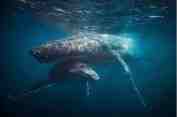
The treaty is meant to serve as a scaffold for future initiatives, and has the power to protect much of the ocean. Photograph by Philip Thurston / Getty

We thank Jeffrey J. Marlow, Assistant Professor of Biology at Boston University, once again; this time for an essay he just posted on the New Yorker’s website. The news in it is not new, but his take on it is:

The Inside Story of the U.N. High Seas Treaty

A new global agreement protects marine life in parts of the ocean that laws have been unable to reach.

The open ocean, which is home to millions of species and generates much of the oxygen we breathe, is a mostly lawless place. Nations have jurisdiction over waters near their coasts, but the high seas, which begin two hundred and thirty miles from shore, are a first-come, first-served domain: there’s little to stop someone from exploiting marine resources, whether plants and animals in the water or fossil fuels beneath the seafloor. Forty-three per cent of the planet’s surface is vulnerable to unregulated deep-sea drilling, overfishing, and bioprospecting. Continue reading

Sunflower Seastars & Ocean Futures

A sunflower sea star found in a kelp forest in waters off the Oregon coast before an invasion of sea urchins. Credit Scott Groth/Scott Groth, via Associated Press

Thanks to Nicholas Bakalar (last seen in these pages seven years ago, we welcome his science reporting work back after so long):

The Missing 24-Limbed Animals That Could Help Rescue the Ocean’s Forest

Scientists say that reintroducing the fast-moving predators to the West Coast could help control the spread of sea urchins that are devouring kelp.

The kelp forests off the West Coast are dying, and with their decline, an entire ecosystem of marine plants and animals is at risk. A large starfish with an appetite for sea urchins could come to the rescue. Continue reading
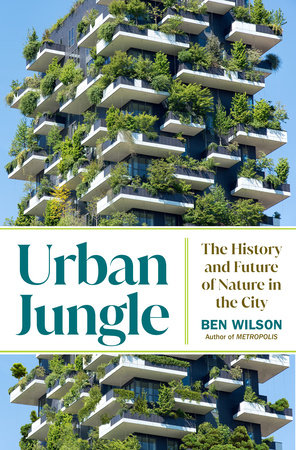
Urban Jungle, Covered In Literary Review

We look forward to Ben Wilson’s new book, as reviewed here:

Where the Streets are Paved with Goldenrod

No one, you would think, aspires to be a night-soil man. Yet in the late 1950s, Shi Chuangxiang’s labours in the latrines of Beijing briefly won him national praise. He was proclaimed a socialist hero and met the head of state. Back then, human excreta mattered, so much so that gangs fought for the plummest spots. Why? Because cities, until relatively recently in human history, were a part of healthy ecosystems that operated according to the principles of nutrient exchange: take, use, return, all in neat equilibrium. The spoils of Mr Shi (who was nicknamed ‘Stinky Shit Egg’), collected at a time when synthetic plant food was not widely available in China, became the organic fertiliser that was intended to power the country’s Great Leap Forward in agriculture. Continue reading
Collagen & Its Discontents

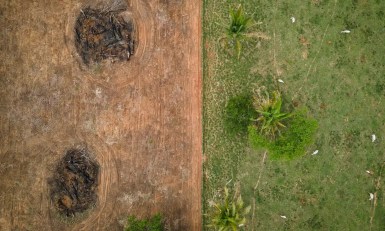
Collagen is derived from cattle, but unlike beef, there is currently no obligation to track the product’s environmental impacts. Photograph: Cícero Pedrosa Neto

Know your beauty products:

Global craze for collagen linked to Brazilian deforestation

Investigation finds cases of the wellness product, hailed for its anti-ageing benefits, being derived from cattle raised on farms damaging tropical forest

Tens of thousands of cattle raised on farms that are damaging tropical forests in Brazil are being used to produce collagen – the active ingredient in health supplements at the centre of a global wellness craze. Continue reading
Economic Zones On Oceanic Commons

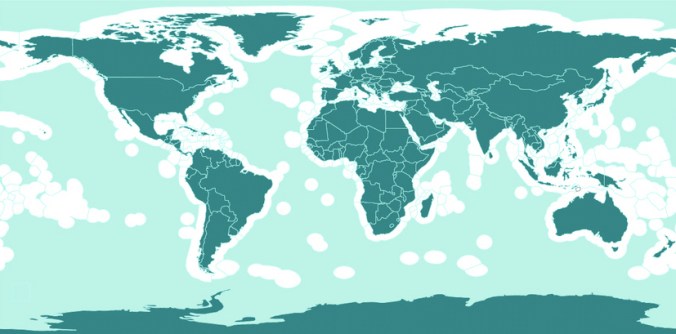
On this map, exclusive economic zones are shown in white and high seas, or areas beyond national jurisdiction, are shown in light green.

For some historical context it helps to think of the many challenges that commons represent. But here and now, this deal is as important as it gets:

Countries Reach Deal to Protect Marine Life in International Waters

UN member states have forged a landmark deal to guard ocean life, charting a path to create new protected areas in international waters. Continue reading
Starbucks, Olive Oil & Longevity

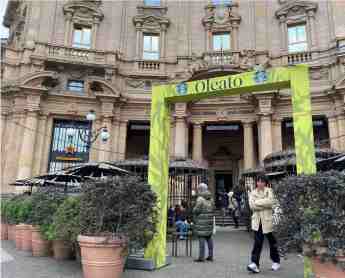
We have always been happy to share news about coffee’s trend setters, whether it is good or not so flattering. Sometimes quite  unflattering. Click the image above to go to the current Starbucks press release for this new, unusual product. Gideon Lewis-Kraus makes a pretty compelling case that while the backstory is interesting this new product is not worth trying:

A banner outside the Starbucks Reserve Roastery in Milan’s city center advertises the chain’s new Oleato line. Photograph by Valentina Za / Reuters / Alamy

Did Starbucks Really Put Olive Oil in Coffee?

The new Starbucks Oleato is terrible. But somehow there’s pleasure to be had in its existence.

As corporate legend has it, the concept of Starbucks was inspired by a visit that Howard Schultz paid to Milan in 1983. At the time, Schultz was the director of operations and marketing for a local Seattle chain with fewer than a dozen outposts; the stores, the first of which opened in 1971, sold whole beans, leaf teas, and spices in bulk. In Milan for a trade show, Schultz found himself enchanted by the city’s espresso bars. Continue reading

Protecting Insects Requires More Effort

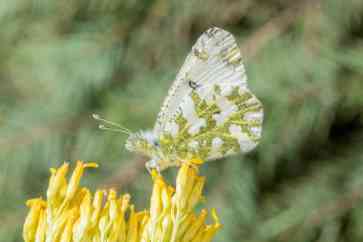
The large marble butterfly is now locally extinct in some places. Rick and Nora Bowers/Alamy

Insects matter, and our thanks to Catrin Einhorn for making it more clear why:

Are Butterflies Wildlife? Depends Where You Live.

A legal quirk leaves officials in at least a dozen states with little or no authority to protect insects. That’s a growing problem for humans.

It’s tough being an insect. They get swatted, stomped and sprayed without a thought. Their mere presence can provoke irrational panic. Even everyday language disparages them: “Stop bugging me,” we say. Continue reading

SUV Realities, Fictions, Dangers

Carmakers have long profited from what’s known as the S.U.V. loophole, which allows auto manufacturers to get around fuel-efficiency regulations by selling trucks. Photograph from Alamy

SUV is a three-letter word, popular to the point of problematic. Thanks again to Elizabeth Kolbert for the most recent thinking on the topic:

Why S.U.V.s Are Still a Huge Environmental Problem

The world is moving toward heavier cars at a time when it should be doing precisely the reverse.

Last year, the world’s S.U.V.s collectively released almost a billion metric tons of carbon dioxide. If all the vehicles got together and formed their own country, it would be the world’s sixth-largest emitter, just after Japan. This is a disturbing figure, but, according to a new report from the International Energy Agency, it gets worse. Globally, S.U.V. sales continue to grow, even though, last year, total passenger-vehicle sales fell. And the trend has now spread to electric vehicles: in 2022, for the first time, the sale of electric S.U.V.s edged out the sale of other electric cars. Continue reading

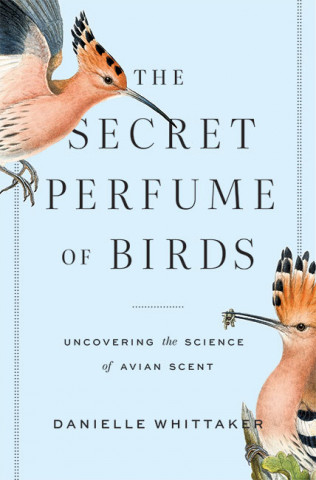
The Secret Perfume Of Birds, Reviewed By The Inquisitive Biologist

The Inquisitive Biologist recently came to our attention with a book review, and now another review of a book on a topic that is new (to us):

To successfully navigate their world, organisms rely on numerous senses. Birds are no exception to this; and yet, for a long time, people have been convinced that birds cannot smell. This came as a surprise to evolutionary biologist Danielle J. Whittaker. Given that smell is effectively chemoreception (the sensing of chemical gradients in your environment) and was one of the first senses to evolve, why would birds have no use for it? The Secret Perfume of Birds tells the story of 15 years spent investigating the olfactory capabilities of birds and provides an insider’s account of scientific research. Continue reading

Carbon Credits Save Lives

Virunga national park is a Unesco world heritage site, recognised for its wildlife and diverse habitats. Photograph: DEA/S Vannini/De Agostini/Getty Images

This concept for combining two forms of credits may serve as an example for other countries tempted by oil and gas discoveries:

US firm to bid to turn DRC oil permits in Virunga park into conservation projects

Exclusive: company plans to sell carbon and biodiversity credits in endangered gorilla habitat and Congo basin rainforest as alternative to drilling for fossil fuels

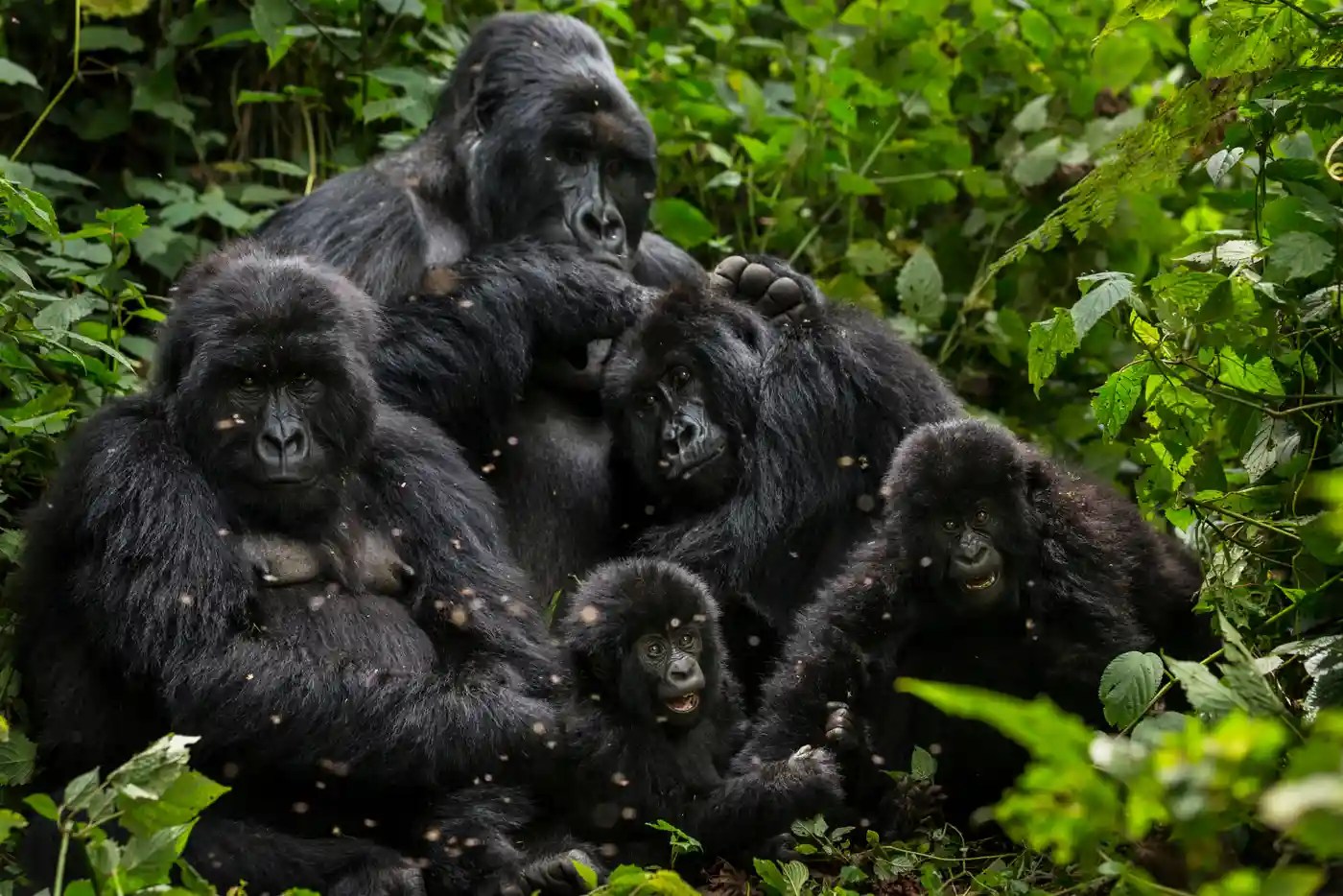
A family of gorillas in Virunga national park, DRC. The oil and gas concessions up for auction include areas of critically endangered gorillas habitat. Photograph: Brent Stirton/Getty Images

A New York investment firm is to launch a $400m (£334m) bid for oil concessions in the Congo basin rainforest and Virunga national park with plans to turn them into conservation projects, the Guardian can reveal. Continue reading

Spirit Catcher and Lumen-Less Lantern, An Art Intervention by Willie Cole

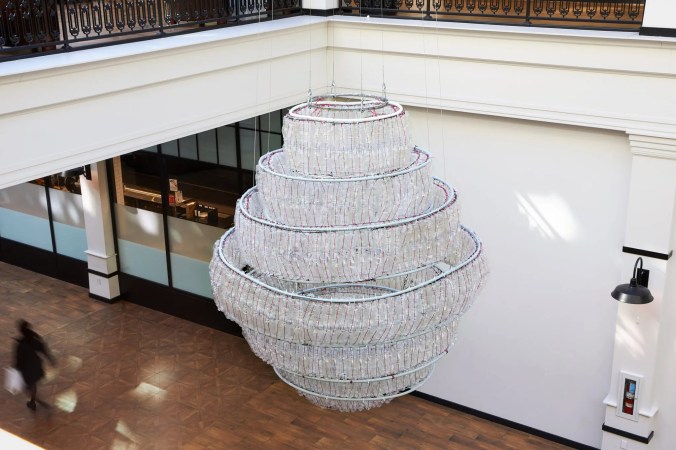
Willie Cole in his artist-in-residence studio at Express Newark, where he has been assembling chandeliers made from thousands of used plastic bottles. Rachel Vanni for The New York Times

Recycling has been a key theme in these pages since we started. Sometimes upcycle has been the term. Of course, reuse is also interesting.

All of these are worth our attention and support.

Our thanks to Laura van Straaten and the New York Times for bringing Willie Cole’s exhibition into view:

The artist invited the community in Newark to reimagine objects that would otherwise be destined for a landfill — to look at them in a fresh, imaginative way.

“Spirit Catcher” by Willie Cole is made of thousands of water bottles held together with metal wire and sculpted to resemble a chandelier. Rachel Vanni for The New York Times

NEWARK — The artist Willie Cole has created two colossal new sculptures and generated a provocative group exhibition stemming from an unusual open call asking artists to transform objects destined for landfill into something imaginative and new. Continue reading

Phosphogeddon, Peecycling & Other Modern Portmanteaus

Addressing the problem, some scientists believe, may require reimagining agriculture from the ground up. Illustration by Juan Bernabeu

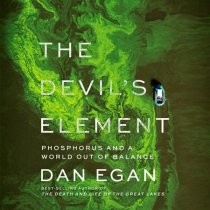
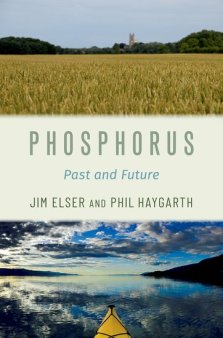
Stephen Porder is Professor of Ecology and Evolutionary Biology, a Fellow in the Institute at Brown for Environment and Society, and the Assistant Provost for Sustainability at Brown. Elemental is his new book looking at how life shapes Earth using basic elements we may take for granted. Read on to learn more about the book, and its wider relevance to other books now being published that discuss phosphorous.

Thanks, as always, to Elizabeth Kolbert for her book reviews, and in this case a nod to the Rich Earth Institute:

Phosphorus Saved Our Way of Life—and Now Threatens to End It

Fertilizers filled with the nutrient boosted our ability to feed the planet. Today, they’re creating vast and growing dead zones in our lakes and seas.

In the fall of 1802, the German naturalist Alexander von Humboldt arrived in Callao, Peru’s major port, just west of Lima. Humboldt had timed his visit to coincide with a transit of Mercury, which he planned to observe through a three-foot telescope, in order to determine Lima’s longitude. He set up his instruments atop a fort on the waterfront, and then, with a few days to kill before the event, wandered the docks. A powerful stench emanating from boats loaded with what looked like yellowish clay piqued his curiosity. From the locals, Humboldt learned that the material was bird shit from the nearby Chincha Islands, and that it was highly prized by farmers in the area. He decided to take some home with him. Continue reading

Darkness Reconsidered

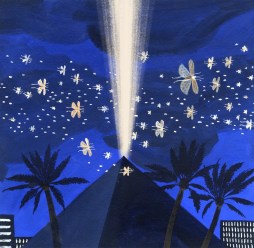
The Luxor Hotel’s “sky beam,” in Las Vegas, generates forty-two billion candlepower of light each night, confusing flying creatures that are drawn to its radiance. Illustration by Carson Ellis

We already linked to one review of it but this book seems worthy of at least two, and if at least one of them is by this essayist then probably two will be enough:

Is Artificial Light Poisoning the Planet?

A Swedish ecologist argues that its ubiquity is wrecking our habitats—and our health.

Among the many looming ecological disasters that terrify us today, one that only a handful of people have contemplated as sufficiently looming and terrifying is the loss of the bats in our belfry. Continue reading

Coffee Love

Illustration of latte art in the shape of a smiley face

Jan Buchczik

Arthur C. Brooks  continues to deliver:

Happiness Is a Warm Coffee

All hail the miracle bean.

I remember the night I fell in love.

The year was 1977, and I was 12 years old. A neighbor kid’s parents had bought an espresso machine—an exotic gadget in those days, even in Seattle. There was just one Starbucks in the world back then, and as luck had it, we lived within walking distance. Continue reading

The Big Myth

If you are in the mood for some basic questioning of the status quo, this book may be for you, according to Kirkus Review:

A thoughtful denunciation of the economic dogma that the market knows best.

“How did so many Americans come to have so much faith in markets and so little faith in government?” So ask Oreskes and Conway, continuing the line of research they began in their seminal 2010 book, Merchants of Doubt. Where that book focused on the co-optation of scientists to dispute the realities of climate change and the linkage of tobacco to cancer, this joins that co-optation to carefully planted “free market” fundamentalism that holds that any attempt to regulate business is a form of tyranny…

Neighborly Advice

Reporting credit: ChavoBart Digital Media

Thanks to the team at Yale Climate Connections:

When do many people decide to go solar? When they’re referred by a friend or neighbor.

They’re more likely to listen to people they trust.

Rooftop solar panels can save people money on their electricity bills. And those savings can mean a lot — especially for people with low incomes, who might have to choose between paying for utilities or buying food or medicine…


Brilliance Up North

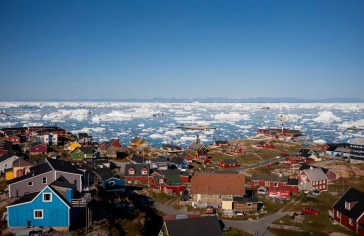
Ilulissat’s icy fjord, a UNESCO World Heritage site, is one of Greenland’s main tourist destinations even though its airport is currently too small to accommodate large jets. Carsten Snejbjerg for The New York Times

Setting limits at the outset, what a brilliant idea:

The Arctic island, renowned for its glaciers and fjords, is expanding airports and hotels to energize its economy, even as it tries to avoid the pitfalls of overtourism.

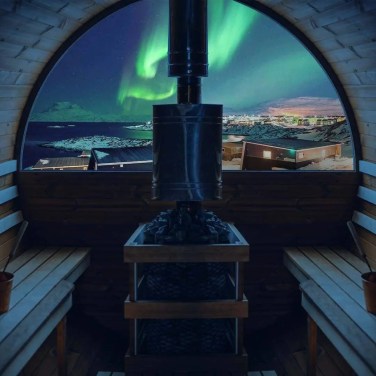
A sauna with a view of Nuuk and, at left, in the distance, the nearly 4,000-foot mountain Sermitsiaq. Inuk Travel

“The weather decides”: It could almost be the motto of Greenland. Visitors drawn to this North Atlantic island to see its powder blue glaciers, iceberg-clogged fjords and breathtakingly stark landscapes quickly learn to respect the elements, and they’re sometimes rewarded for it.

One cold December day, I was waiting for a delayed flight in Kangerlussuaq, a former U.S. military base just above the Arctic Circle, when a friendly Air Greenland pilot named Stale asked if I’d like to join him on a drive to the harbor to “pick up some musk ox heads.” The offer seemed very Greenlandic, so how could I refuse? Continue reading

Living Carbon

OUR MISSION

We believe the challenge of climate instability is the biggest opportunity for global mobilization we have ever seen. It is an opportunity to learn how to use technology to rebalance our ecosystems rather than further alienate us from them. We work with the inherent power of plants, informed by generations of scientific research, to restore ecosystems, improve biodiversity, and enhance the ability of photosynthetic organisms to draw down and store carbon from the atmosphere.

A mission we are curious about, click the image above to learn more.

Communities & Respect

The term was shaped by social-evolutionist thinking; white settlers used it to designate the “primitive” other. Illustration by Lauren Peters-Collaer

Given that our work has often brought us into close proximity, sometimes into working relationships, with such communities as described in the essay below, we have done our best to stay informed on respectful communication; so, this is of interest:

It’s Time to Rethink the Idea of the “Indigenous”

Many groups who identify as Indigenous don’t claim to be first peoples; many who did come first don’t claim to be Indigenous. Can the concept escape its colonial past?

Identity evolves. Social categories shrink or expand, become stiffer or more elastic, more specific or more abstract. What it means to be white or Black, Indian or American, able-bodied or not shifts as we tussle over language, as new groups take on those labels and others strip them away. Continue reading