Photographic Parlor Games

Perhaps to close a recent string of links to interesting items on photography, which began here, continued here and here, and then extended just a bit here, there is an item in the Photo Booth feature on The New Yorker‘s website that:

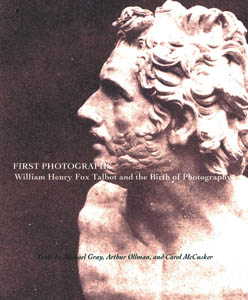
asked Lyle Rexer which five photography books he would want to be stranded on a desert island with. Lyle is a photo critic, curator, teacher, and author of numerous books about photography, so I had a feeling he would take the challenge seriously. My suspicions were confirmed when, after three hours in our library, he was still deliberating. Knowing Lyle’s selections and his reasons for making them, I would gladly trade one of my five desert island photo books for a volume of Lyle’s photo criticism.

Click the image to above to go to the International Center of Photography’s website; they carry one of the choices mentioned in Rexer’s response. Continue reading

A Photographer’s Photographer

Another interesting word or two on this exhibition (click the image to the left to go to the source) to add a different critical perspective:

Last Tuesday, The New Yorker commissioned Jessica Craig-Martin to photograph the opening of Cindy Sherman’s MOMA retrospective.
Continue reading

Canopy Capture

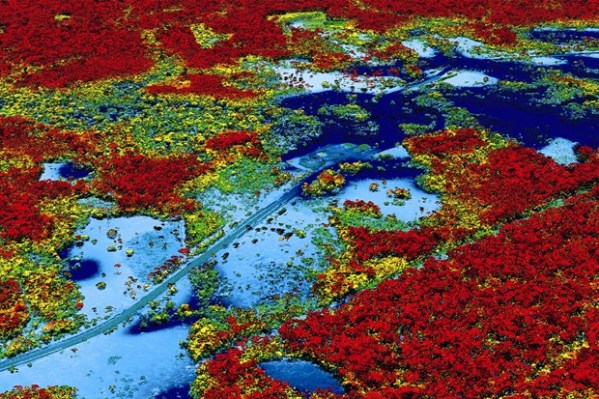
Click the image above to go to a story covered in Wired about a novel approach to mapping threatened rainforest, using existing technology in an innovative manner:

A small, twin-propeller plane flies over the Amazon rainforest in eastern Peru. The scale of the vegetation is extraordinary. The tree canopy stretches as far as the eye can see — an endless array of broccoli florets bounded only by haze and horizon. Greg Asner, 43, has seen the rainforest from this vantage point many times before, but he still stares out of the window in rapt fascination.

Continue reading

Photographer: Artist Or Celebrity?

In two recent posts linking to stories about two very different photographers, there may have been an implied answer to the question raised in the first and repeated in different words in the second.  Art critic Peter Schjeldahl– who has a good track record of mixing  insider knowledge, smart observation and common sense — weighs in with his own answer:

Starting in 1982, Sherman countered a popular clamor to discover “the real Cindy,” as if she were the latest shtick-wielding show-biz celebrity.

Continue reading

Honesty Boxes

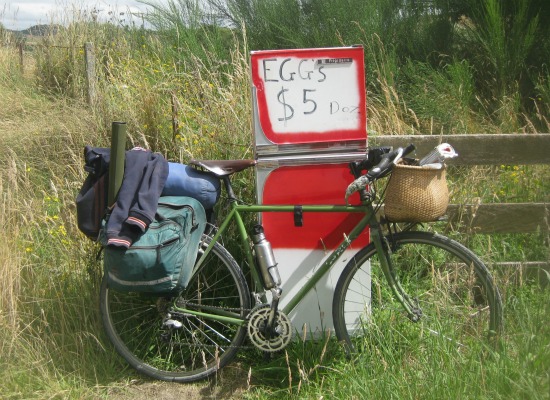
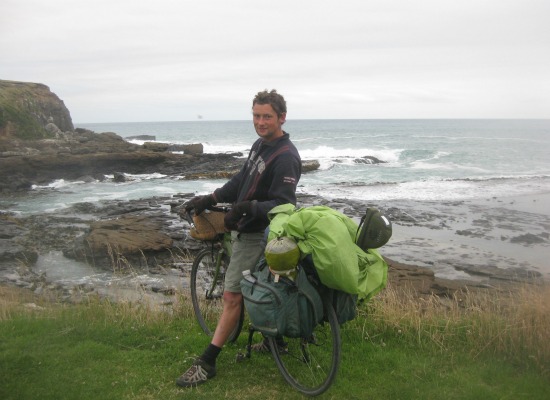
In case you missed the short item about this cyclist down under, it is worth a look.  So is the related item (click the image above to go to the original) about honesty boxes:

Many tourists in automobiles surely pass right by them unaware—but cyclists see these handmade, unguarded food stalls in the distance, usually first as a cardboard sign advertising some product of the homestead. Many times it’s just pine cones, sacks of sheep stool or firewood—and sometimes the sign is just a notice that a reputed local bull is ready and eager to mate.

Continue reading

Today At MOMA

A completely different kind of photographer from our hero, Errol Morris,  Cindy Sherman is more classically defined as an artist.  With all the wonders as well as baggage that come with that term.  Although artists have sometimes been heroic, the recent trend has included plenty of fashionistas.  Cindy Sherman challenges; decide for yourself.  A retrospective show opens today, showing 35 years of her photography.  The New York Times review, titled Photography’s Angel Provocateur, has a nicely turned phrase about the show and how the viewer is:

…confronted by an artist with an urgent, singularly personal vision, who for the past 35 years has consistently and provocatively turned photography against itself. She comes across here as an increasingly vehement avenging angel waging a kind of war with the camera, using it to expose what might be called both the tyranny and the inner lives of images, especially the images of women that bombard and shape all of us at every turn.

Continue reading

Photographer As Mystery

Errol Morris has been a hero at the vanguard of quirky approaches to justice (made a film that freed an innocent man on death row; followed that up with a film that led a famous statesman to be able to acknowledge his war crimes), but has never been noted as a hero within the wider popular culture.

Smithsonian has an article about Morris (click the image to the right to go to it) that will not likely change that, but it does have one of the most fascinating paragraphs you are likely to read about a film maker who writes extensively, especially about photography:

Born in suburban Long Island, Morris graduated from the University of Wisconsin. After a stint of cello study in France, he talked his way into the Princeton graduate philosophy seminar of Thomas Kuhn, an icon of postmodernism, the man who coined the term “paradigm shift.” It wasn’t exactly a meeting of the minds. In fact, it almost cracked Morris’ skull, which is what Kuhn seemed to be aiming to do at the climax of an argument when the esteemed philosopher threw an ashtray at Morris’ head.

Blue Revolution

The Utne Reader, long the aggregator of choice for news on a wide variety of topics from a wide variety of sources, has a great new life on the internet: bigger, better, faster. An item currently on their website (click the image above to go there) is worth a look because of the provocatively obvious (to anyone living in a location where water scarcity is already an issue) opening line:

It’s time to confront our long-held, deeply ingrained belief that water should be forever free, Cynthia Barnett contends in her new book Blue Revolution: Unmaking America’s Water Crisis, which recently came out on Beacon Press.

Continue reading

Photographing New Frontiers

At first glance, we want to go there.  Is it somewhere in the southwest of the United States, or maybe those amazing mountains in Jordan where the dwellings of Petra might be just around the corner? Continue reading

Biking In The Catlins

Facing off with the edge of the world, where the gray and blustery waters of the Southern Ocean meet the rocks of Curio Bay, in the Catlins (New Zealand). Photo by Geoff Green.

Today, a post on the Smithsonian blog (sub-blog?) called “off the road” catches our attention.  The photograph on its own would be enough to catch the eye, but reading this fellow’s several paragraphs about a place called the Catlins is enough to get on the raft and start paddling to New Zealand (if, like us, you like faraway places):

A main claim to fame of the Catlins is the area’s high latitude. Slope Point is the southernmost spot of land on the South Island, at 46 degrees, 40 minutes south. Oh, come on, now. Don’t raise your eyebrows and whistle like that. Seattle, for example, boasts a latitude of 47 degrees, and Glasgow goes just under 56 degrees. Yet I’ll grant that the Catlins are farther south than Tasmania, than Cape Town and than most cities in South America. This is, indeed, among the southernmost settled areas on the planet.

Continue reading

Universities Pushing Boundaries

The University of Minnesota has a website devoted to environmental issues, and we immediately enjoy its spirit and perspective.  Click the image to the left to go to one brief article in a series titled “What would it take?”, in this case featuring an interview with Solomon Prakash.  He is asked a series of questions around the specific theme “What would it take for social entrepreneurship to make inroads to poverty?”  His answers conclude with:

I think the next 10 years will be the decade of social entrepreneurs. I see lots of talented people who want to solve social problems making serious career changes. Some mainstream design firms have actually set up a whole branch around social innovation. Consulting companies are looking at hybrid models of social change. Increasingly, companies are saying it’s no longer possible to look at customers just as consumers. More and more people understand that social change is no longer a marginal activity. The opportunity is huge to solve problems and to come up with interesting commercial models that can be sustainable.

Continue reading

Celebrating Difficulty

Meg’s post, considering the image and the beginning, might have taken a different turn.  Click the image above to go to a short blog post by astrophysicist Adam Frank, which has a photograph remarkably similar to Meg’s as its header.  Where Frank goes, we follow. Continue reading

Facts & Figures

Michael Pollan, whose ideas we have mentioned surprisingly infrequently relative to the impact they have had on our collective lives, made the wise decision to team up with one of our favorite illustrators (have we really not featured her here yet?). Continue reading

A Gandhi At Cornell University

Last week residents of the Cornell University community had the opportunity to hear the grandson of Mahatma Gandhi share anecdotes about their life together.  But those anecdotes were not merely crumbs of celebrity worship–their point is clear all the way through Arun Gandhi’s message, delivered as the Martin Luther King Jr. Commemorative Lecture on February 13 in that University’s beautiful Sage Chapel.

Click the image to the right to go to the article, which includes an embedded link to a video recording of the Lecture.

Continue reading

Paper Guardian

Samantha Contis for The New York Times ©

Click the image above for a profile of an amazing entrepreneurial conservationist.  The New York Times continues to demonstrate its subscription-worthiness.  The key line in the profile, which we can relate to both in principal and practice:

Barrett, who is 61, has dedicated his life to unlocking the mysteries of paper, which he regards as both the elemental stuff of civilization and an endangered species in digital culture. For his range of paper-related activities, he received a $500,000 fellowship from the MacArthur Foundation in 2009. “Sometimes I worry about what a weird thing it is to be preoccupied with paper when there’s so much trouble in the world,” Barrett told me, “but then I think of how our whole culture is knitted together by paper, and it makes a kind of sense.”

Continue reading

Melville’s Muse

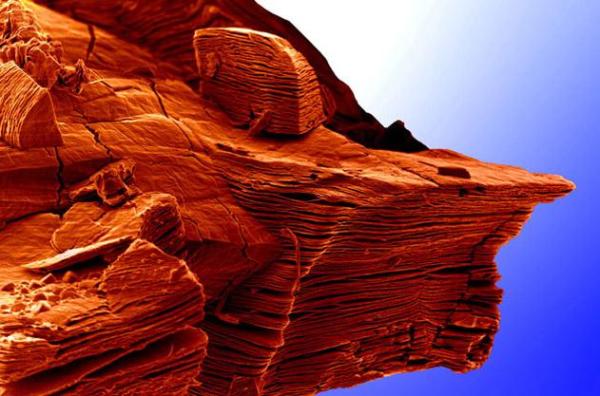
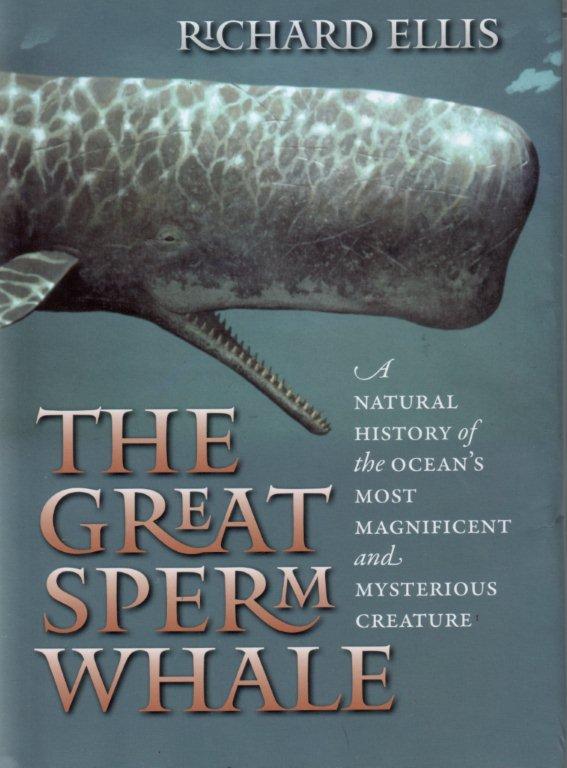
Click the image above to go to the publisher’s website (which also sells the book directly).  If your only knowledge of the title creature comes from a high school literature class, the blurb on the book’s promotional page might make you think this book belonged in the syllabus of the last biology course you took:

Ranging far and wide, Ellis covers the sperm whale’s evolution, ecology, biology, anatomy, behavior, social organization, intelligence, communications, migrations, diet, and breeding. He also devotes considerable space to the whale’s hunting prowess, including its clashes with the giant squid, and to the history of the whaling industry that decimated its numbers during the last two centuries.

According to the review provided in the Times Literary Supplement, the book deserves more attention than that blurb would imply. Continue reading