Among our favorite topics, Paris is always a welcome reason to say something about the avant-garde, including with regard to serious environmental issues.
Continue reading
Author: Organikos
Cats At Home
Mahatma Gandhi In Paris
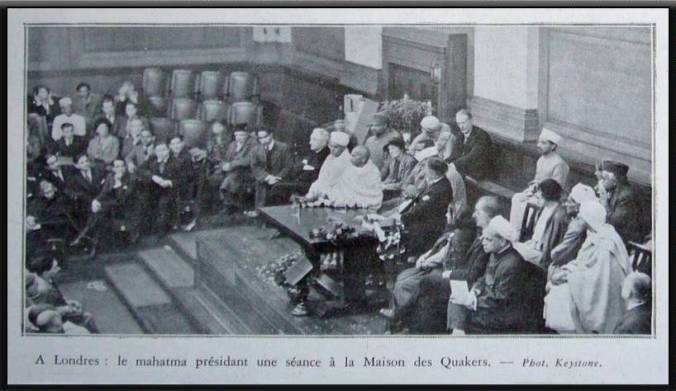
With a mission like this how could we not pay attention? The image above links to the story about two of our favorite subjects, brought together by The Caravan. The image is from a French magazine, which covered the Mahatma’s visit to Paris (and elsewhere) with reverence.
Wonderful Krulwich
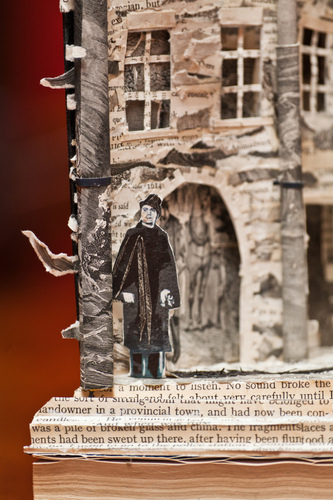
…somebody has been dropping glorious little paper sculptures into libraries and museums all over Edinburgh, Scotland, and we’ve just heard … that there are now three more…
3 Minute Wonders: You Get What You Pay For
It is easy to be skeptical about the relationship between buzz and art, where buzz is meant to be a synonym for meaningful discussion. At 2:23 in this clip one person eloquently suggests that this is art because it has generated discussion. But has it?
Tal’s Photos, Michael & The Tiger Trail Crew
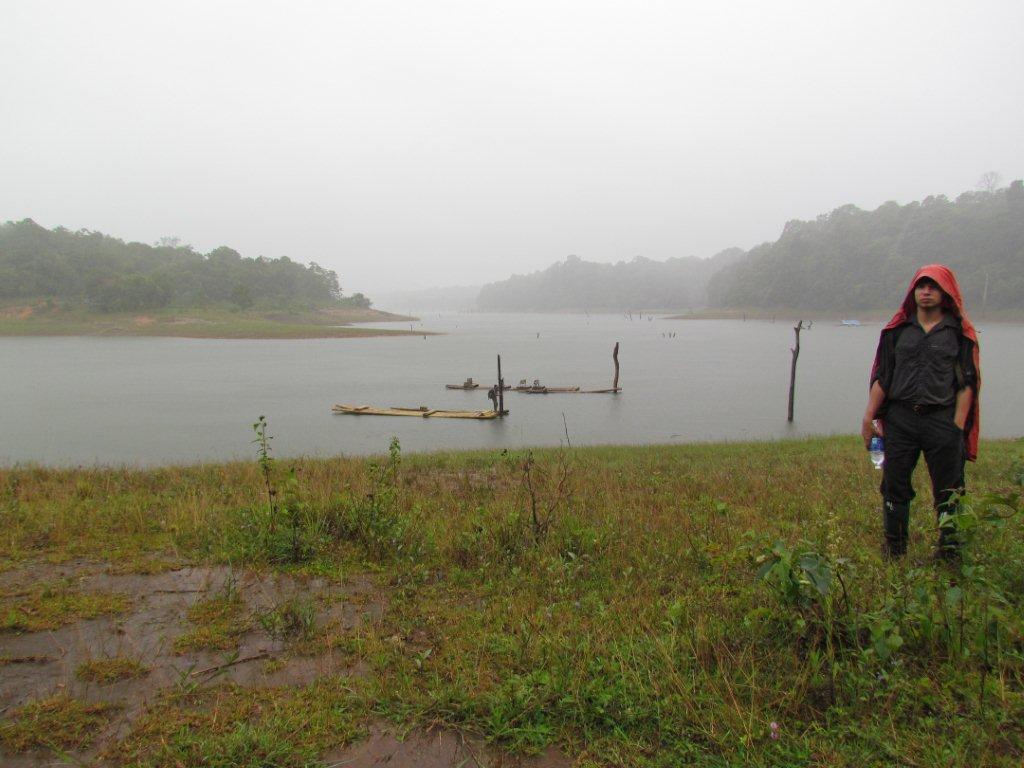
It was an experience worth revisiting. Here’s one more the photo that Tal shared, Michael on that misty morning.
Arts & Science
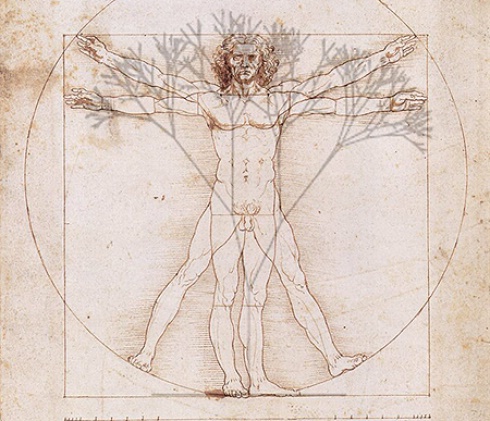
Every year, some percentage of undergraduate students majoring in an academic discipline within the liberal arts, often aka Arts and Science, wonder: what’s next? As in, what will I do when I complete my degree? Many do not need to wonder because they are on a clear path–pre-med or pre-law for example. But for those wondering, we hope our site sheds some light on the variety of possibilities. For one example (click the image above for the source) we like the idea of literally combining art and science (so did da Vinci):
…a mysterious, nearly universal growth pattern first observed by Leonardo da Vinci 500 years ago: a simple yet startling relationship that always holds between the size of a tree’s trunk and sizes of its branches. A new paper has reignited the debate over why trees grow this way, asserting that they may be protecting themselves from wind damage.
Our Gang, Thevara (#2)

In more than one earlier post, we might have given the impression that only fellows are out and about for snapshots in the neighborhoods we visit. Not so.
Do Not Tresspass
Wordsmithing: Authentic
We have been using this word for years as a shorthand for one of the core objectives of our entrepreneurial conservation work: collaborating with communities to assist in the retention of heritage that has meaning, and that those communities feel should remain essentially as it was. It is therefore interesting to consult OED (finally) on exactly what this means.
Top of the list of entries:
a. Of authority, authoritative (properly as possessing original or inherent authority, but also as duly authorized); entitled to obedience or respect.
Waterborne Mysteries
 Click the image to the left and you will find yourself somewhere in the Marie Lorenz realm. It may be easier to understand this realm if you see some of her more “traditional” art, and especially the evolution of that art, at her own website first.
If you happen to be in New York City, you have an advantage: you can experience this realm firsthand. If not, maybe a description of some of her other recent art will give a small portion of perspective to the Tide and Current Taxi:
Recently I have been making collographs of things that I find on the beach. This project is an attempt to find out the story that an object tells about itself. I think of it as another way to collaborate with the tide – because of how the harbor collects things from the city, and distributes them around the shore according to their density, buoyancy, and shape. Continue reading
More Stephen Jay Gould On The Simplicity Of Darwin
Six minutes continuing the lecture (the first five minutes were posted here) given by one of the greatest scholars of evolutionary theory since Darwin himself.
From 81 Years Back
It has been our preference not to to succumb to the second most acute syndrome plaguing file-sharing on the internet. Not that those kittens, monkeys and elephants are not adorable–they are. But the video clip above is different… Continue reading
Amazing People From India
In a post a couple days back, mentioning two artists of Indian origin, there was no intent to create a new focus on the theme of Indians in the so-called new world, but this catches the attention on its own:
Sir Jagadish Chandra Bose, the aforementioned carrot vivisector, was a serious man of science. Born in what is today Bangladesh in 1858, Bose was a quintessential polymath: physicist, biologist, botanist, archaeologist. He was the first person from the Indian subcontinent to receive a U.S. patent, and is considered one of the fathers of radio science, alongside such notables as Tesla, Marconi, and Popov. He was elected Fellow of the Royal Society in 1920, becoming the first Indian to be honored by the Royal Society in the field of science. It’s clear that Sir Jagadish Chandra Bose was a scientist of some weight. And, like many scientists of weight, he has become popularly known for his more controversial pursuits — in Bose’s case, his experiments in plant physiology.
And the source of this information is new to us, but seems worth the visit. Continue reading
National Geographic Channel In Panama
One of our Contributors recently posted from Panama, including a brief summary of his visit to the Panama Canal and Panama City. Here is a nice two minutes worth of additional footage, courtesy of one of the few worthwhile channels on television.
When It Rains, It Pours
 We try not to favor any one source when we link out to interesting items, but sometimes a source seems to have a “hot hand”. Just after noting one great, short item of enormous consequence we can recommend another longer item (click the image to the right) for anyone–especially parents of those most likely to read this series–for whom quality of writing in the English language is a concern. Not to mention that yesterday we had a completely unrelated reason to mention visiting Oxford…
Here is the shocking opening line that should get you reading this piece (and as always we encourage subscription to that publication, without which we would not get so much vivid, varied and valuable reportage):
At Oxford in the nineteen-forties, Professor John Ronald Reuel Tolkien was generally considered the most boring lecturer around, teaching the most boring subject known to man, Anglo-Saxon philology and literature, in the most boring way imaginable.
No one who had read, let alone seen placed on film, this man’s writing would have guessed that to be the case. Continue reading
Tools Of The Trade
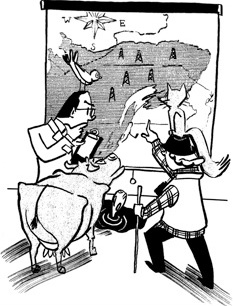 Click the image to the left for context. As we learn more on this complex issue, the enlightened position must be literally that–enlightened by fact. Sometimes sarcasm is an easier position, especially when the facts seem outrageous. But thankfully there are more and more facts to tone down sarcasm to a chiseled tool. Our ever-appreciated investigator shares some this week in her usual venue and as always her balanced-yet-urgent perspective probably is appreciated:
Every kind of energy extraction, of course, poses risks. Mountaintop-removal mining, as the name suggests, involves “removing” entire mountaintops, usually with explosives, to get at a layer of coal. Coal plants, meanwhile, produce almost twice the volume of greenhouse gases as natural-gas plants per unit of energy generated. In the end, the best case to be made for fracking is that much of what is already being done is probably even worse. Continue reading
Necessary Versus Sufficient
There are needs, and there are wants.
A toothpick sculpture? Not necessary for San Francisco to demonstrate its greatness (as might have been an underlying objective of the commission). Not sufficient for that purpose either.
Indians In North America
 Click the photo to the left to read the interview of mother by daughter, artist by artist. The interviewer shares this perspective on the interviewee’s art:
Her work has, over the years, centred on forgotten, vanishing worlds, art and language that exist on the margins. The epigraphs to her novels (TS Eliot, Emily Dickinson, Borges …) often make reference to the persistence of memory. She writes: “The ancient Chinese believed time is not a ladder one ascends into the future but a ladder one descends into the past.” Her new book, The Artist of Disappearance, is made of three delicate stories about the frailty as well as the transforming power of art.
Voltaire Strikes Again
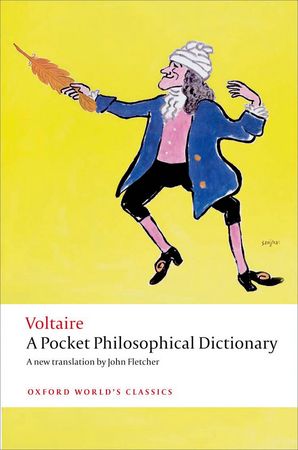 The cover illustration is not very inviting, but the reviews and blurbs in more than one newspaper make it sound worth the read:
Not really a dictionary, but a series of short essays on such topics as equality, Hell, miracles, religion, tyranny and superstition by one of the leading spirits of the Enlightenment. The tone is witty, catty, and there are many neat aphorisms such as: “Atheism does not prevent crimes, whereas fanaticism commits them.”
Incidentally, in case you are already a Voltairophile, you may want a deeper well from which to draw inspiration. In which case you may want to pay a visit to Oxford.
 Organikos