What The World Needs Now

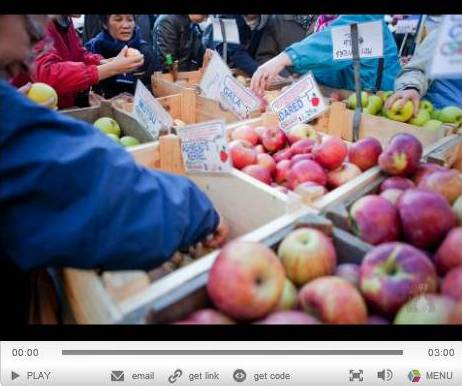
Click the image above to go to the story.  Better yet, don’t.  This might already well be called the era of weaponized foodstuff (witness all that pepper spray), so a story about the goal of breeding the hottest chili pepper in the world (all in good fun, of course) does not bode well.

Continue reading

The Meaning(s) Of Organic

At first glance, this article and others on this website appeared to be of the “denier” variety, but on close read of this particular item (click the banner below to go to the article) it seems clearly of the educational clarification variety.

According to Rodale and his acolytes, products created by—and processes carried out by—living things are fundamentally different from lab-based processes and lab-created products. The resurrection of this prescientific, vitalistic notion of organic essentialism did not make sense to scientists who understood that every biological process is fundamentally a chemical process. In fact, all food, by definition, is composed of organic chemicals.

Continue reading

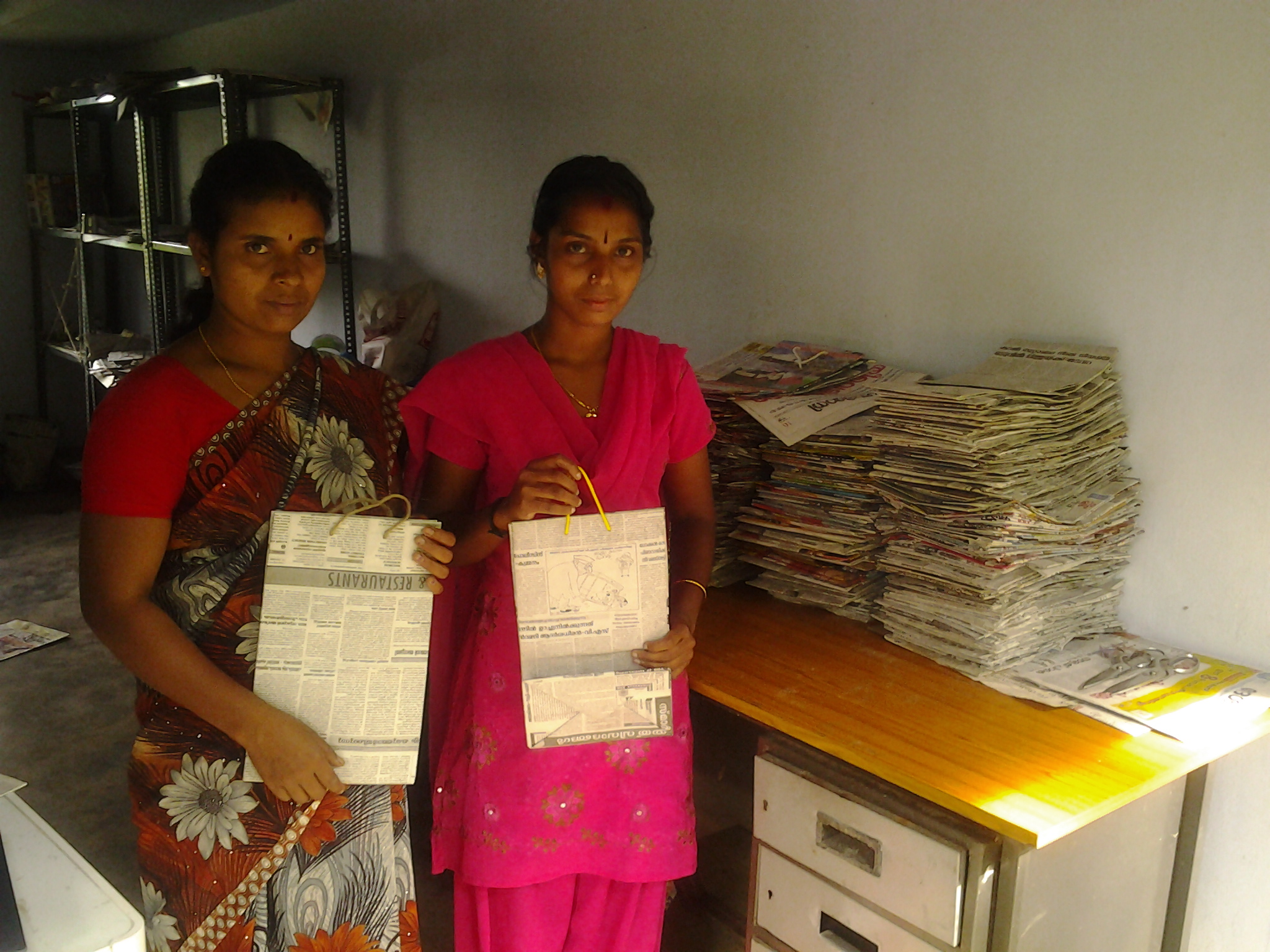
Paper Patrol

Guest Author: Aby Thomas

This slideshow requires JavaScript.

Last week I wrote about the ladies of the Mannakkudy EDC and the success and quality of their bag production.

Now I’d like to tell you a bit more about the Vanasree Auditorium ladies and their Forestry Department responsibilities. If you notice that the ladies’ clothing is different from their counterparts in the Mannakkudy section of the EDC, you are correct. Part of the Vasanta Sena (or Green Army), these women help with both forest patrols against poachers and illegal logging, and as guides for the Cloud Walk Trek as well.  And since they pick up plastics and other non-biodegradable waste along the way, they understand the need for a plastic free national park all the more. Continue reading

Question Of Free Will

Now, after 50 years of studying the brain, listening to philosophers, and most recently being slowly educated about the law, the issue is back on my front burner. The question of whether we are responsible for our actions — or robots that respond automatically — has been around a long time but until recently the great scholars who spoke out on the issue didn’t know modern science with its deep knowledge and implications.

Continue reading

Language Akin To Species

…words and other language units change systematically as they are passed from one generation to the next, much the way genes do. Charles Darwin similarly argued in 1871 that languages, like biological species, have evolved into a series of related forms….

Continue reading

Feasting Thankfully

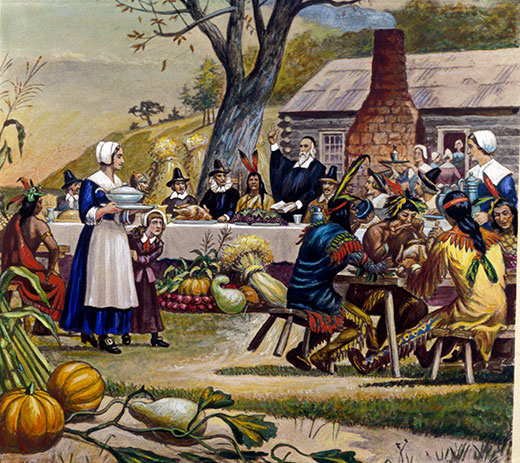
“Wildfowl was there. Corn, in grain form for bread or for porridge, was there. Venison was there,” says Kathleen Wall. “These are absolutes.

William Bradford, the governor Winslow mentions, also described the autumn of 1621, adding, “And besides waterfowl there was great store of wild turkeys, of which they took many, besides venison, etc. Besides, they had about a peck a meal a week to a person, or now since harvest, Indian corn to that proportion.”

152 Years And Counting

Besides being the most useful holiday known to man (however it is celebrated, as well as whenever, and by whomever) today is the birthday of the first publication of Darwin’s On the Origin of Species by Means of Natural Selection, or the Preservation of Favoured Races in the Struggle for Life.

Did you know that Charles Darwin and Abraham Lincoln were born on the same day?  And that Lincoln was responsible for making Thanksgiving a national holiday in the USA? Continue reading

Thanksgiving Is Healthy

Cultivating an “attitude of gratitude” has been linked to better health, sounder sleep, less anxiety and depression, higher long-term satisfaction with life and kinder behavior toward others, including romantic partners.

Continue reading

Little Pics

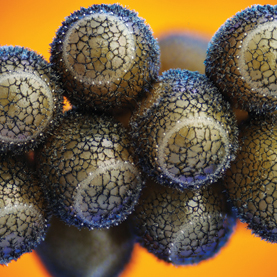
This crowdsourcing of microscopic imagery arrived long before the invention of the smartphone and networked communications: the amateur has long made a mark with the microscope—in the early years, by hand drawing images that appeared underneath the lens, and, in more recent times, with the added realism brought by the photograph.

Continue reading

Wordsmithing: Bibliopegy

By what criterion, of all the books on all the shelves in all the libraries, does one choose a particular book?  In the digital world we live in now, is that even a relevant question?  For anyone who loves to walk over to the lectern in the library where the monumental OED is sitting, the answer is certainly yes, even if they very much also appreciate other forms of access to OED.

So today we pay tribute to those artisans who, along with calligraphers and paper-makers, keep the world of ideas evolving.  How one binds a book could have enormous consequences, so it is surprising to see that the etymology for this word is so modern:

Bookbinding as a fine art.

1876    Encycl. Brit. IV. 42/1   Contemporary masterpieces of French, Italian, and German bibliopegy.

1885    Pall Mall Gaz. 10 Sept. 15   The Exhibition of what is known as bibliopegy.

1958    ‘M. Innes’ Long Farewell 72   Appleby, although hazy about bibliopegy, was quite certain he wasn’t a distinguished student of it.


Ethical Consumption

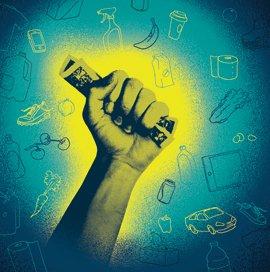
There is a clear link between the focus of this article (click the image to the right to get it) and themes we care deeply about on this site.

It provides a meaningful review of how consumer spending holds the key to a more sustainable economic value chain–which sounds obvious when stated so bluntly but the article also demonstrates that it is not as easy as it sounds.

Otherwise, we would have made more progress than we have by now.

Continue reading

Non-Conformist Rabble-Rousing

This week there is a profile in The New Yorker of the “organization” behind OWS, or more precisely an account of how the movement got its start.  It is in front of the pay wall (click the image to the left to be taken to the article) and is intriguing from the perspective of collective action, a topic we have written about several times.

Conversations by email and phone between two fellows who have not seen each other in person in years seems to have sparked an enormous extended mobilization.

The movement’s evolution, organizationally speaking, is interesting from an entrepreneurial perspective: there is a “don’t try this at home” sense that emanates from the pages.

Continue reading

Gnarly, Radical & Tubuluar: Surf Industry Innovation

Guest Author: Nicole Kravec

After watching Garret McNamara set the world record for riding a 90 (NINETY!) foot wave (aka 27.4 meters) in Praia do Norte, Portugal, I can’t help but wonder where he’ll go next – and what his ride implies for the surf tourism industry – an industry with between 25-50 million participants around the world with yearly growth around 15%, that can unfortunately oftentimes have unsustainable impacts.

McNamara, along with other Big (an understatement) Wave Surfers like Laird Hamilton and Mike Parsons, use a technique called “Tow-In Surfing.”  The process uses artificial assistance to literally tow a surfer into a breaking wave by a partner driving a personal watercraft like a Jet Ski or a helicopter with a tow-line attached.  Tow-In Surfing is what helped get McNamara his wave, as it is used when the wave is uber large and/or where positioning within the wave is critical.  There is some controversy associated with Tow-In Surfing, as it creates a lot of noise and exhaust that can certainly harm the local ecosystems. Continue reading

No More Smirking

Daniel Goleman, a superb interpreter of scientific findings, provides a look inside the mind of the Dalai Lama in a brief video, a quote from which here:

Question: What does meditation do for the brain?

Daniel Goleman: Well, the Mind & Life Institute catalyze these experiments where high, you have to say, Olympic level meditators came to brain imaging labs in the West and have their brains studied while they did different meditation practices. And what they’re finding is brain configurations that they’ve never seen before. These are different brains. For example, the left prefrontal cortex, just behind the forehead, is the center of positive emotions or part of the key… key part of the circuitry for that. And when these monks meditate on compassion, it lights up, it activates to a level that just never seen in ordinary life. And they’re finding, you know, a range of specific… state specific effects like this.

Continue reading

Wild Things Gone Wild

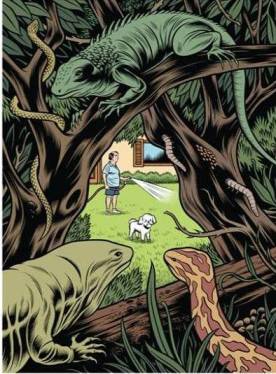
Click the image to go to the article, which examines what happens when exotic animals are bought as pets, then released into ecosystems where they have no predators or other population-regulating mechanisms. Yikes:

…As Magill was driving to the Miami Metrozoo, where he is the communications director, he passed a troop of rhesus macaques scampering up the road, as if on the plains of Kashmir. Later, the monkeys were spotted wandering through nearby farm fields, gorging themselves on tomatoes. Elsewhere, a small antelope was found wandering the halls of an administration building, a group of juvenile baboons broke into the weight room of a private home, and a python was found dead on the beach in Miami, with two full-grown raccoons in its belly. It was as if all Florida had turned, for a moment, into Disney’s Animal Kingdom. Continue reading

Wordsmithing: Development

From the perspective of anyone immersed in the economic paradigm known as sustainable development, the first entry in OED‘s definition of the word development will be much appreciated.

1. A gradual unfolding, a bringing into fuller view; a fuller disclosure or working out of the details of anything, as a plan, a scheme, the plot of a novel.

Continue reading