Song Is Good

Click the photo to the left for a short essay about someone you almost certainly never heard of.

And never likely will again.  It is worth the 20-30  minutes of reading time.

If he is an unsung hero, then song seems an appropriate response.  You will recognize, hopefully, someone you know when you read about Raymond.  Probably good to let them hear the song sooner, rather than later.

Continue reading

In Conservation, Mystery

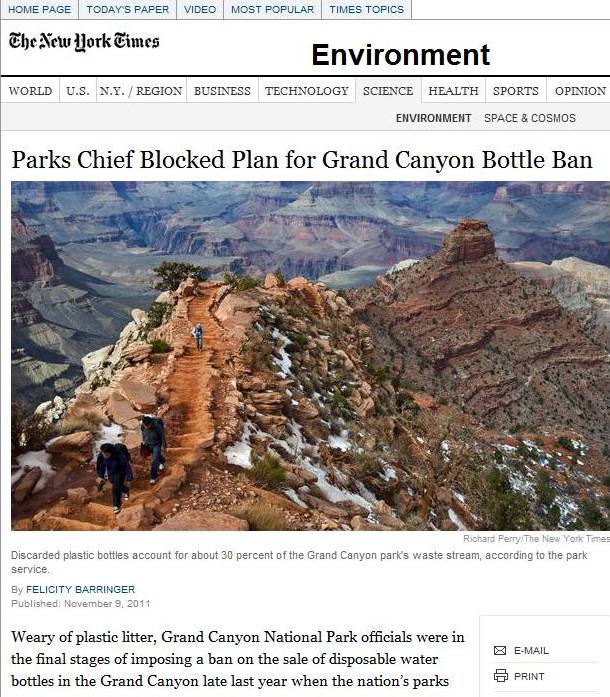
Click on the image to the right to get the full story of a conservation whodunnit.  After linking to Felicity Barringer’s investigative story on the scuttling of a trash reduction plan for one of the world’s most iconic national parks (really, Coca Cola?), some other conservation-focused articles seem worthy of attention.

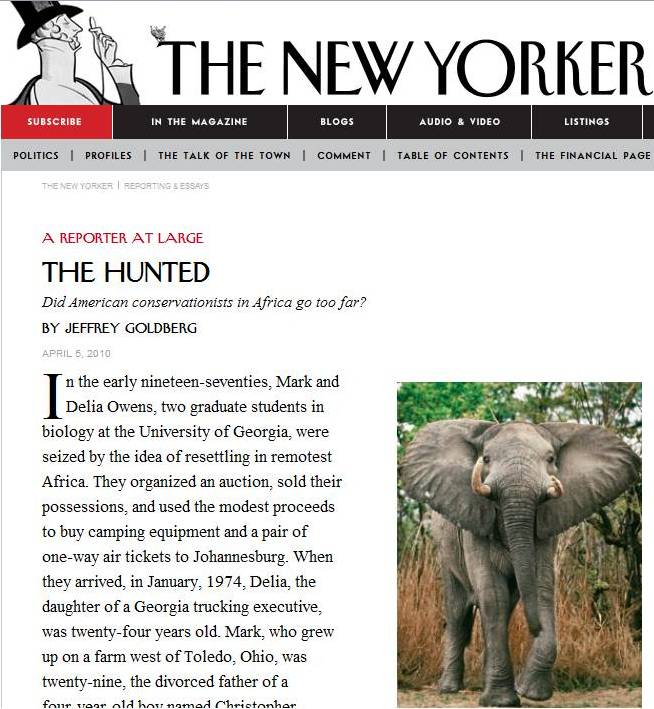
The New Yorker has a deliciously quirky approach to covering environmental issues, and this one is representative.  It delivers on multiple fronts, reading like a detective story while also informing about one of those before it’s too late topics.

Continue reading

Really, Coca Cola?

Click on the image above to be taken to the story, which describes a great trash reduction plan in the Grand Canyon National Park that suddenly got scrapped under mysterious circumstances. The circumstantial evidence suggests that Coca Cola was influential, if not responsible, for that canceled plan.  Every day this newspaper seems more worth the subscription price. Continue reading

Wordsmithing: Sustainability

While the development economics paradigm known as sustainable development has been with us for merely a generation or so, the adjective sustainable goes back to 1611, according to OED.  A derivative of that adjective, the noun sustainability, came into use much more recently, which may explain the name attached to the paradigm:

1980    Jrnl. Royal Soc. Arts July 495/2   Sustainability in the management of both individual wild species and ecosystems is critical to human welfare.

We cannot help but agree with the application in that reference.

Twitcher’s Random Walk

Visit the Cornell Lab of Ornithology’s website, for whatever reason, and you will likely get carried away.  Something will catch your eye, and your imagination, and the resulting search will lead somewhere like this.  This particular weekend you may soon enough find yourself (courtesy of the New York Times Travel Section) here:

If you are like us, you will immediately want to know more about that vulture conservation thing. Continue reading

Sometimes Comment Is King

Raxa Collective does not have any in-house physicists but we are determined to keep up with the Joneses on matters of interest like footprints.  We think about footprint in as many ways as possible in addition to our preferred venue, travel. In recent years that includes thinking about the footprint of the tool we take for granted as essential to our work: the internet.  Continue reading

Progress Back And Forth

We have noted before the intriguing coincidences that link the “old world” to the “new world”–not least the desire to establish trade with what is now Kerala and the accidental discovery of somewhere else; and other links in both directions.  “Old” and “new” become fuzzy qualifiers when considering “modern” European travelers of the 15th century sailing to “ancient” India and instead encountering people we now call Pre-Columbians.  Seth has posted on the environmental impacts of people from that so-called old world as they settled in the new world and brought their definitions of progress with them.  Now, thanks to an article in Smithsonian Magazine our attention is brought to a book and a man who broaden our horizons back to the old world from which those people came. Continue reading

Wordsmithing: Pilgrim

For approximately 90o years now, according to OED,  those of us with wanderlust might properly be defined as a person

on a journey, a person who travels from place to place; a traveller, a wanderer, an itinerant…

…in short, a pilgrim.  That, according to the first entry defining the word according to its oldest usage.  The second definition gives the now more familiar context of journeying to a sacred place as an act of religious devotion, but qualifies that by adding that a pilgrim makes a journey as an act of respect, or homage to a place of particular significance or interest (without necessarily any religious context).  Getting the utility of this word into more widespread practice would be progress, indeed.

From Halloween To Día De Los Muertos

On the fringes of our intent at this site, where culture is sometimes king, sometimes queen, and sometimes jester: a pause to refresh our memory of what many of us consider a not-so serious cultural artifact.  The traditions associated with October 31 in the USA represent a rich co-mingling of sacred, sacrilegious and purely commercial interests; in Mexico and elsewhere those of November 1 or so represent mostly sacred, family-focused interests.  But both share, at least in recent times, an orientation toward humor and its ability to soothe fears.  In that specific path of tradition, the following seems just right for the transition from October 31 to November 1:

Supporting Great Smoky Mountains National Park

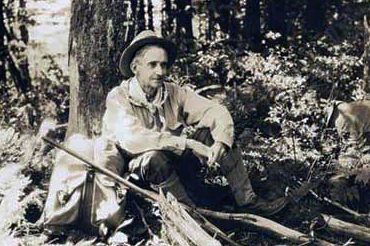
Horace Kephart is, or should be, in the pantheon of anyone working on entrepreneurial conservation initiatives in or near wilderness areas.  Particularly if you have ever been lucky enough to camp in the Great Smoky Mountains National Park.  Even more so if you have also walked through Cornell Plantations.  The book that Kephart wrote, Camping and Woodcraft, has supported both of those amazing places financially.  You could take a look at the contents of this book here or here for a free ride.  But according to this article the royalties from the book were originally donated by Kephart’s descendants, several of whom attended Cornell, to the Plantations.  The article (from which the photos here are rendered) also states that proceeds…

…from the new edition benefit the Great Smoky Mountains National Park.

We will have to investigate further how that works, since Amazon offers a new edition that does not look like the one mentioned in that article.   If you have any information to share on this, please post a comment here.  Meanwhile, anyone who would aptly describe their life as biophilia-driven might understand why this man spent his Continue reading

Crabby and Ant-sy (In The Best Possible Way) in Colombia

Guest Author: Nicole Kravec

This slideshow requires JavaScript.

I woke up smiling and drenched in sweat.  It took me a moment to remember exactly where I was, as my exuberance to investigate Colombia’s diversity resulted in new accommodations nightly.  But as I peeped my head out of the hammock and became further enveloped by the Caribbean humidity, I was content with the decision to spend a few days in one place.   I spied a horse grazing near the backpacker tents, heard gentle ocean waves rolling, and smelled fried plantain patacones pattiesContinue reading

Different Tastes, Together

I had a thought once about couples where one person was a vegetarian and the other was a meat eater. It seemed like they could really never share a meal and have the same experience without one person–usually the omnivore–compromising to suit the mutually agreeable meal. To a normal, well adjusted human being, this is a totally banal observation that wouldn’t warrant losing sleep over.

But to us at Studiofeast, we thought it’d be cool to do a meal where an omnivore and a vegetarian could both share the same meal without the former forgoing meat or the latter having to try flesh. That was the seed of an idea that grew into our most recent dinner: a 7 course meal with an omnivore and vegetarian option where each corresponding course looked identical across the meat/vegetable line. And on July 17th, we seated 40 guests–20 omnivores on one side of the table, 20 vegetarians sitting opposite them–and served them our Doppelganger Dinner.

This slideshow requires JavaScript.

See the whole story hereContinue reading

Krulwich Wonders (click on image)

I tried. I told myself, “You get one week to write about camouflage. One week only.”

I love hiding in plain sight. It makes me almost giddy. So last week I went on a camo binge: I wrote about hunting camo, food camo, underwater camo, but I can’t stop. I’ve got to do one more. Just one.

I’m calling it Celestial Camouflage.

Then we’ll move on. I promise.

So look at this:


Wordsmithing: Collective

Thanks as always to the OED, a splash of cool water on a word of obvious interest to us.  It is more straightforward than we might have thought when deciding what word best complemented Raxa to communicate, through a name, both the means and the ends of a new effort:

…gathered into one; taken as a whole; aggregate…

When it comes to words that are part of names, though, straightforward is not the only consideration that matters.  Implied meaning, even if not recorded anywhere with specificity, matters too.  There is some other sense to the word collective beyond those words in the OED definition, and hopefully that sense is reflected in the actions taken by Raxa Collective.

Wordsmithing: Action

It seems funny that this word is a noun, since normally verbs are “action” words.  But as the OED makes clear in the first entry in the definition of this word, an action is an outcome:

…Something done or performed, a deed, an act; habitual or ordinary deeds, conduct….

More!