Singing the Praises of Wild Foods

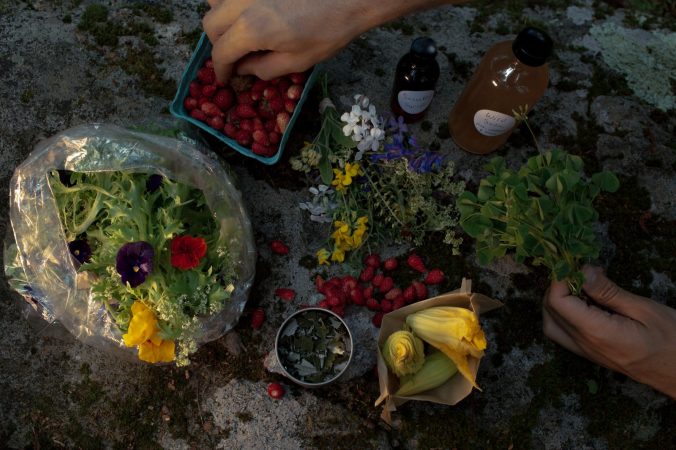
A Wild Box from Allora, available for delivery in Manhattan, Brooklyn, Queens, and the Bronx, might include, clockwise from top: squash blossoms grown on the farm; a bouquet of common vetch (also known as wild peas), linden flowers, dame’s rocket, and bedstraw; a hunk of a chicken-of-the-woods mushroom.Photograph by Courtney Sofiah Yates for The New Yorker

We’ve long been fans of foraged foods on this site, whether that be the seasonal delights of wild mushrooms, or the community gleaning of urban trees and gardens. These Wild Boxes are definitely an inspiration to get outside with an expert, and find a meal.

Foraged Foods Shorten the Supply Chain

Chicken-of-the-woods mushrooms that fry up like their namesake, snappy sea beans that need no extra salt, sassafras syrup, and other edible offerings from the wilds outside the city limits.

“Alot of the talk about quarantine cooking, in the beginning, was, like, ‘Here’s twenty ways to use a can of tuna,’ ” James O’Donnell recounted the other day. “It was very much survivalist.” O’Donnell and his partner, Amanda Kingsley, own Allora Farm & Flowers, in Pine Plains, New York, where they grow what they need for their floral-design studio, plus vegetables. It struck him that “a lot of people at home could probably use feeling connected to the natural world right now, a little bit of excitement and wonder.” Before the pandemic, a substantial part of O’Donnell and Kingsley’s business was supplying restaurants with ingredients that they foraged sustainably from the acres that they lease, as well as from friends’ properties and from public lands in the Hudson Valley and on Long Island. With the restaurant market shrinking, they decided to experiment with a direct-to-consumer weekly-ish Wild Box, available for delivery in the Bronx, Manhattan, Brooklyn, and Queens.

To forage safely requires a good amount of training. Perfectly edible plants can look nearly identical to perfectly poisonous ones. In some cases, a berry that grows on a tree may be as palatable as its flower is lethal. Still, eating my way through a Wild Box gave me hope for my chances of surviving should even the canned tuna run out. Learn the rules—many inherited from indigenous peoples—and unlock access to treasures hiding in plain sight in thickets, on riverbanks, and by the shore. A hefty wedge of chicken-of-the-woods mushroom pried from a tree trunk performed exactly as its name would suggest, its edges pan-frying to a crisp golden brown that rivalled a buttermilk crust, its creamy interior shredding almost like meat.

A vial of sassafras syrup, made by steeping bark and small roots removed responsibly from a sassafras tree, was transformed into an aromatically fizzy glass of root beer when mixed with soda water. The detailed ingredient key that came in the box suggested treating tender, sweet, snappy sea beans—a succulent, also known as samphire, that grows on beaches and in coastal marshes—like salad greens, but to leave the salt out of your vinaigrette until you had tasted the dressed beans. Sure enough, they were so infused with a natural brine that they didn’t need a single grain. Continue reading
Wind Win

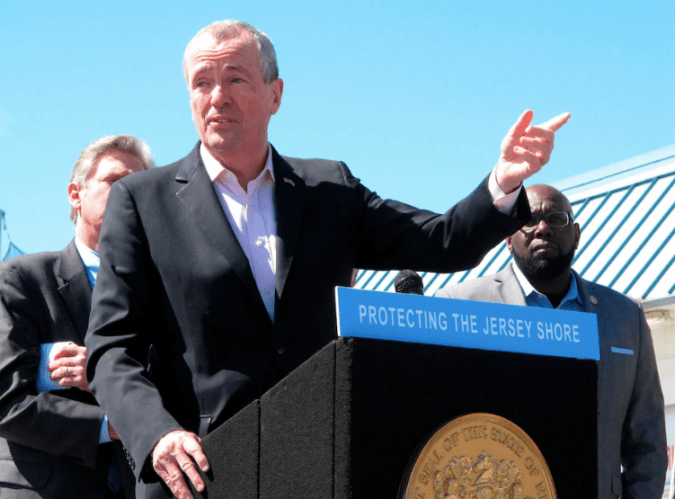
New Jersey Gov. Phil Murphy (D) speaks at a news conference on the boardwalk in Point Pleasant Beach, N.J., in 2018 before signing a bill banning offshore oil and gas drilling. (Wayne Parry/AP)

Alternative energy sources are the requirement for the future. We can only hope that positive leadership actions such as this aren’t vetoed by an administration that would like to keep progressive plans as a thing of the past.

New Jersey aims to lead nation in offshore wind. So it’s building the biggest turbine port in the country.

Gov. Phil Murphy (D) said his state will build the country’s first port dedicated to assembling the turbines that will go up not just in New Jersey but across the Eastern Seaboard.

New Jersey wants to be known for more than just its shores and casinos.

It aims to be the hub of the nation’s nascent offshore wind energy industry.

On Tuesday, Gov. Phil Murphy (D) is set to announce the construction of what he calls the country’s first port dedicated to constructing the colossal turbines that may one day dot the East Coast horizon as Northeastern and Mid-Atlantic states rush to build more renewable energy.

For New Jersey, it is about more than just tackling climate change. Just as Texas is the de facto capital of the U.S. oil and gas industry, New Jersey wants to be an economic engine for offshore wind.

“We have a huge opportunity,” said Tim Sullivan, chief executive of the New Jersey Economic Development Authority. “Somebody’s going to get to be the Houston of American offshore wind.”

To make sure New Jersey plays that role, the state government is planning to turn 30 acres along the Eastern Shore of the Delaware River 20 miles south of Wilmington, Del., into a staging area for assembling the massive turbines. Taller than 800 feet, the turbines will tower higher than the Washington Monument.

State leaders are also hoping to coax factories to the rural area, too, and have set aside 25 acres for potential turbine part manufacturers. They aim to start construction next year and launch operations by 2024. Another 160 acres will be available for future development.

“We’ll be able to be the focal point for the industry in this part of the country,” Murphy said in an interview.

The port is part of the state’s broader plan to get all of its electricity from clean energy by the middle of the century. New Jersey, already one of the nation’s fastest-warming places, wants to generate 7,500 megawatts from offshore wind by 2035 — enough to power half of New Jersey’s homes.

Continue reading

Onon’s Epic Journey

1501

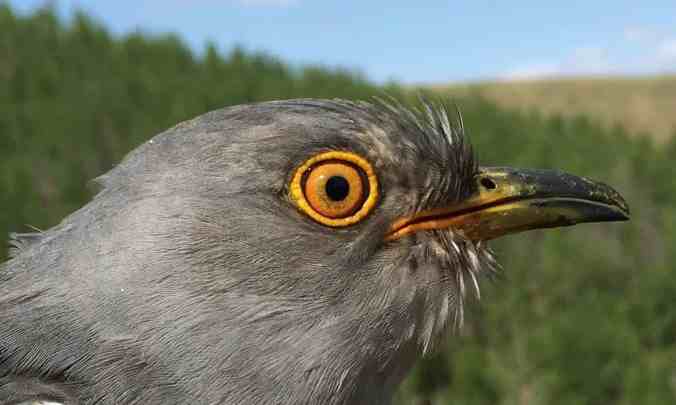
Onon returned after a 26,000km round trip that took in 27 border crossings and 16 countries. Photograph: Mongolia Cuckoo Project/Birding Beijing

Thanks to ornithologists like Dr Hewson, and to scientific instruments like the tracking device on Onon, we can see that Onon the cuckoo has made one of the longest migrations recorded by any land bird:

OnonMap

Guardian graphic. Source: The Mongolia Cuckoo Project

Cloud cuckoo land? How one bird’s epic migration stunned scientists

When Onon the common cuckoo took off from Mongolia last June no one expected him to make a 26,000km round trip to southern Africa

768

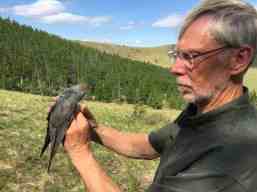
Onon moments before he was released on 8 June 2019. Photograph: Mongolia Cuckoo project/Birding Beijing

When Onon took off above the rolling hills of the Khurkh valley in Mongolia last June, researchers had no idea if they would see him alive again. Along with one oriental cuckoo and three other common cuckoos, each fitted with a tiny tracking device, he was about to embark on an epic journey to southern Africa.

Last month, he was the only bird to return safely with his tracker intact.

“It’s an amazingly long migration,” says Dr Chris Hewson, senior research ecologist at the British Trust for Ornithology, who said Onon’s 26,000km round trip was one of the longest journeys recorded by any land bird. Continue reading

Bees@Church


We are happy to learn their fate, but did not even know they had a fate to consider. Bees at church? Come to think of it, churches are normally considered a safe haven. Thanks to Kim Willsher (again, at long last) and the Guardian (as always) for this coverage:

They survived fire and toxic fumes. So what happened next to Notre Dame’s bees?

Hives that survived catastrophic Paris cathedral blaze are healthier than ever, says beekeeper

7360 (4)

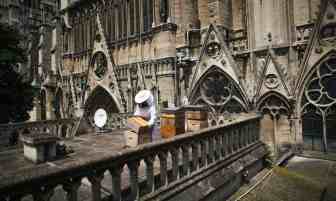
Sibyle Moulin tending the hives on the roof of Notre Dame in 2018. Photograph: Dmitry Kostyukov/The New York Times/eyevine

It is a crisp winter morning and the area around Notre Dame is sealed off as it has been since the fire last April that devastated the cathedral.

Those in the know, however, especially those with the keenest of eyes, might spot some small movement high up to the south of the stricken and blackened structure.

The bees of Notre Dame, whose escape from the inferno seemed almost miraculous, are thriving and conserving their energy ready to produce honey this summer, just as they have every year since they took up residence on the sacristy roof in 2013. Continue reading

More Rigor Needed In Green Finance

20200620_LDP501

Thanks to the Economist for keeping it real:

The trouble with climate finance

Green investing has shortcomings

The financial system and climate change

The financial industry reflects society, but it can change society, too. One question is the role it might play in decarbonising the economy. Judged by today’s fundraising bonanza and the solemn pronouncements by institutional investors, bankers and regulators, you might think that the industry is about to save the planet. Some 500 environmental, social and governance (esg) funds were launched last year, and many asset managers say they will force companies to cut their emissions and finance new projects. Yet, as we report this week (see article), green finance suffers from woolly thinking, marketing guff and bad data. Finance does have a crucial role in fighting climate change but a far more rigorous approach is needed, and soon. Continue reading
If You Eat Beef & Live In The USA

Here is some food for thought, thanks to HighCountry News:

Navajo ranchers are raising premium beef

Is their success sustainable?

The land on the Padres Mesa Demonstration Ranch, in northeastern Arizona, stretched so vast and wild that it could be perspective-skewing, easy to get lost in. But Bill Inman effortlessly navigated his truck through a sea of blue grama grass, broom weed and sage. When he spotted a herd of cows, he hit the brakes.

“She’s a box of chocolates,” Kimberly Yazzie said as she pointed at a stately heifer.

About a dozen cows with week-old calves were bedded down in late winter forage, all muted greens and gold. Continue reading

Citizen Science: 89 Years Old and Counting

Microscopic plankton: they provide a food source for fish, seabirds and other marine life, as well as absorbing CO2 emissions

Although we’ve highlighted citizen science so many times on these pages, it never occurred to me that some of these projects have spanned nearly 9 decades.This particular project’s device is called a continuous plankton recorder (CPR). An apt acronym, indeed.

Tiny plankton tell the ocean’s story – this vast marine mission has been listening

Since 1931 ‘citizen scientists’ on ships have enabled data collection on the tiny building blocks of the sea. Now this research could shape how we tackle the climate crisis

On a clear day, from their small, unassuming warehouse on the south Devon coast, Lance Gregory and Dave Wilson can see right across Plymouth Sound to the Eddystone lighthouse. Today, they’re watching a ferry from Brittany, the Armorique, pull into dock.

Behind it, the ferry is towing a one-metre-long device shaped like a torpedo. It doesn’t look like much, but it’s part of the planet’s longest-running global marine survey.

The device is called a continuous plankton recorder (CPR), and it’s one of 53 such devices that Gregory and Wilson manoeuvre using forklifts in their warehouse, surrounded by racks of distinctive yellow boxes and clipboards covered in spreadsheets.

They dispatch these CPRs in bright yellow boxes to “ships of opportunity” – ferries, cargo or container vessels that have agreed to volunteer for the mission. Once a ship leaves port, the crew attach the device to the stern using steel wire, then toss it overboard.

Trailing along behind the ship, it collects data for the CPR survey. The mission is vast but the subject is minuscule: plankton, the tiny organisms that drift in the ocean. Every marine ecosystem relies on plankton for its basic food source, and it generates half the oxygen we breathe. Perhaps more than any other organism, it is crucial to all life on our planet.

The CPR survey is the longest-running marine science project of its kind. It began in 1931 when the scientist Sir Alister Hardy investigated how herring were influenced by plankton in the North Sea. This month the distance surveyed will reach an impressive 7m nautical miles, equivalent to 320 circumnavigations of the Earth.

Since that first tow from Hull to Germany 89 years ago, the equipment has hardly changed. So far a quarter of a million samples have been analysed, representing a vast geographical spread over the course of the past century. The immense scope has allowed scientists to see dramatic patterns in ocean health, across both time and space, building a much clearer picture of how our marine environments are changing.

It is also, says Gregory, “one of the oldest citizen science projects in the world”. Continue reading
Removing Constraints On Natural Aquatic Migrations

osprey11_wide-f3647cbcd0535446dda9272b7d69c1c7f60f4168-s1300-c85

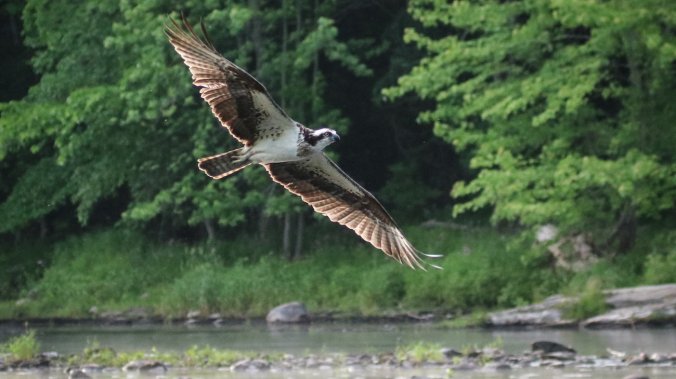
Osprey looking for alewives along the Sebasticook River in Maine. The removal of two dams has allowed migratory fish to return. Murray Carpenter

Migration, an ageless natural phenomenon, can be all the more spectacular when we remove its constraints:

‘One Of The Best Nature Shows’: A River Transformed After Dams Come Down

lamprey2_wide-35396af290da823652ad903769c1b404a48123b0-s1300-c85

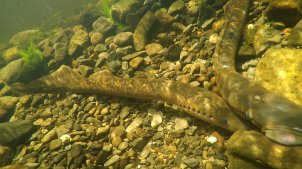
Sea lamprey making a spawning nest in the Sebasticook. Murray Carpenter

Along central Maine’s Sebasticook River, the first thing you’ll notice are the birds. Eagles are everywhere, wading on gravel bars and chattering from the trees.

“A whole bunch of birds, they’re bald eagles, those are all bald eagles!” says conservationist Steve Brooke.

eagle-with-alewife-copy_wide-6b0c286a64e59fc4a2a227d596ebd5e49983b3dc-s1300-c85

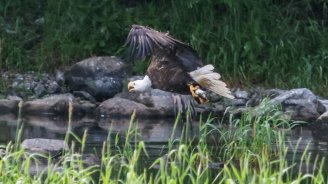
A recent count found nearly 200 bald eagles along the Sebasticook. This one has caught an alewife. Murray Carpenter

It’s a dramatic sight, as the bald eagles swoop to catch fish from the river. And it’s a sight that Brooke predicted for this region, more than 20 years ago. That’s when he began advocating for the removal of a large hydroelectric dam downstream, on the Kennebec River. The Edwards Dam came down in 1999 after the federal government ordered its removal, saying the ecological costs outweighed the benefit of the power it provided. Continue reading

Citizen Farming & Victory Gardens, 2020

WW1-and-WW2-posters

LEFT: “War gardens over the top. The seeds of victory insure the fruits of peace,” Maginel Wright Enright, National War Garden Commission, 1919 (Library of Congress). RIGHT: “War gardens for victory—Grow vitamins at your kitchen door,” lithographed by the Stecher-Traung Lithograph Corporation, Rochester, New York, between 1939 and 1945 (Library of Congress).

In the latest Gastropod episide, Dig for Victory, we get some new background on an old topic that has been on our minds lately:

VicGarden

You’ve seen the news: vegetable seeds are selling out. All that quarantine ennui has combined with anxiety about the gaps on supermarket shelves to create a whole new population of city farmers in backyards and windowsills across America. And everyone from the Los Angeles Times to Forbes to CBS has dubbed these brand new beds of beets and broccoli “COVID-19 Victory Gardens.” Continue reading
Charismatic Mega-Batteries

2000 (5)

When we started this platform, from a base in south India, we were surrounded by charismatic mega-fauna. Even the squirrels were unusually beautiful and large. The purpose of the platform being to highlight stories of creative, entrepreneurial approaches to conservation as much as to raise awareness of environmental issues more broadly, there is a new form of mega charisma worth noting today. It may make a difference to the issues we have been pointing to since the first post nine years ago:

Climate emission killer: construction begins on world’s biggest liquid air battery

Exclusive: project will store renewable energy and reduce climate-heating emissions

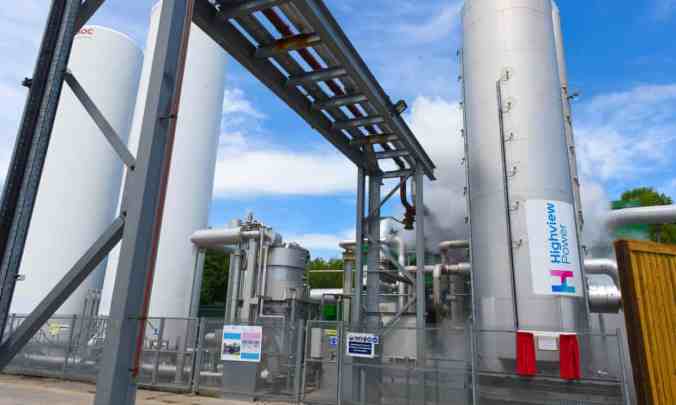
Construction is beginning on the world’s largest liquid air battery, which will store renewable electricity and reduce carbon emissions from fossil-fuel power plants.

The project near Manchester, UK, will use spare green energy to compress air into a liquid and store it. When demand is higher, the liquid air is released back into a gas, powering a turbine that puts the green energy back into the grid.

A big expansion of wind and solar energy is vital to tackle the climate emergency but they are not always available. Storage is therefore key and the new project will be the largest in the world outside of pumped hydro schemes, which require a mountain reservoir to store water. Continue reading
BirdsCaribbean Global Big Day in a Big Way

Birders, in general, tend to be an enthusiastic bunch – and the constraints of the current circumstances actually added extra incentive to find creative problem solving solutions, in finding new birding locations or ways to be safely be in familiar ones.

The BirdsCaribbean Global Big Day video compilation provides proof positive. Enjoy!


Counting Turtles


Great Barrier Reef LogoAt first glance, it looks like art. As most great nature photography, whether amateur or taken by professionals, often does. But this is tech-driven professional science. Thanks to the Great Barrier Reef Foundation for this primer:

COUNTING TURTLES IS A SCIENCE

So how do you count more than 64,000 turtles at once?

With drones – and now we have the science to prove it.

Our Raine Island Recovery Project researchers are investigating the best way to count all the turtles at the world’s largest green turtle nesting area. The highly respected PLOS ONE journal has just published their findings (see the paper). Continue reading
Akira Miyawaki, More On Small Forests

2048 (1)

A Miyawaki forest being planted on the outskirts of Paris, France. Photograph: Courtesy of Boomforest

We knew from a recent post about the importance of small tracts of tree cover, based on reporting in the USA. Here is more from Europe, and about the botanist inspiring an acceleration of planting:

Fast-growing mini-forests spring up in Europe to aid climate

Miyawaki forests are denser and said to be more biodiverse than other kinds of woods

4608 (2)

A three-year-old forest in Ormeignies, Belgium. Photograph: Urban Forests

Tiny, dense forests are springing up around Europe as part of a movement aimed at restoring biodiversity and fighting the climate crisis.

Often sited in schoolyards or alongside roads, the forests can be as small as a tennis court. They are based on the work of the Japanese botanist Akira Miyawaki, who has planted more than 1,000 such forests in Japan, Malaysia and elsewhere. Continue reading

If Not Europe Now, Where & When For A Global Green Recovery?

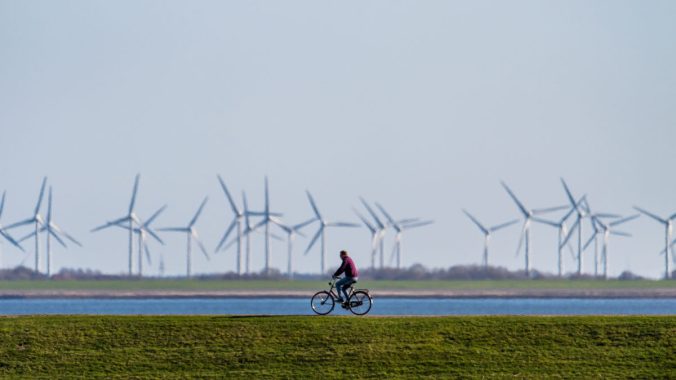
GettyImages-978196998_cycling-turbines_web

A bicyclist on an embankment in front of wind turbines in Norderney, Germany. LINO MIRGELER/GETTY IMAGES

Thanks to David G. Victor for this opinion:

Building Back Better: Why Europe Must Lead a Global Green Recovery

With the global economy reeling from the pandemic, most nations are focusing stimulus programs on reviving employment. But Europe is moving forward with a Green Deal initiative that provides a framework for decarbonizing its economy and spurring the rest of the world to follow. Continue reading

And Now, A Word From The King, On Chocolate

Are chocolates forever?

For World Environment Day, a story of biodiversity and globalization in the ancient Asante Kingdom of Ghana

AsanteChocThe man on the throne in the place where growing cocoa is more important than just about anywhere in the world–the king of the Asante in Ghana–knows well the challenges ahead for this agricultural wonder. If you care about chocolate, read on:

AsanteBy His Royal Majesty Otumfuo Osei Tutu II, King of the Asante Kingdom, Ghana and Dr. Musonda Mumba, Chair, Global Partnership on Forest and Landscape Restoration (GPFLR) and Chief, Terrestrial Ecosystems Unit, UN Environment, Kenya. 

With the easing of COVID-19 lockdowns across the globe, people shall again begin visiting shops to purchase gifts for loved ones. No doubt chocolate delicacies will be part of the presents. Although they can hardly be considered an essential good for consumers, the production of cocoa and chocolate is vital to the livelihoods of millions of people in West Africa. It is at the center of a global multi-billion-dollar industry, and much of the cocoa that feeds this industry originates from trees growing in the Ancient Kingdom of Asante in Ghana. But this source of wealth is under threat. Continue reading

Oceans’ Call to Action

© Alexis Rosenfeld

We’re a day behind on World Oceans Day, but John Tanzer’s words are lasting, despite the date.

Don’t Waste A Crisis – A World Oceans Day Call to Action.

By John Tanzer, Oceans Practice Leader, WWF International

It was early March when the realization hit. Our Year of Ocean Action wasn’t going to happen — at least not in the way so many had been planning. 2020 would be extraordinary, but for all the wrong reasons. Our Super Year was meant to be the launch platform for a decade of strong global efforts to restore the ocean. Clearly, the attention and resources we had hoped to harness have been in much demand elsewhere.

I was not looking for a “silver lining” to the suffering and loss caused by the coronavirus, but somewhere in the back of my mind was a quote about not letting a crisis go to waste. Was it Winston Churchill who said it? Or a contemporary politician?

It turns out, it was not Churchill, and it wasn’t even a politician. The line can be traced back at least as far as 1976, to M. F. Weiner’s article in the journal Medical Economics, “Don’t Waste a Crisis — Your Patient’s or Your Own.” Weiner apparently meant that a medical crisis can be used to improve all aspects of a patient’s well-being.

So, it wasn’t a callous sentiment about seizing the upper hand in a moment of chaos. It was an acknowledgement that a crisis may arise which so disrupts the norm that all preconceptions are set aside, and all solutions are on the table.

Continue reading

Fixing Farms In Ireland

4494

Michael Davoren with his cattle in the Burren, Co Clare. Photograph: Eamon Ward/Burrenbeo Trust

Thanks to Ella McSweeney for this story about a young academic’s hands on, entrepreneurial approach to solving problems caused by Ireland’s farmers, who had followed incentives to their economically logical but environmentally disastrous conclusions:

‘Life attracts life’: the Irish farmers filling their fields with bees and butterflies

Rewarding positive environmental impact has revitalised an area of west Ireland. Is this a solution to the country’s ‘acute’ nature crisis?

2848

In late spring, the Burren is transformed into an explosion of colour. Photograph: Burrenbeo Trust

Michael Davoren shudders when he thinks of the 1990s. He’d been in charge of his 80-hectare farm in the Burren, Co Clare, since the 1970s, and the place was in his blood. The Davorens had worked these hills for 400 years.

But growing intensification fuelled by European subsidies meant that most farmers in this part of Ireland were having to decide between getting big or getting out. Hundreds were choosing the latter.

2848 (1)

Hundreds of farmers have signed up to a scheme that pays them to create healthier fields and clean waterways. Photograph: Burrenbeo Trust

Davoren followed the advice to specialise and chase the beef markets. “The more animals I kept, the more money I got,” he says. “I put more cattle out, bought fertiliser, made silage. Slurry run-off was killing fish. But if I kept fewer animals I’d be penalised 10% of my subsidy.”

The austere appearance of the Burren landscape belies its rich diversity. The thick rocks were laid down 300 million years ago when warm tropical seas covered the area, and the bodies of billions of marine creatures cascaded to the sea floor to form the Burren limestone. Continue reading

The Refuge Of Family Forests

Popkin_Tim-Leiby-2_web

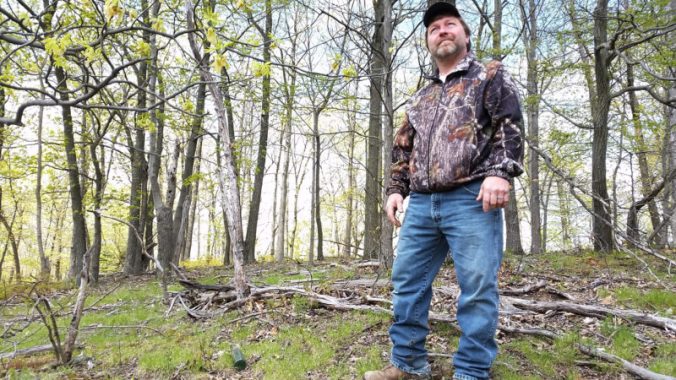
Tim Leiby co-owns his 95-acre forest near Blain, Pennsylvania with eight other families. GABRIEL POPKIN / YALE E360

Gabriel Popkin takes a “who knew?” topic and brightens up the day:

How Small Family Forests Can Help Meet the Climate Challenge

As efforts grow to store more CO2 emissions in forests, one sector has been overlooked — small, family-owned woodlands, which comprise 38 percent of U.S. forests. Now, a major conservation initiative is aiming to help these owners manage their lands for maximum carbon storage.

Popkin_hickory-leaf-recently-emerged_web_web2

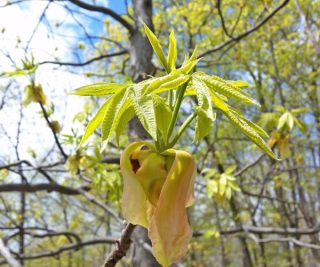
Hickory leaves emerge on Tim Leiby’s forest, a sign of progress toward bringing back native hardwoods. GABRIEL POPKIN / YALE E360

Tim Leiby had wrapped up a fun but fruitless early-morning turkey hunt and was enjoying an old John Wayne flick when I arrived at Willow Lodge near Blain, Pennsylvania. A few flurries drifted down on this unseasonably cold May morning. After a quick scan of antlers mounted on virtually every wall of the cozy hunting lodge, we headed out for a socially distanced stroll through what Leiby calls “our little piece of heaven.”

This 95-acre woods in south-central Pennsylvania’s ridge-and-valley country is a hunting and hiking refuge co-owned by eight families. Continue reading

Virtual Ocean Dialogues

Another example of Costa Rican leadership and team action. The Virtual Ocean Dialogues, held by the World Economic Forum, “bring to light ambitious and inspiring solutions as well as tangible opportunities for positive change, and galvanize urgent global action for a healthy ocean. It will also spotlight some of the solutions that emerged as critical for the recovery from the COVID-19 crisis, including the role of the ocean in building the resilience that our economies and communities need to recover and eventually face other potential future shocks.”

The opening address by Costa Rica’s President Carlos Alvarado Quesada included statements about present and future actions.

“Costa Rica has historically been a leader in conservation,” Quesada says. It has doubled forest coverage in recent years and is aiming for a zero-emission economy by 2050.

Now it wants to turn its attentions to the sea. “We are working towards a sustainable approach for ocean management,” he says.

It is “committed to promoting a global blue economy transformation”, prioritizing mangrove forests, aquaculture and coastal biodiversity.

Continue reading