The New Commute

merlin_173044968_b11a15e2-c026-42bf-b05b-38a6d8a3782a-jumbo

Jim Wilson/The New York Times

If they displace congesting and polluting four-wheel alternatives, they are worth a look:

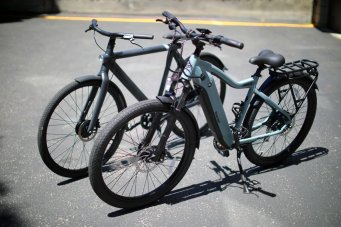
E-Bikes Are Having Their Moment. They Deserve It.

The benefits of owning a battery-powered two-wheeler far outweigh the downsides, especially in a pandemic.

merlin_173044839_217a78b8-1b5d-41a2-9a95-0f9a3a39095d-jumbo

Credit…Jim Wilson/The New York Times

Many of us are entering a new stage of pandemic grief: adaptation. We are asking ourselves: How do we live with this new reality?

For many Americans, part of the solution has been to buy an electric bike. The battery-powered two-wheelers have become a compelling alternative for commuters who are being discouraged from taking public transportation and Ubers. For others, the bikes provide much-needed fresh air after months of confinement. Continue reading

Costa Rican To Lead GEF

carlos_manuel_rodriguez_2

Some happy news:

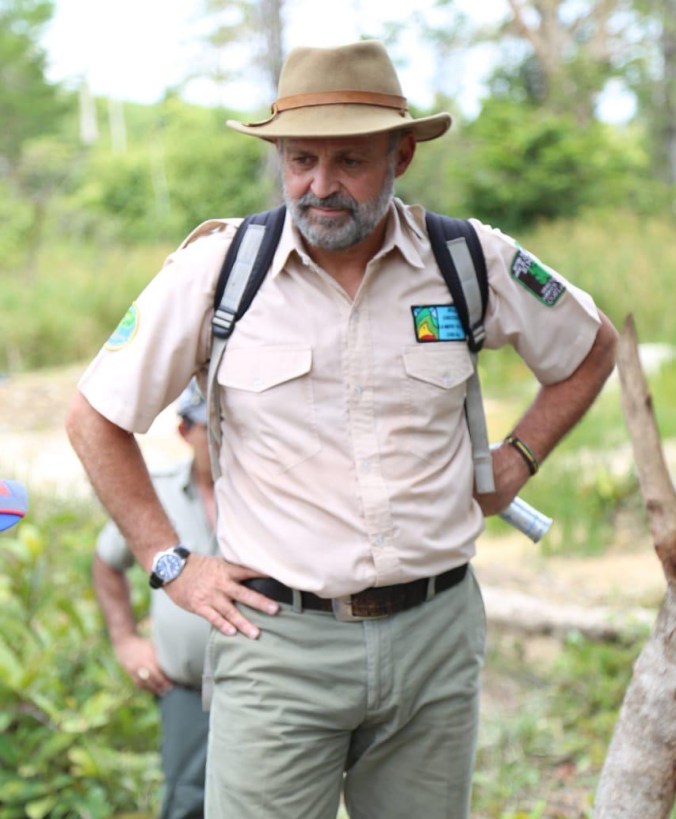
Carlos Manuel Rodriguez named new CEO of Global Environment Facility

Costa Rican Environment and Energy Minister Carlos Manuel Rodriguez has been selected as the next CEO and Chairperson of the Global Environment Facility, the largest multilateral trust fund supporting environmental action in developing countries and the main financing mechanism for multiple United Nations environmental conventions. Continue reading

Rethinking What Comes Next

shutterstock_308990846_FloridaHouses_web

The average size of a new house in the U.S. has doubled since 1970. SHUTTERSTOCK

Thanks as always to Bill McKibben for his view on ways of thinking differently about our shared future:

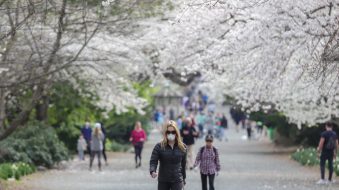
When Social Distancing Ends, Will We Rethink the World We Want?

Long before the virus, Americans had become socially isolated, retreating into sprawling suburbs and an online world of screens. When we emerge from our pandemic-mandated separation, can we reconnect with each other and reconsider how the way we live impacts the natural world?

2BCWX7G_alamy-central-park_web

Patterns are notoriously hard to break, even when you have to. Studies find that more than half of smokers diagnosed with lung cancer keep on smoking, even though their odds of survival would go way up if they stopped. Nicotine is powerfully addictive, of course — but we’re beginning to suspect that’s true of lots of other human behaviors too: checking your phone, for instance, which seems strongly linked to the supply of dopamine (which is what nicotine affects as well). One tells oneself that one will change — but change is hard. Continue reading

From Brooklyn to Beyond

The Brooklyn Film Society has been organizing the Brooklyn Film Festival for decades, providing a public forum for the local community to view an extraordinarily wide range of national and international films. Scheduled from May 29 – June 7th, the 23rd edition of the festival features 6 categories of films: Narrative Feature, Narrative Short, Documentary Feature, Documentary Short, Animation, and Experimental.

The primary difference from past editions is the venue… all the films will be available on line, free of charge. So sign up following this link – and enjoy!

THEME: Turning Point

Just a few months ago, nobody, not even the most daring sci-fi screenwriter, could have predicted the current situation and/or the extent of the COVID-19 takeover. Besides the fact that we are all still dealing with the basics and a resolutive approach feels still far away, one thing seems certain: we won’t be able to go back to the pre-virus thinking and lifestyle anytime soon. The fear of the “invisible danger” that threatens our life is radically modifying our own life routine and the way we deal with our neighbors. It is a “Turning Point” in history. It is a moment that will ultimately reveal who we are as human beings. The Brooklyn Film Festival, with its 2020 event, plans to highlight and dissect people’s character and problem solving attitude as it shifts from one time zone to the next. The international role BFF has always played on the world’s stage, will now come truly handy while with our film lineup we travel from one corner of the planet to another. “Turning Point” is about refreshing our own point of view. It’s about rethinking our old assumptions and learning from the people who share our screen whether they live in a different continent or across the street. “Turning Point” is about reinventing our planet and our life.


Keep Calm and Keep Bees

Credit: Jimmy Simpson

We tend to be bird and bee centric on this site, but somehow we missed this lovely opinion piece–What the Honeybees Showed Me–by Helen Jukes in the NYTimes.

While many people look back to the basics of gardening and baking during the current crisis, beekeeping may be next on some wish lists.

When I first became keeper of a colony of honeybees, I was thinking more than anything of escape. I’d just turned 30 and had recently moved from Brighton to Oxford, having taken a job on a whim, again, moving out of one rented house in one city and into another as I had done throughout my 20s. But the new job was stressful. I spent long hours at the office in front of a screen. I was under pressure from company targets and deadlines, thrown into frenetic communications with colleagues who sounded as stretched as I felt, and disconnected from the world — the world! — I glimpsed as I cycled to and from work each day.

Our garden was little more than a slim patch of weeds within spitting distance of a busy road, but it was secluded enough that I could go there and remain hidden, and so I began imagining a hive out there; imagined myself finding some respite among the bees, away from the hecticness of the city.

Of course, things rarely turn out as we imagine them, and when later that year I was given a honeybee colony as a gift by a group of friends, it was not respite, and not quiet that I found at first. Quite suddenly I was made accountable to another creature, many of them, really — responsible for ensuring the bees were healthy, free from predators and disease. If all went well, I might take a little honey at the end of the season; but for the first few weeks, eyeing the hive at the end of the garden, I was more concerned that they’d either die or fly away.

The thing is that honeybees are so strange.

Continue reading

The Little Things In Life

AVE CALVAR / QUANTA

At a time when microscopic phenomena are the cause of fear and loss, it is surprising and enlightening to read about microbial discoveries that could help answer some of the eternal questions about life, the universe, and everything.

The Last Place on Earth We’d Ever Expect to Find Life

Plants To Plastic To Progress

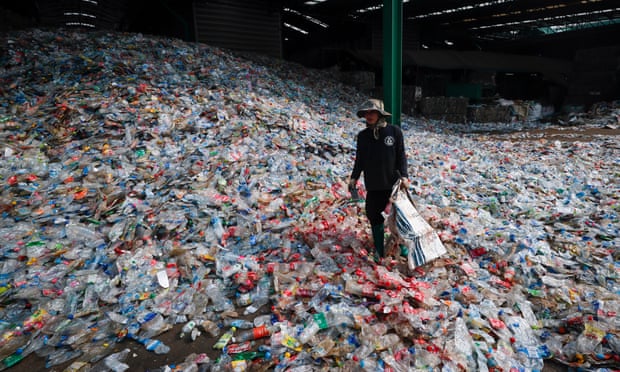
A mound of plastic bottles at a recycling plant near Bangkok in Thailand. Around 300 million tonnes of plastic is made every year and most of it is not recycled. Photograph: Diego Azubel/EPA

We’re always happy to give credit when due. While beer isn’t the first beverage that comes to mind when thinking about the scourge of plastics in the world, bottled soda and water certainly are. So it’s heartening to hear that a company like Coca-Cola, which has contributed to the proliferation of the world’s plastic problem, is backing a bioplastic project that could help to control it.

What To Do With Expired Trees

USDA_USFS_Sierras_web

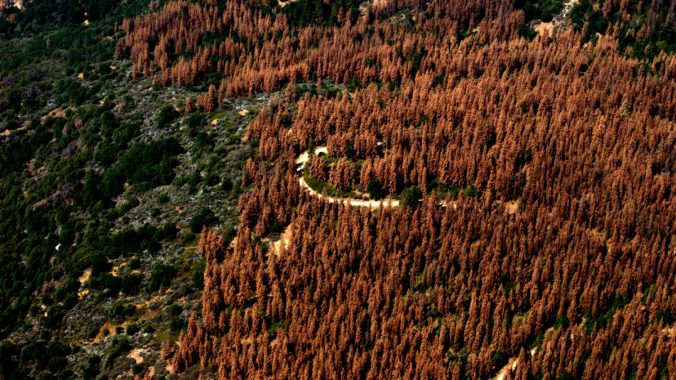
Dead trees in a California forest in August 2016. U.S. FOREST SERVICE

It sounds like the inverse of rewilding’s restorative approach, when there is a large patch of expired trees; decisions must be made. Thanks to Jane Braxton Little for laying out the questions:

In California, A Push Grows to Turn Dead Trees into Biomass Energy

As forests in California and the Western U.S. are hit by rising numbers of fires and disease outbreaks related to climate change, some experts argue that using dead and diseased trees to produce biomass energy will help to restore forests and reduce CO2 emissions.

Jonathan Kusel owns three pickups and a 45-foot truck for hauling woodchip bins. He operates a woodchip yard and a 35-kilowatt biomass plant that burns dead trees, and he runs a crew marking trees for loggers working in national forests. Those are a lot of blue-collar credentials for a University of California, Berkeley PhD sociologist known for his documentation of how the decline of the timber industry affects rural communities. Continue reading

Restorative Stories Are Welcome Here

2000 (4)

Tamara and Steve Davey’s woodland, on the fringes of Dartmoor national park. Photograph: Courtesy of Woodland Wildlife

Thanks to the Guardian for this story about the contentments of ecosystem restoration:

‘It’s good for the soul’: the mini rewilders restoring UK woodland

By buying and managing small wooded plots, enthusiasts are bringing biodiversity back to the countryside

1086

Woodland owners Steve and Tamara Davey. Photograph: Patrick Greenfield/The Guardian

Tamara and Steve Davey cannot help but grin at the suggestion they are “miniature rewilders”. Standing proudly in the weak sunlight on the fringes of Dartmoor national park, the full-time grandmother and taxi company owner delight in their eight-acre woodland.

Robins, tits and siskins chortle in the trees. Nightjars are welcome visitors in the summer. Seven bat species have been recorded in their small plot. There’s a badger’s sett somewhere in the hillside scrub. And the couple feel at peace.

995

 The Daveys, like many woodland owners, are replacing fast-growing conifer trees with diverse native species to support wildlife. Photograph: Courtesy of Woodland Wildlife

“It’s good for the soul,” says Tamara, speaking before the coronavirus lockdown. “It’s one of the best things we’ve ever done,” Steve agrees. “If we can make a difference and help what’s here, I’ll be happy.” Continue reading

Tech for Trees

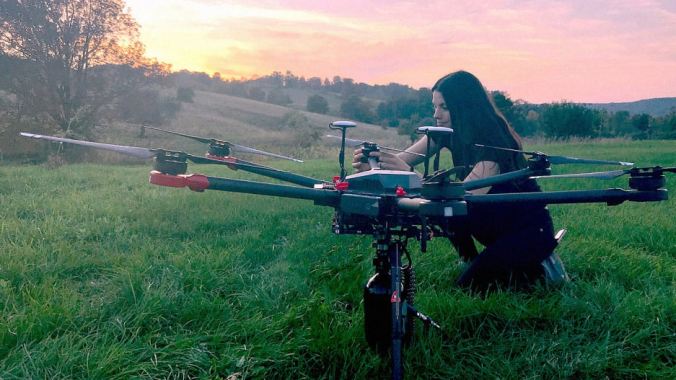
[Photo: courtesy Flash Forest] One of Flash Forest’s prototype drones

And speaking of trees, here’s an example of small tech stepping in when political leadership wavers. The good news is there is ample room for both, and we hope that both systems receive the support they need.

Here’s to a billion trees!

These drones will plant 40,000 trees in a month. By 2028, they’ll have planted 1 billion

We need to massively reforest the planet, in a very short period of time. Flash Forest’s drones can plant trees a lot faster than humans.

This week, on land north of Toronto that previously burned in a wildfire, drones are hovering over fields and firing seed pods into the ground, planting native pine and spruce trees to help restore habitat for birds. Flash Forest, the Canadian startup behind the project, plans to use its technology to plant 40,000 trees in the area this month. By the end of the year, as it expands to other regions, it will plant hundreds of thousands of trees. By 2028, the startup aims to have planted a full 1 billion trees.

[Photo: courtesy Flash Forest]

The company, like a handful of other startups that are also using tree-planting drones, believes that technology can help the world reach ambitious goals to restore forests to stem biodiversity loss and fight climate change. The Intergovernmental Panel on Climate Change says that it’s necessary to plant 1 billion hectares of trees—a forest roughly the size of the entire United States—to limit global warming to 1.5 degrees Celsius. Existing forests need to be protected while new trees are planted; right now, that isn’t working well. “There are a lot of different attempts to tackle reforestation,” says Flash Forest cofounder and chief strategy officer Angelique Ahlstrom. “But despite all of them, they’re still failing, with a net loss of 7 billion trees every year.”

Drones don’t address deforestation, which is arguably an even more critical issue than planting trees, since older trees can store much more carbon. But to restore forests that have already been lost, the drones can work more quickly and cheaply than humans planting with shovels. Flash Forest’s tech can currently plant 10,000 to 20,000 seed pods a day; as the technology advances, a pair of pilots will be able to plant 100,000 trees in a day (by hand, someone might typically be able to plant around 1,500 trees in a day, Ahlstrom says.) The company aims to bring the cost down to 50 cents per tree, or around a fourth of the cost of some other tree restoration efforts.

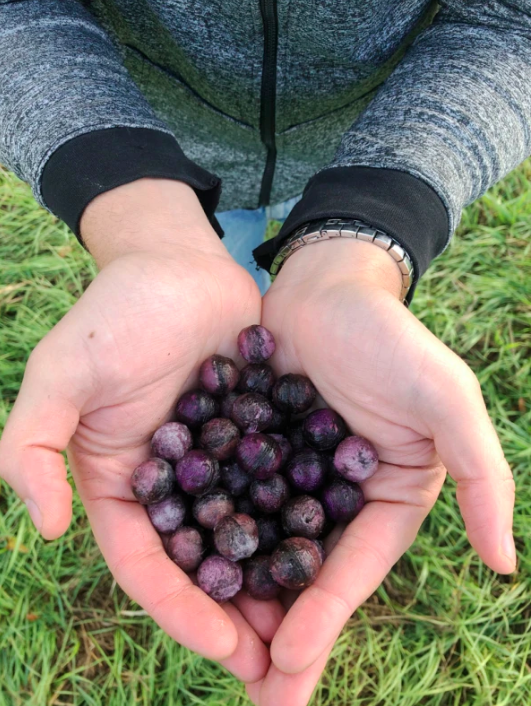
When it begins work at a site, the startup first sends mapping drones to survey the area, using software to identify the best places to plant based on the soil and existing plants. Next, a swarm of drones begins precisely dropping seed pods, packed in a proprietary mix that the company says encourages the seeds to germinate weeks before they otherwise would have. The seed pods are also designed to store moisture, so the seedlings can survive even with months of drought. In some areas, such as hilly terrain or in mangrove forests, the drones use a pneumatic firing device that shoots seed pods deeper into the soil. “It allows you to get into trickier areas that human planters can’t,” Ahlstrom says. Continue reading

Planting Trees, A Two-For-One Deal

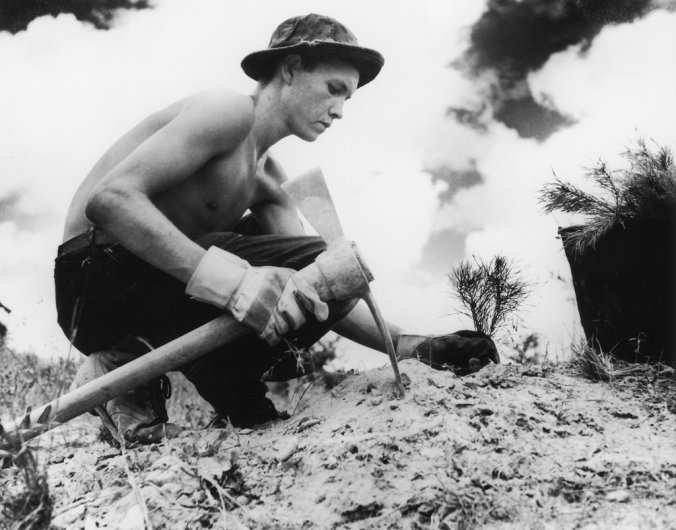
A Civilian Conservation Corps enrollee planting a tree circa 1938. Fotosearch/Getty Images

Thanks to Collin O’Mararough, president and C.E.O. of the National Wildlife Federation, for his idea about how to employ some of the unemployed. Deploy them. Planting trees is not sufficient to solve the looming crisis of climate change, but it is a start:

7.7 Million Young People Are Unemployed. We Need a New ‘Tree Army.’

The Depression-era Civilian Conservation Corps helped build America at a time of national crisis. Let’s do it again.

Nearly 7.7 million American workers younger than 30 are now unemployed and three million dropped out of the labor force in the past month. Combined that’s nearly one in three young workers, by far the highest rate since the country started tracking unemployment by age in 1948.

Nearly 40 percent worked in the devastated retail and food service sectors. And as the most recently hired, young workers are typically the first let go and often the last rehired, especially those of color.

As our country’s leaders consider a range of solutions to address this crisis, there’s one fix that will put millions of young Americans directly to work: a 21st-century version of the Civilian Conservation Corps.

In 1933, when President Franklin Roosevelt created the C.C.C., he was facing, as we are today, the possibility of a lost generation of young people. The conservation-minded president’s idea was to hire young unemployed men for projects in forestry, soil conservation and recreation. By 1942, the 3.4 million participants in “Roosevelt’s Tree Army” had planted more than three billion trees, built hundreds of parks and wildlife refuges and completed thousands of miles of trails and roads.

Continue reading

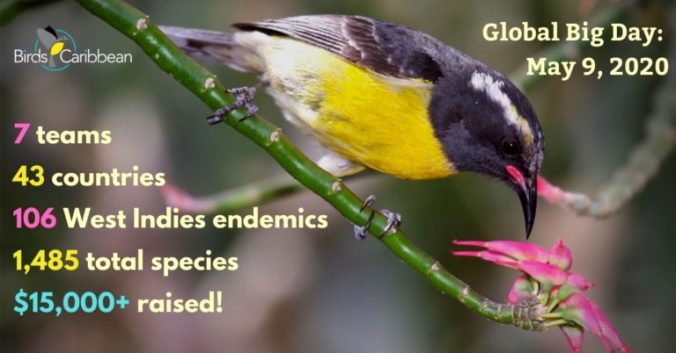
Birds Caribbean Global Big Day Results

Happy to see the results and first post from Birds Caribbean about the various teams’ contributions to the 2020 Global Big Day. Looking forward to reading the highlights of all the teams.

BirdsCaribbean Takes Global Big Day by Storm, Despite COVID-19

The biggest birding day of the year — Global Big Day —took place on Saturday May 9, 2020. More than 50,000 people from around the world joined in to record their sightings. Close to 300 participants from throughout the West Indies recorded 345 different species of birds! Cuba had the most species by country (135) followed closely by the Bahamas (126) and Puerto Rico (125). Regionally1,051 checklists were submitted, 205 more than last year. That’s an incredible achievement — way to go birders!

Birders from Cuba looking great with their BirdsCaribbean buffs in Zapata Swamp on Global Big Day. We will share more about the birding experiences on the different teams in a second blog post

This year was quite a different experience as much of the world remains under stay at home orders or is following social distancing guidelines. Certainly many of the great open spaces that are go-to spots for birders were not open to the public for safety reasons. Nevertheless, eBird recorded a 32% participation increase from Global Big Day 2019 and more than 120,000 eBird checklists were submitted.   Continue reading

Word Matters: Words Matter

Alt-MurderHornets-1

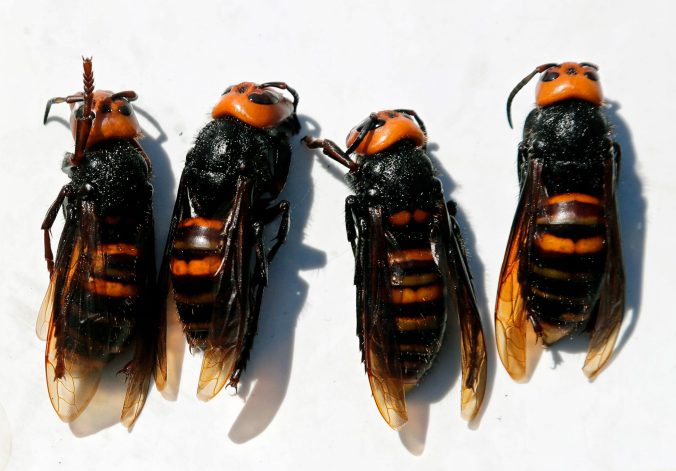
We don’t speak of bears or tigers murdering people. Why, suddenly, hornets? Photograph by Elaine Thompson / Pool / AFP / Getty

When we first linked to a story about this creature, we were sharing a familiar story of introduced and invasive species and a creative approach to controlling the spread. We have favored entrepreneurial approaches, so that culinary story from Japan fit perfectly in our pages. But we also have been equally attentive to word matters since we started on this platform. So Matthew Alt’s coverage of this story, demonstrating how much words matter, also fits perfectly in our pages:

Do “Murder Hornets” Really Exist?

The answer hinges on a peculiarity of the Japanese language.

In the Old Testament, God wrought ten plagues upon humanity. In modern times, we have our hands full with just one: covid-19. Or so we thought, until it was reported, in the May 2nd edition of the Times, that a new pestilence is afoot. “Murder hornets” with “mandibles shaped like spiked shark fins,” we were told, were descending upon North America from their native habitat of Asia. Within twenty-four hours, the hashtag #murderhornets was trending on Twitter, fuelled by all the excitement befitting what sounds like a newly discovered species of homicidal Pokémon. Sensing a rare non-virus viral story, major media outlets ranging from the Washington Post to Fox News pounced. They began amplifying the insect threat with their own details, many of them simply rephrased from the original piece; by the middle of last week, Jimmy Fallon was interviewing a “murder hornet” in costume on “The Tonight Show.” (“Look, we’re just regular old bees who happen to make things fall asleep forever.”)

This is a familiar story of how trending topics drive the modern news cycle, but it’s also a testament to the power of a catchy label. Continue reading

Images From The Natural World

original (1)

Yi Liu / BigPicture Natural World Photography Competition

Thanks to The Atlantic for sharing these images from bioGraphic, the official media sponsor for the California Academy of Sciences’ BigPicture Natural World Photography Competition:

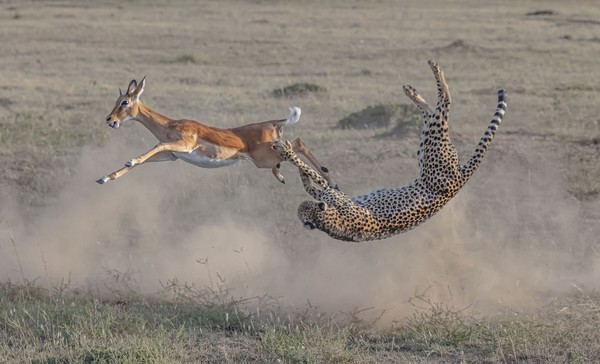
1.  Speed and strategy: Terrestrial Wildlife Winner. Catching prey is no easy feat for cheetahs (Acinonyx jubatus), although they’re the fastest land animals in the world. The mostly treeless terrain of the African savanna gives antelopes, impalas, and other ungulates ample time to spot approaching predators, and even a slight head start can be the difference between life and death. To avoid alerting their prey, cheetahs start out hunting low to the ground, where their spotted coat helps them blend into the terrain. When they get within 60 meters (200 feet) of their target, cheetahs accelerate at a blistering pace, reaching 95 kilometers (60 miles) per hour in a matter of seconds. But the feline predators still have to account for the speed of their prey—in this case an impala (Aepyceros melampus), which can zigzag at upwards of 80 kilometers (50 miles) per hour. To close the gap, this cheetah tripped its quarry as it attempted to escape, proving that sometimes, strategy is just as important as speed. 

original (2)

Andy Parkinson / BigPicture Natural World Photography Competition

2.  Shelter in place: Grand Prize Winner. To get this intimate shot of a mountain hare (Lepus timidus) curled up against a Scottish winter storm, Andy Parkinson endured weeks of ferocious cold and wind that drove shards of ice into his face. Continue reading

Fungus Among Us

200518_r36470

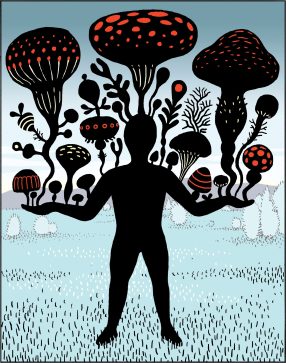
A seemingly brainless organism, the fungus is a model of coöperative resilience. Illustration by Anders Nilsen

It is reassuring to wake up on a Monday morning and read an essay like the one below. Books are still being published. Check. Fungi are still worthy of book-length attention. Check. Book reviews continue. Check. Kind of like yesterday it was a pleasure to know that bioluminescence continues its mysterious ways, and people are still finding ways to be amused by that. The number of articles we have posted here since 2011 about fungi is many times more than about bioluminescence, and our readers demonstrate a greater interest in this subject as well. A book as valuable as this one sounds like from the review should not suffer from an untimely publication date.

avid_fivepoints_0

One of the minor accompanying pleasures following the reading of this essay is a quick investigation that shows there is a bookshop in the Five Points neighborhood of Atlanta, GA and its counterpart in Athens, GA where you can order the book. Our view is that when you can support an independent bookshop you should, for so many reasons. Thanks to Avid for being there, and to Hua Hsu for this:
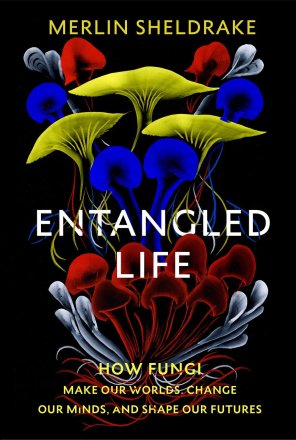
The Secret Lives of Fungi

They shape the world—and offer lessons for how to live in it.

248534In 1957, a man from New York named R. Gordon Wasson published an article in Life about two trips he had taken, three decades apart. The first was to the Catskills, in New York, where his wife, Valentina, took a rambling walk in the woods and became enamored of some wild mushrooms. “She caressed the toadstools,” Wasson recalled, “savored their earthy perfume.” She brought them home to cook, and soon he, too, was enchanted. They spent the next thirty years studying and cataloguing various species, searching out literary and artistic works about mushrooms.

According to Wasson, the world is divided into mycophiles and mycophobes. Reverence might take a variety of forms—think of Eastern Europe or Russia, where foraging is a pastime. There’s a famous scene in “Anna Karenina,” in which a budding romance withers during a mushroom hunt. Wasson was particularly interested in societies that venerated the fungus for spiritual reasons. In Mexico, wild mushrooms were thought to possess “a supernatural aura.” Continue reading

Surfing On Light

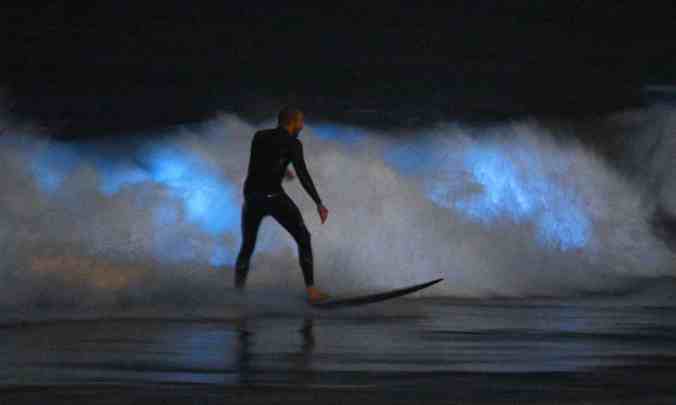
Starting in 2012, bioluminescence has been on our radar, and the phenomenon never fails to impress. We appreciate  the potential utility, and will continue linking to the science. But for now, consider California, hard hit by so many other unwelcome phenomena, and how it deserves a bit of light fun now:

3600 (1)

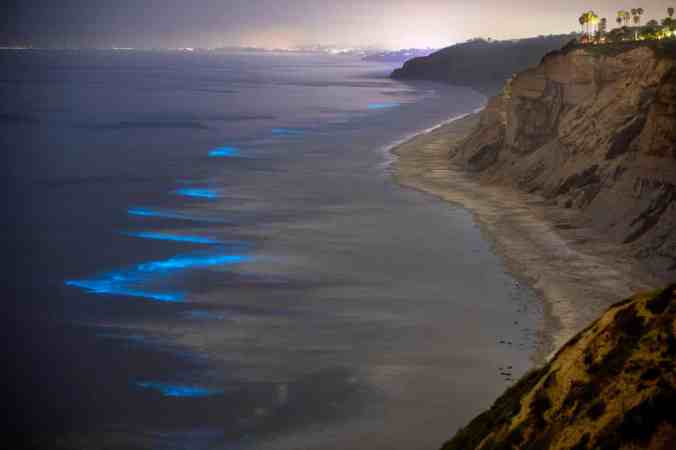
Blue waves, illuminated by the light of bioluminescent organisms, crash along the coast of Blacks Beach in the community of La Jolla. Photograph: KC Alfred/ZUMA Wire/REX/Shutterstock

Bioluminescent waves dazzle surfers in California: ‘Never seen anything like it’

Crowds are coming to see the light show as beaches begin to reopen after an almost month-long closure due to coronavirus

3233

A surfer rides a wave as bioluminescent plankton lights up the surf around him, in Newport Beach, California. Photograph: Mark J Terrill/AP

Mother nature has provided a radical gift to nighttime beach-goers in southern California, in the form of bioluminescent waves that crash and froth with an otherworldly light.

The event occurs every few years along the coast of southern California, though locals say this year’s sea sparkle is especially vibrant, possibly related to historic rains that soaked the region and generated algal bloom. Continue reading

If You Happen To Be On Line

There are themes we’ve returned to frequently since the beginning of this site, in the different ways we’ve posted about collective action conservation or cultural events. The titles of those posts began with the words, “If You Happen to be in…” – followed by the location of our conservation public service announcement.

The internet has obviously played an enormous role in people’s lives for decades now, but even more so in the time of Covid-19, when so many of life’s gatherings, from education to business meetings and conferences, has shifted to the virtual realm.

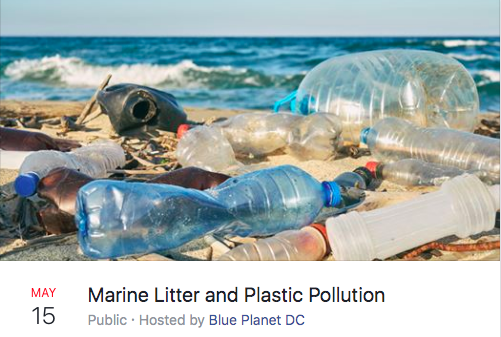
So, here’s a PSA for the Oceans. Hosted by Blue Planet, DC, with guest speaker Phil Karp (a frequent contributor to this site on themes of citizen science and marine conservation) this virtual seminar will discuss both the serious problem of marine pollution, but also some emerging solutions.

If you have an hour to spare on May 15th, join the conversation!

Details

Did you know that between 8 million and 13.5 million metric tons of plastic enter the ocean every year, equivalent to a garbage truck full of plastic EVERY MINUTE?!

Plastic entering the ocean can cause harm to marine organisms and ecosystems, coastal economies and human health. This virtual seminar by guest speaker Phil Karp will examine the magnitude and dynamics of marine litter and ocean plastic along with emerging solutions. In addition, it will discuss what governments and consumers can do to address the problem.Phil Karp recently retired from the World Bank where he was Lead Knowledge Management Specialist in the Urban Development Global Practice. He is longtime diver, citizen scientist and ocean advocate focusing on the interface between marine ecosystem conservation and livelihoods of coastal communities.

Sign up today! Join below on May 15.
https://us02web.zoom.us/j/89825590123


Crunch, Buzz, Twist & Shout

merlin_172190433_b4c20a45-587a-43e7-b808-0dd5d710645f-jumbo

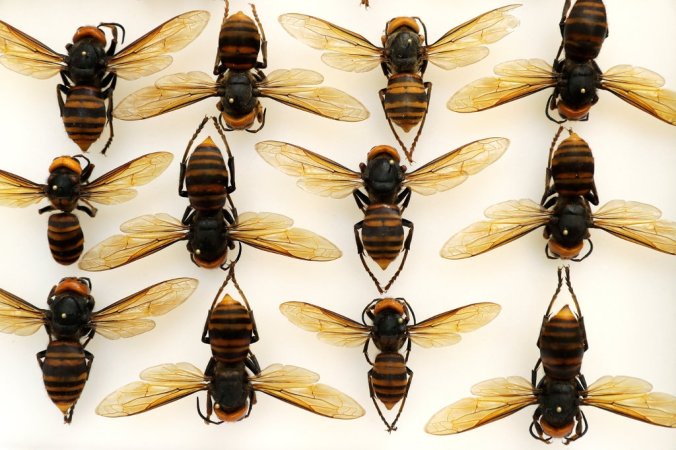
Asian giant hornets from Japan in a display case at the Washington State Department of Agriculture. Ted S. Warren/Associated Press

For every invasion there is an appropriate response, and sometimes it is culinary. Thanks to Ben Dooley for this set of ideas:

In Japan, the ‘Murder Hornet’ Is Both a Lethal Threat and a Tasty Treat

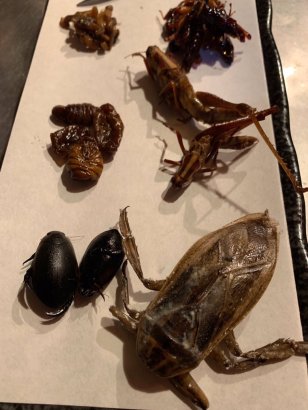
Long before the insects found their way to American shores, some Japanese prized them for their numbing crunch and the venomous buzz they add to liquor.

D-Tp6RhUwAAGMYtTOKYO — Long before the Asian giant hornet began terrorizing the honeybees of Washington State, the ferocious insects posed a sometimes lethal threat to hikers and farmers in the mountains of rural Japan.

But in the central Chubu region, these insects — sometimes called “murder hornets” — are known for more than their aggression and excruciating sting. They are seen as a pleasant snack and an invigorating ingredient in drinks.

The giant hornet, along with other varieties of wasps, has traditionally been considered a delicacy in this rugged part of the country. The grubs are often preserved in jars, pan-fried or steamed with rice to make a savory dish called hebo-gohan. The adults, which can be two inches long, are fried on skewers, stinger and all, until the carapace becomes light and crunchy. They leave a warming, tingling sensation when eaten. Continue reading

Actions Speak Louder With Words

4256bc

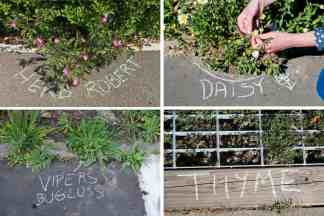
Sophie Leguil, founder of More Than Weeds, stands over chalk names of plants on the pavement.
Photograph: Jill Mead/The Guardian

Thanks to Alex Morss for this story in the Guardian about actions in the interest of botanical awareness:

‘Not just weeds’: how rebel botanists are using graffiti to name forgotten flora

Pavement chalking to draw attention to wild flowers and plants in urban areas has gone viral across Europe – but UK chalkers could face legal action

A rising international force of rebel botanists armed with chalk has taken up street graffiti to highlight the names and importance of the diverse but downtrodden flora growing in the cracks of paths and walls in towns and cities across Europe.

4592

Boris Presseq and fellow botanists write chalk plant names on the pavement in Toulouse, France. Photograph: Claire Van Beek/Handout

The idea of naming wild plants wherever they go – which began in France – has gone viral, with people chalking and sharing their images on social media. More than 127,000 people have liked a photo of chalked-up tree names in a London suburb, while a video of botanist Boris Presseq of Toulouse Museum of Natural History chalking up names to highlight street flowers in the French city has had 7m views.

4040

Chalkers say their work encourages connection with the natural world around us. Photograph: Jill Mead/The Guardian and Handout

Presseq told the Guardian: “I wanted to raise awareness of the presence, knowledge and respect of these wild plants on sidewalks. People who had never taken the time to observe these plants now tell me their view has changed. Schools have contacted me since to work with students on nature in the city.” Continue reading