To Helen, Just Two Words

Rosner-Yuzu

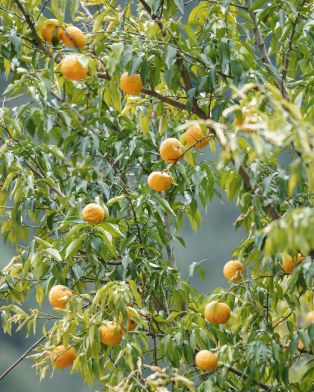
Among New York chefs, there is, reportedly, a thriving black market in fresh yuzu smuggled from Japan.Photograph from World Discovery / Alamy

Thank you:

NOTHING COMPARES TO YUZU

I suffer terribly from what you might call a paralysis of wonder. When I become the custodian of something truly marvellous, notably beautiful, or a little bit rare, I worry so much about using it for a sufficiently special purpose that, more often than not, I fail ever to use it at all. My kitchen, in particular, is a graveyard of reverent neglect: a golden bottle of sunflower oil, pressed by monks in an ancient Georgian monastery, long past rancid; a little jar of barbecue sauce folded into my palms years ago by a grizzled pitmaster in Tennessee; a desiccated hunk of white truffle tucked in molding white rice; bags of international potato chips hanging on far beyond their sell-by dates. Continue reading
Leadership, Prepping For Change

IMG_3276_Swinomish_clam-garden_web

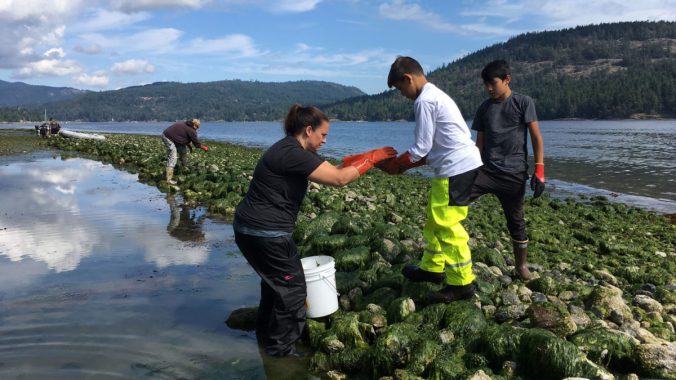
Swinomish tribal members from Washington state participate in a clam garden restoration in British Columbia. PHOTO COURTESY OF SWINOMISH INDIAN TRIBAL COMMUNITY

Thanks to Nicola Jones for this:

How Native Tribes Are Taking the Lead on Planning for Climate Change

With their deep ties to the land and reliance on fishing, hunting, and gathering, indigenous tribes are especially vulnerable to the impacts of climate change. Now, native communities across North America are stepping up to adopt climate action plans to protect their way of life.

GettyImages-1175044784_whiteback-montana_web

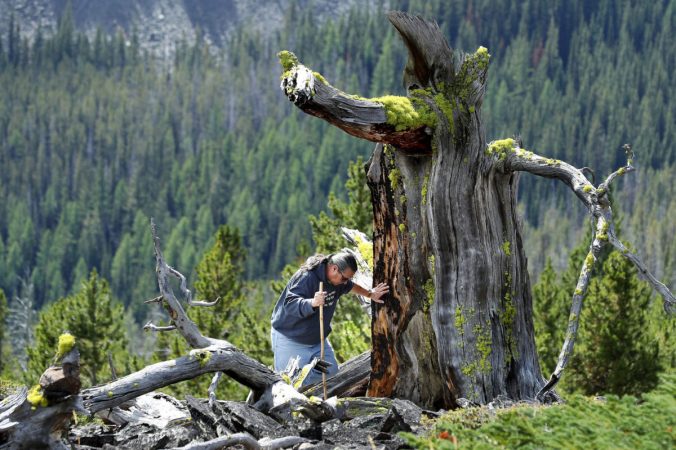
Tribal program manager Mike Durglo Jr. examines what remains of a 2,000-year-old whitebark pine on the Flathead Indian Reservation in Montana, where trees are dying from warming-related diseases. CHIP SOMODEVILLA/GETTY IMAGES

On a hot summer’s day, marine ecologist Courtney Greiner walks the shore of a rocky Washington beach at low tide with a handful of staff and interns. They stake out the ground and hunch down, digging up the top two inches of mud, silt, and gravel looking for baby clams.

For thousands of years, the indigenous peoples of the West Coast would build rock walls at the low tide line, allowing sand to pile up behind them, making the slope of the beach gentler, and expanding the area of the intertidal zone that clams like to call home. These simple clam gardens are effective at boosting shellfish numbers, and have long been used to improve food security for traditional peoples. Continue reading
Changing Tides

SIERRA-body-WB_2Thanks to Sierra for publishing In Pursuit of an Ecological Resilience in the Anthropocene, an excerpt from Alejandro Frid’s “Changing Tides”:

The birth of my daughter, in 2004, thrust upon me a dual task: to be scientifically realistic about all the difficult changes that are here to stay, while staying humanly optimistic about the better things that we still have.

By the time my daughter turned eleven, I had jettisoned my nos­talgia for the Earth I was born into in the mid-196os—a planet that, of course, was an ecological shadow of Earth 100 years before, which in turn was an ecological shadow of an earlier Earth. Continue reading

McKibben’s Latest Venture

McKibben-ClimateNewsletter1

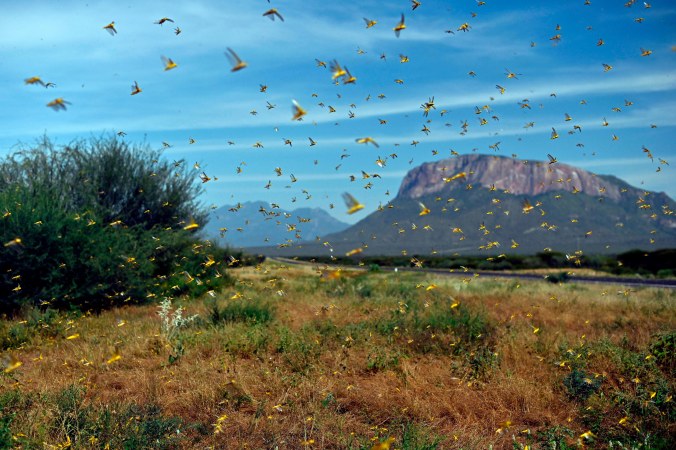
A swarm of locusts north of Nairobi, Kenya, in January. The U.N. described an outbreak of desert locusts as a threat to food security. Photograph by Tony Karumba / AFP / Getty

We need more information, better quality information, and the most relevant information on climate issues. A newsletter, maybe? Bill McKibben is on it:

WELCOME TO THE CLIMATE CRISIS NEWSLETTER

We’re eight weeks into the new decade, and, so far, we’ve had the warmest January ever recorded. (Indeed, researchers at the National Oceanic and Atmospheric Administration said that 2020 is more than ninety-eight per cent likely to be one of the five warmest years ever measured, with a nearly forty-nine-per-cent chance to set a new annual record.) We’ve seen the highest temperature ever measured on the Antarctic continent, and also record swarms of locusts descending on the Horn of Africa, a plague which scientists assure us will “become more frequent and severe under climate change.”

I’m calling this new newsletter—and welcome aboard—The Climate Crisis because this is what a crisis looks like. Continue reading

Forest Alchemy

00SCI-METALFARM1-jumbo

Antony van der Ent

Thanks to Ian Morse for the most surprising twist on the mythological possibilities of the philosopher’s stone:

Down on the Farm That Harvests Metal From Plants

Hyper-accumulating plants thrive in metallic soil that kills other vegetation, and botanists are testing the potential of phytomining.

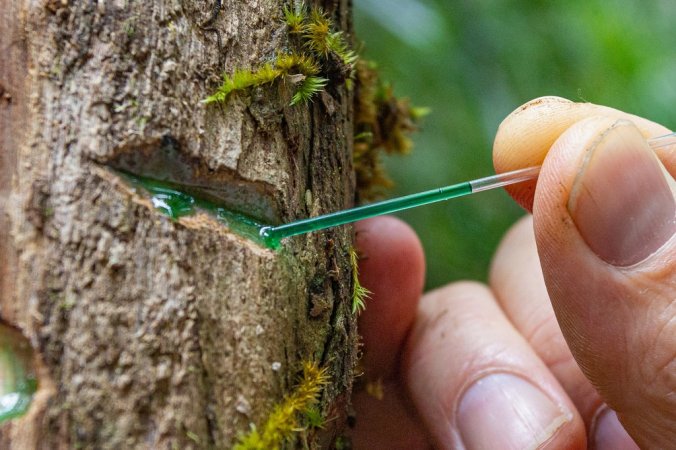
Some of Earth’s plants have fallen in love with metal. With roots that act practically like magnets, these organisms — about 700 are known — flourish in metal-rich soils that make hundreds of thousands of other plant species flee or die.

Slicing open one of these trees or running the leaves of its bush cousin through a peanut press produces a sap that oozes a neon blue-green. This “juice” is actually one-quarter nickel, far more concentrated than the ore feeding the world’s nickel smelters. Continue reading

Eyes On Prize, Do Not Get Numbed

GettyImages-1091137346_elephants_web

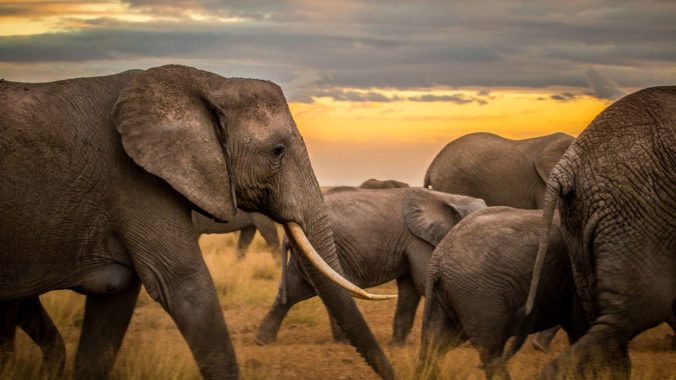
An elephant herd in Kenya. PIETER RAS / 500PX / GETTY IMAGES

Thanks to Yale e360 for the reminder that, as trouble rumbles, there is more need than ever for keeping our eyes on the prize:

Psychic Numbing: Keeping Hope Alive in a World of Extinctions

The litany of lost species can be overwhelming, leading to what has been called “psychic numbing.” But as the recovery of species from bald eagles to humpback whales shows, our actions do matter in saving species and the aliveness and beauty they bring to the world. Continue reading

Pipeline, Refuge & Court

24Harlen1-mobileMasterAt3x

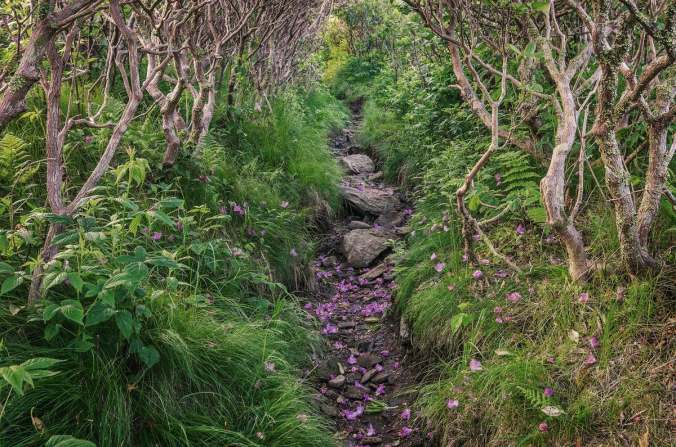
Rhododendron petals line the Appalachian Trail at Roan Mountain State Park in Tennessee. Aheflin/iStock, via Getty Images Plus

Thanks to Will Harlan, a journalist, for this opinion:

Will the Appalachian Trail Stop an $8 Billion Pipeline?

It’s up to the U.S. Supreme Court.

BIG IVY, N.C. — I live in Appalachia, and on Sunday mornings I hike the Appalachian Trail across the mountains I call home. It is my church. I drink from its springs and rest in the shade of its ancient forests.

For decades, the trail has been my refuge. I have run for miles through tunnels of rhododendron, crossed paths with bears and camped with my children beneath starry skies.

A few years ago, however, the 600-mile Atlantic Coast Pipeline broke ground, and crews began clear-cutting a scar across the mountains to move fracked natural gas from West Virginia to customers in Virginia and North Carolina. On my trail treks in Virginia, I watched the bulldozers creep closer.

Then suddenly, on a crisp fall morning in 2018, the bulldozers stopped. The U.S. Court of Appeals for the Fourth Circuit vacated a permit allowing the pipeline to cross the trail deep beneath the ground. Continue reading

Getting a Bigger Bang Out of Plastic

Plastic has been on our radar for years, both as an environmental scourge and a raw material for the rising recycle and “upcycle” economy.  Finding these creative uses for an ubiquitous waste material around the world has been inspiring, to say the least.

We hadn’t been familiar with the Precious Plastic model until we met the wonderful women from the Wagát Upcycling Lab. We applaud the community ethos of open source plans to address a global crisis.

Big Bang, Indeed!

Functioning Ecosystems Are Key To Our Future

200217_r35849

“How do we feed the nine billion?” Fiennes said. “Through functioning ecosystems.” Photograph by Siân Davey for The New Yorker

The title of this post, paraphrasing the subject of the profile below, states the obvious. Sometimes, that must be. Thank you, Sam Knight:

CAN FARMING MAKE SPACE FOR NATURE?

After Brexit, the obsessions of Jake Fiennes could change how Britain uses its land.

One day last summer, Jake Fiennes was lost in a cloud of butterflies. He was on a woodland path near Holkham Beach, on the north coast of Norfolk. Every decade or so, ten million painted-lady butterflies, which are orange, black, and white, migrate to Britain from tropical Africa. The hot summer meant that it was a bumper year for native species, too, and the painted ladies mingled with red admirals, peacocks, and common blues, feeding on bushes set back a few yards from the path. “Just sat in a haze of flittering, fluttering butterflies,” Fiennes told me later. “I was in awe. These flowers were just exploding.” Continue reading

Heroics & Urban Birds

merlin_164360619_2da35a31-32a0-4feb-abd7-e39d5814a61a-jumbo

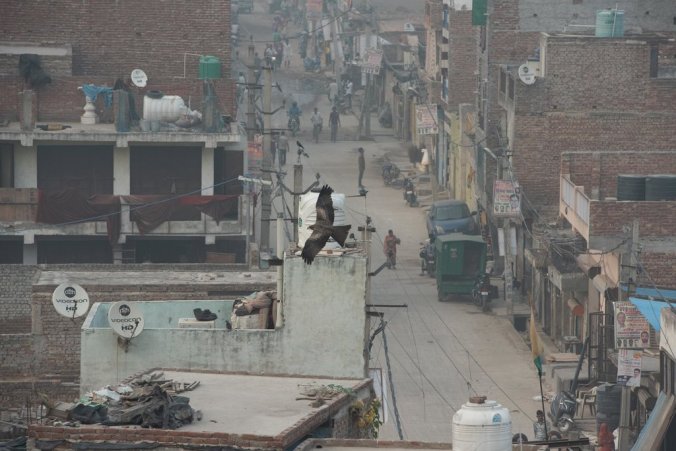
A black kite, a carnivorous scavenger, flying over the Ghazipur area of New Delhi. Black kites are a common sight in the city, but are often fatally injured by the flying of paper kites.

We will take heroics wherever we can find them:

Meet the Bird Medics of New Delhi

Two brothers have given everything to treat raptors injured by a popular pastime.

By Photographs by 

merlin_164360646_bb191806-dbe3-4050-9b03-f26985745f92-jumbo

Kite-flying became a symbol of national pride after India gained independence from Britain in 1947.

NEW DELHI — Sitting in his basement, below the crowded dirt roads of Wazirabad village, Mohammad Saud leaned over the body of an injured black kite.

The room was cramped, its walls chipping blue paint, the noise from the streets above drowned out by the whir of a fan. Mr. Saud stared at the bird in front of him for a couple of seconds, then gently folded its wing over with a gloved hand. At least two bones, four tendons and two muscles had been snapped. The bird’s head tilted back limply, eyes cloudy. Mr. Saud adjusted his glasses with the crook of his elbow, then stated the obvious: “This is a gone case. Nothing can be done.”

Mr. Saud placed the kite back into a thin cardboard box. As he did so, Salik Rehman, a young employee of Mr. Saud, reached into a different cardboard box and pulled out another black kite. This bird’s right wing was wrapped in a gauze bandage stained with dried blood and pus. Mr. Saud examined it briefly. Another gone case, he concluded; it would have to be euthanized. Continue reading

Please Let Your Dandelions Bolt

2142

Each dandelion head has up to 100 individual flowers. Photograph: Janek Skarzynski/AFP/Getty Images

So many challenges, so many unanswered questions about why bee colonies are collapsing. In the realm of how to help, the UK has a new notion:

Help bees by not mowing dandelions, gardeners told

Plants provide key food source for pollinators as they come out of hibernation

Gardeners should avoid mowing over dandelions on their lawn if they want to help bees, according to the new president of the British Ecological Society.

Dandelions – which will start flowering in the UK this month – provide a valuable food source for early pollinators coming out of hibernation, including solitary bees, honey bees and hoverflies.

Each dandelion head contains up to 100 individual flowers, known as florets, which contain nectar and pollen. There are 240 species of dandelion in the UK. Continue reading

Invasive Python Hunting Season

3000 (8)

A Florida Wildlife Commission employee captures a Burmese python during the kickoff event for the Florida Python Challenge in Sunrise, Florida, on 10 January. Photograph: Joe Cavaretta/AP

We first started paying attention to invasive species here. Since then, every year, we pay more and more attention, especially to the pythons in the Everglades. It is that time of year:

Florida hunters capture more than 80 giant snakes in Python Bowl

Annual challenge encourages the public to catch as many of the invasive giant snakes that decimate native wildlife as possible

Most visitors to the mosquito-infested swamps of the Florida Everglades are happy to leave again quickly: a half-hour airboat ride and photograph of a basking alligator is usually enough to satisfy the curiosity of any tourist keen to return to the theme parks and beaches – or sports events – of the sunshine state’s more traditional attractions. Continue reading

Citizen Science & Northern Lights

We believe citizen science, in all its forms, is one of the latest greatest innovations of mankind, and here is one more example:

A New Form Of Northern Lights Discovered In Finland – By Amateur Sky Watchers

People in northern climes have long gazed at the wonder that is the aurora borealis: the northern lights.

Those celestial streaks of light and color are often seen on clear nights in Finland, where they’re so admired that a Finnish-language Facebook group dedicated to finding and photographing them has more than 11,000 members.

There aurora aficionados gather to discuss subjects like space weather forecasts and the best equipment to capture the northern lights. Continue reading

Weeds Are Not Automatically Enemies

Dandelion

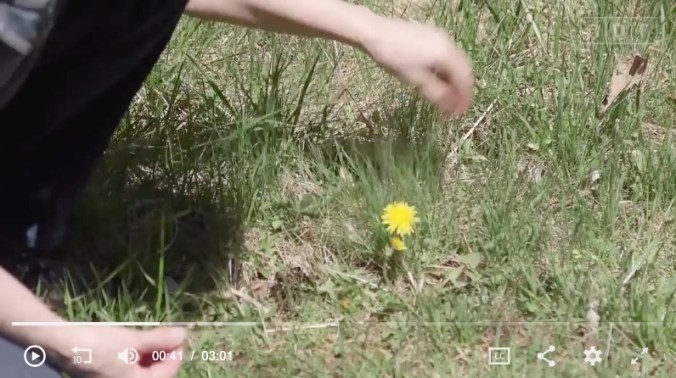
Credit: NPR

We missed this when it was first posted, but on this topic never too late to share:

VIDEO: Dandelions Aren’t Just Weeds. You Can Fry Them, Too

Some may think of dandelions as just unwanted weeds, but expert forager and nutritionist Debbie Naha says “a weed is just a plant growing where you don’t want it to.”

Naha loves to collect and eat dandelions when they bloom in the spring and again in early fall, when the days begin to shorten.

Some may also think of dandelions as those white puffballs whose seeds you can blow away like a candle on a birthday cake. The puffball is also considered a dandelion — it’s what the yellow flower matures into after a few days. But these aren’t especially good to eat. Continue reading

Listen To Workers, Especially On This Topic

3600

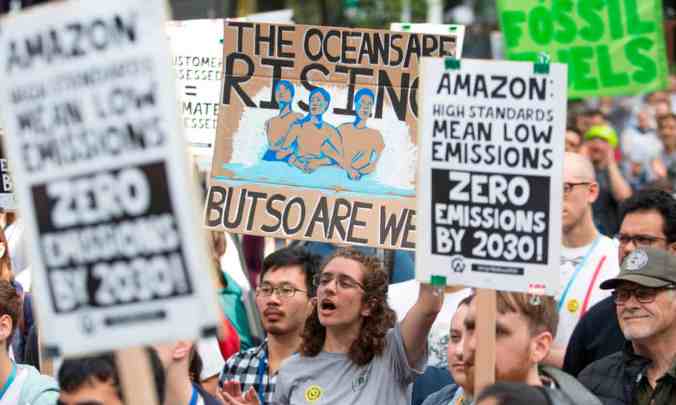
Amazon workers lead a walk out to demand that leaders take action on climate change in September. Photograph: Jason Redmond/AFP via Getty Images

We hope someone in the upper ranks of Amazon is listening:

Hundreds of workers defy Amazon rules to protest company’s climate failures

Employees ‘needed to stand up for what’s right’ despite policy barring workers from speaking about business

Hundreds of Amazon employees defied corporate policy to publicly criticize the company for failing to meet its “moral responsibility” in the climate crisis.

More than 340 tech workers at Amazon used the hashtag #AMZNSpeakOut in public statements that condemn the company for not taking sufficient action on the climate crisis. Continue reading

Albatrosses Tracking Fishing Vessels

merlin_167922471_f481217a-ad3b-4c91-82b0-06bba600e648-jumbo

Albatrosses tracking fishing vessels found that 28 percent of ships had turned off their equipment, possibly fishing without a license or transferring illegal catches onto cargo vessels. Alexandre Corbeau

Thanks to Katherine Kornei, who we are linking to for the first time, for some great science writing:

They’re Stealthy at Sea, but They Can’t Hide From the Albatross

Researchers outfitted 169 seabirds with radar detectors to pinpoint vessels that had turned off their transponders.

merlin_167922456_2ca15e06-a6b7-4573-bcfd-d4a45c100b7d-jumbo

Researchers tagged an adult wandering albatross. Julien Collet

There’s a lot of ocean out there, and boats engaging in illegal fishing or human trafficking have good reason to hide.

But even the stealthiest vessels — the ones that turn off their transponders — aren’t completely invisible: Albatrosses, outfitted with radar detectors, can spot them, new research has shown. And a lot of ships may be trying to disappear. Roughly a third of vessels in the Southern Indian Ocean were not broadcasting their whereabouts, the bird patrol revealed. Continue reading

Biodiverse Forests Are Better For So Many Reasons

Stare me, if you can!!

A tiger in Nagarhole National Park, India. Photo © Chethan Ramesh/TNC Photo Contest 2019

Sometimes the headlines for scientific findings seem to state the obvious; but then again, these days nothing is obvious, nor can be taken for granted:

Biodiverse Forests Capture Carbon Better Than Plantations

Plantations and natural forest regeneration are leading strategies for enhancing carbon sequestration and using nature to fight climate change. New science shows that diverse natural forests with a mix of tree species provide more stable and reliable carbon capture than monoculture plantations in the long run.

The Gist

Published in Environmental Research Letters, the study focused on India’s Western Ghats Mountains, one of 36 global biodiversity hotspots. The mountains are home to several wildlife reserves that were once colonial teak and eucalyptus plantations, allowing researchers to compare the carbon sequestration of both long-lived monoculture plantations and neighboring native forest. Continue reading

Ugly, Not Deadly

t8awet

Photo: Vangelis Aragiannis/Alamy

We do not like looking at them. They disrupt many otherwise pristine views of nature, in the most surprising places. And so the thought of them being dangerous to birds would be an easy stretch of the imagination. Thanks to Audubon for the clarification, that their danger to birds is just an act of imagination:

No, 5G Radio Waves Do Not Kill Birds

Here’s the truth behind a Facebook falsehood spreading across the internet.

On the internet, there is often a fine line between a healthy skepticism of new technologies and blatant misinformation. The recent claim that the radio waves from 5G cellular communication towers are causing mass bird die-offs is a perfect example of just how thin that line can be—and how quickly falsehoods can spread across Facebook, Twitter, YouTube, and even in the comments of Audubon magazine’s stories.

The origin of this claim is as head-spinning as it is instructive, so let’s untangle the knot: Does 5G really kill birds, and if not, why are so many people shouting about it online? Continue reading

Perils of Posing

200127_r35394

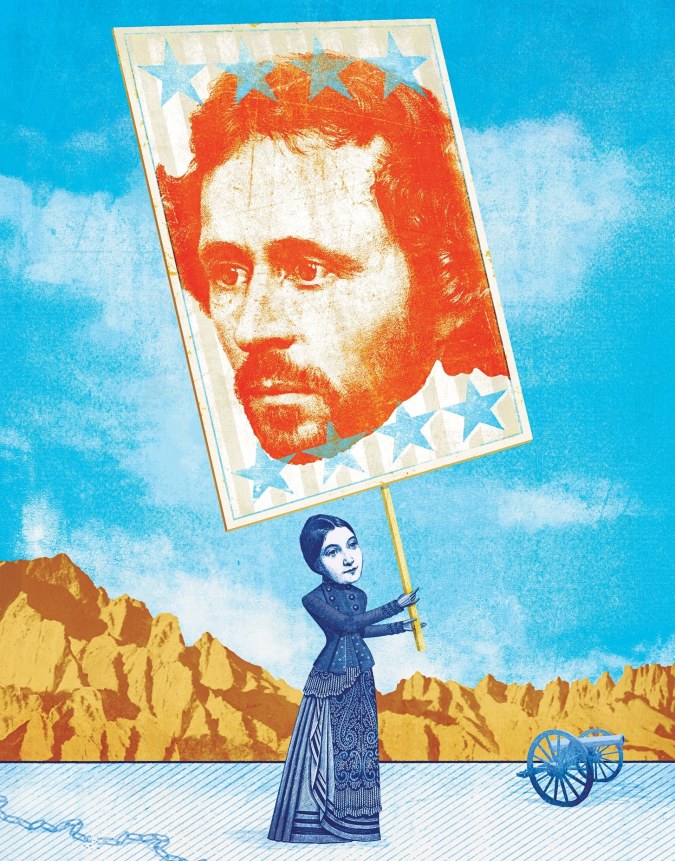
The couple cynically stage-managed their Western exploits for propaganda value.
Illustration by Christian Northeast. Source images from Chronicle / Alamy (woman); Bettmann / Getty (man)

Adam Gopnik’s book review illustrates the roots of today’s Instagram culture, and the perils of posing:

Pioneers of American Publicity

How John and Jessie Frémont explored the frontiers of legend-making.

Legendary development can happen with astonishing speed after a life is past. Gore Vidal, in his 1992 novel, “Live from Golgotha,” made sport of the notion of television coverage of the Crucifixion, as the kind of thing that would happen only in contemporary America, but in truth Jesus’ body was hardly cold, or gone, before the apostle Paul, in a single generation, had made the desert rebbe into a demigod. The special American contribution to legend-making has not been speed so much as absolute simultaneity, with the life and the legend developing together. The American frontier, the Wild West, was not burnished and made epic in memory. It was made epic even as its very brief life was taking place. Buffalo Bill was only twenty-three when dime novels about him began to appear in New York, and early accounts of Billy the Kid’s life read “like a press agent’s yarn,” as one biographer says, because they were. Butch Cassidy and the Sundance Kid were robbing banks and posing for mock formal photographs all at the same time. This national truth remains constant even in our own time. The Apollo missions were genuine acts of daring—and were also, as everyone knew at the time, scripted television programming, with well-wrought lines delivered live. Continue reading