Photo Credit: Stephen Crafts
Isabela Island, Galapagos, Ecuador
Photo Credit: Stephen Crafts
Isabela Island, Galapagos, Ecuador


The Ogelthorpe University Museum of Art is one of the gems of the Atlanta area, for good reason. Not only does the museum have its own well curated collections, it receives visiting collections that are timely and powerful.
Tara Rice‘s Grandmother Project photographic series highlights the historically matriarchal influence within African cultures, coinciding with the project based in Senegal “promoting health, well-being and rights of women and children in developing countries through grandmother-inclusive and intergenerational programs that build on communities’ cultural values and resources.”
The photo series dovetails perfectly with the female centric collection of sculptures and masks in the sister exhibit, Stories Without an End.
Stories Without an End: Power, Beauty and Wisdom of Women in African Art of the Mehta Collection
January 18 – April 21, 2018
The exhibition Stories Without an End: Power, Beauty and Wisdom of Women in African Art of the Mehta Collection includes a selection of 50 classically carved wooden sculptures and masks drawn from the collection of Dileep and Martha Mehta.
The exhibition represents art from more than 25 ethnic groups spanning 12 countries. These objects are gathered into thematic groups including women in governance, maternity, idealized beauty, and female ancestors.
OUMA members Dileep and Martha Mehta are collectors of African and Asian arts. Their African art collection, including objects in this exhibit, has greatly benefited from diligent sourcing by and wise counsel of African Art dealers Tamba Kaba and Sanoussi Kalle.
This exhibition was developed by Elizabeth H. Peterson, OUMA director, and organized by Amanda Hellman, PhD, curator of African art, Michael C. Carlos Museum, Emory University.
Stories Without an End was inspired in part by the work of the Grandmother Project (GMP) an American 501(c)(3) nonprofit organization and a Senegalese NGO with representatives throughout the USA and abroad. GMP, with headquarters in Senegal, works with elders in West African villages to fight the maltreatment of young girls. This includes bettering maternal and child nutrition, reproductive health, and marriage standards. The exhibition title is inspired by the GMP initiative “stories without an ending,” which is a tool used to facilitate communication via the elders. For more about the Grandmother Project please visit www.grandmotherproject.org.
The Grandmother Project: Photographs by Tara Rice
January 18 – April 21, 2019
The Grandmother Project (GMP) develops community approaches that promote positive and sustained improvements in the lives of girls, children, women, and families by building on existing cultural and community values, roles and assets in southern Senegal. Continue reading
 The first reference was in 2017, with a brief reverie on tastes associated with places. Organikos next appeared in early 2019, most recently here. And today just a quick further note to clarify that while chocolate and other taste of place items are in testing to be offered by Organikos, specialty coffee from various regions in Costa Rica is the first product. The simple reason is that coffee is in so many ways the most important product of this country, and set the stage for the country’s many remarkable achievements, including those yet to come. Organikos will focus on specialty coffee because it has a following as strong now as any time in history.

In the new wave of coffee fanaticism, attention to tasting notes and pairings rivals that of the world of wine.
In this short video posted this morning Rachel Lipstein helps define the current intense wave of interest:
Coffee, ambrosia of the capitalist and the creative alike, is many things: a fixture of social ritual, the product of a vast agricultural production steeped in colonialist history, and the most widely used psychoactive drug in the world. Entire economies rest upon its cultivation and its caffeine content…
That is an intense opening statement, and sets the stage for the video’s goal of helping a lay person understand the obsession a bit better:
…Its modern permutations go far beyond cream and sugar: fair-trade designations, additions of alternative milks such as soy or pea-protein, a preparation with butter and oil (for optimized biohacking), or simply with a piece of shortbread dunked in. It has inspired legal and moral crusades and “love is brewing” theme weddings. The latest installment in The New Yorker’s Annals of Obsession video series features a group of specialty-coffee experts and explores the fringes of the fascination…
Coffee is the taste of many places other than Costa Rica, but this is home, so here we go. We have already roasted, packaged and labeled coffee in trial markets, and have made some important adjustments as we prepare to launch formally in a few months. In earlier posts you could see the font we thought was best with which to write the name Organikos. We have decided otherwise for the time being, in part because with the newer design, as the logotype for Organikos evolves, we hope to have a smaller footprint with a message that fits on one side (versus front and back of package labeling).

The archaeologist Guillermo de Anda next to pre-Columbian artifacts in a cave at the Maya ruins of Chichén Itzá. Credit Karla Ortega/Mexico’s National Institute of Anthropology, via Associated Press
This new discovery in Mexico’s Yucatán Peninsula came to our attention just when we’re on an archaeological roll. It definitely gives us pause that there are still such important finds in the world.
In a cave under the ancient city of Chichén Itzá, Mexican archaeologists discovered a trove of ceramic artifacts that appear to be over 1,000 years old.
Archaeologists announced this week that they had discovered an extraordinary trove of well-preserved Maya artifacts under the ancient city of Chichén Itzá in Mexico’s Yucatán Peninsula.
The artifacts were found in a cave called Balamkú, less than two miles from the famed pyramid known as the Temple of Kukulcan, or The Castle, which sits in the center of the site.
Guillermo de Anda, an investigator with the National Institute of Anthropology and History, said in a statement on Monday that the remarkable discovery could help researchers rewrite the history of Chichén Itzá, which flourished from roughly A.D. 750 to 1200.
The city was built on top of a network of waterways, including sinkholes called cenotes, which the ancient Maya believed were sacred places that provided a portal to the underworld. Its name is sometimes translated as “the mouth of the well of the Itza,” the name of the main ethnic group in the area at the time.

Photo by Pexels
Throughout the history of this site we’ve focussed on accentuating positive steps in conservation, while also pointing out the negative forces with the intention that knowledge is power that leads to action.
We applaud the UN Environment Assembly for pressing further into the remaining window of opportunity to restore ecosystem health.
New UN Decade on Ecosystem Restoration to inspire bold UN Environment Assembly decisions
The UN Environment Assembly in Nairobi, Kenya, is the world’s leading decision-making forum. From 11 to 15 March 2019, it will be considering how best to improve outcomes for people and planet. Ecosystems will be high up on the agenda.
The timing looks good. The UN Decade on Ecosystem Restoration 2021-2030, declared on 1 March 2019 by the UN General Assembly, aims to massively scale up the restoration of degraded and destroyed ecosystems as a proven measure to fight climate change, and enhance food security, water supply and biodiversity.
The degradation of land and marine ecosystems undermines the well-being of 3.2 billion people and costs about 10 per cent of the annual global gross domestic product in loss of species and ecosystems services. Key ecosystems that deliver numerous services essential to food and agriculture, including supply of freshwater, protection against hazards and provision of habitat for species such as fish and pollinators, are declining rapidly.
Restoration of 350 million hectares of degraded land between now and 2030 could generate US$9 trillion in ecosystem services and take an additional 13 to 26 gigatons of greenhouse gases out of the atmosphere.
UN Environment and the Food and Agriculture Organization of the United Nations will lead implementation of the UN Decade on Ecosystem Restoration. Continue reading
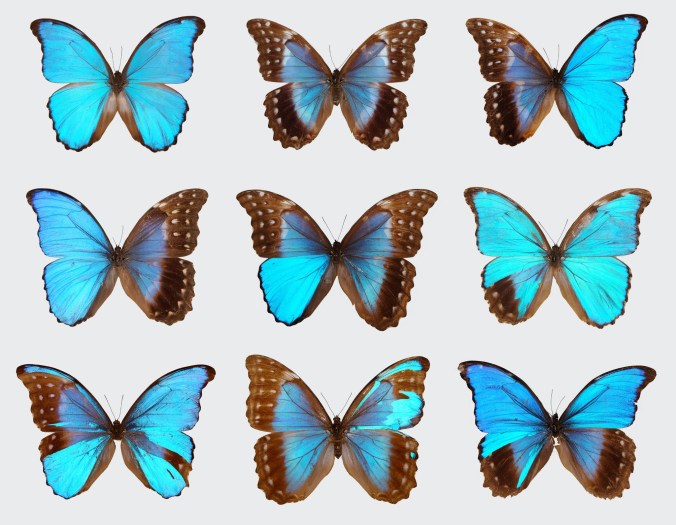
Top left, a male blue morpho butterfly; top middle, a female. The remainder are gynandromorphic, with both male and female characteristics. Credit Nipam H. Patel
With the frequency of gender fluidity in the news (often disparagingly), it’s helpful to read that it’s something that exists in many areas of the natural world.
“Nature’s dealing with conformity all the time in brutal ways and loving ways and all the rest of it,” Dr. Dreger said. “It doesn’t follow the human fantasy of everybody having to be normal. And humans don’t follow that ridiculous idea either.”
Well said.
Split-Sex Animals Are Unusual, Yes, but Not as Rare as You’d Think
All serious butterfly collectors remember their first gynandromorph: a butterfly with a color and pattern that are distinctly male on one wing and female on the other.
Seeing one sparks wonder and curiosity. For the biologist Nipam H. Patel, the sighting offered a possible answer to a question he had been pondering for years: During embryonic and larval development, how do cells know where to stop and where to go?
He was sure that the delicate black outlines between male and female regions appearing on one wing — but not the other — identified a key facet of animal development.
“It immediately struck me that this was telling me something interesting about how the wing was being made,” said Dr. Patel, a biologist who now heads the Marine Biological Laboratory, a research institute in Woods Hole, Mass., affiliated with the University of Chicago.
The patterning on the gynandromorph’s wing shows that the body uses signaling centers to control where cells go during development and what tissues they become in creatures as diverse as butterflies and people, Dr. Patel said.
Gynandromorph butterflies and other half-male, half-female creatures, particularly birds, have fascinated both scientists and amateurs for centuries. The latest sensation was a half-red, half-taupe cardinal that became a regular visitor in the backyard of Shirley and Jeffrey Caldwell in Erie, Pa. Although the bird would have to be tested to confirm that it is a gynandromorph, its color division strongly suggests that it is, scientists say.
Split-sex creatures are not as unusual as they may seem when one discovery goes viral, as the cardinal’s did. It extends beyond birds and butterflies to other insects and crustaceans, like lobsters and crabs.
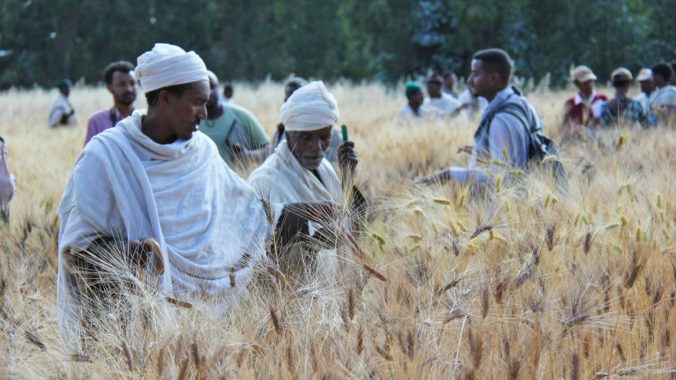
Ethiopian farmers examine the results of a trial of wheat varieties. BIOVERSITY INTERNATIONAL
The bread we eat in the not so distant future may depend on the type of cooperation described below. Thanks to Yale e360 and Virginia Gewin for this story:
How Crowdsourcing Seeds Can Help Farmers Adapt to Climate Change
In Ethiopia and other developing nations, scientists are working with small-scale farmers on trials to see which seed varieties perform best in changing conditions. These initiatives are enabling farmers to make smarter crop choices in the face of rising temperatures, drought, and more extreme weather.
Durum wheat varieties grow in trial plots in Ethiopia’s Amhara region. Thousands of farmers participated in the project, testing how various wheat strands performed under changing climatic conditions. BIOVERSITY INTERNATIONAL
In Ethiopia’s undulating, high-elevation grasslands, farmers — most of them working parcels of only two to three acres — produce more wheat than anywhere else in sub-Saharan Africa. They accomplish this feat in the face of chronically short supplies of high-quality seed. Still, Ethiopia’s record harvest of 4.6 million metric tons in 2017 didn’t satisfy the country’s needs, forcing it to import an additional 1.5 million tons of wheat. Continue reading
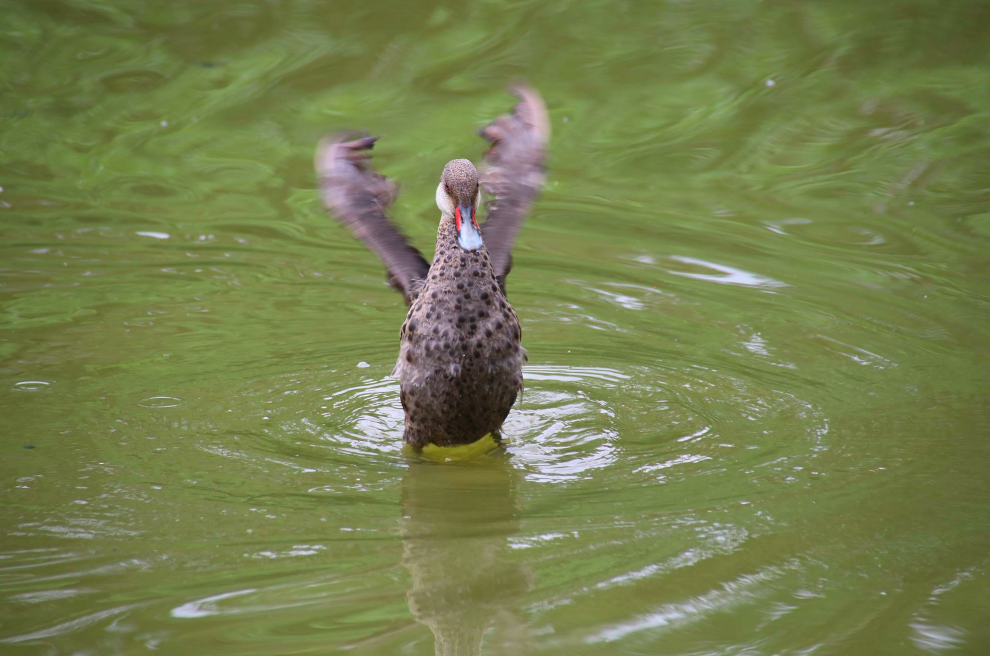
Photo Credit: Stephen Crafts
Santa Cruz Island, Galapagos, Ecuador
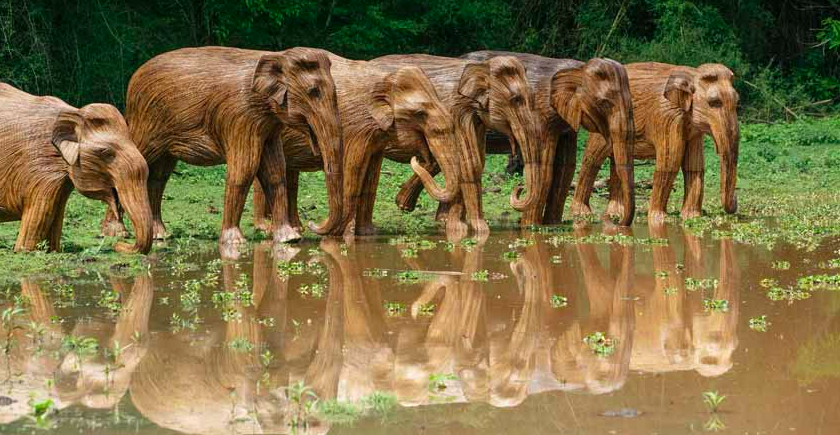
100 life-size lantana replicas of wild elephants will travel across three continents spreading the message of peaceful coexistence with nature.
The beautiful herd of Asian Elephants calmly drinking from this watering hole poses no threat to any onlooker. They’re actually sculptures made from the invasive lantana, introduced to the Indian subcontinent as an ornamental shrub by the British. The harmless looking plant is a scourge to native flora, animals and people of the regions where it’s taken over, as it literally poisons its surroundings so nothing else can survive there, destroying the natural biodiversity of the area.
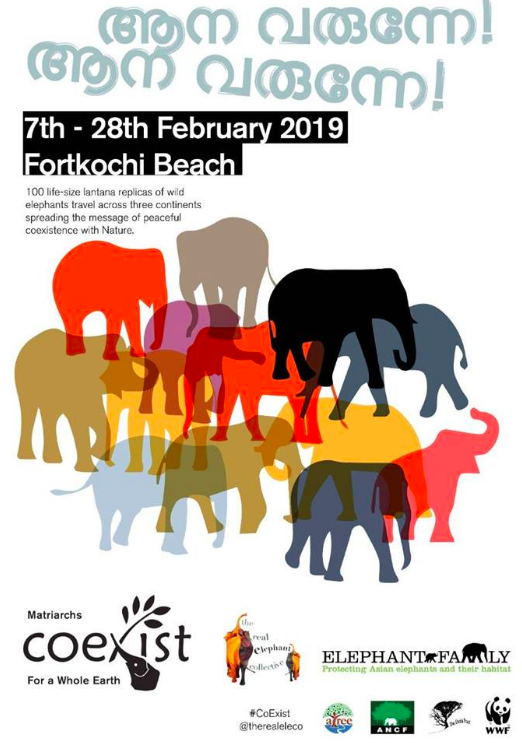 30 of these extraordinary, life-sized works of art have been on display in Kerala, at Kochi’s South Beach, coinciding with the Kochi-Muziris Biennale. The outdoor exhibit, entitled Co-Exist: Matriarchs for a Whole Earth, is on display for only until the end of February, after which it will travel to Bangalore and New Delhi. In 2020, the elephant models will be taken to England where they will be displayed at the Victoria and Albert Museum and the Royal Parks, both in London. In 2021, they will travel by truck across the USA, where they will finally be auctioned, the proceeds of which will go to preservation of wild animals.
The project is a collaboration between multiple organizations, designers and indigenous community artisans. Members of the Ashoka Trust Trust for Research in Ecology & the Environment (ATREE) devised a way to safely craft with lantana as a raw material and support for the making and display of lantana elephants is through the NGOs Elephant Family, The Real Elephant Collective (TREC), and The Shola Trust.
Fort Kochi To Have 100 ‘Lantana’ Elephants. And Here’s Why You Need To See Them
Highlighting the cause of nature and wildlife conservation at a global scale, the Lantana elephants are part of a greater initiative to raise funds for conservation and help people and elephants live together more harmoniously.
On February 7, if you are wandering around the popular South Beach in Fort Kochi, you are sure to come across a magnificent herd of 100 Asian elephants.
If you are wondering about the possibility of such a huge congregation of these beings at one place, let us break the news.
These are beautifully sculpted life-size elephants that have been made by tribal artisans from Thorapalli in Gudalur using Lantana camara or Lantana, a toxic invasive weed.
Lantana elephants are part of a greater initiative to raise funds for conservation and help people and elephants live together more harmoniously.
“Our vision is to bring Asia’s elephants and the issues they face out of India and the shadow cast by the African ivory crisis. With Asian elephants numbering only a tenth of their African counterparts, the importance of this unique migration cannot be underplayed. The survival of a species is at stake,” says Ruth Ganesh, principal trustee and the creative force of Elephant Family.
She had conceptualised the Lantana herd along with Shubhra Nayar of TREC. Modelled on real elephants from the Gudalur-Pandalur region, in its bid to raise awareness and funds for the conservation of Asian elephants, this unique project is also clearing the harmful Lantana from the Nilgiri forests while providing livelihoods to about 70 artisans from the Paniya, Bettakurumba and Soliga communities.
With their inherent knowledge of wild elephants and their exceptional crafting skills with Lantana, these artisans are bringing life to the elephant forms, while earning a dignified income. The elephants are designed by Shubhra Nayar and Tariq T of TREC, with Subhash Gautam overseeing the process. Continue reading
Photo Credit: Stephen Crafts
Fernandina Island, Galapagos, Ecuador

Illustrated by Armando Veve
Whales and other charismatic marine megafauna are frequently in the news related to discoveries of their mysterious navigational or communication skills, or with bad news about the negative impacts of ocean acidification or other human interaction. It never occurred to us how the decomposing carcass of something that immense can be a biological gift to marine systems that could last centuries.
A Whale’s Afterlife
On the day before Thanksgiving, 2011, Greg Rouse, a trim marine biologist in his fifties, was tidying his lab at the Scripps Institution of Oceanography, in La Jolla, California. Rouse studies the worms and other small animals that inhabit the deep sea. He was organizing his microscopes, dissection supplies, and jars of deep-sea critters when he received a long-anticipated e-mail.
In the late two-thousands, Rouse and Eddie Kisfaludy, then an operations manager for Virgin Oceanic, had begun meeting with officials from the National Oceanic and Atmospheric Administration (NOAA) and the city of San Diego to pitch an alternative approach to the disposal of dead whales. Often, whales that wash up on shore are hauled to landfills or pushed back into the water. Rouse and Kisfaludy wanted to tow one out to sea, sink it to the seafloor, and watch what happened. Whale falls, as marine biologists call such events, create pop-up habitats that may serve as stepping stones for organisms migrating from methane seeps or hydrothermal vents to other parts of the ocean. Precisely how this works, and which species colonize the carcass as it degrades, were open questions that Rouse hoped to answer.
In the e-mail, a biologist from NOAA wrote that a large female fin whale had washed ashore four days previously, on the rocky beach at Point Loma, just west of downtown San Diego. The NOAA team had already moved the carcass to the protected beaches of Mission Bay and performed a necropsy, concluding that the whale had been hit by a ship. Now they were ready to hand it over to Rouse: if he could mobilize the necessary resources on short notice, the whale was his to sink.
Rouse quickly met up with Kisfaludy to strategize. They needed a boat big enough to tow a sixty-foot, twenty-three-ton whale, so Kisfaludy leaned on a Newport-based friend, Chris Welch, for the use of his large catamaran. To sink the carcass, they sourced five tons of rusty chains from Newport Harbor and another two tons of iron shackles from the Scripps scrap yard, in San Diego.
On Thanksgiving morning, Welch set out in his catamaran—rusty chains on board—and sailed south. The next day, he met up with Rouse, Kisfaludy, and a growing group of intrigued friends at the dead whale. It rested on the sand, immovable. At high tide, however, the carcass began to float, and the team made its move. They tied seven ropes around the whale’s tail and sailed west. Several hours passed. The weather was crisp and sunny, and there was little boat traffic. To Rouse’s surprise, the whale had attracted no scavengers, despite its exposed rolls of dark purple muscle draped in white, translucent fat. The team began to consider names for the whale. Someone suggested Rosebud, and it stuck. Continue reading
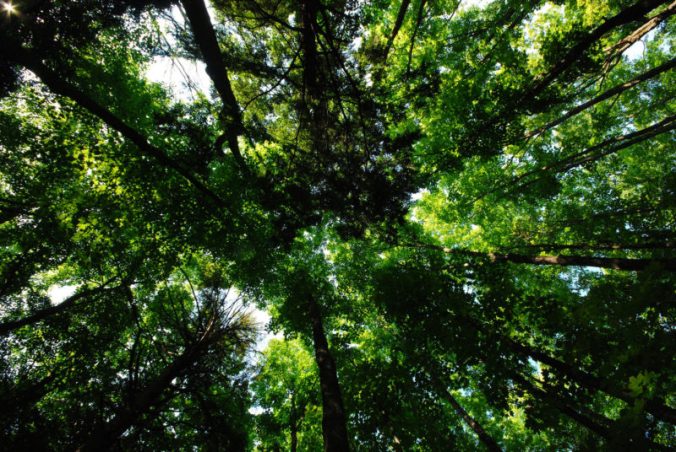
Fox Maple Woods in Wisconsin. JOSHUA MAYER / FLICKR
Emergency? The evidence is clear in the case of the environment, and it is a global emergency with a global solution. Thanks to Yale e360 for this summary of a new finding:
Planting 1.2 Trillion Trees Could Cancel Out a Decade of CO2 Emissions, Scientists Find
There is enough room in the world’s existing parks, forests, and abandoned land to plant 1.2 trillion additional trees, which would have the CO2 storage capacity to cancel out a decade of carbon dioxide emissions, according to a new analysis by ecologist Thomas Crowther and colleagues at ETH Zurich, a Swiss university. Continue reading
Cleaning plastic waste from the oceans is an ever-present issue. We thank the UN News for sharing this example of collaborations that inspire present and future action.
Boat made of recycled plastic and flip-flops inspires fight for cleaner seas along African coast
After completing a historic 500km journey from the Kenyan island of Lamu to the Tanzanian island of Zanzibar, the world’s first ever traditional “dhow” sailing boat made entirely from recycled plastic, known as the Flipflopi, has successfully raised awareness of the need to overcome one of the world’s biggest environmental challenges: plastic pollution.
The Flipflopi Project was co-founded by Kenyan tour operator Ben Morison in 2016, and the ground-breaking dhow was built by master craftsmen Ali Skanda, and a team of volunteers using 10 tonnes of recycled plastic.
The boat gets its name from the 30,000 recycled flip-flops used to decorate its multi-coloured hull. Continue reading

Photo Credit: Stephen Crafts
San Cristobal Island, Galapagos, Ecuador
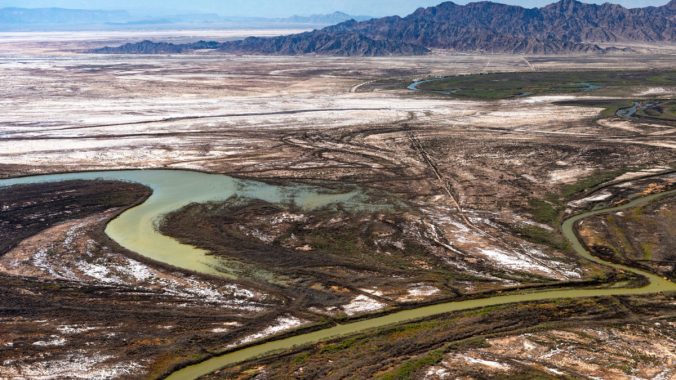
The Colorado River delta in Baja California is now a mosaic of largely dried-up river channels and tidal salt flats. TED WOOD
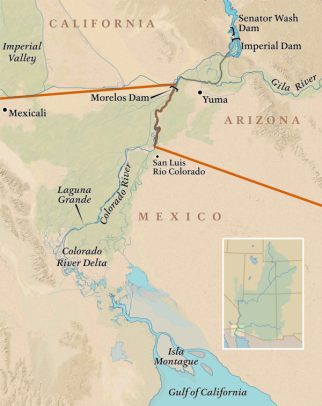
Downstream from the Morelos Dam, the Colorado River delta now runs dry before reaching the Gulf of California. MAP BY DAVID LINDROTH
When the first couple of stories about the Colorado River ran in Yale e360, it was difficult to imagine how much more there might be to say about it. But now the last article in the series, Restoring the Colorado: Bringing New Life to a Stressed River, provides an example of saving the best for last:
The Colorado River has been dammed, diverted, and slowed by reservoirs, strangling the life out of a once-thriving ecosystem. But in the U.S. and Mexico, efforts are underway to revive sections of the river and restore vital riparian habitat for native plants, fish, and wildlife. Last in a series.
The Morelos Dam on the U.S.-Mexico border, where the Colorado’s remaining water is diverted to cities and farms in Mexico. SUPPORT FOR AERIAL PHOTOGRAPHS PROVIDED BY LIGHTHAWK
From the air, the last gasp of the Colorado River is sudden and dramatic. The pale green river flows smack into the Morelos Dam on the U.S.-Mexico border, and virtually all of it is immediately diverted into a large irrigation canal that waters a mosaic of hundreds of fields — alfalfa, asparagus, lettuce, and other vegetables, their vivid green color clashing against the sere desert. The slender thread of water that remains in the Colorado’s channel continues to flow south, but is soon swallowed up by a sea of sand, far short of its delta, which lies 100 miles farther on.
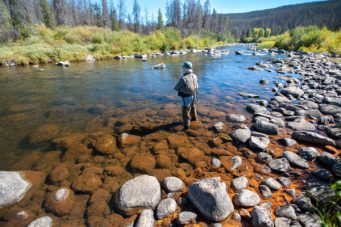
A fisherman on the upper Colorado River in northern Colorado. Low water flows have endangered fish populations and led last year to the closing of parts of the river to fishing.
The Colorado River once surged through the delta during high flows, carrying so much water at times that shallow draft steamboats chugged hundreds of miles up the river into the U.S. with loads of freight. The water in the delta nourished a vast fertile landscape, a fitting end to a river known as the Nile of North America.
“The river was everywhere and nowhere,” the naturalist Aldo Leopold wrote during a 1922 canoe trip to the delta, describing the waterway as it ebbed, flowed, braided, and stalled into pools, nourishing a rich and diverse ecosystem of “a hundred green lagoons,” a “milk and honey wilderness” with thick stands of cottonwoods and willows that provided habitat for hundreds of species of birds. The delta’s marshes, mudflats, and white sand beaches were home to clapper rails, bitterns, mallards, teal, and clouds of egrets.
Bobcats, puma, deer, and wild boar wandered the delta’s forests. Leopold was searching for the jaguar that roamed there, but didn’t see any. Continue reading
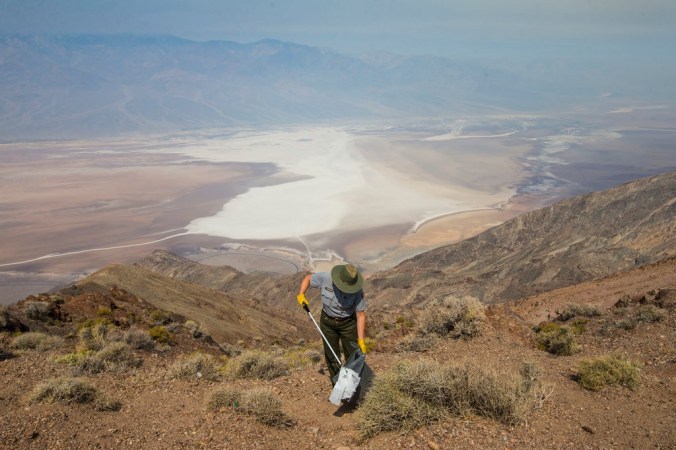
A custodian in Death Valley National Park, which would gain 40,000 acres under the measure. Credit Chase Stevens/Las Vegas Review-Journal, via Associated Press
At a time when the current administration and it’s legislative supporters are busy dismantling the environmental protections that have been painstakingly developed for over half a century, this bipartisan achievement is surprising, and heartening news.
Senate Passes a Sweeping Land Conservation Bill
The Senate on Tuesday passed a sweeping public lands conservation bill, designating more than one million acres of wilderness for environmental protection and permanently reauthorizing a federal program to pay for conservation measures.
The Senate voted 92 to 8 in favor of the bill, offering a rare moment of bipartisanship in a divided chamber and a rare victory for environmentalists at a time when the Trump administration is working aggressively to strip away protections on public lands and open them to mining and drilling.
“It touches every state, features the input of a wide coalition of our colleagues, and has earned the support of a broad, diverse coalition of many advocates for public lands, economic development, and conservation,” said Senator Mitch McConnell, Republican of Kentucky, the majority leader.
Western lawmakers of both parties have been working for four years on the bill, which will next be taken up by the House of Representatives, where it also enjoys bipartisan support.
“This package gives our country a million acres of new wilderness, protects a million acres of public lands from future mining, permanently reauthorizes the Land and Water Conservation Fund and balances conservation and recreation for the long term,” said Representative Raúl Grijalva, the Arizona Democrat who heads the House Natural Resources Committee. “It’s one of the biggest bipartisan wins for this country I’ve ever seen in Congress.” Continue reading
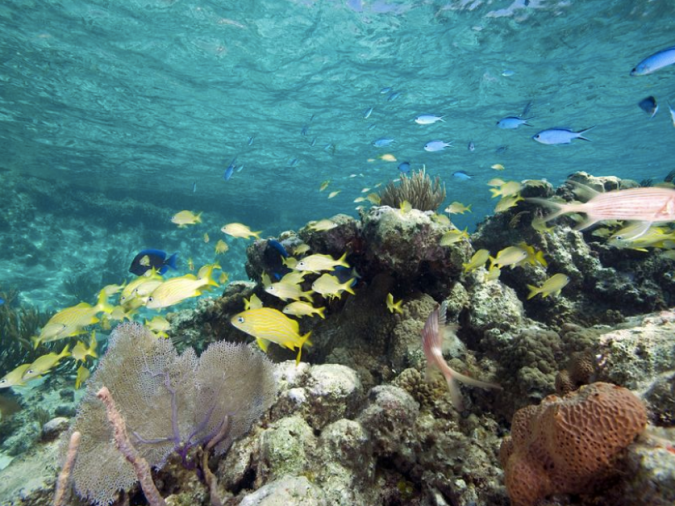
REEF FISH, BAHAMAS Fish congregate near a shallow reef in Exuma Cays Land and Sea Park. © Jeff Yonover
Those familiar with our work will recognize the word valorization, which is an essential element of what we write about and what we do. It’s increasingly important to note that Nature, made more fragile with each passing year by human impact climate change, requires human efforts to protect and hopefully, turn back the clock on damage already done; and it appears to be human nature that maintain a direct correlation between how something is valued and the amount of attention it gets.
We’re particularly impressed by this example of tech collaboration. Thanks to the Nature Conservancy for highlighting these stories…
The Caribbean Needs Tourism, and Tourism Needs Healthy Coral Reefs
AI and social media are helping quantify the economic value of coral reefs
The Caribbean region is more dependent on tourism than any other region in the world—the sector accounts for over 15 percent of GDP and 13 percent of jobs in the region. And almost all visitors to the Caribbean take part in some activity that relates to coral reefs—either directly, like snorkeling and scuba diving, or indirectly, like enjoying sandy beaches, eating fresh seafood and swimming in crystal waters. That means the health of the Caribbean’s tourism industry—and thus the whole regional economy—is dependent on the health of its coral reefs.
But just how much value do reefs produce? After all, “what gets measured gets managed and improved.” The Nature Conservancy (TNC) recently released the results of a study that focused on reef-adjacent activities and the value they generate for the tourism industry, island governments and Caribbean communities. This study, which builds on an earlier body of globally focused research produced by TNC, found that reef-adjacent activities alone generate an estimated $5.7 billion per year in the Caribbean from roughly 7.4 million visitors. When combined with reef-dependent tourism activities, they generate $7.9 billion total from roughly 11 million visitors.
In other words, a major draw for people traveling to the Caribbean are activities related to coral reef ecosystems, and both the tourism industry and other aspects of the local economies depend on healthy coral reefs to keep this relationship afloat. This evidence offers a pivotal opportunity for advancing coral conservation initiatives not only in the Caribbean but around the world, as it can catalyze both the tourism industry and local governments and communities to invest in protecting and restoring coral reefs for the benefit of economies and incomes.
We now know that these natural wonders are responsible for generating billions of dollars, sustaining livelihoods and anchoring economies in the Caribbean as well as other tropical destinations across the globe. And that should translate into a major incentive to conserve them. Continue reading
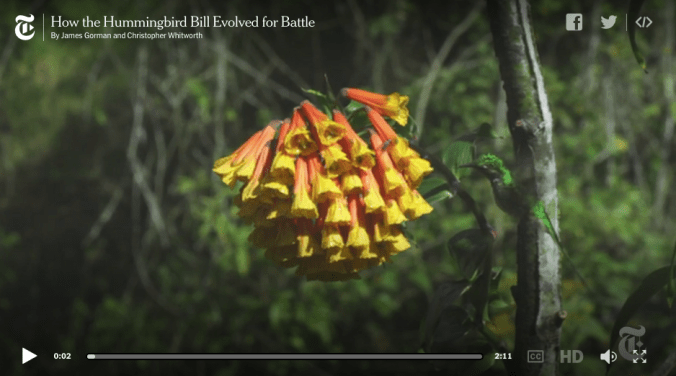
In the South American tropics, where hummingbirds must compete for food, evolution has drastically reshaped their bills. Credit Christian Irian
Hummingbirds are some of the most gemlike and visually striking birds in the “new world”, but those who have spent any time watching them know that striking can also be used as an apt verb to describe their behavior. Fiercely territorial, it’s not surprising that scientists are making more and more discoveries related to the evolution behind their development. (Click on image above to view the video)
The Hummingbird as Warrior: Evolution of a Fierce and Furious Beak
Winsomely captured in poems and song, the birds are yielding new secrets about their astounding beaks and penchant for violence.
If you want to know what makes hummingbirds tick, it’s best to avoid most poetry about them.
Bird-beam of the summer day,
— Whither on your sunny way?
Whither? Probably off to have a bloodcurdling fight, that’s whither.
John Vance Cheney wrote that verse, but let’s not point fingers. He has plenty of poetic company, all seduced by the color, beauty and teeny tininess of the hummingbird but failed to notice the ferocity burning in its rapidly beating heart.
The Aztecs weren’t fooled. Their god of war, Huitzilopochtli, was a hummingbird. The Aztecs loved war, and they loved the beauty of the birds as well. It seems they didn’t find any contradiction in the marriage of beauty and bloodthirsty aggression.
Scientists understood that aggression was a deep and pervasive part of hummingbird life. But they, too, have had their blind spots. The seemingly perfect match of nectar-bearing flowers to slender nectar-sipping beaks clearly showed that hummingbirds were shaped by co-evolution.
It seemed clear that, evolutionarily, plants were in charge. Their need for reliable pollinators produced flowers with a shape that demanded a long slender bill. Hummingbird evolution obliged.
But hummingbirds also heard the call of battle, which demanded a different evolutionary course. Some of those slender, delicate beaks have been reshaped into strong, sharp and dangerous weapons.
In a recent paper organizing and summing up 10 years of research, Alejandro Rico-Guevara and his colleagues at the University of California, Berkeley, shared evidence gathered by high-speed video about how the deadly beaks are deployed in male-to-male conflict.
Like the horns of bighorn sheep or the giant mandibles of stag beetles, hummingbird beaks are used to fight off rivals for mates. This is sexual selection, a narrow part of natural selection, in which the improvement of mating chances is the dominant force. Continue reading
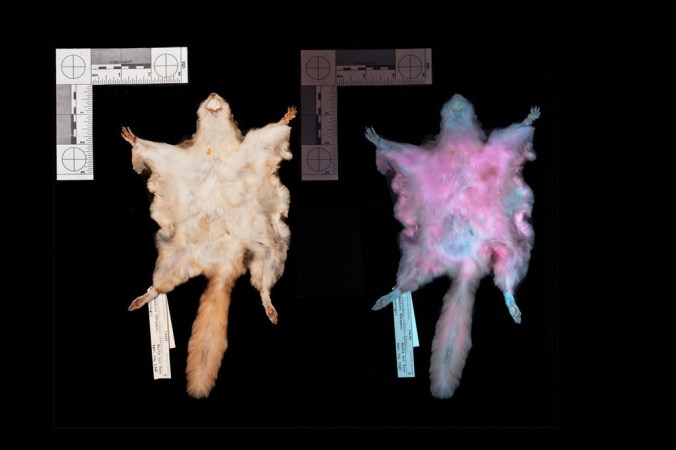
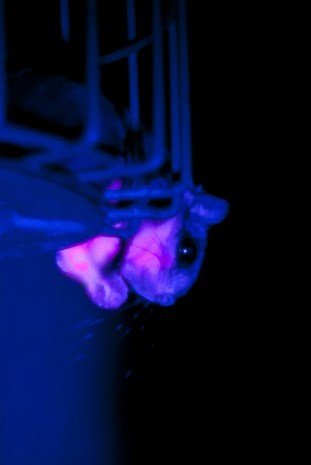
In most circumstances, the flying squirrel has a brownish color, left. But ultraviolet light reveals them to glow hot-pink. Northland College
When we last linked to a story about flying squirrels we mentioned that we had neglected to write about them while in Kerala. However, that was not quite correct. We did frequently mention the Malabar giant squirrel, especially in guest sighting posts. Their other common name is the Malabar flying squirrel. In its own way this animal could make you gasp when you saw one, but it was competing for attention with elephants, tigers and bears. This story, thanks to Veronique Greenwood, points to other flying squirrels that might cause a completely different kind of gasp:
Flying Squirrels That Glow Pink in the Dark
While ultraviolet fluorescence is common in birds, butterflies and sea creatures, scientists haven’t often observed it in mammals.
Scientists suspect the flying squirrel may have evolved fluorescence to evade owls that hunt them. Alternately, the glow may have a mating function. Northland College
One spring night in Wisconsin, John Martin, a biologist, was in his backyard with an ultraviolet flashlight. Suddenly, a hot-pink squirrel flew by.
It was a southern flying squirrel, a small, furry creature most active at dawn and dusk. Under most circumstances, it has a warm brown color. But in the beam of Dr. Martin’s flashlight, it sported a gaudy Day-Glo hue closer to something you might see in a nightclub or a Jazzercise class circa 1988.
“He told his colleagues at Northland College, but of course, everyone was pretty skeptical,” said Allison Kohler, a graduate student at Texas A&M University.
Dr. Martin asked Ms. Kohler, then a student at Northland, to look into it. After examining more than 100 specimens of flying squirrels across two museum collections and spotting five more squirrels under UV light in the wild, the researchers and their colleagues reported surprising results last week in the Journal of Mammalogy: The pink is real. Continue reading
The illustrative video above is on its own worth a couple minutes of your time. But the innovative approach to one of the world’s most pressing problems is the thing to take note of. Thanks to National Public Radio (USA) for bringing Evelyn Wang and Omar Yaghi’s work to our attention in this story:
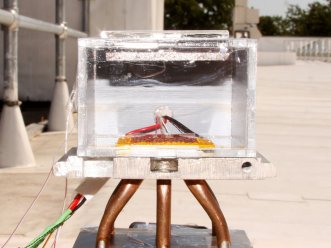
A prototype MOF-based water-collection device is set up for testing on the roof of a building on the MIT campus.
Courtesy Evelyn Yang, MITResearchers have come up with a new way to extract water from thin air. Literally.
This isn’t the first technology that can turn water vapor in the atmosphere into liquid water that people can drink, but researchers from the Massachusetts Institute of Technology and the University of California, Berkeley, say their approach uses less power and works in drier environments. Continue reading