In The Eyes Of Motivated Beholders

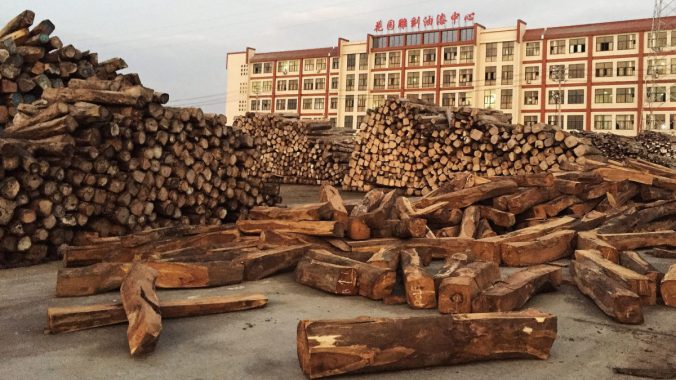
ChineseWarehouses_53_Ong_web.jpg

Stacks of rosewood at a timber market in Dongyang, China, a well-known hub for the illegal trade. SANDY ONG

Thanks to Sandy Ong and Edward Carver for this story about a type of tree that is too beautiful for its own good:

The Rosewood Trade: The Illicit Trail from Forest to Furniture

The most widely traded illegal wild product in the world today is rosewood, an endangered hardwood prized for its use in traditional Chinese furniture. An e360investigation follows the trail of destruction and corruption from the forests of Madagascar to furniture showrooms in China.

madagascar_4_carver_web

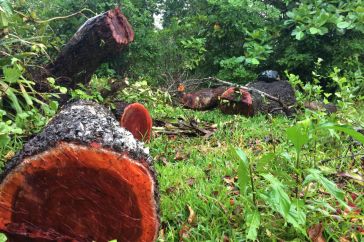
Logged wood on a path near Masoala National Park in northeast Madagascar. The park has been plundered not just of rosewood but many types of tropical hardwood. EDWARD CARVER

Fampotakely, a sandy village in northeast Madagascar, at first seems an unlikely destination for migrants. It has no hospital, no secondary school, no electricity, and limited well water. Yet its population has exploded to 5,000 in recent years. A few of the houses, usually made from dried palm leaves and stalks, now have concrete foundations and solar panels. Fampotakely’s relative wealth is due to its strategic location in the illegal timber trade: it’s downriver from Masoala National Park, home to some of the world’s most valuable rosewood.

Madagascar_3_Carver_web.jpg

Waterways around Fampotakely, Madagascar run blood red from rosewood stored underwater while waiting for ships to transport it to China. EDWARD CARVER

For the last decade, men from all over the region have gone into the park’s dense forests to work as loggers, a job that pays well by local standards. They cut down the massive trees, carve grooves in the logs, and use climbing vines to drag them to the nearest waterway. With rafts made from other felled trees, they use bamboo poles to float the precious hardwood toward Fampotakely and other villages along the Indian Ocean coastline. Continue reading

Community, Collaboration & Bees

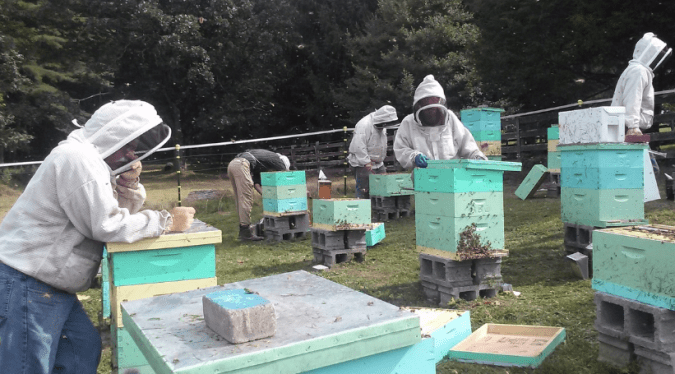
Members of the Appalachian Beekeeping Collective inspect one of their apiaries. The collective trains displaced coal miners in West Virginia on how to keep bees as a way to supplement their income. Courtesy of Kevin Johnson

We never tire of highlighting good news about bees. Thanks to NPR, Jody Helmer, and the Salt for bringing us this to our attention.

Out-Of-Work Appalachian Coal Miners Train As Beekeepers To Earn Extra Cash

Just like his grandfather and father before him, James Scyphers spent almost two decades mining coal in West Virginia.

“These were the best jobs in the area; we depended on ’em,” he recalls.

But mining jobs started disappearing, declining from 132,000 in 1990 to 53,000 in 2018, devastating the area’s economy. In a state that now has the lowest labor-force participation rate in the nation, the long-term decline of coal mining has left West Virginia residents without new options to make a living.

Scyphers was fortunate to find a construction job, but it paid 2/3 less than what he earned underground. He often took odd jobs to make ends meet. One of those odd jobs included building hives and tending bees for the Appalachian Beekeeping Collective.

“I wish this group had been here 30 years ago,” he says. “Our region needs it.” Continue reading

Accentuating the Positive

It benefits all to highlight the “non-rocket science” solutions to hugely global issues wherever we find them.

All It Took To Clean Up This Beach Was A Fish Sculpture Named Goby

As some rumors swirl around the internet that there will be more plastic than fish by 2050, there are also some great stories about local recycling, like this one about Goby the fish.

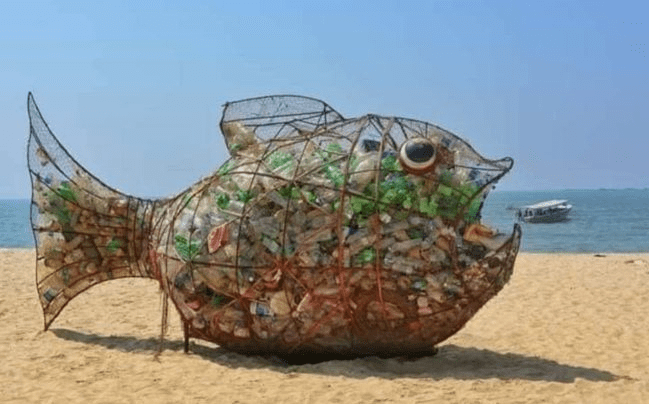
This local beach decided to do something simple, instead of placing a ton of boring old garbage cans around the beach, they made a giant see through fish out of some barbed wire and mesh, and added a sign to it that said, “Goby loves plastic, please feed him”. Continue reading

The Future Runs Through It

CORiver-111118-0482_HooverAerial_web.jpg

After two decades of drought, Lake Mead in Nevada is just 40 percent full. TED WOOD

Thanks to Jim Robbins and Yale e360 for this second installment, and especially to Ted Wood for photography as visually compelling as the implication of the story:

CRISIS ON THE COLORADO: PART II

On the Water-Starved Colorado River, Drought Is the New Normal

With the Southwest locked in a 19-year drought and climate change making the region increasingly drier, water managers and users along the Colorado River are facing a troubling question: Are we in a new, more arid era when there will never be enough water?


corivermx-101118-0063_treeringlab_web

Scientists at the University of Arizona are using tree rings to study centuries of drought conditions in the Colorado River Basin.

In the basement of the University of Arizona’s Laboratory of Tree-Ring Research, the fragrant smell of pine hangs in the air as researchers comb through the stacks of tree slabs to find a round, 2-inch-thick piece of Douglas fir.

They point out an anomaly in the slab — an unusually wide set of rings that represent the years 1905 to 1922. Those rings mean it was a pluvial period — precipitation was well above average — and so the trees grew far more than other years.

“In 1905, the gates opened and it was very wet and stayed very wet until the 1920s,” said David Meko, a hydrologist at the lab who studies past climate and stream flow based on tree rings. “It guided their planning and how much water they thought was available.”

CORiver-0906-0037_MarkHarris_web.jpg

Mark Harris, a water manager in Grand Junction, Colorado.

The planning was that of the states that share the water of the Colorado River. Worried that a burgeoning California would take most of the water before it was fairly divvied up, representatives from the other Colorado River Basin states, presided over by U.S. Secretary of Commerce Herbert Hoover, came together in 1922 to develop an equitable apportionment. They looked at flow measurements and figured that the river contained an average of 15 million acre-feet. They divided the Colorado River states into two divisions – the upper basin and the lower basin, with the dividing line in northern Arizona near the Utah border. The upper basin states — Utah, Wyoming, Colorado, and New Mexico — agreed not to take more than a total of 7.5 million acre-feet and to allow the other half to flow south to the lower basin. The agreement they signed was called the 1922 Colorado River Compact, also known as the Law of the River. Continue reading

99% Success, A How-To Reminder


2438

The ban on chlorofluorocarbon (CFC) gases has been an incredible success story. Composite: Alamy/Guardian Design

Thanks to Jonathan Watts for this reminder:

How to stop the climate crisis: six lessons from the campaign that saved the ozone

Thirty years ago, all 197 countries got together to ban the gases damaging the Earth’s ozone layer. Now we need to unite to combat an even greater threat. What can we learn from 1989?

Amid the anti-globalist chest-thumping of Brexit, Donald Trump, and the Brazilian president, Jair Bolsonaro, it may sound like the stuff of folklore. But there was a time in the recent past when all the countries of the world moved quickly to discuss a common threat, agreed an ambitious plan of action and made it work.

The Montreal protocol, which came into effect 30 years ago, was drawn up to address the alarming thinning of the ozone layer in the Earth’s stratosphere. It was the first agreement in the history of the United Nations to be ratified by all 197 countries. Since it came into effect on 1 January 1989, more than 99% of the gases responsible for the problem have been eradicated and the “ozone hole” – which, in the late 80s, vied for headline space with the cold war, Diana, Princess of Wales, and Madonna – is receding in the sky and the memory. Continue reading
Making Bread In 2019

Bread.jpgHelen Rosner, surprisingly appearing for only the second time in our pages, catches us just after our new year’s resolution to take up bread baking.

Well timed.

For a few minutes of bread love, click the image above. For a few minutes more of bread geek-out, read on:

In the immeasurable history of people talking about food, has there ever been a single statement more raw and moving and real than Oprah Winfrey, sitting before a television camera, flinging her arms emphatically forward, narrowing her eyes with fevered intensity, and declaring, with a passionate roar, “I! Love! Bread!” Continue reading

Enigmatic Fungi

A nematode pierces the cell walls of a mushroom’s hyphae to feed on them.Credit By Markus Künzler

The mysteries of nature never cease to amaze, and fungi rank high in all aspects. Since the inception of this site we’ve highlighted this special branch of the animal kingdom.

When Fungi Fight Back

A mushroom species was found to sense predators and sent warning signals to other parts of its body, but how it does that remains a mystery.

It’s known as fight or flight — the message the brain sends your body when it detects something frightening. Something like it happens to plants when they are under attack, too. And then there are fungi — perhaps the most mysterious kingdom of multicellular life.

Fungi too can sense attackers and manufacture powerful weapons to combat them, including the toxins and poisons that can send you to the emergency room if you eat the wrong mushroom.

But little is known about the built-in threat detectors of these limbless, brainless beings. Humans send messages through their nervous systems. A plant’s vascular system is its relay apparatus. But fungi have neither. Continue reading

Mysteries Of Nature

IceDisk.jpg

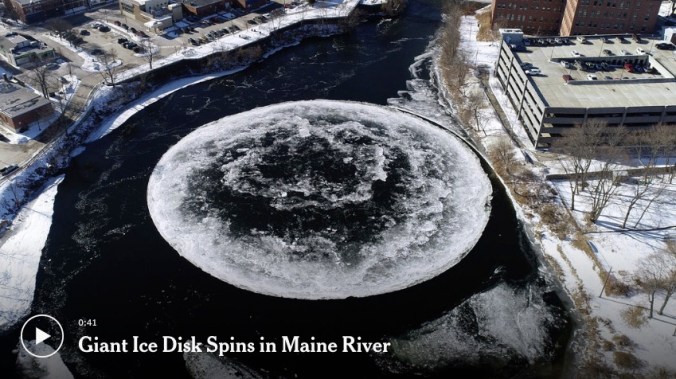
The sudden appearance of a giant ice disk in Maine has raised many questions. Watch it rotate in this stunning drone video.  Tina Radel/City of Westbrook, via Associated Press

We appreciate the fact that there are still such natural surprises out there:

There’s a Huge Ice Disk in a Maine River. No, the Aliens Aren’t Coming.

A giant ice disk churning in a river that runs through the small city of Westbrook, Me., set off fevered speculation on Tuesday.

Was it an icy landing zone for aliens? A sign of impending doom? A carousel for ducks? (A handful were, in fact, enjoying the ride.)

The Boston Globe wrote that it was “like some type of arctic buzzsaw,” and residents hurried to the edges of the Presumpscot River to catch a glimpse.

Scientists say that ice disks are an unusual — but entirely natural — phenomenon that occurs when a pile of slush freezes in an eddy or a piece of ice breaks off from another and begins to rotate. As it turns, hitting rocks and water, the sides are shaved down.

Steven Daly, an expert in river ice hydraulics at the Army Corps of Engineers’ Cold Regions Research and Engineering Laboratory in Hanover, N.H., said his agency generally got just one or two reports of rotating ice disks in the United States each year.

They’re not usually this big, though. Continue reading

Colorado River’s Future

Thanks to Jim Robbins and Yale e360:

CRISIS ON THE COLORADO: PART I

The West’s Great River Hits Its Limits: Will the Colorado Run Dry?

TLW0288_CORiverHeadwaters_web.jpg

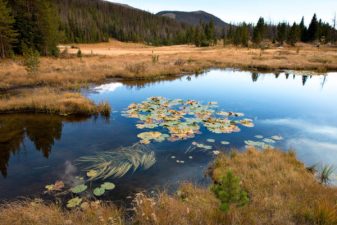
The headwaters of the Colorado River are in a marshy meadow in Rocky Mountain National Park.

As the Southwest faces rapid growth and unrelenting drought, the Colorado River is in crisis, with too many demands on its diminishing flow. Now those who depend on the river must confront the hard reality that their supply of Colorado water may be cut off. First in a series.

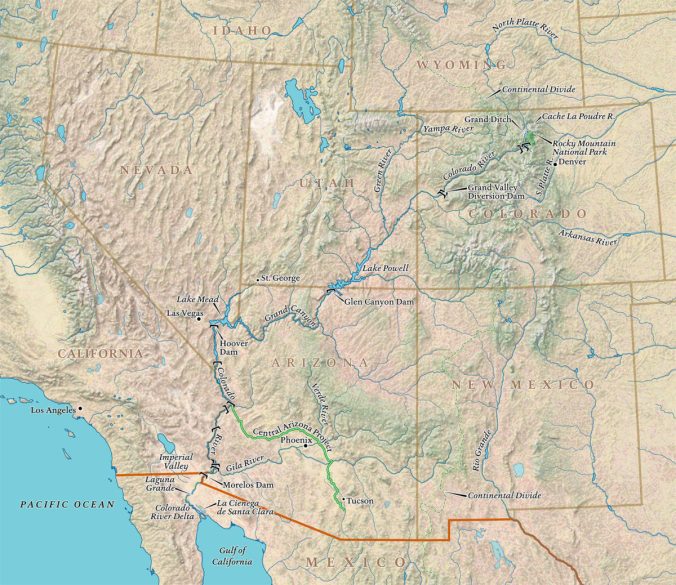
The beginnings of the mighty Colorado River on the west slope of Rocky Mountain National Park are humble. A large marsh creates a small trickle of a stream at La Poudre Pass, and thus begins the long, labyrinthine 1,450-mile journey of one of America’s great waterways.

Several miles later, in Rocky Mountain National Park’s Kawuneeche Valley, the Colorado River Trail allows hikers to walk along its course and, during low water, even jump across it. This valley is where the nascent river falls prey to its first diversion — 30 percent of its water is taken before it reaches the stream to irrigate distant fields.

Yale_e360-ColoR-Ovr_26_web.jpg

The Colorado flows 1,450 from its source in Colorado to the southwest, ending just short of the Gulf of California. MAP BY DAVID LINDROTH

The Never Summer Mountains tower over the the valley to the west. Cut across the face of these glacier-etched peaks is the Grand Ditch, an incision visible just above the timber line. The ditch collects water as the snow melts and, because it is higher in elevation than La Poudre Pass, funnels it 14 miles back across the Continental Divide, where it empties it into the headwaters of the Cache La Poudre River, which flows on to alfalfa and row crop farmers in eastern Colorado. Hand dug in the late 19th century with shovels and picks by Japanese crews, it was the first trans-basin diversion of the Colorado. Continue reading

Floral Communication Better Understood

lead_720_405 (5).jpg

A bee collects pollen from a flower. DARREN STAPLES / REUTERS

 Thanks to Ed Yong, 6+ years in our pages, whose work we always appreciate:

Plants Can Hear Animals Using Their Flowers

And they react to the buzzing of pollinators by sweetening their nectar.

When people pose the old question about whether a tree falling in an empty forest makes a sound, they presuppose that none of the other plants in the forest are listening in. Plants, supposedly, are silent and unhearing. They don’t make noises, unless rustled or bitten. When Rachel Carson described a spring bereft of birds, she called it silent.

But these stereotypes may not be true. According to a blossoming batch of studies, it’s not that plants have no acoustic lives. It’s more that, until now, we’ve been blissfully unaware of them. Continue reading

Livestreaming Conservation

1200 (4)

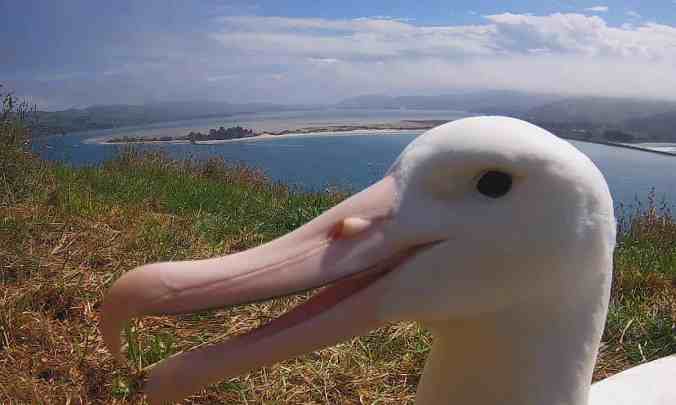
A northern royal albatross inspects the New Zealand Department of Conservation’s ‘Royal Cam’, a 24/7 livestream that documents an albatross nest in breeding season. Photograph: Department of Conservation

The revolution may not be televised but conservation may be livestreamed from time to time, conditions permitting. Thanks to the Guardian for this story from New Zealand:

On a wing and a player: hopes webcam can save endangered albatross

Footage of tiny colony of birds on the southern tip of New Zealand captivates millions around the globe

nzalbMillions of amateur naturalists around the world have been tuning in to the secret lives of albatrosses as New Zealand rangers employ YouTube in a bid to save the mysterious giant sea birds.

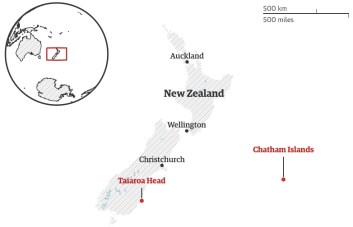
New Zealand conservation teams set up a 24-hour live-stream of an albatross nest at Taiaroa Head on the Otago peninsula in 2016. Three years on, the feed has become an unexpected global hit, with 2.3 million people from 190 countries tuning in to watch the endangered birds rear their chicks on a frigid peninsula at the bottom of the world. Continue reading
The Art of Inclusivity


A visitor takes a close look at “Missing Route 4,” a hand-stitched embroidery by Bapi Das.Credit Atul Loke for The New York Times

The history of our work in Kerala, and specifically in Kochi, has long been intertwined with Art, and how the surrounding community interacts with it. Biennales, by nature, often blur the line between street art and gallery space, as multi-dimensional and multi-media installations begin to appear on walls, pop-up spaces, cavernous warehouse buildings, and classic museum halls.

Now in it’s 4th edition, the Kochi-Muziris Biennale, has grown continually in both the breadth of the artists involved, and the depth of its work toward community outreach. This sense of inclusivity extends to gender equality, a longstanding issue that India as a country has battled with;  the curator and more than half of the artists are female.

As with the previous editions, the installations are thought provoking and moving, at times asking viewers to acknowledge and honor the difficult history of a colonial past.

In India, Building Bridges Between Life and Art

The Kochi-Muziris Biennale, South Asia’s biggest art show, uses interactive exhibits and live performances to help Indians connect with contemporary art.

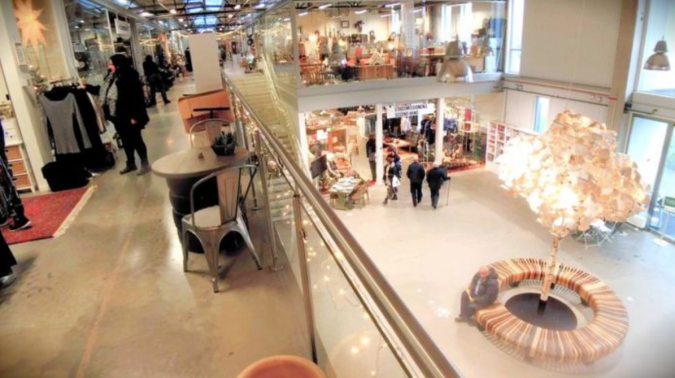
KOCHI, India — Clad in a simple striped shirt and the white mundu of the city’s fishmongers, Bashir stood out from the well-heeled throng at the warehouse galleries and tree-filled courtyards on the first day of India’s biggest contemporary art show, the Kochi-Muziris Biennale.

Bashir, a fishwrapper who works nearby, visited the Kochi-Muziris Biennale on opening day because entry was free. He lingered over the photographs, including these photo essays by Chandan Gomes, a Delhi photographer. Credit: Atul Loke for The New York Times

Keeping to himself, he moved from room to room, stopping to study moody landscapes by the Delhi photographer Chandan Gomes that were paired with imaginary scenes drawn by a girl who died at age 12.

“I don’t understand the inner meaning of the art,” said Bashir, who uses one name and makes a living wrapping and delivering fish. “I just like to see beautiful things.”

Bashir’s willingness to engage with the artwork, no matter how challenging, was a victory for the show’s organizers. The southern state of Kerala, and India as a whole, have very few public venues to see art. So the organizers of the biennale, which runs until March 29, strove to create an event that would appeal to everyone — from untutored day laborers to veteran museum curators.

“We are making a cultural festival,” said Bose Krishnamachari, a painter from Kerala who co-founded the show eight years ago. “We have tried to penetrate to the people’s minds so that they feel that it is their biennale.”…

Continue reading
Urban Tree-Huggers

IndiaDehli_Trees_GettyImages-984331388_web.jpg

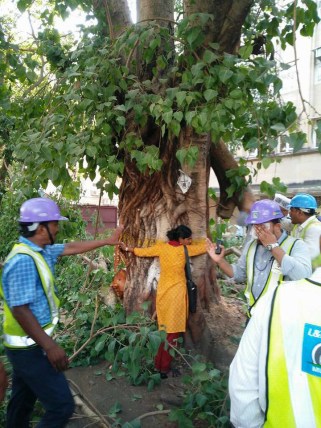
Women demonstrators protest a plan to to cut down more than 14,000 trees for a redevelopment project in New Delhi in June 2018. CHANDAN KHANNA/AFP/GETTY IMAGES

Thanks to Yale e360’s Mumbai-based Vaishnavi Chandrashekhar:

In India’s Fast-Growing Cities, a Grassroots Effort to Save the Trees

In India’s burgeoning urban areas, residents are rallying against the widespread destruction of trees to make way for development. The recent protests highlight a global issue: densely populated megacities in the developing world, which are most in need of tree cover, often have the least.

ZB_MumbaiTreesStreet_2017.jpg

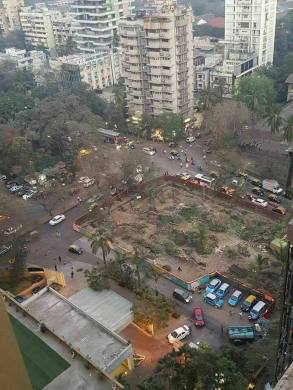
Thousands of trees have been cut down in Mumbai in recent years to make way for new housing, wider roads, and a $3.3 billion subway line. COURTESY OF ZORU BHATHENA

The funeral cortege was small. Six people shouldered the bier and others followed, clad in the traditional Indian white. As the group filed past the state assembly building, the armed guards did not give it a second glance. In a few minutes, however, the security forces caught on. The procession winding its way through Mumbai’s government district was not a real funeral: It was a protest. The shrouded body held aloft was not a human — it was the trunk of a tree, one of many, including grand old banyans, cut down for the construction of a $3.3 billion subway line.

urbantrees2.jpg

A protester hugs an old tree in Mumbai to prevent it from being cut down for a subway project. COURTESY OF ZORU BHATHENA

Mumbai’s old trees have borne the brunt of new development in the booming city, including road widening, transport projects, and housing construction. The new subway alone is destroying or damaging 5,000 trees, from hundreds of old street trees in the dense parts of the historic island city to more than 2,000 trees in a mini-forest in suburban Aarey Colony, where a rail car shed is to be built. A less visible loss lies in defunct industrial areas, where large plots with old trees and ponds are being redeveloped into residential and commercial towers. “Developers are supposed to replace the trees but no one really checks,” says Stalin D., head of local environmental group, Vanashakti. Continue reading
Organikos & Coffee Circa 2019

organikos1

Organikos2.jpgWhen we returned from India in 2017 we mentioned the word organikos in the context of coffee. Just prior to moving to India, in early 2010 we were completing our second year assisting the Patagonia Expedition Race–we not only assisted with their contracting a title sponsor, but Organikos was itself a Race sponsor. Somewhere we have photographs of our team serving coffee to racers, Race staff, and with our logo displayed at the finish line where we also served coffee (even as champagne corks were popping in the pre-dawn darkness). I will post those photos another time, but the reason those images come to mind is that we had developed a graphic statement of how we wanted Organikos to look on a coffee label, and it is very different from what we want today. 2019 is starting out with its own equivalent of corks popping, as last evening we finalized the first draft of what our first coffee shipment, from a roastery in Austin, TX USA is going to look like. You saw it here first (label feedback welcome):

Organikos3.jpg

Buoyant Foundation’s Intriguing Architectural Innovation

This is the kind of story that displays the odd new reality of what can count for optimism–finding intriguing solutions for mankind’s self-inflicted catastrophes. From Anthropocene:

float-when-it-floods.jpg

Amphibious Architecture

Float when it floods

By Emily Anthes

amphibious-house.jpg

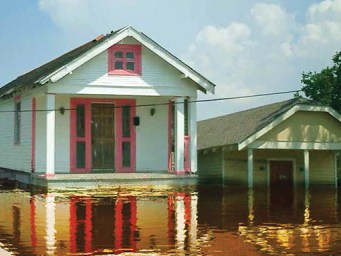
Amphibious structures are not static; they respond to floods like ships to a rising tide, floating on the water’s surface.

Last June, not long after a catastrophic thunderstorm swept through southern Ontario, bringing a month’s worth of rain in just a few hours, a group of 75 architects, engineers, and policymakers from 16 countries gathered in the city of Waterloo to discuss how humanity will cope with its waterlogged future. The timing of the conference was a fitting meteorological coincidence; in a world increasingly transformed by climate change, heavy rains and major floods are becoming more common, at least in some areas. In the summer of 2017 alone, Hurricane Harvey dumped more than 50 inches of rain over Texas; a monster monsoon season damaged more than 800,000 homes in India; and flash floods and mudslides claimed at least 500 lives in Sierra Leone. In the past two decades, the world’s ten worst floods have done more than a 165 billion dollars’ worth of damage and driven more than a billion people from their homes. Continue reading

Fungi, Bees & Future

30stamets-hope-jumbo.jpg

Lilli Carré

Fungi first appeared in our pages thanks to Milo. And the name of the essayist below was mentioned a couple times earlier as well. He deserves more attention, especially if his attention is focused on bees:

Will Mushrooms Be Magic for Threatened Bees?

We might be able to save honeybees from viruses transmitted by invasive parasites without chemical treatment.

By Paul Stamets

Mr. Stamets is a mycologist.

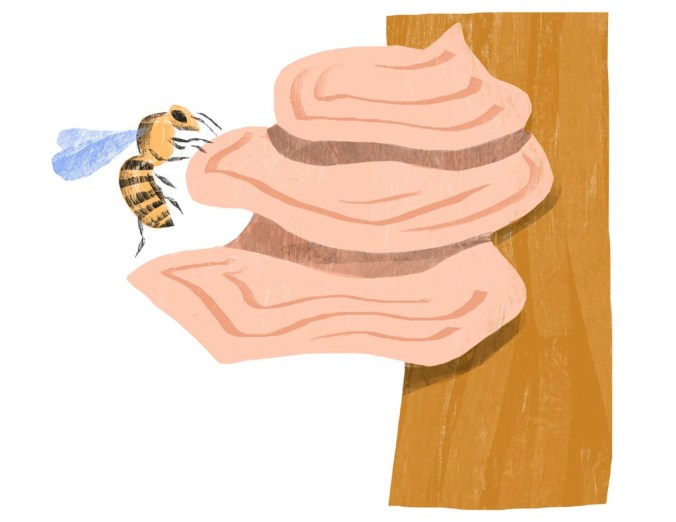
Sometime in the 1980s, microscopic mites that had been afflicting honeybees outside the United States found their way to Florida and Wisconsin and began wreaking havoc across the country. These parasites have invaded and decimated wild and domestic bee colonies. Along with other dangers facing bees, like pesticides and the loss of forage lands, the viruses these mites carry threaten the bees we rely on to pollinate many of the fruits, nuts and vegetables we eat. Continue reading
Electrical Generation Can Look Like Sausage When Visualized Just So

Electric.jpg

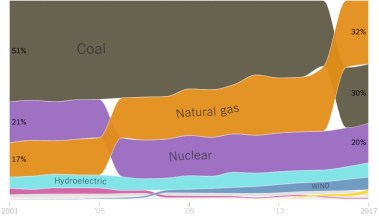
How the United States generated electricity from 2001 to 2017. Percentage of power produced from each energy source

America isn’t making electricity the way it did two decades ago: Natural gas has edged out coal as the country’s leading generation source … and renewables like wind and solar have made small yet speedy gains. But, each state has its own story.

Electric2

Nadja Popovich an explainer of complicated things with visualization techniques that have impressed us so far, now has this.

In Nevada, natural gas surpassed coal as the top source of electricity generation in 2005, earlier than in many other states. Coal’s role in the state’s power mix has continued to decline since then.

We cannot do justice to it, other than suggest you go see it for yourself. A state by state graphic representation of electrical generation methods:

How Does Your State Make Electricity?

Overall, fossil fuels still dominate electricity generation in the United States. But the shift from coal to natural gas has helped to lower carbon dioxide emissions and other pollution. Last year, coal was the main source of electricity generation for 18 states, down from 32 states in 2001.

Foraged Wild Foods

Thanks to National Public Radio (USA) for this brief story by Maia Stern, which expands our knowledge of foraged wild foods:

The first insect that Pascal Baudar ever tried eating was an ant he found in his kitchen. The verdict? “It tasted like some kind of chemical,” says Baudar.

Most people would have probably given up on the bug-eating experiments right there. But Baudar? He’s made it part of his life’s calling. Continue reading
Conservation Innovation, First Nations & Caribou


1920b.jpg

Cornelia Li

Thanks to Hilary Rosner for her penetrating longform reporting on these species at the edge of existence, part of the Atlantic’s Life Up Close project (and thanks for the support provided by the HHMI Department of Science Education for such a publication):

Pulling Canada’s Caribou Back From the Brink

First Nations communities are leading the effort to rescue the last remaining caribou herds from extinction.

a88f72d05

Cornelia Li

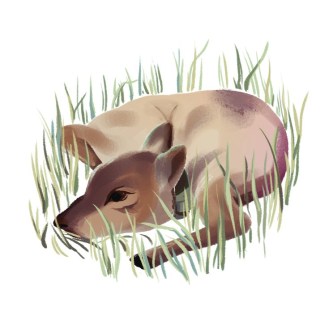
On a family vacation last summer, driving along the empty highways of northern Idaho near the Canadian border, I saw an unlikely road sign—a relic. Diamond-shaped with a yellow background, the sign featured the familiar black silhouette of a deerlike animal. But unlike those on deer-crossing signs, the animal pictured had large antlers and appeared to be ambling toward the road, not leaping. It took me a moment to realize that it was a caribou.

Seeing a caribou wander onto an Idaho highway is about as likely as watching a UFO land there. The South Selkirk herd—the only remaining caribou herd that roamed the continental United States—has dwindled to just two animals, both female. “Not even Noah could save them,” a Canadian biologist told me. Last spring, scientists declared the herd functionally extinct. Continue reading

A Blue Carbon Sink In Australia’s Midst

gettyimages-454427891_custom-36d471720410cb6431d89e0c31878279437006c1-s1400-c85

Researchers studied the carbon storage of deep-water seagrasses living at Lizard Island, Australia. Education Images/UIG via Getty Images

Thanks to National Public Radio for this:

Amid a sea of dire climate change news, researchers say they’ve found a rare bright spot.

A meadow of seagrass among Australia’s Great Barrier Reef — estimated to be twice the size of New Jersey — is soaking up and storing carbon that would otherwise contribute to global warming.

Scientists call this carbon-removal powerhouse a “blue carbon sink.” The term refers to an ocean or coastal ecosystem — including seagrasses, salt marshes and mangrove forests — that captures carbon compounds from the atmosphere, effectively removing carbon dioxide, a known greenhouse gas that contributes to climate change. Continue reading