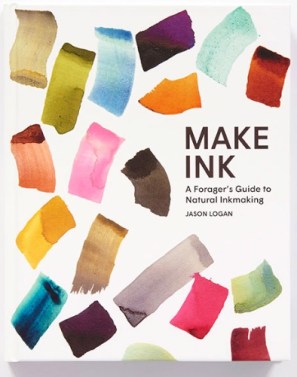
 Since 2011, foraging has been a favored topic here. We have occasionally featured stories with reference to natural colorants, mainly about their various possible uses, and even an exhibition where you could learn more; but not until now have we seen a book like this. It looks like it will be a perfect addition to any of our numerous coffee tables, suited to brighten up even the rainiest afternoon. Click on any image to go to the website for the book. Thanks to Jason Logan for its authorship, and to Amy Goldwasser for bringing it to our attention in the New Yorker:
The founder of the Toronto Ink Company leads a group of pigment enthusiasts on a hunt for acorns, berries, beer caps, and other ingredients.
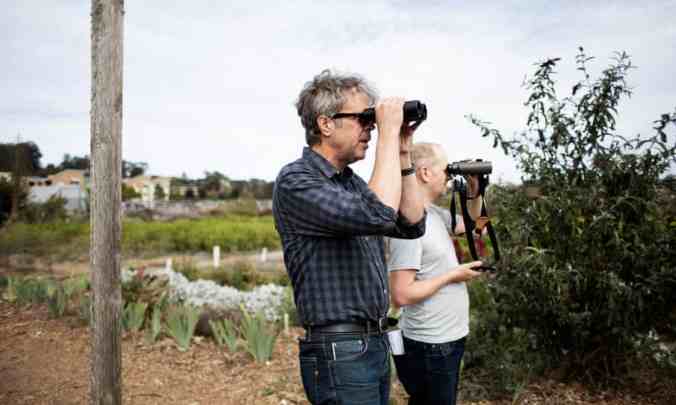
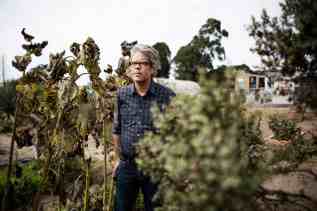
 On a recent drizzly Tuesday morning, a small group of ink enthusiasts—already rain-slicked, under umbrellas and ponchos—stood on Gapstow Bridge, in Central Park, admiring a brilliant-pink pokeweed bush. The Park was the first stop on a five-hour foraging trip that would take them up to Hudson Heights, to collect foliage and trash, which they would cook, to make ink. Their guide, Jason Logan, the founder of the Toronto Ink Company, was in town for the launch of his book, “Make Ink: A Forager’s Guide to Natural Inkmaking.” At a reading in the West Village, he had asked the audience if anyone wanted to go foraging. The city offers some attractive ingredients: acorns, wild grapevines, beer caps, feathers, subway soot.
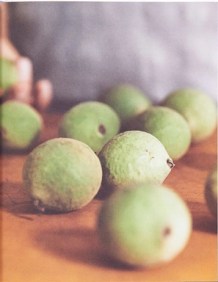 Logan, who is forty-six, became interested in ink about twenty years ago, when he was living in New York, working as an illustrator for newspapers and magazines. He’d burned through a bottle of black-walnut ink, which he’d bought at Pearl Paint, on Canal Street. When he returned for more, the ink was gone. “Then I found black walnuts on my way to work one morning and realized it was easy to make my own deep, rich, delicious ink,” he said.
On the bridge, Logan addressed the foragers, four women of varying ages. He has curly gray hair and was wearing a windbreaker in almost the same hue. “I’m kind of in love with gray,” he said. “It’s interesting for me, too, in terms of ink. Gray is ashes suspended in water.” Logan speaks like a laid-back chemist, using words like “petrichor,” the earthy scent produced when rain falls on dry soil. He carried a backpack filled with ink pots and collection bags.
“That is so bright!” Julia Norton, an artist who teaches a pigment class, said, examining the pokeweed’s fuchsia stems.
“It’s so beautiful it’s hard to believe it just grows like this,” Logan said. “Pokeberry ink was most famously used by Civil War soldiers to write love notes.” Continue reading →