Bringing More Vegetation Into Our Diets

Hercules-Herbs.jpg

Layer bunches of herbs on an ornate oblong platter, and they will become the most decorative feature of any table. Photograph by Joe Woodhouse

Thanks to Olia Hercules for this:

A Case for Eating Herbs as if They Were Vegetables

On a whim one July morning in 1987, my family set off from our small town in south Ukraine in a stuffy old Lada. We drove through Crimea, then rode by ferry to Sochi, and then drove again through Abkhazia and Georgia into Azerbaijan, where our Ukrainian-Armenian extended family lived. My mum recently reminisced about that trip, how we enjoyed late-evening dinners on our relatives’ terrace. There were tandyr-baked flatbreads, katyk yogurt, grilled meats—the works. But what stood out to mum were the herbs. At each meal, a huge platter stood proud in the middle of the table, piled with bunches of greenery: raikhan (purple basil), mint, dill, tarragon, land cress, cilantro, and spring onions. They were long and robust, nothing like those sad, weedy clumps we now buy in supermarkets, and were meant to be eaten by the stalkful, as if they were vegetables. The adults—I was too young then to have a taste for herbs—would pick up a few sprigs of each, fold them in two, dip them into salt, and chomp on them along with fresh radishes and cucumbers, sometimes folded into lavash like a veggie kebab sandwich. Continue reading

Maritime History Just Got Richer

blackseaship_wide-ba336617e8054f7120da46d07a837b5d0c46e374-s1200-c85.jpg

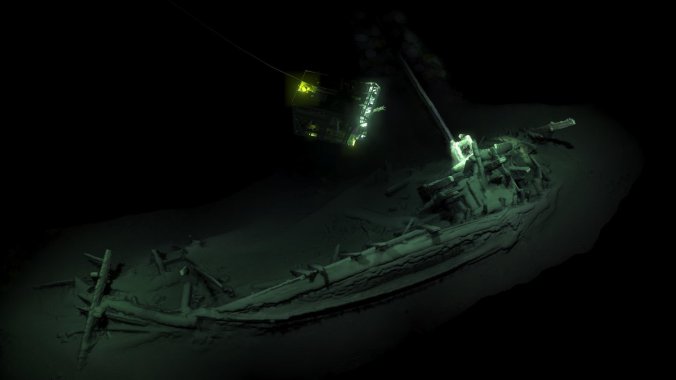
The Black Sea Maritime Archaeology Project says the intact shipwreck was discovered at a depth of more than 1 mile, where the scarcity of oxygen helped preserve the ancient vessel. Black Sea MAP/EEF Expeditions

Who knew there were still such discoveries to be made? Obviously, someone did. And Homer’s epic tale of Odysseus and his journeys plays a part in this story:

‘Oldest Intact Shipwreck Known To Mankind’ Found In Depths Of Black Sea

gettyimages-113635460_sq-30ea9188d1e635b97822388656dde1dcdae3c53e-s1200-c85.jpg

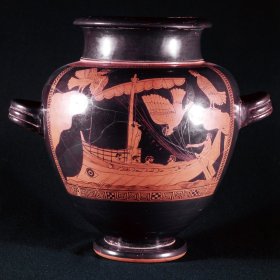
The recently discovered shipwreck reveals details that are similar to the ship on this famed ancient Greek vase, which dates to the fifth century B.C. and depicts Odysseus tied to the mast to brave the sirens.
Universal Images Group/Getty Images

More than a mile beneath the surface of the Black Sea, shrouded in darkness, an ancient Greek ship sat for millennia unseen by human eyes — until the Black Sea Maritime Archaeology Project happened upon its watery grave last year.

The team announced the find Tuesday, saying its discovery has been “confirmed as the oldest intact shipwreck known to mankind.” Radiocarbon-dated to roughly 400 B.C., the trading vessel plied the waves in the days of Plato and Sophocles, when the city-states of ancient Greece had scattered colonies all around the Black Sea.

Since then, it has sat at a depth that more than doubles the height of the tallest skyscraper in the world. In water that deep, oxygen is hard to come by, and because of that, so too are the organic processes that help drive decomposition. That left the ship all but undisturbed until the research team discovered it — along with dozens of other shipwrecks — during an 800-square-mile survey of the seabed. Continue reading

Conversations Between Birders

181029_r33103illuweb

Christopher Skaife Illustration by João Fazenda

Thanks to Sarah Larson for this:

Bird-Watching with the Ravenmaster

The yeoman warder charged with caring for the ravens of the Tower of London hikes along the Hudson.

When he’s at work, at the Tower of London, Yeoman Warder Christopher Skaife typically wears a uniform featuring a royal-blue tabard with scarlet ornamentation, a brass-buckled belt, and a bonnet. (Formalwear involves stockings and a ruff.) Skaife lives at the Tower, too, with his wife, in a house with forty-foot walls and arrow slits for windows. Skaife is the Tower’s Ravenmaster—his new book, “The Ravenmaster,” just came out—and in that role he cares for its most famous current residents, Merlin (a.k.a. Merlina), Erin, Rocky, Jubilee II, Gripp II, Harris, and Poppy, and gives tours to some of the Tower’s three million annual visitors. Recently, while vacationing in Manhattan, Skaife, who is Beefeater-shaped, with a bristly beard, was incognito, dressed in a zippered jacket and cargo shorts. He has tattoos on his calves depicting ravens, as well as, he said, “the skulls of those who were executed on the Tower Green.” On a crisp Friday, Skaife met up with his friend Gabriel Willow, a trim man in a cap, who works with New York City Audubon, to embark on a raven quest.

After a long absence, ravens have returned to the metro area: about six pairs nest in or around New York City. Willow and Skaife visited three potential hot spots—Pelham Bay Park, in the Bronx (mallards, cormorants, egrets; no ravens), far West Twenty-third Street, and Inwood Hill Park, at the northernmost tip of Manhattan. At West Twenty-third and the Hudson River, Skaife and Willow peered through binoculars. “I did see a raven this morning up in Central Park—a big flyby,” Willow said. “I heard cawing and calling, and a murder of crows swirled around, chasing a raven.” Continue reading

Who Will Farm In The Future?

101618_mb_FarmSuccession_EmmaTransplanting_0

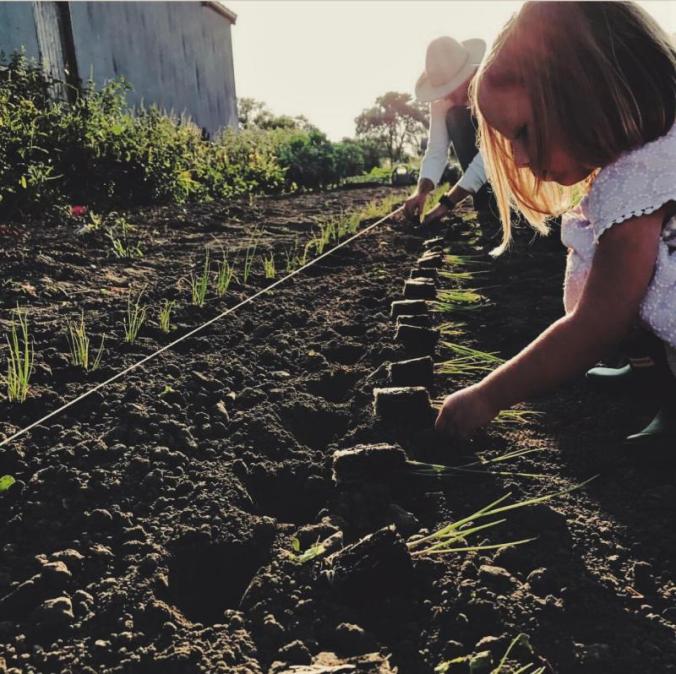
Four-year-old Emma is already helping out at Field and Farm Co., doing things like transplanting onions. SNARE FAMILY / FIELD AND FARM CO.

Thanks to Madelyn Beck:

Handing Off: The Reality Of Land Transfer Between Older, Younger Farmers

101618_mb_FarmSuccession_CurryFamilyFarm

This farm near Springfield, Illinois, has been in the Curry family since 1886, though Kim Curry only moved there in 2008 when her father was dying of cancer. She, her sister and her niece grow and sell pigs, piglets, chickens and cows.
CREDIT MADELYN BECK / HARVEST PUBLIC MEDIA

As life expectancy increases, farmers are staying in the business, but there’s still a need to plan for what happens when they die. At the same time, young farmers who come from non-farming backgrounds are looking for the space to grow their own careers.

A land transfer may seem simple, but challenges abound: How do retiring farmers connect with beginning farmers? When does a farmer confront death? How can smaller farm organizations fit into the ever-growing 1,000-acre farm scene?

101618_mb_FarmSuccession_Curry

Formerly a biochemist in Michigan, Curry now works in disability claims for the state of Illinois on top of helping run the family farm. She said dinnertime often comes late, about 8 or 8:30 p.m.
CREDIT MADELYN BECK / HARVEST PUBLIC MEDIA

Past the likeness of Western movie icon John Wayne etched in stone, a ways down North John Wayne Road and at the end of a long dirt driveway is Kim Curry’s place. A few of the farm’s seven dogs meander up to the gate to bark at anyone who pulls up, while chickens and occasional escapee piglet scrounge for food around the yard.

The Curry Family Farm is near Springfield, Illinois, but unlike most of that area, it has green, rolling hills, a few creeks and a few ponds. It’s been in the family since 1886.

“It’s just so restful and relaxing out here. We’ll have to show you the pigs,” Curry said. “They’re all eating.”

The 59-year-old lives there with her sister and niece, but the three of them can’t keep up with it all, especially because she has a full-time state job working with disability claims.

So, she is selling about 80 acres, which she said “really has potential with someone with younger, more energy.”

And that’s where it gets tricky for people trying to offload land in Illinois, which doesn’t have an online system like several other states — Iowa, Nebraska and Montana, for example — that specifically links older farmers with newer ones looking for land.

Continue reading

Charisma & Conservation

Steve-Pearlman-32_FLUXMAG_WEB

Botanist Steve Perlman rappels into the Kalalau Valley, a biodiversity hotspot on the Hawaiian island of Kauai. COURTESY OF BRYCE JOHNSON/FLUX HAWAII

Thanks to Janet Marinelli and the team at Yale e360 for a reminder that charisma is not all that matters in decisions about conservation:

Extreme Botany: The Precarious Science of Endangered Rare Plants

They don’t make the headlines the way charismatic animals such as rhinos and elephants do. But there are thousands of critically endangered plants in the world, and a determined group of botanists are ready to go to great lengths to save them.

B.insignis-outplanted-in-former-range-at-LImahuli-Garden-2_web

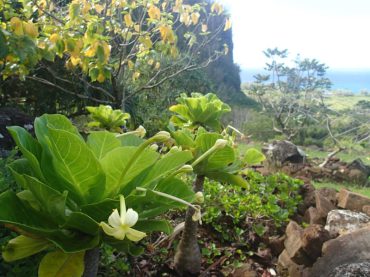
The plant known as cabbage-on-a-stick (Brighamia insignis) has been grown at Limahuli Garden & Preserve on Kauai, which is within the historic range of the species. SEANA WALSH

To save plants that can no longer survive on their own, Steve Perlman has bushwhacked through remote valleys, dangled from helicopters, and teetered on the edge of towering sea cliffs. Watching a video of the self-described “extreme botanist” in actio­­n is not for the faint-hearted. “Each time I make this journey I’m aware that nature can turn on me,” Perlman says in the video as he battles ocean swells in a kayak to reach the few remaining members of a critically endangered species on a rugged, isolated stretch of Hawaiian coastline. “The ocean could suddenly rise up and dash me against the rocks like a piece of driftwood.”

RS40032_Limahuli-Garden_Brighamia-insignis_Nov-8-2016-2_web

A botanist collects pollen from the flower of Brighamia insignis. NATIONAL TROPICAL BOTANICAL GARDEN

When he arrives at his destination, Perlman starts hauling himself up an impossibly steep, razor-sharp cliff 3,000 feet above the sea without a rope, his fingers sending chunks of rock tumbling down to the waters below. Finally, he reaches the plants and painstakingly transfers pollen from the flowers of one to those of another to ensure that the species can perpetuate itself. At the end of the season, he will return to collect any seeds they were able to produce. Continue reading

The Science Of Camouflage

This is more science-y than is our custom, but Nature magazine has been appreciated on this platform as a source of intriguing findings about creatures from time to time, so here goes:

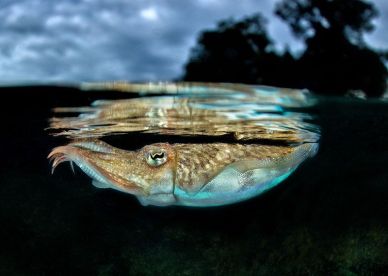
Cuttlefish wear their thoughts on their skin

Elaborate video system tracks how pigment cells controlled by neurons generate complex patterns of camouflage.

d41586-018-07023-7_16205982

Cuttlefish are masters of quick-change camouflage, thanks to skin cells that act as coloured pixels. Credit: Pasquale Vassallo/Getty

Cuttlefish are masters at altering their appearance to blend into their surroundings. But the cephalopods can no longer hide their inner thoughts, thanks to a technique that infers a cuttlefish’s brain activity by tracking the ever-changing patterns on its skin. The findings, published in Nature on 17 October1, could help researchers to better understand how the brain controls behaviour.

The cuttlefish (Sepia officinalis) camouflages itself by contracting the muscles around tiny, coloured skin cells called chromatophores. The cells come in several colours and act as pixels across the cuttlefish’s body, changing their size to alter the pattern on the animal’s skin.

The cuttlefish doesn’t always conjure up an exact match for its background. It can also blanket itself in stripes, rings, mottles or other complex patterns to make itself less noticeable to predators. “On any background, especially a coral reef, it can’t look like a thousand things,” says Roger Hanlon, a cephalopod biologist at the Marine Biological Laboratory in Woods Hole, Massachusetts. “Camouflage is about deceiving the visual system.” Continue reading

Lost & Found, Apples & Ciders

merlin_142713882_be9ebc0e-dd46-437b-98c1-b3318b6157b2-jumbo

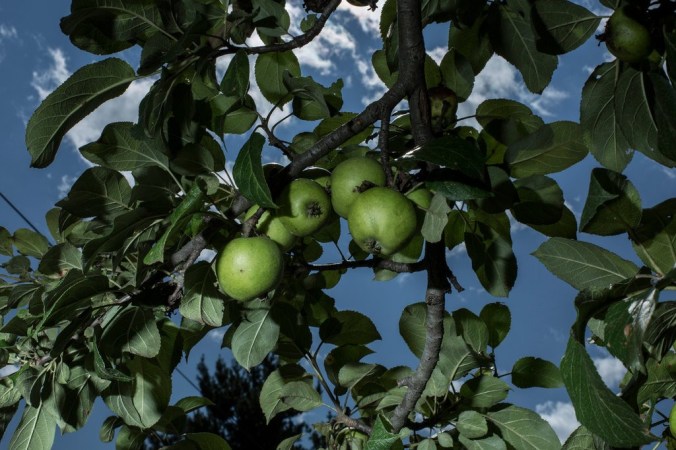
The Harrison apple tree that Thomas Vilardi found near Newark in the fall of 2015. “I knew I had seen apples on a tree,” he said. “I wasn’t expecting to find a Harrison.” Credit Bryan Anselm for The New York Times

Thanks for this article to Rachel Wharton, who is batting 1000 for our taste in food writing:

Finding Lost Apples and Reviving a Beloved Cider

George Washington was among the many fans of Newark cider, a long-missing treat now being recreated by a former ad man on a mission.

merlin_142713408_bab1e622-f74d-40b1-8bce-3ee6fe4b1ae6-jumbo

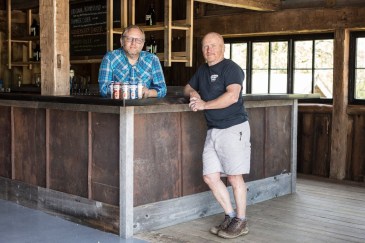
Charles Rosen, left, and Cameron Stark in the new taproom they opened last week at Ironbound Hard Cider in Asbury, N.J. It will serve limited-edition ciders made by Mr. Stark, the head cider maker.CreditBryan Anselm for The New York Times

ASBURY, N.J. — Ironbound Hard Cider may seem an odd name for the business Charles Rosen has built here on 108 acres in central New Jersey. The farm, where a new taproom offers pastoral views of the still-ripening fruit, doesn’t appear to share much with the Ironbound, an industrial neighborhood 50 miles to the east in Newark.

Yet they do have common roots, thanks to four very old apple varieties now growing on Mr. Rosen’s land.

merlin_142713801_a087507e-571c-47c8-a090-d896063758d1-jumbo

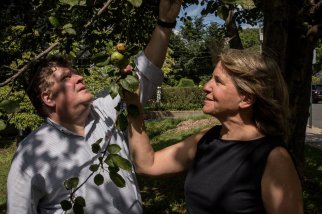
Mr. Vilardi and Fran McManus at the old apple tree he found three years ago. An apple expert connected him to Ms. McManus, who had written an article about Newark cider in 2010. Credit Bryan Anselm for The New York Times

Mr. Rosen, the former chief executive of a Manhattan advertising agency that promoted Svedka vodka and Mike’s Hard Lemonade, wants to reintroduce Newark cider, an 18th- and 19th-century alcoholic drink once famously compared to Champagne.

Newark cider was both a point of pride and big business for the region — requested by name, reportedly lauded by George Washington and produced by dozens of Newark-area cideries with acres of orchards. The secret wasn’t a recipe, but the blending of a quartet of superior apples born in the region: Campfield, Poveshon, Granniwinkle and Harrison, the most celebrated of the four.

merlin_142713792_582225fa-f36e-4060-bf8f-fec10923a552-jumbo

The 1- and 2-year-old apple trees in Ironbound Hard Cider’s nursery include the Harrisons shown here and Poveshons, a New Jersey-born variety thought to be extinct until 2015. Credit Bryan Anselm for The New York Times

As a result of urbanization and then Prohibition, when many of the nation’s remaining cider orchards were destroyed, Newark cider hasn’t been made for at least a century. But after years of planning and planting — not to mention the accidental discovery of two lost apple trees and the investment of what Mr. Rosen called “100 percent of all the money I ever had in my entire life” — Ironbound Hard Cider is on the precipice of bringing it back. Continue reading

110 Million Years And Counting

16SCI-TURTLES2-jumbo

In a village near Watamu, Kenya, a sea turtle accidentally caught by a fisherman was turned over to Local Ocean Conservation. Credit Amy Yee

These creatures have been around forever, more or less. Survived everything that nature threw at them over the epochs. Until mankind and its addiction to plastic. And now it is clear their days are numbered, so any initiative anywhere that tries to slow the clock and keep the species going, we are happy to hear about it and share on this platform. Thanks to Amy Yee for bringing this to our attention:

Rescuing Sea Turtles From Fishermen’s Nets

An organization on the coast of Kenya tries to persuade local residents to help return the trapped reptiles to the ocean, rather than sell their meat and shells for a living.

merlin_145220637_c2a0c017-6041-44e3-9aef-e066644ccaa8-superJumbo

A green sea turtle trapped in a gill net. Scientists estimate the global green turtle population has declined 50 to 70 percent since 1900. Credit Jeff Rotman/Science Source

WATAMU, Kenya — The young hawksbill turtle was accidentally caught in a net in the Indian Ocean off Kenya’s coast.

The fisherman called Local Ocean Conservation, a nonprofit based in the town of Watamu that is the only turtle rescue and rehabilitation center on the East African seaboard. The hawksbill, critically endangered in this region, was a mere seven pounds; adults can weigh up to 160 pounds.

X-rays showed that the reptile’s intestinal tract was clogged with plastic. Hogaar, as Local Ocean named her, floated and couldn’t dive. Gas had built up in her innards after she had eaten small pieces of plastic mistaken for food such as jellyfish. Local Ocean staff members placed Hogaar in a rehab pool and gave her laxatives. She passed feces laced with shreds of packaging and had little appetite. After more than four months at Local Ocean, Hogaar died. A necropsy revealed her gut was also full of sharp shards of white, blue and pink plastic and tangles of blue and gray string.

Turtles are reptiles that have existed for at least 110 million years and survived the mass extinction that killed off dinosaurs. But today, sea turtles worldwide are threatened with extinction. And it’s estimated that only one of 1,000 turtle eggs laid survive to adulthood. Continue reading

Macro Views

main_600

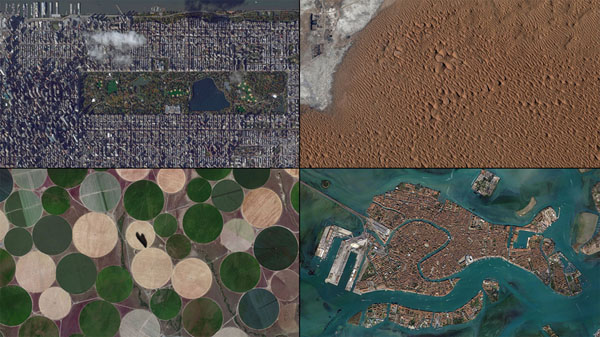
(Clockwise, from upper left) Seven-square-mile views of Manhattan; Chaganbulage Administrative Village in Inner Mongolia; Venice, Italy; and farms in Plymouth, Washington  © Google

Every now and then, it is good to just let the mind wander. And some of those times, visual prompts are the fastest way to get from here to there.

main_600 (1)

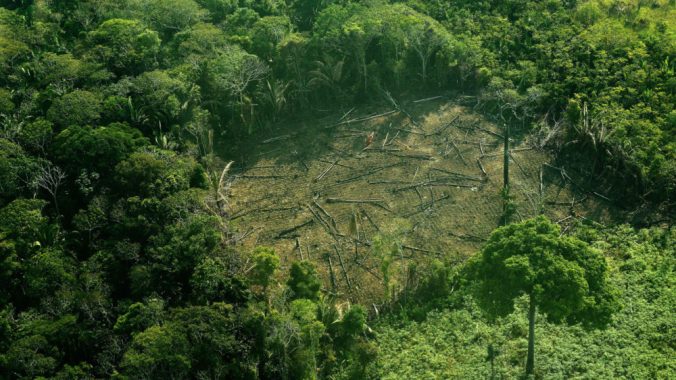
A seven-square-mile snapshot of the 2,700,000-square-mile Amazon rainforest in Brazil © Google

Thanks to the Atlantic’s Senior Editor of the photo section, Alan Taylor, for this:

 Seven Square Miles

main_600 (5)

Multiple channels of a braided river in southern Iceland. See it mapped © Google

Spending time looking at the varying and beautiful images of our planet from above in Google Earth, zooming in and out at dizzying rates, I thought it would be interesting to compare all of these vistas at a fixed scale—to see what New York City, Venice, or the Grand Canyon would look like from the same virtual height. So, the following images are snapshots from Google Earth, all rectangles of the same size and scale, approximately three and a half miles (5.6 kilometers) wide by two miles (3.2 kilometers) tall—showing seven square miles (18.1 square kilometers, or 4,480 acres) of the surface of our planet in each view.

main_600 (2)

A section of Upsala Glacier in Argentina. Explore more here, in Google Maps.  © Google

Continue reading

Forests, Deforestation & Climate Change

Trees cleared in the western Amazon region of Brazil in September 2017. CARL DE SOUZA / AFP / GETTY IMAGES

If you have been following the news recently, you may have noticed a report that indicates the urgency from climate change is greater than scientists previously thought. Everyone who cares has been digesting the science and we appreciate every effort to clarify what the science is saying. Fred Pearce, writing for Yale e360, has this:

Conflicting Data: How Fast Is the World Losing its Forests?

GP0STRVIX_PressMedia_web.jpg

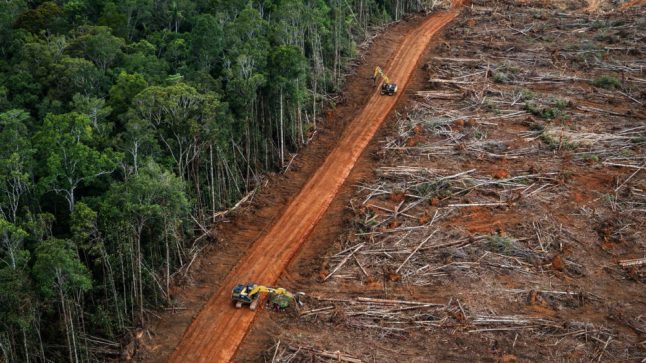
Forest cut to make way for an oil palm plantation in Papua, Indonesia in April 2018. ULET IFANSASTI / GREENPEACE

The latest UN report on climate says reducing deforestation is crucial to slowing global warming. But researchers must first reconcile two contradictory sets of statistics on tree loss in order to determine whether promises made by nations to protect and restore forests are on target.

The world is losing trees faster than ever. An area the size of Italy disappeared last year. Or did it? New research suggests three-quarters of those lost forests may already be regrowing. That hardly means we are out of the woods. Fighting climate change and protecting biodiversity still needs a global campaign to reforest the planet. But it does suggest that, given the chance, nature will do much of the work. Continue reading

Billion Oysters And Counting

BillionOysters

HarborClass

Our school programming puts students at the center of the movement to restore oysters to New York City waters. Explore our Billion Oyster Classroom program, currently in 70+ New York City schools, and high school at the Harbor School.

Every week or so since we started this platform in 2011 we have had too many opportunities to highlight water-based ecological challenges and they seem to outnumber solutions. But it has been our goal to balance the highlighting, neither hiding our head in the sand nor claiming false equivalence between bad news and good.

Given all the challenges facing our oceans and waterways we are always heartened to hear of another initiative that involves collaboration between enterprise, youth and civic organizations. Click the image above or the one to the right to see what the Billion Oyster Project is doing in this regard.   Thanks to National Public Radio (USA) for bringing this initiative to our attention:

Oysters On The Half Shell Are Actually Saving New York’s Eroding Harbor

20180626-dsc_8730_custom-017620689c347e9ace4501eb1e5f40b39875a047-s1400-c85

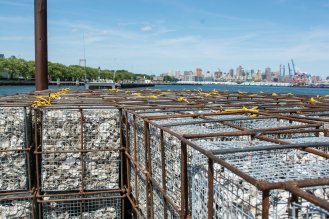
The shells are trucked over to Brooklyn’s Greenpoint neighborhood and once a month are brought en masse to Governors Island in the heart of the New York Harbor. Billion Oyster Project has collected more than 1 million pounds of oyster shells so far. Courtesy of Agata Poniatowski

Across New York City, more than 70 restaurants are tossing their oyster shells not into the trash or composting pile, but into the city’s eroded harbor. It’s all part of Billion Oyster Project’s restaurant shell-collection program.

The journey from trash to treasure begins after an oyster half shell is turned upside down and left on an icy tray. Once discarded, it joins hundreds of thousands of other half shells collected in blue bins and picked up (free of charge) from restaurants five days a week by Billion Oyster Project’s partner, The Lobster Place, a seafood supplier. The shells are trucked over to Brooklyn’s Greenpoint neighborhood and once a month are brought en masse to Governors Island in the heart of the New York Harbor, just yards away from both Brooklyn and Lower Manhattan. There, rolling shell hills sparkle in the sun while “curing” out in the elements for one year, a process that rids them of contaminants.

zadies_morganioneyeager-231_custom-8561dab3ee768ba35d5c28f16d698c2144cc7889-s1400-c85

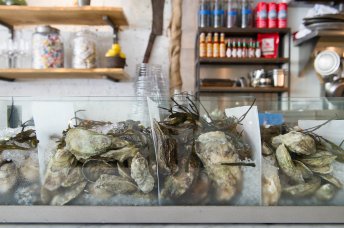
Oysters at Zadie’s Oyster Room, one of the New York City restaurants participating in Billion Oyster Project’s shell-collection program.
Courtesy of Morgan Ione Yeager

The shells then get a final cleaning and are moved to Billion Oyster Project’s hatchery at the Urban Assembly New York Harbor School, a public high school on Governors Island that offers technical and vocational training in the marine sciences. In an aquaculture classroom’s hatchery, student-grown oysters produce larvae in an artificially induced springtime environment. In one to two weeks, each larvae grows a “foot” — a little limb covered in a kind of natural glue — and then is moved to a tank full of the “cured” restaurant shells, which serve as anchors for all of those sticky feet. This phase is critical: If larvae can’t find a place to attach, they die. One reclaimed shell can house 10 to 20 new live oysters, depending on shell size. Continue reading

The Picture From The Recent Climate Change Report Is Now More Clear

Chart_lg.gif

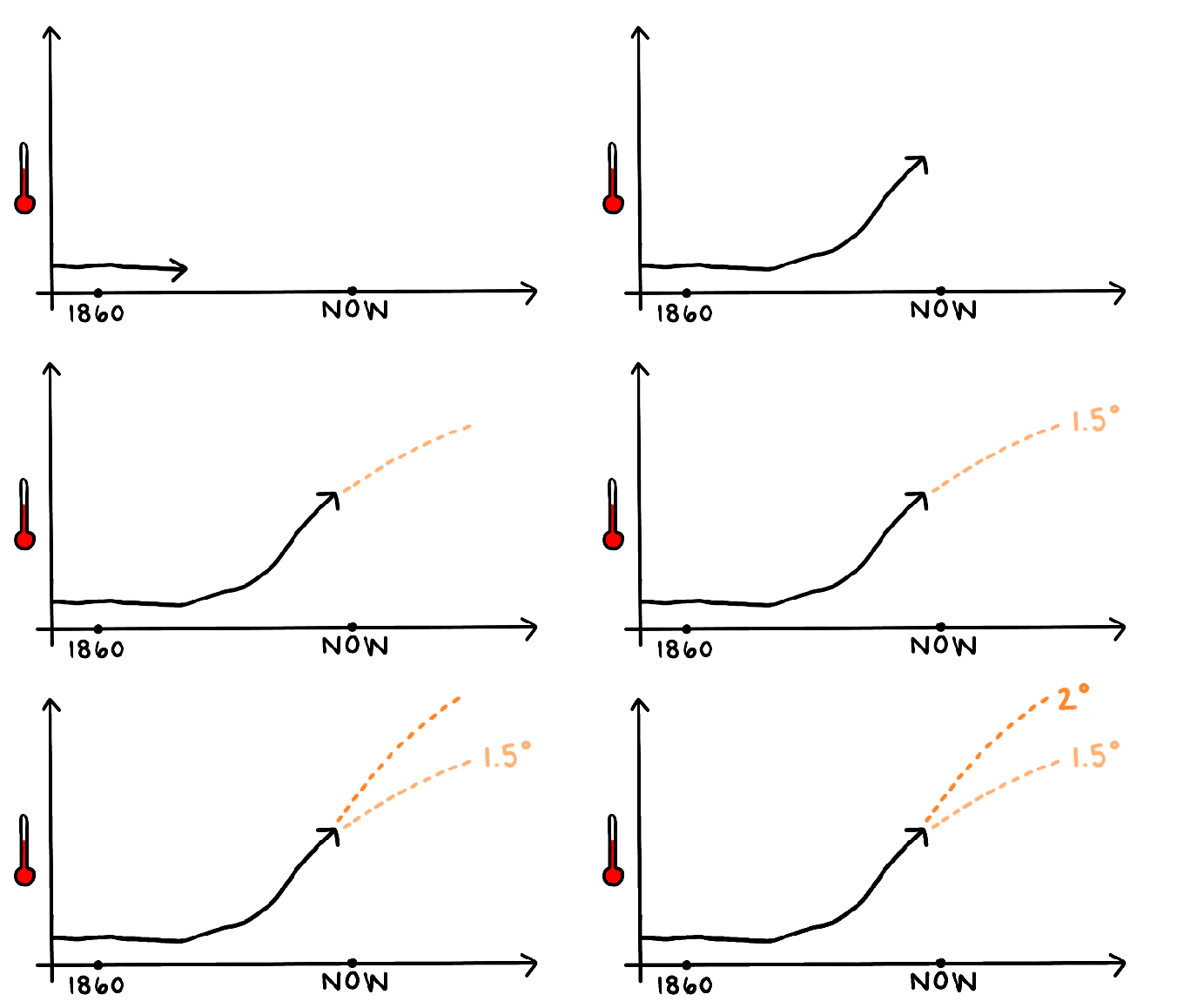
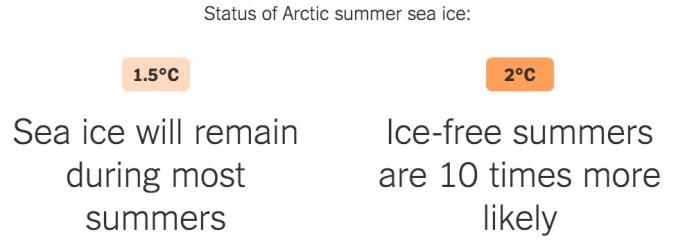
Deniers, we already know you will find a way to see this from some other perspective, and we have given up trying to understand why you do that. But for everyone else, there is still time to understand the implications of this science. And there is no shame in using props to help learn. Thanks to Brad Plumer and Nadja Popovich for making sure we get the point, with clear graphical illustration, about what this recent study is saying and why every one of us should care:

Heat

Extreme heat will be much more common worldwide under 2°C of warming compared to 1.5°C, with the tropics experiencing the biggest increase in the number of “highly unusual” hot days.

Read the rest of this graphics-rich story here.

Have Some Salad With Your Plastic

merlin_143316399_377dd052-ed87-4657-b6e9-7c66c90d8ab1-superJumbo.jpg

Credit Photo Illustration by Stephanie Gonot for The New York Times

Thanks to Jonah Engel Bromwich for asking it clearly:

Is Your Salad Habit Good for the Planet?

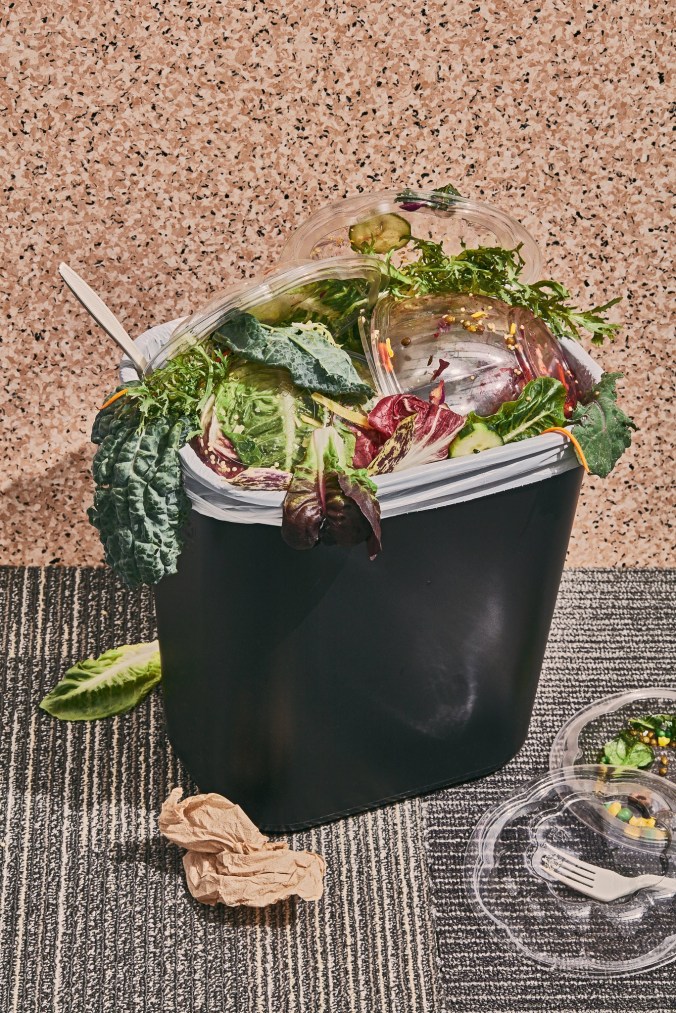
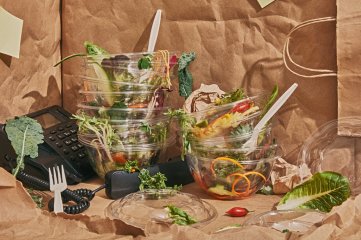
Popular fast-casual chains brag of sustainability, as customers toss their compostable and recyclable bowls into the trash with wild abandon.

30saladbowls1-jumbo.jpg

One word: plastic.CreditPhoto Illustration by Stephanie Gonot for The New York Times

Every weekday, shortly after 11 a.m., a line forms at the Broadway and 38th Street location of Sweetgreen, the eco-conscious salad chain. By noon, the line has usually tripled in size. It often takes more than 15 minutes to get to the front.

The scene is similar at the Chop’t at 41st and Broadway, or the Dig Inn on West 38th, or the Just Salad one block south. In the heart of Midtown Manhattan, the evidence is hard to dismiss: Greens, once so unappetizing that parents all over the country had to beg and bribe their children to eat them, have never been hotter. (Almost as hot: their denser, younger cousin, grains.) Continue reading

Helping Coral Repopulate

lead_720_405 (3).jpg

Valérie Chamberland and Erik Houtepen look for signs of spawning in grooved brain coral colonies. EXPOSURE LABS

Thanks to Michelle Nijhuis, whose science writing we have been following since 2014 but up to now mostly in another magazine we source from; this is as fine as it comes:

b8f1093ff.jpg

EXPOSURE LABS

Valérie Chamberland swims like a dolphin, quickly and fluidly, and for most of the past hour she has been darting through the warm, shallow water off the Caribbean island of Curaçao. Now, she is dangling upside down, hovering above a pillow-sized brain coral. Her rubber fins twitch steadily overhead, and as she sips air from the aluminum tank on her back, a stream of bubbles rises from her regulator’s mouthpiece.

The reef spread below Chamberland isn’t one of those flashy, fluorescent gardens seen in calendar photos and nature documentaries. Only a few dozen yards from shore, it lies almost literally in the shadows of a stone jetty, a busy casino, and a Denny’s restaurant. The waters that surround it are murky, and most of its corals are brown and lumpy, sparsely accessorized with bright-purple vase sponges and waving, rusty-red sea fans. Continue reading

Nature Lovers Versus Nature Lovers Versus Reality

In just under half an hour, hear a very complex question answered (or not) from two very compelling, and very different perspectives:

Into the Woods with Scott Carrier

In Montana’s Yaak Valley, a hiking trail that cuts through a grizzly-bear habitat pits nature lover against nature lover in an unwinnable fight over the environment.

Grandparents’ Approach To Avoiding Food Waste

5184b.jpg

‘Whatever’s in the fridge’: a traditional cottage pie. Photograph: neiljlangan/Getty Images/iStockphoto

This time of year, harvests finishing in many places, abundance is about to give way to the longer lean season. Maybe that is the perfect time to start thinking about stretching the ingredients at hand:

How to avoid food waste: top chefs on their grandparents’ favourite dishes – and what they taught them

Angela Hartnett, Fergus Henderson, Raymond Blanc and many others describe the frugal simplicity – and delicious flavours – that inspire their cooking today

4152.jpg

Summer pudding with ‘beautiful glossy purple juice’. Photograph: Katherine Anne Rose for the Observer

It is all too easy to romanticise the past, particularly with food. In Britain, rationing created a postwar generation that was very well-nourished, but also utterly bored by the meals it ate … or endured. Similarly, for all the criticism levelled at processed foods (“Don’t eat anything your great-grandmother wouldn’t recognise as food,” as the writer Michael Pollan famously advised), food has never been cheaper, nor easier to access and prepare. In 1957, as a proportion of their weekly income, UK households spent roughly double what they now spend on food – 33% of their money. There is a kind of liberation in the Pot Noodle.

Yet among many chefs and campaigning food writers, the sense persists that on a number of issues – particularly food waste, but also obesity, nutrition, cost, pleasure even – there is much to admire in how our grandparents ate. In an era of limited choice and tight budgets, they made a virtue of the necessity to cook with whatever fresh ingredients were available. “My grandparents didn’t cook ‘sustainably’, but they did cook every day, one of life’s best skills, and they didn’t throw leftovers away. To that extent, they were thrifty,” says Tom Hunt, the self-styled eco-chef and Guardian columnist.

To examine that idea, we asked a number of top chefs to choose a meal that encapsulates how their grandparents cooked and to explain how, in its frugal simplicity, it still influences them. Call it going back to the future. Continue reading

A Visual Requiem, And A Call For Quiet Grace At The Grand Canyon

Paumgarten-Grandy-Canyon_01.jpg

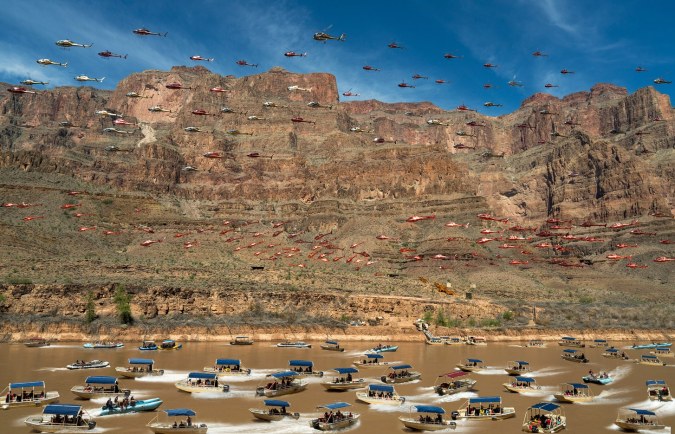
In a merged image, the photographer Peter McBride captured a vision of the Grand Canyon choked by noise and exhaust. Photograph by Pete McBride

Noise pollution was the topic of several of the first posts on this platform when we started it in 2011, and has been a persistent theme ever since then. We especially appreciate those related to noise in wilderness areas, so thanks to Nick Paumgarten for this story:

The Grand Canyon Needs to Be Saved By Every Generation

Paumgarten-Grandy-Canyon_03.jpg

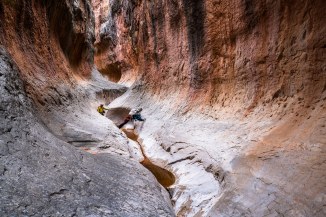
Hiking in the Grand Canyon can be a perilous pursuit. Photograph by Pete McBride

Three years ago, in the course of thirteen months, the photographer Peter McBride and the writer Kevin Fedarko hiked from one end of the Grand Canyon to the other. They did it in eight sections, mainly so that McBride could shoot in different seasons. In all, it took them seventy-one days to cover two hundred and seventy-seven river miles and some eight hundred shoe-leather miles, through some of the continent’s roughest hiking terrain—“a whole lot of scratching around the rock puzzles in that giant abyss,” as McBride put it recently.

Before they set off, the Grand Canyon had been hiked nose to tail only nine times in recorded history. There is also a handful of obsessives who have chipped away at it, piece by piece, in the course of decades. “Maybe some crazy ancestral Puebloan did the whole thing, but that wouldn’t make logical sense—they wouldn’t have had any reason to,” McBride said.

Paumgarten-Grandy-Canyon_02.jpg

 panoramic view of the confluence of the Colorado and the Little Colorado. Photograph by Pete McBride

McBride, a native Coloradan who shoots for National Geographic, has been documenting the Colorado River for a decade, sometimes from a perch in an ultralight aircraft. Fedarko, who lives in Flagstaff, Arizona, has guided on the river and is the author of “The Emerald Mile,” an account (with many historical tributaries) of a harrowing speed run of the Grand in a dory during the biggest flood in generations. (As it happens, Kenton Grua, the boatman in the book, was also the first person to walk the canyon, in 1976.) McBride and Fedarko have both become persistent, ardent advocates for preserving the place, in all its spellbinding, inhospitable glory, in abidance with Teddy Roosevelt’s famous dictum, issued during his one visit, in 1903: “Leave it as it is. Man cannot improve on it; not a bit.” Still, this was the first time, and surely the last, that either of them had tried to walk it. Continue reading

Analyzing Local Sources Of Big Carbon Footprints

lead_720_405.png

GOOGLE

What gets measured gets managed. In the realm of climate science, national governments have the scale and responsibility to be involved in measurement. But if a skeptic is in charge of the government apparatus, good luck with that. With the national government of one of the big carbon footprint countries abandoning science and dropping out of the fight to reduce climate change, one of that country’s biggest companies is stepping up to offer an alternative. It may be too little too late but under the circumstances we may have no choice but to cheer it on:

Google’s New Tool to Fight Climate Change

The company will begin estimating local carbon pollution from cities around the world.

In the next decade or so, more than 6,000 cities, states, and provinces around the world will try to do something that has eluded humanity for 25 years: reduce their emissions of greenhouse gases, which warm the atmosphere and cause climate change.

The city-level leaders overseeing this task won’t have the same tools available to their national peers. Most of them won’t have an Environmental Protection Agency (or its equivalent), a meteorological bureau, a team of military engineers, or nasa. So where will they start? Never mind how to reduce their city’s greenhouse-gas emissions; how will they know what’s spewing carbon dioxide in the first place?

Maybe Google will do it for them. Or, at least, do it with them.

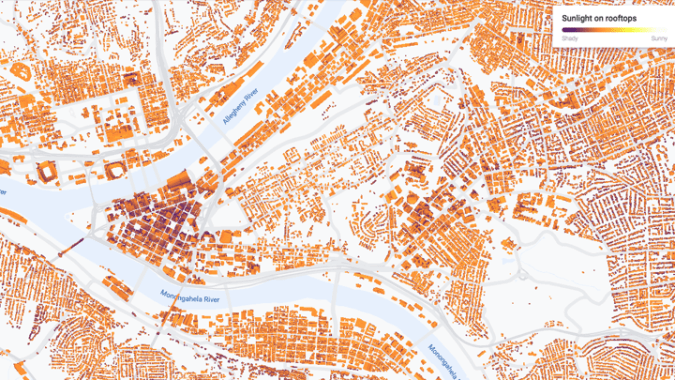
Google has started estimating greenhouse-gas emissions for individual cities, part of what it recently described as an ambitious new plan to deploy its hoard of geographic information on the side of climate-concerned local leaders. Continue reading

A Big Purpose In Utah

181001_r32893.jpg

Utah used to be home to the largest national monument in the continental United States. Now the owners of Hell’s Backbone Grill are fighting to restore it. Photograph by Jim Mangan for The New Yorker

We wrote once prior, a couple months ago, on this book but we see reason to post a bit more on it here. Here is a New Yorker profile-length detailed description of the story briefly mentioned in the prior post. Thanks to Kathryn Schulz for keeping our eyes on the prize that these two chefs have decided to fight for:

Why Two Chefs in Small-Town Utah Are Battling President Trump

The owners of an improbably successful restaurant at the gate of a vast wilderness are fighting to keep it unspoiled.

181001_r32894.jpg

Blake Spalding with two of her seven goats. Photograph by Jim Mangan for The New Yorker

In south-central Utah, where the topography is spectacular, desolate, and extreme, the pessimistic tradition in place-names runs strong. Head south from Poverty Flat and you’ll end up in Death Hollow. Head east from Dead Mare Wash and you’ll end up on Deadman Ridge, looking out toward Last Chance Creek and down into Carcass Canyon. During the Great Depression, when the whole state turned into a kind of Poverty Flat, the Civilian Conservation Corps sent a group of men to the region to carve a byway out of a virtually impassable landscape of cliffs and chasms. The men nicknamed the project Poison Road: so steep that a single drop would kill them. Midway up, the ridge they were following gaped open and plunged fifteen hundred feet to the canyon floor. They laid a span across it, and called it Hell’s Backbone Bridge.

Today, the entire route built by those men is known as Hell’s Backbone Road. Still largely unpaved, still treacherous in bad weather, it connects the town of Escalante to the tiny hamlet of Boulder, long reputed to be one of the most remote settlements in the continental United States. As late as 1940, the mail there was delivered via an eight-hour trek by mule team; the first lights did not flicker on until Christmas Eve, 1947. Until the nineteen-seventies, locals had to spend up to forty-eight hours in transit to obtain any number of essential goods and services: a new pair of socks, medical care, anything beyond an eighth-grade education. Continue reading

Climate Change’s Other Casualties

Scotland.jpg

Some of the world’s oldest structures have survived for 5,000 years in the Orkney Islands. Kitchens. Forges. Round houses. Now they face dire threats from climate change.