Horses Reversing Domestication

SZA-20140711_194702-e1553695110699.jpg

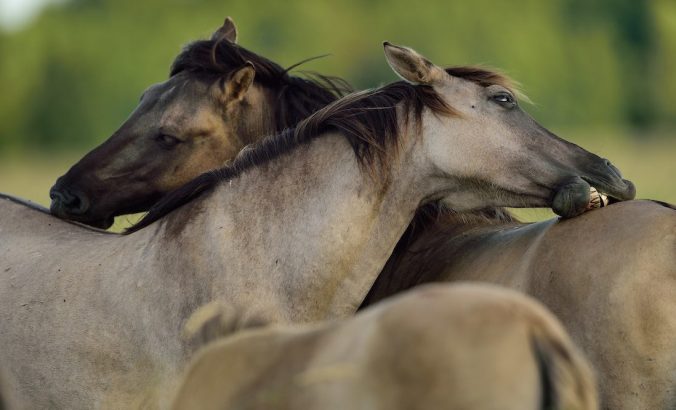
The group of 23 wild Konik horses which arrived in the Ukrainian village of Orlovka on March 26 represents the first translocation of such animals into the Danube Delta. SOLVIN ZANKL / REWILDING EUROPE

Thanks, as always, to our friends at Rewilding Europe for another story about an animal we always think of as one of the oldest examples of domestication, and its role in rewilding:

Natural grazing in the Ukrainian Danube Delta boosted by arrival of Konik horses

Representing the first ever translocation of Konik horses into the Danube Delta, the shipment of 23 animals travelled by road from Latvia to the Ukrainian village of Orlovka. By helping to create and maintain mosaic landscapes, their grazing will help to boost biodiversity in the Danube Delta rewilding area.
SZA-20140709_175536-e1553683904215-1248x455.jpg

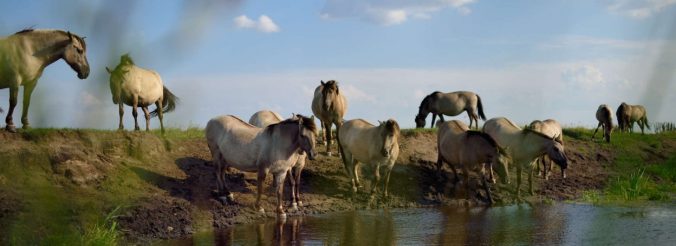
The sturdy Koniks, which lived over 20 years in the wild in Latvia, are well-suited to life in the Danube Delta. SOLVIN ZANKL / REWILDING EUROPE

Two herds of wild Konik horses will soon be roaming the landscapes of the Ukrainian Danube Delta, boosting the area’s biodiversity through their natural grazing. A shipment of 23 horses (made up of two family groups) arrived in the small delta village of Orlovka on March 26, having made the long road journey from Latvia. Despite the lengthy trip of around 1800 kilometres, which took nearly two days and two nights, all of the animals were pronounced fit and well on arrival by a veterinarian. Continue reading
South-South Cooperation In The Fight Against Invasive Species

2759.jpeg

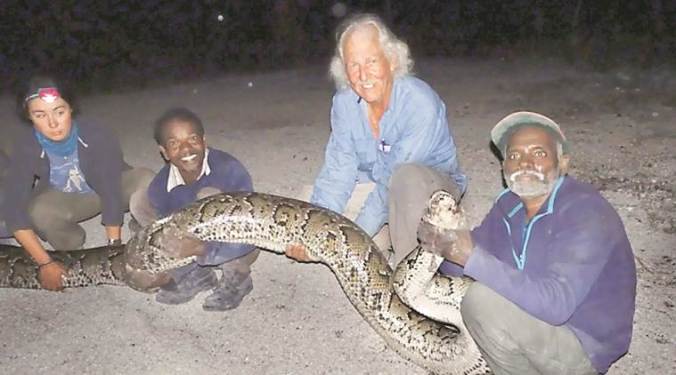
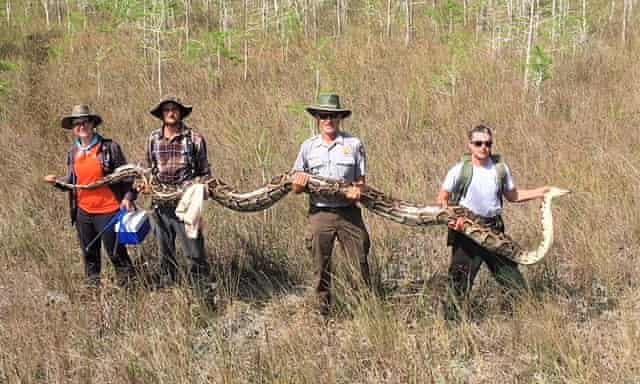
We missed the story last year about two men in the photo above, from southern India, who were brought to the Florida habitat where invasive pythons are doing enough damage that we started paying attention eight years ago. We are thinking about it again, thanks to the Guardian:

Snake hunters have captured what they say is the largest python ever found in the swamps of the Florida Everglades: a pregnant female more than 17ft (5.2 metres) long and weighing 140lb, or 63.5kg.

The team from the Big Cypress National Preserve posted news of their record-setting catch in a Facebook post that also noted the giant reptile was carrying 73 eggs.

640 (1).jpg

Big Cypress National Preserve group captures 17ft female python on 4 April. Photograph: Big Cypress National Preserve/Facebook

Environmentalists have been struggling to find ways to eradicate Burmese pythons, a non-native species, from the 1.5m-acre wilderness since the 1980s, when some were released into the wild as overgrown pets. Others escaped from a breeding facility wrecked by Hurricane Andrew in 1992. Continue reading

The Guardian Is A Public Service Newspaper

1157.jpg

The Mauna Loa weather observatory in Hawaii. The Guardian will publish the Mauna Loa carbon count every day. Photograph: Courtesy of NOAA

Our thanks to the Guardian for this reminder of our shared responsibility:

Why the Guardian is putting global CO2 levels in the weather forecast

As CO2levels climb, the carbon count is a daily reminder we must tackle climate change now

The simplest measure of how the mass burning of fossil fuels is disrupting the stable climate in which human civilisation developed is the number of carbon dioxide molecules in the atmosphere.

Today, the CO2 level is the highest it has been for several million years. Back then, temperatures were 3-4C hotter, sea level was 15-20 metres higher and trees grew at the south pole. Worse, billions of tonnes of carbon pollution continues to pour into the air every year and at a rate 10 times faster than for 66m years.

At the dawn of the industrial revolution, CO2 was at 280 parts per million (ppm) in the atmosphere. By 1958, when the first measurements were made at Mauna Loa in Hawaii, it had reached 315ppm. It raced past 350ppm in 1986 and 400ppm in 2013.

The Guardian will now publish the Mauna Loa carbon count, the global benchmark, on the weather page of the paper every day.

“When I read the letter from Guardian reader Daniel Scharf encouraging us to include information on climate change in our weather forecasts, we thought it was a fantastic idea,” said the Guardian’s editor-in-chief, Katharine Viner. Continue reading

Renewables For Communities In Need

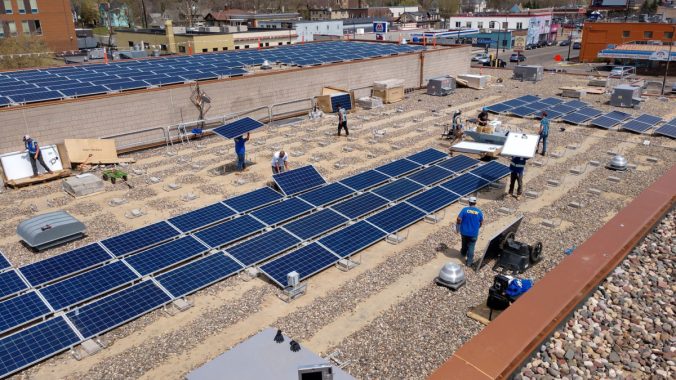
CEF_Shiloh-Temple_IMG_20180503_133709053_HDR_web.jpg

EnterA 204-kilowatt community solar array being installed on the roof of the Shiloh Temple International Ministries in Minneapolis. COURTESY OF COOPERATIVE ENERGY FUTURESa caption

Thanks to Maria Gallucci and Yale e360 for this:

Energy Equity: Bringing Solar Power to Low-Income Communities

Millions of Americans lack access to solar energy because they cannot afford the steep upfront costs. Now, more than a dozen states are adopting “community solar” programs that are bringing solar power and lower energy bills to low-income households from New York to California.

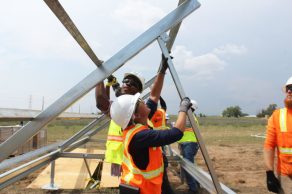
GRID-Alternatives_CO-Solar-Training-Academy-Platteville-0818-03_web.jpg

Workers receive job training while building a shared solar farm in Platteville, Colorado. COURTESY OF GRID ALTERNATIVES

Isbel “Izzy” Palans lives in a small cabin nestled among mountain peaks and towering trees in the Colorado Rockies. Her home is often shaded and, during the long winters, buried under heaps of snow. Her monthly utility bills show credits for solar electricity production, but no solar panels are affixed to her roof. Instead, the power comes from a solar array some 60 miles away in a nearby valley.

Last year, the panels nearly slashed her energy bill in half. “I’ve been thrilled,” said Palans, a 76-year-old retired waitress who relies partly on Social Security benefits to make ends meet.

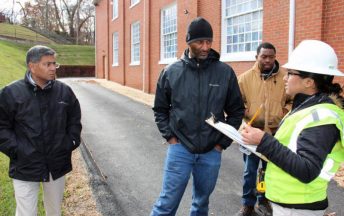
Groundswell_DC_Dupont-Church_IMG_1237_web2.jpg

Solar contractor Brad Boston (center) and utility representatives meet with engineer Pranay Kohli to discuss a community solar project at DuPont Park Seventh Day Adventist Church in Washington, D.C. COURTESY OF GROUNDSWELL

Palans is a subscriber to a 145-kilowatt solar array project run by Holy Cross Energy, a rural utility cooperative. Built with state funding, the program provides solar credits to more than 40 low-income households in western Colorado that otherwise wouldn’t have the financial or technical means to access renewable energy. The venture is just one of a growing number of so-called “community solar” projects across the United States focused on delivering renewable energy — and the cost-savings it can provide — to low-income households, from California to Minnesota to Massachusetts. Continue reading

Authentica & Organikos

Organikos2019LogoAuthentica, mentioned a couple of times prior to the current series of posts, has the character of a startup but its goal is the opposite of disruption.

A major disruption already happened, and if one of the antonyms of disrupt is organize, then that is what we are doing. Authentica is part of a nascent movement in Costa Rica to provide market opportunities to artisans, farmers, food producers and others who design, craft, grow and cook things that are essentially Costa Rican. The disruption they faced is not the story we want to tell. The reversal of that disruption is the story.  One example is Organikos. Continue reading

Design, Taste, Ephemera

Design1

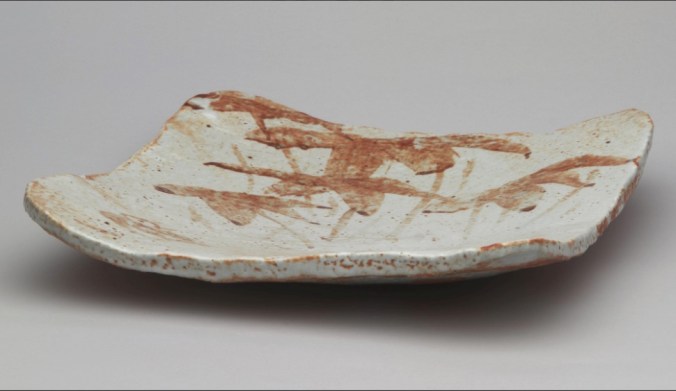
Kitaoji Rosanjin. Square platter with rounded edges. 1954

In preparing to exhibit things we believe represent Costa Rica well enough that we would want travelers to take some such things home with them, MOMA’s The Value of Good Design provides a valuable pause. The image above, from the MOMA show, is an example of good design of a tactile thing. As the video below shows that is what good design means in MOMA’s estimation, namely things that you want to look at as much as you want to touch or use.

Costa Rica, and its visitors, would benefit from an exhibition of things that are useful, inspiring, and/or in good taste.  Our contribution to this effort has focused on coffee, so we are inclined to think about taste in the gustatory sense, as in what flavors and aromas please. This type of pleasure is more ephemeral than something you can look at and touch over and over.

Design2.jpgAnother sense of good taste, which also has value: we do not consider it in good taste to sell things in Costa Rica that are foreign-made replicas of Costa Rican traditional arts and crafts. And that has been very much on our mind. It is a challenge we have signed on to. The MoMA exhibition inspired Nikil Saval to share a few thoughts about How “Good Design” Failed Us and they strike me as relevant to our own current challenge to be tasteful:

In 1958, the American radical sociologist C. Wright Mills was invited to address the International Design Conference, in Aspen. The lecture he gave, “Man in the Middle: The Designer,” criticized a number of its audience members for being willing dupes in the grand illusion that was consumer society. Continue reading
Impossible Made Possible By Pat Brown

01impossible1-jumbo.jpg

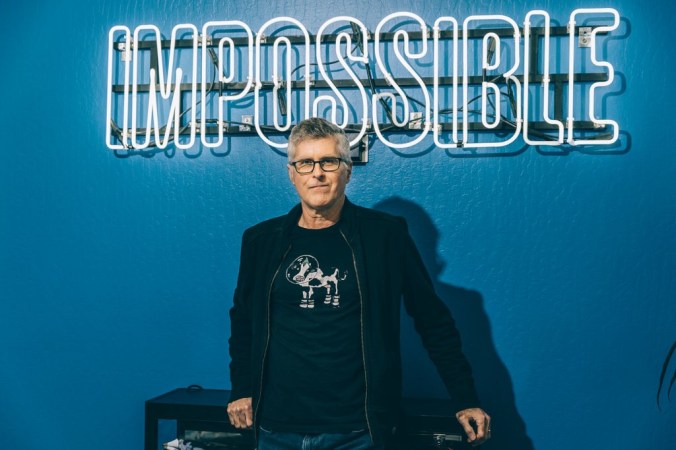
“Our whole focus is on making products that deliver everything that meat lovers care about,” said Pat Brown, the chief executive.  Matt Edge for The New York Times

We were waiting patiently for this day to come. Impossible has had our attention for a couple years now, but who knew when it would go really big? The time is now:

Behold the Beefless ‘Impossible Whopper’

Burger King is introducing a Whopper made with a vegetarian patty from the start-up Impossible Foods. The deal is a big step toward the mainstream for start-ups trying to mimic and replace meat.

OAKLAND, Calif. — Would you like that Whopper with or without beef?

merlin_142926714_e16db61c-10ca-410f-a951-850718fda06a-jumbo.jpg

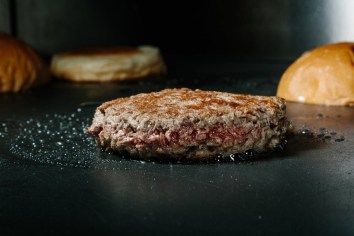
An Impossible Foods burger on the grill at the company’s headquarters in Redwood City, Calif.CreditJason Henry for The New York Times

This week, Burger King is introducing a version of its iconic Whopper sandwich filled with a vegetarian patty from the start-up Impossible Foods.

The Impossible Whopper, as it will be known, is the biggest validation — and expansion opportunity — for a young industry that is looking to mimic and replace meat with plant-based alternatives.

Impossible Foods and its competitors in Silicon Valley have already had some mainstream success. The vegetarian burger made by Beyond Meat has been available at over a thousand Carl’s Jr. restaurants since January and the company is now moving toward an initial public offering.

White Castle has sold a slider version of the Impossible burger in its 380 or so stores since late last year. Continue reading
Flamingos In The City

5059

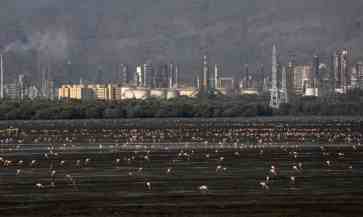
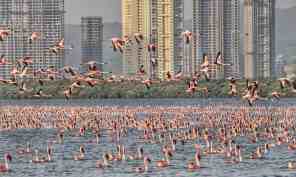
Flamingos eat plankton in front of an industrial area at Sewri mudflats, Mumbai. Photograph: Divyakant Solanki/EPA-EFE

Payal Mohta reported from Mumbai for this story in the Guardian that caught our attention with images of urban flamingos. An unusual beauty can be the result of a common problem. As it is important to understand nature in wilderness areas, which is our strong preference, it is also important to understand these man-made phenomena:

3284.jpg

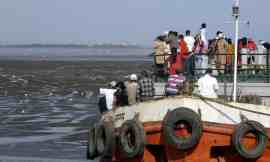
People watch flamingos from a boat during the Bombay Natural History Society’s flamingo festival. Photograph: Hindustan Times/Hindustan Times via Getty Images

There is an air of anxious excitement among the urban professionals and tourists on board our 24-seater motorboat as we enter Thane Creek.

A chorus of “oohs” and “aahs” breaks out as we spot the visions in pink we came to see – hundreds of flamingos listlessly bobbing in the murky green water – followed by the furious clicking of cameras.

4898

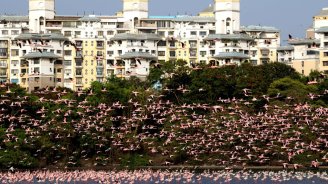
Flamingos at Sewri. Photograph: Hindustan Times/Hindustan Times via Getty Images

Then, almost as one, the birds skim the water and take off in sync. “They always stay together,” says Prathamesh Desai, who has been organising birding excursions in the city for seven years. “They are an extremely gregarious species.”…

1857

Flamingos at Sewri. Photograph: Hindustan Times/Hindustan Times via Getty Images

gettyimages-960486752_wide-883dade8322ed23956ec36d5285d3f8b5751b17b-s1200-c85.jpg

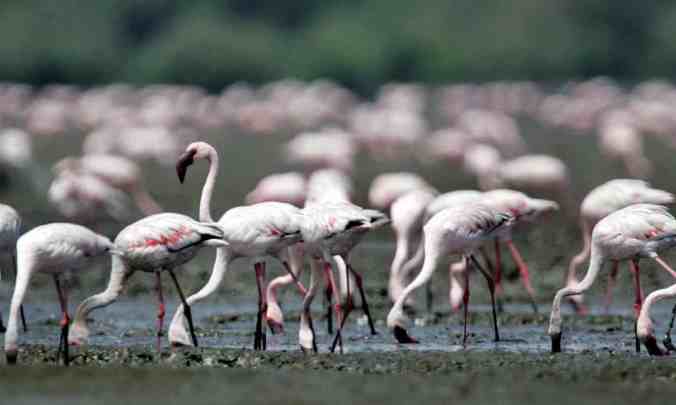
Flamingos flock to Mumbai between September and April, but this year there are almost three times more birds than the amount that usually flocks to the area.
Bachchan Kumar/Hindustan Times via Getty Images

That story continues after the jump below. First, thanks to National Public Radio (USA)’s Audrey Nguyen and Sarah Oliver for producing and bringing this story to our attention with this opening line (which goes on to credit the Guardian story as its source):

Around this time every year, tens of thousands of flamingos flock to Mumbai to feed. But this year, there are almost three times more than the normal amount in the city — about 120,000.

The reason for the influx is currently a mystery. But some scientists believe that pollution in the birds’ natural habitat might be one factor at play… Continue reading
Mass Transit Morphing

Weeks 297, 2008 - Photo by Stephen Mallon.jpg

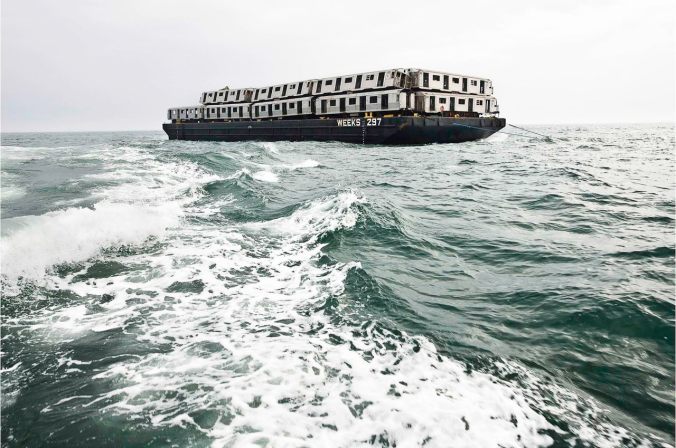
Subway cars set sail on a barge in “Weeks 297, 2008.” STEPHEN MALLON

Thanks to Winnie Lee and Atlas Obscura:

Photographing the New York City Subway Cars That Retired as Artificial Reefs

How Stephen Mallon captured this unusual voyage to the bottom of the ocean.

image.jpg

The rooftops of subway cars. “Abbey Road, 2008.” STEPHEN MALLON

The photographer Stephen Mallon specializes in documenting man’s industrial-scale creations. During his career, he’s focused his lens on the recycling industry, the largest floating structure ever built, and the transportation and installation of a new bridge in New York City. So it wasn’t surprising when, in 2008, he was drawn to an unusual program spearheaded by the MTA New York City Transit system: a multi-phased artificial reefing project that saw the shells of 2,580 decommissioned subway train cars repurposed and dropped into coastal waters off New Jersey, Delaware, Maryland, Virginia, South Carolina, and Georgia, between 2001 and 2010.

image (1).jpg

The abstract beauty of stripped-down vehicles in “Transfer, 2009.” STEPHEN MALLON

Mallon arranged to follow the outdated subway cars as they were prepared and cleaned, loaded onto barges, and finally plopped into the sea. As he traveled with a crew in a tugboat to get his shots, the photographer developed his sea legs.

image (2)

Subway cars hoisted in the air in “Mind The Gap, 2008.” STEPHEN MALLON

“I was never underwater, so just needed to keep myself steady on the back of the boat. It’s kind of like surfing or skiing—just keep your balance, keep the horizon line straight, bend your knees, and don’t fall overboard,” Mallon says. Continue reading
Seeds Are Our Future

Lotus-seeds.jpg

Lotus flower seed heads and raw, un-puffed lotus seeds.

Lotus flower first appeared in these pages years ago, but its seeds were never mentioned. Time to correct that. We missed the opportunity to mention this book when it was first published–we missed the enthusiastic review–but better late than never. Thanks to the folks at Gastropod for the shoutout in a recent episode that gives Thor Hanson and his book their due:

Seeds

02b9f459390ae3332af708bdd6a67871

When seeds first evolved, hundreds of millions of years ago, they not only revolutionized the plant world, but they also eventually sowed the path for human civilization. Today, it’s nearly impossible to eat a meal without consuming a plant embryo—or many. But how did seeds come to play such a critical role in human history? Why might one seed in particular, the lotus seed, hold the secret to immortality? And, perhaps just as importantly, how does this magical seed taste?

Making Something The Traditional Way

Last week, we visited producers of various arts and crafts on the eastern side of Costa Rica. Our first stop was in the Central Valley, just before crossing over to the Caribbean slope, in a coffee shop. There, a man showed us his ceramic work, which we had seen one example of previously. All of it was beautiful, but the one below was the one we chose to purchase as a sample. And here it is, in the morning sun.

Bandolera.jpg

It brought to mind the old documentary above, which anyone in the USA public school system might have seen in their 7th grade art class. In less than half an hour, that film clinically explains and demonstrates visually what goes into making something the traditional way. This man, here and now in Costa Rica, is hand-crafting these coffee makers. The material is organic, as is the design, which pays tribute to Costa Rican tradition, as well as to pre-Colombian indigenous tradition. The coffee seems to taste the better for it.

Green Building Techniques Inspired By Insects

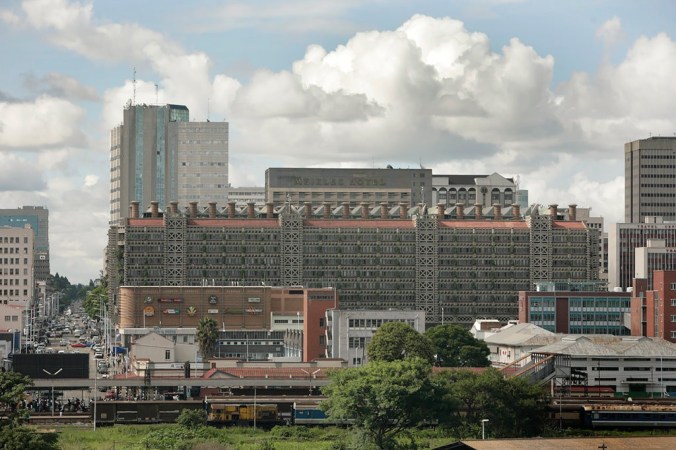
The air conditioning system of the Eastgate Centre in Harare, Zimbabwe, was inspired by termites’ nests. Credit David Brazier, via Wikimedia Commons

It’s been quite some time since we posted about biomimicry. Thanks as always to JoAnna Klein for this illuminating story:

What Termites Can Teach Us About Cooling Our Buildings

“We think humans are the best designers, but this is not really true,” a researcher said.

In the capital of Zimbabwe, a building called Eastgate Centre holds nearly 350,000 square-feet of office space and shops. It uses 90 percent less energy than a similar sized building next door.

What’s Eastgate Centre’s secret? Termites.

merlin_152612904_38aa91c7-eec0-456c-ae7a-09920b6f5ed5-jumbo.jpg

Three views of a termites’ nest, including from left, a photo of the nest, a tomography of the the nest’s interior and the networks of galleries and paths in it. Credit G. Theraulaz, CRCA, CBI, CNRS, Toulouse

In the 1990s, Mick Pearce, the building’s architect, took his inspiration from mounds built by fungus-farming termites he saw on a nature show. The insects created their own air conditioning systems that circulated hot and cool air between the mound and the outside.

As architects and builders seek new and improved ways to cool buildings without using more energy in a warming world, a study of another type of termite mound suggests that Mr. Pearce won’t be the last human to take design tips from these cockroach cousins. Continue reading

From South-South To North-North

merlin_150668253_8478433b-acb1-4e50-ad5c-07753a4a7545-jumbo.jpg

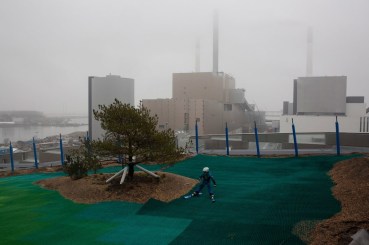
The beginning of a ski run on the roof of Copenhagen’s new trash incinerator, which will help heat buildings in the city. Photograph by Charlotte de la Fuente

South-south cooperation has been an important learning mechanism for some time and we have shared plenty of those stories in part because those places are where we work. According to Somini Sengupta Copenhagen Wants to Show How Cities Can Fight Climate Change,  so we now also should be paying attention to the northern counterpart of the cooperation that has been getting all our attention:

merlin_150668361_cc20049e-a87c-46f1-a7d1-8dcb474d3f5f-jumbo.jpg

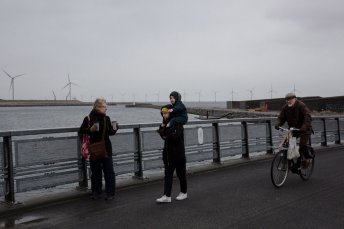
Wind turbines along the strait that separates Denmark from Sweden, seen from the Amager Strandpark in Copenhagen. Photograph by Charlotte de la Fuente

COPENHAGEN — Can a city cancel out its greenhouse gas emissions?

Copenhagen intends to, and fast. By 2025, this once-grimy industrial city aims to be net carbon neutral, meaning it plans to generate more renewable energy than the dirty energy it consumes.

merlin_150668178_4d6ca480-2e7d-41c4-b2ca-263eb31c8490-jumbo.jpg

The Copenhagen Metro. A new line, scheduled to open this year, will put most residents less than half a mile from a station. Photograph by Charlotte de la Fuente

Here’s why it matters to the rest of the world: Half of humanity now lives in cities, and the vast share of planet-warming gases come from cities. The big fixes for climate change need to come from cities too. They are both a problem and a potential source of solutions.

The experience of Copenhagen, home to 624,000 people, can show what’s possible, and what’s tough, for other urban governments on a warming planet.

merlin_150668325_10e1c59f-32f1-40bb-8099-87326409a305-jumbo.jpg

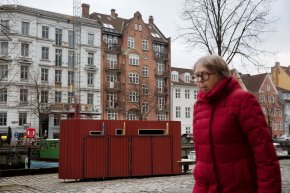
Recycling bins in the Christianshavn district of Copenhagen. The city requires residents to sort recycling into eight separate categories. Photograph by Charlotte de la Fuente

The mayor, Frank Jensen, said cities “can change the way we behave, the way we are living, and go more green.” His city has some advantages. It is small, it is rich and its people care a lot about climate change.

Mr. Jensen said mayors, more than national politicians, felt the pressure to take action. “We are directly responsible for our cities and our citizens, and they expect us to act,” he said. Continue reading
Fortunate Encounters With Birds

190401_r34004illuweb.jpg

Jeffrey and Jason WardIllustration by João Fazenda

Thanks to Anna Russell for this short wonder:

Birding Brothers of the Bronx

A chance sighting of a hungry peregrine falcon gave a homeless teen a lifelong passion; now Jason Ward and his brother Jeffrey star in “Birds of North America,” on topic.com.

When Jason Ward was fourteen, he spotted a peregrine falcon devouring a pigeon on the windowsill of the South Bronx homeless shelter where his family was living. “I was literally witnessing a nature documentary unfold,” he recalled, adding, “That was definitely my spark bird.” Ward, now thirty-two, has five siblings, but only he and his younger brother Jeffrey are birders. (Jeffrey’s spark bird was a barn owl, which he saw in Central Park.) “These peregrines are really powerful fliers,” Jason said. “They have the ability to just change their immediate surroundings. Growing up in the Bronx, that was something that I admired, and wanted to be able to do myself.” Continue reading

Bob’s Red Mill Keeps On Amazing

redmill1_wide-9f7e4dfcb6b1bbe41f3ed0fb85f60daeb2ea71ae-s1300-c85.jpg

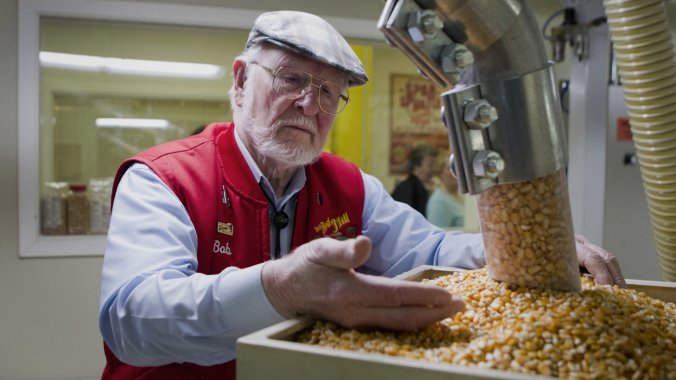
Bob Moore, founder of Bob’s Red Mill and Natural Foods, inspects grains at the company’s facility in Milwaukie, Ore. The pioneering manufacturer of gluten-free products invests in whole grains as well as beans, seeds, nuts, dried fruits, spices and herbs.
Natalie Behring/Bloomberg via Getty Images

One of our favorites, featured in a story that is important to several people we know:

How Bob’s Red Mill Company Became A Gluten-Free Giant Ahead Of Its Time

redmill2_wide-963a77b360e361e6d37206cd2d89da3014710621-s1300-c85.jpg

Gluten-free products are for sale at the Bob’s Red Mill and Natural Foods store in Milwaukie, Ore.
Natalie Behring/Bloomberg via Getty Images

Bob Moore, the 90-year-old founder of Bob’s Red Mill, was just a few years into the business of milling whole grains at a converted animal feed mill in a Portland, Ore., suburb when he got a visit from some gluten-free Seattlites who’d come down with a business proposition: Use his business contacts to help them buy bulk xantham gum, an ingredient used in gluten-free baking to help replicate gluten’s elasticity. Continue reading
Regeneration & Food Futures

tnc_67697146_preview-1260x708.jpg

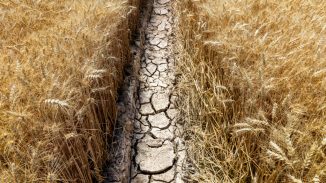
A view of wheat grown on Meaker Farm, Montrose, Colorado. Photo © Ken Geiger/TNC

While on the topic of food, thanks to Dustin Solberg and Cool Green Science for this:

Dirt to Soil: A Farmer’s Tell-all Puts Soil First

tnc_92212427_preview-1260x708.jpg

Circle irrigation tire tracks remain in the challenging soil conditions on a wheat farm in Colorado. Photo © Ken Geiger/TNC

Quite a few years back, while working the wheat harvest in the middle of Oklahoma, I met a leathery skinned farmer. He lived through the dusty, hardscrabble, droughty years of the Great Depression, and experience had taught him plenty. I still recall his silver belt buckle, his straw cowboy hat, and the funny joke he told me about the buffalo on a buffalo nickel, which I can’t repeat here. He wanted me to know, and so told me in no uncertain terms, that there’s one way, and one way only, to plow a field.

We were standing then in the fresh golden stubble of a wheat field. It was hot. We’d just finished combining and after a day of steady motion we were finally still, the diesel engines at rest. I can still recall the animated force in his muscly hands – he made his fingers into the tines of a chisel plow – to make his point as vividly as I recall what he said: “You’ve got to set the plow deep.”

The trouble was, he was wrong.

Continue reading

Getting The Food Puzzle Solved


http___com.ft.imagepublish.upp-prod-us.s3.amazonaws

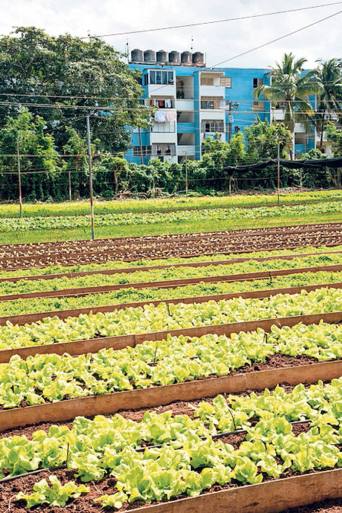
Green: an organic farm in Cuba © Getty

Thanks to FT’s Sarah Murray for this story–Organic farming’s growth only part of answer to food sustainability:

The approach has an impact far beyond its scale but questions remain over yields

While only a tiny proportion of the world’s agricultural land is devoted to organic farming, some argue that it punches above its weight in contributing to more sustainable farming practices. “Its influence goes far beyond the 1 per cent of land that is managed organically,” says Verena Seufert, assistant professor at the Institute for Environmental Studies at VU University Amsterdam. “It is influencing the debate by highlighting food sustainability and how big an impact the food we eat has on many of our environmental problems,” she says. Yet while some believe that organic agriculture could play a bigger role in helping feed the world, environmental advocates see it as one option in a number of more sustainable approaches to farming. Continue reading

Watching Birds From Home, Online

Thanks to Lewis Page and the folks at Sierra for this selection of bird-viewing options:

6 Exciting Birdwatching Webcams

Vicariously join in on the springtime migration from your couch

Birding is a sport for the intrepid—its participants rise at ungodly hours, bundle in layers, and sit silently for hours, all in hopes of seeing a winged animal that may never arrive. But for those who aren’t quite ready to trek outdoors into wintry-remnant weather, or who might be stuck in front of a computer when they wish they weren’t, there’s another, tamer option. Indeed, the miracles of modern webcam and streaming technology have afforded even the lowliest of couch potatoes ample portals into a variety of avian worlds. And the advent of spring means that flocks of migratory birds are en route north from their winter haunts—which means it’s about to be primetime for bird cams. Here are a few to watch in the coming months.
The Mississippi River’s Migratory Birds

On a small island in the middle of the Mississippi River’s Lake Onalaska, near the Wisconsin-Minnesota border, stands a slowly rotating camera on a pole. Continue reading