Alternative Foodstuffs For Healthier, More Sustainable Meals

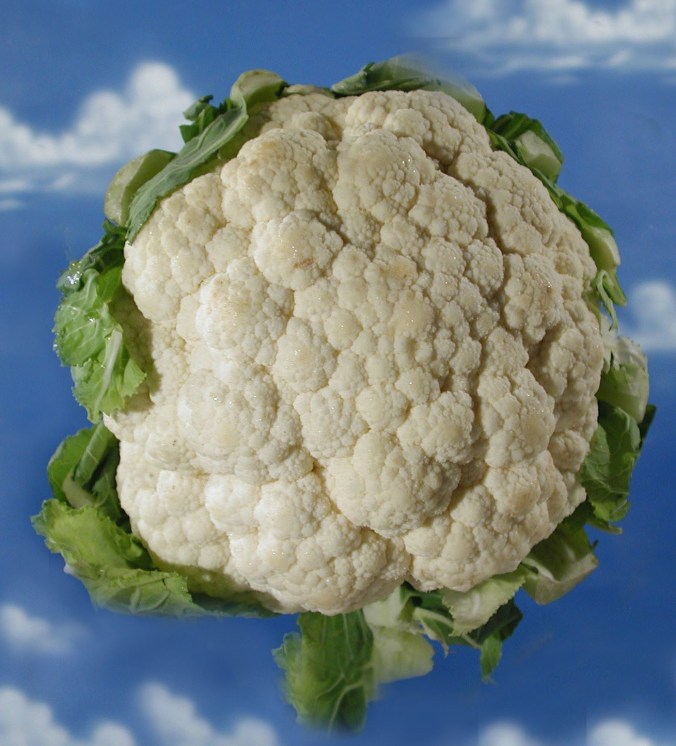
cauliflower-superJumbo.jpg

Tony Cenicola/The New York Times

Several of us who contribute here recently tested homemade pizza using the product pictured below, we pass the story along to our foodie friends, vegetarian and otherwise. Our thanks to Anahad O’Connor for this:

The Ascension of Cauliflower

Food companies are capitalizing on the low-carb, gluten-free trend by using vegetables like cauliflower to replace flour, rice and other simple carbs.

12sci_pizza-superJumbo.jpg

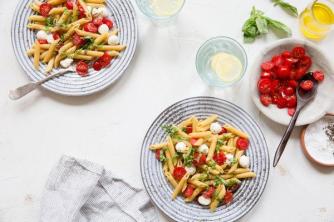
Pizza made with a cauliflower crust.

For Gail Becker, a former marketing executive who has two sons with celiac disease, finding gluten-free pizza that her kids could enjoy has long been a challenge.

So a few years ago, Ms. Becker started making her own, using a crust that contains cauliflower instead of white flour. Her sons loved her cauliflower creation so much that in 2016 Ms. Becker quit her job and launched her own company, Caulipower, which sells frozen cauliflower pizzas and cauliflower baking mix.

12sci_pasta-articleLarge.jpg

Cauliflower pasta looks like pasta made from wheat.

What Ms. Becker did not anticipate is how quickly it would catch on. Caulipower is now a multimillion-dollar brand, with cauliflower pizzas sold in 9,000 stores nationwide, including Whole Foods, Walmart, Safeway and Kroger.

“One thing that we were very insistent on when we started our brand is that we reference cauliflower in the name,” said Ms. Becker, who lives in Los Angeles. “We want to celebrate the vegetable. We’re not trying to hide it or sneak it in.” Continue reading

Technology To Battle High Seas Ecological Crimes

3129.jpg

China, Taiwan, Japan and South Korea account for well over two-thirds of high seas fishing. Photograph: Laura Lezza/Getty Images

If you are trying to watch what you eat for sustainability and impact, Justin McCurry, in Tokyo writing for the Guardian, has this story to keep in mind:

The ‘dark fleet’: Global Fishing Watch shines a light on illegal catches

Low light imaging data being used to expose unregulated and unreported fishing on the high seas

VIIRS-detection-1030x597.png

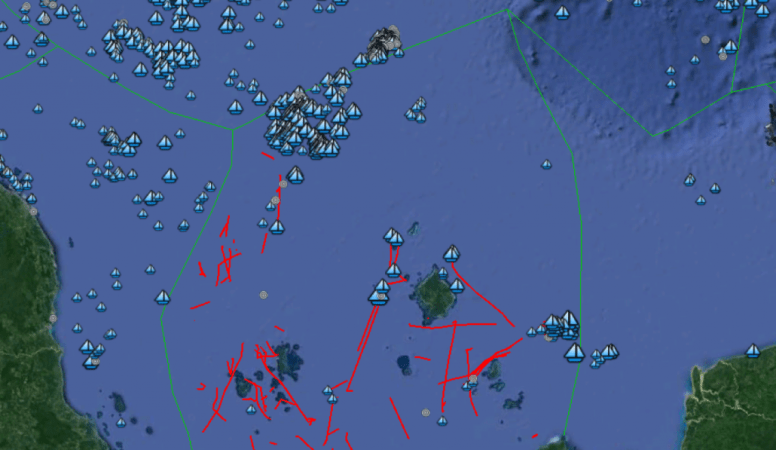
These vessels (indicated with blue boat icons) in the Natuna Sea off Indonesia were detected by VIIRS, and are suspected to not be using VMS. The red lines indicate VMS tracks from the same day.

New data is being used to expose fleets of previously unmonitored fishing vessels on the high seas, in what campaigners hope will lead to the eradication of illegal, unregulated and unreported fishing.

Global Fishing Watch (GFW) has turned low light imaging data collected by the US National Oceanic and Atmospheric Administration (NOAA) into the first publicly available real-time map showing the location and identity of thousands of vessels operating at night in waters that lie beyond national jurisdiction. Continue reading

Bess, Honey & Nothing

merlin_139147827_59aa1ad7-2e69-4dd7-8bc2-8ee31aa76222-jumbo.jpg

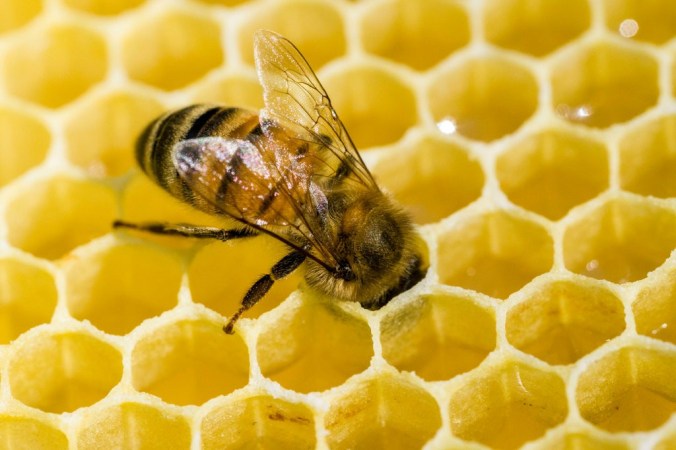
Not only can a honey bee count, it understands the concept of zero, according to researchers. CreditFrank Bienewald/LightRocket, via Getty Images

Thanks as always to James Gorman, one of the best illuminators of any variety of natural mysteries who we never tire of citing in these pages. He tells funny stories sometimes, about beautiful as well as awesome phenomena that we want to know. And he knows how to tell it:

Do Bees Know Nothing?

Researchers say bees understand the concept of nothing, or zero. But do we understand what that means?

What would it mean if bees could understand the concept of nothing?

That would be really something.

merlin_139147956_3b91262b-cb30-4eb9-9279-465935577f13-jumbo.jpg

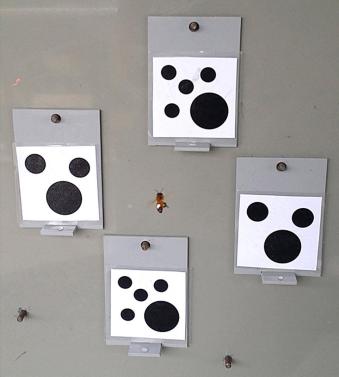
Bees were rewarded when they landed on cards with more shapes.CreditScarlett R. Howard et al.

Yet that is what scientists reported Thursday in the journal Science. Bees had already demonstrated they could count. Now, the researchers wrote, bees have shown that they understand the absence of things — shapes on a display in this experiment — as a numerical quantity: none or zero.

This is a big leap. Some past civilizations had trouble with the idea of zero. And the only nonhuman animals so far to pass the kind of test bees did are primates and one bird. Not one species, one bird, the famed African gray parrot, Alex, who knew not only words, but numbers. Continue reading

Not Pretty, But Pretty Amazing

Burdick-Stick-Insects.jpg

A surprising reproductive strategy could help to explain how stick insects—which are eaten by birds and don’t lay a lot of eggs—have managed to persist from generation to generation. Photograph by Education Images / UIG via Getty

Another day, another short-form wonder, thanks to Alan Burdick. His pieces are short, but to the point on topics we care about on this platform:

Why Stick Insects Might Be Into Birds Eating Their Kids

Stick insects make a certain amount of sense, evolutionarily speaking. They look like sticks, or twigs, or leaves; thus camouflaged, they presumably have a better chance of avoiding predators, reproducing, and passing on their stick-resemblance genes to their offspring. Except that birds still eat them, a lot. Stick insects don’t run fast, most don’t fly, and the females typically don’t lay eggs in large numbers. So there’s a mystery: How do they manage to persist from generation to generation? Why, having managed to exist, do they continue to do so? Continue reading

Reducing Our Intake Is The Only Answer

3829

Cattle at an illegal settlement in the Jamanxim National Forest, state of Para, northern Brazil, November 29, 2009. With 1,3 million hectares, the Jamanxim National Forest is today a microsm that replicates what happens in the Amazon, where thousands of hectares of land are prey of illegal woodcutters, stock breeders and gold miners. Photograph: Antonio Scorza/AFP/Getty Images

The argument made below by Damian Carrington, the Guardian’s Environment editor, is one nobody can hide from. We are not. Contributors on this platform have been reducing our intake of these forms of calories over the last couple years. We can report on its not being as difficult as it may sound at first to carnivores, ice cream aficionados and milk-drinkers. We are down some 40% and pushing the envelope further as fast as we can. It is not enough, relative to what these numbers say:

Avoiding meat and dairy is ‘single biggest way’ to reduce your impact on Earth

Biggest analysis to date reveals huge footprint of livestock – it provides just 18% of calories but takes up 83% of farmland

Avoiding meat and dairy products is the single biggest way to reduce your environmental impact on the planet, according to the scientists behind the most comprehensive analysis to date of the damage farming does to the planet. Continue reading

Can You Top This Birding Experience?

31WARBLERS-jumbo.jpg

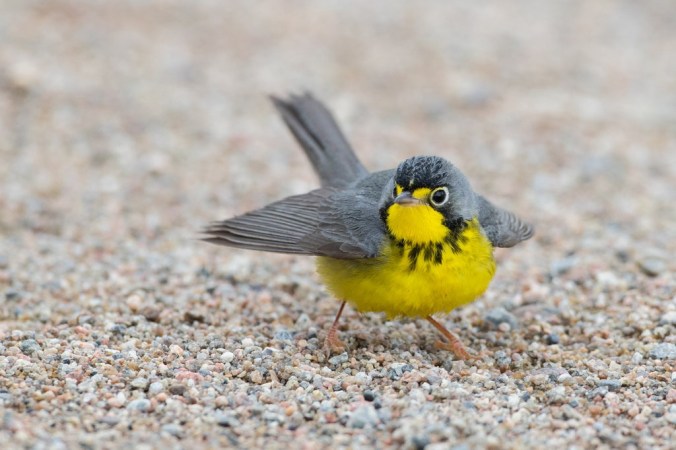
A Canada warbler. Credit Ian Davies

We have wow posts about birds all the time, but this one will have to take the cake, for now:

A River of Warblers: ‘the Greatest Birding Day of My Life’

At an observatory in Quebec, they were hoping for a 50,000-bird day. They saw more than half a million.

By James Gorman

Ian Davies got hooked on birds when he was 12. He went to a site near Plymouth, Mass., where volunteers were putting bands on migrating birds.

“They let me release a Canada warbler,” he said, “and that was just game over.”

On Monday, he saw an estimated 700,000 warblers and set the birding world all atwitter with a posting on the site eBird describing the astonishing event. Continue reading

Renewables In Our Midst

Facebook_Odense_Heat-Recovery_vFINAL_web

When it opens in 2020, Facebook’s new data center in Odense, Denmark will channel its waste heat to warm nearly 7,000 homes. FACEBOOK

Thanks to Nicola Jones and colleagues at Yale Environment 360 for this:

Waste Heat: Innovators Turn to an Overlooked Renewable Resource

Nearly three-quarters of all the energy produced by humanity is squandered as waste heat. Now, large businesses, high-tech operations such as data centers, and governments are exploring innovative technologies to capture and reuse this vast renewable energy source.

HeatHaze_Grangemouth-Refinery_Scotland_ChristopherFurlongGetty_web

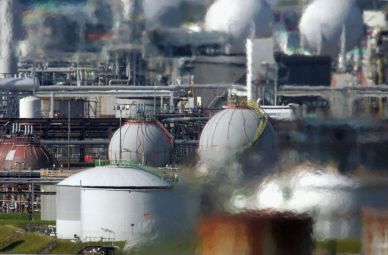
Heat radiates from the Grangemouth Oil Refinery in Scotland. About 70 percent of all the energy produced globally gets discarded as waste heat. CHRISTOPHER FURLONG/GETTY IMAGES

When you think of Facebook and “hot air,” a stream of pointless online chatter might be what comes to mind. But the company will soon be putting its literal hot air — the waste heat pumped out by one of its data centers — to good environmental use. That center, in Odense, Denmark, plans to channel its waste heat to warm nearly 7,000 homes when it opens in 2020.

google-datacenter-places-04_Dalles-Oregon_web2

Data centers, such as Google’s facility in Dalles, Oregon, generate huge amounts of waste heat. GOOGLE

Waste heat is everywhere. Every time an engine runs, a machine clunks away, or any work is done by anything, heat is generated. That’s a law of thermodynamics. More often than not, that heat gets thrown away, dribbling out into the atmosphere. The scale of this invisible garbage is huge: About 70 percent of all the energy produced by humanity gets chucked as waste heat. Continue reading

Paddlefish, Pioneers Of Sustainability

merlin_138254148_5493a279-d7d5-4f52-a071-0bbed4dab490-jumbo

Janie Osborne for The New York Times

Thanks to Jim Robbins, whose work we have appreciated not least for its culinary intrigue, but especially for the sustainability angles:

Food For Thought & Thought For Food

27stager-jumbo

Enzo Pérès-Labourdette

The food for thought is by way of Curt Stager, a professor of natural sciences, who celebrates citizen science in a powerful ominously-titled op-ed:

Why care about this new silence of the bugs? An across-the-board decline in flying insects, if true, means that an entire sector of the animal kingdom is in trouble, representing an immense diversity of life-forms, from butterflies and beetles to hoverflies and damselflies. The eminent biologist Edward O. Wilson, who has spent much of his life studying ants, has warned: “If all mankind were to disappear, the world would regenerate back to the rich state of equilibrium that existed ten thousand years ago. If insects were to vanish, the environment would collapse into chaos.”

And the thought for food is also from an op-ed:

Why You Should Be Drinking Weird Wines

By Jason Wilson

merlin_138630777_bd5bc3fe-d84f-4de8-a999-7c0568353414-superJumbo

Alicia Adamerovich

…For years, the global wine industry had been devolving toward a monoculture, with local grape varieties ripped out in favor of more immediately profitable, mass-market types. There are 1,368 known wine grape varieties, but nearly 80 percent of the world’s wine is made from just 20 kinds of grapes. Many of the rest face extinction. Continue reading

Adaptation’s Appetite

merlin_138614541_c4902893-8458-4d2d-ab11-fa10c796102c-jumbo

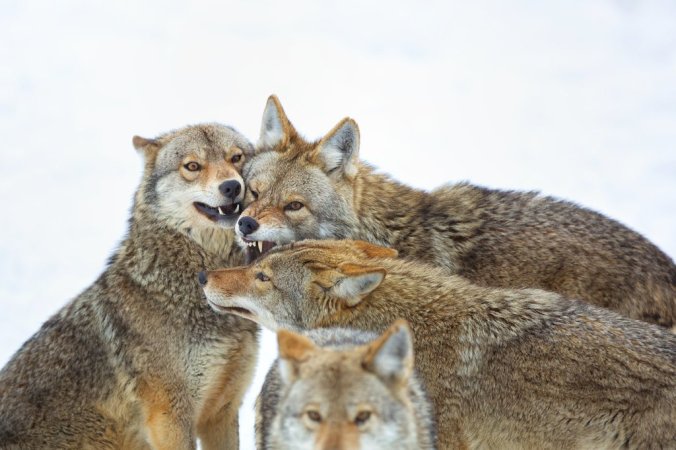
“They have to be one of the most adaptable animals on the planet,” said one ecologist who studies coyotes. Credit Perry McKenna/Getty Images

On this platform we have been in favor of celebrating conservation rather than doomsday. Science is key, but we also think entrepreneurship can be harnessed in the right direction, publicly and privately. There is not much to celebrate in the following story. The animals in the photo above, without any further details, could be granted wild beauty status. But context is everything. So we celebrate the writers who illuminate important scientific ideas, and their stories. Thanks to JoAnna Klein, who we have linked to many times (but missed this related recent story) for providing those details:

Coyotes Conquered North America. Now They’re Heading South.

New maps seek to update the historical range of our continent’s toughest canids, which have thrived as other predators experienced decline.

merlin_138614523_660b4fa1-90b1-49ed-8678-6322959a59e1-jumbo

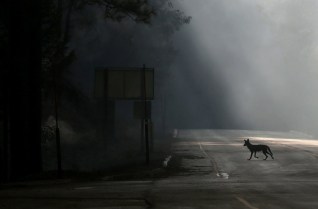
A coyote crossing U.S. Highway 120 near Groveland, Calif. Credit Justin Sullivan/Getty Images

Coyotes are excellent colonizers.

They breed fast, eat almost anything and live just about anywhere. You can find them in fields, forests, backyardsparks and even parking decks. They’re living in cities like Los AngelesNew York and Chicago. They’ve even made it to the Florida Keys and Long Island. In 2010, they crossed the Panama Canal. Now, the only thing keeping them from entering Colombia is a dense patch of forest called the Darien Gap. And camera traps have caught them heading that way. Continue reading

Bee-Saving In Costa Rica

Thanks to Rainforest Alliance, who sent its polite email asking whether we wanted to stay on their mailing list. Of course we do (but thanks for asking) because we believe in their work. And we have believed for a long time. Too long since our last post referencing them, but see this:

liz.png

Liz Paniagua, Co-founder Api-Agricultura

Introducing Costa Rican pro surfer Carlos Cortes and his partner Liz Paniagua. The husband-wife-apiarist-activist team is part of a growing movement working to save bees from the global crisis of colony collapse.

Their bee rescue organization, Api-Agricultura, works with a model Rainforest Alliance Certified banana farm in Costa Rica to save bee colonies from destruction and educate local communities about the importance of bees. By encouraging others to live in harmony with nature, Carlos and Liz exemplify the Costa Rican ethos of “pura vida.”  Continue reading
Bolivia’s Boggling Biodiversity

00MADIDI-andes-jumbo

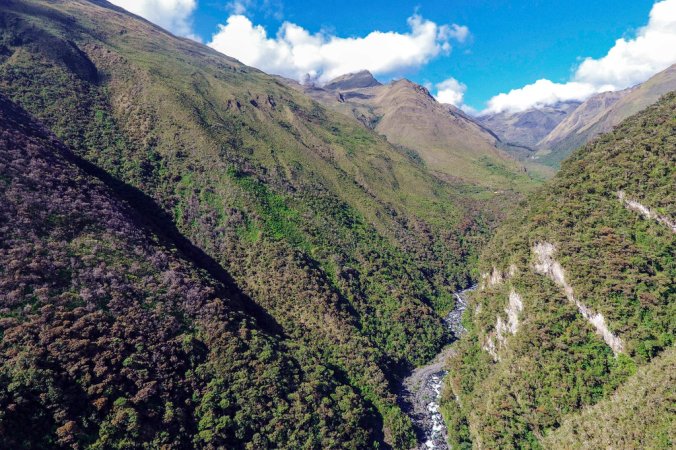
Keara valley Credit Omar Torrico/Wildlife Conservation Society

Whether or not the title is a rhetorical question does not matter; what does matter is our thanks to James Gorman, a science writer at large for The New York Times for this story about the work of Rob Wallace and colleagues at the Wildlife Conservation Society:

Is This the World’s Most Diverse National Park?

Bringing the numbers to life for the jewel in Bolivia’s conservation crown.

merlin_135918486_4d9c8f39-bf06-4931-b1d1-f35e5aa3c9eb-jumbo

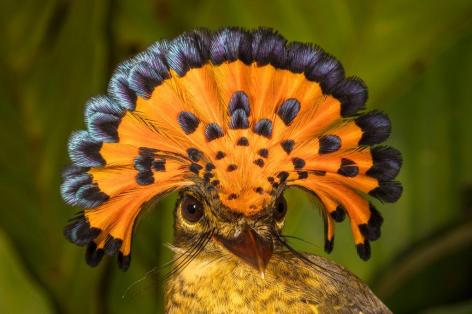
Royal flycatcher Credit Rob Wallace/Wildlife Conservation Society

The credit to Mr. Wallace and colleagues for these photos alone would be worthy of a post, but the creation of such a park in Bolivia is no small wonder:

Madidi National Park in Bolivia goes from lowland to mountaintop, from 600 feet to almost 20,000 feet above sea level. It covers more than 7,000 square miles of wildly different habitats. It is, says Rob Wallace, an ecologist with the Wildlife Conservation Society in Bolivia, “a place where the Amazon meets the Andes.”

merlin_135918168_ad69e304-0870-4e92-a1c9-02449dac0e78-jumbo

Rob Wallace/Wildlife Conservation Society

“Madidi was put together on the hypothesis that it could be the world’s most biologically diverse protected area,” Dr. Wallace said. And, he said, it is — for mammals, birds, plants and butterflies. Continue reading
Bob Moore And His Red Mill

ep78-bobsredmill_wide-3ed9dbf82bd572d256b86956e1e9823a74cd536b-s1400-c85

Marcus Marritt for NPR

47 minutes well spent with one of our heroes, who we realize now is not featured enough in our pages relative to how much he has inspired our work. Here is a quick start at repairing that oversight (click the image above to go to the podcast):

In the 1960s, Bob Moore read a book about an old grain mill and was inspired to start his own.

Using giant quartz stones from the 19th century, he ground and packaged dozens of different cereals and flours, quickly positioning his company at the forefront of the health food boom.

Despite a devastating fire in the 1980s, Bob’s Red Mill grew into a $100 million business – and although Bob is nearly 90, he goes to work at the mill every day.

Make Your Opinion Known About New Labeling For GMOs


dept-ag_custom-27b49bc849696ef8487e34355a2fc1a9ae7bf17d-s1400-c85

The USDA has released several options for what the labels might look like.
Department of Agriculture

If the questions and concerns surrounding GMOs are of interest to you, then in the next six weeks you have a unique window of opportunity. Until July 3 you are invited to share your opinion with the folks responsible for these label design options to the right. Thanks to our friends at the salt (National Public Radio, USA) for bringing this to our attention:

USDA Unveils Prototypes For GMO Food Labels, And They’re … Confusing

Foods that contains genetically modified ingredients will soon have a special label.

We recently got the first glimpse of what that label might look like, when the U.S. Department of Agriculture released its proposed guidelines.

This is the product of a decades-long fight between anti-GMO campaigners and Big Agriculture companies, which left neither side completely satisfied, as NPR has reported.

After Congress passed a bill in 2016 requiring labels on foods containing GMO ingredients, the USDA launched a long process to figure out the specifics. When it asked for feedback, it received 112,000 responses from consumers, farmers and manufacturers, among others.

The result? Continue reading

Karen Washington, Food Activist

2560

‘When we say ‘food apartheid,’ the real conversation can begin.’
Illustration: Daniel Chang Christensen

Thanks to Anna Brones for bringing this article, and its subject, to our attention in the Guardian, as a reprint of an essay originally published in Guernica:

Food apartheid: the root of the problem with America’s groceries

Food justice activist Karen Washington wants us to move away from the term ‘food desert’, which doesn’t take into account the systemic racism permeating America’s food system

America’s sustainable food movement has been steadily growing, challenging consumers to truly consider where our food comes from, and inspiring people to farm, eat local, and rethink our approaches to food policy. But at the same time, the movement is predominantly white, and often neglects the needs and root problems of diverse communities. Continue reading

Zero-Waste Shopping

180509-zero-waste-shopping-hetu-london

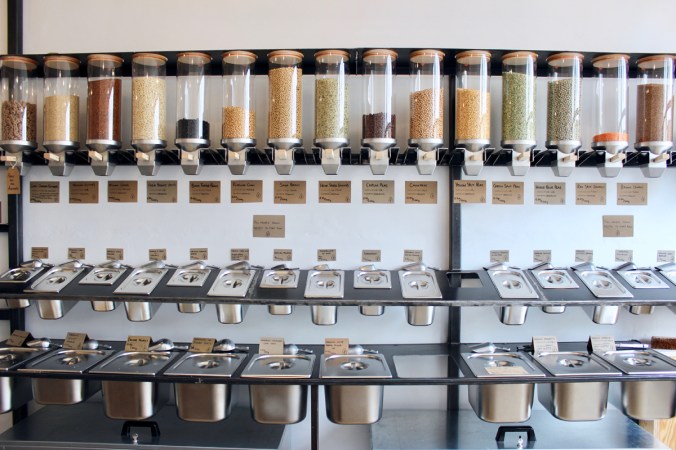
Bulk food bins at Hetu, an all-bulk / zero-waste grocery store in London. (Photo credit: Celia Ristow)

Thanks to Cathy Erway and colleagues at Civil Eats for this story on where and how the boundaries of shopping waste-reduction is being pushed:

Zero-Waste Stores Ask Shoppers to Bring Their Own Everything

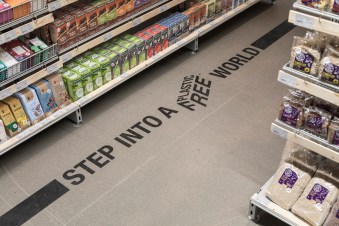
As record amounts of plastic waste pollutes the planet, some grocers are helping shoppers do without.

180509-zero-waste-shopping-ekoplaza-plastic-free-aisle-credit-Ewout-Huibers.jpg

Ekoplaza’s plastic-free aisle. (Photo credit: Ewout Huibers)

Tom and Katrin Helmick live in New York’s Hudson Valley region with their 2-year-old son. They cook and grow vegetables in their backyard during the summer months, bring reusable totes to the grocery store or farmers’ market, and never buy plastic bottled water. Although they try to avoid buying foods that come in non-recyclable packaging, their landfill waste bin still receives a hearty diet of disposable baby food pouches and “lots of thin plastic,” says Tom.

“When we do buy grocery store meat, I hate that it still comes wrapped in Styrofoam. That’s why I love going directly to the source for our meat from a farm nearby that is simply vacuumed-packed,” says Tom. “We find it ridiculous that three people can create so much waste,” adds Katrin. Continue reading

Invasive Species, Eradication Efforts, Success Story

sght-monitoring-credit--oli-prince-230-2859dbe05902ffba6a40bf580c0c137db5803219-s1400-c85

Jane Tansell, one of the two handlers responsible for the rodent detection dogs, looks on from the background as a seal stares down the camera on South Georgia Island earlier this year.
Oliver Prince/Courtesy of South Georgia Heritage Trust

These three pairs of words in the post title, placed together in this order in a search engine, produce some interesting results from around the world. And today we find one more to add to the database. Thanks to National Public Radio (USA)’s Colin Dwyer for sharing this story:

south-georgia-pipit_credit-ingo-arndt_custom-2b8f235f1d7d80e43a778471718118bae53dd8d4-s1400-c85.jpg

The South Georgia pipit, seen posing for a glamour shot earlier this year, had been among the species hardest hit by the island’s invasive rodents.
Ingo Arndt/Courtesy of South Georgia Heritage Trust

There are no other birds quite like them in the world. The South Georgia pipit and pintail are so distinctive in the grand pantheon of ornithology, in fact, they draw their names from the one place they’ve made their home: South Georgia Island, sitting lonely in the forbidding South Atlantic not far from Antarctica.

Yet even in such a remote location, surrounded by penguins, fur seals and seemingly endless ocean, the birds have long been besieged by tiny alien invaders: rodents. Since the first European ships arrived in the late 18th century bearing rodents as stowaways, the voracious predators have devastated the South Georgia birds — which, with no trees to nest in, must make their vulnerable homes on the ground or in burrows.

Now, after more than two centuries, those invaders have been rebuffed. Continue reading
Avocados & Epic Journeys

lead_960_540

Maggie Marsek / Getty / Katie Martin / The Atlantic

The Atlantic’s partnering with specialists in content that would not qualify as the magazine’s historically typical fare, we think, is good for all concerned. The folks at Gastropodcast certainly qualify, we also think, and have thought so, more than once:

Peak Avocado Is Yet to Come

How the fatty green fruit went from near-extinction to a worldwide boom

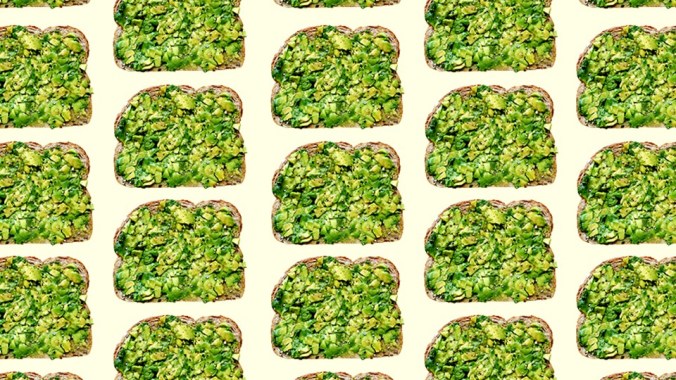
AvocadoAvocados are on a roll. More precisely, they’re on toast—a lot of toast. Last summer, BritishVogue reported that more than 3 million new photos of whole, sliced, and toast-topping avocados are uploaded to Instagram every day. Continue reading
Fishes, Fishing & Fishermen, Reviewed

Untitled-1

Book covers left to right: Fishes in the Fresh Waters of Florida, Fly Fishing for Redeye Bass, and Born to Fish

Thanks to Mathew L. Miller for an honest take on these three books:

Review: Fishing and Conservation

The mayflies are hatching, river levels are dropping and the evenings are getting longer. It’s the most wonderful time of year for those of us in North America who love to fish.

And if you can’t be out fishing? Well, you can always read a fish book. Here are three great new reads: a biography of an obsessed angler turned conservationist, a how-to book about overlooked species that need some attention, and an invaluable reference guide.

I have no interest in competitive fishing, and even less in books by and about celebrity anglers. I find most of them to be self-congratulatory and poorly written. So I’d normally have little inclination to read a book about a record-breaking striped bass angler, one who gained fame by appearing on the show Shark Tank.  Such a book would also appear to be a poor fit for a conservation blog. Continue reading