Alladale & Apex Wildlife

4019.jpg

Eurasian grey wolves at the Highland Wildlife Park, Kingussie, Scotland.
Photograph: Alamy

Thanks to Kevin McKenna and the Guardian for this profile of an entrepreneurial conservation project that is quite in the spirit of our work over the last two decades. We salute Paul Lister and his team for this wonder:

One man’s plan to let wolves roam free in the Highlands

The ‘custodian’ of the Alladale estate wants to turn it into a fenced-off wildlife reserve

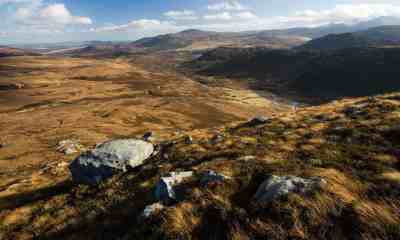
4992.jpg

The Alladale estate. Photograph: Alamy

The echoes of Scotland’s predator prince faded into silence three centuries ago. The wolf was once lord of these Sutherland slopes and the forest floors beneath and now a voice in the wilderness is calling him home.

Paul Lister acquired the Alladale estate, 50 miles north of Inverness, in 2003 and immediately set about creating a wilderness reserve according to his perception of what these wild and beautiful places ought to look like. He can’t imagine them without the packs of wolves that once roamed free here.

But his views are considered eccentric by ramblers and conservationists, who view them as a rich man’s caprice, centring their objections on his plans to fence off the vast reserve. Continue reading
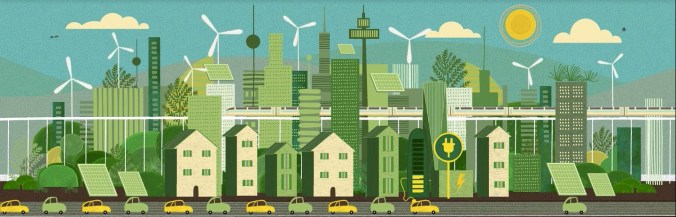
Carbon Footprint Self-Analysis

Carbon1.jpg

Thanks to Livia Albeck-Ripka and the New York Times for this

How to Reduce Your Carbon Footprint

carbonfootprint-slide-SUBX-jumbo.jpg

What Is a Carbon Footprint?

Climate change can be overwhelming. The science is complex, and when it comes to future impacts, there are still a lot of unknowns. While real solutions will require action on a global scale, there are choices you can make in your day-to-day life to lessen your personal impact on the environment. This guide will walk you through some of them.

carbonfootprint-slide-664U-jumbo.jpg

DRIVE LESS

A carbon footprint is the total amount of greenhouse gas emissions that come from the production, use and end-of-life of a product or service. It includes carbon dioxide — the gas most commonly emitted by humans — and others, including methane, nitrous oxide, and fluorinated gases, which trap gas in the atmosphere, causing global warming. Usually, the bulk of an individual’s carbon footprint will come from transportation, housing and food.

You can start the process by calculating your carbon footprint here. You will need to know the following: Continue reading

Victorious Bananas

physed-banana-master768.jpg

iStock

We are already big fans of this fruit, for all kinds of reasons, so this is like icing on the cake:

Bananas vs. Sports Drinks? Bananas Win in Study

A banana might reasonably replace sports drinks for those of us who rely on carbohydrates to fuel exercise and speed recovery, according to a new study comparing the cellular effects of carbohydrates consumed during sports.

It found that a banana, with its all-natural package, provides comparable or greater anti-inflammatory and other benefits for athletes than sports drinks. But there may be a downside, and it involves bloating.

For decades, athletes and their advisers have believed, and studies have confirmed, that eating or drinking carbohydrates during prolonged exertion can enable someone to continue for longer or at higher intensities and recover more quickly afterward than if he or she does not eat during the workout. Continue reading

Thermal Imaging For Species-Level Learning

merlin_136343916_184e67ea-b2c7-4c2d-8cf5-2dbc257b126a-superJumbo.jpg

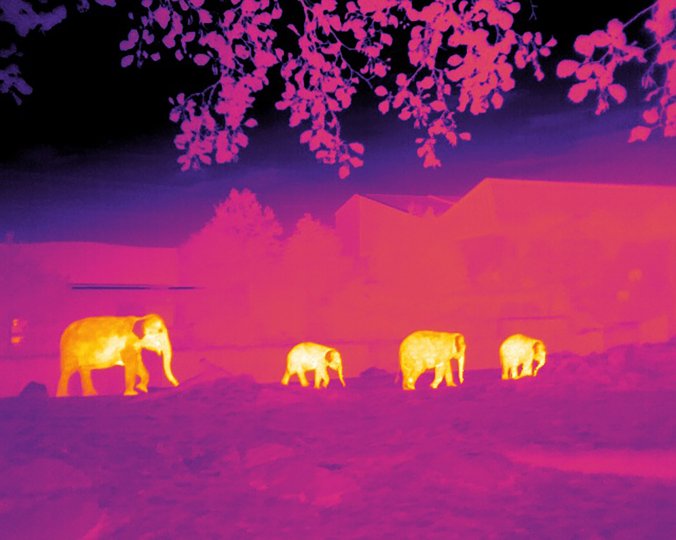
A thermal image of elephants, part of an effort to apply tools from astronomy to help conservationists and fight poaching. Credit Endangered Wildlife Trust/LJMU

We have noted this technology more than once in recent years, and who can resist the images? But Joanna Klein’s story here is a bit different from our earlier notes:

How Do You Count Endangered Species? Look to the Stars

06TB-INFRARED2-superJumbo.jpg

The research team has been working with a local safari park and zoo to film and photograph animals, like these chimpanzees, to build up a reference library of different animals. Credit Endangered Wildlife Trust/LJMU

The conversation started over a fence dividing two backyards. On one side, an ecologist remarked that surveying animals is a pain. His neighbor, an astronomer, said he could see objects in space billions of light years away.

And so began an unusual partnership to adapt tools originally developed to detect stars in the sky to monitor animals on the ground. Continue reading

Plastic Reduction Success Story

5150 (1).jpg

A UK levy of 5p per bag introduced in 2015 has already reduced single-use plastic bags by 85%. Photograph: Stuart Kelly/Alamy Stock Photo

We never tire of reporting on efforts at plastic-reduction, so thanks to Juliette Jowit and the Guardian for this update:

Drop in plastic bags littering British seas linked to introduction of 5p charge

Scientists find an estimated 30% drop in plastic bags on the seabed in the same timeframe as charges were introduced in European countries

A big drop in plastic bags found in the seas around Britain has been credited to the introduction of charges for plastic bags across Europe. Continue reading

Junto Clubs For 2018 & Beyond

Junto-Club

The Junto Club outgrew into the American Philosophical Society.

This historical reference is not typical of posts on this platform, except for when one of our contributors was in the midst of historical coursework that led to riffs like this; and then during his archival research that led to riffs like this.

We are riffing now from a current need (to put it mildly) for better conversation, with hindsight to a widely respected man’s approach at a time full of contentions. Thanks to Andrew Marantz for this brief note, whose accompanying illustration below belies the seriousness of the situation. Click the image to the left above to go to a historical archive with more background on this Talk of the Town item below:

Benjamin Franklin Invented the Chat Room

Conversation clubs, inspired by the Founding Father, have never felt more necessary.

180409_r31846webIn 1727, when Benjamin Franklin was twenty-one, he and a few friends—among them a scrivener, a joiner, and two cobblers—formed a conversation club called the Junto. They met on Friday evenings at a Philadelphia alehouse. “The rules that I drew up required that every member, in his turn, should produce one or more queries on any point of Morals, Politics, or Natural Philosophy, to be discuss’d by the company,” Franklin wrote in his autobiography. The United States was not yet the United States, but already he sensed a civility problem. His solution: structured, secular chitchat, “conducted in the sincere spirit of inquiry after truth, without fondness for dispute, or desire of victory.” Continue reading

Respecting Our Oceans, And Our Fellow Beings

Holloway-Whales

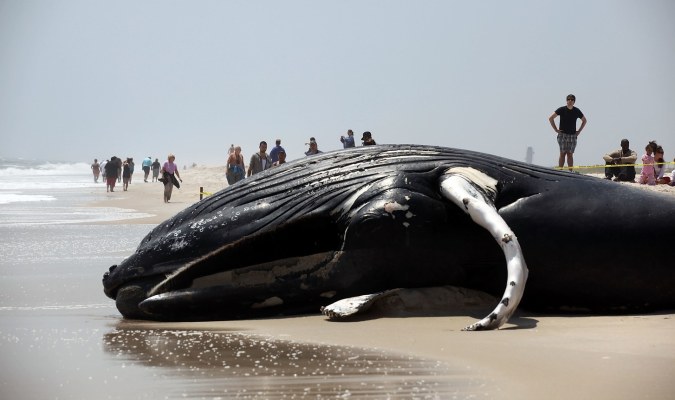
A humpback whale calf that washed ashore in Wantagh, New York. A series of “unusual mortality events” among whales has scientists worried that the ocean is more dangerous than ever. Photograph by Mario Tama / Getty

Thanks to Marguerite Holloway, who we have appreciated a couple times earlier, for this:

One foggy morning last April, a dead humpback whale washed up on New York’s Rockaway Beach. It was a young male, thirty-one feet long, and had extensive bruising—the result of contact with “something very large,” according to Kimberly Durham, of the Atlantic Marine Conservation Society, who performed the necropsy. The Rockaway whale was one of sixty-eight humpbacks that have died between North Carolina and Maine since 2016, casualties in what the National Oceanic and Atmospheric Administration is calling an “unusual mortality event.” And humpbacks, it turns out, are not the only species suffering. Continue reading

MA’O’s Marvelous Mission

MaoFarm

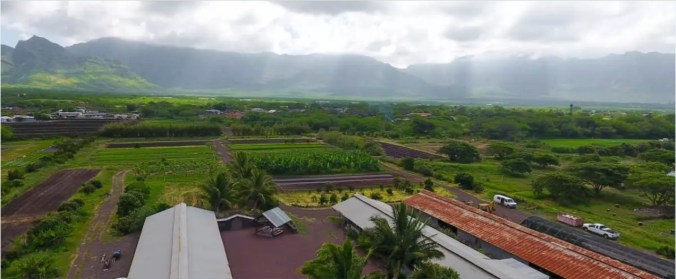
If we had come upon the website with no introduction maybe it would have looked like just another pretty organic farm in a tropical paradise.

MaoFarm2

But there are people involved, and it is a pleasant surprise to learn from Dakota Kim’s story Youth Farm In Hawaii Is Growing Food And Leaders how those people bring that place further to life. There is a mission worth reading about:

farm-3_vert-1ca699e699afb15a6803f2ffef41df115fa49f22-s500-c85

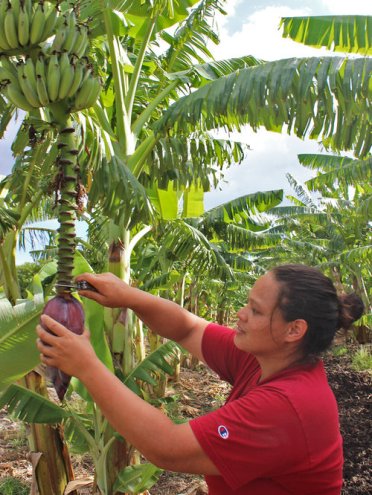
Cheryse Sana, farm co-manager, cuts a banana blossom off a tree at MA’O Organic Farms. Dakota Kim

A tight circle of teenagers is deep in conversation — not about movies or apps, but about … vegetables.

It’s 7 a.m. at MA’O Organic Farms, part of 24 acres nestled in an emerald mountain-ringed valley just two miles from Oahu’s west shore. Under a hot sun that bathes this idyllic breadbasket, college-aged farmers harvest tons of mangoes, bananas, mizuna (mustard greens) and taro every month for the island of Oahu.

The farm’s atmosphere bubbles with enthusiastic lightheartedness, its college interns quipping across the rows that they can beat their neighbors’ harvesting speed. But a calm falls over the group as they move from joking around to talking more seriously. A circle forms under an open pavilion, and a young woman speaks. Continue reading

Accentuate The Positive, But Also Be Vigilant

180402_r31793 (1)

William Ruckelshaus, who ran the E.P.A. under Nixon and Reagan, said that Pruitt and his top staff “don’t fundamentally agree with the mission of the agency.” Illustration by Paul Sahre; photograph by Saul Loeb / AFP / Getty (man)

The vast majority of posts on this platform are stories related to environmental conservation, social responsibility, community innovations. Forward-looking. Positive, if you want to think of it that way. But we keep our eyes open for clouds on the horizon as well. Yesterday’s post was a reminder that we should keep our eyes open to pernicious changes in the national park system of the USA. Today we get deeper into the underbelly of that particular issue, and the illustration above, which accompanies an epic (allow 80 minutes to read or listen to it) expose on Scott Pruitt, and as illustrations go it is a blunt hint of what to expect from the article that follows. Creepy. Ugly. Needing serious attention. Thanks to Margaret Talbot and her editors at the New Yorker:

Scott Pruitt’s Dirty Politics

How the Environmental Protection Agency became the fossil-fuel industry’s best friend.

One afternoon last April, Scott Pruitt, the administrator of the Environmental Protection Agency, travelled to the Harvey Mine, in Sycamore, Pennsylvania, to declare that the agency had a new direction, which he called “Back to Basics.” It was an unusual place for the nation’s chief steward of clean air, land, and water to set out a policy agenda. Consol Energy, the owner of the Harvey facility, which is part of the largest underground coal-mining complex in North America, has been fined repeatedly by the E.P.A. for violations; in 2016, it had to pay three million dollars for having discharged contaminated wastewater into the Ohio River and its tributaries. Past E.P.A. administrators have spoken of creating jobs as a welcome potential by-product of the agency’s work, especially if they are green jobs, but creating or protecting energy jobs is not supposed to be the mission—protecting human health and the environment is. As the speech that Pruitt gave at the mine demonstrated, he seems to have these priorities reversed. Continue reading

A Question Worth Asking About Yosemite

5988

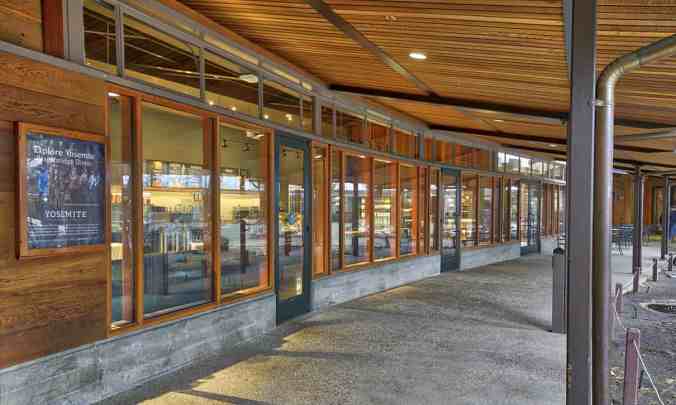
There is an intentional lack of exterior signage for the new Starbucks at Yosemite national park. Photograph: Courtesy of Starbucks

Thanks to Freddy Brewster, the former Yosemite trail guide who raised the question, and thanks to the Guardian for airing it:

Yosemite’s secretive Starbucks: cafe opens in park, to delight and dismay

A new Starbucks provides convenience and caffeine to visitors, but to many it represents a trend of commercialism and 25,000 people petitioned to stop it from opening

6720

Australian visitor Tom Collin sips a coffee from the new Starbucks at Yosemite, part of a major remodeling effort inside the 128-year-old national park. Photograph: Gabrielle Canon for the Guardian

It looks and feels just like any of the other roughly 27,000 Starbucks locations that have opened around the world. The green apron-clad barista makes tall, grande and venti coffee concoctions that are handed over in familiar mermaid-endowed cups.

But from the parking lot outside – where there is an intentional lack of Starbucks signage – the world-famous Yosemite falls can be heard through the patter of an early spring rainstorm. Continue reading
Using Water Cleverly

SandTroughBefore2-e1521583715535-1260x708

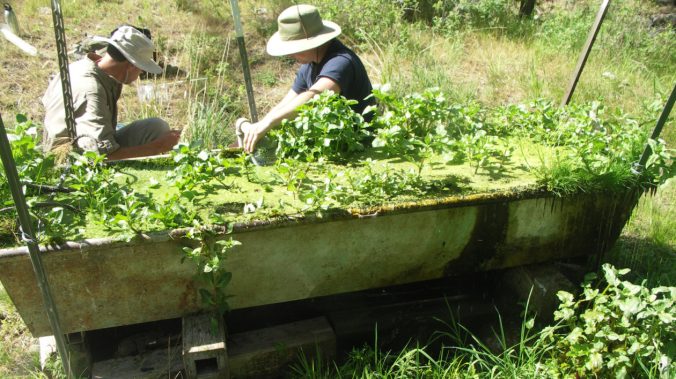
Hydrologists Zach Freed (The Nature Conservancy) and Hank Johnson (U.S. Geologic Survey) measure water chemistry of the spring from the inflow pipe to the old trough, which is filled with emergent aquatic vegetation. Photo © Allison Aldous / The Nature Conservancy

Thanks to Lisa Feldcamp at the Nature Conservancy for this story:

Sharing Water: How I Met the MacGyvers of Water Use

DSC_0131-1260x708.jpg

Down the stream at Sand Spring you can see an elk wallow. Photo © Lisa Feldkamp / The Nature Conservancy

“It’s like leaving the kitchen faucet on all year for one glass of water,” says Zach Freed, a hydrologist for the Nature Conservancy in Oregon. That’s how people in Oregon and throughout the US West have traditionally used spring water.

When European homesteaders first came west, spring water must have seemed like an endless resource. Homesteaders could find a potable spring and turn on the tap to provide water for their families and livestock. As the generations came and went, old ranches failed, and new ones sprang up. Springs came in and out of use, but it often happened that nobody ever turned off the tap. Continue reading

Yesterday’s Curry

Fish curry inflected with coconut is a staple dish in the coastal Indian state of Goa. It’s usually eaten accompanied by unpolished rice, fried fish and a dab of pickle. Once all the fish has been eaten up, the leftover curry is reheated over a low flame until it condenses and thickens. At that point, it is reborn as Kalchi koddi, which literally translates to “yesterday’s curry.” Joanna Lobo

Local food-ways have long been an interest on this platform, especially when spice is involved. Thanks, once again, to the Salt and Joanna Lobo for sharing this story.

If You Happen to be In New York: Baya, Pablo & Henri

Femmes attablées (Women at table), 1947. Gouache on board, 19 1⁄2 x 25 7⁄16 in. (49.5 x 64.6 cm). Collection of Adrien Maeght, Saint-Paul-de-Vence, France

How is it possible that we’re just learning of this autodidactic painter who inspired two of the 20th Century’s greatest painters now? If you’re lucky enough to be in New York through the end of March, get yourself to the NYU Grey Art Gallery and bask in color, especially during the current snowy days!

Baya: Woman of Algiers is the first North American exhibition of works by the self-taught Algerian artist Baya Mahieddine (1931–1998). Known as Baya, she was born in Bordj el-Kiffan and orphaned at age five. Encouraged by her adoptive French mother to pursue art, she began as an adolescent to paint gouaches and make ceramics. Her work was soon discovered by fabled gallerist Aimé Maeght who, along with André Breton, organized an exhibition in Paris in 1947. Baya’s colorful depictions of women, rhythmic patterns, and bright palette drew the attention of Henri Matisse and Pablo Picasso, with whom she later collaborated in the renowned Madoura pottery studio in Vallauris. Celebrated in both Algeria and France, Baya has yet to gain international recognition. Woman of Algiersreexamines Baya’s career within contemporary, Surrealist, “outsider,” and Maghreb post-colonial art contexts.  The exhibition features works drawn from the Maeght Family Collection, Paris, as well as several Madoura ceramics by Picasso and a video by London-based French-Algerian artist Zineb Sedira. Baya is curated by Natasha Boas and will be accompanied by an illustrated catalogue with essays by  Boas, André Breton, Assia Djebar, and Menna Ekram.

Why Did The Robot Swim Like A Fish?

Thanks to for this story about how a Robotic Fish Moves Like The Real Thing — So It Can Observe The Real Thing:

1sofi-swimming-close-up_wide-6a470eed915278147d38a60afa055d7ac8c1e5a0-s1600-c85

SoFi, the robotic fish, swims in for its close-up. MIT computer scientists hope SoFi will help marine biologists get a closer (and less obtrusive) look at their subjects than ever before. MIT CSAIL

Scientific advancement: It’s all in the wiggle.

OK, it’s a lot more complicated than that. But when a team of researchers at MIT unveiled their robotic fish Wednesday, one of the keys they emphasized was the graceful undulation of the prototype’s tail — which, besides being rather eye-catching, serves a crucial role in the robot’s ultimate mission: giving scientists the ability to unobtrusively observe marine wildlife remotely.

robot-fish.gif“Because the fish moves through undulating movement rather than thrusters, the impact it has on how the water moves around it is much more like what is expected of physical fish,” Daniela Rus, director of the school’s Computer Science and Artificial Intelligence Lab, tells NPR. Continue reading

For Ocean Conservation, Focus On Scientifically-Driven Decisions

merlin_135772488_b42241fe-633d-46e4-aa00-8913cd80255e-master768

Nathaniel Russell

Our favorite stories on conservation challenges–whether marine or terrestrial–are those that highlight entrepreneurial approaches. Those stories, though, have multiple counterparts related to government approaches to conservation. In our many celebrations of various forms of ocean conservation, we have probably tended to favor quantity and scale more than emphasizing the value of science. Guilty as charged, but ready to remedy:

Bigger Is Not Better for Ocean Conservation

SAN FRANCISCO — I have spent my entire life pushing for new protected areas in the world’s oceans. But a disturbing trend has convinced me that we’re protecting very little of real importance with our current approach.

From Hawaii to Brazil to Britain, the establishment of large marine protected areas, thousands of square miles in size, is on the rise. These areas are set aside by governments to protect fisheries and ecosystems; human activities within them generally are managed or restricted. While these vast expanses of open ocean are important, their protection should not come before coastal waters are secured. But in some cases, that’s what is happening.

Continue reading

Humans Still Best Machines In The Berry Patch

strawberry-picking-robot-3

Credit: Dan Charles/NPR

Thanks to Dan Charles and his salt colleagues at National Public Radio (USA) for this look at one of machine-learning’s agricultural challenges:

Robots Are Trying To Pick Strawberries. So Far, They’re Not Very Good At It

Robots have taken over many of America’s factories. They can explore the depths of the ocean, and other planets. They can play ping-pong.

But can they pick a strawberry?

strawberry-robots-1_custom-1b3f058153beb9913594f45092469a575e5133ea-s1600-c85

The strawberry-picking robot enters a field near Duette, Fla.
Dan Charles/NPR

“You kind of learn, when you get into this — it’s really hard to match what humans can do,” says Bob Pitzer, an expert on robots and co-founder of a company called Harvest CROO Robotics. (CROO is an acronym. It stands for Computerized Robotic Optimized Obtainer.)

Any 4-year old can pick a strawberry, but machines, for all their artificial intelligence, can’t seem to figure it out. Pitzer says the hardest thing for them is just finding the fruit. The berries hide behind leaves in unpredictable places. Continue reading
Government Conference Looking For Solutions To Big Puzzles

Happy to hear that there are still such efforts (conferences such as the one described below) underway and that they are inclined to the audacious. Thanks to Brad Plumer, at the New York Times, for this report:

Kelp Farms and Mammoth Windmills Are Just Two of the Government’s Long-Shot Energy Bets

Thousands of entrepreneurs gathered near Washington this week for an annual government conference. On the agenda: unusual solutions to major clean-energy problems.

merlin_135587181_610e6e68-2378-49ae-8b1a-5557e87a02a5-jumbo

A kelp forest off Mexico’s Pacific coast. A project presented this week at an energy research conference proposes using tiny robots to farm seaweed for use in biofuels. Credit Reinhard Dirscherl/ullstein bild, via Getty Images

Off the coast of California, the idea is that someday tiny robot submarines will drag kelp deep into the ocean at night, to soak up nutrients, then bring the plants back to the surface during the day, to bask in the sunlight.

The goal of this offbeat project? To see if it’s possible to farm vast quantities of seaweed in the open ocean for a new type of carbon-neutral biofuel that might one day power trucks and airplanes. Unlike the corn- and soy-based biofuels used today, kelp-based fuels would not require valuable cropland. Continue reading
Matta-Clark, Urban Decay & Renaissance

Cowan-Revisiting-Gordon-Matta-Clark_02

Gordon Matta-Clark’s “Day’s End” (Pier 52), 1975. Photograph Courtesy the Estate of Gordon Matta-Clark / ARS / David Zwirner

Renaissance is a word that sounds like it means something good. But not necessarily so. Sarah Cowan has this review of a show in the Bronx that sounds worthy of a visit:

The Future Did Not Have to Be Luxury Condos: Revisiting Gordon Matta-Clark

Cowan-Revisiting-Gordon-Matta-Clark_01

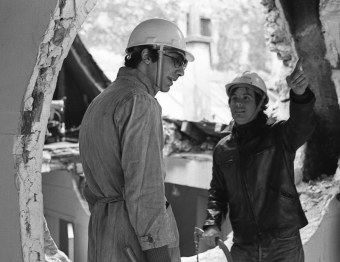
Gordon Matta-Clark (pictured left, in 1975) folded urban decay into his art. Move ahead forty years and the city’s debris is from new development. Photograph by Harry Gruyaert. Courtesy the Estate of Gordon Matta-Clark / ARS / David Zwirner

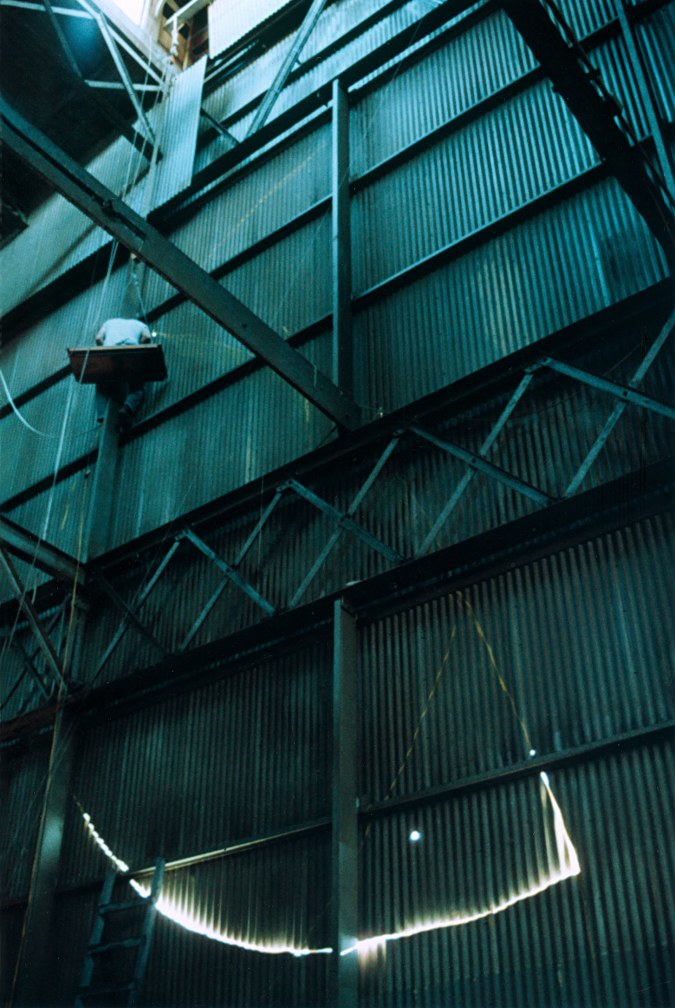
In the film “Day’s End,” the artist Gordon Matta-Clark rides a whale-size piece of corrugated metal as it is hoisted away from the wall from which he just cut it. He’s a young man, age thirty-two. The feat was filmed in the summer of 1975, in Chelsea’s abandoned Pier 52 building, where Matta-Clark attempted to make an “indoor park.” His silhouette, against the sunlight streaming in from his new view of the Hudson River, is heroic. Continue reading

Podcast Proliferation

VoxPodNearly one month ago, Vox launched a new way for us to source stories. We have sourced from their website when the story fits our mission. For us to scan the news daily and link to at least one article or book review or other media that seems consistent with our mission, we increasingly bump up against the fact that producers of and channels for accessing relevant information seem to be increasing faster than we can possibly keep up.

Today we sampled from their sonic venture, a story about changes way up north, wrought by climate change, geopolitical ambitions, head in the sand-ism and other intrigue. Finding an episode like this one stretches our horizons in a healthy, productive manner:

VoxPod2

There’s a new Cold War being fought in the North Pole between the United States and Russia (but also China, Finland, Norway, Canada, Greenland and more). Fueling the battle is the melting Arctic, which just had its warmest winter in recorded history. Vox’s Brian Resnick gives us the science before Yochi Dreazen takes us to the war.

It must also be mentioned that having outlets we trust recommend other outlets is a must. And here is an example of one we appreciate:

“Today, Explained”: An Edgy New Vox Podcast to Compete with “The Daily”

By 

Larson-Today-Explained

Hosted by Sean Rameswaram, the Vox podcast “Today, Explained” feels funny, knowing, and energetic—which, in this news climate, isn’t easy. Photograph by James Bareham / Vox Media

Podcast-wise, 2017 was arguably the year of “The Daily,” the beautifully produced, gently voiced narrative-news offering from the Times, hosted by Michael Barbaro, which started last January and quickly became indispensable. The show, which parses a different news story in each episode, through a conversation with a reporter or other guest, then delivers a brief news roundup, has sufficient perspective and empathy that it produces in its listeners an intoxicating, if temporary, feeling of sanity; by now, its theme song alone cues in me a Pavlovian calm. The show garners 4.5 million unique listeners each month; in April, it will expand to public-radio syndication. Continue reading

Keeping It In The Ground?

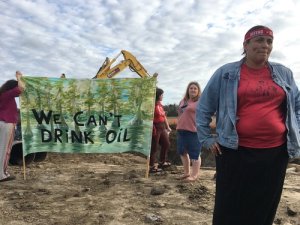
louisianapipelineprotest-d0864bee2b618a1d4d9ff96d2cbe12ac53c96f8b-s1600-c85

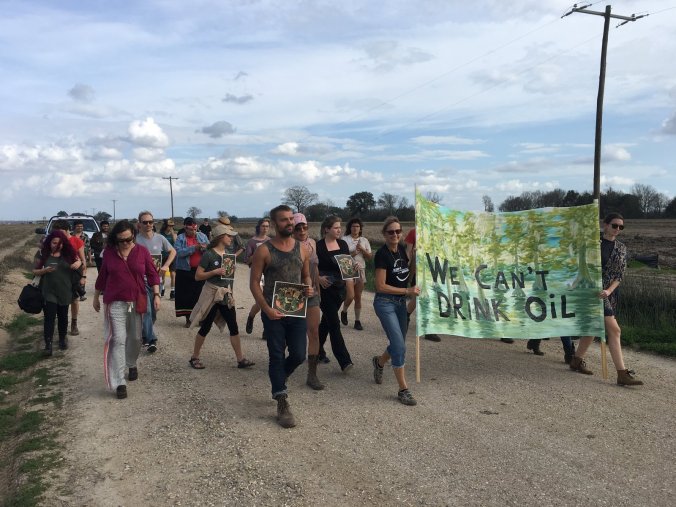
“Keep it in the ground” activists protesting the Bayou Bridge Pipeline on February 17, 2018 near Belle Rose, Louisiana. Travis Lux/WWNO

Under the current circumstances in the USA (you know what we mean) it is not straightforward to consider optimism obvious. But stranger things have happened. Thanks to National Public Radio (USA) for reminding us that when times get tough, the tough tough it out on behalf of us all:

cherrifoytlin-e88dddf32b0f52e571f94c798a180f7125ec1c59-s500-c85

Activist Cherri Foytlin vows to physically block construction of the Bayou Bridge Pipeline in Louisiana.
Travis Lux/WWNO

The United States oil business is booming and the country could soon be the largest crude oil producer in the world. Despite this record-breaking production, climate change activists campaigning to move away from fossil fuels say they are making progress.

Here’s the idea underpinning the ‘keep it in the ground‘ movement: to address climate change, activists say known reserves of fossil fuels will have to be left untouched instead of burned. In the meantime, they want countries to transition to renewable forms of energy such as solar and wind. Continue reading