Recycling Primer, UK Edition

3840

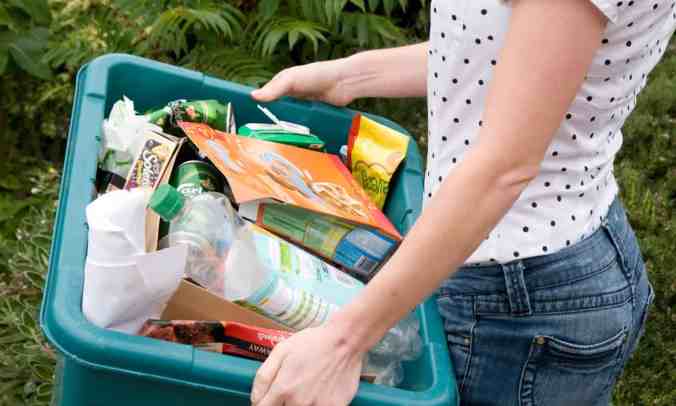
Many people aren’t sure which plastics they can recycle – and which they can’t. Photograph: Alamy

Thanks to Angela Monaghan, at the Guardian, for this reminder of the basics of recycling:

Which items can’t be recycled?

Many people think items such as plastic bags and coffee cups can be recycled when they can’t. Here are the do’s and don’ts

British consumers are increasingly willing to recycle their household waste but are failing to grasp the basics, according to the latest research by the British Science Association. Failure to get it right means that a lot of recyclable waste is going to landfill, the BSA says.

The issue is further complicated by inconsistency among councils, which make their own rules and funding decisions on recycling collections.

Common mistakes include putting tissue boxes in the recycling bin without first removing the plastic insert. On the flipside, people often wrongly think that empty deodorant aerosols cannot be recycled. Continue reading


Pomology, Diet & Trade

00IMPORTS-superJumbo

More than half of the fresh fruit and almost a third of the fresh vegetables Americans buy now come from other countries. Credit Jens Mortensen for The New York Times; Styled by Mariana Vera

David Karp, no not that David Karp, is in our distant memory recalled as The Fruit Detective, and we had lost track of him until today. Thankfully, he is still pomologizing:

Most of America’s Fruit Is Now Imported. Is That a Bad Thing?

It’s obvious to anyone who visits an American supermarket in winter — past displays brimming with Chilean grapes, Mexican berries and Vietnamese dragon fruit — that foreign farms supply much of our produce.

14imports2-master180

Although local, seasonal and farm-to-table are watchwords for many consumers, globalization has triumphed in the produce aisle. Credit Jens Mortensen for The New York Times

Imports have increased steadily for decades, but the extent of the change may be surprising: More than half of the fresh fruit and almost a third of the fresh vegetables Americans buy now come from other countries.

Although local, seasonal and farm-to-table are watchwords for many consumers, globalization has triumphed in the produce aisle. And despite the protectionist “America First” message coming from the Trump administration, the growth in imports appears likely to continue.

So this is an apt moment to examine how the shift happened, and what it portends — good or ill — for American consumers and farmers.

“I had no idea that more than half our fruit is imported, and it shocks me that this has happened so quickly,” said Michael Pollan, a professor of journalism at the University of California, Berkeley, whose best-selling books have analyzed the tensions between local and global food systems. Continue reading

Salmon, Shrinkage & Man

large-chinook-salmon_wide-e91ab4e6c6999d8d452ab3824075c74f0f7bbf3f-s1600-c85

A photo taken in Astoria, Ore., circa 1910. It was stated that the chinook on the left weighed 116 pounds and the one on the right weighed 121 pounds. WikiMedia Commons

John Ryan, filed this story through Northwest Public Radio, KUOW and EarthFix, an environmental journalism collaboration led by Oregon Public Broadcasting in partnership with five other public media stations in Oregon, Washington and Idaho. Another of the many reasons we appreciate National Public Radio (USA) and its various associates:

This Is Why You Don’t See People-Size Salmon Anymore

While the orcas of Puget Sound are sliding toward extinction, orcas farther north have been expanding their numbers. Their burgeoning hunger for big fish may be causing the killer whales’ main prey, chinook salmon, to shrink up and down the West Coast.

Chinook salmon are also known as kings: the biggest of all salmon. They used to grow so enormous that it’s hard now to believe the old photos in which fishermen stand next to chinooks almost as tall as they are, sometimes weighing 100 pounds or more.

“This has been a season of unusually large fish, and many weighing from 60 to 70 pounds have been taken,” The Oregonian reported in 1895. Continue reading

Crafting History With Wood

merlin_135052758_3da0e0c4-0d11-4265-9719-2503b4e68d7d-blog427

The elaborately detailed Bingham secretary enjoyed pride of place at the Wadsworth Atheneum in Hartford until it was determined to be a forgery. Credit John Banks

The principle of the matter, depending on how you look at it, makes this story interesting. The idea that a person can craft new wood into historical storylines so compellingly that experts cannot detect the recency of the crafting? Wow. Fooling a buyer into paying a premium for the historical significance? Uh, no. Thanks to John Banks for this sleuth story:

The Civil War memorial secretary was widely embraced as a folk art treasure. Fashioned from walnut, maple and oak, it was said to have been created circa 1876 to honor John Bingham, a Union infantryman who had fallen at Antietam.

merlin_135052761_3c9565a7-df1d-4773-ade7-6794ef8b279f-master675.jpg

A detail of the secretary, with the barnyard-bone lettering. CreditJohn Banks

Profusely adorned, it featured a music box that played “Yankee Doodle” and it was accompanied by a letter from a Bingham descendant, describing the significance of the piece to the family.“I was astonished by it,” said Wes Cowan, an auctioneer and dealer who examined the secretary at the Winter Antiques Show in New York in 2015.

The owner, Allan Katz, had bought it months earlier from a Massachusetts dealer for an undisclosed price, and was now trying to sell it for $375,000.

merlin_135244140_6fe1dd00-dc24-404e-a024-c2b695bf6284-master675.jpg

John Bingham, left, and his brother Wells, Union soldiers from East Haddam, Conn. Credit via, Military and Historical Image Bank

“Clearly,” Mr. Katz, a Connecticut antiques dealer, said in a video filmed at the show, “we are hoping that it might go to an institution, because it really would be wonderful to share this with the public on a day-to-day basis.”

So it was gratifying, Mr. Katz said in an interview, when the Wadsworth Atheneum in Hartford purchased the work and gave it prominent display. Continue reading

Evolution Never Fails To Surprise

lead_960 (15)

Kauai, Hawaii. Suzanne Cummings / Getty Images

We never think of evolution as particularly predictable. Surprising, yes. Awesome, yes. Predictable? Well, we love science for that reason, but still do not associate evolution with predictability. Thanks to Ed Yong, who enjoys making provocative statements that draw his reader in, for making evolution surprising in a new way:

Hawaii: Where Evolution Can Be Surprisingly Predictable

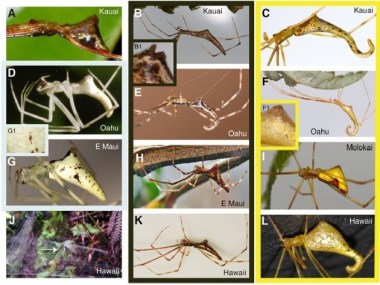
On each Hawaiian island, stick spiders have evolved into the same basic forms—gold, white, and dark. It’s a stunning example of how predictable evolution can be.

60fe627b0.jpg

Examples of white, dark, and gold species of stick spiders on various Hawaiian island. The top-left species is the most ancestral of them all. (Rosemary Gillespie et al.)

Most people go to Hawaii for the golden beaches, the turquoise seas, or the stunning weather. Rosemary Gillespie went for the spiders.

Situated around 2,400 miles from the nearest continent, the Hawaiian Islands are about as remote as it’s possible for islands to be. In the last 5 million years, they’ve been repeatedly colonized by far-traveling animals, which then diversified into dozens of new species. Honeycreeper birds, fruit flies, carnivorous caterpillars … all of these creatures reached Hawaii, and evolved into wondrous arrays of unique forms. Continue reading

The Wisdom Of Wolves

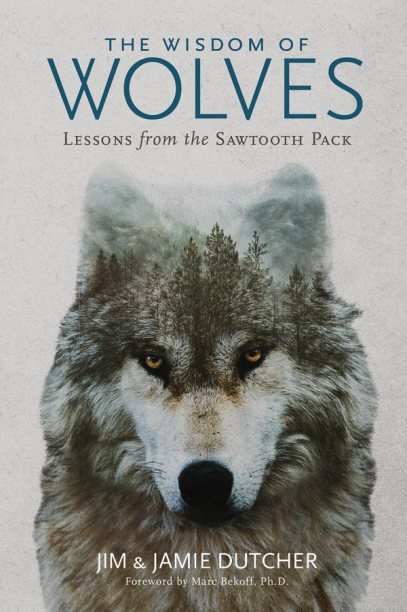
WisdomofWolvesCover.600x900.jpgWe first heard of the book here, so thanks to Public Radio station WNYC. However, in the blurb for the podcast interview with the authors, the link to the book went directly to Amazon. Must it forever more be so? Hope not.

So, click the image to the left to go to the actual source of the book, which seems a more worthy place to consider purchasing it, even though here too they give you the option to buy on Amazon. But there is a slight favoring of the publisher, National Geographic, in the purchase options. Here’s what they say:

CURIOSITY. COMPASSION. FAMILY FIRST.

After living among the wolves of The Sawtooth Pack for years, Jim and Jamie Dutcher present a new book, The Wisdom of Wolves: Lessons from the Sawtooth Packproviding groundbreaking observations of their unique experience.

As strong, and just as immediately recognizable as the ties that unite a human family, the emotional bonds shared among wolves are far more complex than ever realized, and now are detailed in this exceptional book. Continue reading

Know Your Packaging

girl-juicebox_wide-4eff0c88df284307072a9da33247352693ffef88-s1600-c85.jpg

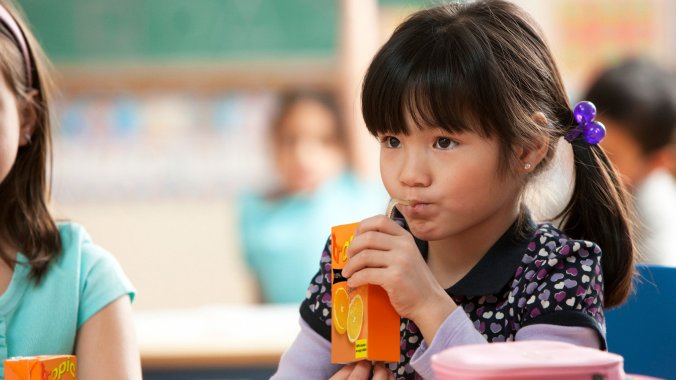
Because of layers of material that can be difficult to separate, many containers for juices and broths have traditionally been destined for landfills. But recycling them is getting easier. KidStock/Getty Images

Natalie Jacewicz, a science writer based in New York City has this illuminating story on packaging:

In The Recycling World, Why Are Some Cartons Such A Problem?

Scoot over, cans; cartons are moving in on your shelf space. Specifically, the soft, light rectangular containers commonly associated with juice boxes — “aseptic cartons” to the carton literati.

“They’re growing in popularity,” says Jason Pelz, vice president of recycling projects for the Carton Council, an industry group. “Broth is predominantly in aseptic packaging now, and you see a lot of coconut water in it.”

Aseptic cartons pack several environmental upsides, with one big catch: Traditionally, these containers have been quite difficult to recycle. To take stock of the promises and challenges of this supermarket sensation, I talked to experts on all things carton. Continue reading

Rewilding In New Jersey

It has been some time since we featured a story on rewilding, which occasionally involves iconic urban areas. New Jersey may not sound iconic, but it is the home to one of the masters of long form so we are happy to share this late great masterpiece of his:

Direct Eye Contact

The most sophisticated, most urban, most reproductively fruitful of bears.

Improbably, I developed a yearning, almost from the get-go, to see a bear someday in the meadow. While I flossed in the morning, looking north through an upstairs bathroom window, I hoped to see a bear come out of the trees. If this seems quixotic, it was. This was four miles from the campus of Princeton University, around which on all sides was what New Yorkers were calling a bedroom community. Deer were present in large familial groups, as they still are in even larger families. They don’t give a damn about much of anything, and when I walk down the driveway in the morning to pick up the newspaper I all but have to push them out of the way. Beforehand, of course, I have been upstairs flossing, looking down the meadow. No bears. Continue reading

Geothermal Cooking, Just Because

merlin_125685548_c436b8e6-ebb0-4c57-8c2a-b2fcbf46e20b-master768.jpg

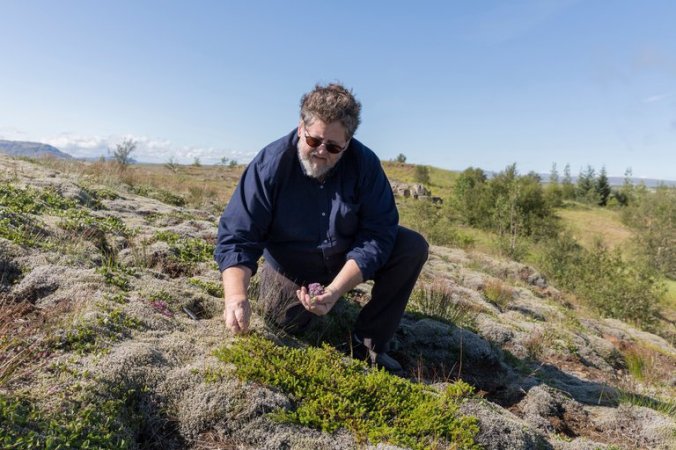
Jon Sigfusson, the chef at Fridheimar, a restaurant in Reykholt, Iceland, picking herbs for cooking lamb. Credit Bara Kristinsdottir for The New York Times

Thanks to Peter Kaminsky, who helps answer the question Why Cook Over an Icelandic Geyser? and does so with gusto:

REYKHOLT, Iceland — Standing in the mud of the Myvatn geyser field in northern Iceland, Kolla Ivarsdottir lifted the lid of her makeshift bread oven. It had been fashioned from the drum of an old washing machine and buried in the geothermally heated earth. All around us mudpots burbled and columns of steam shot skyward, powered by the heat of nascent volcanoes.

merlin_125685812_85ded439-31d9-4c03-b718-389cf79b405a-master675.jpg

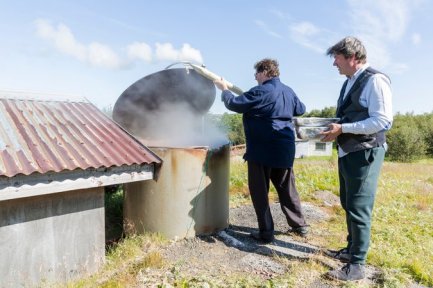
Mr. Sigfusson, left, and Kjartan Olafsson, a restaurant critic and fish exporter, putting food into the communal geothermal oven. Credit Bara Kristinsdottir for The New York Times

Ms. Ivarsdottir, a mother of three who sells her bread in a local crafts market, reached into the oven and retrieved a milk carton full of just-baked lava bread, a sweet, dense rye bread that has been made in the hot earth here for centuries. She cut the still-hot loaf into thick slices. It is best eaten, she said, “completely covered by a slab of cold butter as thick as your hand, and a slice of smoked salmon, just as thick.” We settled for bread and butter — still a supernal combination. Continue reading

Henry Worsley & The Importance Of Making Dreams Come True

r31463.jpg

Before Henry Worsley set off alone, his family painted messages on his skis. “Come back to me safely, my darling,” his wife wrote.
Photograph by Sebastian Copeland

If you have not read it yet, go straight to it. If you have read it already, next you will want to listen to the author, the subject (via field recordings) and the subject’s wife.

r31492.jpg

Henry and Joanna Worsley at the Korean War Veterans Memorial, in Washington, D.C., in 2015. Worsley served in the British Army for thirty-six years.
Photograph courtesy Joanna Worsley

We have linked to stories about explorers, though none specifically about Shackleton, in the past. The subject of this story has something important to say about his hero, and it is worth hearing his voice as well as his wife’s (click here).

The author, who we have linked to more than once, gave two excellent interviews about his process as a long-form story-teller, and if this is your thing, then you will want to listen to both, first here and more recently here.

The White Darkness: A Journey Across Antarctica

A solitary journey across Antarctica.

By David Grann

I. Mortal Danger

Worsley.jpgThe man felt like a speck in the frozen nothingness. Every direction he turned, he could see ice stretching to the edge of the Earth: white ice and blue ice, glacial-ice tongues and ice wedges. There were no living creatures in sight. Not a bear or even a bird. Nothing but him.

It was hard to breathe, and each time he exhaled the moisture froze on his face: a chandelier of crystals hung from his beard; his eyebrows were encased like preserved specimens; his eyelashes cracked when he blinked. Get wet and you die, he often reminded himself. The temperature was nearly minus forty degrees Fahrenheit, and it felt far colder because of the wind, which sometimes whipped icy particles into a blinding cloud, making him so disoriented that he toppled over, his bones rattling against the ground. Continue reading

When Edward O. Wilson Has Something To Say In Writing, Reading It Is A Top Priority

04wilson-master768

Credit Jillian Tamaki

Edward O. Wilson invariably focuses our attention on the planet in new and interesting, not to mention critically important, ways. Here he goes again, and the supporting graphics, highly informative maps, alone are worth the read:

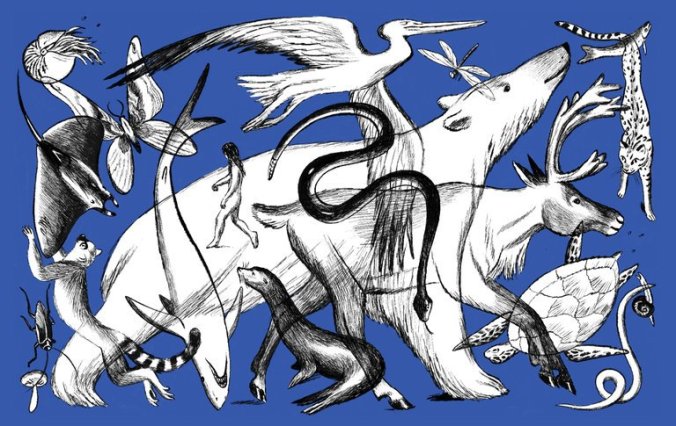
The 8 Million Species We Don’t Know

The history of conservation is a story of many victories in a losing war. Having served on the boards of global conservation organizations for more than 30 years, I know very well the sweat, tears and even blood shed by those who dedicate their lives to saving species. Their efforts have led to major achievements, but they have been only partly successful.

The extinction of species by human activity continues to accelerate, fast enough to eliminate more than half of all species by the end of this century. Unless humanity is suicidal (which, granted, is a possibility), we will solve the problem of climate change. Yes, the problem is enormous, but we have both the knowledge and the resources to do this and require only the will. Continue reading
Toys-R-Greening


720.jpg

Pieces such as leaves, bushes and trees will be made entirely from plant-based plastic. Photograph: Maria Tuxen Hedegaard/Lego

Among contributors to this platform, the number of lego pieces bought over the last fifty years likely aggregates into the hundreds of thousands. And yes, we all eventually knew that the product is petroleum-based and therefore worthy of reconsideration in for the next generation. But they have remained irresistible anyhow, and so we are glad to hear the company is moving in a new direction. Rebecca Smithers, the Consumer affairs correspondent for the Guardian, offers this news on where the company is going with green:

First sustainable Lego pieces to go on sale

Range including leaves, bushes and trees made entirely from plant-based plastic sourced from sugar cane will be available later this year

The first Lego pieces made from plant-based plastic sourced from sugar cane will go on sale this year, the company has announced.

The 85-year-old Danish toymaker said production has begun on a range of Lego botanical elements or pieces such as leaves, bushes and trees, made entirely from plant-based plastic. They will start appearing in Lego box sets with bricks and mini-figures later this year. Continue reading
Writers, Thinkers, Birders

Petrusich-Dont-Mess-with-the-Birds.jpg

A proposed Republican amendment threatens to weaken the protections in the Migratory Bird Treaty Act of 1918. Photograph by Ernest Manewal / Camera Press / Redux

Thanks to writers who become birders, and this one in particular:

Don’t Mess with the Birds!

By Amanda Petrusich

Catskill, New York—the small Hudson River town where the American painter Thomas Cole lived and worked, from 1825 to 1847—is also home to the RamsHorn-Livingston Sanctuary, which contains four hundred and thirty acres of tidal marsh, upland forest, and fallow farmland, and is presently occupied by common loons, great blue and green herons, wood ducks, mallards, a pair of bald eagles, northern harrier and red-tailed hawks, ruffled grouse, merlin falcons, eastern screech and great horned owls, belted kingfishers, pileated woodpeckers, warblers, scarlet tanagers, blue-gray gnatcatchers, a tiny and nervous-looking thrush known as a veery, and various other species of birds whose names, I will admit, are perilously delightful to type. There is also a beaver. Continue reading
Progress Through Yeast

yeast_wide-eb654133785982b6ac43f4ee0d2913b4aab254fa-s1600-c85.jpg

Fresh and dried yeast. It might not look like much, but it has shaped the way we eat and live, according to a new book. Maximilian Stock Ltd./Getty Images

Thanks to Menaka Wilhelm:

The Rise Of Yeast: How Civilization Was Shaped By Sugar Fungi

An imagined conversation between two yeast cells appears in Kurt Vonnegut’s 1973 novel Breakfast of Champions. “They were discussing the possible purposes of life,” Vonnegut writes. If that’s not absurd enough, their existential discussion takes place against a weird, dismal backdrop, “as they ate sugar and suffocated in their own excrement.” Little did they know, their little yeasty lives had an important, human-centric purpose. “Because of their limited intelligence, they never came close to guessing that they were making champagne.” Continue reading
Finn The Wonder Dog, And Other Introduced Species

KarenAndrew_Finn-1-1260x708

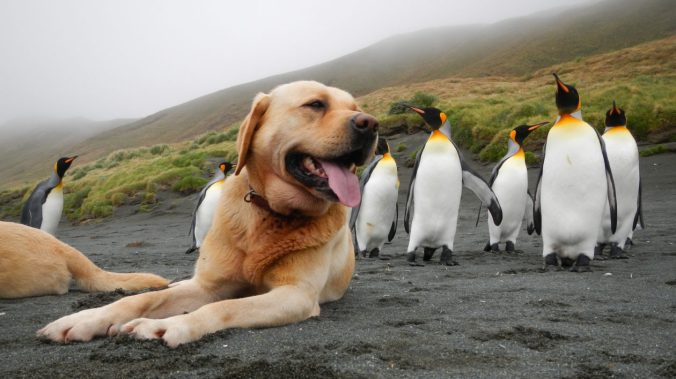
Finn the Wonder Dog on Macquarie Island with king penguins. Photo © Karen Andrew/New Zealand Department of Conservation

Thanks to Ted Williams at Cool Green Science for this article about the eviction of an invasive species in a remote location with charismatic species both native and introduced:

16051893298_01a0a7f12f_k-1260x708.jpg

Choros Field Work. Photo © Island Conservation

Early in the 20th century settlers on the islands of Chañaral and Choros off northern Chile had a brainstorm: They’d create a ready supply of fresh meat by unleashing European rabbits.

It worked out as well as rabbit introduction in Australia. Continue reading

Starbucks Taking Some Responsibility

5118

Thanks to the Guardian’s consumer affairs correspondent, Rebecca Smithers, for this:

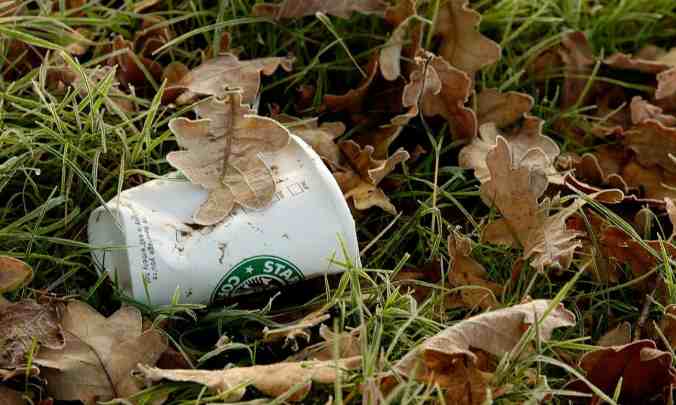
Starbucks trials 5p takeaway cup charge in attempt to cut waste

People buying hot drinks in cardboard cups in 35 London branches will pay ‘latte levy’

Starbucks will be the first UK coffee chain to trial a “latte levy” – a 5p charge on takeaway coffee cups – under plans that aim to reduce the overuse and waste of 2.5bn disposable cups every year.

In the latest offensive in the war against plastic waste, the chain said it hoped the move, starting on Monday, would help change behaviour and encourage customers to switch to reusable cups instead. Continue reading
Enlightenment & Optimism

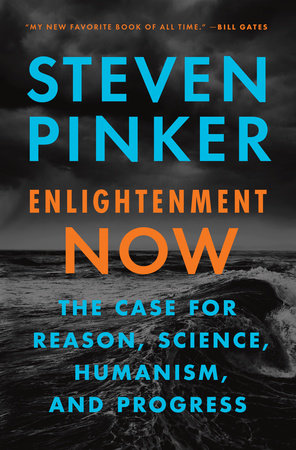
9780525427575.jpegSteven Pinker has featured in these pages plenty of times for the quality of his writing. Recently he was featured in a joint interview with Bill Gates that we meant to link to, but never did. And meanwhile we linked to this story about optimism; now this:

…If you think the world is coming to an end, think again: people are living longer, healthier, freer, and happier lives, and while our problems are formidable, the solutions lie in the Enlightenment ideal of using reason and science.

Is the world really falling apart? Is the ideal of progress obsolete? In this elegant assessment of the human condition in the third millennium, cognitive scientist and public intellectual Steven Pinker urges us to step back from the gory headlines and prophecies of doom, which play to our psychological biases…[continue reading on the book’s website]
The book came to our attention thanks to a smart op-ed:

merlin_132531638_bf5b1cdd-75e4-4b98-96d1-b77255ff8edd-master768

Steven Pinker, a psychology professor at Harvard, calls himself an Enlightenment man. Credit Chona Kasinger for The New York Times

…Pinker’s philosophical lens prevents him from seeing where the real problems lie. He calls himself an Enlightenment man, but he’s really a scientific rationalist. He puts tremendous emphasis on the value of individual reason. The key to progress is information — making ourselves better informed. The key sin in the world is a result either of entropy, the randomness that is built into any system, or faith — dogma clouding reason. Continue reading
A Pro-Environment Form Of Apartheid

4928

Jonathan Watts, over at the Guardian, has this news:

Britain and Europe must ban palm oil in biofuel to save forests, EU parliament told

Forest peoples affected by plantations urge EU to enact ban despite diplomatic opposition

If Britain and other European nations are to fulfil forest protection goals, they must ban the use of palm oil for biofuel and tighten oversight of supply chains, a delegation of forest peoples told parliamentarians this week.

The call for urgent, concrete action comes amid an increasingly heated diplomatic row over the issue between the EU and the governments of major palm-producing nations such as Indonesia, Malaysia and Costa Rica.

The European parliament voted last April to prohibit sales of biofuels made from vegetable oils by 2020 in order to meet its climate goals. This was followed by a related vote last month. Whether and how this might be implemented is now being considered by the European Commission and member states.

Continue reading

Interpreting Climate News

ArcticTemps.jpg

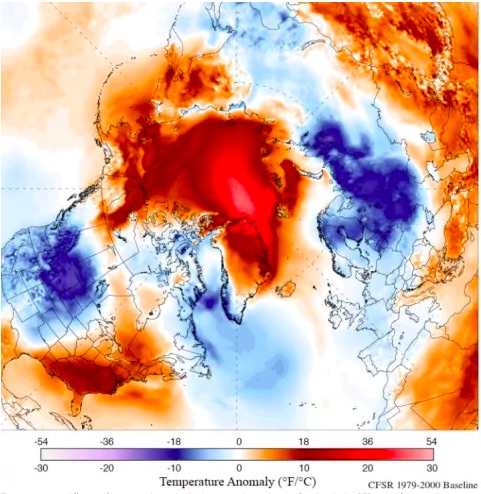
The temperature difference from normal over the Arctic averaged over the next five days in the GFS model forecast. (University of Maine Climate Reanalyzer)

Is it cataclysm or is it a rendering of what we already thought we knew? In case you missed it, there was some startling news that came with this image to the left, that does not look like anything we have ever seen. And the article starts like this:

While the Eastern United States simmers in some of its warmest February weather ever recorded, the Arctic is also stewing in temperatures more than 45 degrees above normal. This latest huge temperature spike in the Arctic is another striking indicator of its rapidly transforming climate.

On Monday and Tuesday, the northernmost weather station in the world, Cape Morris Jesup at the northern tip of Greenland, experienced more than 24 hours of temperatures above freezing according to the Danish Meteorological Institute. “How weird is that?” tweeted Robert Rohde, a physicist at the University of California at Berkeley. “Well it’s Arctic winter. The sun set in October and won’t be seen again until March. Perpetual night, but still above freezing.”

This thaw occurred as a pulse of extremely mild air shot through the Greenland Sea.

Warm air is spilling into the Arctic from all sides. On the opposite end of North America, abnormally mild air also poured over northern Alaska on Tuesday, where the temperature in Utqiaġvik, previously known as Barrow, soared to a record high of 31 degrees (minus-1 Celsius), 40 degrees (22 Celsius) above normal. [continue to the article]

Alarming? We think so. Clear? We do not think so. Eric Lach, Deputy News Editor at The New Yorker, has this brief helpful interpretation, with a much easier to understand illustration:

The-Current-Today-Big-Climate-Change.jpg

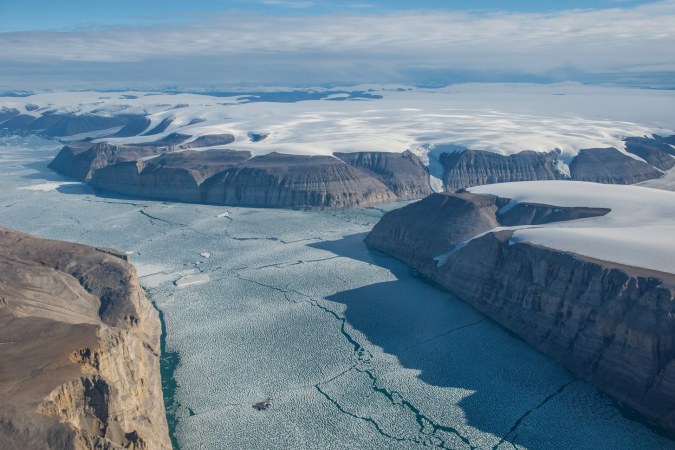
Many media outlets now regularly cover instances of extreme weather in remote corners of the world. How should readers understand these reports? Photograph by Esther Horvath / Redux

How to Read Today’s Big Climate-Change Headline

This week brought news from the Arctic. “Arctic temperatures soar 45 degrees above normal, flooded by extremely mild air on all sides,” the Washington Post declared, in a headline. The article below that headline detailed how, on Monday and Tuesday, at the northern tip of Greenland, temperatures rose above freezing for a full twenty-four-hour period—extremely unusual for this time of year—while temperatures across “the entire Arctic north of 80 degrees latitude have averaged about 10 degrees (6 Celsius) above normal since the beginning of the calendar year.”

All sorts of media outlets now regularly cover instances of extreme weather in remote corners of the world. And yet how should readers understand these reports? Are the ups and downs of climate change something to follow in the newspaper, like the Mets or the Yankees? [continue to the post]