Catching the Entomology Bug

Sophia Spencer and Morgan Jackson co-wrote a scientific paper on Twitter, entomology and women in science, after a tweet about Sophia’s love for bugs went viral

It’s good to find an inspiring story highlighting a child’s interest in scientific exploration and the support of parents and the entomological community to foster that passion. Thanks to NPR for bringing it to our attention.

Once Teased For Her Love Of Bugs, 8-Year-Old Co-Authors Scientific Paper

Sophia Spencer, 8, loves bugs — especially grasshoppers. She’s an expert on insects, and likes to give her littlest friends an occasional ride on her shoulder.

That used to earn her mockery from her peers. But now it’s earned her a massive outpouring of support — and a byline in the Annals of the Entomological Society of America.

Everything changed after Sophia’s mom, Nicole Spencer, reached out to scientists for support last year.

She wrote to the Entomological Society of Canada and explained the dilemma. Her daughter wanted to know if she could learn more about bugs as a job, but her mom wasn’t sure how to encourage her. And she wanted to reassure her that her entomological enthusiasm wasn’t weird.

Mission accomplished. Continue reading

Bison Awareness In Europe

21xp-bison-master768

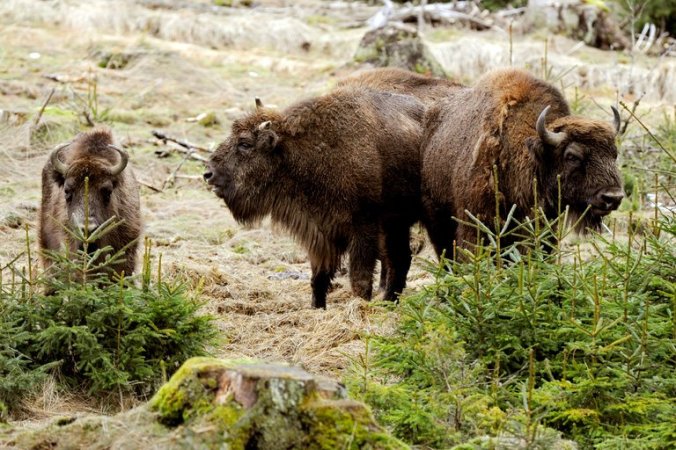
European bison near the town of Bad Berleburg, Germany, in 2013. Credit Marius Becker/Picture Alliance, via Associated Press

Bison in Europe have not been on our agenda for a while, though rewilding in Europe remains a topic we monitor and share here with regularity. Progress seemed more the rule than the exception; so this recent story from Germany takes us by complete surprise:

Last week, a rare wild bison was spotted wandering alone near the town of Lebus in eastern Germany. A local official, alarmed that the animal could be dangerous, ordered hunters to shoot it and one of them did, using a rifle to kill an animal that had not freely roamed Germany for several hundred years, conservationists say.

The killing of the mature male European bison on Sept. 14, which was first reported by local news outlets, set off an outcry among conservationists, who have worked to protect the species and increase its population. The World Wide Fund for Nature in Germany has begun a lawsuit against the local official who gave the order, Heiko Friedemann, setting off a state investigation before it goes to court. Continue reading

Climate Change Primer

Illustrations by JON HAN

Once again we thank NYTimes Science writer Justin Gillis for this primer on a complex and politically weighty issue.

Climate Change Is Complex. We’ve
Got Answers to Your Questions.

We know. Global warming is daunting. So here’s a place to start: 17 often-asked questions with some straightforward answers.

1.Climate change? Global warming? What do we call it?

Both are accurate, but they mean different things.

You can think of global warming as one type of climate change. The broader term covers changes beyond warmer temperatures, such as shifting rainfall patterns.

President Trump has claimed that scientists stopped referring to global warming and started calling it climate change because “the weather has been so cold” in winter. But the claim is false. Scientists have used both terms for decades.

2.How much is the Earth heating up?

Two degrees is more significant than it sounds.

As of early 2017, the Earth had warmed by roughly 2 degrees Fahrenheit (more than 1 degree Celsius) since 1880, when records began at a global scale. The number may sound low, but as an average over the surface of an entire planet, it is actually high, which explains why much of the world’s land ice is starting to melt and the oceans are rising at an accelerating pace. If greenhouse gas emissions continue unchecked, scientists say, the global warming could ultimately exceed 8 degrees Fahrenheit, which would undermine the planet’s capacity to support a large human population.

3.What is the greenhouse effect, and
how does it cause global warming?

We’ve known about it for more than a century. Really.

In the 19th century, scientists discovered that certain gases in the air trap and slow down heat that would otherwise escape to space. Carbon dioxide is a major player; without any of it in the air, the Earth would be a frozen wasteland. The first prediction that the planet would warm as humans released more of the gas was made in 1896. The gas has increased 43 percent above the pre-industrial level so far, and the Earth has warmed by roughly the amount that scientists predicted it would.

Continue reading

Coral Larvae To The Rescue, Thanks To Marine Biologists

00REEFS6b-superJumbo.jpg

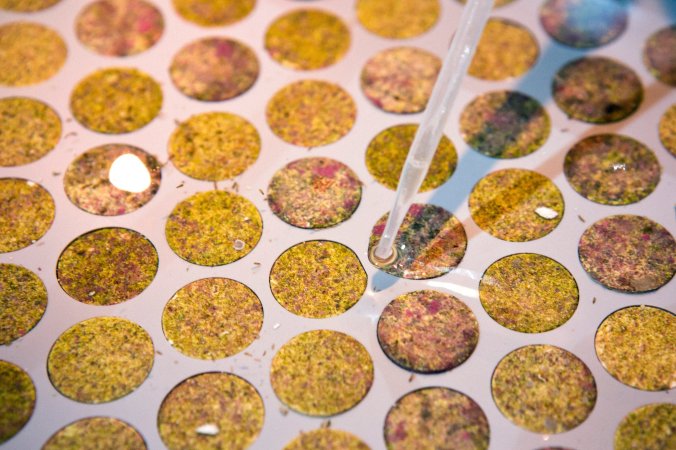
A researcher used a pipette to release coral larvae into trays to encourage settlement and growth. Credit David Maurice Smith for The New York Times

This feature story suggests that even as we stress nature on a global scale, there are creative scientists working on fixes for particular challenges:

Building a Better Coral Reef

As reefs die off, researchers want to breed the world’s hardiest corals in labs and return them to the sea to multiply. The effort raises scientific and ethical questions. Continue reading

If You Happen To Be In Cambridge

9780674975910-lg

Thanks to Jonathon Shaw and Harvard Magazine for bringing our attention to this book:

Life Beyond Sight

The microbial earth, brought into view

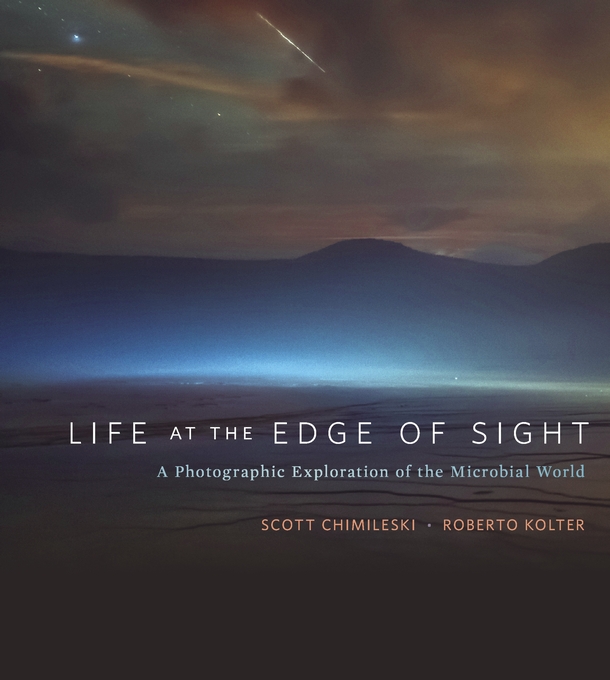
world.drop_.sig_IN ROCKS AND SOIL, air, ponds and oceans, life is dominated by creatures that humans cannot see. Microbes thrive everywhere, from gardens and kitchens to the harshest environments on the planet: under polar ice, in hydrothermal vents at the bottom of the sea, in hot springs that spew acid. A single gram of soil teems with billions of them, and their genetic diversity is equally impressive, dwarfing that of all the plants and animals round.microbe.2 (1)on Earth. Life at the Edge of Sight: A Photographic Exploration of the Microbial World (forthcoming from The Belknap Press of Harvard University Press), brings the planet-shaping diversity of these single-celled, microscopic organisms into view through stunning images. Co-authors Roberto Kolter, professor of microbiology and immunology, and Scott Chimileski, a research fellow in microbiology and immunology at Harvard Medical School, share their passion for the subject in part by magnifying what cannot be seen unaided, in part by revealing large-scale microbial impacts on the landscape. Kolter has long been a leader in microbial science at Harvard, while Chimileski brings to his scholarship a talent for landscape, macro, and technical photography…

Read the whole article here, and if you happen to be in Cambridge (MA, USA) this exhibition might be of interest:

World in a Drop: Photographic Explorations of Microbial Life

logofinalThe minuscule ecosystem within a single drop of water is home to an astonishing diversity of organisms busily living out their lives and interconnected by myriad complex relationships. The photographic exhibit World in a Drop is an aesthetic journey into this microbial world, as revealed through cutting-edge imaging microbe.gallery.1technologies. With expertly executed photography, videography, and poetic narration, Scott Chimileski and Roberto Kolter capture the intrinsic beauty of a mysterious world that is seldom recognized.
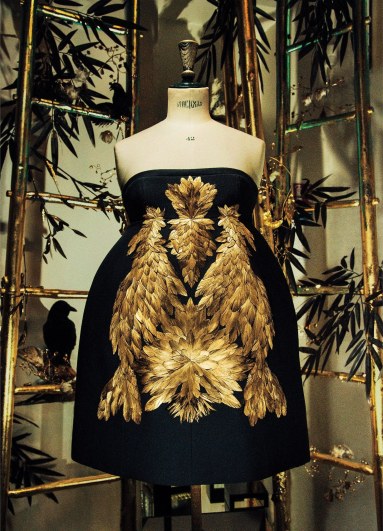
Feathers’ Fine Flourish

170925_r30593

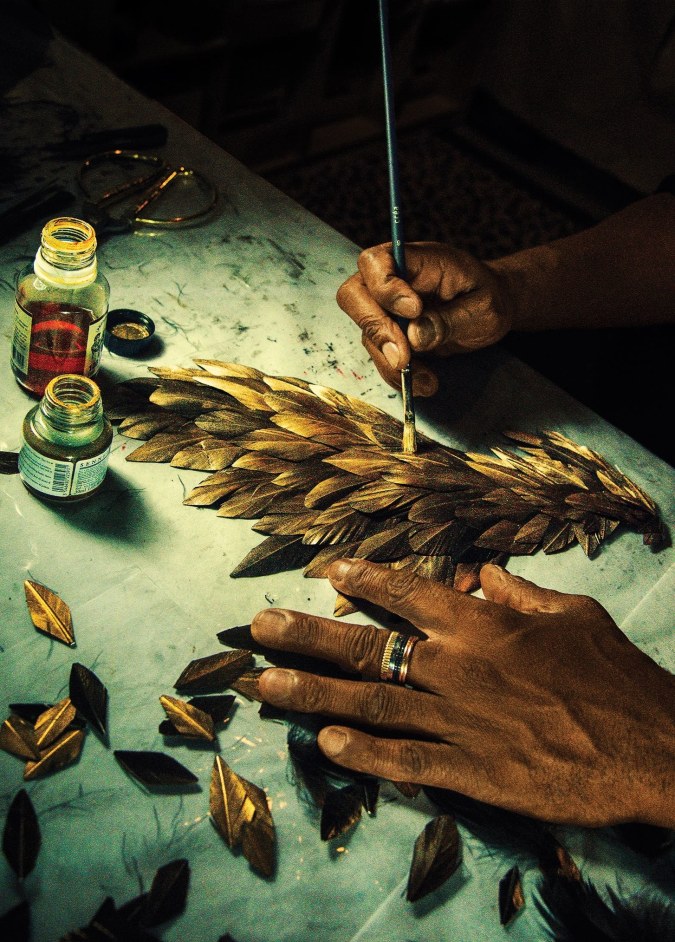
Charles-Donatien paints and lacquers goose feathers in his studio. Photograph by Pari Dukovic for The New Yorker

The Style issue of the New Yorker is the least interesting of the year, from the perspective of these pages; and yet on occasion even in this one they deliver something we can mull over:

The Eternal, Seductive Beauty of Feathers

We’ve been dressing up as birds since the Stone Age. Eric Charles-Donatien has brought the craft of featherwork into the twenty-first century.

Not surprisingly Burkhard Bilger is the journalist who pulls this off. Our Bird Of The Day (365 times for seven years running) feature exposes us to feathers of such variety that we could not resist giving Mr. Bilger the benefit of the doubt on this one:

170925_r30592There is such a thing as too much beauty. So the stuffed bird on the counter seemed to be saying. It was a Himalayan monal, Lophophorus impejanus, Liberace of land fowl. Its head was emerald, its neck amber and gold, its back a phosphorescent violet that flared to a sunburst at the tail. A pouf of feathers jutted from its head like a tiny bouquet. Named for Lady Mary Impey, the wife of the Chief Justice of Bengal in the late seventeen-hundreds, it had a stout, ungainly body swaddled in bright plumes as if for an audience with the maharaja. It was a turkey that wanted to be a hummingbird. Continue reading

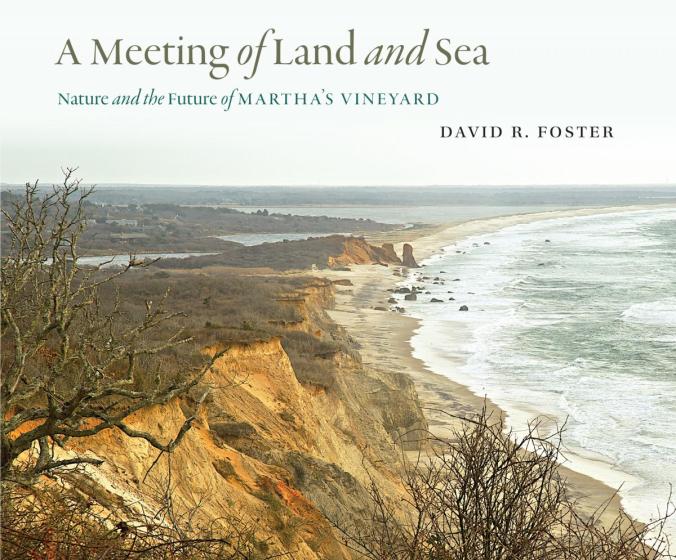
The Conservation Model Of Martha’s Vineyard

YUP FOSTER MV COVER.jpg

Whether or not you have been to Martha’s Vineyard, if you have been through our pages at all you will understand how this excerpt from the above book captures our attention and why we are interesting in tracking it down for a closer look:

The Vineyard landscape is distinct in many ways — most notably in land values, pace of development toward full build-out, the assemblages of plants and animals, and past success in land protection — but it typifies many qualities of Massachusetts and the greater New England region, including their conservation challenges. They share the history of agricultural and woodlot land use, the ongoing growth of their forests, the tension among farmed, open, and wooded lands, the relentless sprawl of development, the fragmentation of the land by many small, private landownerships, and the looming threats from climate change, sea level rise, insect outbreaks, and other stresses. Nevertheless, the Vineyard has put itself into a particularly strong position to address the looming challenges due to its expansive breadth of conserved lands, its forward-looking and Island-wide planning efforts and knowledge base about the landscape, and the capacity for ongoing land protection and stewardship. Continue reading

Conservation Tourism and Species Survival

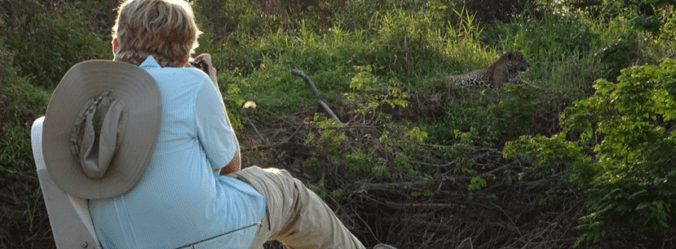
A recent study found that the value of jaguars to tourism (US$6,827,392) was far in excess of the cost to ranchers from depredation of their cattle (US$121,500)

The intersection between jaguar territory and tourism has been part of our work for decades, in both the Paraguayan Pantanal, Costa Rica’s Osa Peninsula and more recently in northwestern Belize.

We’ve seen the efficacy of species protection via conservation tourism when the economic value of species survival is quantified. This is good news for one of our favorite animals.

Curiosity saves the cat: Tourism helps reinvent the jaguar

From villain to hero, the jaguar (Panthera onca) stands at the cusp of a radical overhaul in its public image. As the largest cat in the Americas, the species commands a dominant role in the food chain of its native Pantanal – a vast swathe of tropical wetland that encompasses parts of Brazil, Paraguay and Bolivia. Once hunted for its fur, the jaguar’s appetite for the abundant prey in the Pantanal has led it into deadly conflict with ranchers in recent decades, casting it as the stalking menace of livestock and livelihood in a region where much of the land is reserved for cattle rearing. However, in a hopeful development for conservationists, researchers have revealed in a new study published in Global Ecology and Conservation that jaguars are worth 60 times more to tourism than the cost the big cats inflict on ranchers.

“The study represents a regional reality in the Pantanal,” said Fernando Tortato, research fellow at Panthera, the global wild cat conservation group that helped lead the study. “Where the jaguar brings in far more revenue than the potential damage it can cause.”

Jaguars once abounded from the southwestern U.S. to Argentina, but their numbers have fallen due to hunting and habitat loss. In the Amazon rainforest, deforestation is an ongoing threat, even while the dense foliage often precludes human encounters with jaguars. In the absence of benign tourism opportunities there is demand for jaguar teeth, paws and claws as souvenirs.

But jaguar’s predilection for lush and low-lying forest makes the Pantanal a stronghold for the species. The wetland’s web-like tributaries also open the wild cat’s home to human exploration, allowing tourists to share in their company.

In the Pantanal, the biggest threat to their survival is conflict with ranchers. Continue reading

Fish Provenance Matters

Kim-Salmon-Spill_01

Lummi Nation fishermen work to capture Atlantic salmon that escaped an aquaculture pen near Cypress Island, in Washington State. Photograph by Brandon Sawaya / SOULCRAFT ALLSTARS

With big weather news recently holding our attention, it is easy to miss smaller scale natural disasters, so thanks to E. Tammy Kim for ensuring this story made it to our pages:

Washington State’s Great Salmon Spill and the Environmental Perils of Fish Farming

Just after the thrill of the total solar eclipse, a troubling nature story emerged from northwestern Washington State. On August 22nd, Cooke Aquaculture, a multibillion-dollar seafood company, reported that, three days earlier, extreme tides coinciding with the eclipse had torn apart its enormous salmon farm off Cypress Island, a teal idyll near the college town of Bellingham. Continue reading

Collaboration in Lake Tana

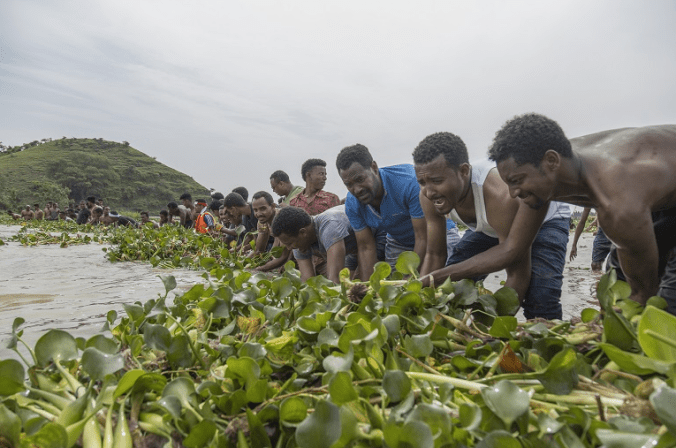
People come up with different strategies to remove as many weeds as they can. One of those is to stand in line and push segments of weeds together. Maheder Haileselassie Tadese/Mongabay

This isn’t the first time the subject of water hyacinth has shown up on this site – it would be impossible to spend seven years in Kerala without coming into contact with the invasive weed.

Innovative solutions abound to harvest the fast growing plant for the labor intensive creation of consumer goods, or creative farming techniques, but in cases such as Ethiopia’s Lake Tana, communities unite to attempt manual eradication.

Community pulls water-thirsty invasive weeds from Ethiopia’s Lake Tana

Last week thousands of people in northwest Ethiopia marched to Abay River and Lake Tana as part of the “Save Lake Tana” movement to remove invasive water hyacinth by hand. The free-floating, water-thirsty perennial can grow up to three feet tall and is swallowing the northeast shores of Lake Tana, impacting both aquatic habitat health and local fishermen.

Lake Tana is the source of the Blue Nile and the largest lake in Ethiopia. The lake is frequently used for transport, tourism, hydroelectric power generation, ecological conservation and fishery operations. It is home to 28 fish species, out of which 16 are endemic.

A team of university researchers discovered in 2012 that 20,000 hectares of the lake’s body was covered by invasive water hyacinth (Eichhornia Crassipes). Since then, it’s gone to a peak infestation of 40,000 hectares. At first, the hyacinth was mainly found in an area with three tributaries to Lake Tana. Continue reading

Honey With Urban Terroir

The bees’ home at the Javits. Beekeeping was illegal in New York until 2010 when the ban was lifted. Credit Chang W. Lee/The New York Times

It’s impossible to overstate the importance of bees, both environmentally and agriculturally.  So we’re suckers for happy bee stories, especially urban bees. Kudos to the New York City Board of Health for lifting the Giuliani-era ban against urban bee-keeping, not to mention the Javits Center green-roof sustainability project!

Atop a Manhattan Convention Center, a Harvest of Honey

Let us begin not with the who, which was several thousand bees and a bunch of people in anti-sting gear that looked like spacesuits, or the what, which was harvesting honey. Let us go directly to the where.

It was not a bosky setting that would bring to mind the Robert Frost poem about good fences and good neighbors, but the south roof of the Jacob K. Javits Convention Center on Manhattan’s Far West Side. Here the neighbors are the unfinished towers of the Hudson Yards development. They ring what has become an urban meadow — the south roof, mostly covered by 6.75 acres of kaleidoscopic sedum. It is yellowish green. It will turn red in time for Christmas.

The bees have been in residence since spring. The first 12,000 came from California, transplanted in a three-pound container that looked like a shoe box with screens on both sides. They were placed in wooden hives, which look like stackable drawers. There were 60,000 to 80,000 by midsummer.

The accommodations are typical of urban apiaries. Liane Newton, the director of nycbeekeeping.org, who tends them, described her role as “convincing them they live in a tree trunk when they live in a file cabinet.”

Her persuasion seems to have paid off. “They made cells for closets, cells for babies, cells for storing pollen,” she reported one morning last week. “One amazing thing about bees is they have this architectural inclination.” Continue reading

Cultural Conservation In A North American Indigenous Community

09culturecamp6-master675

Yurok dance feather regalia in cedar boxes, at Dave Severns’s camp on the Yurok Indian reservation. Credit Talia Herman for The New York Times

As important as cultural conservation is to us it gets half as much attention in these pages as nature conservation (a matter of life and death), so we are more than happy to share stories like this one (thanks to Patricia Leigh Brown) when they land on our desk:

09culturecamp5-blog427

Dance feather regalia dry in the sand, made by Dave Severns, whose culture camp teaches young men a nearly forgotten art form. Credit Talia Herman for The New York Times

KLAMATH, Calif. — The gathering known simply as “Uncle Dave’s camp” begins at daybreak on the pebbled banks of the Klamath River, the age-old spruce and redwoods on the bluffs shrouded in mist.

Here on the Yurok Indian Reservation near the Oregon border, so remote that certain areas have yet to receive electricity, young male campers sit on cedar logs while keeping tabs on a river rock heated in a fire. The rock, hand-hollowed and chiseled with basketry patterns, contains a molten glue made from the dried air bladders of sturgeons. The syrupy concoction is a crucial ingredient for making feathered headdresses, hide quivers, obsidian-blade sticks and other forms of ceremonial dance ornaments, or regalia, that are at once works of art and living conduits to the spirit world. Continue reading

The Origin Of Feasting

170918_r30523

A life of hunting and gathering had advantages over one of farming and settlement. Illustration by Golden Cosmos

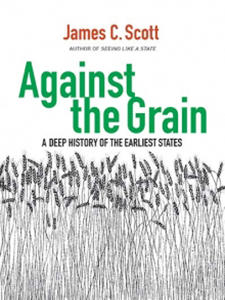
John Lanchester’s article, pondering technology versus science, gives fire its due in the course of reviewing a new book about how hunting and gathering gave way to progress. At the same time, Lanchester raises reasonable doubts about the gains:

book-scott-grain…We don’t give the technology of fire enough credit, Scott suggests, because we don’t give our ancestors much credit for their ingenuity over the long period—ninety-five per cent of human history—during which most of our species were hunter-gatherers. “Why human fire as landscape architecture doesn’t register as it ought to in our historical accounts is perhaps that its effects were spread over hundreds of millennia and were accomplished by ‘precivilized’ peoples also known as ‘savages,’ ” Scott writes. Continue reading

The Largest Underground Bicycle Parking Garage In The World

02Bikes6-master675

A special section in Utrecht’s new underground bike parking garage is for bigger bikes, which usually have children’s seats attached. Credit Ilvy Njiokiktjien for The New York Times

If You Build It, the Dutch Will Pedal

02Bikes2-master675

As fast as Utrecht can build underground bike parking garages, most spots are taken. Credit Ilvy Njiokiktjien for The New York Times

The city recently surpassed Amsterdam in a widely respected ranking of bike-friendly cities and is now second only to Copenhagen, which is more than twice its size. Continue reading

Audubon’s 2017 Photography Awards Winners

Aud1

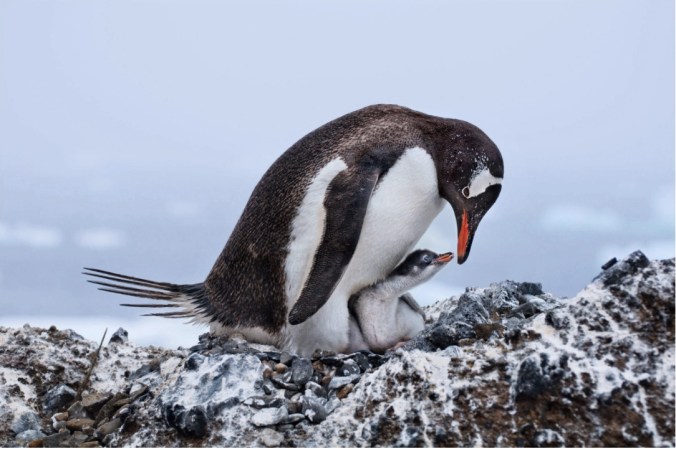
Gentoo Penguins. Photo: Deborah Albert/Audubon Photography Awards

Thanks to the judges who chose the Grand Prize Winner (above) in this year’s contest, among an impossibly great selection:

The more than 5,500 photos entered in this year’s contest, our eighth, show birdlife at its most vivid, vulnerable, formidable, and elegant. Photographers from 49 states and eight Canadian provinces submitted images in three categories: professional, amateur, and youth. While it wasn’t easy whittling those down, the following seven images proved exceptional. The category winners, in addition to garnering cash and trip prizes, are being displayed within the 2017 Nature’s Best Photography Exhibition at the Smithsonian National Museum of Natural History.  Continue reading

Clay-Eating Is Not Just A Bird Thing

gettyimages-522092748-2_wide-de7958c65f734cfb3d3e2c276d37cc2f7a4e3ff7-s1500-c85

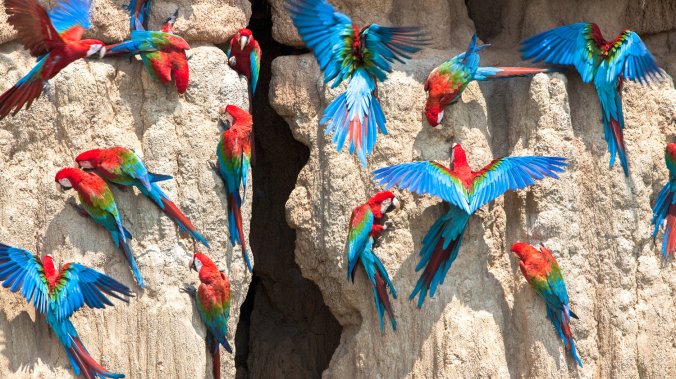
Parrots at an exposed cliff in Peru, where they gather to eat clay, which is richer in sodium than plants in the area. Frans Lemmens/Getty Images

Thanks to Carolyn Beans and the salt colleagues at National Public Radio (USA) for this:

Why Do Parrots (And People) Eat Clay?

The parrots of Southeastern Peru crave an earthy delicacy: dirt. At the Colorado clay lick, a cliff face rising above the Tambopata River in the western Amazon Basin, parrots — often hundreds at a time from up to 18 species — gather each day to feast on sun-hardened clay. Continue reading

Model Mad, National Monument Protection Coalition

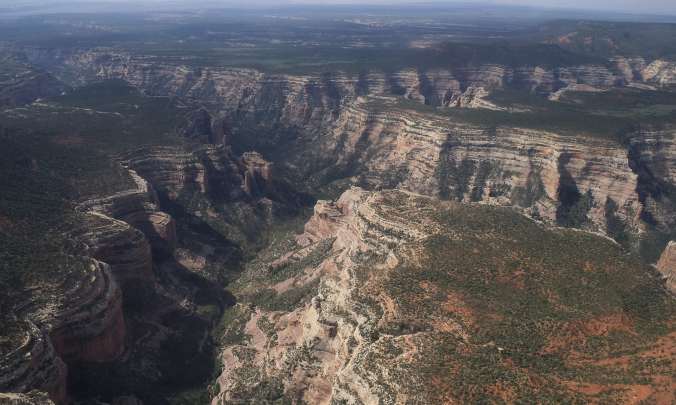
Arch Canyon, within Bears Ears national monument in Utah. Bears Ears is under threat from the Trump administration. Photograph: Francisco Kjolseth/AP

More examples of corporate social responsibility and activist collaboration taking the higher ground position over flawed public policy.

Native Americans and environmental advocates get help from outdoor retailers as they battle proposal to change monuments’ boundaries

Environmental activists, Native American groups and a coalition of outdoor retailers have vowed to redouble their efforts to protect public lands, after the US interior secretary, Ryan Zinke, recommended on Thursday that Donald Trump change the boundaries of a “handful” of national monuments.

“Secretary Zinke’s recommendation is an insult to tribes,” said Carleton Bowekaty, co-chairman of the Inter-Tribal Coalition, which asked Barack Obama to create the Bears Ears monument in Utah in 2015, citing increasing thefts and vandalism at more than 100,000 native cultural sites in the area.

Millions of petitioners have joined an urgently assembled advocacy effort to dissuade the Trump administration from moving against the monuments. On Friday, the outdoor retailer Patagonia, which spearheaded the industry initiative, said the group would continue its efforts. Continue reading

How Does Your Garden Grow?

Partnering with programs like the Atlanta Community Food Bank Garden Program and the Cornell Lab of Ornithology to bring bird friendly and healthy food education to youngsters connects well with our ethos. Citizen Science participation starts early. We hope our readers will share with public and private K-12 schools!

SCHOOL GARDEN GRANTS to grow healthy, happy, nature-connected kids!

School gardens provide an exciting context for cross-disciplinary learning and a wonderful opportunity to engage students in hands-on activities, project-based learning, and citizen science. Kids benefit from gardens in academic, physical, emotional, social, and behavioral ways. We are excited to support teachers’ efforts to engage kids in outdoor learning and all its benefits!

We will award 20 grants to teachers within the United States who strive to take the classroom outside, reconnect students with the natural world, and teach them valuable concepts and skills that integrate across all subjects. In partnership with our amazing sponsor, Alaska Fertilizer, we’re thrilled to support 20 teachers with a $500-$2,000 grant, gardening supplies, and BirdSleuth’s Habitat Connections kit. Funds can support a new garden or the revitalization of an existing one. In addition to funding food/veggie gardens, preference will be given to bird, pollinator, native habitat, rain, and other natural projects. Continue reading

Art of the Anthropocene

A series by Mr. Guariglia depicting the impacts of agriculture and mining on the Asian continent. The shimmering panels are layered with gold and other precious-metal leaf, gesso and acrylic ink. Below right is botryoidal slab of malachite from a mine in Africa. Credit Nathan Bajar for The New York Times

Tapping into a long, intertwined history of “photographers depicting nature with an eye to its fragility”, multimedia artist Justin Brice Guariglia translates his unprecedented access to NASA mission flights to visually quantify what is currently coined the Anthropocene Era.

Readers lucky enough to have the opportunity to view his coming exhibition, at the Norton Museum of Art in West Palm Beach, Fla., from Sept. 5 to Jan. 7 should do so!

Earlier this year at the Telluride Mountainfilm Festival, the artist Justin Brice Guariglia fell into conversation with a stranger.

“I got stuck on a gondola ride with a climate change denier,” Mr. Guariglia said recently. The stranger clearly had no idea who he was dealing with.

Not only had Mr. Guariglia previously talked his way into joining a NASA scientific mission over Greenland so that he could photograph melting polar ice caps. He also had even created a mobile app called After Ice, which allows users to take a selfie that is overlaid with a watery filter indicating the sea level projected in their geo-tagged location in the 2080s.

So when the man on the gondola said the earth’s warming temperatures were just part of a cycle, Mr. Guariglia recalled, “I took off my jacket and I said, ‘Does this look like a cycle to you?’” Continue reading