Moths Worthy Of Art Galleries

Index

A collection of Gowin’s photographs from “Mariposas Nocturnas,” taken in February, 2007, at the Integral Forest Otonga, El Reventador, and Otongachi Reserve, in Ecuador.Photographs by Emmet Gowin / Pace/MacGill Gallery / © Emmet and Edith Gowin
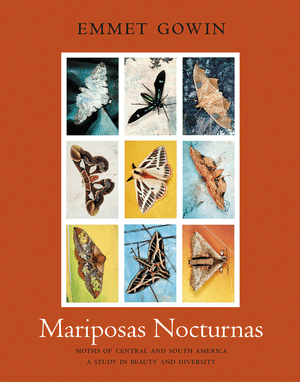
k11112We have occasionally “discovered” the inspirational aspect of moths in all their variations, but had not thought so much of their beauty.  Thanks to Andrea K. Scott for bringing our attention to the photography of Emmet Gowin, whose “Mariposas Nocturnas: Moths of Central and South America, A Study in Beauty and Diversity” will be published this month by Princeton University Press. Also we thank her for mentioning that an exhibition of Emmet Gowin’s work will be shown at Pace/McGill Gallery from September 28th through January 6th, 2018:

The moth doesn’t enjoy the same charmed reputation as its lepidopteran cousin, the butterfly. Continue reading
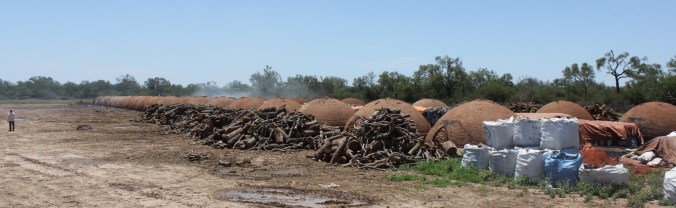
Paraguay’s Chaco Region

1-f_LUdJ744pFNFjVrM-NZXg

Bricapar charcoal facility at Teniente Ochoa ©Earthsight

The picture above, and the picture below, will suffice if you do not have the half hour required to read the details. Earthsight is a non-profit organization that uses in-depth investigations to expose environmental and social crime, injustice and the links to global consumption. One such investigation provides these images, and it is worth a read, especially if you are in Europe and you use charcoal for barbecue. Thanks to the folks in the Guardian’s Environment team for bringing the report and its consequences to our attention.

1-p3wv9-kVWxSHsitTi2BTEw

Figure 1: Jaguar photographed in the Gran Chaco forest ©Hugo Santa Cruz & Fundación Yaguareté

Choice Cuts

How European & US BBQs are fuelled by a hidden deforestation crisis in South America

Summary

On a vast, hot plateau in Paraguay, in the centre of South America, lies a little-known environmental crisis, and a dirty secret that can be traced to the supermarkets of Europe.

The dry tropical forests of the Chaco are being destroyed faster than any other forests on earth. The trees felled as a result of the advance of industrial agriculture into pristine wilderness are being turned into charcoal to feed demand in Europe.

Described by David Attenborough as “one of the last great wilderness areas in the world”,[1] the Chaco is home to a plethora of precious wildlife and one of the world’s last tribes living in voluntary isolation, the Ayoreo. Continue reading

A Puddle Of Bizbaz

170904_r30446

Photograph by Simone Lueck for The New Yorker

Although our most consistent feature suggests obsession (yesterday completing the 72nd month and 2,217 dailies in a row of bird photos, we know how it looks), we are anything but obsessed. That word implies trouble. We are looking for anti-trouble. We mostly post stories and images that imply reduction of trouble–through more information, and better quality of information, and useful case studies in trouble management.

This has led us to post 8,500 times (including this one) covering dozens of themes over the years. Usually several per day. Recently, in addition to our daily bird photo we are trying to post just once per day on something that highlights a remarkable example or explanation of any of those themes. Taste of place is on our minds now, more than anything else. So it is time for another restaurant review. Thanks to the reliably concise Nicolas Niarchos for this opening line:

In the nineteen-nineties, the late, great writer Denis Johnson once followed a group of Somalis across the border from Ethiopia and into the heart of their turbulent country. One of the images that endures from the piece he wrote afterward is of Somali food—“chunks of goat and spaghetti”—and of his narrator being taught “how to eat pasta the Somali way, without utensils, taking a shock of it in his right hand, turning it this way and that and gathering the long strands up into his palm, and then shoving it into his face.” Continue reading

Taste The Place: Navajo Greenthread

tea1_vert-b01a1f88eb6ec914884123022d3526d05ef1a121-s400-c85

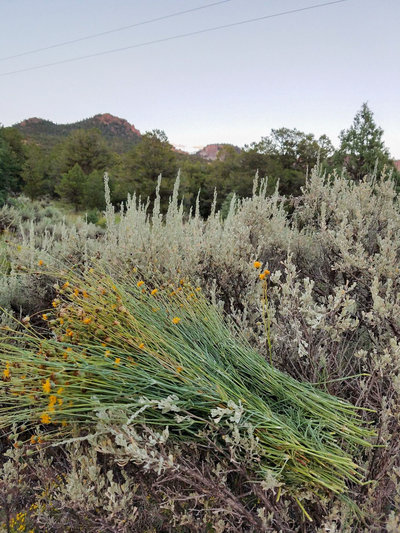
Greenthread (Thelesperma) is a wild plant that thrives in the mid-summer heat of the American Southwest. This bunch is freshly cut, and waiting for rinsing and drying to make Navajo tea. Courtesy of Deborah Tsosie

Give yourself a few minutes for this story about the link between seasonal produce and cultural patrimony:

In the dusty red earth of eastern Arizona’s portion of the Navajo Nation, the main road stretches out beneath the massive white-cloud sky and rubs against barren, chalky mesas; sometimes it skirts the deep, dry crack of a canyon stubbled with sagebrush. Small fields of corn occasionally sprout up beside the road, the short stalks still far from ripe.

But away from the road, tucked beside lakebeds or the foot of a hillside, a mid-summer visitor will find bright yellow flowers beginning to open. They are the crowning blooms of a thin plant that can grow up to two feet tall and which thrives in the heat of this arid region. Called greenthread (Thelesperma), it is used to make Navajo “tea.”

garland2_custom-1d9e1c90351b0643bdc75c5165546a671754eec4-s1300-c85

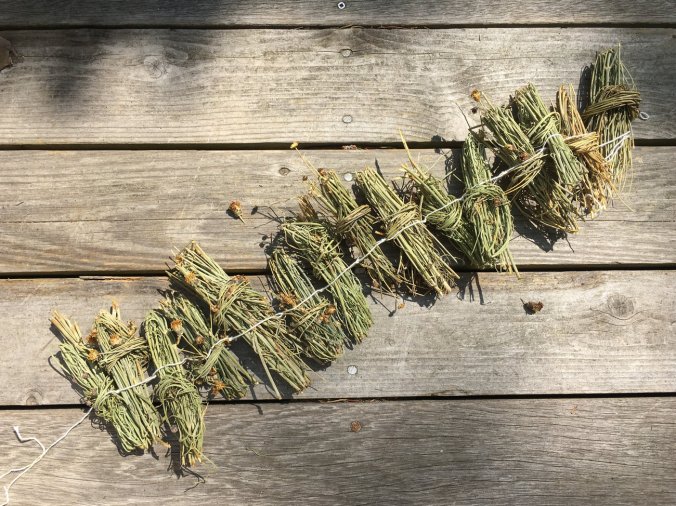
A garland of greenthread. The dried bundles are brewed with sugar or honey. Courtesy of Ada Cowan

Continue reading

Crowdfunding as a Branch of Citizen Science

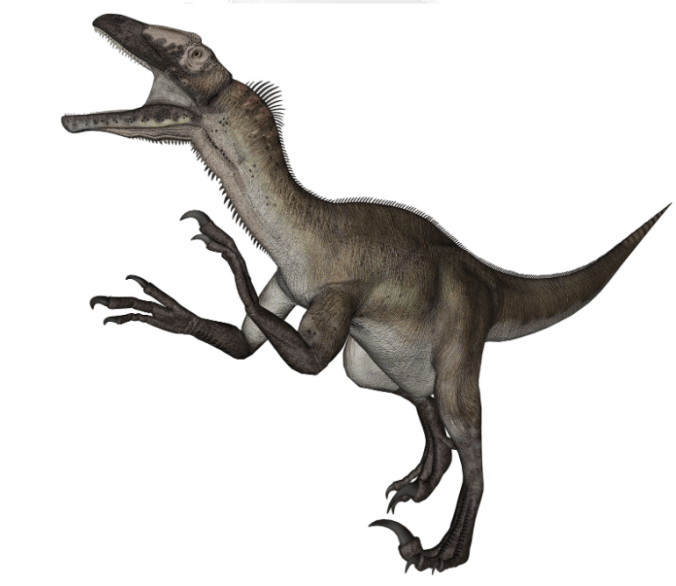
An artist’s rendering of a Utahraptor, several specimens of which were found in a massive slab of sandstone in eastern Utah in 2001. Scientists are seeking to raise money to remove the remaining bones from the giant trove of fossils, a slow and painstaking process. Credit Elena Duvernay/Stocktrek Images, via Science Source

There’s no age limit to the human fascination with dinosaurs, so it’s good news for science that interest translates to collaborative efforts when public funding for exploration and documentation run low.

Raptor Cam? Sounds enticing!

Utah Paleontologists Turn to Crowdfunding for Raptor Project

Millions of years ago, on a mud flat somewhere in Cretaceous Utah, a group of Utahraptors made a grave mistake: They tried to hunt near quicksand. The pack’s poor fortune has given modern paleontologists an opportunity to decode the giant raptor — its appearance, growth and behavior — but only if they can raise the money.

Enter “The Utahraptor Project,” started on GoFundMe last year with a $100,000 goal. It offers backers access to a field worker’s blog, a live “Raptor Cam” and digital models of the find put together through the process of photogrammetry. While it is far from reaching its goal, the team is optimistic.

“Once we get this up and running, with all the cameras and gizmos to record the action on a micro and macro level,” said Scott Madsen, a fossil preparator, “I think we can give the public a good show for their money. Continue reading
Popkin’s Arboreal Editorial

27popkin-master768

Credit Zoe Keller

Economic value from trees is as old as mankind. Timber for homes and ships and all variety of implements. Nutritional value also: olives and their oil; figs; nuts. In the last year while in the forests of northwest Belize we were on the lookout for something new, something we had not yet known, something that would reveal new value within the forest; we had no clue what it might be. We were looking for the intersection between economic, nutritional and ecological value.

And finally a few months ago we came upon a nut that was new to us, and the trees it grows upon are particularly valuable from an ecosystem perspective. And an ethnobotanical perspective. So we are on the lookout for tree stories, especially those that overlap with themes we tend to in these pages–ecological, cultural and edible. We have linked to articles by Gabriel Popkin a couple of times previously, so we are not surprised by this editorial fitting our schema so well:

For several years, I’ve led tree walks in Washington, D.C. I start by asking participants who they are and why they want to spend precious hours looking at trees. My students are nearly all highly educated, successful people who work impressive jobs, speak multiple languages and effortlessly command sophisticated computers and phones. Yet most know barely the first thing about the trees around them. They want to change that. Continue reading
Habitat Conservation via Travel Choices

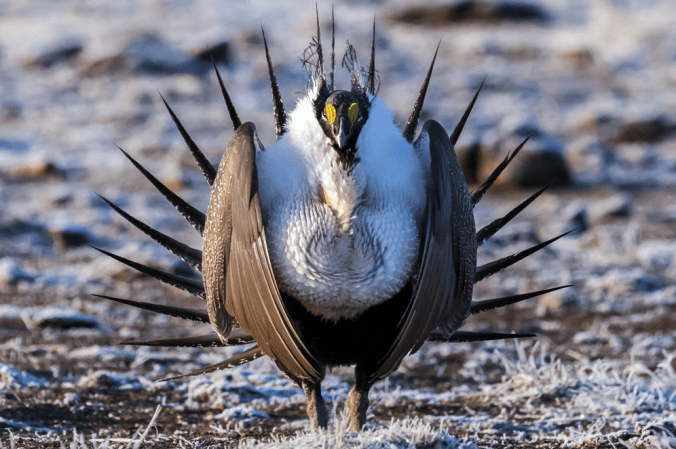
The greater sage grouse is a favorite among birders. Credit Rick McEwan


As protected areas and wildlife come under threat through lessening of restrictions on invasive oil and gas exploration, the importance of proving the economic value of conservation tourism become more and more evident.

Birders and Naturalists Ponder the Fate of the Greater Sage Grouse

Evan Obercian says it is the highlight of his Colorado birding tours every spring, even though he has to wake his clients up before 5 a.m. to be in the sagebrush flats before the sun comes up. And there they wait in Mr. Obercian’s van, listening to strange whoops and popping sounds that float magically from the predawn darkness.

The first rays of a new day’s sun reveal what is making the noise: large brown birds more than twice the size of a barnyard chicken, strutting and shaking while thrusting bulbous yellow air sacs out of their chests, and fanning a fantastic spread of pointy tail feathers. The bird is the greater sage grouse, and the sight is their spring mating ritual on their dancing grounds, called leks.

“It’s profoundly moving for me, and my clients,” said Mr. Obercian, “watching this ancient nuptial dance that’s been performed since way before there were any people on this land. It’s something way beyond just checking another bird off a list.”

The van acts like a blind, so the sage grouse do not notice that people are nearby, watching. Sometimes the grouse will dance right up to the tires. Birders are under strict orders not to get out, because as Mr. Obercian says, sage grouse “are very sensitive.” Continue reading
The Fourth Estate Asking Questions About Sustainable Agriculture

img_0086_custom-e02be884d2146582492b3313dc275f8aa2261bea-s1300-c85.jpg

Wade Dooley, in Albion, Iowa, uses less fertilizer than most farmers because he grows rye and alfalfa, along with corn and soybeans. “This field [of rye] has not been fertilized at all,” he says.
Dan Charles/NPR

Thanks to National Public Radio (USA) and Dan Charles for doing their job, keeping the questions coming, even on topics we think we know the answers to:

Does ‘Sustainability’ Help The Environment Or Just Agriculture’s Public Image?

Brent Deppe is taking me on a tour of the farm supply business, called Key Cooperative, that he helps to manage in Grinnell, Iowa. We step though the back door of one warehouse, and our view of the sky is blocked by a gigantic round storage tank, painted white.

“This is the liquid nitrogen tank,” Deppe explains. “It’s a million-and-a-half gallon tank.” Continue reading
Kelp Farming, Whether For Food Or Fuel, Is In Our Future

underwater-3_david-ginsburg_custom-97dbae965986d1d3a1c7f69ddc5967e3ddd1e31d-s1300-c85

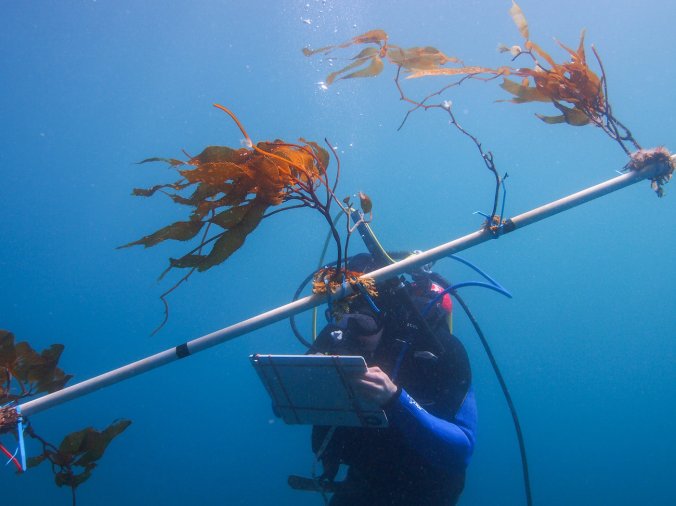
Kelp plants grow on a 30-foot-long, white PVC pole suspended in the water. If this is successful, instead of just one row, there would be a whole platform, hundreds of meters across and hundreds of meters deep, full of kelp plants. Courtesy of David Ginsburg/Wrigley Institute

Farming seaweed, using the power of the sun and the vast resources of the oceans, is a topic we expect to be featuring more of in these pages, and whether considering it as food or fuel we know the folks at the salt will be one of our primary sources delivering the goods:

The push for renewable energy in the U.S. often focuses on well-established sources of electricity: solar, wind and hydropower. Off the coast of California, a team of researchers is working on what they hope will become an energy source of the future — macroalgae, otherwise known as kelp.

The Pacific Coast is known for its vast kelp forests. It’s one of the fastest-growing plants on Earth, and farming it requires no fertilizer, fresh water, pesticides, or arable land. “It can grow 2 to 3 feet per day,” says Diane Kim, one of the scientists running the kelp research project at the University of Southern California. Continue reading
Forest Pathways For Species Survival

22CORRIDORS2-master675

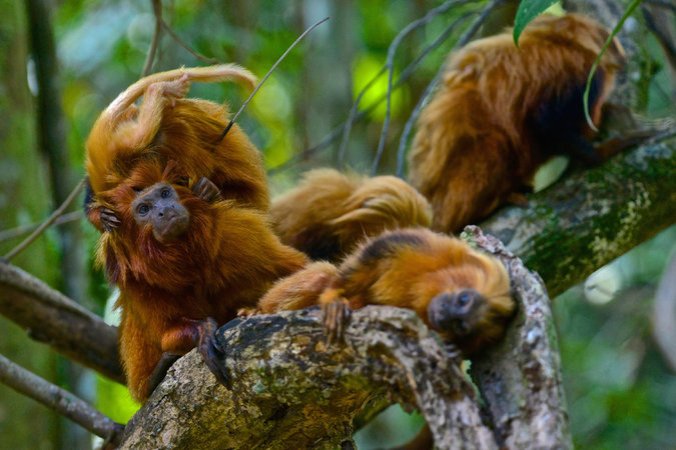
The golden lion tamarin has been observed passing through some of these corridors, an encouraging early sign for researchers. Credit Kike Calvo, via Associated Press

Thanks to Brad Plumer and the commitment of the New York Times to continue covering the complex topic of climate change in interesting, and sometimes hopeful ways:

Stitching Together Forests Can Help Save Species, Study Finds

In the 1980s, an ecologist named Thomas Lovejoy conducted an unusual experiment in Brazil’s Amazon rain forest. As loggers moved in with chain saws to clear trees for cattle pasture north of Manaus, he asked them to leave untouched several small “islands” of forest to see how the animals within them fared.

The results were unsettling. Continue reading

If You Happen To Be In Berkley

FoerOn September 25, 2017 the Berkley Center for New Media is presenting “World Without Mind: The Existential Threat of Big Tech” that has our attention:

Franklin Foer reveals the existential threat posed by big tech and offers a toolkit to fight their pervasive influence. Elegantly tracing the intellectual history of computer science—from Descartes and the enlightenment to Alan Turing to Stuart Brand and the hippie origins of today’s Silicon Valley—Foer exposes the dark underpinnings of our most idealistic dreams for technology. The corporate ambitions of Google, Facebook, Apple, and Amazon, he argues, are trampling longstanding liberal values, especially intellectual property and privacy. This is a nascent stage in the total automation and homogenization of social, political, and intellectual life. By reclaiming our private authority over how we intellectually engage with the world, we have the power to stem the tide. At stake is nothing less than who we are, and what we will become. In this talk, Foer explains not just the looming existential crisis but the imperative of resistance.

movefastThat got our attention at the same time as this book did, thanks to Elizabeth Kolbert’s review in this week’s New Yorker:

…Taplin, who until recently directed the Annenberg Innovation Lab, at the University of Southern California, started out as a tour manager. He worked with Judy Collins, Bob Dylan, and the Band, and also with George Harrison, on the Concert for Bangladesh. In “Move Fast and Break Things,” Taplin draws extensively on this experience to illustrate the damage, both deliberate and collateral, that Big Tech is wreaking. Consider the case of Levon Helm. He was the drummer for the Band, and, though he never got rich off his music, well into middle age he was supported by royalties. 

This is not a mainstay theme in these pages, but we have felt compelled from time to time to pass along an informative read on a topic that seems likely to continue growing in importance.

Zero At The Bone, In The Everglades

Ginarte-Balarama-Heller-zeroatthebone09

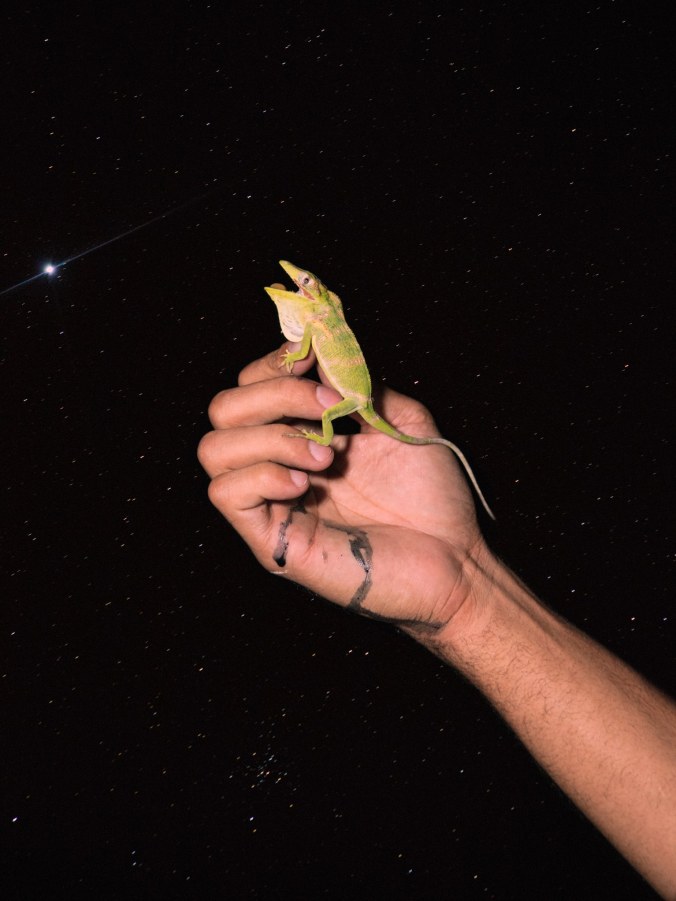
Photograph by Balarama Heller

Thanks to José Ginarte, a digital photo editor at The New Yorker, for this unusual reminder of the python invasion in the Everglades:

Chasing Pythons in the Everglades, and Finding an Eerie Dreamscape

Two and a half years ago, the photographer Balarama Heller began venturing into the Florida Everglades at night, shining his flashlight and pushing through underbrush, in the hope of photographing an invasive predator that has disrupted the local ecology: the Burmese python. Continue reading

Weather Waves and Habitat Changes

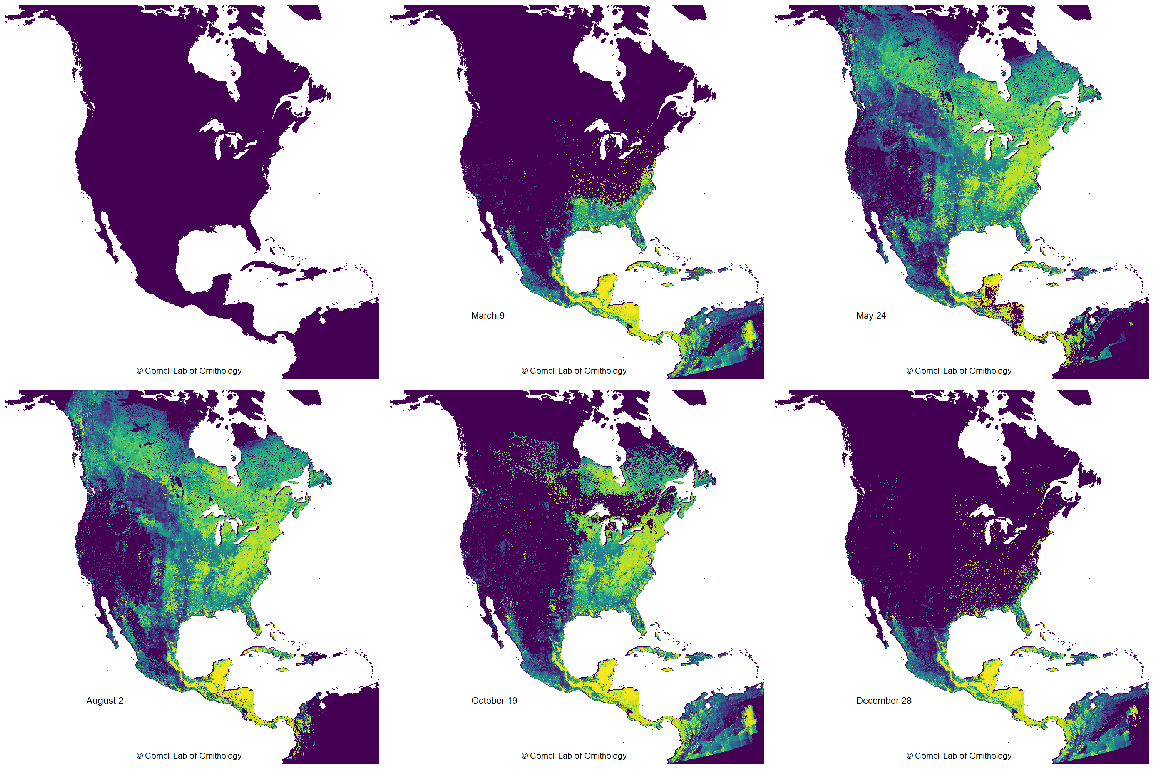
This animation shows where the 21 species in the study occur during each week of the year. Brighter colors (yellows) indicate more species are present than darker areas (blues and purples); overall, the species spend more time in Central American wintering grounds than on their northern breeding grounds. Map and animation by Frank La Sorte.

Once again eBird data and the Cornell Lab of Ornithology studies highlight the importance of forest conservation for species survival, as seen in Climate Change Or Habitat Loss? Study Weighs Future Priorities For Conserving Forest Migrants:

Birds are among the first to let us know when the environment is out of whack. But predicting what might happen to bird populations is tricky. Studies often focus on a single issue or location: breeding grounds or wintering grounds, changes in climate, loss of habitat. But in the real world, nothing occurs in isolation. A new study just published in the journal Global Change Biology pulls the pieces together. Continue reading

Ubiquitous and Sublime

photo credits: Richard Kostecke

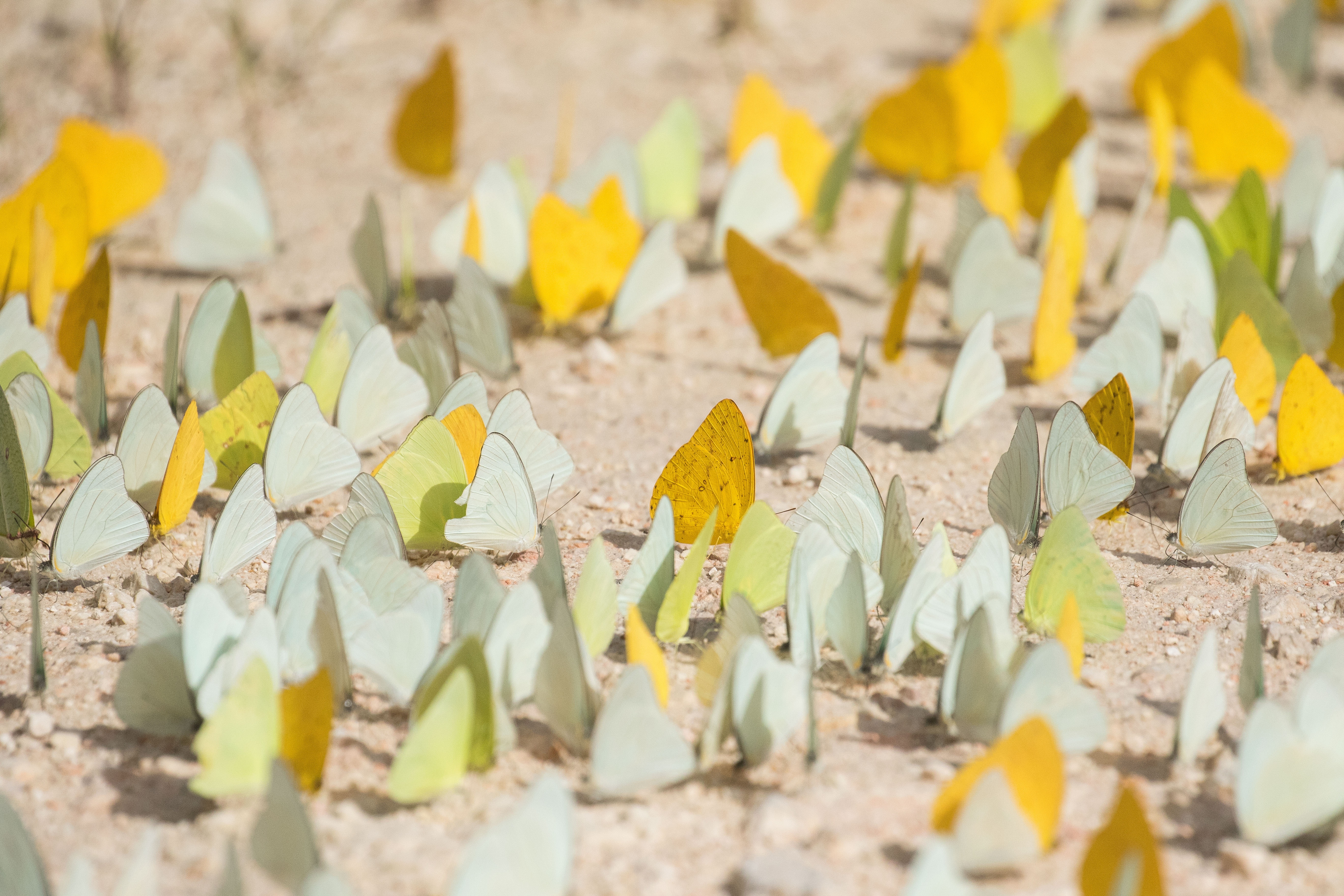
The sources we frequent for stories of interest appears to proclaim it butterfly season. So it’s incredibly timely that contributor Richard Kostecke should have sent us  these beautiful photos of Sulfurs and Whites “puddling” along the road to Chan Chich Lodge. Continue reading

Scotland, Land Of Butterfly Resurgence

5151

For a second day in a row, a butterfly story catches our attention. Small stories of unexpected good fortune are always welcome:

Rare butterfly spotted in Scotland for the first time since 1884

Elusive and endangered white-letter hairstreak discovered in a field in the Scottish borders could become the 34th species to live and breed in the country Continue reading

A Highway For Monarchs

Monarch-migration-map

Interstate 35, which stretches from Minnesota to Mexico, lies in the heart of the monarchs’ migration route.

Thanks to Janet Marinelli and the team at YaleEnvironment360:

Can the Monarch Highway Help Save a Butterfly Under Siege?

The population of North American monarch butterflies has plummeted from 1 billion to 33 million in just two decades. Now, a project is underway to revive the monarch by making an interstate highway the backbone of efforts to restore its dwindling habitat. Continue reading

Farming Fish For The Whole World

nets-1_wide-01c3b5ebd0d717bd50433e402fd75dc5e35d6f44-s1300-c85

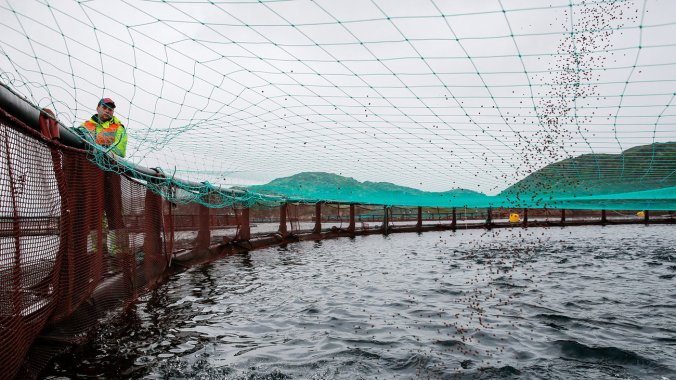
A Russian fish farming operation in Ura Bay in the Barents Sea.
Maxim Zmeyev/AFP/Getty Images

Thanks to Alastair Bland and the folks at the salt at National Public Radio (USA) for this look at the prospects for aquaculture on a global scale:

For years, scientists and activists have sounded the alarm that humans’ appetite for seafood is outpacing what fishermen can sustainably catch.

But new research suggests there is space on the open ocean for farming essentially all the seafood humans can eat. A team of scientists led by Rebecca Gentry, of the University of California, Santa Barbara, found that widescale aquaculture utilizing much of the ocean’s coastal waters could outproduce the global demand for seafood by a staggering 100 times. Continue reading

Ensuring Public Access To Climate Science

640

Sterling Library at Yale University in New Haven Connecticut, US. Photograph: Alamy

Thanks to John Abraham, and the Guardian’s team focused on the Environment, for shining the light on the good works of those who work to ensure our access to essential environmental science at a time when there are efforts to silence the science:

Yale Climate Connections: America’s beacon of climate science awareness

Stellar work by group led by Anthony Leiserowitz on putting climate change research into public domain is empowering citizens and institutions Continue reading

Conservationists And Public Servants Collaborate In South Texas

14butterfly4-master675

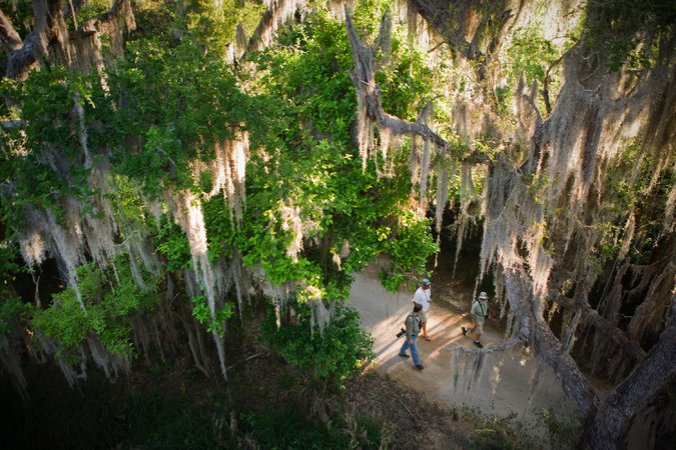
Birders walking under trees draped in Spanish moss in the Santa Ana National Wildlife Refuge near Alamo, Tex. The border wall would traverse the refuge. Credit Michael Stravato for The New York Times

Thanks to Michael Hardy and the New York Times for this coverage of an unwanted, disruptive intruder:

MISSION, Tex. — Last month, Marianna Wright, the executive director of the privately owned National Butterfly Center here, discovered survey stakes on the property marking out a 150-foot-wide swath of land.

Ms. Wright later encountered a work crew cutting down trees and brush along a road through the center. The workers said they had been hired by United States Customs and Border Protection to clear the land.

“You mean my land?” Ms. Wright asked, before kicking them out. Continue reading

Chile Finds A Better Path To Renewable Energy

Chile4

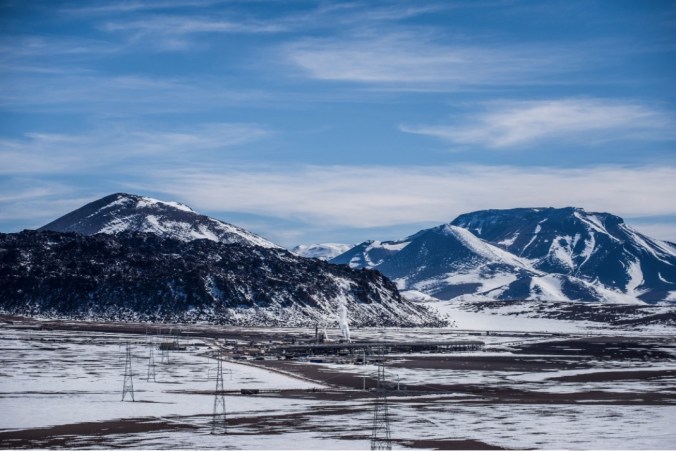
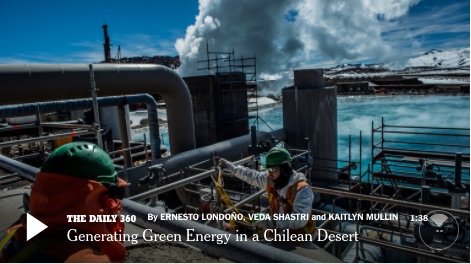
The first geothermal energy plant in South America is in Cerro Pabellón, Chile, 14,760 feet above sea level, surrounded by volcanoes. Credit Meridith Kohut for The New York Times

Chile’s near catastrophe with hydroelectric energy, averted in part thanks to the efforts of friends in the Patagonia Sin Represas campaign, made us wonder whether Chile’s path to a greener future would be straight and narrow. Thanks to the New York Times and Ernesto Londoño we think we have strong evidence helping us with the answer:

Chile’s Energy Transformation Is Powered by Wind, Sun and Volcanoes

CERRO PABELLÓN, Chile — It looks and functions much like an oil drilling rig. As it happens, several of the men in thick blue overalls and white helmets who operate the hulking machine once made a living pumping crude.

Chile2

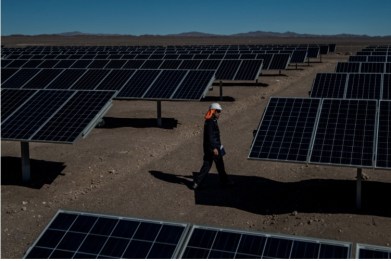
A worker inspecting solar panels in the Atacama Desert in Chile, one of the driest and sunniest places on Earth. The sun is so strong there that workers must wear protective suits and slather on thick layers of sunscreen. Credit Meridith Kohut for The New York Times

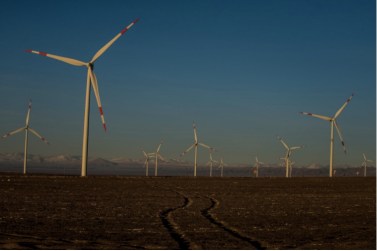
With the ability to power roughly 165,000 homes, the new plant is yet another step in Chile’s clean energy transformation. This nation’s rapidly expanding clean energy grid, which includes vast solar fields and wind farms, is one of the most ambitious in a region that is decisively moving beyond fossil fuels.

Chile1

Wind turbines in the Atacama Desert and other turbines along Chile’s 2,653-mile coast contribute to power to national grid. Credit Meridith Kohut for The New York Times

Latin America already has the world’s cleanest electricity, having long relied on dams to generate a large share of its energy needs, according to the World Bank.

But even beyond those big hydropower projects, investment in renewable energy in Latin America has increased 11-fold since 2004, nearly double the global rate, according to a 2016 report by the International Renewable Energy Agency, an intergovernmental organization. Chile, Mexico and Brazil are now among the top 10 renewable energy markets in the world.

Chile3So as Latin America embraces greener energy sources, government officials and industry executives in the region have expressed a sense of confusion, even bewilderment, with the Trump administration’s decision to withdraw from the climate changecommitments contained in the Paris Agreement, declare an end to the “war on coal” and take aim at American environmental regulations. Continue reading