Laying Eyes on the Ocellated Turkey

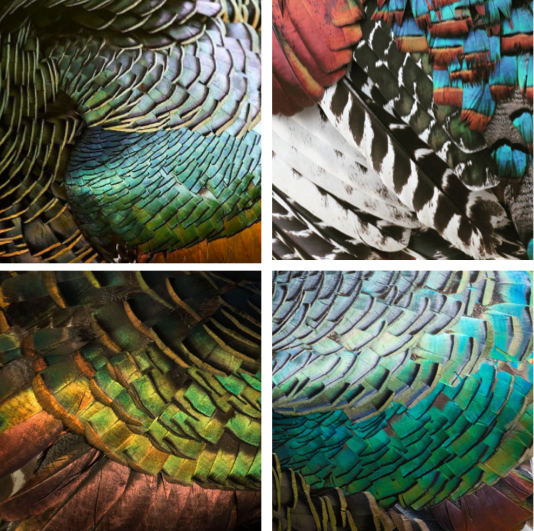
Ocellated Turkey Details Photo Credits: TL: Leander Khil, TR: Seth Inman, BL & BR: Richard Kostecke

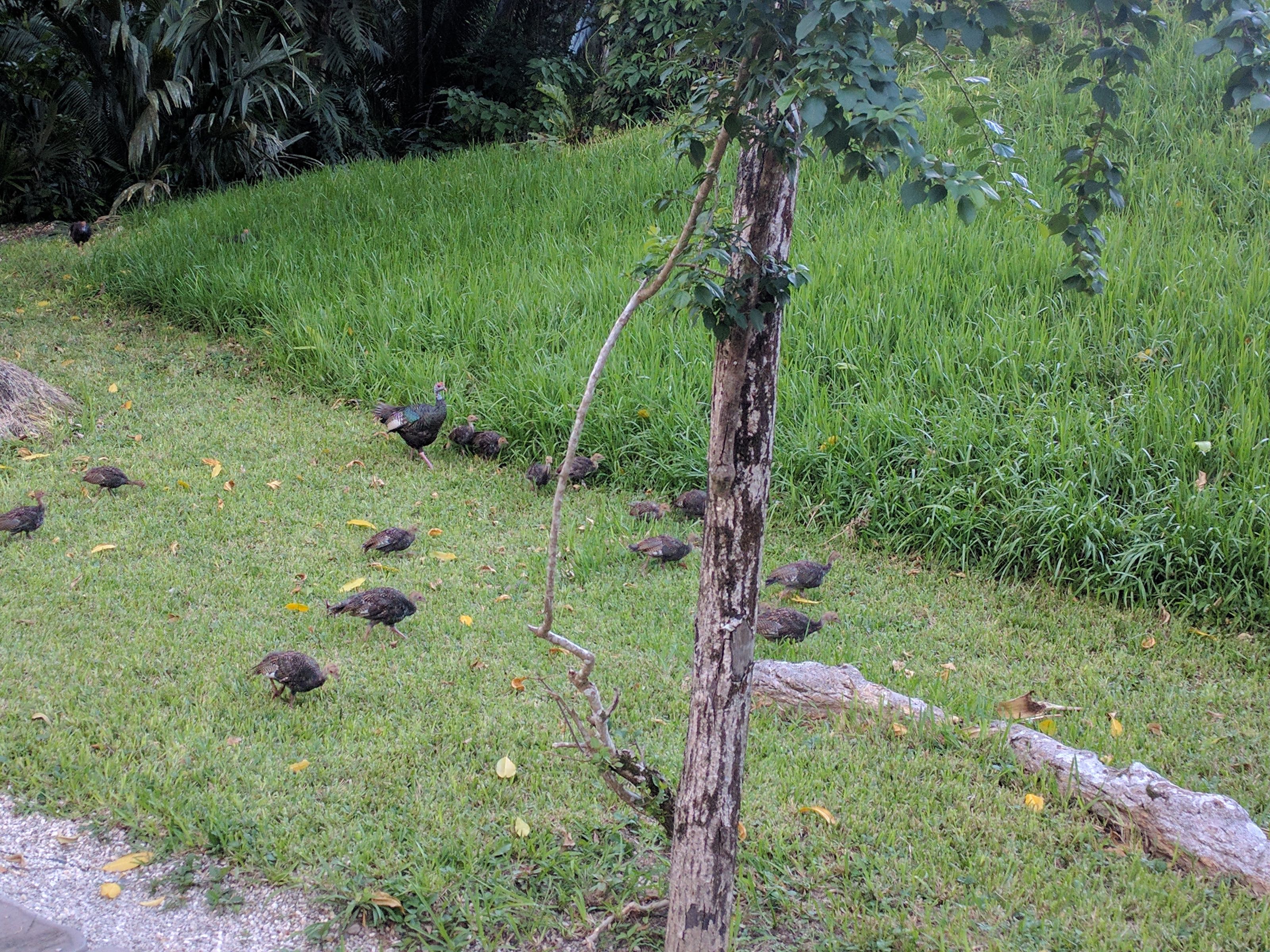
When we first met recent guest (and now contributor) Richard Kostecke at Chan Chich Lodge he shared that the Ocellated Turkey was a life list bird for him. Like many birders we’ve met here, he was thrilled by the fact that this near-threatened species is so prevalent around the lodge and throughout our 30,000 acres.

This is especially true during the past several months, when we see the parades of chicks running behind the attendant adults throughout the property.
As a parting gift Richard had sent us a link about the species from Cool Green Science, a site we frequent ourselves.

Found only on the Yucatan Peninsula of Mexico, Guatemala and Belize, the ocellated turkey (Meleagris ocellata) certainly bears a resemblance to the American wild turkey.

But it’s a different species. It is smaller and lacks the “beard” typical of the more familiar wild turkey. Its mating call is higher pitched than the usual “gobble.” The most striking difference, though, is the color.

The vibrant, almost unreal color: iridescent feathers, large spots on the tail, a bright red ring around the eye and a blue head covered with red and yellow nodules (nodules that swell and become brighter in males during the breeding season).

It’s a turkey as conceived by Dr. Seuss. Or perhaps Alexis Rockman. Continue reading
Conservation Via Valuation

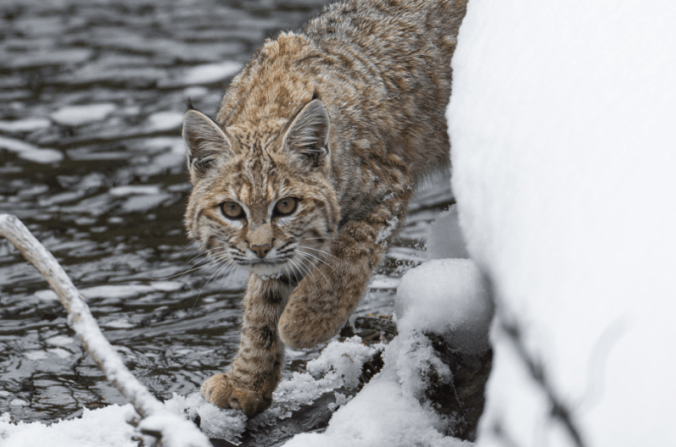
When we consider that cat sightings play an important role in why our guests come to Chan Chich Lodge, this type of valuation is something we can get behind whole heartedly. Thanks again to the Anthropocene for this interesting piece of daily science. And thanks again to Panthera.org for their role in the research.

The lesson of the $300,000 bobcat

What is a bobcat worth? There’s a few ways of thinking about that question. One answer, of course, is that a bobcat’s value is intrinsic, their lives not something to signify with a price tag. Fair enough. But for the sake of discussion, and because there’s already a market for their hides, let’s run the math: in the state of Wyoming, a bobcat is worth roughly $300 dead and up to $308,000 alive. And in that vast difference is a tension — some would call it a flaw — in the way these marvelous cats, and many other species too, are presently managed in North America.

The calculations come from a study recently published in the journal Biodiversity and Conservation. Led by Mark Elbroch, a biologist with Panthera, the wild cat conservation organization, and also featuring researchers from wildlife advocacy group Wyoming Untrapped, the researchers totaled the revenues generated in 2015-2016 from selling trapping licenses in that state — $152,000 — and divided them by 1,160 bobcats killed, then added the average sale value of pelts. The final per-bobcat value came to $315.17.

Then Elbroch’s team turned to the example of a bobcat living along the Madison River in Yellowstone National Park, where his predilection for hunting waterfowl made him popular among wildlife lovers. They surveyed 46 photographers who traveled to Wyoming in winter 2015-2016 and the outfitters who guided them. Between outfitters’ fees, money spent on food, lodging and travel, and revenues from selling pictures, the bobcat generated $308,105, or a thousand-fold increase from his worth as a source of fur alone.

The researchers don’t argue that every living bobcat in Wyoming is worth more than $300,000.

Continue reading

Elephants, Orangutans, Rhinos & Tigers–What Are They Worth To Us?

4256n.jpg

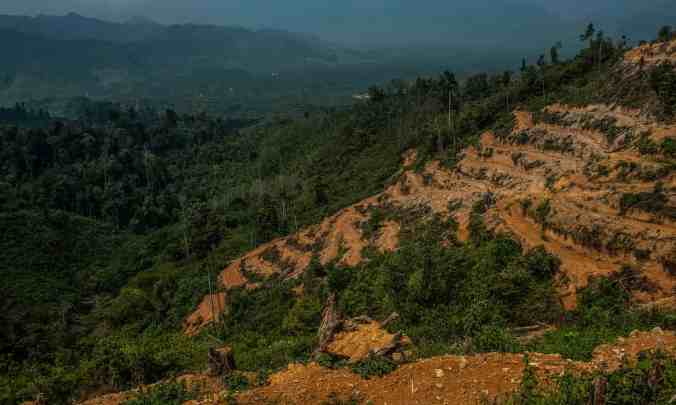
Deforestation in the Leuser ecosystem, one of the last homes to Sumatran elephants, orangutans, rhinos and tigers. Photograph: Sutanta Aditya/Barcroft Images

Thanks to the Guardian:

Pepsico, Unilever and Nestlé accused of complicity in illegal rainforest destruction

Palm oil plantations on illegally deforested land in Sumatra – home to elephants, orangutans and tigers – have allegedly been used to supply scores of household brands, says new report Continue reading

Cod Recovery Is A Redemption Story


5277

David Milne, skipper of the MSC-certified trawler Adorn, holds a cod in Peterhead fish market. Photograph: Eleanor Church/Marine Stewardship Council

Cod seems as good as any other creature to feature in a redemption story. The editor of the Environment section at the Guardian shares good news on one lucky population of cod that got the attention they needed, seemingly just in time:

Sustainable British cod on the menu after stocks recover

A recovery from near total collapse has led North Sea cod stocks to be labelled as sustainable by the Marine Stewardship Council for the first time in 20 years Continue reading

Resolving a Politically Fraught Problem By Natural Means

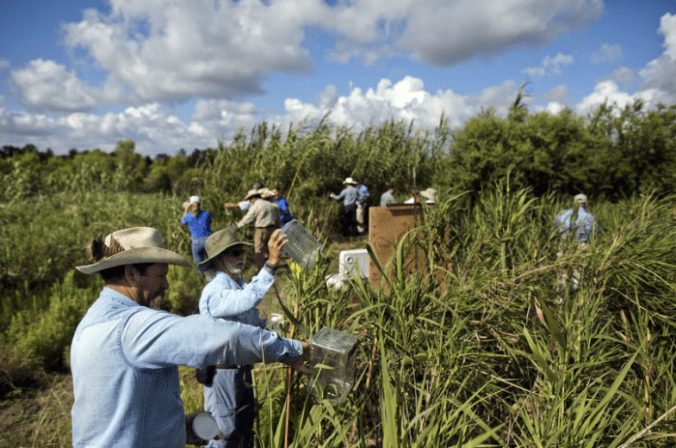
Texas officials release reed-eating Arundo wasps into a thicket of the invasive weed Arundo donaxa, also called carrizo cane, in an effort to weaken or eradicate the plant.Photograph by Victor J. Blue/Bloomberg via Getty

With all the talk about building a wall along the US/Mexico border, it’s rather refreshing to read about this joint program between the U.S.D.A. and Customs and Border Protection to attempt to tear one down.

The problem is a fast growing invasive grass that sucks up water resources, crowds out native plants, and can grow as tall as a 2-story building, . The elegant solution of using stingless wasps whose larvae happily munch on the vigorous plant is elegant compared to options such as bulldozing or aerial spraying of herbicides.

Someone wandering along the banks of the Rio Grande, on the American side, in the summer of 2009 might have been startled by a small cardboard box plummeting to the ground. Neatly sealed with blue packing tape, its paper wrapping crisp and clean, the box would have felt light, even empty. But then, on further inspection, an observer would have noticed the platoon of tiny black insects exiting a slit on one end. Slightly larger than a gnat, the insects would have buzzed off, one by one, into the South Texas heat. Continue reading

Wildlife Protection And Unintended Consequences

15tb-wolves02-master768

A wolf from a den within Yukon-Charley Rivers National Preserve in Alaska. A study found that limiting the population of wolves outside the preserve affected those within its boundaries. Credit Drew Rush/National Park Service

Mention Alaska, and we are in. Wolves, ditto. An academic publication called Wildlife Monographs? You had us at Alaska and wolves:

Protected Wolves in Alaska Face Peril From Beyond Their Preserve

Within the 2.5 million acres of the Yukon-Charley Rivers National Preserve in central Alaska, wolves and other majestic animals are protected. But animals like wolves do not respect lines drawn on a map. And a recent study suggests that efforts to limit populations of these predators outside those borders is having negative effects on wolves living within the preserve. Continue reading

“Arks of the Apocalypse”

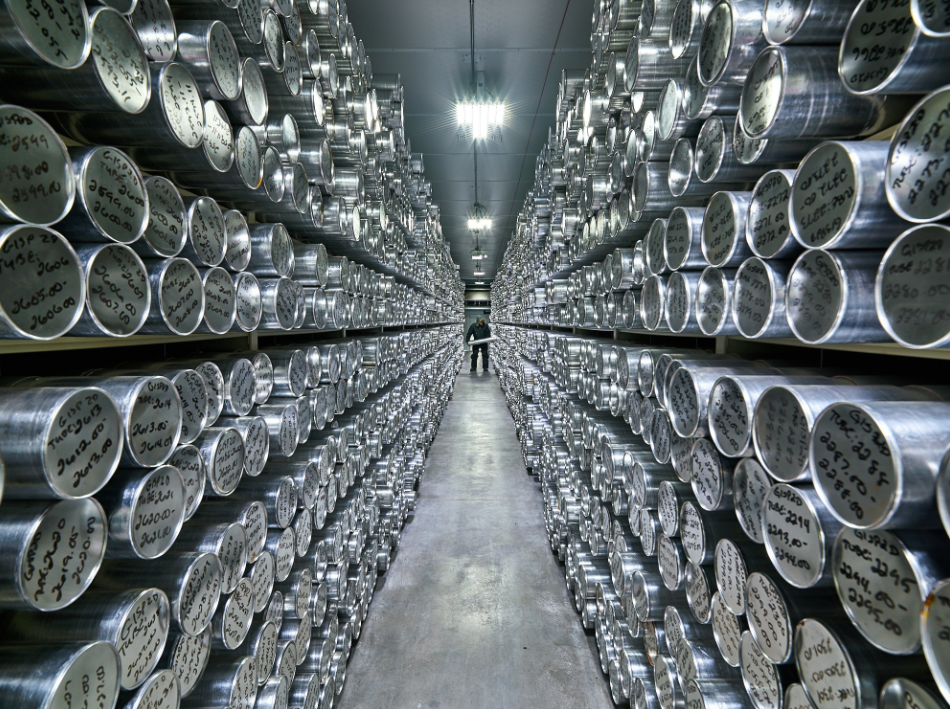
U.S. National Ice Core Laboratory, Lakewood, Colo. photo credit: Spencer Lowell for The New York Times

Thanks again to the New York Times for highlighting the global nature of this scientific “call to arms” to save not only data, but genetic and organic material as a back-up plan for future generations. From the Svalbard Global Seed bank in Norway, to sperm banks for coral, endangered wildlife, and even glacial ice – these archives are meant to provide both a life line to the future and answers about the past.

The fragility of each project is evident as Science itself has come under attack from current public policy, which doesn’t appear to see the irony of their denial in the face of facts about climate change.

It was a freakishly warm evening last October when a maintenance worker first discovered the water — torrents of it, rushing into the entrance tunnel of the Svalbard Global Seed Vault, a storage facility dug some 400 feet into the side of a mountain on a Norwegian island near the North Pole. A storm was dumping rain at a time of year when the temperature was usually well below freezing; because the water had short-circuited the electrical system, the electric pumps on site were useless. This subterranean safe house holds more than 5,000 species of essential food crops, including hundreds of thousands of varieties of wheat and rice. It was supposed to be an impenetrable, modern-day Noah’s ark for plants, a life raft against climate change and catastrophe.

A few Norwegian radio stations and newspapers reported the incident at the time, but it received little international attention until May, when it was becoming clear that President Trump was likely to pull the United States out of the Paris climate agreement. Suddenly the tidings from Svalbard were everywhere, in multiple languages, with headlines like “World’s ‘Doomsday’ Seed Vault Has Been Breached by Climate Change.” It didn’t matter that the flood happened seven months earlier, or that the seeds remained safe and dry. We had just lived through the third consecutive year of the highest global temperatures on record and the lowest levels of Arctic ice; vast swaths of permafrost were melting; scientists had recently announced that some 60 percent of primate species were threatened with extinction. All these facts felt like signposts to an increasingly hopeless future for the planet. And now, here was a minifable suggesting that our attempts to preserve even mere traces of the bounty around us might fall apart, too.

Continue reading

Pines, Beetles & Grizzlies

15mcnamee-master768

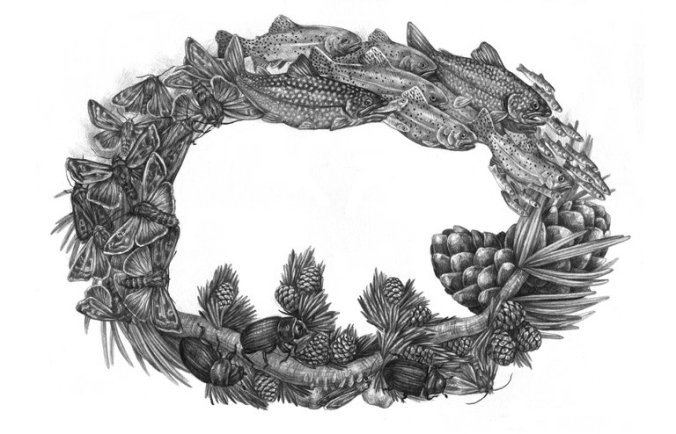
Zoe Keller

Thanks to Thomas McNamee for his opinion on these matters:

The Government Is Now the Yellowstone Grizzly’s Biggest Threat

In March 2016, the United States Fish and Wildlife Service proposed removing the Yellowstone grizzly bear population from the list of threatened species. The uproar was ferocious. Conservationists, scientists, 125 Indian tribes and some 650,000 citizens expressed concern about the move.

Now the government has gone and done it anyway. Continue reading

Massive Ice Shelf Larsen C

antarctic-rift-900

NASA Blue Marble imagery

Thanks to the New York Times for a graphic illustrating the scale of change, aka consequences, related to global warming:

An Iceberg the Size of Delaware Just Broke Away From Antarctica

By  and 

A chunk of floating ice that weighs more than a trillion metric tons broke away from the Antarctic Peninsula, producing one of the largest icebergs ever recorded and providing a glimpse of how the Antarctic ice sheet might ultimately start to fall apart. Continue reading

Spaceship Earth

We recently encountered Parley for the Oceans when Doug Aitken’s water pavilion installation came onto our radar.

Both the collaborative ethos and the focus of the cause are dear to our hearts.

Parley is the Space Where Creators, Thinkers, and Leaders come together to raise awareness for the beauty and fragility of our oceans and collaborate on projects that can end their destruction.

Parley for the Oceans addresses major threats towards our oceans, the most important ecosystem of our planet.

We believe the power for change lies in the hands of the consumer – given he has a choice – and the power to shape this new consumer mindset lies in the hands of the creative industries.

Artists, musicians, actors, filmmakers, fashion designers, journalists, architects, product inventors, and scientists have the tools to mold the reality we live in and to develop alternative business models and ecologically sensible products to give us earthlings an alternative choice, an everyday option to change something.

Continue reading

Tapping The Largest Animal For Science

08tb-whales01-superJumbo.jpg

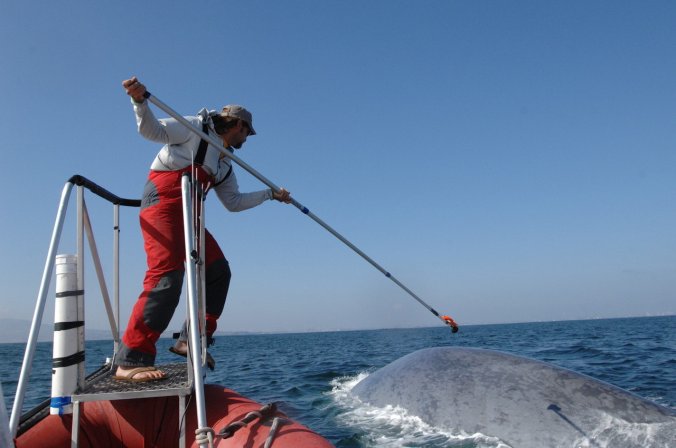
Ari Friedlaender, a marine ecologist at Oregon State University, deploying a multi-sensor tag on a blue whale off the California coast. Credit Jeremy Goldbogen

Camera traps, in the interest of science, and of conservation, are no longer a novelty. The story accompanying the photo above is new, for us. At first glance it looks like an act of aggression, which the history of whaling has taught us to expect. But this story has a much better outcome than the old obsessions:

How to Attach a Video Camera to a Humpback Whale

This is how you put a video camera on a whale.

Hop into an inflatable boat and head out to where they’re feeding. Stand in a pulpit with a 20-some-foot pole in your hands. Then watch and wait until you spot a whale. Plan your angle of approach with the driver of the boat. (Never approach directly from behind). Get close. Get closer. Get within 16 feet of this sea giant — which is more than twice the size of your boat if it’s a humpback — and as soon as it surfaces, tap the whale on its wet tire of a back with the pole. If you’re lucky, the detachable suction-cup on the end of the pole — which has a camera and sensors — will stick. Continue reading

The Fairest Of Fair Tigers

1103.jpg

A rare ‘pale tiger’ discovered in the wilds of Tamil Nadu state in India. Photograph: Nilanjan Ray

We have heard and read plenty about pale ale, which is often associated with India, but this is the first we are hearing of a pale tiger, in India or elsewhere:

Exceptionally rare ‘pale tiger’ photographed in the wild

Animal spotted by photographer in jungles of southern India may be the fairest known tiger living outside captivity

A rare “pale tiger”, whose fur conservationists say could be the fairest of any in the wild, has been photographed in southern India. Continue reading

Tradition and Memory, Handed Down Stitch by Stitch

If you happen to be anywhere near the Philadelphia Museum of Art, you have a few more days to visit this extraordinary exhibit of Phulkari: The Embroidered Textiles of Punjab.

Thanks to Architectural Digest contributor Medhavi Gandhi for this informative and culturally sensitive article.

Philadelphia Museum of Art showcases the history of Punjab’s rich embroidery craft through ‘Phulkari’

Phulkaris, which literally translates into ‘flower work’, is a unique style or technique of embroidery peculiar to Punjab, and today constitute the lavishly embroidered head scarves and shawls crafted in the region. ‘Phulkari: The Embroidered Textiles of Punjab’ presents phulkaris from the collection of Jill and Sheldon Bonovitz alongside the Philadelphia Museum of Art’s permanent collection, focusing mostly on embroideries from a pre-partitioned Punjab.

The threads of phulkari have since endured much: partition, industrial reforms, changing economic and fashion trends, and the exhibition aptly helps you develop a perspective around all these.

GEOGRAPHICAL INDEXING
Curators Dr. Cristin McKnight Sethi and Dr. Darielle Mason position the craft as art, presenting phulkaris through the historical and cultural lens, thus offering a renewed contact with the old way of life; ceasing to be a commodity of high commercial value but more as a window into the lives of people.

In a brief issued by the Museum, Timothy Rub, The George D. Widener Director and CEO of the Philadelphia Museum of Art, said: “This exhibition, which examines the artistic, cultural, and political significance of phulkari, is long overdue and will certainly delight visitors who may be unfamiliar with this remarkable art form”. I couldn’t agree more, and here’s why: Continue reading

Blue New Worlds

As a company we have a long interest with the concept of non-permanent Art Installations .  Installed off the coast of Catalina Island, California, these particular interactive underwater sculptures were a collaboration with artist Doug Aitken , the Museum of Contemporary Art, Los Angeles (MOCA) and Parley for the Oceans.

Due to the temporary nature of the installations, they’re no longer in place but will reopen to the public soon, at a new location, in a new ocean.

Underwater Pavilions is artist Doug Aitken’s large-scale installation and collaboration with Parley consisting of three temporary sculptures submerged beneath the water’s surface. As a symbol and catalyst for the Parley Deep Space Program, the sculptures provide a portal into the marine realm that swimmers, snorkelers, and scuba divers can swim through and experience. Continue reading

Swamp Is Not A Bad Word

14847876920_3904caac90_o_slide-2a56f4c96e9fcd098def2965b202ed5806f00671-s1300-c85.jpg

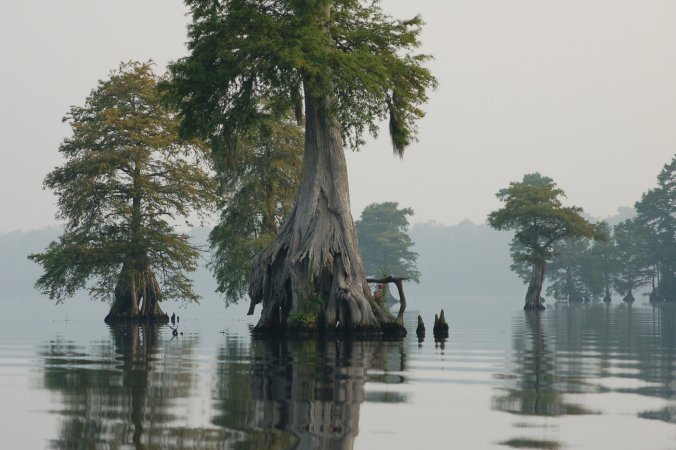
The Great Dismal Swamp National Wildlife Refuge in North Carolina and Virginia has been dramatically altered over the past few centuries by human development. Rebecca Wynn/U.S. Fish and Wildlife Service

Thanks to Sarah McCammon at National Public Radio (USA) for this story:

“Drain the swamp” may be a popular political slogan, but it doesn’t always work so well in nature. Continue reading

Entrepreneurial Conservation Through Seaweed Farming

1600.jpg

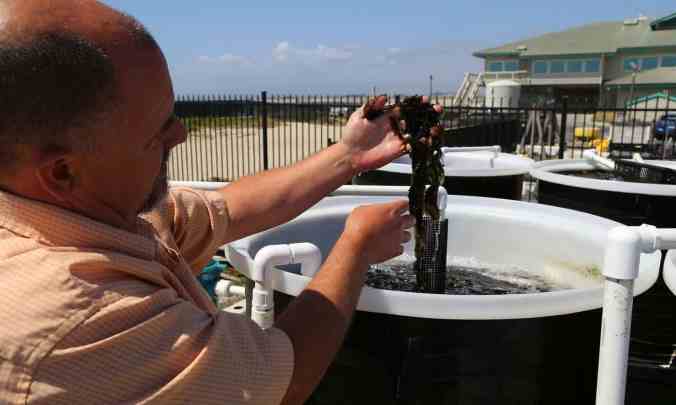
Michael Graham at his seaweed farm in Monterey Bay. ‘This is like a backyard farm where you can sell your goods at a farmer’s market.’ Photograph: Katie Fehrenbacher

Bayer, Bees Beware

lucyhulmes_osmiabicornis-rufa_dsc_0165_custom-d84c4a4f48bda66e294b71b7c4601fffd31e43f7-s1300-c85.jpg

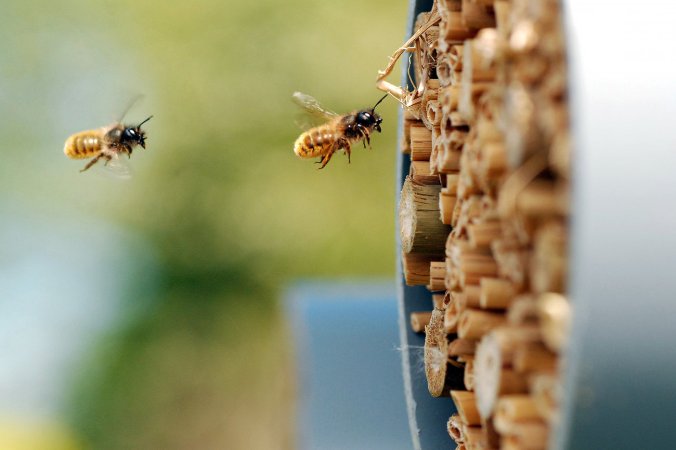
Researchers monitored the health of these wild bees, from the species Osmia bicornis. They nest inside small cavities, such as hollow reeds. Courtesy of Centre for Ecology & Hydrology

Thanks to National Public Radio’s special forces, aka the salt, for their ongoing search for interesting news and stories related to the intersection of nature and food:

Pesticides Are Harming Bees — But Not Everywhere, Major New Study Shows

In the global debate over neonicotinoid pesticides, the company that makes most of them has relied on one primary argument to defend its product: The evidence that these chemicals, commonly called “neonics,” are harmful to bees has been gathered in artificial conditions, force-feeding bees in the laboratory, rather than in the real world of farm fields. That company, Bayer, states on its website that “no adverse effects to bee colonies were ever observed in field studies at field-realistic exposure conditions.” Continue reading

Beware, Brazil

4368

Thanks as always to the Guardian for coverage of environmental crises in the making:

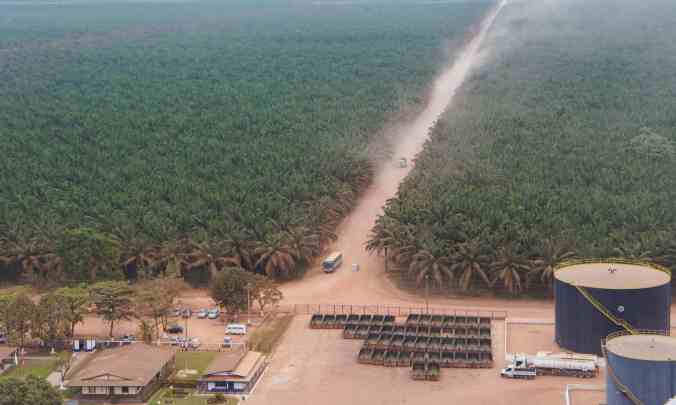
The Amazon’s new danger: Brazil sets sights on palm oil

Brazil’s ambition to become a palm oil giant could have devastating social and environmental impacts if the move is not carefully managed, say experts Continue reading

Birds Banging On Drums

29tb-cockatoos01-superJumbo.jpg

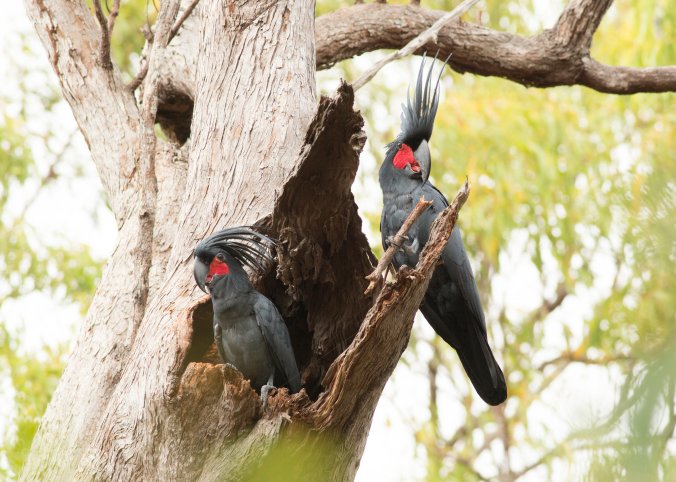
A male palm cockatoo, right, drumming with a stick for a female. Credit Christina Zdenek

Todd Rundgren, a musical talent better known to an earlier generation, had an oddball hit song about banging on drums. It came to mind immediately when reading this oddball story about cockatoos. If you do not already know the song, you might want to find it to accompany your reading of this story:

Whales and songbirds produce sounds resembling human music, and chimpanzees and crows use tools. But only one nonhuman animal is known to marry these two skills.

Palm cockatoos from northern Australia modify sticks and pods and use them to drum regular rhythms, according to new research published in Science Advances on Wednesday. In most cases, males drop beats in the presence of females, suggesting they perform the skill to show off to mates. The birds even have their own signature cadences, not unlike human musicians. Continue reading

A Metric For Reinvention

Edge.jpg

Click above for 26 minutes of intelligent contemplation. Neuroscience meets environmentalism. He was a New York Times science writer, then the author of one of the most influential nonfiction books of recent decades. Now, he is the gift that keeps on giving:

Daniel Goleman

One way a systems perspective could help with the environmental crisis is through understanding that we have a very narrow range of affordances, the choices presented to us. Continue reading