Ammonia, Who Knew?

4617875064_daab01704d_o-1260x708

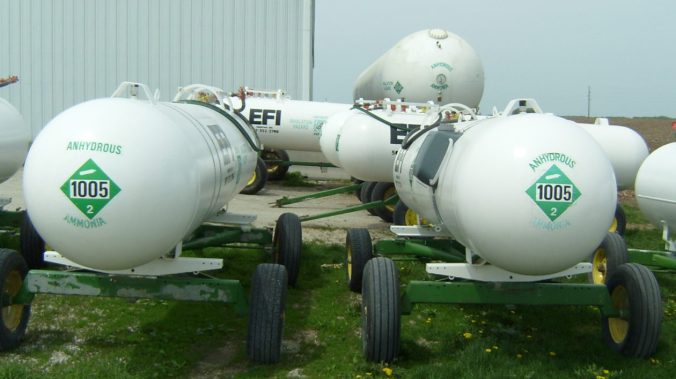
Anhydrous ammonia. Photo © Thirteen Of Clubs / Flickr through a Creative Commons license

Recognizing its utility as a household cleaner, especially to remove grease, ammonia has a smell that is familiar to most of us. But, nearly all of the annual industrial production of ammonia goes into other products, especially nitrogen fertilizer. Some farms inject ammonia directly into the soil. Others apply urea or ammonium phosphate fertilizers made from ammonia. All aim to supplement the availability of nitrogen for crop growth. Not all the ammonia gets into the crop. Inadvertent losses of nitrogen from fertilizers to the atmosphere account for about ten percent of fertilizer applications across the USA. Some nitrogen is also lost in the runoff to streams and rivers. Continue reading

Lost & Found, Lizard Edition

Holloway-Lizard-1200

For nearly two centuries, Varanus douarrha was an enigma. Now it has been resurrected. PHOTOGRAPH COURTESY VALTER WEIJOLA

In our book, lost and found is normally half glass full (versus half empty) new that we enjoy sharing, and this one counts as more than half full due to the intrigue of the history and the odd charisma of the creature:

A LIZARD LOST AT SEA MAKES ITS RETURN

By Marguerite Holloway

On June 27, 1824, a trading vessel en route from Mauritius to England was caught in a powerful gale. For ten days, winds pounded the King George IV until it could no longer hold together. In three perilous traverses, a small rescue boat shuttled those aboard to a beach near the Cape of Good Hope. “Neither myself nor the passengers have saved a single article,” the captain later wrote. “Probably they may cast up in time.” Amid the lost cargo—mostly sugar, cotton, and cloves—were three cases of scientific specimens. Continue reading

Model Mad, Mayors

07pedutoWeb-1496845647065-master315.jpg

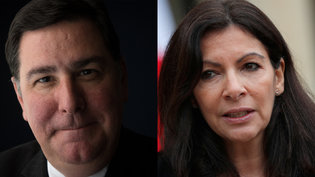
Mayor Bill Peduto of Pittsburgh, left, and Mayor Ann Hidalgo, of Paris, are outspoken supporters of the Paris climate accord. Credit Justin Merriman for The New York Times (Peduto); Christophe Ena/Associated Press

She has been featured in these pages due to her creative approach to governance more than once. We are happy to see Ann Hidalgo again, this time providing another example of the “don’t just get angry–do something with creative ferocity” ethos implied in these constant observations of model mad. And we are especially grateful for the joint commentary with Pittsburgh Mayor Bill Peduto, who we hope to see more of:

…Though separated by an ocean and a language, we share a desire to do what is best for our citizens and our planet. That means putting aside parochial politics and embracing the global challenge of fighting climate change. In doing so, we can create a cleaner, healthier, more prosperous world for Parisians, Pittsburghers and everyone else on the planet. Continue reading

Rancher’s Life In The High Plains

4681.jpg

The scale of the cattle farming at Gallon Jug is modest compared with the tradition of grazing on public lands typical of ranching in the western USA. But they share some common ground such as the horse-based cowboy (note below that women are also in the saddle in some places such as Montana). Something not discussed in the ideological battles over public lands that got to a boiling point in the last couple years–the intangible patrimony of a way of life–is worth a couple minutes of your consideration and this article lays it out, part of a series the Guardian is running:

In Montana, land transfer threatens the American rancher’s way of life

Ranchers in the west have been struggling for decades. Now a new threat looms: public land might be taken away from them Continue reading

Blue Heart of the Planet

The United Nations Ocean Conference is underway to support the implementation of Sustainable Development Goal 14: Conserve and sustainably use the oceans, seas and marine resources for sustainable development.

The importance of collaboration between public and private sectors to brainstorm innovative solutions to environmental issues is becoming increasingly clear, as is the reality that states and local governments will be the stronger voices for climate activism.

The health of the planet and our oceans are interchangeable, and Sylvia Earle has been the spokesperson for that truth for decades.

Take the extra 18+ minutes to listen to her 2009 TED Prize Talk here.


Keep This Place Out Of Bounds

4256b.jpg

The letters come amid fears that the Trump administration will favor the powerful mining lobby, increasing the risk, particularly, of uranium contaminating water flowing into the Grand Canyon. Photograph: Stephen Yelverton Photography/Getty Images

Arizona officials, sensing an opportune moment, are using one of the most iconic places on earth to make a point. And the point is at one with the reason given for the USA pulling out of an environmental treaty, that every last buck to be raked out of the earth is more important than the earth as a whole, or a particular spot on the earth, or those living on the planet generations from now. The headline and story below fail to shock. This is how things are lately. Getting numbed to it is not an option. Arizona officials have made their point clear, but the point cannot be conceded. Boundaries still exist and must be protected. Thanks to the Guardian for its vigilance in its This is Your Land series:

Grand Canyon at risk as Arizona officials ask Trump to end uranium mining ban

Exclusive: Powerful regional officials to ask administration to end 20-year ban, saying it is unlawful and inhibits economic opportunity Continue reading

Stanford Earth’s Rosemary Knight

Thanks to Stanford News for this short video on important innovation related to ensuring we all stay hydrated well into the future:

Mapping groundwater from the air

Stanford Earth’s Rosemary Knight recently spearheaded a project to map underground freshwater resources and forecast the intrusion of saltwater into aquifers beneath the California coastal town of Marina. The project, a collaboration between Stanford, the Marina Coastal Water District, and Aqua Geo Frameworks, involved a low-flying helicopter towing a giant, instrument-laden fiberglass hoop that generated ground-probing magnetic fields that penetrated 1,000 feet beneath the surface.

Sea Shepherd & Cuvier’s Beaked Whales

It has been a long while since our last link to Sea Shepherd news, shame on us, but today we rectify it with news from Seth and Jocelyn’s neighborhood–actually on the Pacific side of Mexico’s Baja California Sur but as close as most people get:

Sea Shepherd Records Never Before Seen Footage of Rare Cuvier’s Beaked Whales During Expedition in Mexico

Sea Shepherd’s research vessel the R/V Martin Sheen returned to Mexico’s Guadalupe Island to continue its study of Cuvier’s beaked whales, capturing never before seen drone footage of these rare and elusive cetaceans.

During the two-week expedition, Mexican lead-scientist Gustavo Cardenas Hinojosa and American collaborator Jenny Trickey, deployed various acoustic devices to compare their effectiveness. The scientists will return and leave these devices for a longer period of time. Continue reading

Rome Rewilded

viscosa.jpg

Image: Planet World / Flickr

Thanks again to one of our most reliable sources for the summary of conservation-oriented science, and specifically to Brandon Keim for this one:

An Anthropocene wildness grows in Rome

Even in one of the most densely urbanized places on Earth, wildness and natural abundance may yet flourish again, sustained by both neglect and stewardship. Continue reading

Climate, Agriculture & Disruption

corn-shot_custom-954dc74482bc59c82397d81f4660d015b059809a-s1400-c85

Journalist Chris Clayton writes for an audience filled with climate skeptics: farmers and leaders of agricultural businesses. He’s telling them that a changing climate will disrupt their lives. Courtesy of Chris Clayton

From the salt over at National Public Radio (USA), here is an interview in keeping with the spirit of yesterday’s post on peaches:

…Clayton is a Midwesterner and agricultural policy editor at DTN/The Progressive Farmer. He’s also the author of The Elephant in the Cornfield: The Politics of Agriculture and Climate Change, which describes in detail how farmers and farm lobbyists have dealt — or, more often, refused to deal — with a changing climate.

It has sometimes put Clayton in an awkward spot, as he acknowledged when I reached him this week in his office in Omaha, Neb.

Does it make you nervous, as a reporter at a farm publication, talking about climate change?

All the time. I feel like the guy who has to tell people things they don’t want to hear. But if I simply ignore the topic or ignore the issues, am I doing anybody any favors? Continue reading

Leadership On Climate Change Is Alive And Well

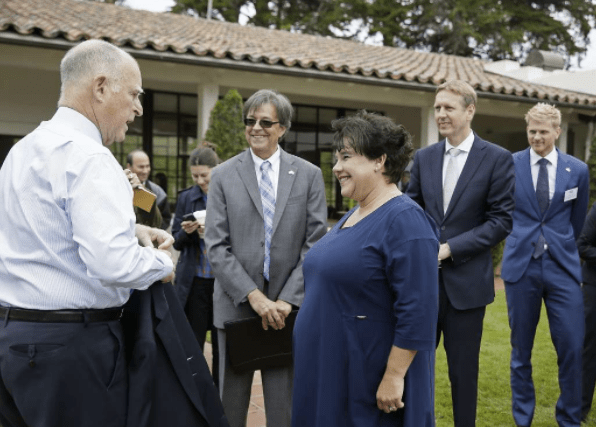
California Gov. Jerry Brown talks with Sharon Dijksma, Netherlands Minister for the Environment, during the joint Netherlands and California Environmental Protection Agency conference called, “Climate is Big Business,” at the Presidio Wednesday, May 24, 2017, in San Francisco; Photo: Eric Risberg, Associated Press

The news yesterday that the USA is exiting the Paris climate accord was in a font size the New York Times only uses at times of true tragedy–i.e. big news. Editorials accompanying that headline on the front page were proportionately big with invective:

Our Disgraceful Exit

Trump’s Stupid and Reckless Climate Decision

Brooks: Trump Poisons the World

Krugman: Trump Gratuitously Rejects the Paris Accord

All consistent with the implications of the news. There is no discounting the scale of that tragedy, so it is possibly not the right moment to look for silver linings. But that is what we do here, so here goes. In the model mad series we linked to a story about California Governor Jerry Brown, who has been making a stand during decades of public service, and he clearly has no intention of slowing down. The governors of California, New York and Washington on Thursday announced a new “alliance of states dedicated to fighting global warming and urged others to join them”.

“California will resist,” Brown told journalists on a conference call, going on to say that  the administration may well create the exact opposite of what is intended –

an aroused citizenry — and an aroused international community — who will not tolerate this kind of deviant behavior from the highest office in the land.”

Brown and his counterparts, Jay Inslee of Washington and Andrew Cuomo of New York, announced that they would join forces in a United States Climate Alliance, a coalition of states committed to upholding the goals of the Paris agreement.

The three states, combined, represent more than 20 percent of the U.S. population and at least 10 percent of the country’s greenhouse-gas emissions, according to the governors. Continue reading

If You Happen to Be in Washington DC…

Frédéric Bazille’s The Family Gathering has none of the quick, airy brush strokes his future impressionist peers would discover; but the sunshine is there, as are the bright colors. Musée d’Orsay, Paris/Courtesy of the National Gallery of Art

Considering the changes in the air of the 1860’s Paris art scene, the “might have been” aspect of this story about a lesser known 19th century French painter is poignant, to say the least. Thanks, once again, to NPR for sharing this story about what could have been.

France’s ambassador to the United States, Gérard Araud, is a fan of 19th-century French painter Frédéric Bazille. But I had a confession to make when I spoke with him about the National Gallery’s “Frédéric Bazille and the Birth of Impressionism” exhibition. I said that I usually walk right past Bazille’s paintings and go straight to the impressionists — and I assume I’m not the only one who does that.

Araud understands, but says he likes Bazille for the opposite reason: The impressionists are so well-known, he says, “I’ve reached a point where I don’t look at them anymore.”

Those impressionists were also Bazille’s pals. Continue reading

When Life Gives You Lionfish…

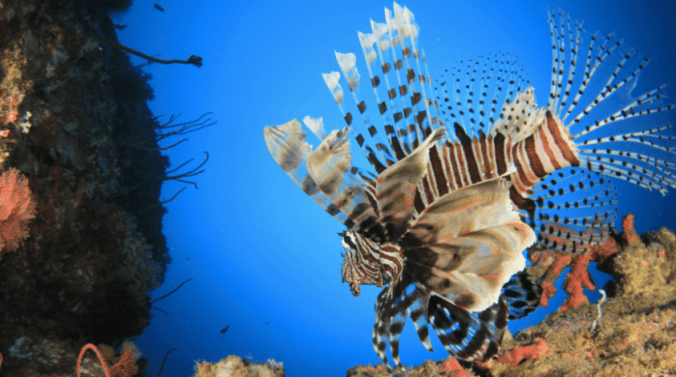
Market-based approaches to controlling invasive lionfish populations were highlighted at a recent GEF event in Grenada.

La Paz Group contributor Phil Karp has long been our guide into marine ecosystems, with both citizen science and social entrepreneurship posts on his work with groups in Belize and other parts of the Caribbean focused on these goals.

This collaboration with Sarah Wyatt,  a colleague from the Global Environment Facility, illustrates the on-going market-based approaches to managing the invasive species while creating new cottage industry opportunities.

Seeing a lionfish while diving in the Caribbean is a cause for mixed emotions.  On the one hand, one marvels at the exquisite beauty of the fishes’ flowery fins and its amazing adaptability to a range of habitats, from shallow estuaries with low salinity to deep reef environments. But then you remember that these fish don’t belong in the Caribbean, and that the very versatility noted above makes them an invasive menace. Indeed, if the fish you are looking at is a female, she may be carrying up to 30,000 eggs, and may have thirty or more native fish or crustaceans in her stomach.

One of the many impacts of the Anthropocene era on global biodiversity is the increased spread of invasive species, like the lionfish, due to rapid globalization. With the United Nations Ocean Conference taking place in New York next week, the conservation and sustainable use of the oceans and marine resources is high on the international agenda.  While long recognized as an environmental and biodiversity threat, invasive species also pose a threat to livelihoods, particularly in developing countries where incomes may be heavily dependent upon a single sector or product.

Traditionally, efforts to eradicate or control invasive species have been focused on public sector interventions.  But control efforts are often expensive and are either out of reach, or pose severe strains on limited budgets of developing countries.  Hence there has been growing attention to identification of market-based control approaches which create commercial incentives for removing the invaders, providing a financially sustainable means of control… Continue reading

Consumables Containing Consumables

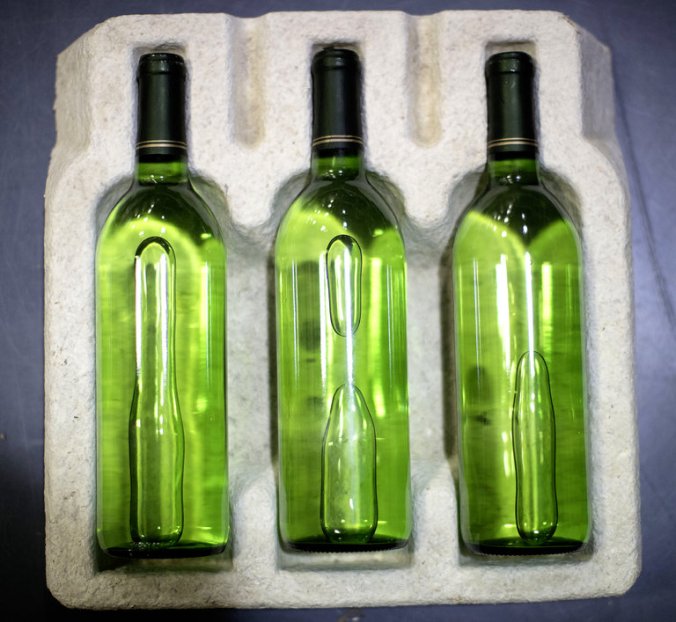
31PACKAGE1-master768.jpg

The design company Ecovative makes a variety of packaging materials using mycelium fungus. Credit Nathaniel Brooks for The New York Times

Thanks again to Stephanie Strom for a story about ecology that surprises:

Packaging Food With Food to Reduce Waste

For the environmentally conscious eater, they are among the most inconvenient truths: Too much food goes to waste. Too much packaging comes with the food. And too much of the packaging is made to last for ages.

Now there may be a single answer to all three problems: using excess food to make the packaging. Continue reading

Cornell’s Climate Friendly Construction

oakImage-1495980544830-jumbo

A view of Manhattan from the roof of the Bridge building on the Cornell Tech campus on Roosevelt Island. Photo VINCENT TULLO

When Cornell University competed in 2011 to develop an applied science and engineering campus in New York City, part of its pitch was that it would construct an academic building that would at least approach making as much energy as it used in a year, a concept known as net zero. It won. Then came the hard work of making that vision happen at the campus, known as Cornell Tech. Continue reading

The Value Of Coral Reef

ReefEcon.jpg

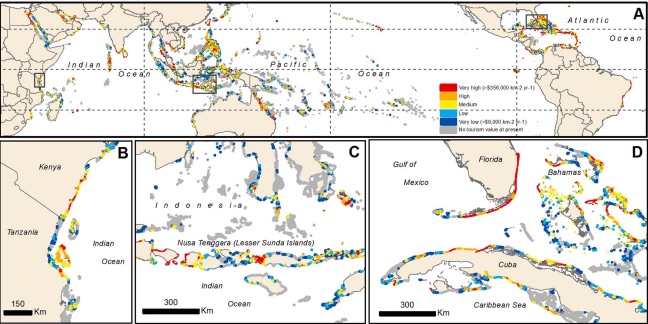
Economic value of coral reefs for tourism (A). This figure summarises the combined dollar values of expenditures for on-reef and reef-adjacent tourism. Reefs without assigned tourism value are grey; all other reefs present values binned into quintiles. Lower panels show Kenya and Tanzania (B), South-central Indonesia (C), and Northern Caribbean, with part of Florida, Cuba and the Bahamas (D). (Further maps can be seen in Appendix A and online at maps.oceanwealth.org

A country that depends on its coral reef to attract visitors, as Belize does, has every reason to pay attention to the various sciences paying attention to those reefs. Mostly marine biologists, perhaps, but also economists. Geeks and wonks are heroically gathering information, processing it, publishing it and if not for The Nature Conservancy’s efforts some of us might not ever see it.

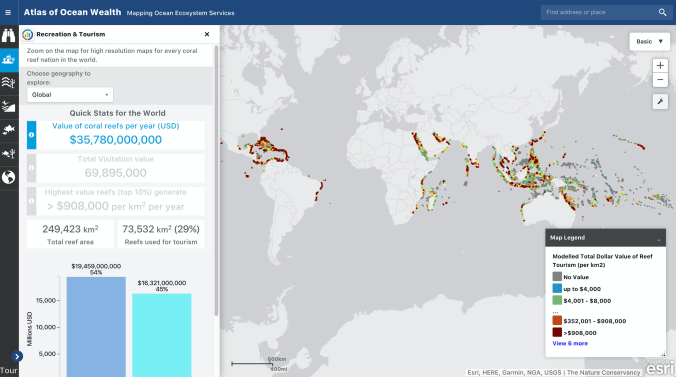
The August, 2017 issue of Marine Policy, an academic journal, carries the article “Mapping the global value and distribution of coral reef tourism” by the scientists Mark Spalding, Lauretta Burke, Spencer A. Wood, Joscelyne Ashpole, James Hutchison, and Philine zu Ermgassen and TNC’s Cool Green Science has a summary in common language. Also they complement the academic illustration above with one of their own:

Screen-Shot-2017-05-26-at-12.09.02-PM.png

Screen shot from the Atlas of Ocean Wealth showing global reef value to tourism. © The Nature Conservancy

If it’s true that people reveal their true values by how they spend their money, coral reefs are very valuable indeed. In fact, according to a new study in the Journal Marine Policy coral reef tourism generates $36 billion (U.S) in global value every year. Continue reading

Leading Legumes To A Better Place


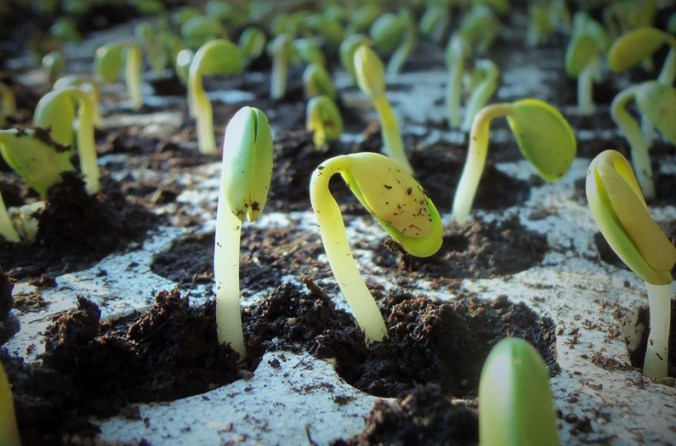
Anthropocene’s Emma Bryce has summarized the science of Building a better soybean:

What will it take to build crops that can withstand future climate changes? A group of plant biologists think they might be on to a solution for soybeans. Using genetic engineering, they’ve created a plant whose yields remain unaffected by high-stress conditions. The key lies in a genetic tweak that makes the plant overexpress a particular enzyme, which is thought to boost the efficiency of their photosynthesis cycle and enhance seed production. Continue reading

Coffee’s California Coming

27COFFEE1-superJumbo

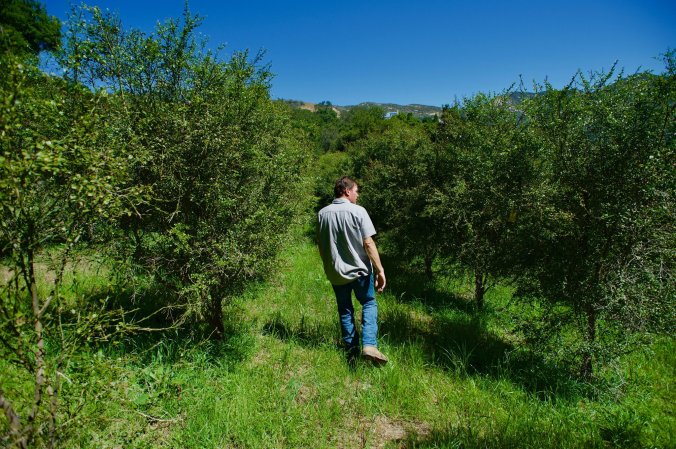
Jay Ruskey is one of the first farmers to be growing coffee commercially in California. His coffee plants share the farm with avocado and cherimoya trees and passion fruit vines. Credit Morgan Maassen for The New York Times

It always seemed that California could grow just about anything, so why did it take so long for this to happen? Thanks to Stephanie Strom for this story in the New York Times:

GOLETA, Calif. — There is a new crop growing in Southern California’s famous avocado groves — coffee.

About two dozen farms between San Diego and here, just outside Santa Barbara, are nurturing coffee bushes under the canopies of old avocado trees, in what may be the first serious effort in the United States to commercialize coffee grown outside Hawaii, home of Kona coffees. Continue reading

Svalbard Improvements

4186766563_7bab19f5c2_b.jpg

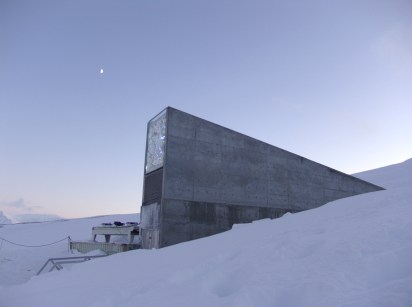
The Svalbard Global Seed Vault in Norway. (Credit: Mari Tefre/Svalbard Globale frøhvelv)

Our favorite doomsday machine, which we never tire of hearing about and sharing on this platform each time it has demonstrated its visionary worthiness, is back in the news. Discover Magazine brought this to our attention today: Continue reading

Naming For The Sake Of Conservation

Helmeted_Honeyeater_at_Healesville_Sanctuary_in_Healesville_Victoria_Australia._Birds_are_being_bred_under_a_captive_breeding_program_for_reintroduction_into_the_wild_over_time-1260x708

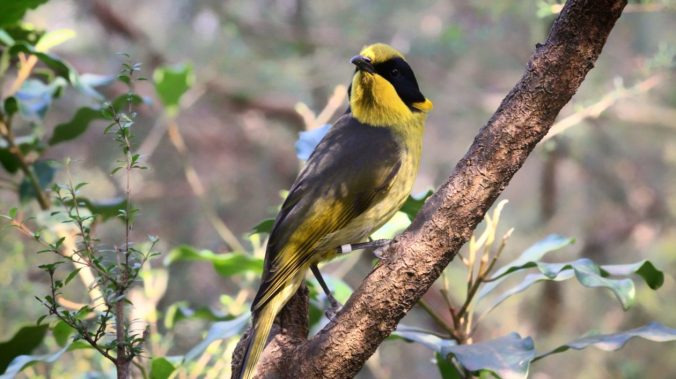
The Helmeted Honeyeater, a subspecies of the Yellow-tufted Honeyeater and the state bird of Victoria. Photo © Dylan Sanusi-Goh / Wikimedia Commons

Thanks to the Nature Conservancy for its conservation and scientific work in Australia, and for this finding shared on Cool Green Science:

…Recognizable common names are often critical for species protection, but subspecies miss out on this public perception benefit. A new paper argues that standardized English names are key to conservation success for Australia’s fantastic avifauna, and creates a definitive list for every subspecies on the continent. Continue reading