Dams, Development & Destruction

3500 (2).jpg

Munduruku people demonstrate in front of the Brazilian Ministry of Mines and Energy, calling for the suspension of construction of the Belo Monte hydroelectric plant. Photograph: Lunae Parracho/Reuters

Thanks to John Vidal and the Guardian for this coverage in Latin America:

The rains had been monumental throughout April 2014. By early May, the operators of the 219 MW Cachoeira Caldeirão dam being built in Brazil’s remote Amapá state knew that levels on the Araguari river were dangerously high. If some water was not released fast, the whole thing might collapse. There would be no danger to people because any run-off would be absorbed by two other dams downstream, the hydropower company thought.

But communications failed and no one warned the small town of Ferreira Gomes, nestled on the banks of the Araguari nearly 50km away. Continue reading

Sometimes Less Is More

Nijhuis-The-Many-Meanings-of-Biodiversity_01-640.jpg

In a new paper, researchers argue that oddball animals like the Cuban solenodon should be more aggressively protected. COURTESY NEW YORK ZOOLOGICAL SOCIETY / WIKIMEDIA COMMONS

Our focus is on developing and managing entrepreneurial opportunities to protect natural areas. More protection is better than less, we naturally assume. That is why we are intrigued by this blurb about a new scientific finding: “a small but strategic increase in protected lands could triple the amount of bird and mammal species preserved worldwide.”

The headline to this short item–CONSERVATIONISTS COULD BE SAVING MORE BIODIVERSITY IN LESS SPACE–has us clicking, and we thank the New Yorker’s commitment to science writing, and specifically Michelle Nijhuis for it:

Magnifying Whale Scale Science

24TBwhale-4-superJumbo

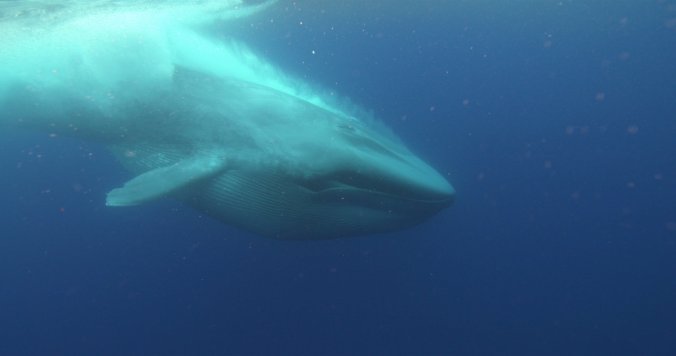
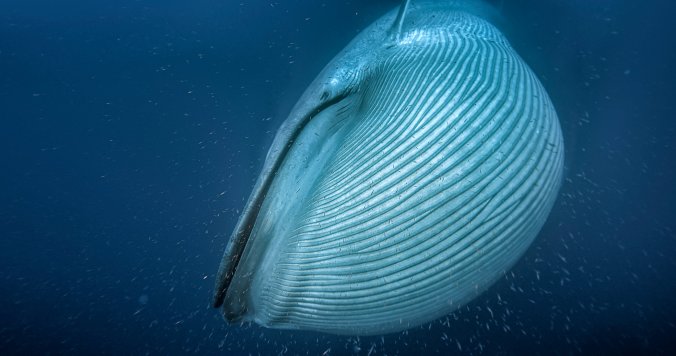
A blue whale off the coast of California. CreditSilverbackFilms/BBC

Ed Yon’g posting on the Atlantic website pursued the same natural history question as Nicholas St. Fleur’s How Whales Became the Biggest Animals on the Planet, and both science writers provide their specific source as seen here in the Times article:

…In a study published Tuesday in the journal Proceedings of the Royal Society B, a team of researchers investigated gigantism in baleen whales, the filter-feeding leviathans that include blue whales, bowhead whales and fin whales. The marine mammals became jumbo-size relatively recently, they found, only within the past 4.5 million years. The cause? A climatic change that allowed the behemoths to binge-eat…

The number of written words in both is about the same, and the quality of writing is comparable, but the photos in the Times article magnify the words there by, it seems, a thousand times, which explains why we are linking to another whale scale story a second day in a row:

24TB-whale3-superJumbo.jpg

Baleen whales became big around the same time as when ice sheets began covering the Northern Hemisphere. CreditSilverbackFilms/BBC

Continue reading

Whale Scale Explained

Thanks as always to Ed Yong, who keeps the fires under our wonder about whales well stoked:

Why Did The Biggest Whales Get So Big?

… and perhaps more importantly: when?

Five years ago, on a boat off the southern coast of Sri Lanka, I met the largest animal that exists or has ever existed. Continue reading

Ladybugs, Awe & Design Inspiration

19tb-ladybugs01-superJumbo.jpg

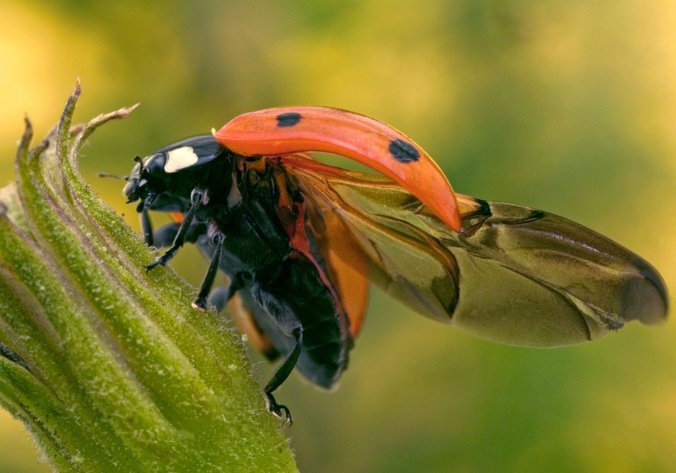
After ladybugs fly, they tuck their wings into a sliver of space between their abdomen and the colorful outer wings for which they are best known. Credit Jean-Michel Labat/Science Source

Even without words this item from the Science section would tell a full story just with the gif below, which captures what any of us might remember being awed by as a kid. Thanks to Joanna Klein for this:

Ladybugs Pack Wings and Engineering Secrets in Tidy Origami Packages

The ladybug is a tiny insect with hind wings four times its size. Like an origami master, it folds them up into a neat package, tucking them away within a slender sliver of space between its abdomen and the usually polka-dotted, harder wings that protect it. Continue reading

Crop Type & Pesticides

bunch-of-grapes (1)

Image: Pixabay

Thanks to Emma Bryce for A more nuanced approach to reducing insecticides on our food, shared via Anthropocene:

Model Mad, Mechanism

gettyimages-671595622_wide-3b228004a6ccebbd2b6b9901d8a92f181b3643b1-s1400-c85

In this era, when saying no in creative manner has been raised to an art form, we remain on the lookout for model mad; but it does not have to be creative or novel. If there is an established machinery to utilize, utilize it! Here is an example. We are not surprised that, when asked, people say they want their environment protected, nonetheless we are pleasantly surprised that the “system” such as it is continues to even ask:

Public To EPA On Cutting Regulations: ‘No!’

As part of President Trump’s executive order to review “job-killing regulations,” the Environmental Protection Agency last month asked for the public’s input on what to streamline or cut. It held a series of open-mic meetings and set up a website that has received more than 28,000 comments, many of which urge the agency not to roll back environmental protections. Continue reading

Reanimating Coffee

fuel-gauge-coffee-mugConsidering the coffee farming and roasting operation, not to mention all the coffee served at Chan Chich Lodge; also considering the constant search for new options relevant to ecologically sensitive operations, this catches our attention. Thanks to Anthropocene and Prachi Patel:

A simpler route to biodiesel from used coffee grounds

The world produces almost 10 million tons of waste coffee grounds every year. Researchers have now discovered an efficient way to turn that waste into a green fuel. Their simple one-step process, outlined in the Journal of Environmental Chemical Engineering, would save time and the cost of producing biodiesels from coffee. Continue reading

Thank You Nebraska!

Nebraska

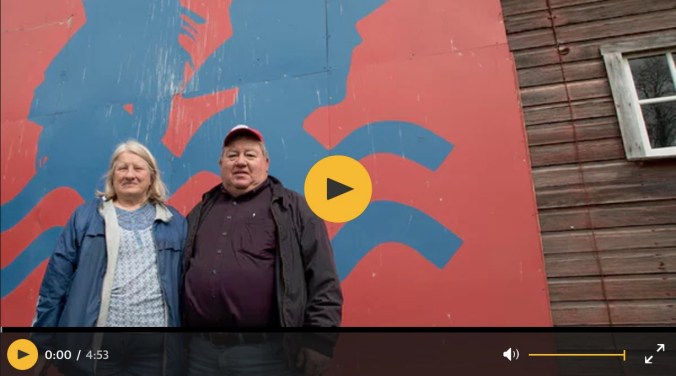
We have refused to give up hope because there continue to be a trickle of stories like this, thanks to the Guardian. Bruce Springsteen dedicated a whole album to Nebraska, and this short news via video reminds us of that state’s great people:

After Trump’s revival of the Keystone XL pipeline project, some communities along its route are getting ready to fight back. Others see the US president keeping his promise to ‘make America great again’. The Guardian drove along the proposed route of the pipeline, through three red states – Montana, South Dakota and Nebraska – to hear what those who will be affected have to say about it

Agripreneurship On The Rise

This exciting project came to our attention a little over a year ago, and we’re excited to see that it’s going full steam ahead!

This is an Embark Fellowship campaign. If we raise our target, Brown University will donate $25,000 to our project!

What’s up with fish?

The world’s population is growing rapidly, and the global demand for animal protein—from fish to poultry, beef, and pork— is growing with it. But there’s a problem: animal feeds are made from wild-caught fish like anchovies and sardines. These fish are caught using highly destructive fishing methods that result in unintentional by-catch and the destruction of coral reefs. One third of global fish catch doesn’t go towards direct human consumption; it goes to feeding animals. As a result, more than 85% of the world’s fisheries are exploited. We are feeding fish to other animals, and it doesn’t make sense.

Meanwhile, the world’s population is increasing rapidly and is projected to hit 9.7 billion by 2050. We desperately need a new way to feed a growing population that is not at odds with the health of our oceans.

Meet the black soldier fly.

Continue reading

Environmentalism, It’s Just Good Business

Solar panels at the Googleplex, headquarters of Google in Mountain View, Calif. Its data centers worldwide will run entirely on renewable energy by the end of this year, the technology giant announced in December. Credit Smith Collection/Gado, via Getty Images

Although the current administration may be cloaking themselves in a fog of denial, we’re happy to read that much of corporate America is staying the course of their own emissions goals.

Nearly half of the Fortune 500 biggest companies in the United States have now set targets to shrink their carbon footprints, according to a report published Tuesday by environmental organizations that monitor corporate emissions pledges. Twenty-five more companies adopted climate targets over the last two years, the groups said.

Almost two dozen companies, including Google, Walmart and Bank of America, have pledged to power their operations with 100 percent renewable energy, with varying deadlines, compared with just a handful in 2015. Google’s data centers worldwide will run entirely on renewable energy by the end of this year, the technology giant announced in December.

“We believe that climate change is real, and it’s a severe crisis,” said Gary Demasi, who directs Google’s energy strategy. “We’re not deviating from our goals.” Continue reading

Cruise Ships Rarely Bring Good Tidings

Kujawinski-Cruise-Ships-Arctic-1200.jpg

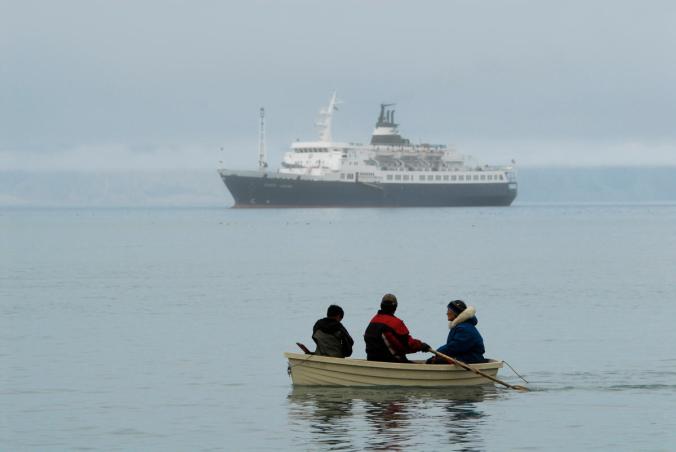
The presence of cruise ships in the Northwest Passage is among the dilemmas that climate change is creating for Canada’s Inuit people amid their struggle to balance environmental and economic concerns. PHOTOGRAPH BY KIKE CALVO / REDUX

It is our view, based on news reports like this that appear constantly in myriad variations from around the world, that with few exceptions cruise ships are problematic. Here is just one more datapoint:

THE COMPLICATED RELATIONSHIP BETWEEN CRUISE SHIPS AND THE ARCTIC INUIT

Last summer, the Crystal Serenity, a luxury cruise ship, embarked on a monthlong voyage through the Northwest Passage, the sea route that winds through Canada’s Arctic archipelago. The Serenity, which can accommodate more than a thousand passengers, headed through the same waters as had H.M.S. Resolute, which, in August of 1853, set out to rescue a group of British explorers and ended up trapped in the ice for the better part of a year. The Arctic Ocean is warmer than it was a hundred and sixty-three years ago, and the Crystal Serenity, accompanied by a British icebreaking vessel, made the voyage without dire incident. It is the largest cruise ship to sail through the Northwest Passage, and its voyage signalled the economic changes that are coming to the vast region as a result, in part, of climate change. Continue reading

Lost Rice, Found Alive

image005_custom-74fcf2c593047698233b11f237300862d88e143a-s1400-c85.jpeg

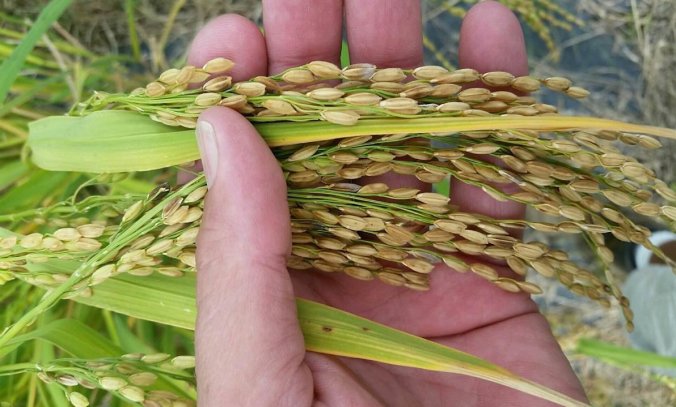
An upland rice strain. Courtesy of Brian Ward

Thanks to the salt and National Public Radio (USA) for this story about the strain of a grain means so much to billions of people around the world:

A grain of rice, like a grain of sand, sifts through your hands with a mysterious and lovely sameness. Mostly white or tan, hundreds or thousands of grains pour smoothly out of buckets, out of burlap, into bowls, with a sound like small waterfalls. Rice seems so simple, really. And yet, because it plays a central role in world cuisines, these modest grains can carry the weight of history. Sometimes that history is deeply surprising. Continue reading

Model Mad, Down Under

John Church in Hobart in September 2010. He is known internationally for helping to bring statistical and analytical rigor to longstanding questions about sea level rise. Credit Peter Boyer

We continue to keep our eyes open for stories that offer inspiration even in the face of apparent adversity.

A Parable From Down Under for U.S. Climate Scientists

HOBART, TASMANIA — John A. Church, a climate scientist, did not look or sound like a man who had recently been shoved out of a job.

Speaking softly and downing coffee at an outdoor cafe in this old port city, he sounded more like a fellow fresh off a jousting match. “I think we had a win — a bigger win than I ever anticipated,” Dr. Church said in an interview last month.

Australian climate science went through an upheaval last year, one that engaged the press and the public in defending the importance of basic research. In the end, Dr. Church did indeed lose his job, but scores of his colleagues who had been marked for layoffs did not. Some of them view him as having sacrificed his career to save theirs.

What happened in Australia shows the power of an informed citizenry keeping watch on its government. And it may turn out to be a precursor to an attack on fundamental climate research in the United States.

Continue reading

Sound, Noise & Wilderness

lead_960c

I’m sorry, what was that? Ints Kalnins / Reuters

Sound is often profound. Noise often annoys. Thanks as always to Ed Yong, touching on a topic we have been sensitive to for some time now:

A Not-So-Silent Spring

Even America’s protected areas are being subjected to harmful levels of noise pollution.

If a tree falls in the forest, and there’s no one around, the National Park Service will still hear it. Continue reading

Welcome News From Brazil

Thanks to Anthropocene for a moment of relief:

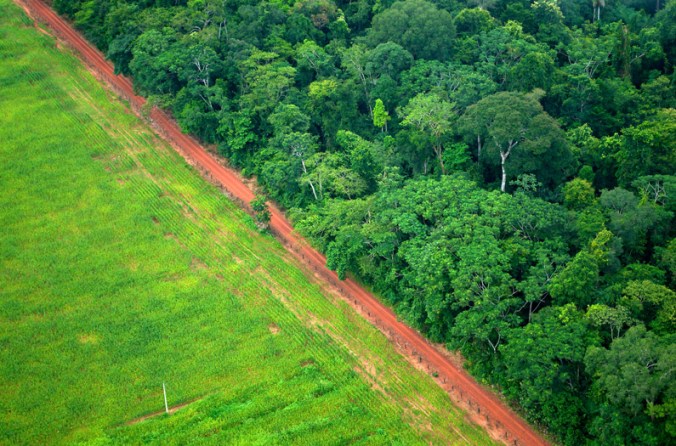
In Brazil, signs that a soy moratorium is slowing down deforestation

Community, Collaboration & Conservation in Mozambique

Thanks to contributor Phil Karp for sharing this great example of how peer-peer knowledge exchange can help to replicate and scale up innovative solutions.

For communities, by communities

Experience from around the world shows that managing fisheries and marine resources works best when responsibility is placed in the hands of local communities. This is particularly true in low-income countries, where there is often limited capacity and infrastructure for fisheries management and conservation.

Locally Managed Marine Areas (LMMAs) are areas of ocean managed by coastal communities to help protect fisheries and safeguard marine biodiversity. Found throughout the world’s tropical and subtropical seas, and encompassing diverse approaches to management and governance, their sizes and contexts vary widely, but all share the common theme of placing local communities at the heart of management.

Continue reading

Counting Down To Global Big Day

Global-Big-Day-map

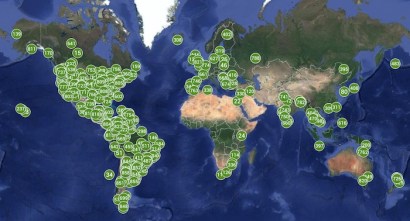
A world of birders has already marked out where they’ll be on 13 May. Where’s your place? Add it today!

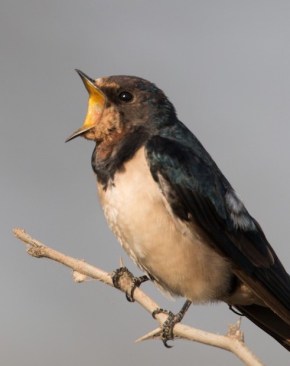
Thanks to eBird for the one week marker until Global Big Day, which we look forward to supporting at Chan Chich Lodge. Click the map to the left to mark your territory, so to speak. This countdown notice uses one species to illustrate a conceptual premise of the annual event, and we are happy to report that this species is frequently seen at Chan Chich Lodge on birding walks, and excursions to Gallon Jug Farm, where the barns are accommodating:

The familiar Barn Swallow (right) has been recorded in eBird from 222 countries. You can hope to spot a Barn Swallow almost anywhere on the planet, from Alaska to Argentina, Siberia to Australia, Iceland to South Africa. Barn Swallows criss-cross the equator and traverse the Eastern and Western Hemispheres. Their movements not only span an entire planet of birds, but connect a worldwide community of birders.

In the same way, Global Big Day and eBird connect all of your local birds with the rest of the world, making a real difference in the collective understanding of birds worldwide. On 13 May, every bird that you report contributes to the global team total for an unprecedented snapshot of our planet’s bird diversity. Every bird counts.

To join the Global Big Day team from more than 150 countries, all you have to do is go birding on 13 May!  Continue reading

One Possible Future of Fish

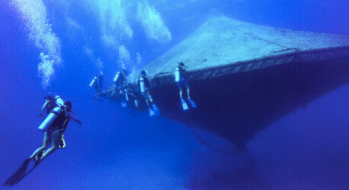
Open-ocean aquaculture could reduce environmental concerns associated with aquaculture in coastal waters. Photo courtesy of NOAA Fisheries.

We’re always looking for well-balanced discussions on innovative but occasionally controversial forms of food production.  Open ocean aquaculture is an example, and we appreciate the Food & Environment Reporting Network for offering just that, suggesting that many of the environmental concerns with aquaculture are mitigated by using deep water locations.

President of the New Orleans–based Gulf Seafood Institute, Harlon Pearce knows better than anyone that wild fisheries alone can’t supply U.S. consumers’ growing demand for fish. Which is why he’s doing his best to bring everyone to the table to achieve one goal: farming the Gulf of Mexico. Continue reading