
Baja California Sur, Mexico
Baja California Sur, Mexico
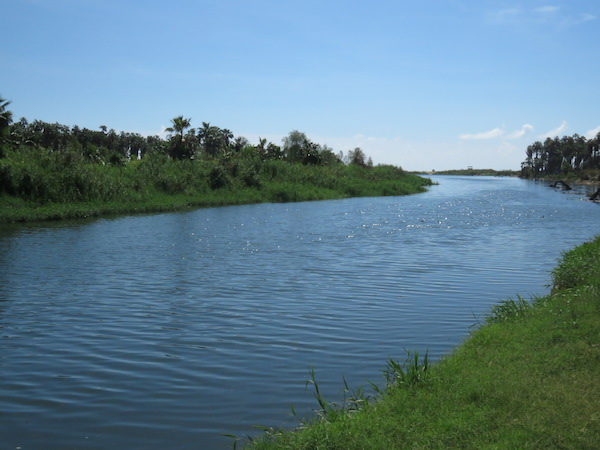
San Miguel Reservoir, Turrúcares, Costa Rica

Replicas of gannet skulls from the collection at the Smithsonian Institution allowed researchers to measure the forces a bird’s skill experiences during a dive. (Photo by Sunny Jung/Virginia Tech)
The title may seem silly, but I can’t help that a whole family of birds are alternatingly called boobies or gannets – most of us have heard of the Blue-footed Booby, but there are several other species, all of which hunt for fish by diving, head first, at extremely high speeds from many meters above the water. For a human entering water at fifty miles an hour, a neck injury would be a certainty, and even organ damage could occur, but boobies/gannets accomplish the dives plenty of times during a day’s hunting, with no apparent problem. It seems that their physiology, as well as the way they contract their muscles during the plunge, save them from harm. From the Smithsonian Insider:
New research from Virginia Tech, the Smithsonian’s National Museum of Natural History, the National Museum of Rio de Janeiro and the North Carolina Museum of Natural Sciences helps explain how the birds manage these high-speed dives.
“We were interested in what happens when objects plunge into water, so we looked for examples in nature; the gannets are incredible,” said Sunny Jung, an associate professor of biomedical engineering and mechanics in the College of Engineering and an expert in fluid biomechanics; he has also studied dogs’ unusual drinking technique and how shrimp use microscopic bubbles to hunt.
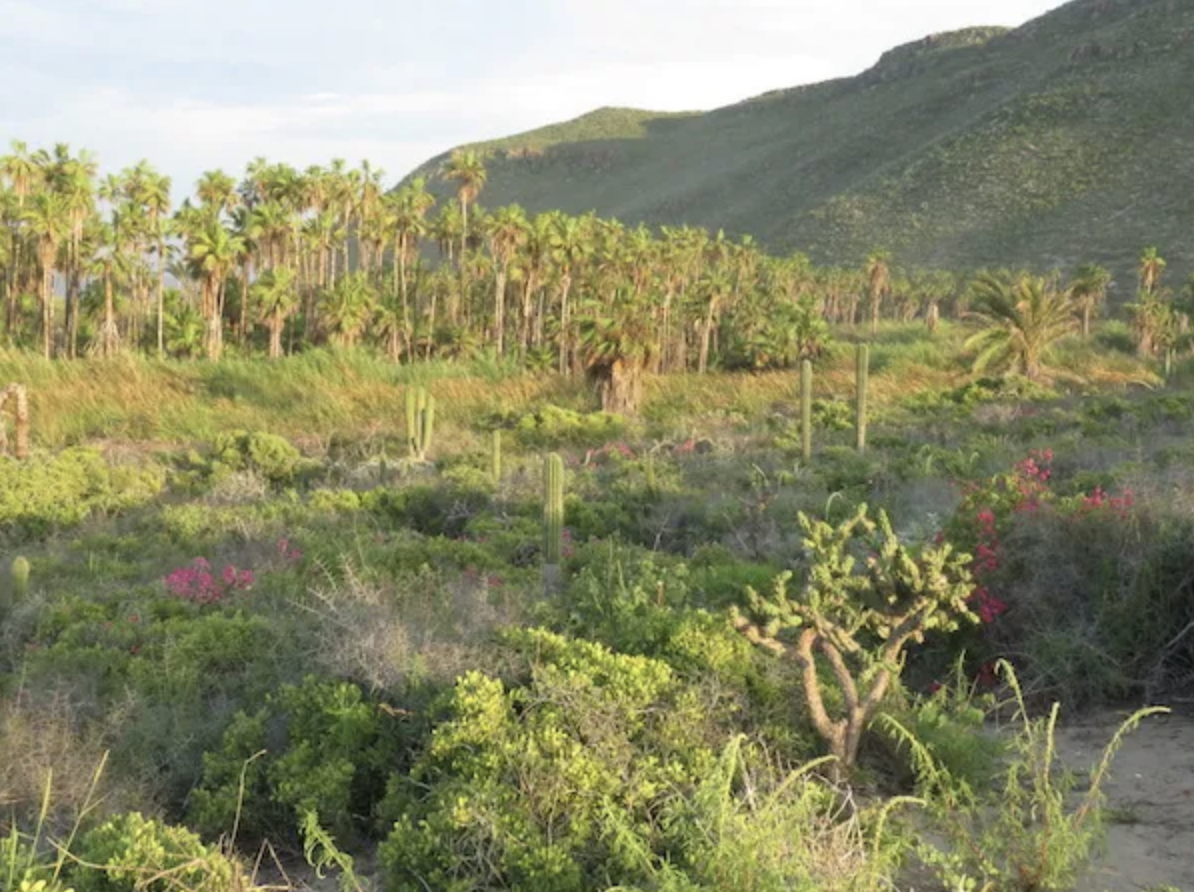
Oasis Playa Las Palmas de San Pedro, near Todos Santos
Check out my last post for an introduction to this series and to read about the Sierra de la Laguna.
At three hours away from Villa del Faro, the town of Todos Santos is a bit of a stretch for a day trip, but could be accomplished by a determined driver or could be an addition to a stay here on the East Cape. Todos Santos is a very pleasant town on the Pacific coast of the southern Baja Peninsula, and two spots in particular are relatively well-visited by birders in the region: a little wetland area right by the beach at the southern edge of town called La Poza de Todos Santos (poza meaning “pool” or “puddle”) and a hotel associated with the spot called Hotel Posada la Poza (posada meaning “inn” or “lodge”).

Baja California Sur, Mexico

Baja California Sur, Mexico

Dunwoody, Georgia, USA

Sierra de la Laguna and its highest point, El Picacho, as seen from SJD International Airport
Check out my last post for an introduction to this series and to read about the San José Estuary.
Down here at the tip of Baja California Sur, some part of the Sierra de la Laguna mountain range can be seen pretty much from anywhere with a good view inland. In fact, when you land in the Cabos airport, it feels next-door. When we were last here at Villa del Faro in July, Jocelyn wrote about some spots in the southern region of the Sierra Biosphere Reserve, and for our second trip last week, we visited the north (the middle is the most mountainous, with no access roads that we know of, just 6-hour hiking trails).

Carara National Park, Costa Rica

male – Dunwoody, Georgia, USA
Since last week, I’ve been based back at Villa del Faro in Baja California Sur, Mexico, where I’ll be co-managing the property with Jocelyn for a good while. In addition to having the opportunity to see what kind of birds show up here in their winter migration, I’m also hoping to have time to check out the surrounding region for other birding hotspots. I’ll do this not only for my own interest, but also because we may get guests here in the future who are bird-watchers. I’d like to be able to recommend areas based on my own experience, so they don’t have to rely solely on eBird, which helps find certain spots but can’t give you any directions that Google Maps doesn’t have.
Nevertheless, eBird is one of the best ways to quickly figure out what locations within a region are popular for birding, whether because they have lots of species or because lots of birders pass through there (or both). Continue reading

female – Baja California Sur, Mexico

male – Baja California Sur, Mexico

Photo via Pinterest
With Deepwater Wind’s Block Island energy farm in Rhode Island completed – all five turbines of it – it’s not surprising to learn that the cost of wind power, just like that of solar, is going to decline in coming years, according to industry experts. Prachi Patel reports for Conservation Magazine:
Wind energy is soaring around the world thanks to technology advances and energy policies that have reduced its cost. And things are only going to get better with prices dropping substantially by mid-century, according to a survey of 163 of the world’s leading wind energy experts. The results, published in the journal Nature Energy, suggest that the cost of electricity from wind could drop by 24–30 percent by 2030 relative to 2014 prices, and by 35–41 percent by 2050.
The key driver of this price drop? Bigger, more efficient turbines, according to the experts. Taller turbines with larger rotors make it possible for turbines to better harness stronger winds, generating more power.

Aerial view of the Elk River Wind Project near the small town of Beaumont, in the southern Flint Hills region of Kansas. This 150 MW wind farm came on-line in December 2005. The one hundred 1.5 MW wind turbines are located several miles South of Beaumont. © Jim Richardson via Cool Green Science
As the human population around the world grows, demand for food and energy will increase. Land conversion will become more and more rampant as countries grow crowded for space – any unprotected forests are sure to be felled to make way for people, and if not people, then their cows/crops, and if not that, then their fossil fuel wells. That’s a pretty dire picture, but there are always measures that can be taken to try limiting the development of land for new energy production, in an effort to slow the loss of nature and habitat for wildlife. A new article in the peer-reviewed journal PLOS ONE claims that demand for energy will be the largest driver of land conversion, at least in the US.
The main solutions that the researchers offer to mitigate “energy sprawl” are “Improved siting, energy conservation, and more end-use energy production like rooftop solar.” according to lead author Anne Trainor. That way, energy production will have a lower carbon footprint and less impact on natural areas as well. My main takeaway from Trainor’s thoughts on her paper, which Cara Byington covered for Cool Green Science, is that, “If you’re saving energy, you’re saving land.” Continue reading
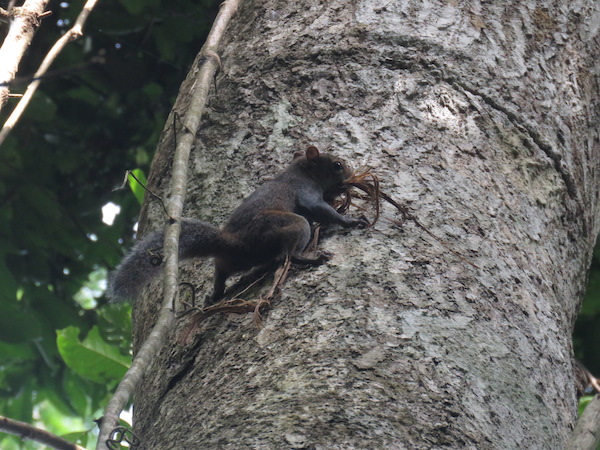
Unfortunately, we haven’t seen anything as exciting as a jaguar recently, but morning walks at the Lodge have been fruitful nonetheless. Mostly I look for birds, but any mammal spotted is one worth seeing – even a squirrel, given that the most common species here is one only found in Central America. I’m most used to the Eastern Gray Squirrel of the United States, as well as the smaller Variegated Squirrel of Costa Rica’s Central Valley and the cute Red-tailed Squirrel in the volcano regions. Here at Chan Chich, the Deppe’s Squirrel is a dark brown with frosted gray on the tail, and it is much more timid than the acclimatized suburban rodents of the East Coast in the US.

Headlines from news sources responding to a pair of scientific articles from 2013 that highlighted the importance of scale in assessing the effect of invasive species. Photo by Diana Lutz.
Five years ago this month, I wrote in a post titled Preventing Invasive Fire that, “Absolute regulation of invasive species is not possible. We cannot search every inch of soil that enters a country for microorganisms, dormant insect eggs, or plant seeds. But controls must be imposed, and more severe ones than currently in place. The intensely focused damage (biodiversity loss) that a male and female zebra mussel, emerald ash borer beetle, Asian carp, or fire ant can have on a vulnerable ecosystem is much greater than the thinned-out costs of higher taxes or more stringent customs inspections.”
The following year, I discussed the merits of Integrated Pest Management in helping eradicate or at least control pests, which are sometimes introduced from other countries. Reading today about a plan in North Carolina to use beetles as a predator of the hemlock woody adelgid, an aphid-like invasive species from east Asia, I am reminded of those two posts from the past, inspired by Cornell courses in environmental governance and entomology.

Image via thehindubusinessline.com
A few years ago, I wrote about two cases of industrialized biofuel production, based on corn and sugarcane in the US and Brazil, respectively. Both of these sources are first-generation biofuels, and there is no doubt that second- and third-generation sources, which often don’t require land conversion or threaten food security, are better alternatives to petroleum-based fuels. A new study funded by the American Petroleum Institute and carried out by the University of Michigan Energy Institute has created headlines declaring biofuels to be non-carbon neutral, but many find the research to be too limited. Prachi Patel reports:
Biofuels have for years divided energy experts and environmentalists. Critics say that they displace farmland and cause deforestation. Proponents argue they are a green, low-carbon alternative to petroleum-based fuels.
A new analysis adds fuel to the incendiary topic. Researchers report in the journal Climatic Change that biofuels might harm the climate more than petroleum. Substituting petroleum fuels with biofuels in American vehicles has led to an increase in net carbon dioxide emissions over the eight years covered by their study, they calculate.

© Cornell Marketing Group
In 2009, Cornell faculty, staff, and students came together to create a Climate Action Plan that made a goal of making the Ithaca campus carbon neutral by 2035. Since then, gross emissions have already been reduced by about 30% through several measures, such as installing solar farms and ceasing the use of an old coal-powered energy plant. Now, a new initiative to keep the campus warm in winter with a geothermal project called Earth Source Heat might help reduce emissions by another 38%. Syl Kacapyr reports for the Cornell Chronicle:
Cornell is pursuing a project that has the potential to eliminate an estimated 82,000 metric tons of carbon from its annual footprint and establish one of the country’s most advanced geothermal systems to heat the 745-acre Ithaca campus – an effort that could demonstrate a new scalable model for using this sustainable energy source throughout the U.S. and almost anywhere in the world.

male – Atlanta, Georgia

