An Object Lesson on Tote Bags

We discovered the “essay and book series about the hidden lives of ordinary things” called Object Lessons through The Atlantic a few months ago, when we shared an article on real cheese. Today, I learned an unsettling – and to borrow a phrase – inconvenient truth about tote bags. Pretty much any time I go grocery shopping I use a couple reusable totes, unless I need some plastic shopping bags to replenish my trash-can liner supply, so what the folks at Object Lessons have to say about the issue is very informative about how we need to change the way we look at certain everyday objects:

For at least a few decades, Americans have been drilled in the superiority of tote bags. Reusable bags are good, we’re told, because they’re friendly for the environment. Disposable bags, on the other hand, are dangerous. Municipalities across the country have moved to restrict the consumption of plastic shopping bags to avoid waste. Many businesses have stopped offering plastic sacks, or provide them for a modest but punitive price. Bag-recycling programs have been introduced nationwide.
Continue reading →

Wildlife Crime Challenge Winners Announced

From wildlifecrimetech.org

From wildlifecrimetech.org

Back in July we shared a story on turtle egg poaching that was part of the Wildlife Crime Tech Challenge, created by USAID with the support of the Smithsonian Institution, the National Geographic Society, and TRAFFIC. The company with the fake turtle egg idea from that article was one of the sixteen winners of the competition, but a grand prize was announced for the four “most creative and impactful” ideas offered out of those winners. The four grand prize winners were announced this weekend at the  World Conservation Congress of the International Union for Conservation of Nature in Honolulu, Hawaii. Christine Dell’Amore reports:

Every year about 10 million aquarium fish pass through United States ports, many on their way to new homes as family pets. But first, federal inspectors must leaf through mountains of paperwork on the animals, which are shipped from more than 40 countries around the world. “Until recently, the [inspectors] didn’t even have wireless access in the warehouses,” says Michael Tlusty, director of ocean sustainability and science at the New England Aquarium. Continue reading →

FDA Bans 19 Chemicals in So-called Antibacterial Soap

Image via The Telegraph

In my family we practically never used antibacterial hand-wash, because it wasn’t proven that they perform any better than normal soap – it was convenient sometimes to have a quick gel to clean up on the go without water, but antibacterial consumer products in the household were pretty much nonexistent. As it turns out, chemicals like triclosan, while still not proven with certainty to act negatively on human health, can persist in the natural environment for decades, including in water and soil. And that never seems like a good thing, especially when such compounds might be strengthening bacteria’s resistance to antibiotics. Monique Brouillette reports on the new US Food and Drug Administration’s ruling:

The U.S. Food and Drug Administration released its decision Friday on banning 19 active ingredients in antibacterial soaps. The ruling, 40 years in the making, caps a decades-long debate over whether these germ-busting chemicals are safe and offer any advantage over ordinary soap. The ban includes the most widely used antiseptic in hand soaps, triclosan—after a large number of studies have fallen short of manufacturers’ claims about its health benefits.

Continue reading →

VLMPAs Face Risks of Becoming Paper Parks

Image © CNN

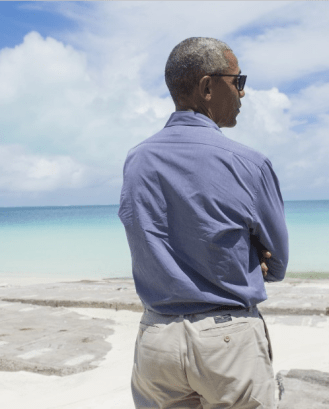
President Obama at Midway Atoll. Image © CNN

Two definitions are needed here at the outset: VLMPAs are “very large marine protection areas” and “paper parks” is a phrase used by conservationists and researchers to convey the idea of parks designated by governments only on paper – that is, they don’t get appropriate funding or management to create actual conservation within park limits. Most paper parks are found in developing nations where politicians may have good intentions in setting aside land to protect, but then don’t have enough resources to enforce the rules adequately, or in worse-case scenarios turn a blind eye to extraction if it favors them. Last week I discussed a possible race for bigger parks, and both examples happened to be marine in nature. Two researchers have commented in the academic journal Marine Policy to warn against creating ever-larger marine parks in remote areas that might be hard to monitor, unless there’s commitment for real enforcement. John Vidal reports:

“It is not enough to simply cover the remotest parts of our oceans in notional ‘protection’ – we need to focus on seas closer to shore, where most of the fishing and drilling actually happens,” said Peter Jones, a marine researcher at University College London.

Co-author Elizabeth de Santo, an assistant professor at Franklin and Marshall College in Pennsylvania, added that the push for quantity over quality threatens to undermine sustainability.

Continue reading →

Some Ants Fight Fungus with Fungus

Leaf-cutter ants carrying leafy loot back to their underground colony in Carara National Park, Costa Rica

I’ve covered some ants in the past, discussing their fungal friends that provide them food, as well as their foes that turn them into zombies. A recent article by a team of researchers that included members of the Smithsonian Tropical Research Institute has found that most species of leaf-cutter ants have a practice that helps defend their young against parasitic fungi: wrapping them in the same fungi that they use to digest the leaves they bring underground!

Sarah Puschmann reports:

In the dark recesses of an underground fungus garden, a Panamanian leaf-cutting ant plucks a tuft of mycelia, the wispy part of the basidiomycete fungus these ants grow and eat, and carries it to a nearby ant pupa. The ant licks the pupa’s body before patting the fungus into place, continuing until it appears, when viewed under a powerful microscope, as though the pupa is webbed in short strands of spaghetti.

Continue reading →

Anthropocene Closer to Becoming Officially Declared

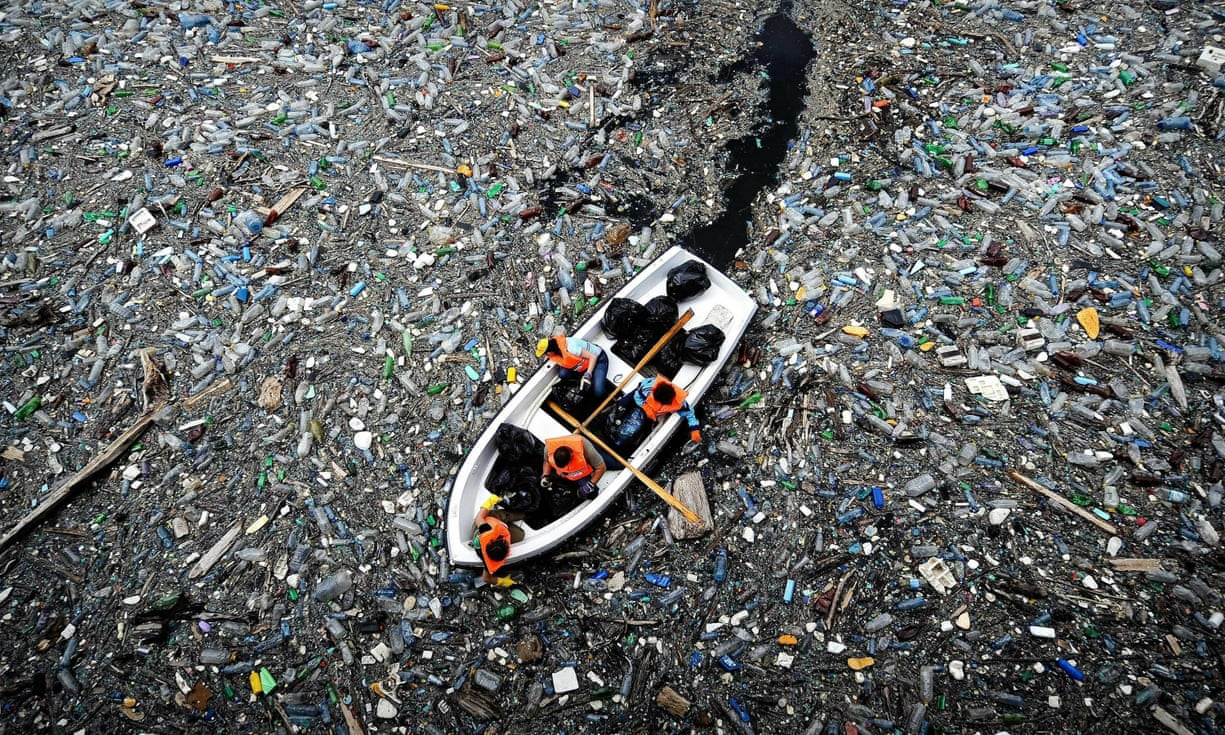
One candidate to be considered as evidence of the Anthropocene is plastic pollution. Photograph: Dimitar Dilkoff/AFP/Getty Images

We’ve covered the science and evidence behind the idea of our new geological epoch – one influenced by human activity – several times over the years, quoting various sources like The New Yorker, the New York Times, and The Economist.  Now, the Working Group on the Anthropocene has presented their official recommendation to the International Geological Congress that the Anthropocene be declared a new epoch starting around 1950, based on world-wide evidence such as radioactive elements from nuclear bomb explosions, plastic pollution, and even domesticated chicken bones. Damian Carrington reports:

The current epoch, the Holocene, is the 12,000 years of stable climate since the last ice age during which all human civilisation developed. But the striking acceleration since the mid-20th century of carbon dioxide emissions and sea level rise, the global mass extinction of species, and the transformation of land by deforestation and development mark the end of that slice of geological time, the experts argue. The Earth is so profoundly changed that the Holocene must give way to the Anthropocene.

Continue reading →

Seaweed Farming to Start in Costa Rica

Red (despite the color) seaweed in spaghetti style. Photo © Ricardo Radulovich, UCR professor

A little less than a year ago, I read a very interesting article in The New Yorker about growing seaweed in Long Island Sound, off the shore of Connecticut, that held inspiring information on the environmental effects of farming the marine macroalgae: it absorbs excess nitrogen, phosphorus, and carbon dioxide from the ocean, all of which otherwise negatively affect the ecosystem’s health. Seaweed also can be a solid source of protein, vitamin B12, Omega 3 and 6 fatty acids, and fiber. So growing it is good for the oceans as well as our bodies.

Today, I was reminded about Dana Goodyear’s piece from last November as I read a headline on the University of Costa Rica’s webpage announcing that researchers from their School of Agricultural Engineering and Biosystems, after years of trial studies, will be promoting the growth of seaweed farming off of both coasts of Costa Rica, where they hope it will become a significant food source for the country. Continue reading →

Merdacotta from Castelbosco

Merdacotta (baked processed cow dung mixed with clay and hay) products. Credit Alex Majoli

I’ve shared some thoughts on dung in the past, and also experienced first-hand the use of methane collected as an alternative energy source at a coffee farm in Nicaragua. There, the gas was used for cooking fuel, but in the case of Castelbosco farm in Piacenza, Italy, dairy farmers who make Grana Padano cheese also generate electricity from their dung’s methane, and run a museum that showcases poop in part of a medieval castle. They also make the beautiful pots, tableware, and tiles shown in the photo above. Christine Smallwood writes for the New York Times Style Magazine:

THE DAIRY FARMER Gianantonio Locatelli climbed up the steel ladder and peered over the brim of a large corrugated vat, about the size of a very deep above-ground swimming pool. “It’s full!” he exclaimed, with warbling joy. “It’s beautiful!”

The vat was full of liquid cow dung. I handed my phone to Locatelli’s friend, the architect Luca Cipelletti, and climbed the ladder to the top, disembarking on a viewing dock. Beneath my feet the manure bubbled and gurgled, forming foamy peaks and crests. It was a topographical map, a primordial stew. A rich and beautiful shade of brown.

Continue reading →

Price of Solar Continues to Decline

Precisely two months ago we shared a great function by Google for investigating the potential for installing solar power in your neighborhood (mostly if you’re in the US). Last week, one of our most successful Instagram posts was of three shades of blue at Villa del Faro (see above), where photovoltaics are key. Panels are becoming less and less expensive, so hopefully the alternative energy will keep spreading!  Continue reading →

Russkaya Arktika National Park Expanded

Big sky can be seen above Tegetthoff Island.
Photograph by Cory Richards, National Geographic Creative

We have lots of land conservation news going on right now (just scroll down), which can only be a good thing, and is perfect timing given the US National Park Service centennial. Jocelyn will be posting a close-up feature of a park later today, but first I invite you to imagine a new arms race between Russia and the United States – not of weapons, but rather in the sphere of conservation through protected national park expansion. President Obama just quadrupled the area of marine national monument Papahānaumokuākea, and now Prime Minister Dmitry Medvedev of Russia expanded the island region of Russian Arctic National Park by over eighty percent. In this case, I say, the more friendly competition the better! Brian Howard reports on the Russian expansion:

Made up of more than 190 islands, Franz Josef Land is a mostly uninhabited area that is encased in sea ice for much of the year. Yet the rocky, glaciated islands are home to stunning biodiversity. The newly expanded park will protect habitat for such species as the Atlantic walrus, bowhead whale, polar bear, narwhal, and white gull.

Continue reading →

Podcast: The Magic of Salt

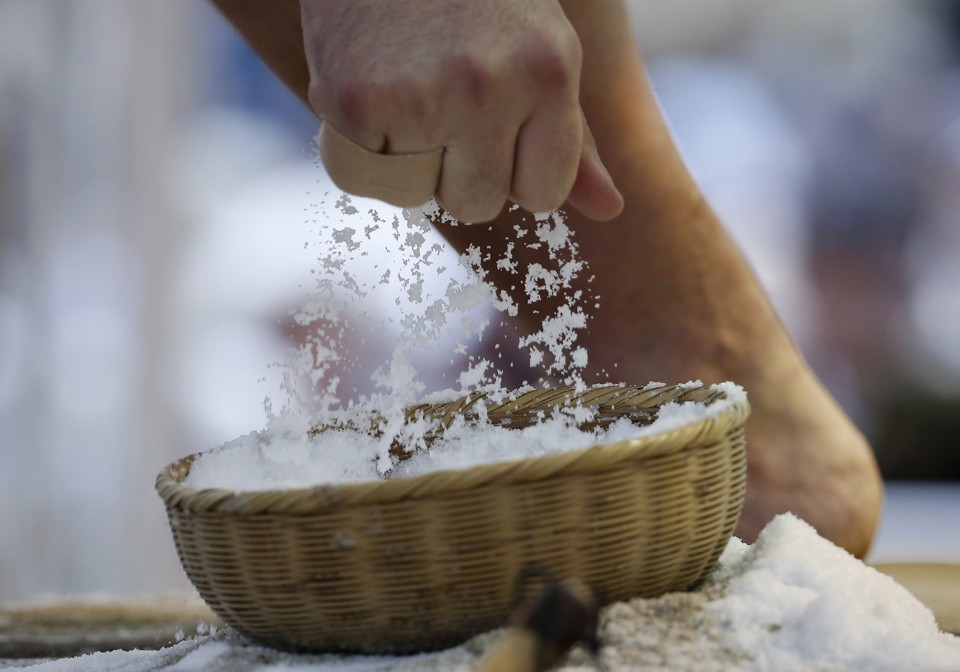
Yuya Shino / Reuters via The Atlantic

Almost exactly five years ago, I quoted Mark Kurlansky’s book focused on the history of an Atlantic fish species, Cod. I knew he’d written another book on the history of salt, but haven’t read it yet. With a podcast episode from Gastropod that was featured in The Atlantic recently, I got a nice summary of the subject and learned even more about the current issues revolving around sodium.

Salt is a magical substance. It reduces bitterness, enhances sweetness, boosts flavor, and preserves perishable foods. Without it, we would die: The human body can’t make sodium, but our nerves and muscles don’t work without it. It was considered rare until quite recently, so it’s hardly surprising that, throughout history, salt has been the engine behind empires and revolutions. Today, there’s a new battle in the salt wars, between those who think that we eat too much of it and it’s killing us—and those who think most of us are just fine. Join us for a serving of salt, seasoned with science, history, and a little politics.

Continue reading →

Elephant Footprint Land

We know how much an Asian elephant eats, but until today we didn’t know the biodiversity footprint of African elephants – that is, the literal biodiversity in the footprints left by these massive animals as they walk around, hopefully avoiding beehives. John Platt reports for Scientific American on the ecosystem engineers’ effects from walking:

When you weigh upwards of 6,000 kilograms, you tend to leave a trace of yourself wherever you walk. That’s definitely the case with African elephants (Loxodonta africana), which, according to new research, is actually a boon for dozens of other, much tinier, species.

As discussed in a paper published this week in the African Journal of Ecology, elephant feet play an important ecological role in Uganda, and probably in other countries. As elephants walk through the forest, they leave deep footprints behind them. These footprints then fill up with water, creating little foot-shaped microhabitats for at least 61 different microinvertebrate species from nine different orders.

Continue reading →

America’s Only Full-time Tea Taster

The “Green Giant” mechanical tea harvester, one of only a few in the world, does the manual work of 500 people. Wayne’s View Photography/Courtesy of Charleston Tea Plantation

versus

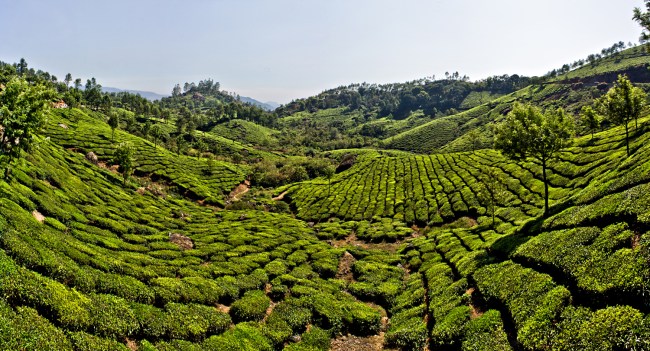
A Munnar tea estate in Kerala, India, where tea leaves are picked by hand. Photo by Milo Inman.

The two photos and their implications offer a pretty big contrast, but what they have in common is Camellia sinensis, the tea plant.  Continue reading →

Another Night Excursion at Chan Chich

1

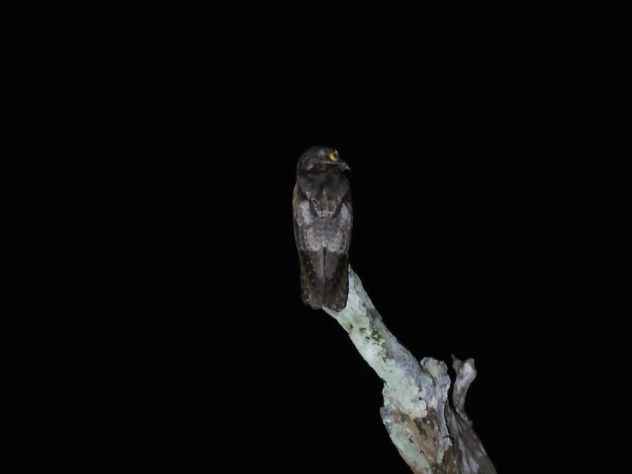
A Northern Potoo on a tall exposed limb seen during the outing

A few nights ago we went out on another night drive, to look for nocturnal animals. Seeing wildlife in the dark is always a challenge, and one has to be prepared to come back relatively empty-handed, especially in comparison to a lengthy jaguar sighting. This second time around, we saw fewer birds and just one mammal apart from deer: a young gray fox, but it was still a very pleasant ride through the forest at night, feeling the cool breeze and looking up to see the stars.

Continue reading →

Rhode Island’s Offshore Wind Turbines Completed

One of five turbines that make up the Block Island Wind Farm, the first offshore wind farm in the United States, off the Rhode Island coast. Credit Kayana Szymczak for The New York Times

Less than a month ago we shared the story in WIRED about the Block Island Deepwater Wind farm, and now, construction is finished! That may seem like trivial news to Europeans with coastline who have been enjoying offshore wind power for years now, but given that this is the first project of its kind in the US, it’s an exciting sign of progress to come in renewables for a nation with one of the largest carbon footprints. Justin Gillis reports for the New York Times:

BLOCK ISLAND, R.I. — The towering machines stand a few miles from shore, in a precise line across the seafloor, as rigid in the ocean breeze as sailors reporting for duty.

The blades are locked in place for now, but sometime in October, they will be turned loose to capture the power of the wind. And then, after weeks of testing and fine-tuning, America’s first offshore wind farm will begin pumping power into the New England electric grid.

Continue reading →

Fantastic Fantasy Maps Generated By Code

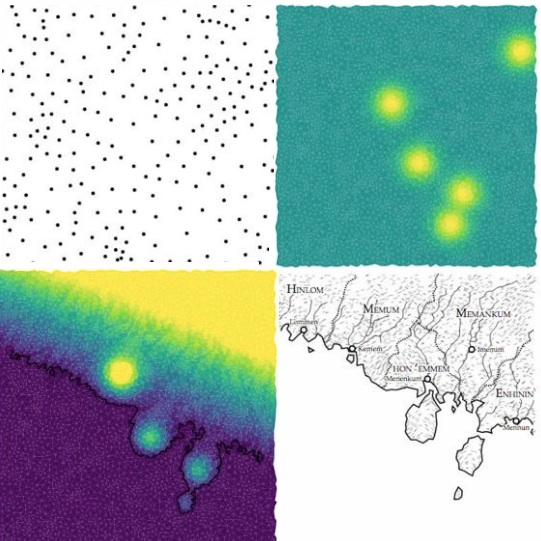
Different steps in the creation of a code-generated map that mimics real-world coastal landscape formation by erosion. Images by Martin O’Leary

There is no shortage of posts on maps here, but only one has been focused on the maps published in fantasy or fiction novels to set the scene. Two others have been linked to conservation, with one formatted in an amusing way. Then there’s my series on Icelandic cartography, starting in 1585 and continuing through 1849, then 1875, and finally 1906. But this is the first I hear about realistic fantasy maps created every hour by a bot – or computer program – coded by glaciologist Martin O’Leary and then tweeted on Twitter. And you can even go through the steps yourself and create a map of your making on his website! Betsy Manson writes for NatGeo:

As you travel northeast along the shore of southern Nimrathutkam, the first town you’ll encounter is Ak Tuh, followed by Nunrat and Nrik Mah before you reach the coastal city of Tuhuk, the largest urban area in the region of Mum Huttak.

If these sound like places out of a fantasy novel you read as a teenager, you’re not far off. Nimrathutkan is the result of an automated map generator that was inspired by those novels. The map bot, created by glaciologist Martin O’Leary of Swansea University in Wales, combines imaginary place names with fake terrain to produce fantasy worlds, tweeting a new one every hour from the Twitter account @unchartedatlas.

Continue reading →

Chan Chich Spider Monkeys

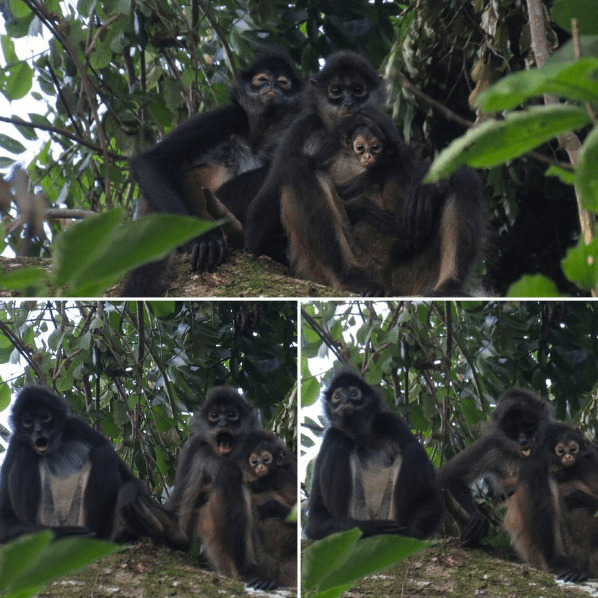
Pretty much any time you walk out in the woods at Chan Chich Lodge, at some point during your hike you should be able to hear the rocking branches that are a sign of either spider monkeys or howler monkeys moving or eating in the treetops. And if you’re lucky, the swinging simians might stop and watch you with an uncannily familiar curiosity (or boredom), interrupting their normal activity for a minute or two before continuing on their way.

During the period in which we observed the family of three in the video above, the father yawned at least nine times, while the mother did so at least five times. Continue reading →

Community Food Systems Minor at Cornell

Compost demonstration in the Dedza region, Malawi. Photo by Catherine Hickey via cornell.edu

Classes are starting at Cornell University around now, and there’s a new minor in town: Community Food Systems, a multidisciplinary study housed within the College of Agriculture and Life Sciences’ Department of Developmental Sociology. With elective courses from three categories (ethical and epistemic perspectives; ecological perspectives; and agricultural perspectives) in wide-ranging departments like philosophy, natural resources, economics, and anthropology, the minor also includes a required practicum with a community-based organization that works on “just, equitable and environmentally sound” food systems. Krisy Gashler writes for the Cornell Chronicle:

Scott Peters, professor of Development Sociology, said the minor has been a years-long process of discussion among faculty, staff and community partners, and was developed through the Food Dignity project, a 5-year, $5 million grant from the Agriculture and Food Research Initiativeand support from a Cornell Engaged Curriculum development grant.

Continue reading →

Slacklining in Rio

Image of Giovanna Petrucci via youtube.com

I wrote about slacklining last year, as James did the year before that, but we were nowhere near the class of skill practiced by professional slackers like those in Rio de Janeiro, where lots of young people go to the beaches and enjoy the relatively new sport in a much more acrobatic fashion than the simple balancing I’ve been doing in back yards and college campuses. Anna Jean Kaiser reports on the world champion of slacklining, an eighteen-year-old girl who practices in her hometown at Ipanema Beach:

RIO DE JANEIRO — Bouncing in the air above the sand of Ipanema Beach, not an Olympic venue in sight, is one of the most remarkable athletes in the world who has nothing to do with the Rio Games. Her name is Giovanna Petrucci, and her acrobatics rival those of the gymnasts and divers competing across this city.

Continue reading →