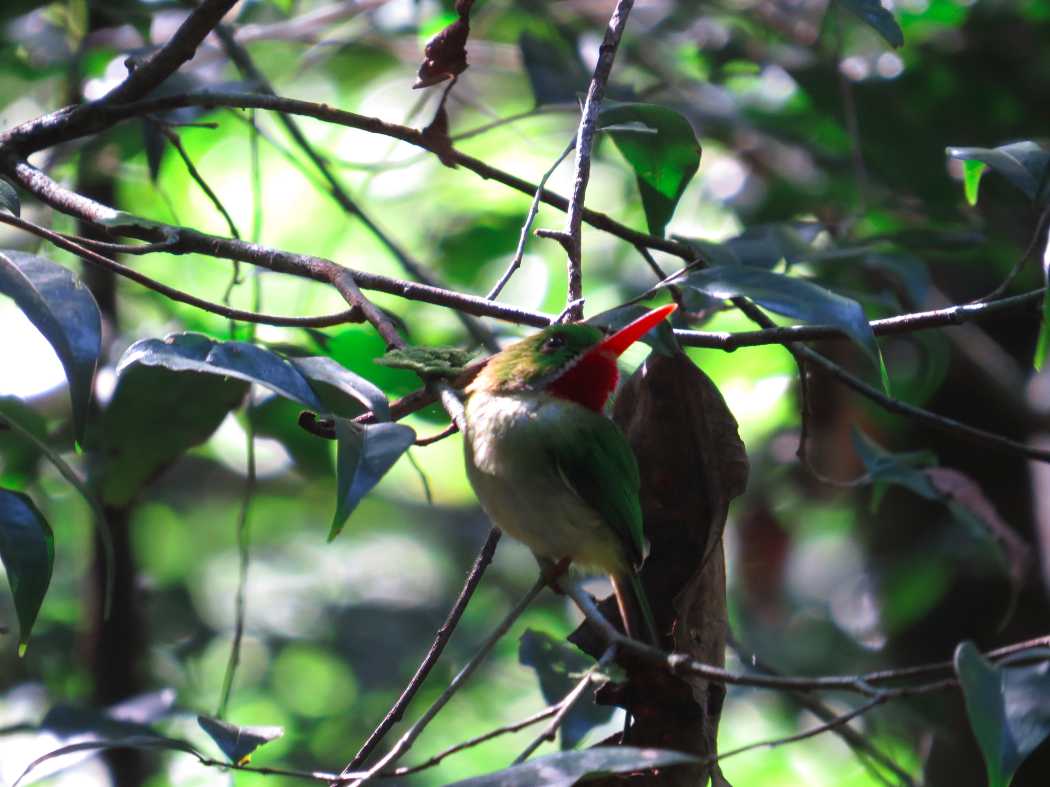
Cockpit Country, Jamaica
Cockpit Country, Jamaica

Expedition Group – From L to R: Seth, Justin, Bobo, no name donkey, John. Photo credit: Dango, a friendly local
We’re back from a three day and two night excursion into Cockpit Country along the Troy-Windsor trail. We went out with Bobo and his donkey with no name, and made it what we think added up to about twelve miles down the old, overgrown trail. Several times we had to chop through fallen trees that the donkey couldn’t go around or over, and this took up quite a bit of our time.

Photo of rotten tree we cleared by John
Eventually we hit a patch that would have taken a full day to clear so we left the donkey behind with the idea of setting out for a few hours and then coming back. Continue reading
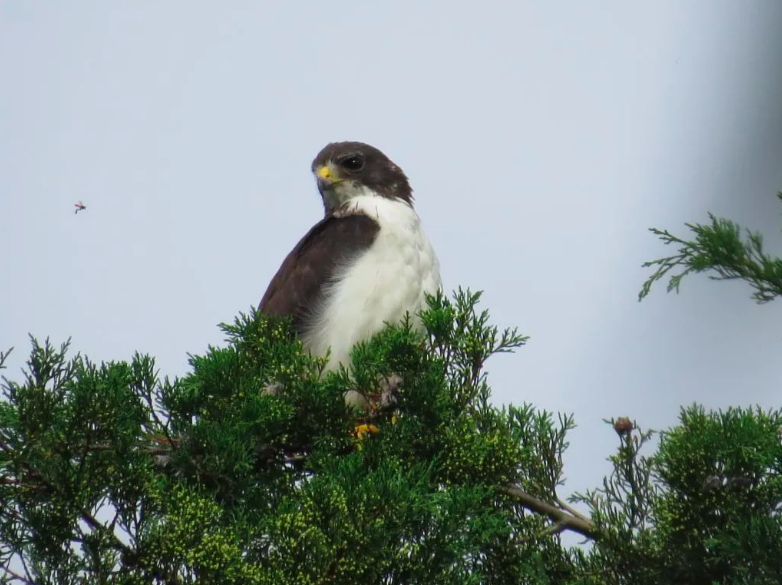
John, Justin and I have been at the Windsor Research Center for a day and getting ready for our first five or six day trip through Cockpit Country. Every single Jamaican we’ve met so far has been super friendly and helpful. We won’t be able to update as much as we’d like but hopefully every week we can send out one quick post. If you don’t hear from us though, it’s likely just because there’s some wind hitting the leaves that are reflecting the signal that the antenna here picks up and plugs into the desktop they use at Windsor. Continue reading
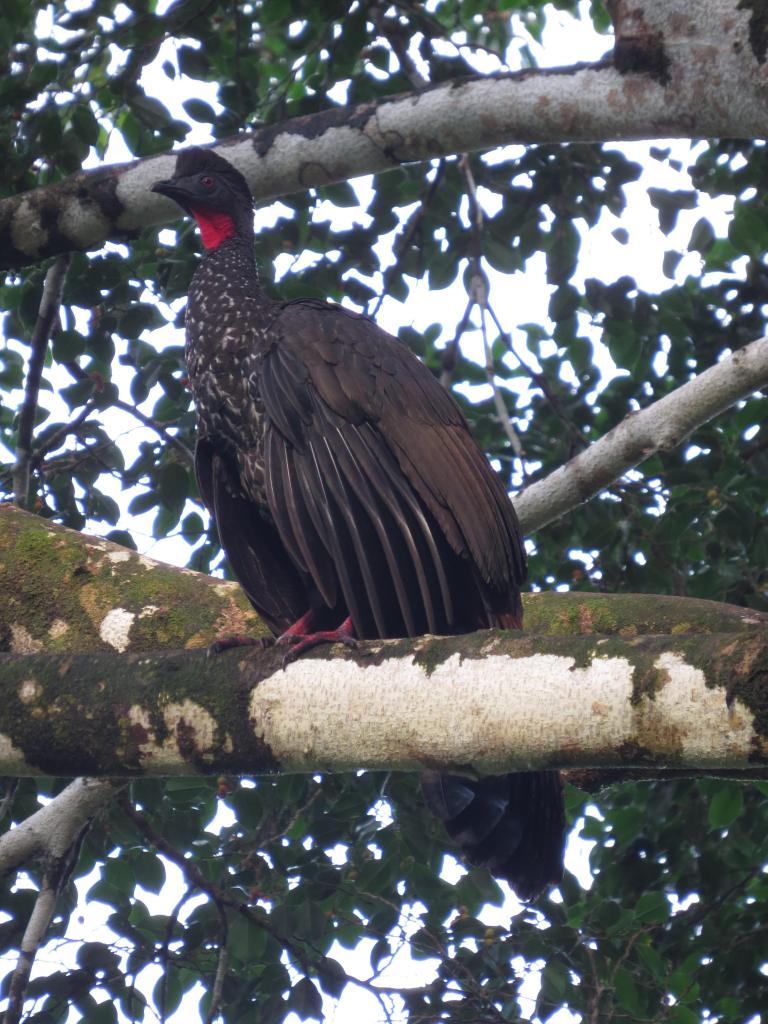
Osa Peninsula, Costa Rica

Six checked bags, three carry-ons, and two personal items. Three tickets for travel through three airports over a course of eight hours (including layover). One rental car for forty-eight hours, and thirty nights in Jamaica, around twenty-five of which should be in the bush. We’re hoping there’ll be enough internet access at the Windsor Research Centre to have some posts published throughout the next month, but it’s possible we’ll only have time for some very detail-packed posts. Regardless, we should be back in time for Valentine’s Day, February 14th!
Jamaica has thirty endemic bird species, which is more than any other West Indies island. Justin, John and I have a good chance of seeing a good handful of those, especially since Cockpit Country and the Blue Mountains are such well-forested and protected areas. Although none of us are the type of birder that pursue “life lists” — a checklist of the thousands of bird species in the world that one has seen — we all use eBird and are definitely interested in seeing and identifying wildlife of any sort.
And if that type of animal happens to be found only in the area that we’re passing through, then that just makes us appreciate the relative rarity a little more. Endemism in a bird species does seem to assign that bird a bit of a higher status for life-listers, for the obvious reason that you have to be able to go to the certain region to find it — you can’t necessarily spot it merely by visiting a different continent, but rather you have to go to the country, or island, or mountain range.

Cockpit Country, the first of the two regions we’ll be traveling through during our pair of expeditions, is an area of roughly 500mi² in northwestern Jamaica. The country is divided into parishes, which are like the counties or provinces of other countries; Cockpit Country is in the southern section of Trelawny Parish, which at one point had the most sugar plantations on the island. The sugar factories were closer to the coastal ports, but Cockpit Country, full of forest and strange limestone terrain, was (and still largely is) uninhabited and difficult to traverse.
 Using Cornell’s Mann Library plotter printers and the Digital Printing Center’s laminating capabilities, John, Justin and I were able to make some versions of northwestern Jamaica maps this week. Cropped to show just Cockpit Country and its environs, the maps are big and waterproof and will be perfect for field use if our Garmin Oregon 650 handheld GPS unit fails for whatever reason. This area of Jamaica is full of interesting historical and vernacular place-names like Me No Sen You No Come, Look Behind, Cutthroat, and other regions we’re interested in getting a look at, at least from afar.
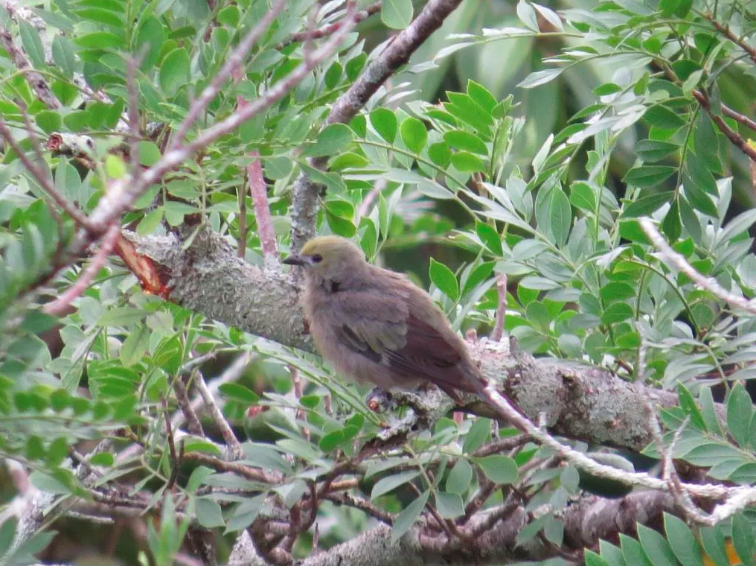
Tacacori, Costa Rica
 Since we’re doing most of our packing today, we figured it would be a good time to share some photos of our gear before everything is stuffed into a suitcase. Below is a random selection of items we’ll be taking down to Jamaica with us, from food to insect repellent.
Starting to our left, we have a small bottle of biodegradable all-purpose soap that can be used as bodywash, shampoo, and detergent for both clothes and dishes. I’ve already sampled it on some clothing and it seems to do a great job. Seeing as you can’t take a real shower in the field for five or six days at a time, it might be good to have some of this stuff handy.
Next are two types of water container that should grant us more mobility away from our base at the Windsor Research Centre. We’ve been told that there aren’t many natural sources of water in Cockpit Country, so we need to bring our own water with us. Our solution to this problem is hiring a mule to carry water and certain heavy equipment like tents for us, so we have two 26.5L bladders and two 8L carriers for water. Continue reading

Research trips, especially international ones, take a lot of money to organize and execute properly. There’s flights, gear, accommodations, food, and other logistical or supply costs that add up to a hefty sum, and field scientists can rarely afford to foot the bill themselves. That’s where large, well-funded organizations like the Smithsonian Institution come in. The coordination and leadership of a museum and research body like the Smithsonian, paired with additional support in the form of grants or gear from other groups, is what makes a successful research trip possible.
For our Jamaica expedition, we’re Continue reading

Yesterday I mentioned live mammal trapping, and our original post describing the Golden Swallow Jamaica Expedition referred to animal surveys as well. Today we tried setting up our tents and our traps, to make sure everything is in working order and also to see how fast we can build up and break down the gear. We’re each using our own personal tent — two Marmots and an Eureka — and we’ll have three Tomahawk Live Trap cages for the surveying.

From left: Justin Proctor, Seth Inman, and John Zeiger.
It’s now been several months since we last shared any news on the Smithsonian Institution’s expedition to search for the Golden Swallow (Tachycineta euchrysea) in Jamaica, where no sightings have been reported since 1989 — and even that report is a little questionable. While the Hispaniolan subspecies of the Golden Swallow is labeled as vulnerable, the Jamaican subspecies is labeled as critically endangered and possibly extinct, so this research trip is designed to lend some more finality to the issue. If our team of three positively identifies a Golden Swallow in Cockpit Country or the Blue Mountains between mid-January and late March, it will be the first confirmed sighting of the species in Jamaica in several decades, and new conservation efforts might be kick-started into action. If during our pair of one month trips to these two isolated areas of Jamaica we don’t see any signs of the Golden Swallow, the ornithological community can move a little closer to declaring the Jamaican subspecies of Tachycineta euchrysea extinct.

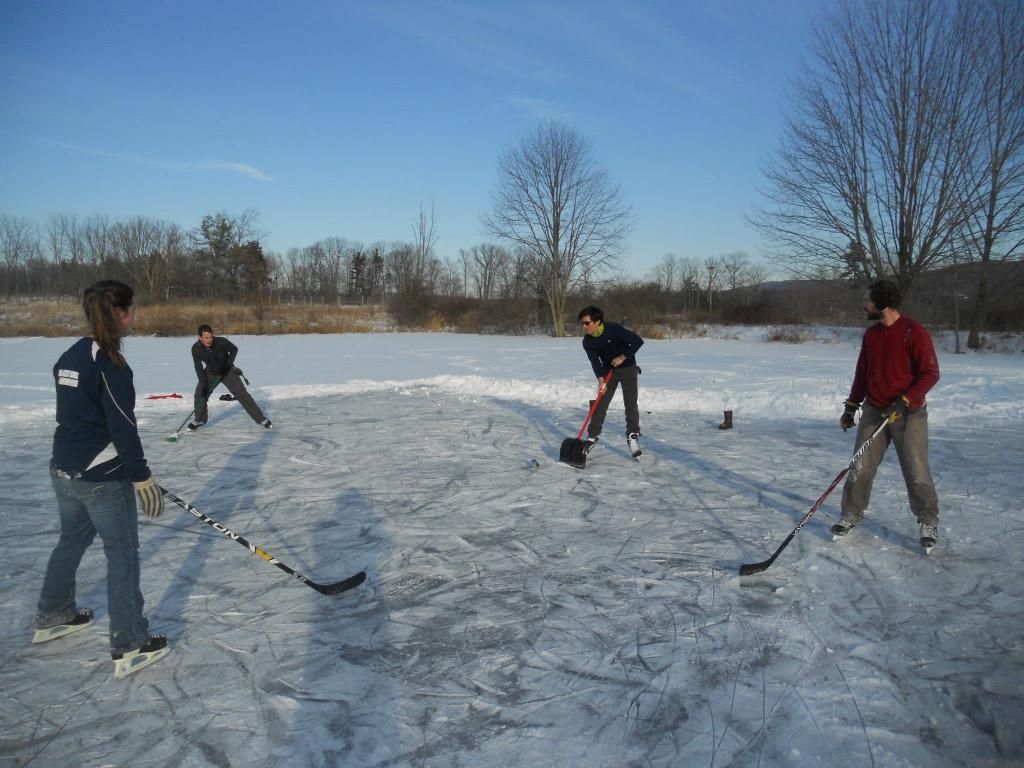
Photo of Cornell students playing outdoor hockey somewhere in NY, by Miles Luo
While a student at Cornell University, I played hockey out on a pond multiple times, and always had fun even on the occasions when several of us needed to use brooms or shovels as hockey sticks, and a crushed pineapple juice can as a puck. In recent years, it’s been a little tougher to find a good time to play since temperatures have fluctuated so wildly sometimes. Since my friends and I like to stay very conservative with our estimates on the ice’s thickness, an unusually warm day after a series of extremely cold — and typical Ithaca — ones can set us back a bit as we wait for a safer time to get on a pond.
So I at least partly understand the angst of all outdoor hockey-loving Canadians as described by Dave Levitan for Conservation Magazine:
Take anything from Canadians, anything at all—anything except hockey.
Few countries have such a relationship with an individual sport; cricket in India, soccer (football) in Brazil or various others, hockey in Canada. And while the Maple Leafs and the Canadiens aren’t going anywhere, the sport as it is played by millions of others in Canada is in serious danger thanks to climate change.

Eggs from tinamous being used for research at Hunter College. Tinamou eggs are up to 14 times as glossy as the average chicken egg. Credit Fred R. Conrad/The New York Times
Readers of the blog who have visited in recent months will know that I do a lot of work with chicken eggs for artistic purposes, and readers from years ago might remember that I worked with Celebrate Urban Birds at the Cornell Lab of Ornithology, and I often wrote about bird-related topics (and still do!). During one of CUBs’ photo competitions called Funky Nests, I posted on egg coloration, and looking back on that post I am very surprised to see that I didn’t mention the eggs of a family of birds called tinamous. I’m puzzled as to why I wouldn’t have written about tinamou eggs because they are curiously glossy. In addition to having quite pretty colors, the eggs are extremely shiny to the point of looking fake, or varnished by wood elves after they’re laid.
Perhaps I didn’t include tinamou eggs in my post because very little is understood about why their glossiness exists, as Rachel Nuwer reports for the New York Times this week in an article with a title that obviously caught my eye:
Easter Eggs Without a Kit
The Shy, Drab Tinamou Has a Stunning Palette That Still Holds More Mysteries Than Answers.
When it comes to shell color, most birds’ eggs conform to one of four motifs: colored with spots, colored without spots, white with spots or pure white.
Osa Peninsula, Costa Rica

Animals that move through air and water have evolved a variety of wing and fin forms, as well as sleek, streamlined shapes that harness the power of fluid dynamics for propulsion. © Ernie Cooper 2012, macrocritters.wordpress.com
Every day, just using any part of our bodies to move, see, talk, or eat — among countless other activities, we are enjoying the biomechanics that have evolved to perform the functions necessary to survive. An exhibit at the Field Museum in Chicago called, “The Machine Inside: Biomechanics” will be closing on January 4th, so this post is more of a celebration of the exhibit than an invitation to check it out. If you won’t be in Chicago before the 4th, they have a great website with photos and a good video.
Imagine if your jaws could crush over 8,000 pounds in one bite, your ears could act as air conditioners, and your legs could leap the length of a football field in a single bound. From the inside out, every living thing—including humans—is a machine built to survive, move, and discover. Beginning March 12, 2014, investigate the marvels of natural engineering in The Machine Inside: Biomechanics. Explore how plants and animals stay in one piece despite the crushing forces of gravity, the pressure of water and wind, and the attacks of predators. Using surprising tactics, creatures endure the planet’s extreme temperatures, find food against fierce competition, and – without metal, motors or electricity – circulate their own life-sustaining fluids.
Tacacori, Costa Rica
 Organikos