Tacacori, Costa Rica
Tacacori, Costa Rica
 September 27th is World Tourism Day! As the UNWTO Secretary-General Taleb Rifai said in his address this year,
Tourism is a people-based economic activity built on social interaction, and as such can only prosper if it engages the local population by contributing to social values such as participation, education and enhanced local governance. At the same time, there can be no real tourism development if such development damages in any way the values and the culture of host communities or if the socio-economic benefits generated by the tourism sector do not trickle down to the community level.
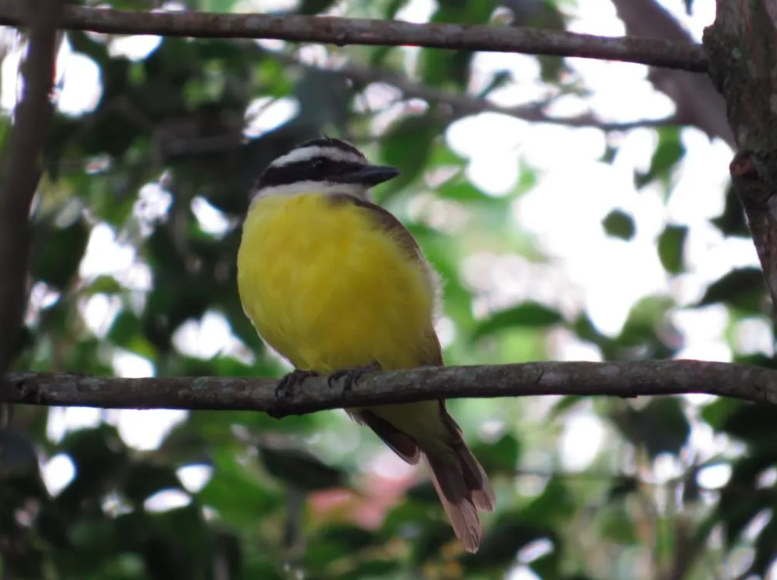
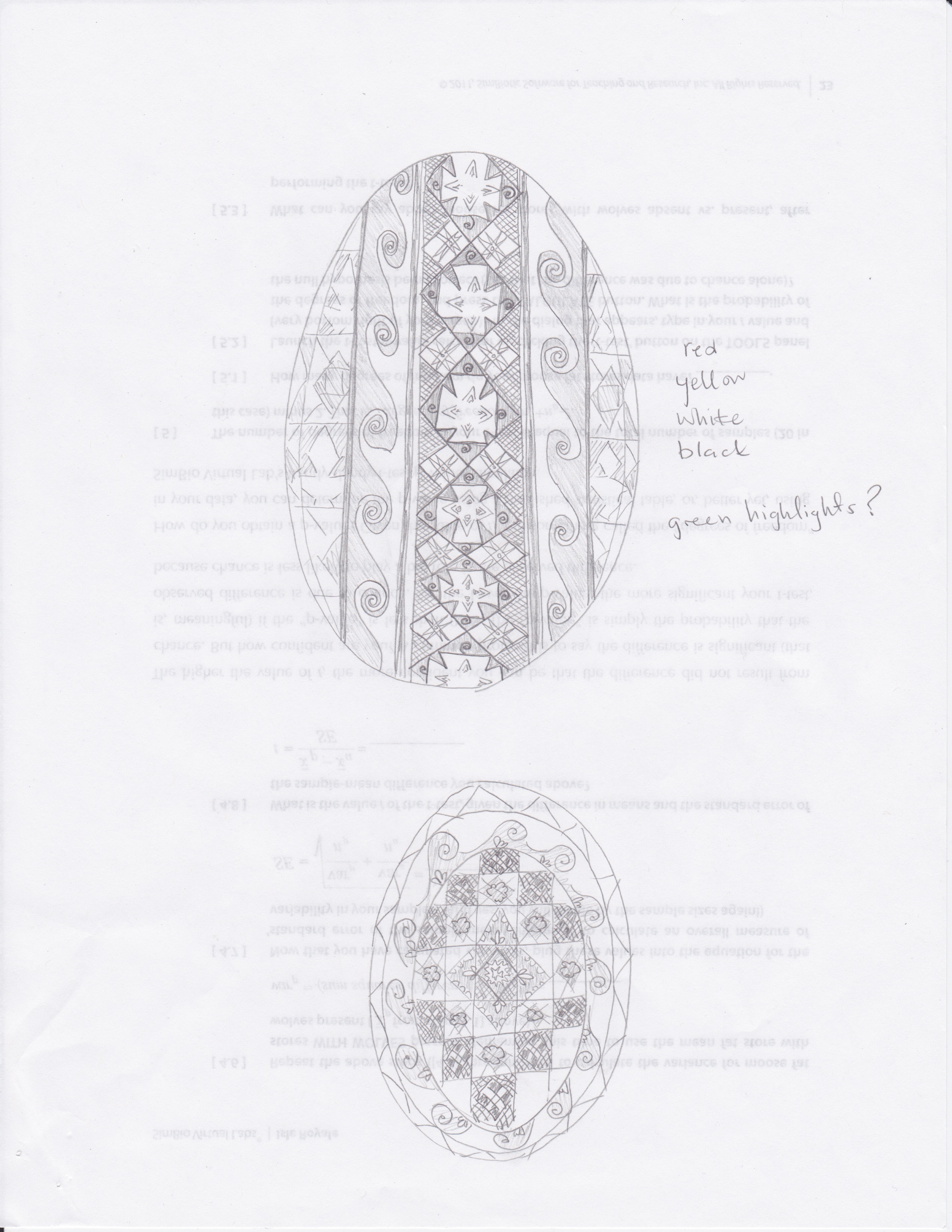
Egg blueprints for a previous project
Access Part One and Part Two if you haven’t checked them out yet!
As we reach the end of September, it may seem strange to be posting about a traditional art form that generally revolves around the festivities of Easter. Even though none of my egg creations have had religious foundations behind them, I’ve still always worked on them in the springtime around holy week because that’s the accepted time to be fashioning and gifting “Easter eggs.” Being at Xandari for the past several months, however, where the gift shop could always use another little shelf of locally-crafted artwork souvenirs, I’ve been thinking about making a round of trial eggs to put up for sale and see how it goes. After all, we could dedicate any profits to more artwork supplies for the Tacacorí school or another good local cause. Continue reading


 This Sunday, while thousands of people were marching in NYC and other major cities around the world, Costa Rica had its national clean-up day in communities, rivers, lakes, beaches, and oceans. Designed to collect recyclable material as well as trash, the program was organized in part by the Ocean Conservancy and Terra Nostra, and sponsored by relevant government agencies. Xandari invited community members to join in to work around the roads in Tacacorí and the neighboring town of Tambor, and including four hotel employees and myself we had forty-five people come out from 7am-11am to pick up and sort trash. Many of these individuals were young children and teenagers, which was an encouraging sight!

Part of the street before trash pick-up
On Saturday, a team of thirteen hotel employees had also gone out along the Tacacorí river, and they collected a total of twenty-two pounds of plastic, forty-four pounds of glass, ninety pounds of scrap metal (tins, car parts, etc.), two-hundred pounds worth of car tires, and four-hundred and sixty-two pounds of just trash (clothing and other non-recyclable waste). The next day, the group of forty-five combing the streets found a hundred and twenty-seven pounds of plastic, a hundred and nineteen pounds of glass, sixty-six pounds of paper and cardboard, and six-hundred and six pounds Continue reading
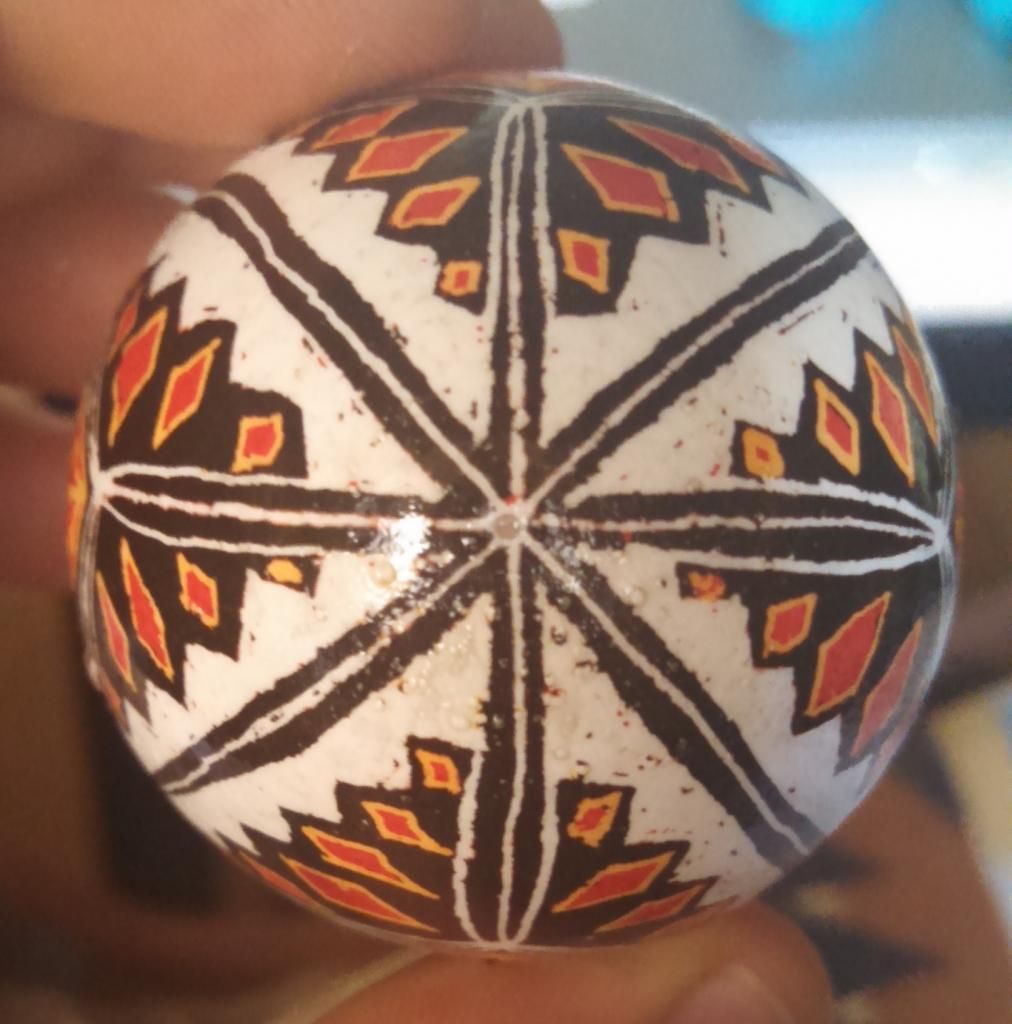 Several years ago, my aunt gave my mom and me a starter kit to make Ukrainian Easter eggs, knowing that the two of us enjoyed art and working on detail-oriented things. Included in the package was this book, which contains a great history of the tradition as it evolved in communities around the US through the work of Ukrainian immigrants. The book also, of course, explains how to make the eggs and includes many fantastic photos of eggs that the authors or their friends have created over the years, in countless patterns and color schemes. These exemplary eggs have served as perfect inspirational diving-boards for my mom and me as we create our own pysanky every year (when we have the time).
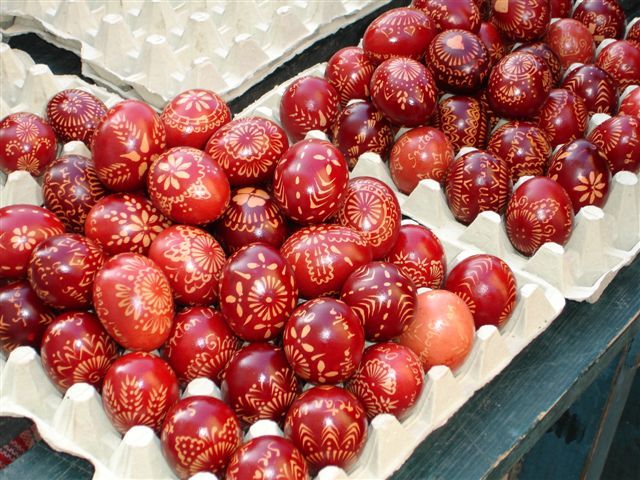
Croatian Easter eggs made for neighbors, friends, and family
The process always starts with creating the dyes. In Croatia, on the island of Koločep where my family lived for a year, we learned that villagers use a boiling water bath of red onion skins, walnuts, roots, and herbs. This creates a reddish dye that stains the egg a reddish color. The problem is that the boiling water also removes the wax that covered the egg before it was placed in the dye, so you only get two shades on the egg, but that’s Continue reading
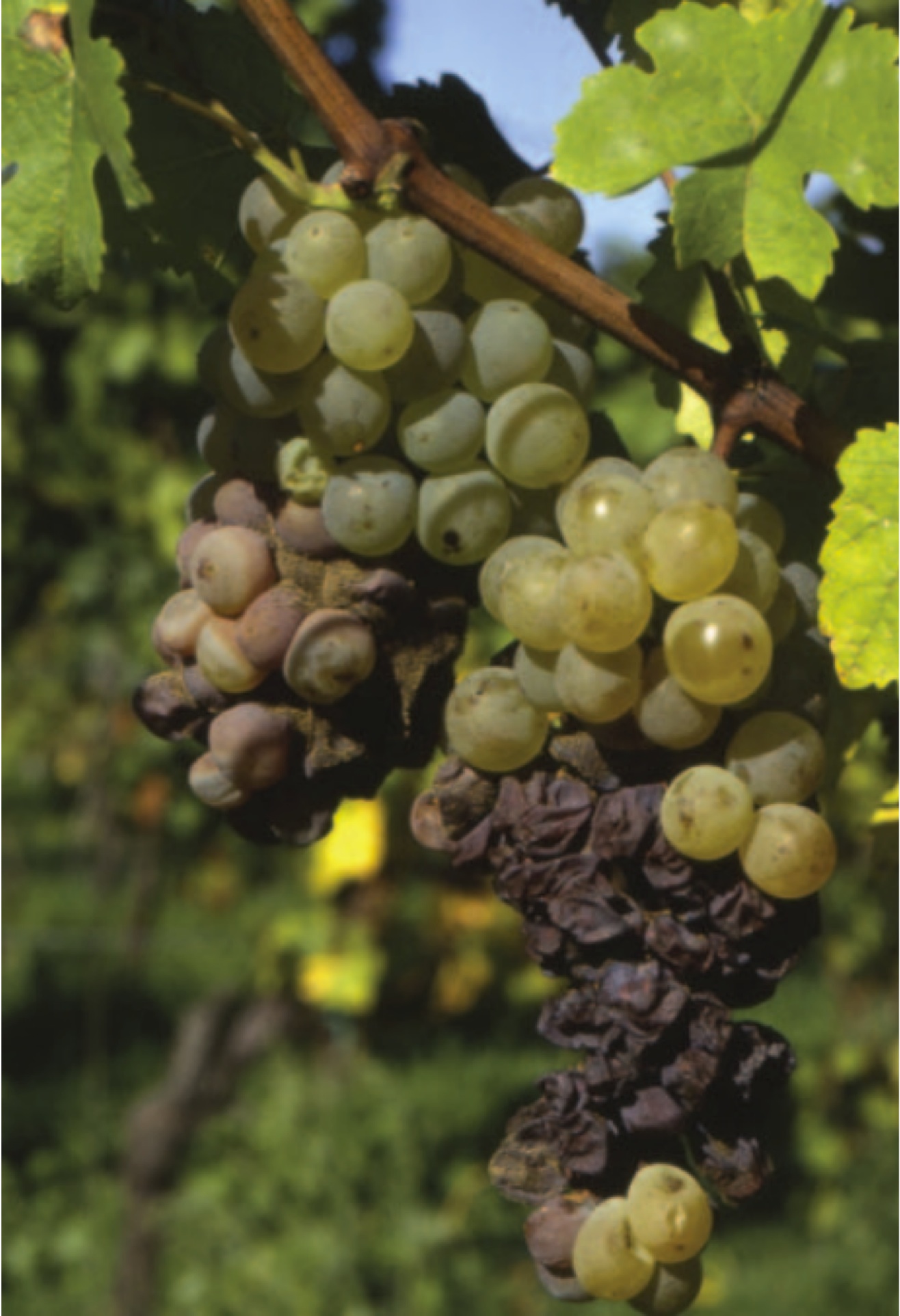
Jackson, Ron. Wine Science Principles and Applications Plate 9.1 – Cluster of grapes at different stages of rot.
The fungus Botrytis cinerea — a type of gray mold — is the kind that grows on the old berries in your fridge, but in the vineyards of Europe (and more recently some other wine-producing regions artificially infected, but more on that later) B. cinerea doesn’t always turn valuable fruit into a furry mush. Also known as noble rot, B. cinerea has the potential to positively change wine grapes, in the right conditions. Depending on a vineyard’s microclimate, infection can result in either gray rot, which essentially ruins the grapes, or noble rot, which leads to unique dessert wines such as the Tokaji Aszú of Hungary, the higher Prädikat wines of Germany, and the Sauternes of France (the most prized of which can fetch $750 a bottle!).
In a single vineyard there can be completely healthy grapes, grapes with gray rot, and grapes with noble rot, all in close proximity to each other. The required conditions for noble rot formation are incredibly narrow. Like with most fungi, humid conditions favor formation. However, alternating dry and rainy periods, particularly frequent morning fogs, are necessary for the formation of asexual conidia (spores). Therefore, noble rot seldom occurs in hot and dry areas, since sunny and windy conditions allow more water evaporation. Continue reading
On a recent trip to the Osa Peninsula for a couple of days, and one herpetologically-rich night, I found a number of the types of animals that make Costa Rica such a popular destination for wildlife-lovers. The Osa is home to about half the species that Costa Rica boasts, making it the most biodiverse spot in the country — or even the world. The density of fauna seen on any hike through the forest back up the statistics (2.5% of the earth’s biodiversity just on this little peninsula?!), and I was glad to be able to get some video of typical animal behavior during my time there. Continue reading
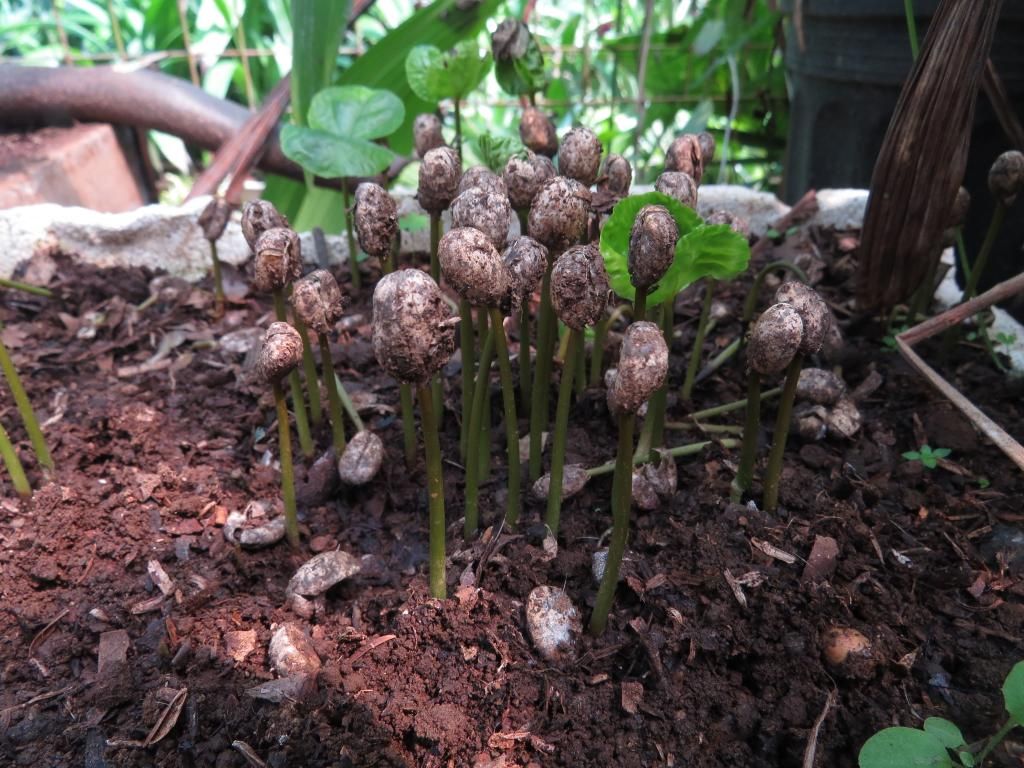 Back in the beginning of July, James and I helped José Luis plant some Bourbon coffee seeds so that they would eventually become seedlings that could be put in bags to grow into saplings. Now, after months of watering and patience, many of the seedlings are finally beginning to emerge. As more and more of them germinate and create their shoots, we’ll be putting them into the bags with soil to wait another year before planting them in the ground at Xandari.
Plenty of other plants have been productive over the last couple months: Continue reading
 I recently went on a night walk in the rainforest of Costa Rica’s Osa Peninsula, looking for frogs, snakes, and other nocturnal animals with a great wildlife guide who knew the area well. Although we didn’t see any mammals or the famous deadly Bothrops asper viper known as the “terciopelo” in Spanish (velvet) and “fer-de-lance” in French (spearhead). We did, however, see numerous frog species and at least two snake species, although we could only identify the six or seven Cat-eyed Snakes we saw.
 There were also some basilisk lizards getting bit by mosquitoes, a large spider similar to a tarantula, a dragonfly larva in the water, and plenty of frog eggs. At one point we turned off all our flashlights to try to find a glass frog (pictured below) and noticed some bioluminescent mushrooms, which were impossible to photograph in the dark and look pretty dull in the light. Although I’ve forgotten the names of the various frog species featured in the slideshow of the photos I was able to take below, I hope you enjoy Continue reading

“Turquoise Falls, Bruarfoss” © Jerome Berbigier
Continued from Part 2.
As it turned out, it was a British law student, William Lord Watts, who became the first man to truly answer Longman’s call and embark on some serious exploring. In the introduction to his book Across the Vatna Jökull; or, Scenes in Iceland; Being a Description of Hitherto Unknown Regions, Watts started by taking issue with the concerned British subject at home who saw the exploration of wilderness as a waste of “money, time, and labour,” or “utter folly,” explaining that everyone had a mania for something or other, and his own “may be to wander amongst unknown or unfrequented corners of the earth.” Calling for “a truce to critical stay-at-homes,” Watts advanced to the meat of his trip itself.
In his descriptions of his several expeditions, Watts usually employed a calm, scientific and lawyerly tone that make his bursts of romantic and athletic enthusiasm in certain scenes all the more exciting and believable. Nodding to his biggest audience, he also used some of the Continue reading
Continued from Part 1.
If Longman’s unorthodox address is interesting as a sign of Iceland’s attractiveness to the middle-class British authentic-seeking traveller, the responses to his suggestions are even more so. In a May 18 article The Critic wrote a review of the Longman’s address that effectively summed up the perceived position of Iceland in the global context of travel and exploration. The author suggested that any adventurous Briton who had already “used up Ireland and Scotland” and “[did] not care to ascend Mont Blanc for the dozenth time” might turn to Iceland for their future travels, as it had spectacular scenery equal to Switzerland and critics were growing tired of “oft-repeated tales” in countries they knew intimately through so many books. The contributor continued by explaining that:

Aerial view of Iceland © Sarah Martinet
We do not ask the good-natured traveller to kill gorillas in Africa after Mr. Du Chaillu’s fashion, or hunt bisons on the American prairies with Mr. Grantley Berkeley. Our request is much more reasonable. Iceland may be reached by the expenditure of a single five-pound note: and in that uncockneyfied land a solitary Englishman may pay all his daily travelling expenses, including those which will be entailed on him by a retinue of three horses and a guide, for twenty shillings.

Aerial view of Iceland © Sarah Martinet
It has been months since I’ve mentioned Iceland on the blog, partly because I was exhausted with the subject after completing my thesis in mid-April, but also because I’ve been occupied with less academic matters over the summer. Another reason for revisiting the topic is that over the summer I had the honor of learning that my thesis was added to the Kroch Library Rare and Manuscript Collections–hopefully somebody will find it useful eventually! Now that the volcanic dust has settled and the borrowed library books have been returned, I feel there are a couple facets of nineteenth-century British travel to Iceland left to explore here.
I’ve written about some of the qualities exhibited by British travelers to Iceland before, but Continue reading
This post was originally published on August 2nd, 2011.
While walking to Morgan’s Rock’s lobby yesterday morning, Pierre heard some rustling in the bushes on our right. We looked for the source and were stunned to see an anteater standing on its hind legs, spreading its arms and swaying about like a drunkard but in fact trying to dissuade us from attacking it by trying to appear larger (it was bigger than a very fat house cat, but not by much). I immediately pulled my video camera from my pocket and started filming, and although the anteater had ceased his humorous movements and started climbing a very thin sapling, the footage was incredibly fortunate and very entertaining.
Since the tree he decided to grasp was so young, it started to bend as he climbed higher, reminding me of cartoons where characters are catapulted out of the branches after a certain point. The anteater was less than a meter away and at times looked like a teddy bear, but as a wild animal—and one with claws in full display at that—we refrained from touching him and were satisfied with a video. Eventually, the formicary raider descended the sapling and chose a better escape tree (in a pose reminiscent of the boa’s in a previous post), and we left happy with the sighting of what I thought I’d only be able to see in the summer when foliage was less dense. Continue reading

The video above follows the process of acquiring, drying, and blending a mix of Indian spices to create the 51 spice mixes that head chef Ghanshyam Giri will be using for special chicken or fish dishes.
Back in January, I shared another spice video (which I didn’t Continue reading
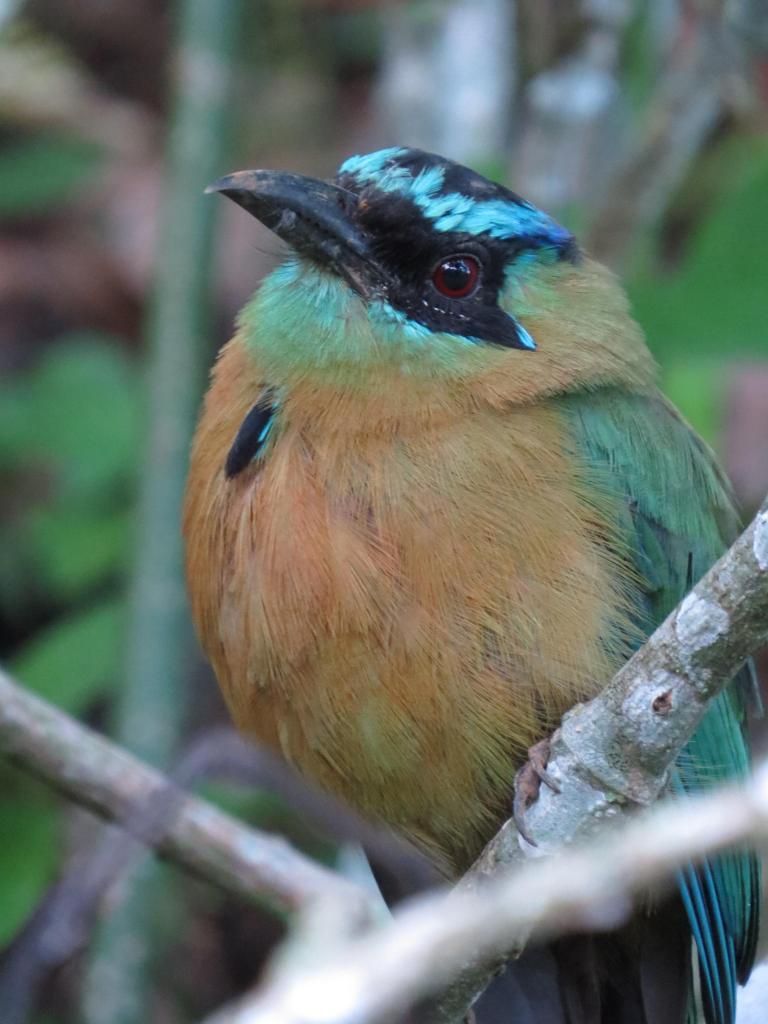
Tacacori, Costa Rica

A dragonfly on a path at Xandari
Whenever I have the opportunity to visit a national park in Costa Rica, I obviously take my camera with me so I can try to get some good photos or videos of all the wildlife I hope to see. Looking back on my files of images from the past couple months, I realized that I happened to have some half-decent videos that represented what I’d consider the four most important classes of Kingdom Animalia/Metazoa from the point of view of a terrestrial biophile: Aves, Reptilia, Mammalia, and Insecta. In other words, when I’m walking through the rainforest, the animals I keep an eye out for will likely fall into the category of bird, reptile, mammal, or insect. If I’m out at night, then maybe Amphibia will get thrown in there too!
In the video above, you can Continue reading