The phrase “flying fox” in our experience has been used to describe the huge bats that can be found around Cardamom County in Thekkady, feasting on fruit and insects. In the video above, however, we learned that even common ground-dwelling foxes can reach stunning heights — in their pursuit of rodents living underneath deep layers of snow!
Author: Seth Inman
The Cornell Lab Of Ornithology’s Student Innovators, Dreamers, and Leaders
After you watch the video above you might recognize some faces from the Cornell expedition to Borneo that we featured about a month ago, and be introduced to the faces of other friends that I made in ornithology class several years ago and have kept up with through soccer, squash, and biology classes we’ve taken together. Continue reading
The Guidebook and the Beaten Track (Part 1)
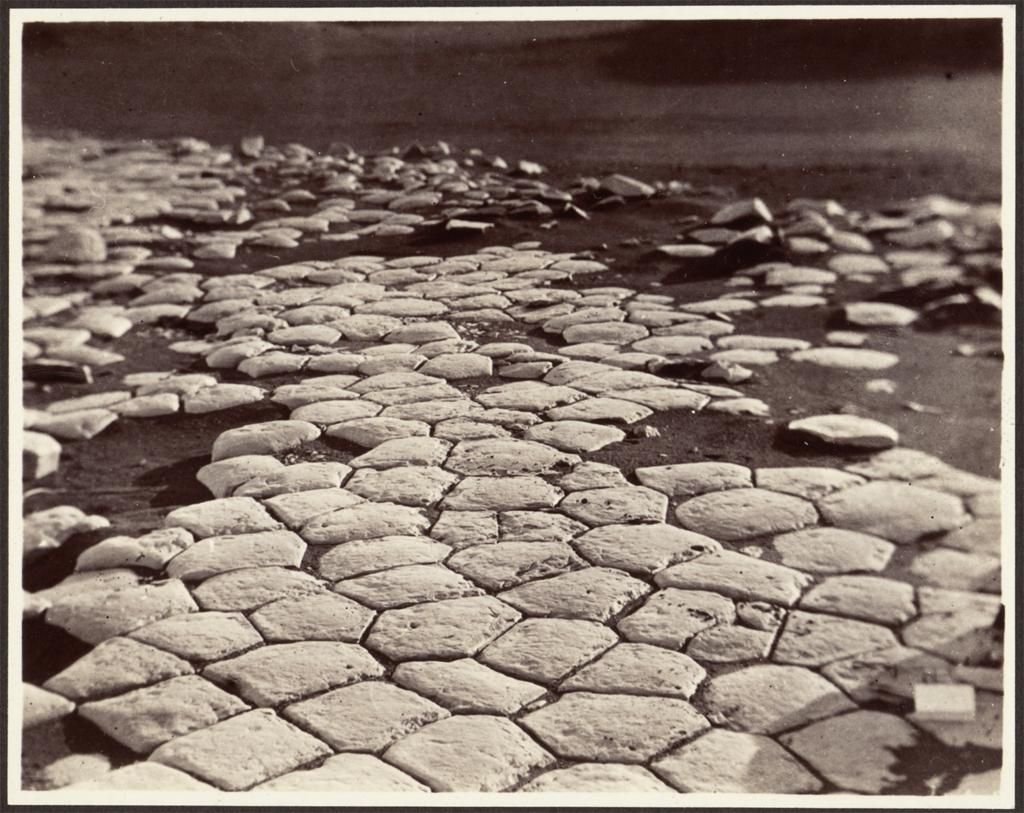
Basalt pavement, Kirkjubær (Síða). Collodion print by Frederick Howell ca. 1900, courtesy of the Fiske Icelandic Collection in the Department of Rare & Manuscript Collections, Cornell University Library.
It’s now been almost exactly a month since I finished my first draft of a thesis chapter, and shared the introduction to it here on Raxa Collective. My goal was to spend part of my academic break as a comfortable vacation without thinking of Iceland and instead focus on enjoying my time in India with family, and apart from the niggling worries that pop up when I’m trying to fall asleep every now and then, I’ve succeeded. But school starts up again in less than two weeks, so it’s about time to rev up the Iceland think-engine again, and a good way to do that is by sharing some more of the draft as it stands so far. What follows is a section of the “Cockneys in Iceland” chapter with the same title as this post, de-annotated, slightly altered, and divided into two parts for readability. Continue reading
The Story Behind Our New Banner’s Banners

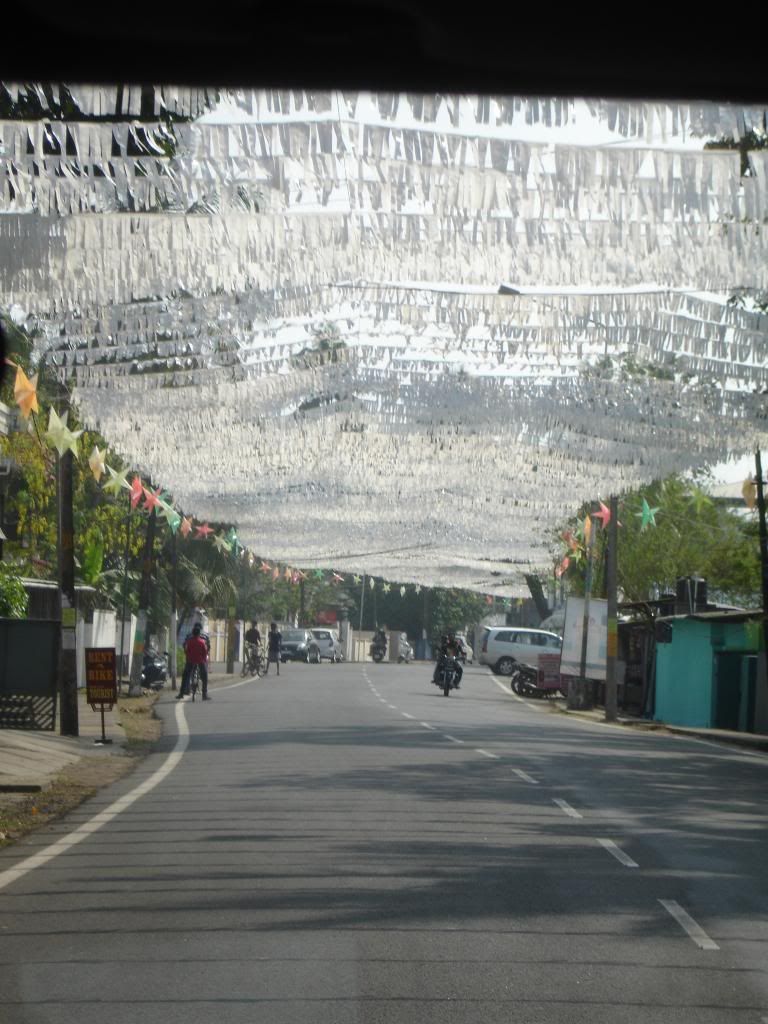 If you visit this blog several times a day, or happen to chance upon any of our pages when the randomized top banner is just right, you may have noticed that for the past 48 hours a new picture has been thrown into the mix of our banner images, which have been growing steadily — and stealthily, given that the last time we addressed them explicitly was in 2011 — over the past few years.
The number of banner images has since doubled, with more dragonflies, some great-looking tree bark, picturesque tea plantations, and other scenes that we think make a pleasant and interesting (and hopefully not too distracting) backdrop to our written content on any given page. But the banner in question is about sharing and celebration, so I’m sharing a little bit about the image this time around. Continue reading
Bird Sightings and Ecology in the PTR

A White-necked Stork carrying nest material to a large tree.
A few days ago we went for a two or three hour hike in the Periyar Tiger Reserve and saw a multitude of avian species that make Kerala a great place for both the amateur and ardent birder. I was also able to see very tangible examples of two related concepts that I’d learnt in my ecology and ornithology classes at Cornell: mixed-species foraging flocks and the ecological niche.
The American ecologist Robert MacArthur, in his seminal dissertation on five insectivorous species of warbler, noticed that Continue reading
Sleuthing for Birds
Next to my Celebrate Urban Birds student work-desk at the Lab of Ornithology, team members of the inquiry-based science program called BirdSleuth are always busy developing new curriculum plans in avian education for K-12 students and instructors to learn more about birds and the local environment through citizen science and discovery driven by curiosity.

Photo © Shailee Shah / Lab of Ornithology
Originally called “Classroom BirdWatch,” the program provides training, kits, and other resources to encourage investigation and data collection among youth. Although it started in 2004 under a National Science Foundation grant in the US, about five years ago Continue reading
Statler Hotel Partners with Clean the World
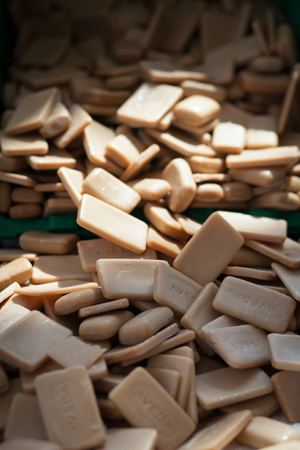
Jason Koski/University Photography
According to the Cornell Chronicle from a few weeks ago, Cornell University’s Statler Hotel has been a partner with the nonprofit Clean the World organization since March, and has collected over 2,500 bars of soap from the Statler’s rooms. This soap has been recycled and distributed to communities in need throughout over 55 countries.
Clean the World is a great group that we have written about before, since its goal is to take something that would otherwise be wasted and provide it to people at risk of poor health due to hygienic conditions that can be easily ameliorated by increased access to soap.
Why You Should Eat Naked — I Mean Nākd

Image © Natural Balance Foods
A few months ago I was introduced to the Nākd bars made by UK-based Natural Balance Foods, which are commonly described as being “nuts and fruits smushed together.” You can really tell this is the case from the ingredients list (see the Berry Delight above; the natural berry flavor is made up of extracts and spices). I sampled from of their wonderful range of flavors, and I think my favorite so far has been the Berry Delight, with Cocoa Orange as runner-up, but I’m also excited to try the Rhubarb & Custard some time. Continue reading
Cockneys in Iceland

The Cockney Tourist, or Where Shall We Go To? © Look and Learn / Peter Jackson Collection / The Bridgeman Art Library
Earlier last week, I completed a working draft of one of my thesis’ chapters. Its subject matter is a bit different from what I’ve been writing about in previous months, because I more closely address trends in travel and travel literature rather than the travellers’ interactions with the environment around them. Here’s an edited (and de-annotated, so comment for further reading) version of the introduction to this chapter:
After the Napoleonic Wars, as continental Europe reopened to British travel during the 1820s, there came to be an exaggerated perception that sightseers were swarming sites of the Grand Tour, previously inaccessible due to both military and socioeconomic barriers. Many aristocratic Britons considered this type of tourist, the mere excursionist, distinct from themselves, the sophisticated travellers more interested in natural history, authentic culture, and exploration. Iceland, with its near-mythical Continue reading
New CUBs Challenge: Fascinating Feathers
As of this week, the latest Celebrate Urban Birds challenge is up and running! Called Fascinating Feathers, this multi-media competition is designed to get you thinking about the most defining feature of birds — their plumage.
Whether you’re out shooting video of a Herring Gull at the beach getting disheveled by a buffeting wind, taking a photo of puffed-up chickadees at the bird-feeder from your porch, writing/recording a poem or story about the down that keeps you warm in the winter, or painting plumes floating in the ether, we want to see what you can say about feathers from the world around you!
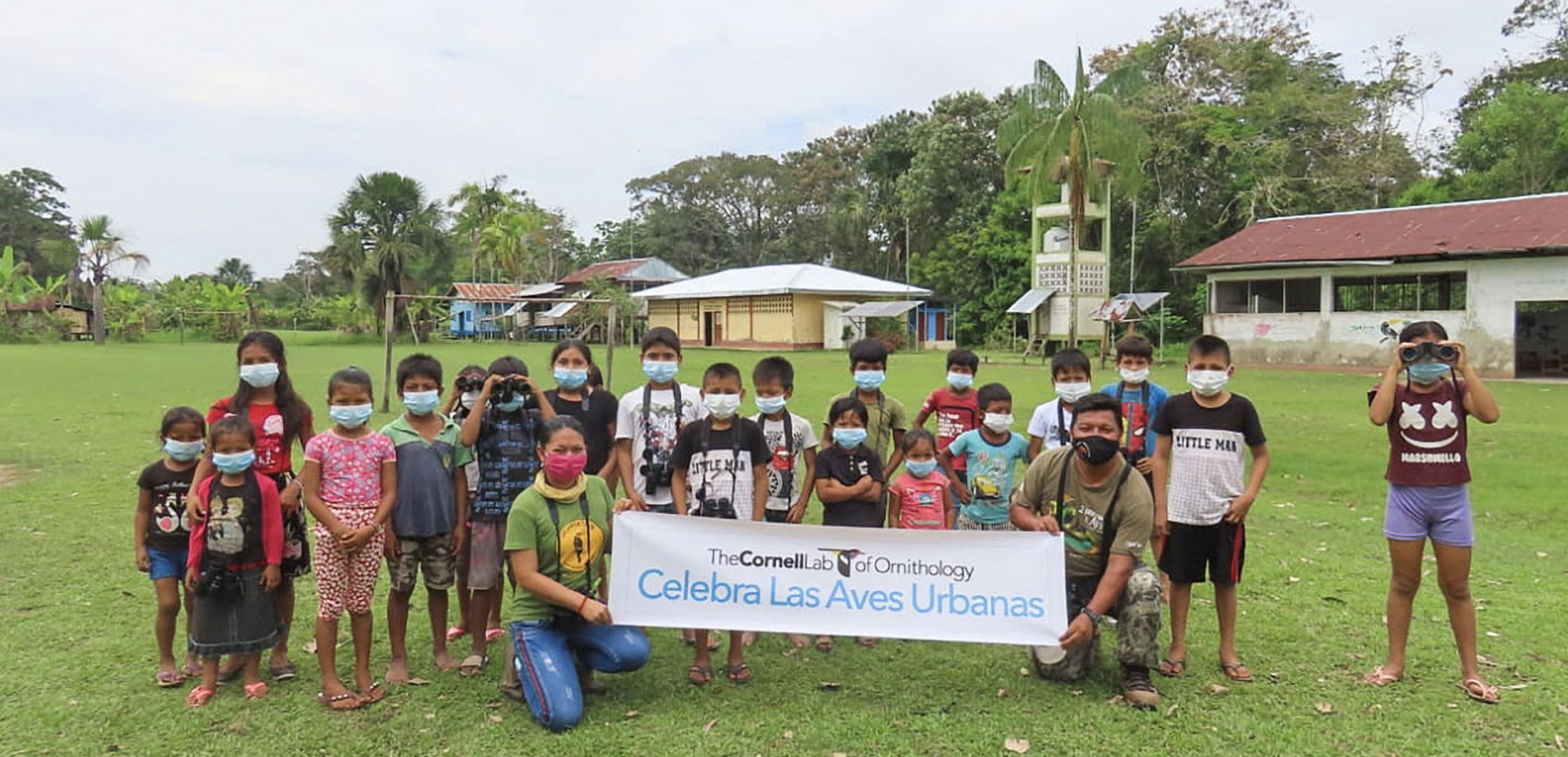
With categories for Best Camouflaged, Best Dressed, Most Bizarre, and Most Functional, you’ll have different ways to frame your work and share it with us and other participants; on January 15, 2014 we’ll close the contest and begin reviewing submissions to select award-winners. Prizes include Opticron binoculars, Pennington bird feeders, bird sound CDs, waterproof bird foldout guides, and more!
Check out the challenge homepage
or
Read the Lab of Ornithology’s press release on the challenge
A Thesis Hypothesis
Shutterstock
This week, the time has come for me to officially lay out some of the terms of my honors history thesis that I have been writing about for a few months now. Although this “hypothesis,” or explanation of what I expect to argue, won’t set my focused topic in stone, it will certainly be instrumental in guiding me at least in a broad sense as I move forward with writing this semester, and it will also help show my advisors what path I plan to take. Without further ado, here is my thesis hypothesis in a 400-word nutshell. Continue reading
Arachnophotography
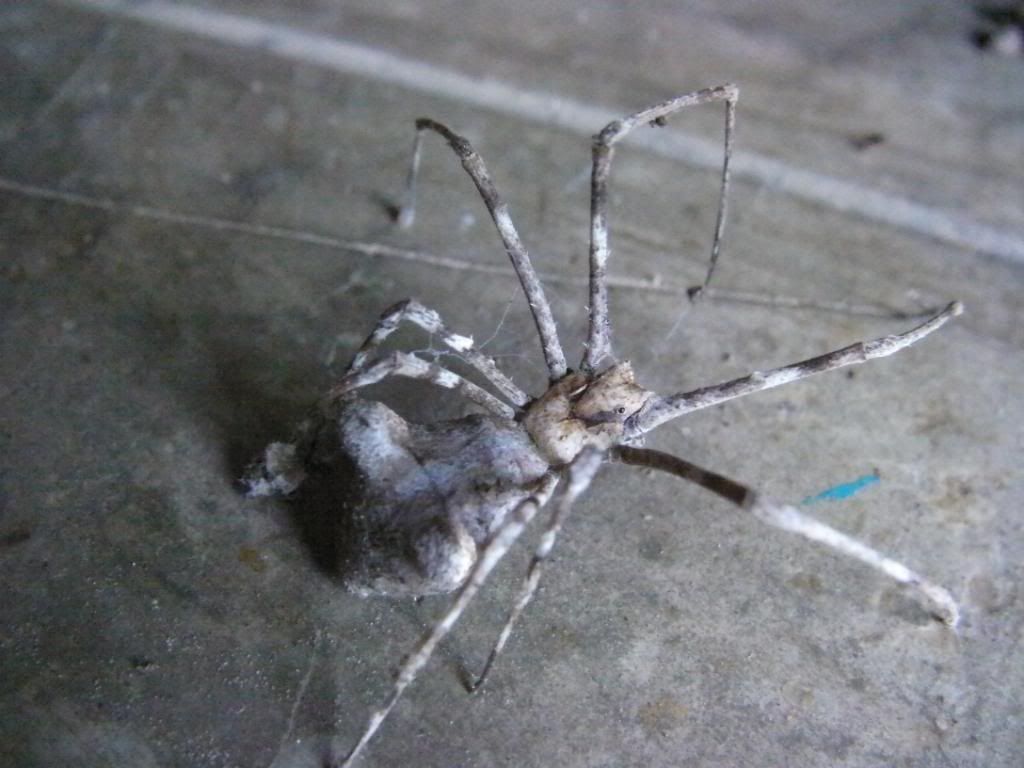
Photograph by the author at Morgan’s Rock Hacienda and Ecolodge, Nicaragua.
Growing up in Costa Rica prepared me for most encounters with the eight-legged kind I’ve had later in life, so that I have to hide a smile as my housemates here in Ithaca rave about the size of our household spiders in all their sweet innocence. A few years ago when I was working in Nicaragua I made an effort to photograph many of the arachnids I came across, and I’ve included a gallery of some of those shots below. But just a couple weeks ago while browsing the great blog Colossal I found this and was stunned, not by the size of the spiders because most of them are really quite tiny, but by the incredible diversity and beauty that Nicky Bay was able to capture in the spiders of Singapore. If you have some free time and no problem with close-ups of creepers, crawlers, weavers, and stalkers, I’d highly recommend browsing Bay’s macrophotography galleries for an hour or three.
Zombie Ants

African ant (Pachycondyla sp) attacked by an insect eating Fungus (Cordyceps sp) Guinea, West Africa. Photo © PIOTR NASKRECKI/ MINDEN PICTURES/National Geographic Creative
A few years ago I wrote about a curious and very specific relationship between some beetles and their wood-eating fungus symbiotic partner, and we’ve also shared other work on crazy parasitic creatures that can alter their hosts’ behavior, sometimes pretty radically (warning, creepy video). Believe it or not, the photo above isn’t some weirdly-antlered African ant–well, actually it is, but the antlers aren’t part of the ant’s body, they’re the spore-spreading apparatus of a parasitic fungus. Read on for more about the real-life World War Z that has been going on between ants (as well as other insects) and a family of zombifying fungi for millennia.
 Earlier this week I went to a lecture hosted by Cornell’s Department of Neurobiology and Behavior titled “Zombie Ants: the precise manipulation of animal behavior by a fungal parasite.” The lecturer was David Hughes, Professor of Entomology at Penn State University, whose faculty webpage provides PDF links to most of the articles that he has contributed to if you’re interested in checking out the actual journal pieces on this topic. Continue reading
Journey to the Center of the Earth, Via Iceland
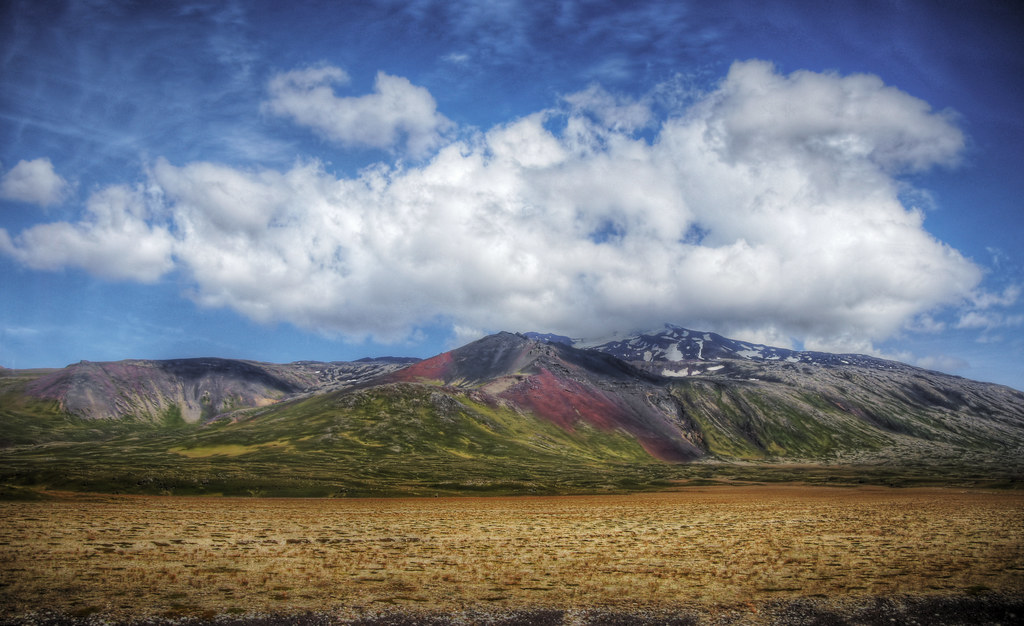
Snæfellsjökull, Iceland. Photo © Mariusz Kluzniak
When I explain my honors thesis subject to those who ask about it, not a few of them ask if I plan on looking at Jules Verne’s classic science fiction novel, since the volcanic entrance to the cavernous depths of the world in his story is ‘Snäfell,’ in western Iceland. For some , Journey to the Center of the Earth might be their only popular source of information on the country, since it is perceived as so remote, and, in many American minds at least, the Nordic countries can all get mixed up in a Scandinavian mélange of fjörds and vikings and skyr.

Snæfellsjökull, Iceland. Photo © Manny on BiteMyTrip.com
To Verne’s credit, therefore, he has put Iceland on the map for many people over the past century and a half (his book was first published in France in 1864, and was translated by 1871). To his discredit, however, he never visited Iceland himself, and instead relied primarily on two French works on Iceland written about scientific expeditions made there in the late 1830s. Continue reading
Icelandic Hell-broth

Krafla, Iceland. Photo © Land & Colors
In the Middle Ages, Iceland’s Mount Hekla was commonly thought of as a mouth of Hell, from whence one could hear the cries of the damned and even see their spirits haunting the peak — if the raging flames of hellfire weren’t blocking your view, that is. A few hundred years later, describing imagery as infernal or unearthly was still popular in travel accounts, as we saw in the case Reverend Sabine Baring-Gould’s thoughts on Námarskarð. Given the image above and those from the mud pits in the linked post, it really isn’t too surprising, especially after you consider that to reach these chthonic scenes the travelers had been riding ponies over a “tortuous and wretched” landscape of lava.
Cornell Herpetology and Ornithology
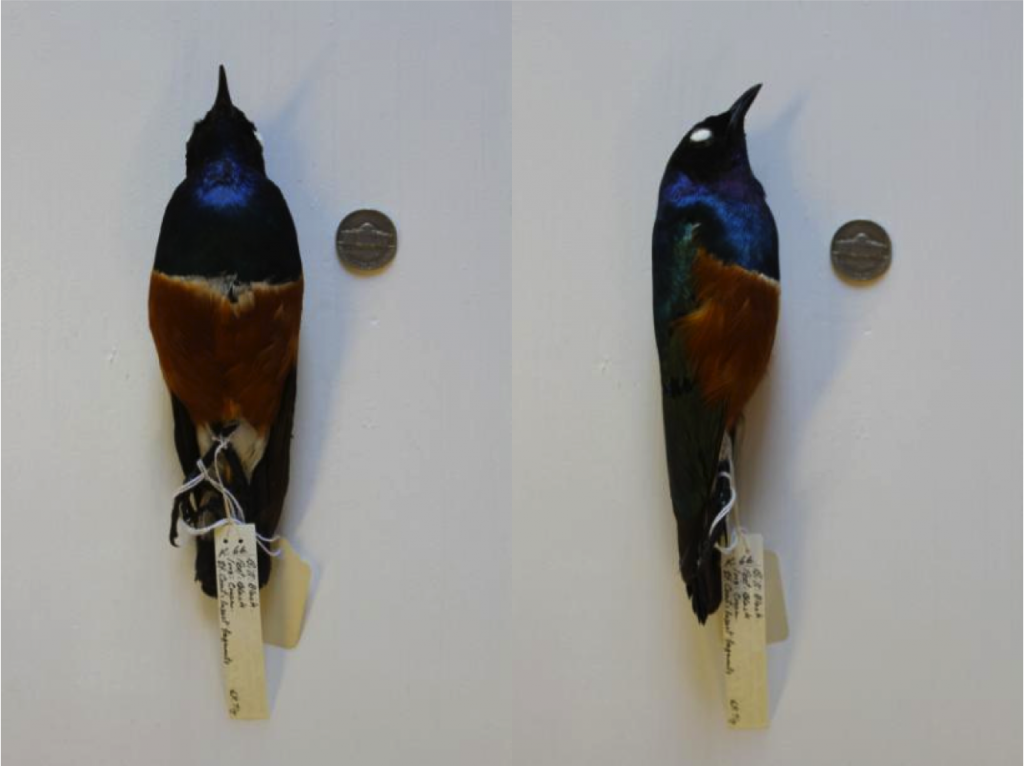
African Superb Starling specimen from Cornell’s collection. Photo by Jon Atkinson for students taking BIOEE 4750 – Ornithology.
During each of the spring semesters in my second and third year at Cornell, I took an advanced biology course that focused on one big group of vertebrates that I’ve always found both interesting and beautiful to study both in and out of school: birds and ‘herps’, or reptiles and amphibians. In the university setting, there is a half-joking rivalry between biologists who study these groups, leading to this type of crude but funny cartoon that can be seen on the office doors of at least one professor in Cornell’s Corson-Mudd Hall, home of the Ecology & Evolutionary Biology Department.
Iceland’s Fearful Agencies at Work

Námarskarð mud pits, Iceland © Navis Photography
Over the summer, several people have asked me, after I tell them what I’m researching, whether the books I’m looking at are actually enjoyable to read or just another dry primary source, as dreary and monotonous as many travelers found Iceland’s vistas during the eighteenth and nineteenth centuries. As with most things, the answer depends (largely on the book and certain chapters of each book), but for the most part I’ve flipped through hundreds of pages of travel literature with pleasure, not only because I know I’m being productive despite the beautiful day two floors above me outside Cornell’s Olin Library, but also because I find the Victorian British style of these authors–most of the works I’ve read so far were published between 1850 and 1880–quite engaging and fun to read.
Consider, for example, the following excerpts from Sabine Baring-Gould’s description of Námarskarð, an area full of hot mud springs in northern Iceland, in his 1863 book, Continue reading
The Internet and Citizen Science
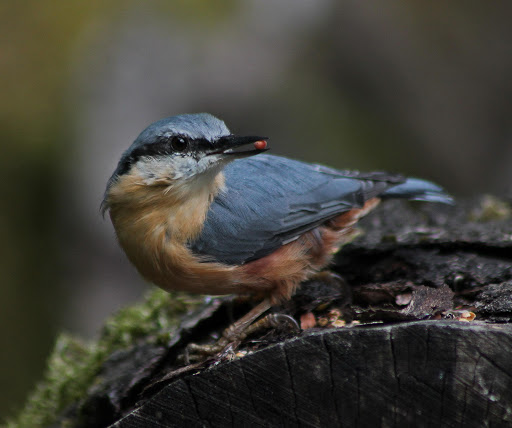
Eurasian Nuthatch by Pieter Colpaert on ProjectNoah.org
For the past two years I’ve been working at one of the Cornell Lab of Ornithology’s citizen science projects, Celebrate Urban Birds, which largely relies on the Internet to disseminate information about birds and urban habitat, to reach new audiences, and to receive the daily data that participants provide by uploading their observations directly onto the CUBs website.
The CUBs science model involves thousands of 10-minute bird observations around North America, and many of them come to the Lab of Ornithology on pen and paper data forms that then have to be scanned in, so internet observations are preferred. Another citizen science project based out of Cornell that I’ve highlighted before, the Lost Ladybug Project, isn’t based on data forms, but on photographs of ladybugs found across the US, focusing in particular on the nine- and two-spotted ladybug. As I mentioned in my brief post on the Lost Ladybug Project, one of the goals outlined in their National Science Foundation Project Summary is to create “one of the largest, most accurate, accessible biological databases ever developed.” Continue reading
AguaClara in India

A water treatment plant construction site in the village of Gufu. Columns for the base of the overhead tank are visible. Photo by Maysoon Sharif.
While some people turn their sweat into water, Cornell student engineers who have previously built eight treatment facilities in Honduras are now expanding into a couple sites in Jharkhand, India. Anne Ju from the Cornell Chronicle reports:
Since its founding in 2005, AguaClara has worked to bring cost-effective, municipal-scale water treatment technologies to communities in Honduras, where more than half the population cannot access safe water. They have partnered with the Honduran nonprofit Agua Para el Pueblo to provide designs and transfer the water treatment technologies to communities. … Continue reading
Icelandic Cartography: Thoroddsen

This tiny thumbnail is all the American Geographical Society Library will let you download from their digital map collection, but if you click on the photo you’ll be routed to the University of Wisconsin’s Milwaukee Libraries Digital Collections page and have access to the map in stupendously high resolution, with the capability to zoom in and move around Þorvaldur* Thoroddsen’s 1901 Geological Map of Iceland; Surveyed in the years 1881-1898. This version was published in English at Copenhagen, but I have featured the 1906 version before, and keep a printed copy of the later publication (publ. Gotha, Germany), hanging in my room in Ithaca.
I use my copy for any quick reference I need to make while reading or thinking about places in Iceland for my research, and I also plan on starting to use little ball pins to mark down the most often-traveled areas and more quickly become accustomed with place-names and distances between locations. One interesting difference between the 1901 English and 1906 German versions of this map is the Vatna/Klofa Jökull region, which Continue reading
 Organikos