Staff Profile/More About Those Superstitions

Harvey Lopez, until two years ago, was a student at the Universidad National Autónoma de Nicaragua (UNAN) in Managua, studying English on a scholarship. He came to work at the Morgan’s Rock reception at the recommendation of a friend working there at the time, but after one year he became a guide when the position became available. Nowadays he spends his time taking guests on tours or studying the various wildlife books to build his knowledge of local species. These are the same guidebooks that I’ve been using to identify some of the animals in my photographs.

Harvey enjoys sharing popular Nicaraguan countryside myths during nature tours; Latin American lore equivalent to, but a bit less ubiquitous than, the infamous chupacabra. Night walks are especially good tours to tell the tales, since the only illumination comes from flashlights, stars, and reflections in animals’—especially spiders’—eyes, and the stories’ topics fit the dark and quiet atmosphere.

He presents these myths as “creencias,” or beliefs, from small towns like the one he grew up in (Tola, 13km from Rivas):

  • Cadejos are a pair of dogs that appear to travelers at night. One is huge and black, and follows you till it finds an opportunity to attack. The white dog is more of a guardian and is supposed to protect you from the evil one. These cadejos commonly appear to men who are walking at night in dark streets, especially those traveling in a state of fear or inebriation.
  • Lechuzas, or owls (Harvey says screech owls in particular) are omens of death. When their cry is heard in a village, one is supposed to say “en la otra esquina,” or “on the other block,” to ward the bad fortune off to another area so that one doesn’t wake up dead.
  • A duende, which translates as elf, troll, goblin, and sprite, is a supernatural creature that when seen by adults (an uncommon occurrence) appears only as a shimmer in the air. They play with children, specifically those who misbehave, and lure them to their own land (considered by some to be hell). These children are stolen and never seen again. This portrayal of elves or fairy-folk might be as common elsewhere around the world as the chupacabra, but has less of a presence in tabloids and a more mythological nature.
  • The ceibón tree, Bombax emarginatum, is a mysterious and often spiny tree that houses Continue reading
Omens of Fortune

I am not superstitious. But I am also not exactly non-superstitious. I love black cats (my grandmother has two, named Helios and Selini after the sun and moon, in Greek). Sometimes I have to pass under a ladder to get something done. No problem. And in the spirit of declaring my semi-agnosticism in that domain, I also think insects have had a bad rap for way too long. With all due respect to arachnophobes (and I really mean that), I always find encounters with spiders fascinating. Today, it went beyond empirically verifiable fascination; I found myself feeling positively superstitious, if I may say so with the dual meaning of the adverb.

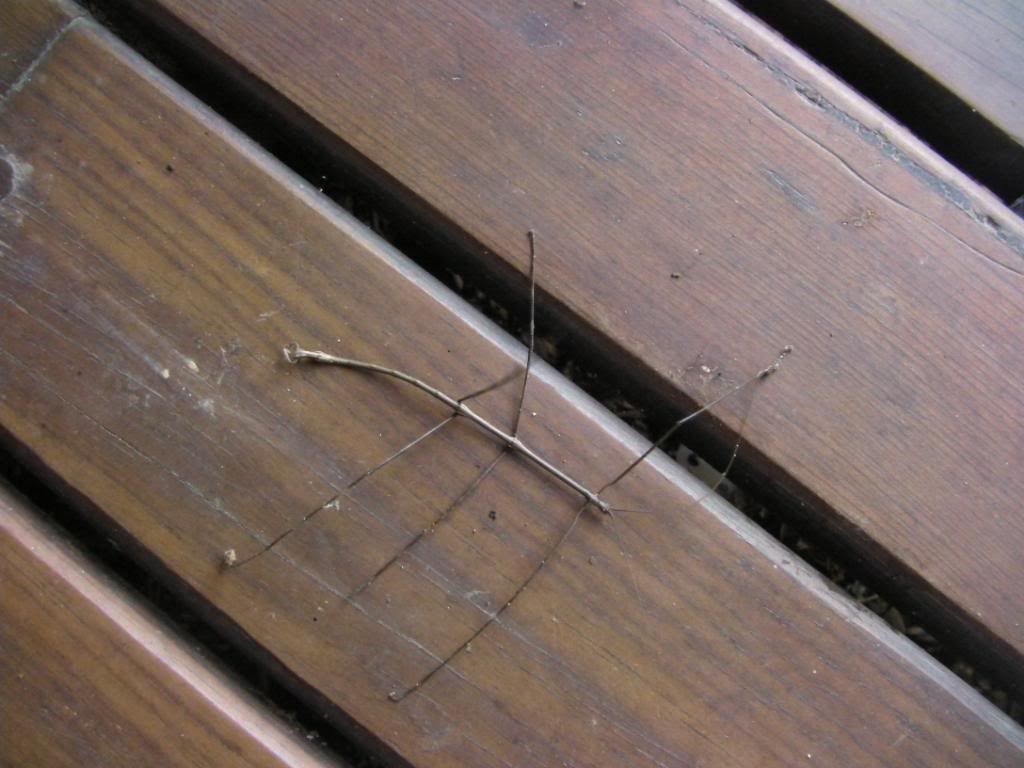
In the morning when I exited my room in the little house not too far from the Morgan’s Rock lobby, this spider was waiting for me outside. After I showered and got ready to leave, I passed a frantic walking stick attempting to find a tree, perhaps having fallen from the ceiling earlier. As I walked to the restaurant for breakfast, I considered these two arthropods good omens of the sightings I would have on my forest walk later in the day.

When I departed on the trail to find wildlife to photograph, I passed near some weeds on the side of the path that had been ravaged by some insect. I crouched and looked closely at all the leaves to detect the culprit, but found no obvious caterpillar or beetle munching on the foliage. Bending closer, I scanned the plants with a patient eye and finally noticed something that stood out. Continue reading

Da’ Flying Frog

When guests at Morgan’s Rock want to have the experience of zooming over the tops of trees, they normally can’t make it all the way to Café Las Flores’ Mombo Canopy Tour at Mombacho Volcano, which is over an hour away. Instead guests almost always go to Da’ Flying Frog, a canopy tour just 25 minutes away in the hills overlooking San Juan del Sur. At a cattle ranch with a nice amount (acreage unknown) of uncut forest on the property, this series of 17 zip lines includes several practice platforms that prepare you for greater heights by starting over dirt paths. Their longest zip line is 400 meters long, a distance that is fun and exhilarating to complete.

Biodiversity Buffers

Private reserves have been established in many countries around the world, dramatically expanding the conservation provided to biodiversity in public parks by voluntarily protecting buffer zones. Despite their smaller size (relative to public parks) on an individual basis, in aggregation these private reserves are significant providers of environmental services.

So far the Nicaraguan Red de Reservas Silvestres Privadas includes 50 private reserves that protect 7,467 hectares—18,453 acres—of various ecosystems. Each one has renewable status as a reserve for ten years at a time, and is exempted from income taxes for ten years, property taxes for whatever amount of time the land is a private wildlife reserve, and retail sales taxes on goods that contribute to the reserve.

The Nicaraguan Ministry of Environment and Natural Resources (MARENA) supports certification of conservation activities, includes the private reserves in sustainability workshops, and helps bring teams of scientist investigators to the reserves to conduct studies like the one done at Morgan’s Rock/El Aguacate. Among other things, the reserve owners must make a yearly management plan, comply with environmental norms, and protect the wildlife inside their property. Some of the required contents of a management plan include Continue reading

Post-Estuarial Paddling +

In “Kayak Surfing with a Friend,” I described the surfing in words and included a short video. Here is some longer and better footage of the experience, this time including Pierre (brown hair), me (black hair), and Bismar (green shirt). We have concluded, after experimentation with the paddles and waves, that this activity would be a great post-estuary kayak experience if the tide is right. Since I had mentioned this to Bismar (a Morgan’s Rock guide) he decided to join Pierre and me after completing his estuary tour with some guests, so that he could see for himself.

Continue reading

Reserve @ Morgan’s Rock

El Aguacate, the protected forest at Morgan’s Rock, is part of the Nicaraguan network of private reserves, or La Red de Reservas Silvestres Privadas. Over the past two days, a team of three biologists (one botanist in this forties and two zoologists in their twenties) has been walking through the reserve, photographing and documenting the wildlife they encounter in order to perform a sort of valuation study of the natural resources at El Aguacate. For the past week this team has been in the Rivas/San Juan del Sur area qualitatively assessing the floral and faunal density and diversity at around thirteen different private reserves; similar teams around the country are doing the same according to region.

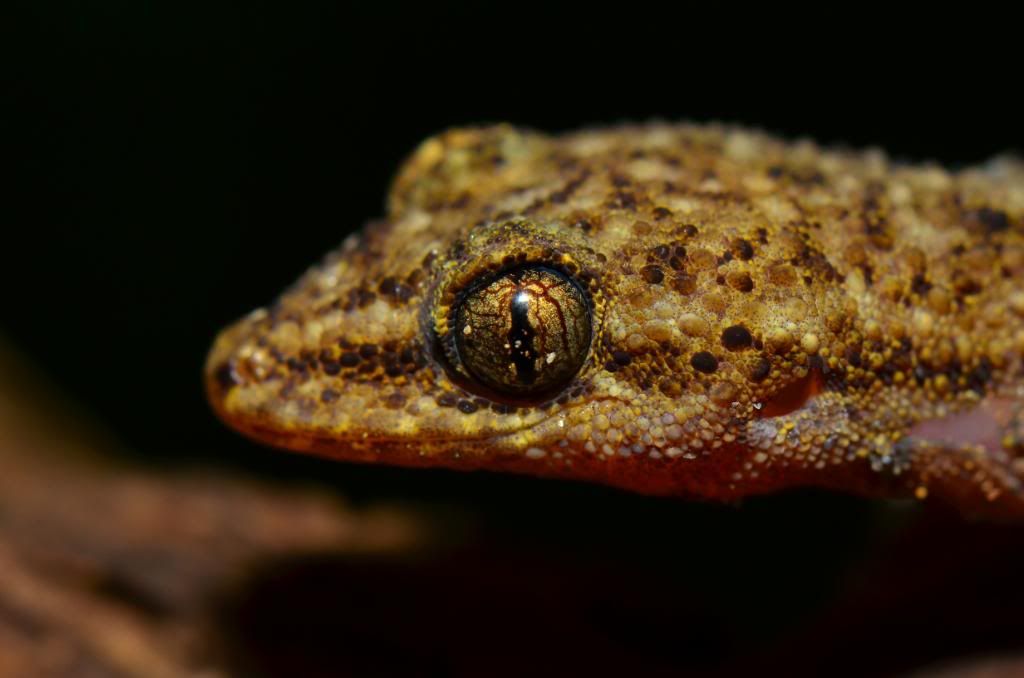
Gecko; species to be identified

José Gabriel Martínez Fonseca, one of the zoologists who also sports a Nikon camera that seems to have a telephoto lens (it looks almost a foot long), calls his photography enterprise Svaldvard Ink., after watching a show on the Svalbard archipelago in Norway on the Discovery Channel as a kid. Interested in the polar bears, he wrote down what he heard and years later preferred his own spelling of the word, adopting it as a username/alias for business. With his camera and skill as a biologist whose job it is to document species of reptiles, amphibians, birds, and mammals, José was able to photograph animals that have evaded my lens during my time at Morgan’s Rock. He was happy to share his images with me, so now I can share some of the best of them: all the photos in this post are his. Continue reading

Anteating Howler Butterflies

While walking to Morgan’s Rock’s lobby yesterday morning, Pierre heard some rustling in the bushes on our right. We looked for the source and were stunned to see an anteater standing on its hind legs, spreading its arms and swaying about like a drunkard but in fact trying to dissuade us from attacking it by trying to appear larger (it was bigger than a very fat house cat, but not by much). I immediately pulled my video camera from my pocket and started filming, and although the anteater had ceased his humorous movements and started climbing a very thin sapling, the footage was incredibly fortunate and very entertaining.


Since the tree he decided to grasp was so young, it started to bend as he climbed higher, reminding me of cartoons where characters are catapulted out of the branches after a certain point. The anteater was less than a meter away and at times looked like a teddy bear, but as a wild animal—and one with claws in full display at that—we refrained from touching him and were satisfied with a video. Eventually, the formicary raider descended the sapling and chose a better escape tree (in a pose reminiscent of the boa’s in a previous post), and we left happy with the sighting of what I thought I’d only be able to see in the summer when foliage was less dense. Continue reading

The Oldest City in Central America

Pierre and I took a walk around Granada today with Mombotour guide Gustavo, a native of the colonial city. Our first stop was the San Francisco Monastery and Church, the oldest church in Central America, which has been converted (aha) into a museum of colonial and pre-Colombian history. Probably built on the site of an indigenous temple, the monastery later became a school, then the museum. It also recently underwent a restoration project, since earthquakes have especially strong effects on such old architecture as Granada’s churches.

Gustavo led us through each of the rooms containing an exhibit, such as ancient pottery, contemporary art replicating historical or cultural scenes, and zoomorphic stone statues. He explained some of the beliefs held by the indigenous groups, which were often influenced by northern tribes (Mayans, Toltecs, and Aztecs) and South American indigenous nations, as well as the Spaniards’ opinions of them. For example, the rain god was considered to have four sons at the cardinal points. Ritual offerings such as those depicted in this painting were thought to bring fertility to the soils. Spaniards were also quite surprised to see the symbol at the base of this statue, not knowing that it represented the cardinal points and not the savior. Continue reading

Sweet NicarAgua

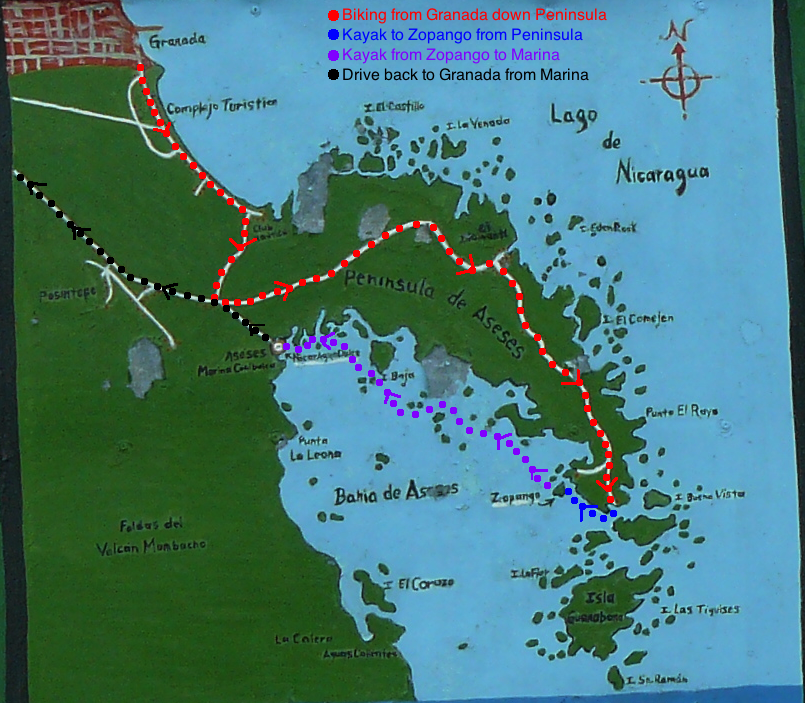
This morning Pierre and I went on a trip facilitated by Mombotours, using Detour bikes and NicarAgua Dulce kayaks. Eddy, our guide from Mombotour, arrived after breakfast and drove us to Detour, the bike rental shop. We picked up three bikes and left Granada’s hub towards the shore of Lake Cocibolca. The Mombotour driver followed behind in the truck in case we had any bike problems or accidents. We hadn’t gone more than two or three kilometers when the truck’s presence became needed. I’d accidentally driven over some glass, and punctured my tire in two places with tiny shards. With the tools and spare tube in the truck we were able to fix this unfortunate damage within twenty minutes, and Eddy’s training made my negligible REI workshop experience unnecessary.

The rest of the bike trip, which lasted about an hour and a half, was without further perforations, and we enjoyed riding up and down muddy dirt roads, dodging stones and chickens along the way. The mountain bikes performed very well and changed gears fluidly, which is always a nice surprise. We rode down along a peninsula till Continue reading

Mombo Jombo

Early this morning Pierre and I set out from Morgan’s Rock towards Granada, which is maybe two and a half hours away. Before reaching the city, we turned onto a road that led to Mombacho Volcano, an inactive peak with several extinct (and some fully collapsed) craters. The volcano is protected by the Mombacho Volcano Nature Reserve, created in 1996 by the several local fincas on the volcano’s foothills that comprise the NGO Cocibolca Foundation. Our time at Mombacho, described in the rest of this post, is part of the exploratory trip that Pierre and I are taking over the next three days, assessing the possibility of connecting Morgan’s Rock’s tour offerings with other operators in the area.

The day’s activities started at the Mombacho Volcano Nature Reserve (MVNR), where we met our guide Jennifer. We decided to take the longest trek, called the Puma Trail, so named because there are some big rocks and even caves that pumas are said to live in, although none have been sighted in a decade. Prior to starting this four-hour hike we stopped by an area called Los Fumalores where Jennifer had fun by daring us to put our hands in a small hole next to the trail, reassuring us that no snakes would be inside. As we placed our hands near the opening in the ground, we could immediately feel a stunning temperature difference. The place is called Los Fumaroles because sulfuric gases rise from volcanic holes and crevasses in hot gushes, heating the surrounding stone to a surprising degree. This area also provides a nice view of Las Isletas, which are known as children of Mombacho because they are islands initially created from a volcanic eruption. I mentioned Las Isletas very briefly here.

The Puma Trail’s path is very well maintained, Continue reading

How Smart Can Wood Be?

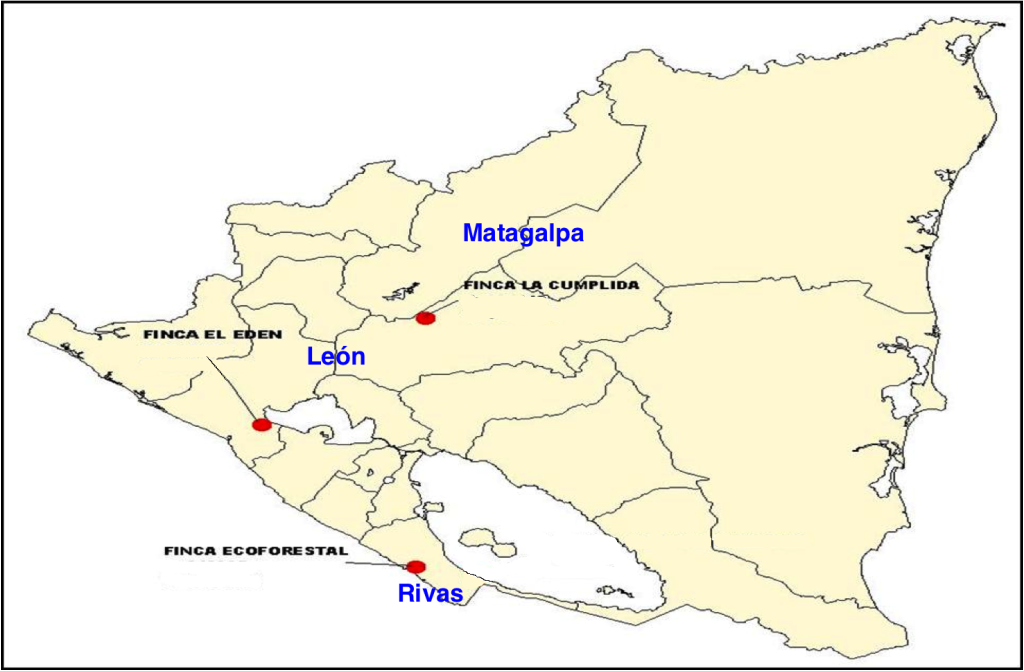
Yesterday I met with Javier López, the forestry engineer for Agroforestal, S.A. This company covers the tree plantations at La Cumplida, Ecoforestal/El Aguacate (Morgan’s Rock’s finca), and El Eden; it is not to be confused with Cafetalera Nicafrancia, which manages the coffee (and the planted trees growing in the coffee fields) at La Cumplida, or MAPIINIC S.A., which administers the forests felled by Hurricane Felix in 2007 at a finca called Rosita.

Javier, often known simply as “Prófe,” [PRO-feh] which translates as “Prof” (a nickname for Professor), has worked to get certification from Rainforest Alliance’s forestry auditor SmartWood (and by association the FSC and RA itself)

In 2009 Agroforestal became certified for forest management. To do so the company had to go through the same continuous improvement process that I described a bit in my post about coffee certification. An initial evaluation is made, and subsequent audits over the next 5 years that the certification is valid provide the certifier with evidence of progress and room for improvement. From what I saw of a couple examples, SmartWood seems to emphasize explicit documentation, which makes sense given the nature of the forestry industry: extractive at its most basic, but also focusing on replanting trees as long-term investments.

Some of SmartWood’s requirements are as simple as Continue reading

Ramírez, Reading & Responsibility

The presenter introduced Sergio Ramírez with all the formal flourish that the Spanish language provides for; a laudatory salute that seems unique to places where poets serve as public servants.  The presenter mentioned the publications Ramírez has contributed to; the number of his essays, short stories, and novels; told of his political history and his creation of Nicaraguan publications and organizations of reform. The presenter was obviously very proud of having such an influential man in the room, and finally said, “I give you, author, poet, thinker, ex-president Sergio Ramírez!”

(c) Overdue Media LLC, used with permission

The man who has given talks at over forty academic institutions around the world (including Cornell University) took the podium. “Thank you for the very generous introduction,” he started.  And what he said next illustrates the difference between poets and politicians. Continue reading

Nicaraguan 1st Graders Book It to 25wpm

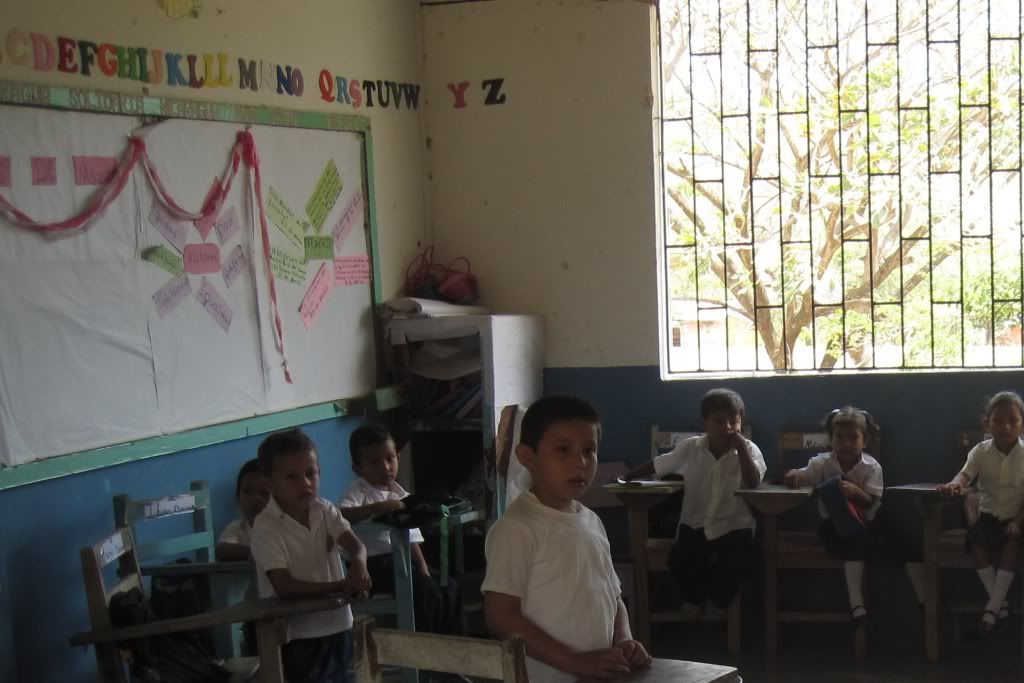
The José Dolores Estrada School, named after one of the military heroes who fought against William Walker’s army in the mid-1800s, is located only five or six kilometers away from Morgan’s Rock. JDE is a small public school with three teachers and around sixty to seventy students (the numbers vary widely each year or even by semester) that sit in mixed-grade classrooms to learn from whatever textbooks become available. On the walls, hand-made posters read, “What is a fable?” or give the definition of “traba-lenguas” (tongue-twisters) along with several examples. Cut-outs of volcanoes, whales, and ducks rest above a student’s project on “The Land of Lakes and Volcanoes.”

The three teachers responsible for the colorful and educational decorations came with José Tomás Gómez Valdivia (Nicafrance Foundation) and other teachers from La Cumplida for three days in Managua to attend the congress. I joined the delegation in their final day of sharing and learning and took notes on the conferences.

“The Situation of Reading in Nicaragua and Initiatives for Improvement” was the title of the first talk that José Tomás and I attended (the teachers went to whatever conference or workshop was most interesting or valuable to them). It was given by Vanessa Castro, a PhD from the Harvard Graduate School of Education. Dr. Castro has worked alongside the World Bank, IADB, UNESCO, and AED, and is now one of the leading investigators for the Nicaraguan group CIASES (Centro de Investigación y Acción Educativa).  Continue reading

Latin America Reads

Several hundred teachers sporting green canvas bags filled an auditorium at the Central American University (UCA) of Managua. The bags bore the Nicaragua Lee (Nicaragua Reads) and International Reading Association logos under the inscription, “Cantar Palabras, Dibujar Textos,” or, “Sing Words, Draw Texts.” A large banner across the top of the stage welcomed teachers to the eleventh Latin American and second National Congresses on Reading. The teachers were mostly from Nicaragua and Central America, but many South American countries, as well as Puerto Rico and USA, were also represented.

I was there accompanying the delegations from schools supported by Fundación Nicafrance. As I mentioned in a previous post, this foundation sponsors schools with other members of its social enterprise network: Morgan’s Rock Hacienda & Ecolodge, La Cumplida/Cafetalera Nicafrance, and Exportadora Atlantic, S.A. These are all intertwined with the Simplemente Madera Group.

The great highlight of the day’s proceedings was the eagerly-awaited arrival of Sergio Ramírez, who was vice-president of Nicaragua just after the revolution (86-90) and is probably the most celebrated poet and author of Central America since Ruben Dario, who still has a historic importance to Nicaraguan culture. Scores of teachers had copies of his latest book, La fugitiva, which they would ask him to sign at the end of his speech about the importance of reading to future generations of Nicaraguan society. This tall man and his deliberating voice, which rang across the auditorium, actually inspired me to wait in line and ask him to sign my shirt. This was the first time I’d ever asked someone for their autograph.

To find out why I had my shirt signed rather than a piece of paper or a Congress program (see the first link for an Excel sheet), stay tuned for the latter of my next two posts about this Congress and what I learned about the state of Nicaraguan literacy today.

Defensive Insects

My younger brother Milo has posted about Entomotography, sharing his excellent “macro” pictures of dragonflies in India. Yesterday I was walking in the woods at Morgan’s Rock when I remembered that I had promised to describe in more detail the cornizuelo tree, which fronts fierce fire ants and sports sharp spines on its branches. Since these trees are all over the place, I set my camera to macro mode and looked for a good specimen. Below is a video that shows just how diligently the ants patrol their home, both when no imminent danger is present and also when a threat is detected. At the end of the video I’ve included footage of a caterpillar.


When I first saw the little balls on the caterpillar’s back, I wasn’t all that surprised. Many insect species (and other animals like fish and crustaceans, for that matter) cover themselves with debris to disguise themselves from predators. What struck me as odd, however, was that this caterpillar, clearly a poisonous species (or at the very least an example of Batesian mimicry), felt the need to cover itself with crap (which, as the video shows, I discovered to literally be true) and thereby potentially avoid predation. Of course, it may be Continue reading

Bonds In Theaters

Here on the southern coast of Nicaragua, I have tracked reviews of the latest Harry Potter movie without yet being able to see it for myself.  My parents and brother went to see it in Kerala today.  Their review was less about the movie itself than about the fact that being in a movie theater in India is a kind of spectacle in its own right, apart from whatever may be happening on screen. I’ll describe the Indian experience in more detail later; for now I think back in time.

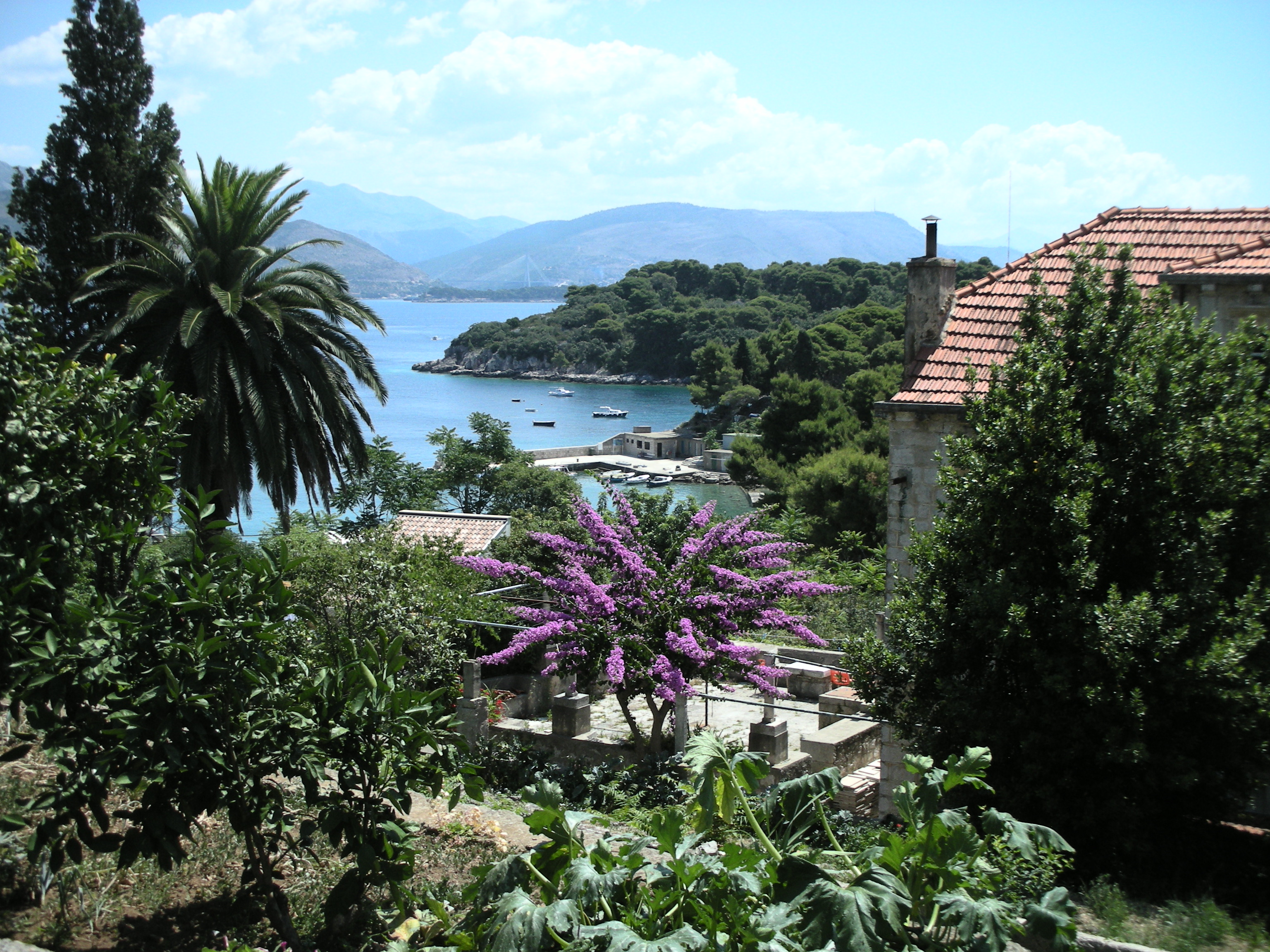
In 2006 my family was living on a small island off the coast of Dubrovnik (that is the view from our home in the photo above). About 150 people lived on the island, mostly the families of fishermen, who only spoke Croatian and maybe a little Italian.  The old city of Dubrovnik had a small cinema that sometimes played movies in English.  I recall when the latest James Bond film, with a new actor whose performance everyone was eager to review, started playing in this theater–in English with Croatian subtitles. “Casino Royale,” the movie was called.

Continue reading

A Campesino Breakfast Revisited

About three weeks ago, I was on the Campesino Breakfast Tour when I had the chance to see a boa sleeping in the chicken barn. This morning, the collection and preparation of breakfast ingredients went by without such an exciting event. But since unlike last time today I had a video camera with me, I can share some of the audiovisual details of the breakfast tour that were lost last time. I still recommend reading the previous post for a more elaborate text description than that which you will find here.


When we left the fowl barn and headed to Doña Candida’s traditional Nicaraguan house,  Continue reading

Certification of Sustainability

Unlike most of my other posts, practically all the hyperlinks in this post link to an aptly corresponding webpage instead of a picture I took. Also, please note that my previous post on the reserve at La Cumplida has been corrected. You can find the corrections in bold at the top of the post.

*

La Cumplida’s coffee farm is accredited by UTZ CERTIFIED and Rainforest Alliance. These two organizations are worldwide leaders in assessing and monitoring sustainable practices. UTZ is solely concerned with agriculture—coffee, cacao, and tea farms, mostly. The group states that through their standards, farmers see increases in productivity, efficiency, and quality:

Productivity

“In 2007, before being certified, my farm of 2.1 hectares produced 7,000 pounds of parchment. Now, in 2009, I have a productivity of 11,000 pounds. That represents an income increase.” (Cooperativa San José El Obrero, Guatemala)

Efficiency

“Before certification I fertilized 3 times a year with 80 grammes per plant, now I fertilize two times a year and apply 100 grammes per plant; with this measure I saved labor and fertilizers, while farm productivity has not been affected. Savings have been US $39 / ha”. (Cooperativa Anserma, Colombia)

Quality

The percentage of Class 3 & 4, which fetch better prices, has increased above 80% since certification, unlike 2006/2007 when they only produced 26.1% of class 4. (Rianjagi Coffee Farmers Cooperative Society (RFCS), Kenya)

Continue reading

La Cumplida’s Private Reserve

Author’s Note 19/7/11: The lizard pictured at the beginning of the post has been identified as a pug-nosed anole. The first group of stinkhorn pictures (paragraph 2) are of the species Phallus duplicatus, and the second group of pictures (last paragraph) are of Phallus indusiatus. The green mushroom linked to by the word “others” (paragraph 4) is Hygrocybe sp. and the grey/white ones are Psathyrella candolleana. Credit and thanks for mushroom identification goes to Milo Inman.

*

The untouched forest of the reserve at La Cumplida is a hilly cloud forest with few trails and many streams that served as much of our path through the trees. My guide, a local named Santos, and I started in the foothills outside of the reserve and entered the forest by climbing up some steep, muddy inclines.

The protected area amounts to 600 hectares, or 1,482 acres. Santos and I had walked for only about twenty minutes when I spotted the first attraction of the day: some stinkhorn mushrooms. Two were just a white line of pulp, but one was still not fully decomposed and looked as phallic as ever, having lost its veil.

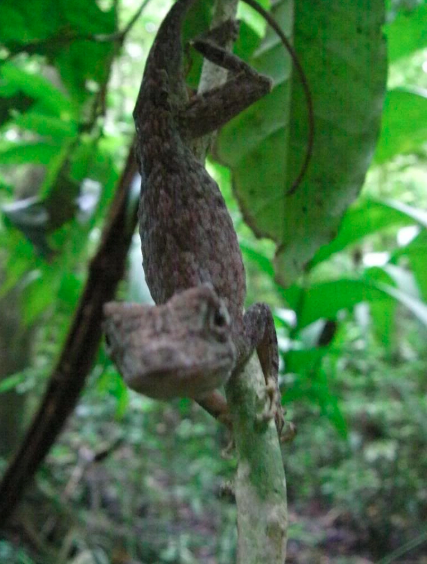
Only around half an hour of hills later, Santos stopped me and pointed out a sapling in front of us. He said some words that I didn’t understand, so I tried looking more closely to decipher his meaning. At last I saw the outline of a faint figure sticking out of the tree’s trunk. I slowly approached and saw that a lizard, perhaps the length of my hand, was grasping the sapling and facing downwards, its scales a mottled variety of wood colors, like a camouflaged chameleon but clearly not of that species based on its head shape. The poor lighting in the forest didn’t allow for the best pictures, but I was glad to get a couple, especially these ones of the lizard curiously raising its head at the closely approaching camera lens.


We advanced further into the forest and saw only the dense and variegated foliage around us

Continue reading

Sustainable School Sponsoring

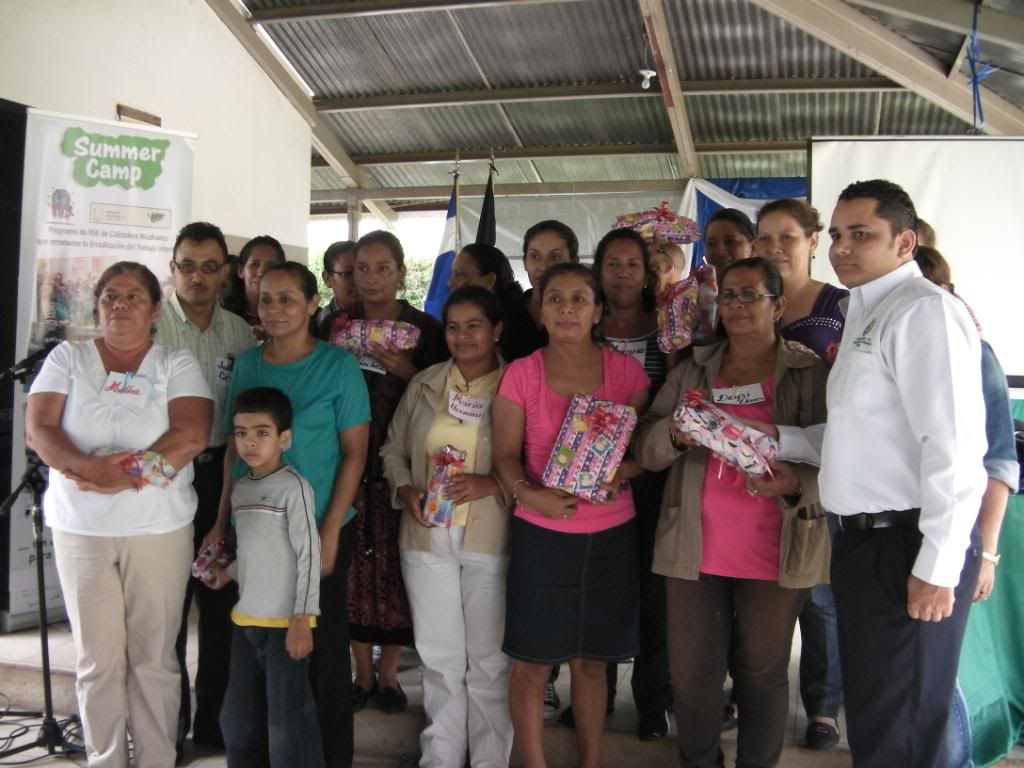
Last week, teachers from schools supported by Morgan’s Rock Hacienda & Ecolodge, Cafetalera Nicafrance, S.A., and Exportadora Atlantic S.A. met at finca La Cumplida to celebrate Teachers’ Day a little late and discuss the importance of education to Nicaragua’s future.

Morgan’s Rock sponsors six schools in the San Juan del Sur area; Cafetalera Nicafrance (essentially La Cumplida) helps eight in the Matagalpa area; and Exportadora Atlantic (EA) just recently picked up a school. In Spanish, the sponsoring is known as “godfathering/godmothering” depending on the name of the school (they are named after national heroes, martyrs, etc.). Each seat at the long tables was supplied with a folder, notepad, pen, and calendar provided by EA , as well as a schedule of the day’s activities and suggested readings printed by José Tomás Gómez Valdivia, who is in charge of the whole school sponsoring program under the Nicafrance Foundation, which all the previously mentioned companies are associated with.

Gift presentation to schoolteachers


Continue reading