The Morning Walk At Aarvli

aarvlimorningwalk

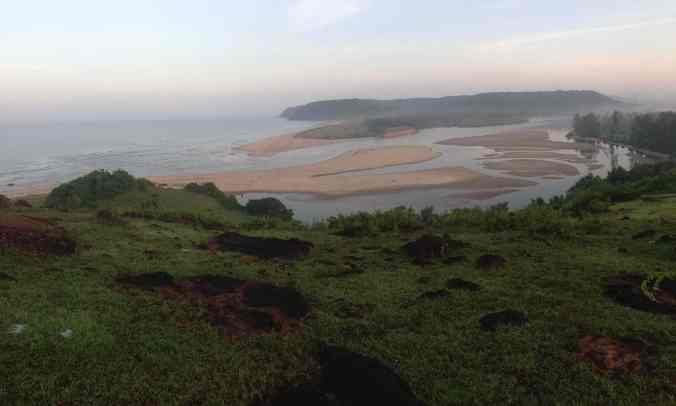
As soon as there is enough light each day I start my walk from the Aarvli bluffs to the water below. I start in the estuary, then move along the sea. The patterns around sunrise are not unlike those at sunset.

aarvlifishboatfar

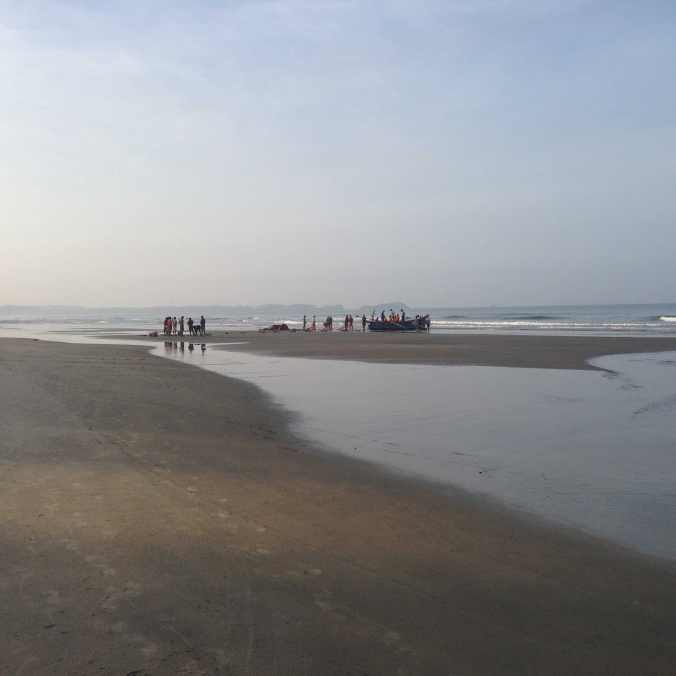
Fishing with this type of boat is a community activity, day in and day out. Many are required to get the boat back onto shore, first with the nets coming off and then the boat being block and tackled up the sand. Continue reading

A River Runs Through Amboli Reserve

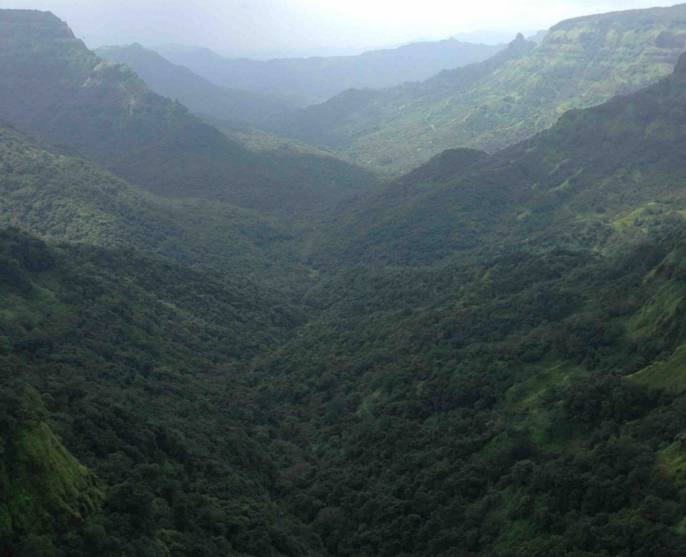
On my Saturday afternoon I followed up a morning of farm visits with a visit to the local agricultural research extension of the state university. More on that tomorrow. For now, I want to share some images from my Sunday exploration about an hour from the farms described, due inland and into the Western Ghats. Specifically, Amboli Reserve, which is in the view above.

Continue reading

An Unusual Travelogue

9780374710750.jpg

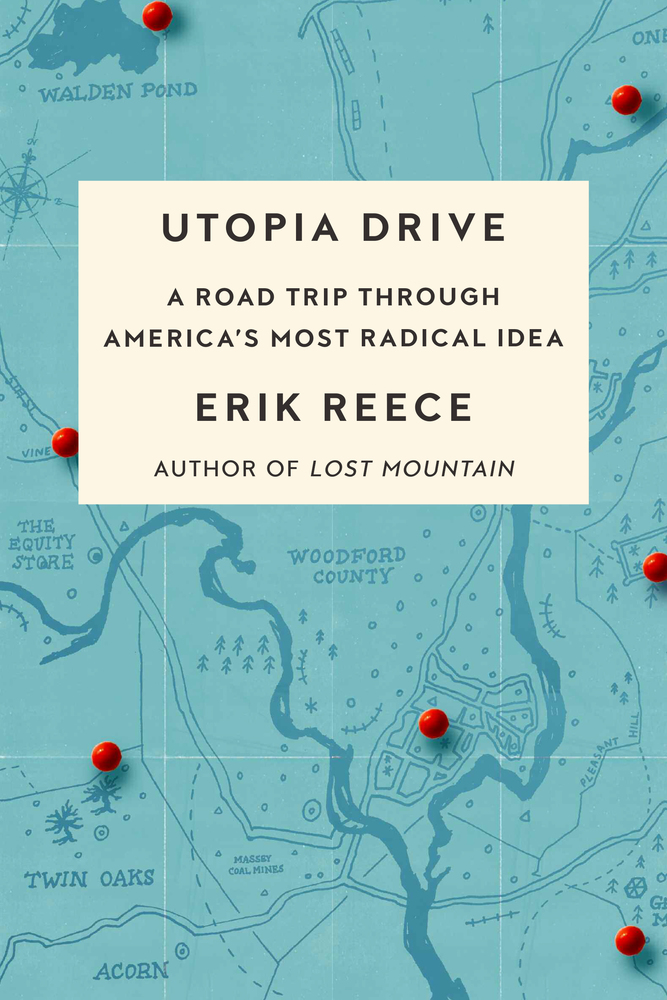
Publishers’ blurbs are sometimes much better than the sound of the word blurb would imply, and anyway I always trust them more than I could possibly trust Amazon’s tricky sales methods. Reviews in trusted publications are best, but they take much longer to read; this blurb has my attention, especially after pondering two decades of life online:

For Erik Reece, life, at last, was good: he was newly married, gainfully employed, living in a creekside cabin in his beloved Kentucky woods. It sounded, as he describes it, “like a country song with a happy ending.” And yet he was still haunted by a sense that the world–or, more specifically, his country–could be better. He couldn’t ignore his conviction that, in fact, the good ol’ USA was in the midst of great social, environmental, and political crises–that for the first time in our history, we were being swept into a future that had no future. Where did we–here, in the land of Jeffersonian optimism and better tomorrows–go wrong? Continue reading

National Park of the Week: Ergaki National Park, Siberia

information_items_555

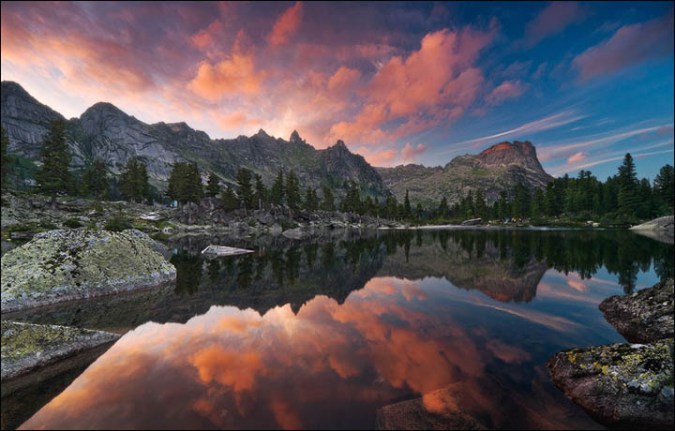
Photos by Moscow based photographer, Alexander Ermolitsky

Colloquially referred to as the “Russian Yosemite,” Ergaki National Park is a mandatory stop for those who ever plan to travel to Russia, and more specifically, to Siberia. Located in the Western Sayan Mountains of Siberia, this 342,873 hectare park of steep mountain ranges and glacial streams and lakes will break your camera lens with its beauty – figuratively speaking.

Continue reading

59 Parks in 59 Weeks

every-national-park-1024x683

All images from: Darius Nabors

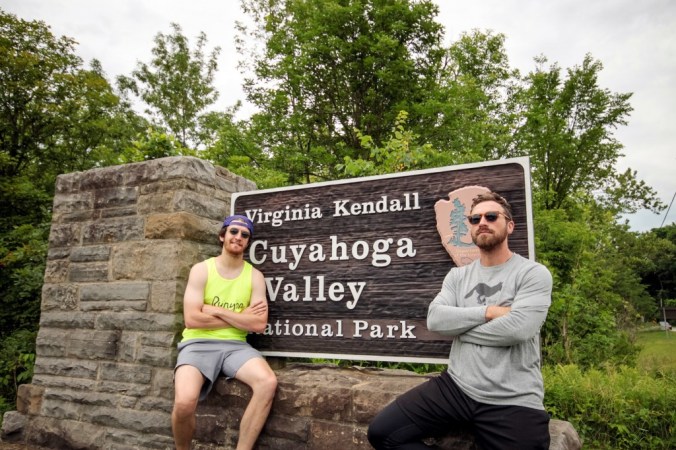
We continuously incentivize our readers to go out and explore the nature that abounds in the great outdoors. Well, Darius Nabors (although not a follower of ours – that we know of) raises our proposition to a whole new level by visiting all fifty-nine National Parks in fifty-nine weeks. In order to begin the pursuit of his goal, Nabors quit his job when he realized that it would take him forty-two years to see the ones he had not yet visited if he only traveled to one park per year. Therefore, he set himself this challenge while he is still young and active and can explore everywhere without worrying about physical limitations.

So far, Nabors and his friend and travel companion Trevor Kemp, who recently finished his Ph.D. in mechanical engineering, have visited 34 parks, including Glacier, Gates of the Arctic, Crater Lake, Haleakala and Joshua Tree.

Continue reading

The Chan Chich Lodge Night Sky

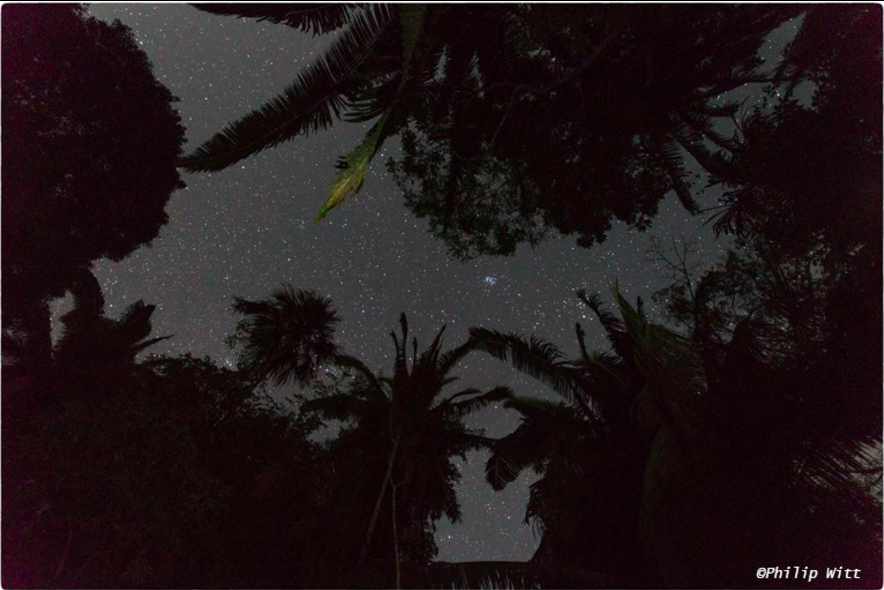
Night Sky by Chan Chich Lodge guest Phillip Witt

Night Sky by Chan Chich Lodge guest Philip Witt

A ping from my electronic calendar recently reminded me of the upcoming appex of the Perseid Meteor Shower between August 11th and 12th. I’d specifically marked it because this will be one of the first times I’ll be in a location so beautifully free of light pollution.

Although we do much of our work in remote locations, it’s surely a matter of luck to be in one of them at just this moment and this year,  when scientists say the meteor fall will be of the greatest density in 20 years. Chan Chich Lodge is located in the midst of 33,000 acres of private land, with the only infrastructure other than the lodge itself being a small village and the farming operations of Gallon Jug. 9-plus miles of trails branch off from the lodge, as well as simple gravel access roads. Continue reading

Going Bananas for a Good Cause

5591717_orig

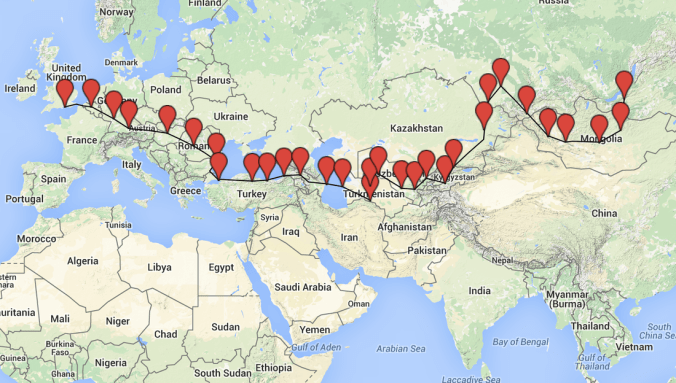
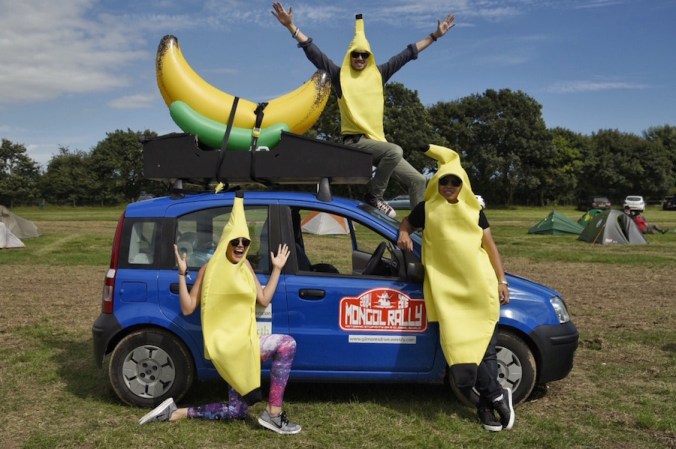
Driving 10,000 miles in a miniature, beat-up car from London to Mongolia might not be everyone’s ideal method to travel around the world (or at least, about 1/3 of the world’s surface). However, this challenge, known as the Mongol Rally, is more than just an unconventional thrill for adventurers. The challenge also requires participants to raise a minimum £1000 for charity, the first half going to Cool Earth, an organization dedicated to protecting endangered rainforest in order to combat global warming, and the rest to the charity of the team’s choosing.

2016-07-16-145637420-eabf5-ios_1_orig

Team Bananavan from gilmoresdrive.weebly.com

Continue reading

The New Ranchera (In Practice)

Ranchos, mountains, and coastline make up the bulk of Baja California Sur. The languid cattle or skittish chickens are what one most commonly sees when one is driving along the dirt roads, but if you take what might look like a short cut or a fun exploration route, you are most likely driving on someone’s driveway and will find a ranchero’s home at the end of it. I was keen to do some off-road exploring, particularly through the arroyos, but a car would not make it through and walking seemed too inefficient.  We were told by our neighbors (the only family that comes to vacation at their beach house exclusively in the summer time) two houses down from Villa del Faro that the family who delivers the water has a mule that they let people ride. As we talked more about the possibility of riding their mule up the arroyo, I learned that it was not a typical offer the family made to strangers, so that meant we were going to have to get introduced.

Continue reading

A Leap into the Sun


20160717_085340_zpsehmrqyi6

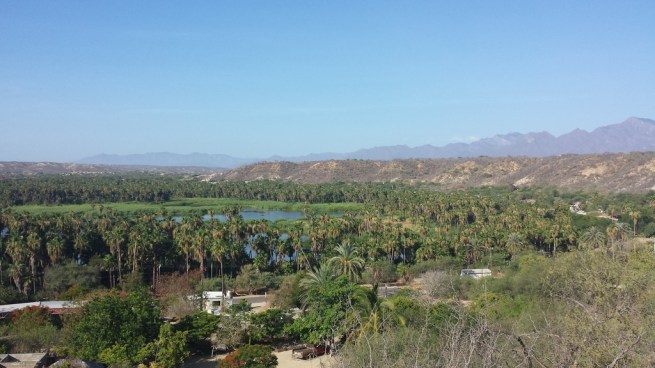
Among the foothills of the Sierra de la Laguna mountain range in Baja California Sur lies a geological marvel of isolated natural hot springs, fresh lakes, and rocky canyons, so we dedicated a whole day to discover a few of these natural wonders, protected within the Biosphere Reserve of Sierra de la Laguna. After almost two weeks of gazing upon a landscape of brown shrubs and dusty arroyos (not counting the great gardens here at Villa del Faro), the sight of a freshwater pond surrounded by palm trees and green undergrowth near the town of Santiago at the base of the sierra was like seeing a dear friend from childhood once again. I could not stop smiling and felt revitalized at the sight. Continue reading

Lost & Found, Geological Trickery, Conservation

looters_trench02

I had the opportunity to visit a site in Belize that had been on my radar for most of the last two decades. On my radar, but chance had conspired to keep me away, until last week. I will write more about that visit soon, but for now I want to share a thought on the photo above, and the one below (since I neglected to snap photos while standing in exactly the same location as the photographer who took these two, my thanks to him for his website’s provision of these two images).

looters_trench

These are commonly referred to as looter’s trenches, on opposite sides of a Mayan burial site. They are relatively fresh. The family that owns the property on which these trenches were dug, by tomb raiders looking for valuables, decided that the best way to protect the patrimony of this site was to ensure that there were always people nearby to keep looters away. A lodge was built, and it became a pioneering success story in protecting both archeological and natural patrimony. In other words, what we call entrepreneurial conservation. Continue reading

Please Do Not Close The Door, Iceland

lead_large (2)

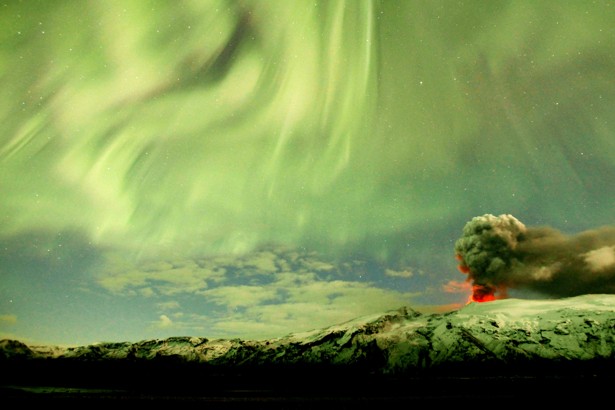
The Northern Lights above the ash plume of Iceland’s Eyjafjallajokull volcano Lucas Jackson / Reuters

We have had a thing for Iceland for a few years now, mainly due to Seth’s honors thesis. But none of us currently contributing to this blog have actually been there, yet. There is a plan in the air, very vaguely, for several of us to meet up there one day soon. Thanks to writers such as the Atlantic‘s Feargus O’Sullivan, and our own ongoing discussion on travel conundrums, we are not rushing into the plan, but contemplating it in back burner mode. We know we cannot wait forever:

Iceland vs. Tourists

It’s not easy fitting 1.2 million annual visitors onto an island of 330,000 residents.

Xandari, Another Saturday Morning

IMG_4527

Today is my final day waking up at Xandari, at least for now. Rising with the sun each day, and heading for the trails, I often catch a view of something that I have not seen before. When it is something simple, elegant and expressive like this twirling twig I tend to keep my eyes open for more of a certain thing. Continue reading

Southward, Ho!

160523_r28182-290x149-1462985555 (1)

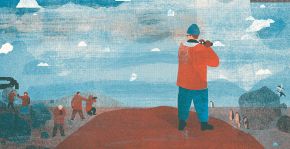
I had never before had the experience of beholding scenic beauty so dazzling that I couldn’t process it, couldn’t get it to register as something real. ILLUSTRATION BY BLEXBOLEX

We are happy any time this novelist takes time from his main craft to devote time to what seems to be his main personal passion, which might be identified as birding, or else more broadly speaking the environment in which birds thrive (or not). From this week’s New Yorker, another journey far away, southward, by Jonathan Franzen with an eye to environmentalist perspective:

The End of the End of the World

An uncle’s legacy and a journey to Antarctica.

BY

Two years ago, a lawyer in Indiana sent me a check for seventy-eight thousand dollars. The money was from my uncle Walt, who had died six months earlier. I hadn’t been expecting any money from Walt, still less counting on it. So I thought I should earmark my inheritance for something special, to honor Walt’s memory.

It happened that my longtime girlfriend, a native Californian, had promised to join me on a big vacation. She’d been feeling grateful to me for understanding why she had to return full time to Santa Cruz and look after her mother, who was ninety-four and losing her short-term memory. She’d said to me, impulsively, “I will take a trip with you anywhere in the world you’ve always wanted to go.” To this I’d replied, for reasons I’m at a loss to reconstruct, “Antarctica?” Her eyes widened in a way that I should have paid closer attention to. But a promise was a promise. Continue reading

Private Property in the US

The sand hills of Alberta © Ken Ilgunas via NYTimes

We’d never given this issue much thought, but the idea of private property remaining accessible to others who will act responsibly as passersby is an interesting one. If nothing is damaged and the goal is simply to get from one place to the other, or enjoy nature without borders, then why not? Ken Ilgunas writes an opinion editorial for the Sunday edition of the New York Times:

A COUPLE of years ago, I trespassed across America. I’d set out to hike the proposed route of the Keystone XL pipeline, which had been planned to stretch over a thousand miles over the Great Plains, from Alberta, Canada, to the Gulf Coast. To walk the pipe’s route, roads wouldn’t do. I’d have to cross fields, hop barbed-wire fences and camp in cow pastures — much of it on private property.

I’d figured that walking across the heartland would probably be unlawful, unprecedented and a little bit crazy. We Americans, after all, are forbidden from entering most of our private lands. But in some European countries, walking almost wherever you want is not only ordinary but perfectly acceptable.

Continue reading

Finding a Boiling River in Peru

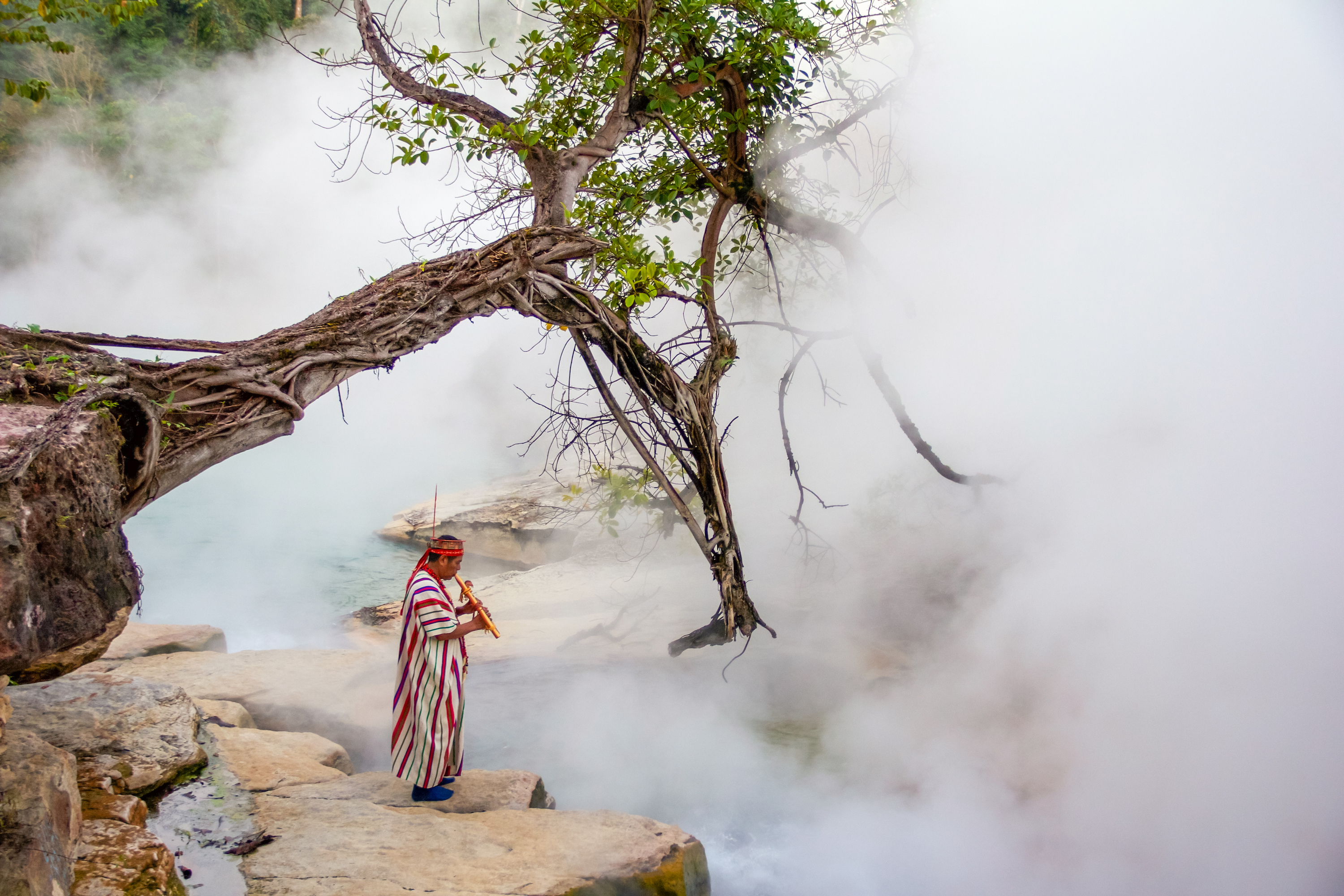
The Boiling River and an Amazonian shaman. Photo by Sofia Ruzo

Thanks once again to Chau Tu at Science Friday’s weekly written article, we’ve learned something new about the natural world, and it sounds like pretty much everyone except maybe a couple hundred people were unaware of its existence too: a steaming-hot river in the Amazon of Peru that isn’t volcanically heated. As Andrés Ruzo, the first geoscientist to study the water body, said in his TED Talk on the subject in 2014 (just released this February), “At a time when everything seems mapped, measured and understood, this river challenges what we think we know. It has forced me to question the line between known and unknown, ancient and modern, scientific and spiritual. It is a reminder that there are still great wonders to be discovered.” Here’s more from Chau Tu on the subject, and make sure to visit the Boiling River Foundation website.

Andrés Ruzo first heard about the Boiling River from his Peruvian grandfather, who shared a legend with him when he was a kid about the Lost City of Gold in Peru. “One of the details of the story was a ‘river that boils,’” Ruzo recalls.

Twelve years later, when Ruzo was studying at Southern Methodist University in Texas to become a geophysicist, he asked colleagues and other experts if they knew anything about a large river that boiled in the Peruvian Amazon. No one had; some scoffed at the inquiry. While thermal rivers do occur on earth, they’re generally tied to active volcanic or magmatic systems—neither of which were known to exist in the Amazon jungle, they said.

Continue reading

Boquete and Barú

waterfall_zpszydkbpmv

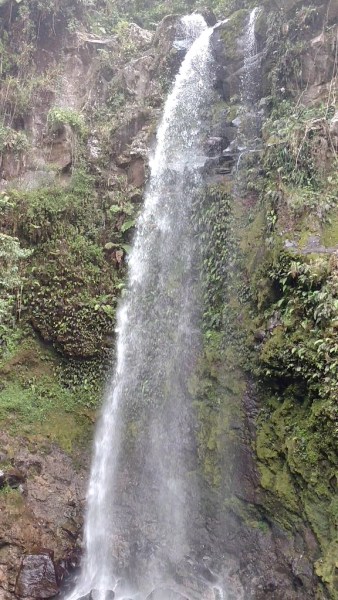
The first waterfall on the Lost Waterfalls Trail

During Easter weekend, I took an eight-hour bus ride from San José, Costa Rica to David, Panama, and then a 45- to 60-minute bus ride from David to Boquete, a mountain town in the foothills of Barú, Panama’s only volcano and the country’s highest peak at 3,474 meters above sea level. Barú Volcano National Park is adjacent to the international park that Costa Rica and Panama share, called La Amistad (The Friendship), though it is far smaller than La Amistad, at around 14,000 hectares compared with 207,000. I was joined on the four-day weekend trip by my friend and coworker, Jocelyn, who had never been to Panama before, and we enjoyed hiking the conservation areas above the town of Boquete, admiring the many waterfalls in the region and also looking for the high-elevation bird species native to the cloud forest, many of which are endemic to Costa Rica and western Panama, as I wrote in my previous volcano-related post.
 

IMG_20160327_140448935_HDR_zpsjgqp1kax

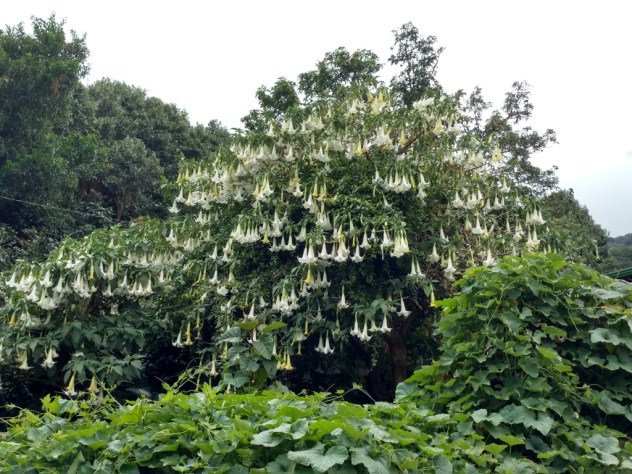
In addition to the national park, which charges $5 for entrance and has two main trails (one to the peak of the volcano, which takes about five hours to ascend, and one across the forest and part of the mountain ride, called Sendero Los Quetzales), there are some private forest reserves that charge a small admission fee. One is called the Lost Waterfalls Trail, which features three cascades and costs $7; another is called the Pipeline Trail, which follows a series of water tubes to the source and costs $3.

Continue reading

A 3-minute Visit To Iceland

Iceland

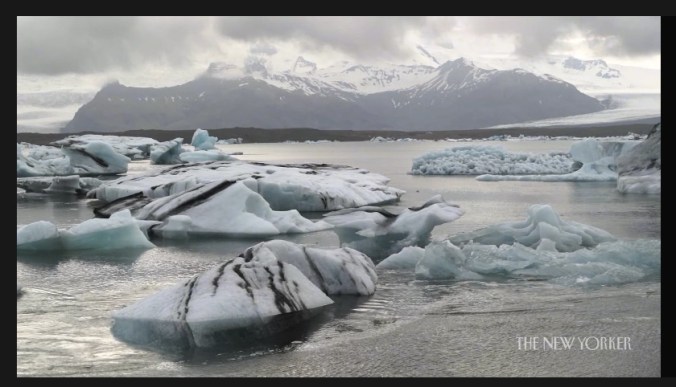
It is about two years since several of us took turns reading drafts of Seth’s honors thesis. We had been reading the summaries of his archival research since the summer of 2013, and by March 2014 he was describing Iceland in centuries past in a manner that made us hope such a place still existed. This small video makes us think it may still exist. It reminds us: we must go soon (as 19th century adventurers also said). It is too beautiful to describe in words, so instead may we recommend clicking on the image above and just going for a few minutes?

For The Pleasure Of It

fenn002_wide-60ad3787c2cdba4c577f1a4ed6f5d0622d31862d-s700-c85

We have plenty of readers on these pages who have the time, the energy and smarts to crack the code on this, so must pass this along to them:

Seeking Adventure And Gold? Crack This Poem And Head Outdoors

An eccentric millionaire from Santa Fe hid a chest full of gold and precious gems in the Rocky Mountains six years ago. Today, thousands of treasure hunters are obsessed with finding it.


Traveling by Water

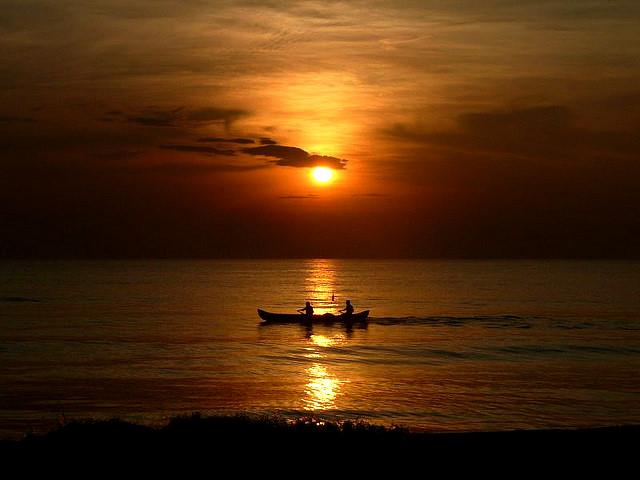
Many are the memories created on the banks of rivers, in the middle of the sea, and along ocean tides. PHOTO: Abrachan Pudussery

Many are the memories created on the banks of rivers, in the middle of the sea, and along ocean tides. PHOTO: Abrachan Pudussery

At Xandari Riverscapes, water is everything. Sharing the Kerala backwaters with all those who choose to travel with us has always been about sharing stories of the waters. Of the paddy fields that hug the river banks, canoes that transport groceries and construction material to the hinterlands, women and children fishing and splashing around near their waterfront homes, fishing boats, and more. And so this soulful piece on water’s incredible power to flow by memories resonates with us all through:

Water is great. We tune ourselves to it, to its murmured song of ebb and flow, of wave and ripple, in seas, rivers, streams, lakes, wetlands, ponds, snows. We drink it, we bathe in it, we stare at dark clouds praying for their sudden moment of release of it. “Take me somewhere magical,” my favorite cousin once said. So I did, to sail the sea. By the third day our ship was completely out of sight of land, nothing but water curving with the horizon.

“Oh,” she said. “Oh. That’s exactly what I needed.”

Below us, the swells rolled, allowing us to dance with them until our very steps were full of the lift of waves. In our own small way, our steps lifting with the waves, we were tuning the ocean as we sailed—and it, in turn, was tuning us.

Continue reading

The Earliest Artists

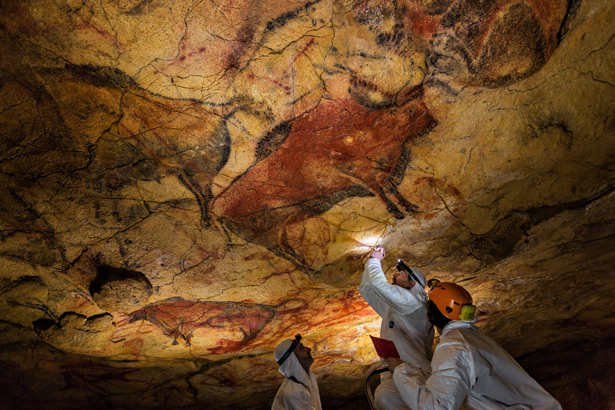
Located in southern France, the Cave of Pont d’Arc holds the earliest-known and best-preserved figurative drawings, dating back to the Aurignacian period (30,000–32,000 BP). PHOTO: Nat Geo

Located in southern France, the Cave of Pont d’Arc holds the earliest-known and best-preserved figurative drawings, dating back to the Aurignacian period (30,000–32,000 BP). PHOTO: Nat Geo

The Cave of Chauvet-Pont-d’Arc has been ferociously protected by the French Ministry of Culture. An exceptional testimony of prehistoric art, the cave was closed off by a rock fall and remained sealed until its discovery in 1994. The images demonstrate techniques of shading, combinations of paint and engraving, three-dimensionality and movement.

Around 36,000 years ago, someone living in a time incomprehensibly different from ours began to draw on its bare walls: profiles of cave lions, herds of rhinos and mammoths, a magnificent bison off to the right, and a chimeric creature—part bison, part woman—conjured from an enormous cone of overhanging rock. Other chambers harbor horses, ibex, and aurochs; an owl shaped out of mud by a single finger on a rock wall; an immense bison formed from ocher-soaked handprints; and cave bears walking casually, as if in search of a spot for a long winter’s nap. The works are often drawn with nothing more than a single and perfect continuous line. In all, the artists depicted 442 animals over perhaps thousands of years, using nearly 400,000 square feet of cave surface as their canvas.

Continue reading