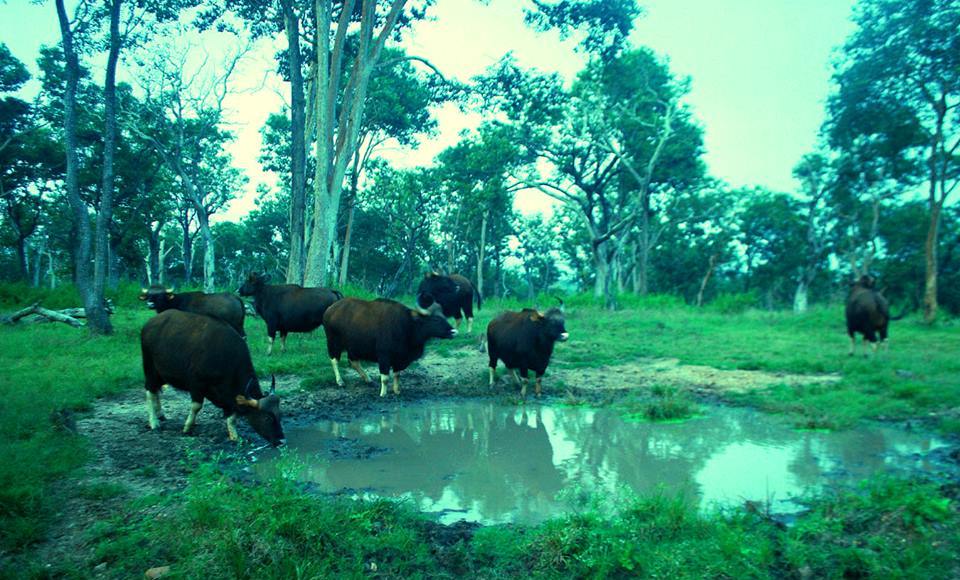
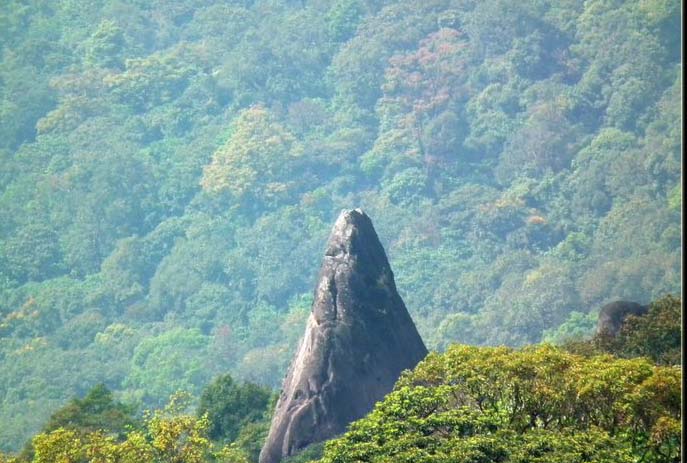
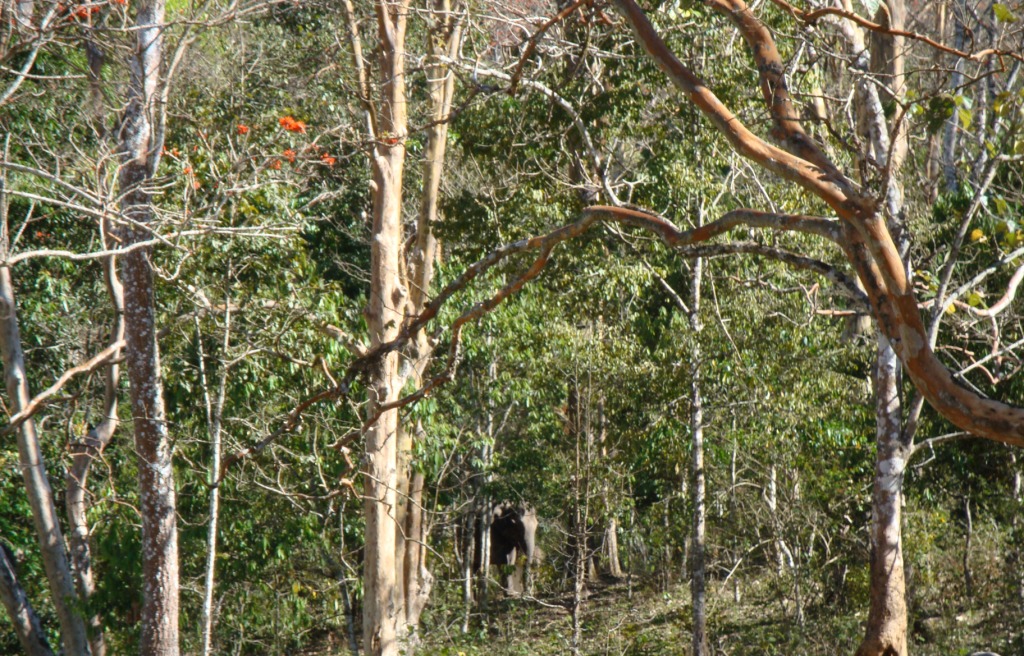
Mudumalai National Park is situated in the state of Tamil Nadu. One of the first wildlife sanctuaries established in India, the terrain consists of low hills, valleys, and flat lands with a few swampy areas scattered about. Continue reading
Adventure
Race Beyond All Reason
If you have to ask why, chances are that this sort of thing will not make sense to you under any circumstance. But since Chris Heller has taken the time and made the effort to beautifully elucidate, you might give a few minutes to this video on the Atlantic’s website, which makes us think of the Patagonia Expedition Race, except on steroids:
The Roughest, Toughest Race in the World
Jun 09, 2014 | Chris Heller
Eravikulam National Park – Munnar
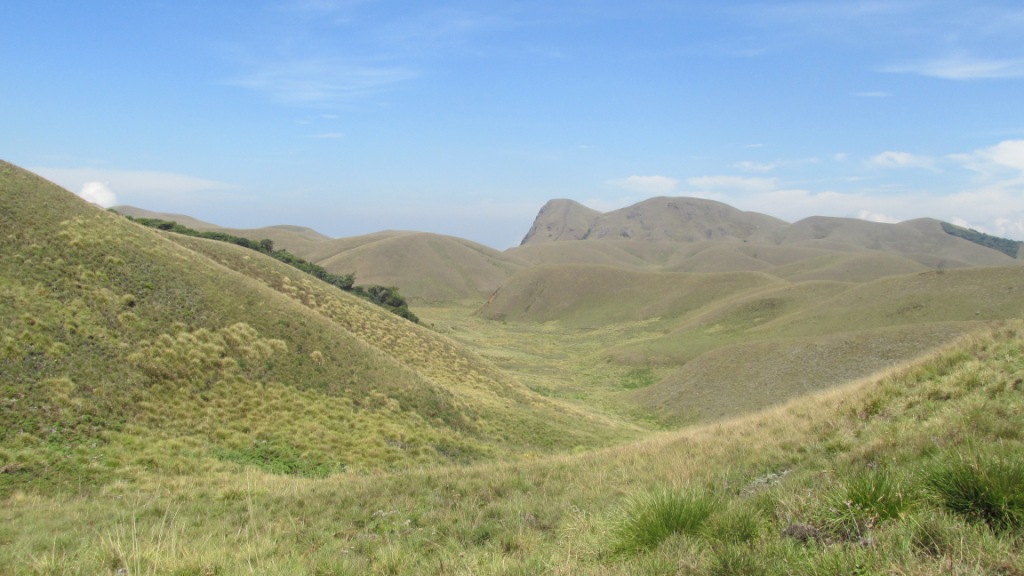
Eravikulam National Park is situated near Munnar in Kerala’s Western Ghats of Kerala. It covers an area of 97 sq km of rolling grass lands and shola forests. It’s an ideal hill station for seeing the biodiversity of shola grass land eco-systems. Continue reading
Calveri Mount, Idukki
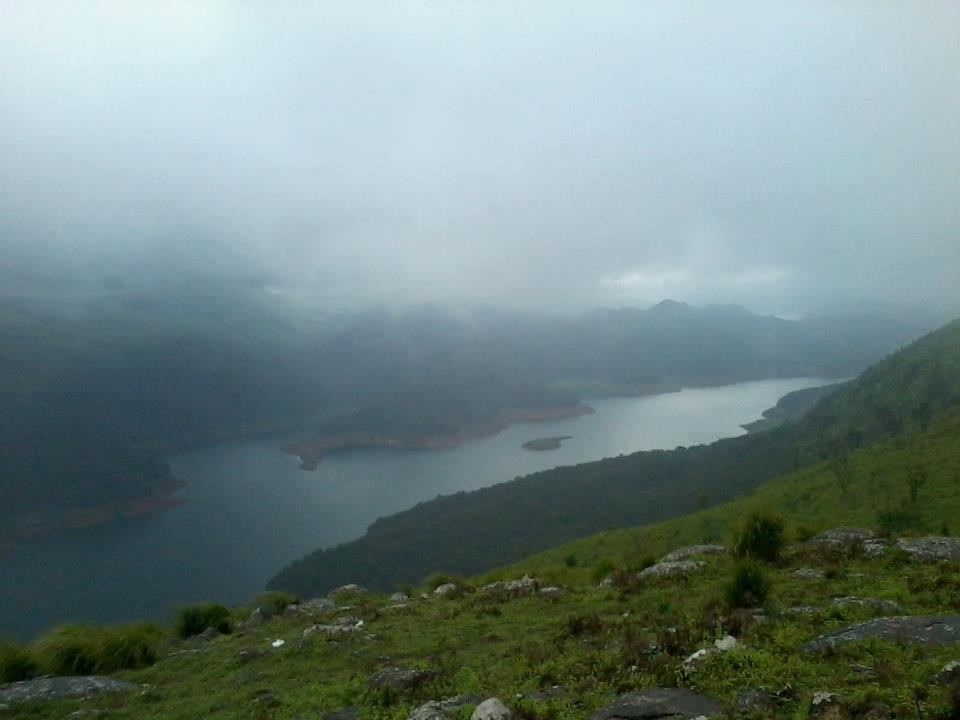
Calveri Mount is a beautiful destination, situated on the high ranges of the Western Ghats about 40 kilometers from Periyar Tiger Reserve. From Calveri Mount one can experience a spectacular panoramic view of Idukki reservoir – the biggest arch dam in India. The location also offers great trekking and the scenic beauty of Idukki’s valleys and high-altitude hills. Continue reading
Portraiture Of Self-Sufficiency
Many contributors to our platform here, and its readers, have probably considered life off-grid. Most will experiment during their travels, but stop short of the full monty, which would mean divestiture or most/all possessions and hitting the road. Thanks to this photographer (and the New Yorker‘s far-reaching sampling) for giving us both candid and portrait-like views into some examples of “self-sufficient” lives:
In 2006, while he was backpacking in Australia, the French photographer Antoine Bruy signed up with an international exchange program for volunteers who want to work on organic farms.
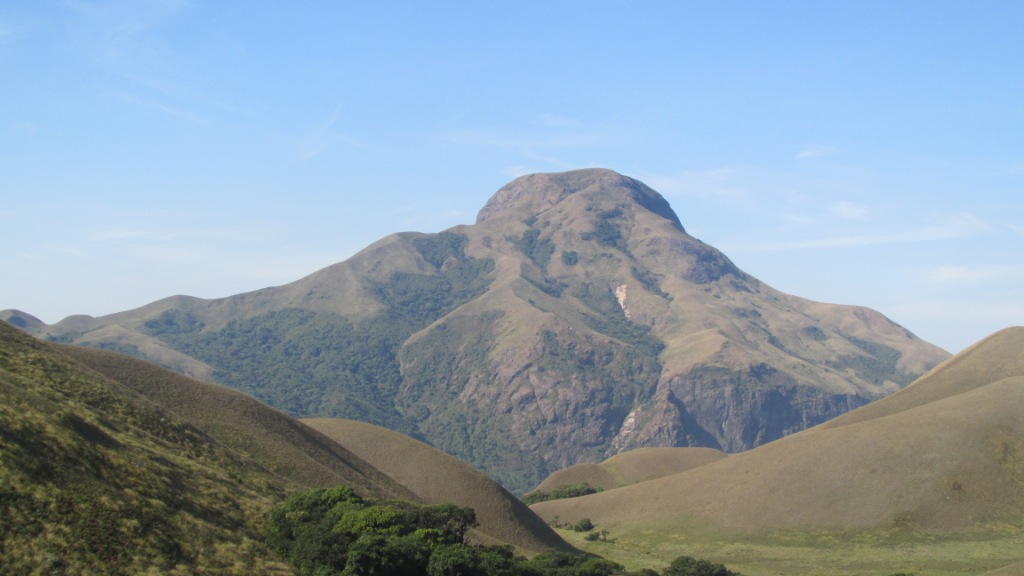
Anamudi Peak – Munnar
Anamudi Peak, highest peak in South India, is situated in Idukki district at Munnar. The slopes of the hills abound in all kinds of rare flora and fauna.The peak is on the southern end of Eravikulam National park and can be reached on foot from there, a technically easy hike on grass slopes. Continue reading
Fiji Shark Dive

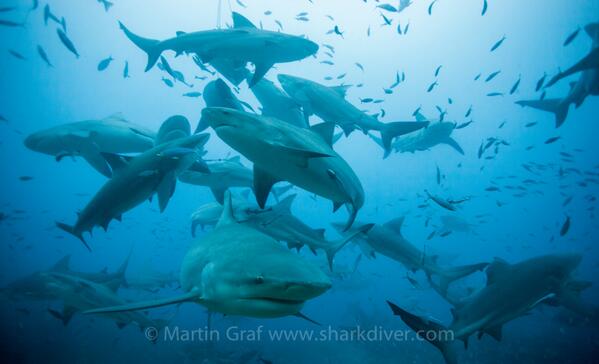
Photo Credit: Martin Graf, Sharkdiver.com
In an earlier post I wrote about how more and more countries are waking up to the benefits of preserving natural capital, in recognition of the economic value that can be derived through ecotourism. I noted, in particular, the value that can be generated through ecotourism ventures focused on iconic species such as sharks, manta rays, and sea turtles. I cited a number of studies and calculations that demonstrate that the ecotourism value of these animals far outweighs their one-time economic value if harvested for food or body parts.
Earlier this week, I had an opportunity to experience one such venture first hand, via the famous Fiji Shark Dive. Over the course of two dives I was treated to the spectacle of 40+ Bull Sharks and dozens of Blacktip and White Tip Reef Sharks, up close and personal! What an amazing experience to see these magnificent animals – some upwards of 8 feet long –swimming only inches away. Click here for a video (check out the background music!) courtesy of Martin Graf, one of the pioneers of the Shark Diving industry, who just happened to be in Fiji this week and was along on my dives. Continue reading
A Young Architect’s Process from Concept to Construction to Cigarette featured in Indian Architect & Builder

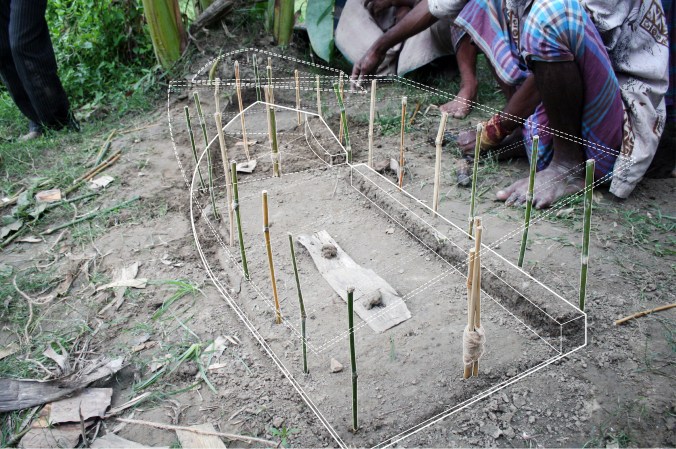
Preliminary model of the pavilion (Photo by Karen Chi-Chi Lin)
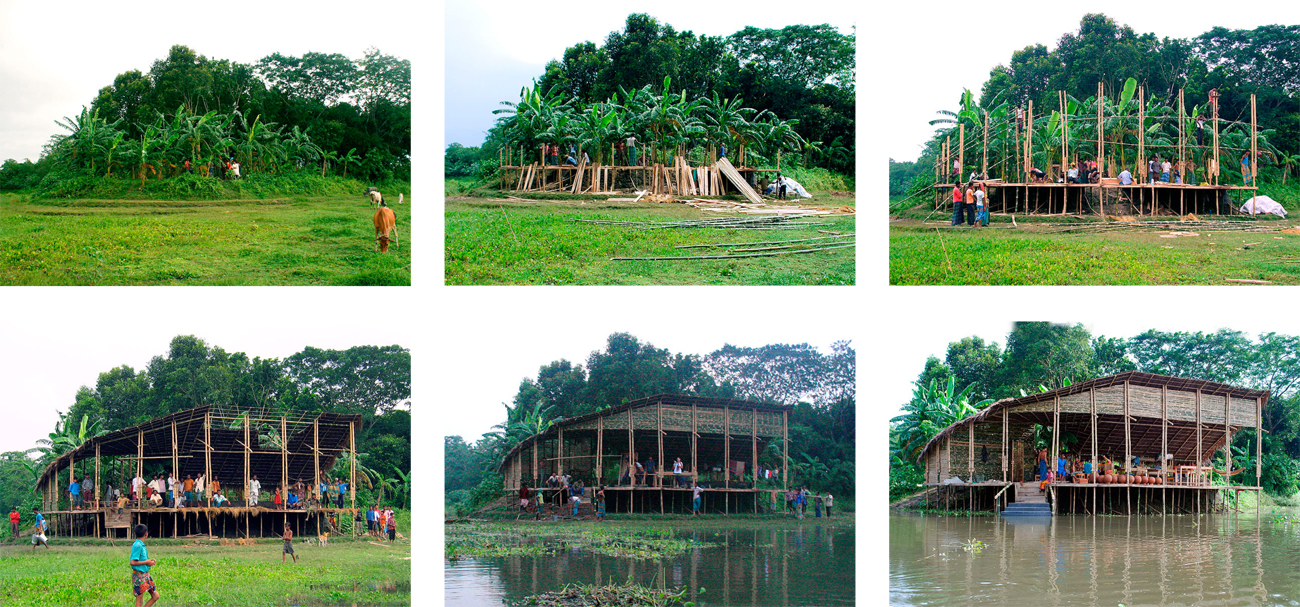
My very first internship was in Bangladesh with Panigram Resort, an eco-boutique resort in a rural farming town outside of Jessore, Bangladesh. I had no idea that it would ignite an insatiable curiosity about South Asia that would lead me back to the region several years later. I arrived in Kerala, India in 2012 not only with the amazing opportunity to return to a similar tropical biome and region, I had also returned to the same hospitality and resort family! Raxa Collective collaborates with Panigram Resort to help train Panigram Resort’s future leadership and staff.
When I was working at Panigram Resort, I was tasked with building a temporary pavilion for hosting potential investor meals and events. It seemed like an uphill battle for me at the time: I was young (19 years old); I was female; and I was a foreigner. Who would listen to me? I recently shared my story and was awarded the Young Designers 2014 Award by the Indian Architects & Builders (IA&B) magazine. I hope you, too, will enjoy my anecdote about the process from concept to construction … and finally, acceptance.
I have never felt more accomplished than when I was handed a cigarette. Of course that requires an explanation. Continue reading
Deep Caving
Burkhard Bilger writes about the ongoing effort to explore what may be the deepest cave in the world, located in Mexico. It’s “a kind of Everest expedition turned upside down,” he observes. Above, watch the cavers scale slippery walls, swim through frigid water, and make camp in a cloud forest, as Bilger narrates.
Going Deep Into Caves

Atanasio, a cliff-face opening in the Sierra de Juárez mountains of Oaxaca, Mexico. The mountains are home to the Chevé system, some eighty-five hundred feet deep—potentially the deepest cave in the world.
The writer who brought you the inside scoop on wild things gone wild, brings you a journey deep into the earth:
On his thirteenth day underground, when he’d come to the edge of the known world and was preparing to pass beyond it, Marcin Gala placed a call to the surface. He’d travelled more than three miles through the earth by then, over stalagmites and boulder fields, cave-ins and vaulting galleries. He’d spidered down waterfalls, inched along crumbling ledges, and bellied through tunnels so tight that his back touched the roof with every breath. Now he stood at the shore of a small, dark pool under a dome of sulfurous flowstone. He felt the weight of the mountain above him—a mile of solid rock—and wondered if he’d ever find his way back again. It was his last chance to hear his wife and daughter’s voices before the cave swallowed him up. Continue reading
If You Happen To Be In Denver
We are always on the lookout for more information about counter-intuitive relationships between various communities of outdoor enthusiasts–including those involving people with guns, bows & arrows, and fishing rods–and their collaboration with/as conservationists. An op-ed article today on the Atlantic‘s website, by Tovar Cerulli, got us thinking about posting something we would title “Hunters, Anglers, Conservationists:”
For many environmentalists, the word “hunter” suggests a mindless brute, an enemy of nature who loves guns, kills for fun, and cares nothing for biodiversity or ecological integrity. For many hunters, the word “environmentalist” suggests a self-righteous tree-hugger, an enemy of freedom who hates guns, has no respect for hunting, and imagines nature as a Disney-like fantasyland where humans should not tread.
Though these stereotypes contain grains of truth, hunters and environmentalists aren’t as separate as many imagine. The Nature Conservancy counts many hunters among its members and staff and works closely with hunting-conservation organizations. Likewise, Pheasants Forever has thousands of non-hunting members who appreciate the organization’s work on behalf of native prairie habitats, wetlands, butterflies, and clean water.
Then we clicked through his byline to see that he is affiliated with this organization that is hosting an event this weekend in Denver and decided this would make a more interesting post: Continue reading
Mind-Bending Race
A friend who lives in Costa Rica left a few weeks ago for a visit to Alaska. We did not learn until after he was already there what it was he planned to do there during the deepest depth of winter. We knew he was serious about endurance racing. We also believed that we knew something about expedition races, both in terms of adventure and endurance. A post on the New Yorker‘s website, about the results of this year’s Iditarod, reminded us to search on the race our friend is in, to learn more about its details, and now our minds have been bent:
WHAT THIS RACE IS ALL ABOUT
The Iditarod Trail Invitational is the world’s longest winter ultra marathon by mountain bike, foot and ski and follows the historic Iditarod Trail from Knik, Alaska over the Alaska Range to McGrath and to Nome in late February every year one week before the Iditarod Sled Dog Race. The short race 350 miles finishes in the interior village of McGrath on the Kuskokwim River and the 1000 mile race finishes in Nome. Racers have to finish the 350 mile race in a previous year before they can enter the 1000 mile race.
We invite 50 racers to take part in this unique challenge every year.
To qualify for the race go to our sub page “qualifiers” or “winter training camps” to find out more. Continue reading
Pakshipathalam – Wayanad
Pakshipathalam is situated in the district of Wayanad, near Karimala peak. It contains numerous caves and is surrounded by rocky hillocks. Pakshipathalam is a haven for a large avian colony, mainly around the natural rock cave. Continue reading
Periyar Sightings
Sightings in the Periyar Tiger Reserve have always been an excitement for guests. It’s fun to see the animals from the boats but it’s even more enchanting to see them up close during treks in the reserve. These photos were taken by Cardamom County guest Mr. Oliver Wyatt, who was most delighted to share his experience.
Continue reading
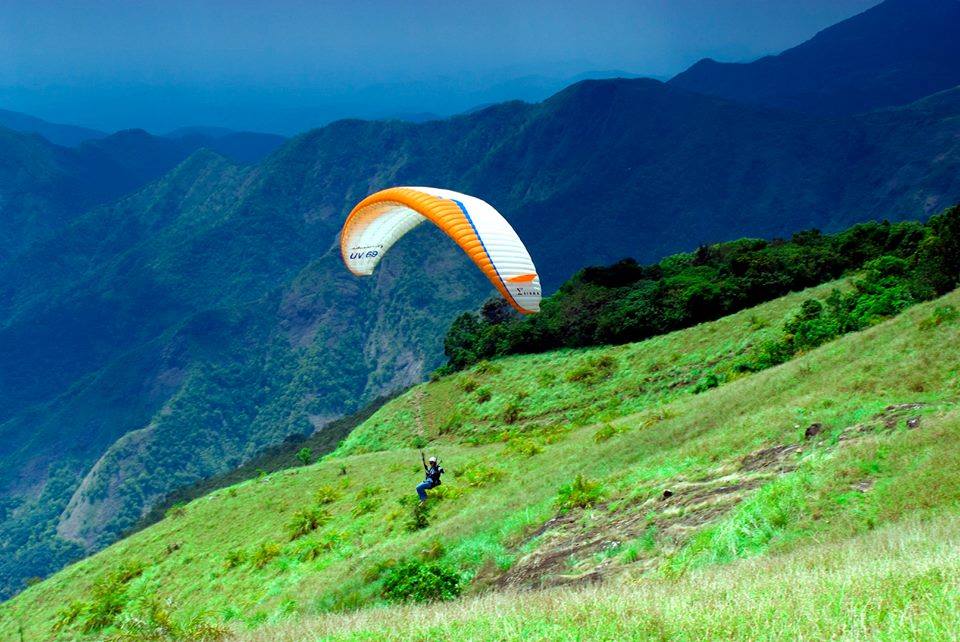
Paragliding Carnival – Vagamon
Paragliding is one of the newest adventure sports in India, with the number of thrill seeking enthusiasts growing annually. In Kerala, Vagamon has been identified as a Paragliding hotspot for by travelers and tourists the world over. Continue reading
Indians In Jamaican Territory
Samanth Subramanian–an author we hope will pay us a visit in Kerala one day soon, considering how much of his authorship overlaps with our own interests, especially this book–has posted on the New Yorker‘s website a blog post about a remarkable young man, and two fellow countrymen from India, very much worth the read. The Jamaican bobsled team gets all the attention, and it is well deserved, but they are, rather surprisingly, in good company. We excerpt from the second half of the post because the first half is a too-familiar “dirty laundry” story which we would rather not repeat, but what follows is inspirational:
…The thirty-two-year-old Keshavan will be participating in his fifth Winter Games. He set a speed record for Asia in 2012 and won the Asian Luge Cup in 2011 and 2012, but he has not been so dominant on the world stage; his best Olympic performance remains a twenty-fifth-place finish at Turin, in 2006. Continue reading
Just Stop, Leave, And Do Not Come Back

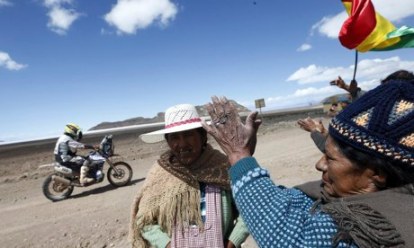
A Dakar rally competitor passes indigenous people between Bolivia and Chile. The rally, it is claimed, turns their land into a tourist attraction. Photo: Felipe Trueba/EPA
From 2008-2010, several contributors to this platform were spending time in the Patagonia region of Chile working on various projects, and during that period first came to know of the obscene event known as the Dakar Rally.
With no offense intended to motorbike racing, car racing or other enthusiasts of motorized sport, it is impossible to reconcile the destruction this event causes with any supposed positive outcomes. We can think of plenty of healthier alternatives to this method of getting around the southern part of South America. And yet, the event organizers have continued making their case to a government that has continuing granting an unwarranted privilege, and the annual event it is still going strong in spite of all the evidence of its negative spillovers:
The Dakar Rally of 500 off-road vehicles bumping and skidding through clouds of dust may be one of the world of motor sport’s most spectacular sights but archaeologists, environmentalists and indigenous groups are warning the 14-day event is ruining Chile’s ancient heritage.
Chilean government studies seen by the Guardian confirm the damage done to geoglyphs, protected sites, burial grounds and tracks on the Inca trail during previous races, but such is the race’s importance for tourism that it has once again been given the green light. Continue reading
Beauty of Munnar – Top Station
Top Station, named for being the railway station with the highest elevation in the area, is one of the main attractions in Munnar. It is about 24 km from the town, and the view from Top Station provides us with a stunning bird’s eye view of Tamil Nadu, our neighboring state to the east. Continue reading
If You Happen To Be In Denmark
We have been paying a lot of attention to Iceland in the last year, and we do not expect that to change very soon. At least not until May of this year. But we will always consider the two poles of the planet worthy of our time and investigation. There is an excellent exhibition website separate from the museum’s website pages about this exhibit whose last month has just begun:
ARCTIC
September 26 2013 – February 2 2014
Louisiana’s major, multi-faceted autumn exhibition explores a wonderful, fragile, frightening and powerful world. ARCTIC is a story about dreams, destiny, adventure and beauty. It is a tale of fear, fascination, desire, downfall, and survival in spite of everything. A quest for a location, real and imagined, that through the centuries has stirred up strong drives and emotions, fascinating and attracting artists, scientists, writers and adventurers alike. Continue reading
Self-Sufficiency Taken To The Outer Extremes
Before the lights go out on the last New Yorker issue of 2013, one more of several articles we found worth the read, and relevant to our common themes of interest–community-building, innovation, environmentalism, farming, etc.–on this blog, even if we tend to incremental change rather than the radicalism on display here:
Marcin Jakubowski, the owner of a small farm in northwestern Missouri, is an agrarian romantic for high-tech times. A forty-one-year-old Polish-American, he has spent the past five years building industrial machines from scratch, in a demonstration of radical self-sufficiency that he intends as a model for human society everywhere. He believes that freedom and prosperity lie within the reach of anyone willing to return to the land and make the tools necessary to erect civilization on top of it. His project, the Global Village Construction Set, has attracted a following, but among the obstacles he has faced is a dearth of skilled acolytes: the people who show up at his farm typically display more enthusiasm for his ideas than expertise with a lathe or a band saw. Continue reading