Health & Hydroponics

ask-hydroponic-tmagarticle

Jason Henry for The New York Times

We have been paying more attention to hydroponics since mid-2011 when first introduced to the topic by Milo, who was our in-house agriculturalist for a stretch; we also appreciated at that moment getting to know more about the open source concept. Last year we were happy to see agriculture and open source covered by a thought leader we have been following since his visit to Kerala a few years earlier.  Today the question and the answer provided here by Sophie Egan is worth a moment of your time:

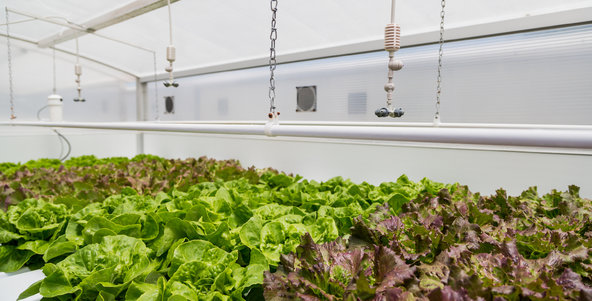
Are vegetables grown hydroponically as nutritious as those grown in soil?

The bottom line is it depends on the nutrient solution the vegetables are grown in, but hydroponically grown vegetables can be just as nutritious as those grown in soil.

“Much as I think that soil is just great for growing plants, hydroponics has come a long way,” said Marion Nestle, a professor of nutrition, food studies and public health at New York University. “I’ve seen hydroponic producers who have tested their leafy greens for key nutrients, and the amounts fall well within normal limits for their crop and are sometimes even higher.” Continue reading
Spain, Hops & Craft Beer

hops_wide-d79a830a1be1de6c8b818c90c577a0ca779d620f-s1100-c85

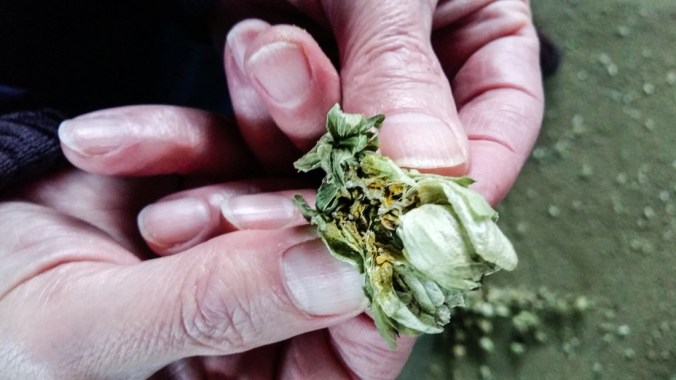
Ignacio Nicolas Campillo, director of a hops production facility in northern Spain, peels apart the flower of the hops plant, to reveal yellow powder inside. The powder is used to make beer. Lauren Frayer/NPR

This story from the salt over at National Public Radio (USA) adds to our hops coverage from time  to time:

Only the oldest residents of Villanueva del Carrizo, a town on the fertile banks of the Órbigo River in northern Spain, remember that day just after World War II, when all the area farmers were called to a meeting in the center of town.

Spain’s tiny beer industry was in a bind: It could no longer import hops – a key ingredient in beer – from war-devastated Germany. But brewers had spotted wild hops along the Órbigo River, and they had a hunch it could grow on farms too. Continue reading

Bees In Need Get Boost

3000b

Honeybees alone are responsible for boosting the production of fruits, nuts and vegetables. But bee and other pollinator populations in the US have been in decline in recent years. Photograph: Klas Stolpe/AP

Thanks to the Guardian:

Bee’s knees: a new $4m effort aims to stop the death spiral of honeybees

General Mills is co-funding a project with the federal government to restore the habitat of pollinators such as bees and butterflies on North American farms Continue reading

Surfing, Farming, Learning

surf1

We have on occasion linked to video shorts offered over at the Atlantic website; this one is worth the seven minutes:

When Pro Surfers Learn to Farm

Video by The Perennial Plate

What happens when a group of professional surfers get tired of the global surfing circuit?

Surf2.jpg

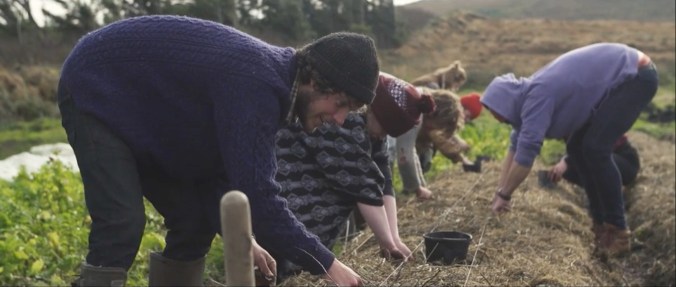
This charming short documentary tells the story of how three friends abandoned their sports careers for the whimsical calling of growing organic vegetables on Ireland’s Wild Atlantic Way. Continue reading

Agricultural Origin Story

leaf-cutter-ants_wide-6b7093087f0ce34d72d51f5eebb34ebc9db81df7-s1100-c85

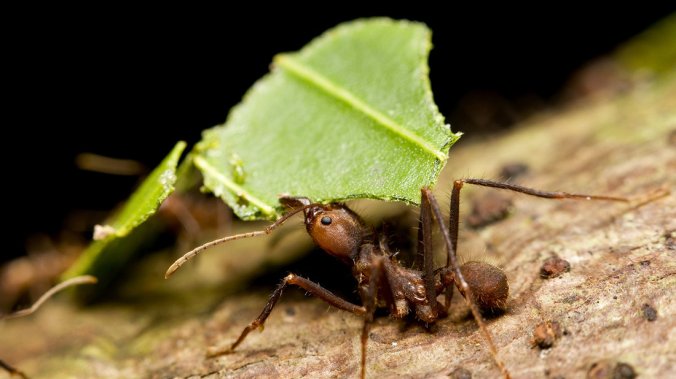
Various species of ants engage in some kind of agriculture. Here, a leaf-cutter ant gathers food for its fungus farm. Mark Bowler/Science Source

Thanks to National Public Radio (USA):

Who Invented Agriculture First? It Sure Wasn’t Humans

Ants in Fiji farm plants and fertilize them with their poop. And they’ve been doing this for 3 million years, much longer than humans, who began experimenting with farming about 12,000 years ago. Continue reading

The Future Of Food & Taxes

5126

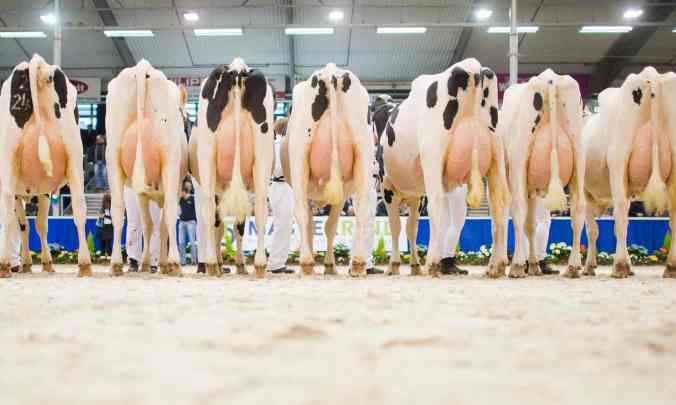
Food production causes a quarter of greenhouse gas emissions, largely from the raising of cattle and other livestock. Photograph: Mike Kemp/Getty Images

Tax meat and dairy to cut emissions and save lives, study urges

Surcharges of 40% on beef and 20% on milk would compensate for climate damage and deter people from consuming as much unhealthy food

Damian Carrington

Climate taxes on meat and milk would lead to huge and vital cuts in carbon emissions as well as saving half a million lives a year via healthier diets, according to the first global analysis of the issue. Continue reading

Dutch Methane Capture

2711

Agriculture produces about 10% of the Netherlands’ greenhouse gas emissions. A new project will help capture methane emissions from Dutch dairy farming. Photograph: Julian Stratenschulte/EPA

Thanks to the Guardian for this:

Poo power: Dutch dairy industry launches €150m biogas project

Will a scheme to turn cow manure into biogas help the Netherlands lose its reputation as the ‘bad guy’ of Europe when it comes to agricultural emissions?

The air smells fruity, slightly alcoholic. Against the strong hum of machinery, 175 cows are eating hay. As their dung drops to the slatted floor, a machine sweeps it through and it runs underneath the barn to a futuristic dome outside. Continue reading

Perfectly Good Imperfect Food

24UGLYFOOD-web01-master768.jpg

A customer shopped at Fruta Feia, a Portuguese cooperative created to sell imperfect food. The food industry has begun looking for ways to reduce waste. Bargain-hunting consumers seem to be going for the deals.CreditPatricia De Melo Moreira for The New York Times

Increasing attention to the inherent waste in judgements about imperfection is a welcome topic in our pages:

Food Industry Goes Beyond Looks to Fight Waste

Continue reading

Traditions Taken Beyond The Limit Of Logic

wine

The annual harvest of the sangiovese grapes at the tiny Colombaia winery outside Siena. Credit Susan Wright for The New York Times

This story touches on many of our favorite themes, so thanks to Mr. Pergament for telling it well (click the image above to go to the original, at the New York Times website):

By DANIELLE PERGAMENT

It was a hot, late summer evening in Tuscan wine country — and, unexpectedly, I was getting a lesson in astrology.

Inside a grid of cool, lush green vines, amid hills and valleys rippling toward the horizon, a cherubic woman in a wide straw hat named Helena Variara was pointing toward the sky.

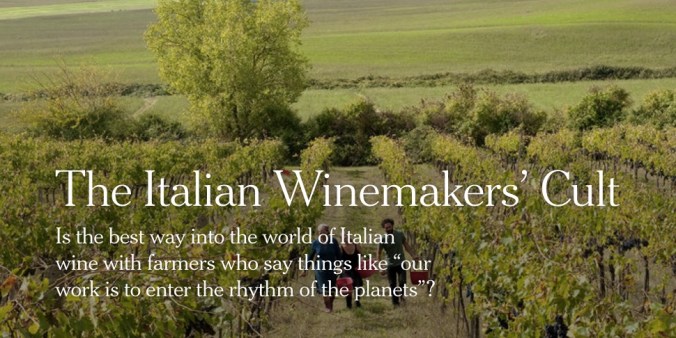
“You have days of fire, air and days of earth — the 12 constellations are our helpers,” she said matter-of-factly. “Our work is to enter the rhythm of the planets.” Continue reading

Genetic Engineering Versus GMO

14236210688_a488be4c46_k

E-maxx/Flickr.com

Thanks to Anthropocene for this summary of promising new findings for the GMO-concerned:

A novel approach to pesticide-free, non-GMO food?

Farms, Interns, Valuable Life Experience

farmintern

We have a long, productive and gratifying history with internships, and so we take note when the Thanks to the Atlantic’s website for this:

The Benefits of Interning on a Farm

Video by The Perennial Plate

High in the mountains of Telluride, Colorado, Tomten Farms offers the opportunity to learn agriculture through an internship program. Continue reading

Fiber Fashion

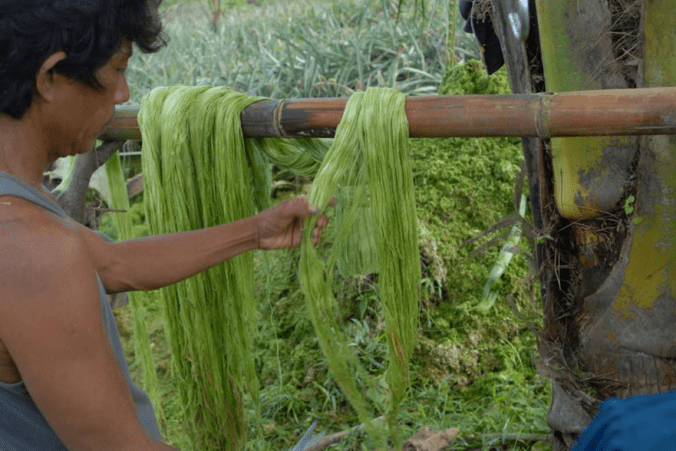
PiñatexTM production will bring new income opportunities for pineapple harvest farmers in developing countries, with the initial development stage taking place in the Philippines

We’re not insensitive to the frequent commentary on both news and social media by animal rights activists against viewing animals as commodities. With those feelings in mind, this discovery of Ananas Anam, a not for profit organization that is developing leather-like textiles using natural fibers that are the by-product of the pineapple harvest, is an exciting one.

I’ll definitely be on the look out for Pinatex products and hope our readers will as well!

ananas- anam – new materials for a new world

OUR SOCIAL IMPACT

Ananas Anam supports pineapple-farming communities in the Philippines. We are developing a new industry that will enhance the social network in rural areas as farmers will be able to sell fibres as a commercial and viable proposition.

Furthermore, the farming communities will benefit from the potential output of natural fertilizer/biogas which is the by-product of fibre extraction.

Other pineapple-growing developing countries will join the Philippines in the production of Piñatex, which will support local economies and strengthen their exports. Continue reading

Sundrop Farms, Harnessing Seawater & Solar

screen-shot-2016-10-11-at-2-26-28-pm

Thanks to EcoWatch for this:

World’s First Farm to Use Solar Power and Seawater Opens in Australia

Sundrop Farms, a tomato production facility that is the first agricultural system of its kind in the world, celebrated its grand opening in Port Augusta, South Australia, Thursday.

Continue reading

Mango Dreaming

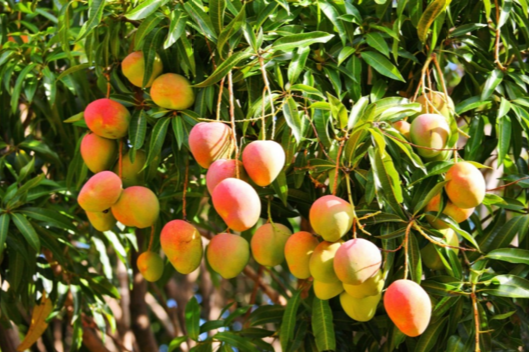
Crist’s visit to small farms as part of our work on a new project serves as a reminder of the amazing diversity and abundance of fruits and vegetables growing in many fertile parts of this country. In Kerala it seems that any seed or stick placed into the rich soil will sprout, and even in the sandy or red clay soil of Maharashtra he found vegetables with explosive flavor.  He described the mango trees that surrounded the farm – not only was he in “mango headquarters”, as he put it – he was likely surrounded by the one of the most prized of this “king of fruit” – the Alphonso.

Note to self: visit during mango season. Continue reading

Agricultural Exploration, Flavor Surprise


aarvliag1

Where is Asha, or at least her book? I could utilize her culinary inputs related to southern Indian vegetables and flavors right about now.

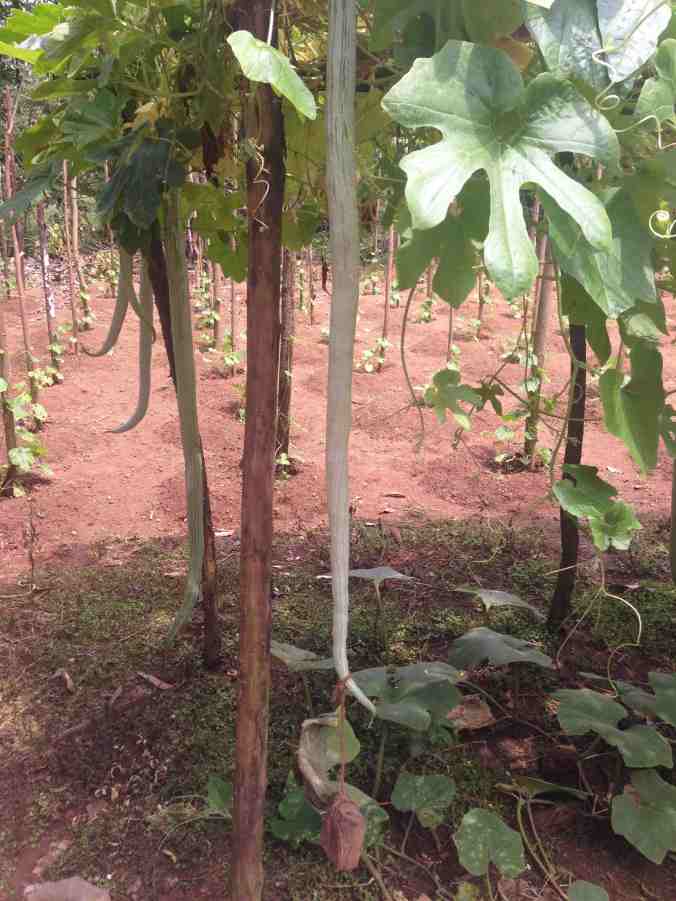
I am in the coastal region of southern Maharashtra now, just north of the Goa border. The cuisine is different from that of Kerala, but with many of the same vegetable inputs. For ten days my mission is primarily to food-focused. For a new project we are working on, our current task is to determine what food items will be grown on property and which will we sourced from local farmers. This is always a curious task. Continue reading

Beware The Compost

veggiegarden_cropped-680x450

Image credit: US Department of Agriculture via Flickr

Thanks to Conservation for their tireless effort to review important science and summarize it for we, the less scientifically-trained folk:

HOME-GROWN VEGGIES CAN FIGHT CLIMATE CHANGE—BUT BEWARE THE COMPOST PILE

Vegetables grown in home gardens are associated with lower greenhouse gas emissions than vegetables bought at the store, according to a study by researchers at the University of California, Santa Barbara. Home gardening reduces emissions by about 2 kilograms for every kilogram of produce, they report in the journal Landscape and Urban Planning.

The study is the first to show that gardening could make a meaningful contribution to helping cities and states meet their emissions reductions targets. Continue reading

Regenerative Agriculture Revolution

kempfhero

Source: Modern Farmer

Organic farming is the agricultural “trend” that we keep hearing about for the future, but what about a different type of farming method that is not certified organic but is still environmentally friendly? The following is the story of John Kempf, a young Amish man who embarked on a quest to rescue his family farm from worsening disease and pest problems and from it all, became a staple in the alternative-agriculture lecture circuit and founder of a consulting company, Advancing Eco Agriculture (AEA). Here’s his story as shared on Modern Farmer:

Once he finished school at age 14, Kempf went to work on his family’s fruit and vegetable farm in northeastern Ohio, overseeing irrigation, plant nutrition and herbicide and pesticide applications. In the fields, Kempf used horses instead of a tractor, with a sprayer powered by a small Honda engine.

It was a trying time for the family. Pests and disease were ravaging the crops, and Kempf found himself mired in escalating chemical warfare against them, with little success. Things hit a low point in 2004, when well over half of the Kempfs’ mainstay crops – tomatoes, cucumbers, zucchini and cantaloupes – were lost. With the family staring at an increasingly bleak financial situation, Kempf, then 16, set off on his mission to relearn everything he’d been taught about farming.

Continue reading

Using Drones in Ag Optimization

Precision agriculture: there’s a drone for that.
Image: ©Mauricio Lima/Flickr via conservationmagazine.org

Earlier today we referenced the changing assumptions in how plants retain water during high carbon dioxide conditions. Luckily for farmers with a little tech-savviness, they may have a new tool available to quantify water stress in plants: drones fitted with infrared thermometers. Catherine Elton reports:

In the quest to maximize the efficiency of agriculture for a growing planet, farmers have recently turned to drones. They are using them to detect pests and to map weeds. More recently, researchers have demonstrated that they can aid farmers in making smarter, more efficient use of irrigation water. This helps farmers not only increase yield, but also conserve a valuable resource in high demand.

Researchers’ early forays into employing drones for this end involved mounting them with thermal cameras to take measurements of canopy-air temperature above the crops. Canopy-air temperature is the basis of a widely used index for water stress in plants. The problem with this system is that thermal cameras are expensive, putting them out of reach of many farmers.

Continue reading

More CO2 Means Less Water for Plants

160829163305_1_540x360

Credit: © yommy / Fotolia

A new study on plant water retention from the University of California, Irvine and the University of Washington might rescind some of our assumptions of climate change impacts on agriculture, water resources, wildfire risk, and plant growth. Their findings reveal that water conserved by plants under high CO2 conditions compensates for much of the effect of warmer temperatures, which means more water is retained on land than predicted in commonly used drought assessments. ScienceDaily reports:

The study compares current drought indices with ones that take into account changes in plant water use. Reduced precipitation will increase droughts across southern North America, southern Europe and northeastern South America. But the results show that in Central Africa and temperate Asia — including China, the Middle East, East Asia and most of Russia — water conservation by plants will largely counteract the parching due to climate change.

Continue reading

Seaweed Farming to Start in Costa Rica

Red (despite the color) seaweed in spaghetti style. Photo © Ricardo Radulovich, UCR professor

A little less than a year ago, I read a very interesting article in The New Yorker about growing seaweed in Long Island Sound, off the shore of Connecticut, that held inspiring information on the environmental effects of farming the marine macroalgae: it absorbs excess nitrogen, phosphorus, and carbon dioxide from the ocean, all of which otherwise negatively affect the ecosystem’s health. Seaweed also can be a solid source of protein, vitamin B12, Omega 3 and 6 fatty acids, and fiber. So growing it is good for the oceans as well as our bodies.

Today, I was reminded about Dana Goodyear’s piece from last November as I read a headline on the University of Costa Rica’s webpage announcing that researchers from their School of Agricultural Engineering and Biosystems, after years of trial studies, will be promoting the growth of seaweed farming off of both coasts of Costa Rica, where they hope it will become a significant food source for the country. Continue reading