Who Will Regulate Lab-grown Meat and Milk?

David Parry/PA Wire via Science Magazine

Like most people, we hold reservations about the idea of putting meat, milk, and egg whites made from laboratory cellular agriculture on the market. Will the proteins be safe for humans to consume? Might there be some unforeseen environmental impact even worse than that of raising cattle where rainforests once stood? Are there ethical considerations that outweigh the hope of freeing the chickens that are kept in cages their whole lives just to harvest their eggs?

We don’t have any answers, but are learning more about the whole process this week from Elizabeth Devitt at Science Magazine, where she writes about the fledgling industry and its potential regulators:

The first hamburger cooked with labmade meat didn’t get rave reviews for taste. But the test tube burger, rolled out to the press in 2013, has helped put a spotlight on the question of how the U.S. government will regulate the emerging field of cellular agriculture, which uses biotechnology instead of animals to make products such as meat, milk, and egg whites.

Continue reading

America’s Only Full-time Tea Taster

The “Green Giant” mechanical tea harvester, one of only a few in the world, does the manual work of 500 people. Wayne’s View Photography/Courtesy of Charleston Tea Plantation

versus

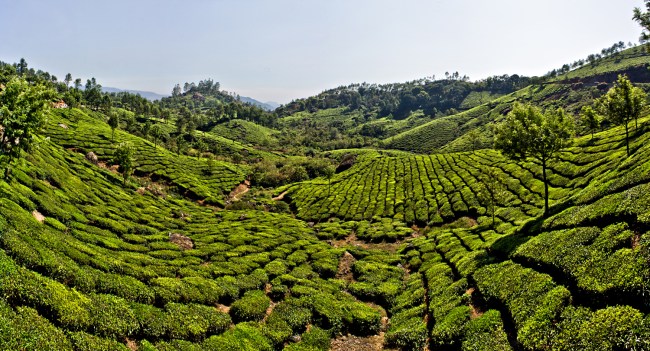
A Munnar tea estate in Kerala, India, where tea leaves are picked by hand. Photo by Milo Inman.

The two photos and their implications offer a pretty big contrast, but what they have in common is Camellia sinensis, the tea plant.  Continue reading

An Abandoned Quarry Transformed

img_9482-1

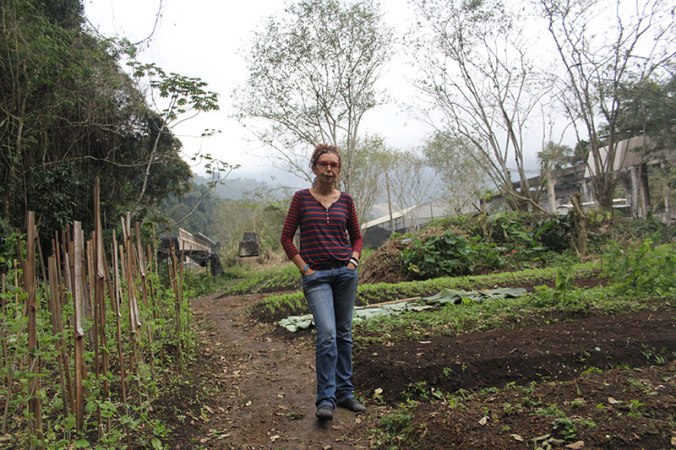
Fátima Anselmo, owner of Orgânicas da Fátima. All photos from: modernfarmer.com

The following is a story about a woman in Rio de Janeiro whose passion for sustainable farming, along with the support of a loyal community, allowed her to transcend an unforeseen hardship and turn an industrial wasteland into a fruitful organic farm. Here’s the story as told on Modern Farmer:

On a steep, forested hillside, in what was once a quarry in Rio de Janeiro, Fátima Anselmo scoops a handful of loose, dark soil from one of her garden beds. “It’s alive!” she says, holding the dirt in the air.

The whole place, in fact, is bursting with life.

Continue reading

Obliterating Weeds with Grit

weed-blaster

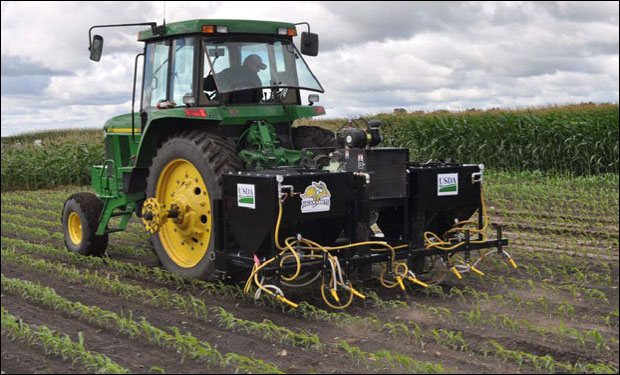
Source: modernfarmer.com

Herbicides are, unfortunately, a necessary product for most industrial farms, but given the rise in organic farming and the growing number of weeds becoming immune to the chemical poisons, other options have to be considered. Frank Forcella, a USDA agronomist, first had an idea to use apricot pits, considered an “agricultural residue,” as a weed killer when ground up with other waste and inserted in a sand blaster. He turned to his colleague Dean Peterson and together they bought a cheap sand blaster and started some simple experiments in a greenhouse.

Their initial work involved growing weeds next to a corn plant; when the corn was about six inches tall and the weed was about one to three inches tall, the researchers blasted both with a split-second application of grit.

It turned out that only the weeds got hurt. In fact, they vanished, while the corn plant was fine. This prompted a field experiment in 2012 with a bigger sand blaster mounted on an ATV. While Peterson drove, Forcella followed, crouched over with the sand blaster nozzle, blasting pigweed and other pesky sprouts.

Forcella’s “silly” idea turned into a feasible and successful solution for killing weeds.
Continue reading

The Adapters to Climate Change

field-notes-bangladesh-adapt-676-1

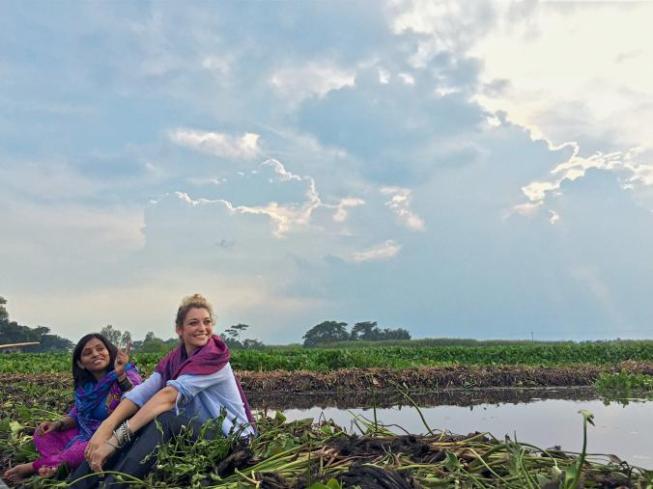
Bouyant fields made of plants and manure can support crops in Bangladesh. Source: National Geographic

Climate change is a tough reality, but in spite of its devastating impacts on the natural environment, there are people who are drawing from their ingenuity to find alternative farming methods in the affected surroundings. Alezé Carrère, a National Geographic grantee, is on a journey to study the people and communities that are adapting to climate change, and she and a film crew are documenting cases into a video series called Adaptation.

[In 2012 Carrère] learned of a group of farmers in Madagascar who were figuring out how to farm in fields eroded by deforestation and heavy rains. Instead of depending on development aid to reforest washed-out areas, the farmers adapted. Soon they began to prefer farming in the eroded gullies, which became rich with water and nutrients.

Continue reading

The Development of Organic Farming

4437

All photos from: The Guardian

The debate of whether or not an organic diet is healthier has long been in question and does not yield a definitive scientific answer, but instead a consensual logical conclusion.  An organic diet is beneficial in that food free of pesticides and chemicals is safer and better for us than food containing those substances. Although organic agriculture occupies only 1% of global agricultural land, the growth of this industry is projected to increase as population growth, climate change and environmental degradation progress and will therefore necessitate agricultural systems with a more balanced portfolio of sustainability benefits.

With that prospect in mind,  John Reganold and Jonathan Wachter from Washington State University conducted a study, Organic Agriculture in the 21st Century, published in Nature Plants, that compared organic and conventional agriculture across the four main metrics of sustainability: be productive, economically profitable, environmentally sound and socially just.

[They] found that although organic farming systems produce yields that average 10-20% less than conventional agriculture, they are more profitable and environmentally friendly. Historically, conventional agriculture has focused on increasing yields at the expense of the other three sustainability metrics.

Continue reading

Feeding Fish with Methane?

Our last post on farmed fish revolved around grubs – dried black soldier fly larvae – as an alternative and more sustainable feed in aquaculture. Today I learned about yet another method for feeding fish that doesn’t involve catching wild fish or using petroleum-reliant grains, and actually helps control a problematic greenhouse gas, methane. Kristine Wong writes for Civil Eats, a website that acts as a “daily news source for critical thought about the American food system”:

Wild seafood is disappearing rapidly and many consumers have turned to farmed fish as a way to help reverse the trend. But finding a sustainable source of food for carnivorous fish such as salmon and tuna—which rank as the second and third most popular types of seafood in America—has been a persistent challenge for aquaculture producers.

Continue reading

Growing Hops & Crafting Beer

hops_custom-06d73795999a6d93f111680ade5849c244609f3f-s1400-c85.jpg

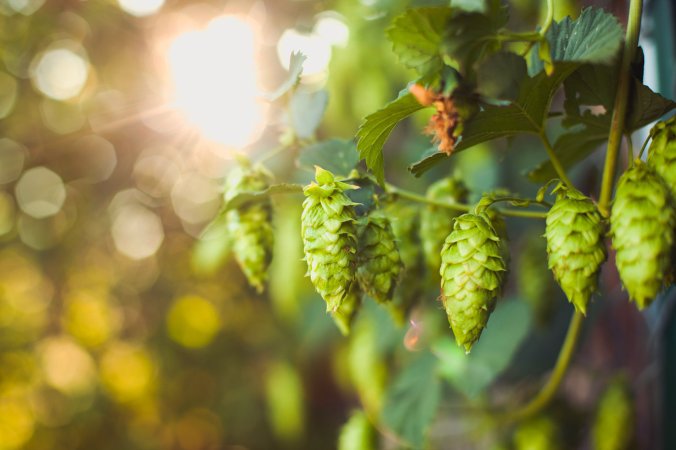
Ripe summer hops good for making beer. Tim Newman/Getty Images

We are anticipating another post by one of our authors, on a topic related to this news story below (thanks to NPR’s great special section, the salt), so let this serve as a reminder and a harbinger:

Hop Growers are raising a glass to craft brewers. The demand for small-batch brews has helped growers boost their revenues, expand their operations, and, in some cases, save their farms.

“Without the advent of craft brewing, a few large, corporate growers would be supplying all of the hops and local, family owned farms like ours would have gone bankrupt,” says Diane Gooding, vice president of operations at Gooding Farms, a hop grower in Wilder, Idaho. “It’s saved the industry.” Continue reading

Thanks As Usual, Monsanto

img_3117_edited-8ee56f2024cb095b7e2552ed630ec23e085d621b-s1400-c85.jpg

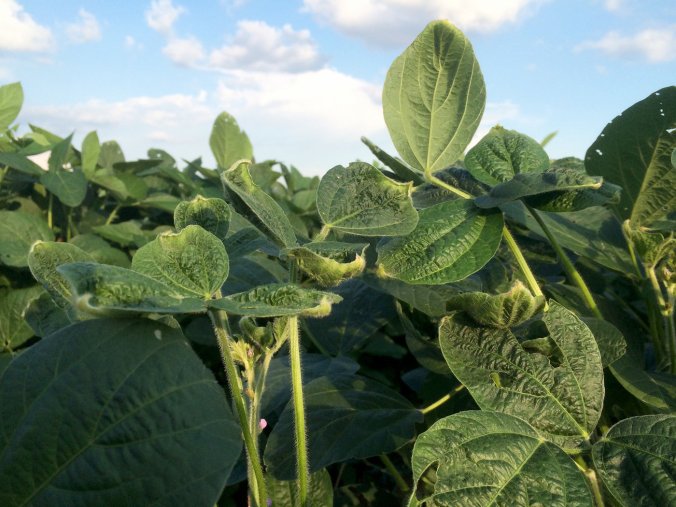
These soybean leaves show evidence of damage from dicamba. It could cut the the harvest by 10 to 30 percent. Courtesy of the University of Arkansas

We live at a time when figuring out how to feed an already-oversized global population (relative to the earth’s natural resources and known agricultural methods) is a monumental task. But Monsanto seems determined to take shortcuts that do as much harm as good. And that is probably putting it too politely, considering the number of times their misdeeds come to our attention (thanks to National Public Radio, USA):

Crime In The Fields: How Monsanto And Scofflaw Farmers Hurt Soybeans In Arkansas

by Dan Charles, August 1, 2016

When agricultural extension agent Tom Barber drives the country roads of eastern Arkansas this summer, his trained eye can spot the damage: soybean leaves contorted into cup-like shapes.

He’s seeing it in field after field. Similar damage is turning up in Tennessee and in the “boot-heel” region of Missouri. Tens of thousands of acres are affected. Continue reading

Ants & Agriculture

attaqueennest1cropt1web.jpg__800x600_q85_crop

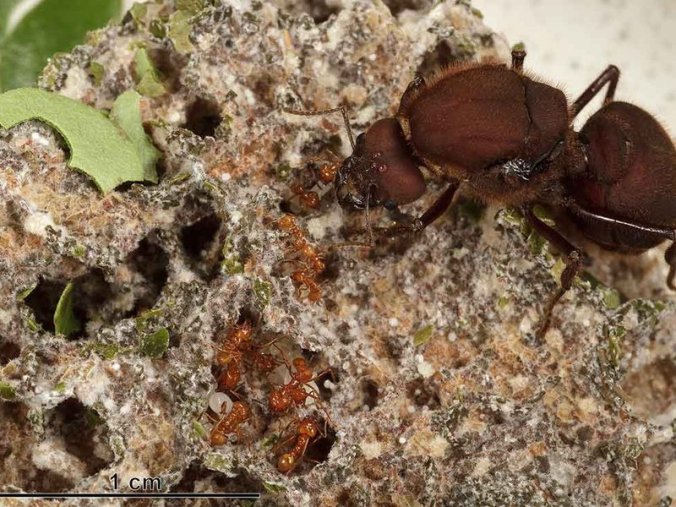
Tiny nurse ants tending to white ant larvae are dwarfed by the queen ant in the upper right. All the ants feed upon protein-rich food produced by a white-grey fungus that they cultivate underground. (Karolyn Darrow)

Thanks to the folks at Smithsonian for this one:

Were Ants the World’s First Farmers?

A new study shows that a group of ants have been conducting a subsistence type of farming since shortly after the dinosaurs died out

By Jackson Landers

Humans have been practicing agriculture for about 10,000 years. But the attine ants of South America (which include the well-known leafcutters) have us beat by a long way.

According to a new paper co-authored by entomologist Ted Schultz, curator of ants at Smithsonian’s National Museum of Natural History, attine ants, which farm on an industrial scale similar to humans, have been carefully cultivating gardens with a complex division of labor to grow an edible fungus. Schultz’s team found that the ants have been doing this far longer than previously believed—up to 65 million years—and that we have much to learn from them. Continue reading

Corn, Heritage & Conservation

980x

Masienda / Facebook

Thanks to EcoWatch for this:

Heirloom Non-GMO Corn Is Helping Sustain Mexico’s Heritage and Farmers

It’s not often that a conversation inspires an idea leading to a project that improves people’s lives and potentially transforms an industry. But that’s what happened to Jorge Gaviria, founder of Masienda.

While serving as a host and translator at the G9 Chefs Summit at Blue Hill at Stone Barns in Pocantico Hills, New York in 2013, Gaviria heard chefs discuss responsibly sourced ingredients. Continue reading

Food Waste, Remarkably Grotesque

5451

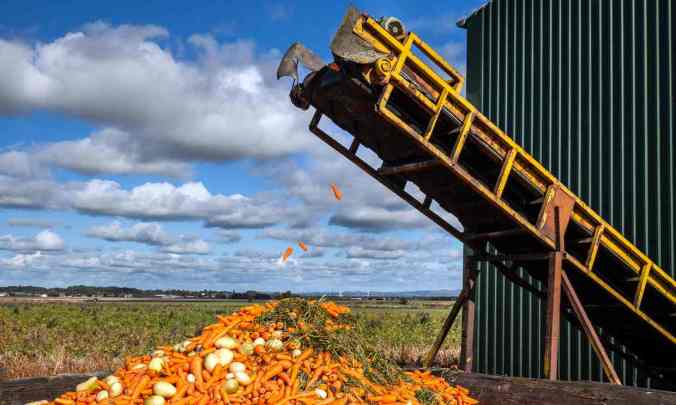
Discarded food is the biggest single component of US landfill and incinerators, according to the Environmental Protection Agency. Photograph: Alamy

We have known for some time the problem is serious, and we are always looking for counter-balancing stories that also highlight solutions. And we are constantly learning more details on just how serious the problem is getting; in short, worse rather than better. Now, new words come to mind. Grotesque is probably the most appropriate (thanks to the Guardian’s ongoing attention to this problem):

The demand for ‘perfect’ fruit and veg means much is discarded, damaging the climate and leaving people hungry

Americans throw away almost as much food as they eat because of a “cult of perfection”, deepening hunger and poverty, and inflicting a heavy toll on the environment.

Vast quantities of fresh produce grown in the US are left in the field to rot, fed to livestock or hauled directly from the field to landfill, because of unrealistic and unyielding cosmetic standards, according to official data and interviews with dozens of farmers, packers, truckers, researchers, campaigners and government officials.

Continue reading

Almond Versus Cow Versus?

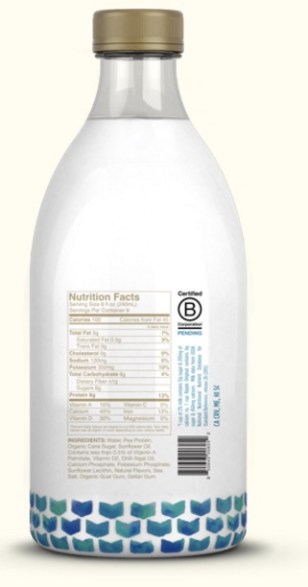
RippleAt first, the name does not help me think anything useful. I do not only mean the name of the contents of the bottle; I mean the brand name on the bottle. So I am showing only the information side of the label. Looks like milk inside. Good start.

If you compare it to almond milk, this one has 8 times the protein. If you compare it to 2% cow milk, this one has half the sugar and 50% more calcium; plus 32mg DHA Omega 3’s Vitamin D & Iron. If this were an advertisement I would face the bottle forward, but it is more an appreciation of how products like this come to be. I like startup stories and particularly the stories of co-founders of startups (which is why I have been listening to this podcast). According this company’s website:

Neil and Adam are committed to making a difference. Adam created Method to bring the world sustainable, beautiful cleaning products. Before trading in his lab coat to start Continue reading

Floating Dairy Farm Planned in Netherlands

Illustration of proposed floating farm by Beladon.

We’ve written about floating solar panels before, and created a floating fence at Xandari Harbour to keep out water hyacinth, but there are plans in Rotterdam for a floating cow farm that will process milk and yogurt, according to Senay Boztas, writing for the Guardian:

Do cows get seasick? It’s not a question farmers often ask, except in the Dutch city of Rotterdam where a team of developers plans to build a floating dairy.

“They won’t here,” says Minke van Wingerden of Beladon, a company involved with water-based projects from a luxury hotel to this floating farm proposed for Rotterdam harbour. “In Friesland, where I come from, sometimes they bring cows from one place to another on a small barge,” van Wingerden recalls. “[The floating farm] will be very stable. When you are on a cruise ship, you aren’t seasick.”

Continue reading

Conservation Reserve Program

The Hull family has partnered with U.S. Department of Agriculture (USDA) Farm Service Agency (FSA) Conservation Reserve Program (CRP) in Vermont to conserve sensitive riparian areas on their dairy farm by establishing forested buffer zones and installing high-tensile fence, stream crossings and other water handling equipment. Photo © USDA / Flickr through a Creative Commons license

This article by Kris Johnson for The Nature Conservancy is reminiscent of a post on paying for ecosystem services published here five years ago, where watersheds that would otherwise be affected by agriculture are better protected with incentives from conservation programs. From Cool Green Science today:

Ask someone in the rural Midwest what the Conservation Reserve Program (CRP) does, and a likely answer is: “It pays farmers not to farm.” But, research recently published in the journal Ecosystem Servicessuggests a better answer would be: It pays farmers to grow clean water.

It’s a better answer because with nutrient pollution threatening drinking water supplies, impacting boating and fishing on lakes and rivers throughout the Midwest and causing a persistent “dead zone” in the Gulf of Mexico, figuring out how to produce clean water is a critically important challenge. And the Conservation Reserve Program (CRP) is key to solving it.

Continue reading

Moringa: Superfood?

A moringa tree (tallest plant in the back left of the photo)

There’s a Moringa tree in the coffee plot at Xandari’s west farm area, and the head gardener José Luis always points it out to guests as a plant with dozens of healthy properties, in addition to its value as a shade-provider to the coffee shrubs. The genus of trees is beginning to be touted as a “miracle tree” and superfood in the United States, but has yet to really catch on among the denizens of developing nations in the dryland tropics, where Moringa grows best. Amanda Little writes for the New Yorker:

On the western margin of Agua Caliente [Mexico], Mark Olson, a professor of evolutionary biology at the National Autonomous University of Mexico, has a farm. “It may look like a shitty little field with runty little trees in a random little town, but it’s an amazing scientific resource,” Olson said, as he led me through the hilly, hardscrabble acre that constitutes the International Moringa Germplasm Collection. This is the world’s largest and most diverse aggregate of trees from the genus Moringa, which Olson believes are “uniquely suited to feeding poor and undernourished populations of the dryland tropics, especially in the era of climate change.”

Continue reading

Potential New Food for Farmed Fish

Photo of microalgae by CSIRO ScienceImage via WikiMedia Commons

We’ve known for some time that lots of fish food used in pisciculture is actually just wild fish, whether processed or not. Conservation Magazine is reporting that microalgae may provide the solution for sustainably feeding fish in farms:

Aquaculture could play a key role in sustainably feeding our growing planet. The problem is that when it comes to feeding the fish, it seems hard to hit the mark on sustainability. Fish oil and fishmeal are draining the oceans of ecologically important forage fish. But when the aquaculture industry substitutes these marine-based foods with vegetable oils and grains, they are driving an enormous amount of additional farming, with all its attendant impacts on the environment. What’s more, this vegetarian diet produces fish that are lacking in the marine omegas that are so important for human health.

Continue reading

Methane from Livestock Has Yet to Decrease

via GreenBiz

A few weeks ago we posted bad news about the higher release of methane gas from cows treated with antibiotics. Data published relatively recently by the U.N. is showing that greenhouse gases produced by livestock and crops are still increasing, unfortunately. John Upton reports for GreenBiz:

As signs emerge that the global energy sector is beginning to rein in what once had been unbridled levels of climate-changing pollution, new United Nations figures show pollution from farming is continuing to get worse.

Greenhouse gases released from the growing of crops and livestock directly increased by a little more than 1 percent in 2014, compared with a year prior, the newly updated data shows.

Continue reading

Questions We Never Thought To Ask, But Should Have

celery_custom-f77a18ccad839316bdd9e4df3fd35f4d43fa662d-s1400-c85.jpg

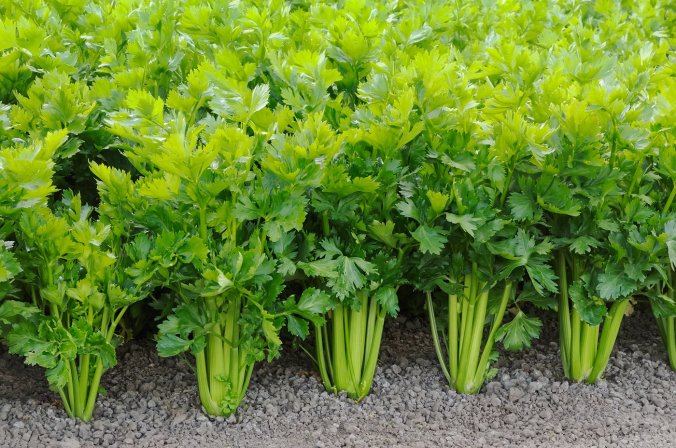
Why did humans start cultivating celery? It’s low-calorie and, one might argue, low flavor. We asked some experts at the intersection of botany and anthropology to share their best guesses. Cora Niele/Getty Images

Thanks to good old Salt, the special feature at National Public Radio (USA):

FOOD FOR THOUGHT

Celery: Why?

by NATALIE JACEWICZ

Celery, the mild-mannered straight man of the vegetable world, packs a puny six calories per stalk and — in my opinion — about as much flavor as a desk lamp. Yet despite its limitations, the fibrous plant has featured in Mediterranean and East Asian civilizations for thousands of years. Continue reading

Farm-Table Symbiosis

09caviarpeas-web2-master675

Preparing tear peas at Nerua, a restaurant at the Guggenheim Museum in Bilbao. The peas are known as “green caviar” among Spain’s top chefs. Credit Samuel Aranda for The New York Times

Mr. Minder’s reporting from the field, in this case the rarified field of Michelin-starred chefs, reminds us that the foodie phenomenon (sometimes now bordering on annoyingly precious, and risking the celebrity-worshipping tendencies that will ruin all good fun) is spreading good old fashioned common sense practices far and wide:

Top Chefs and Local Farmers in Spain Regenerate Their ‘Green Caviar’

ARRIETA, Spain — Making his way down a row of pea plants, Iker Villasana Hernaez, a Basque farmer, leans down to feel each pod individually before deciding whether it is ready to pick.

If the peas inside feel slightly hard, “best to leave it for one more day,” he said. “It’s really all about the perfect timing.” Continue reading