Farming, Students, Sustainability

053116_organic_students_edited_custom-3ae21e3010769f3366279eb8587118e174a358ab-s1400-c85

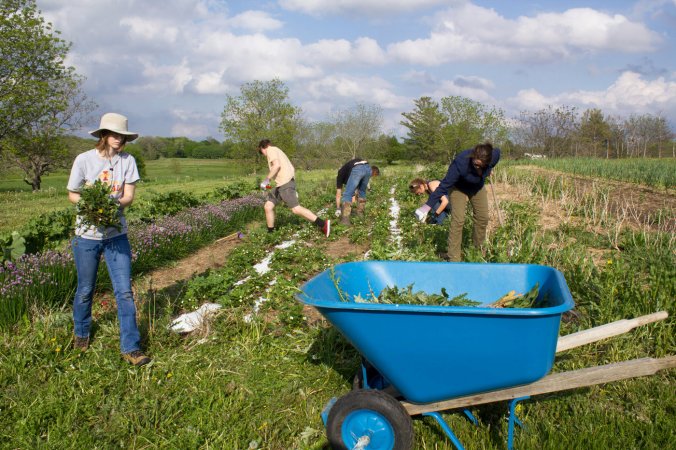
A weekday work session on the Student Organic Farm at Iowa State University has members weeding a perennial bed. Amy Mayer/Harvest Public Media

Thanks to National Public Radio (USA) for this story:

A Student-Run Farm Cultivates Passion For Sustainable Agriculture

A weathered wooden shed that holds wheelbarrows, hoes and other basic tools is the beacon of the Student Organic Farm, a two-acre swath within the larger horticultural research farm at Iowa State University.

On a warm spring evening, a half-dozen students gather here, put on work gloves and begin pulling up weeds from the perennial beds where chives, strawberries, rhubarb and sage are in various stages of growth.

“I didn’t know how passionate I [would] become for physical work,” says culinary science major Heidi Engelhardt. Continue reading

Antibiotics, Even Worse than Anticipated

© Conservation Magazine

We disagree with having cows filled with antibiotics, primarily because of the problems created by bacterial resistance to drugs given without cause. But now we’re learning that there’s even more wrong with antibiotics in cattle: their dung releases more methane. Catherine Elton reports for Conservation Magazine:

Antibiotic use and overuse in livestock has long been controversial, as it has been linked to antibiotic resistance in humans. Livestock are regularly given antibiotics to keep them healthy in overcrowded or unsanitary conditions, or even to boost their growth.

Now, a study published recently in the Proceedings of the Royal Society B has documented for the first time that antibiotics given to cows also increase the emissions of the greenhouse gas methane from cow dung.

Continue reading

Weeding and Stopping Compost Hurts Farms

NatureNet Science Fellow Danny Karp checking on his field experiments in an organic romaine lettuce field. © The Nature Conservancy (Cara Byington)

We regularly report on innovations in agriculture, such as biofeedback and “certified transitional” ingredients, but also on tried-and-true methods like composting, or removing weeds in alternative ways. Cara Byington from The Nature Conservancy’s Cool Green Science blog reports on a recent study on nature and farmers:

A new paper in the Journal of Applied Ecology finds that two farm-based food safety practices – removal of non-crop vegetation in and around fields, and abandonment of composting – actually hurt farmers without making food safer.

“The practices are unnecessary,” said Danny Karp, lead author on the study. “Not only are they ineffective for their intended purpose, they damage growers by decreasing crop yields and pest control.”

Continue reading

Photosynthesis as Biofeedback for Adjusting Light Levels in Greenhouses

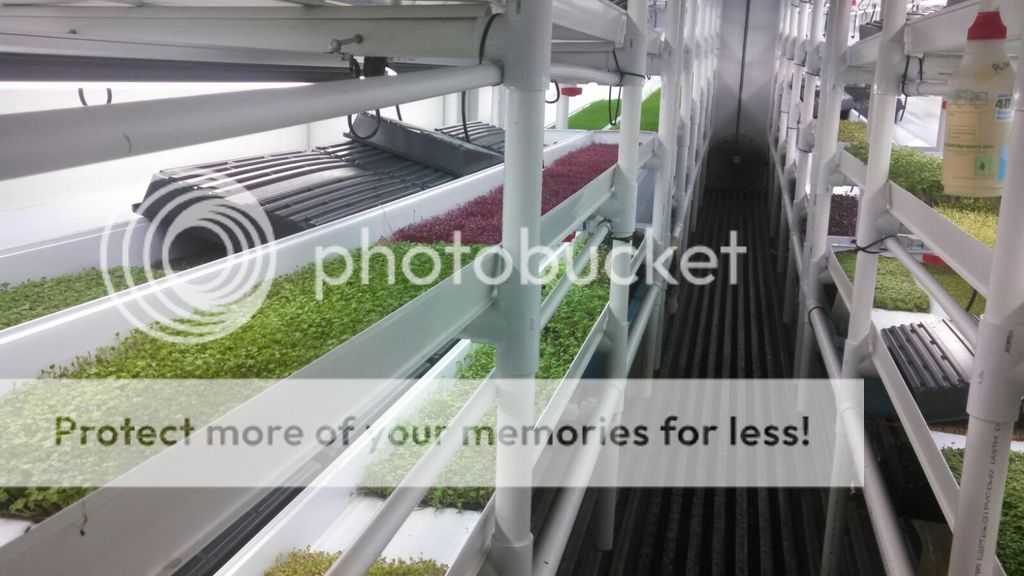
Photo of a small commercial indoor growing setup by CJP

We’ve recently shared interesting methods to improve the growth of plants, whether in the commercial or domestic setting. We learned that tomatoes may reduce need for pesticides, that plants can grow fairly well in artificial bubbles underwater, and now that technology might soon develop to use a metric of how much one’s plants are photosynthesizing to determine how much light they need, in an effort to cut electricity use. Catherine Elton reports for Conservation Magazine on a study published in the Journal of the American Society of Horticultural Science:

Indoor agriculture is gaining in popularity, and there are high expectations that—at a large enough scale—it could help satisfy the growing demand for food. But whether indoor farms, often called vertical farms or plant factories, make economic or environmental sense is hotly debated.

Continue reading

“Certified Transitional” Ingredients

An interior view of Clif Bar headquarters in Emeryville, California. Photo © GreenBiz Group

We put a lot of stock in organic farming, as well as eating and drinking. If companies do it right, sourcing organically can make a difference. So it’s uplifting to read that two companies we support by buying their delicious products, Clif Bar and Kashi, are making an effort to bolster the organic ingredient supply chain by leading a new category for crops produced by farmers who are in the three-year process of switching from conventional agriculture to an organic label; it’s called “Certified Transitional.” Lauren Hepler reports for GreenBiz:

Inside an airy, post-industrial space situated on the East side of the San Francisco Bay, several brightly colored mountain bikes and the sail of a kite surfing set hang from a lofted ceiling above some 350 employees sprawled across the 150,000-square-foot headquarters of Clif Bar.

Outside, a small organic gardening plot has been set up next to the free daycare center for the children of employees at the famously outdoorsy food company.

“We start ’em young,” jokes Dean Mayer, Clif Bar’s communications manager.

Continue reading

Human – Pachyderm – Apium Collaboration

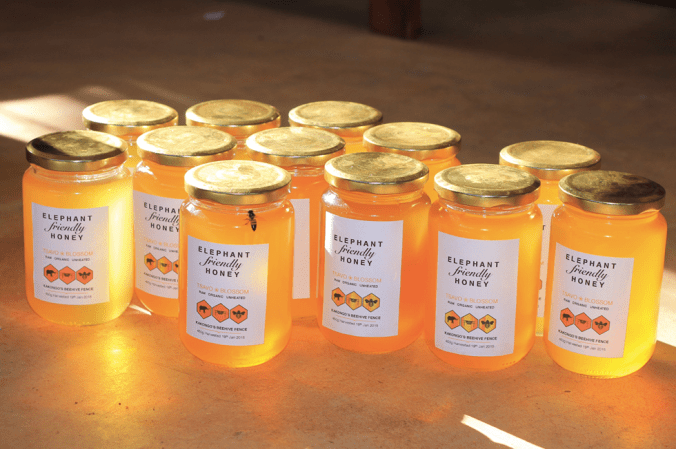
Innovation takes many forms. It’s especially satisfying when that innovation works with nature instead of against her. Examples of creative collaboration to solve environmental issues, be they unusual agricultural pest control or ways to avoid human/wildlife conflict such as this Elephant and Bee project are happy news indeed.

Some of our team live in Kerala, India – and know from personal experience the intelligence, and perseverance of elephants, when confronted with an obstacle to plants or trees they crave. This beehive fence concept is incredibly clever, taking advantage of the elephants’ natural fear of bees to keep them safe from potentially deadly conflict.

“I congratulate Dr. King as the winner of this important award. Her research underlines how working with, rather than against, nature can provide humanity with many of the solutions to the challenges countries and communities face. Continue reading

In The Interest Of Debate On GMOs

We are concerned, and therefore generally against, GMOs up to now. But we are not 100% sure and so welcome new information when it is available. The University of Washington’s magazine, Conservation, is back in full awesomeness as a public service:

Despite the controversy surrounding genetically modified crops, they can be an important tool for developing disease-resistant crops that can eliminate the use of pesticides and reduce crop losses. In a trio of papers published recently in Nature Biotechnology, researchers documented how new, faster methods of isolating genes—and looking in some unexpected places—led them to identify, clone, and transfer disease-resistant genes into soybean, wheat, and potato plants. Continue reading

Waddler Utility

duck-parade_custom-581ea4c0b2ef8bc06e405fc310706495ca268162-s1400-c85

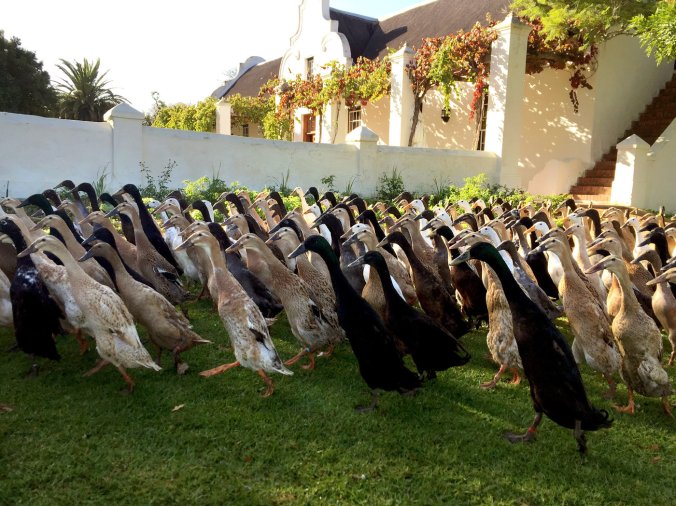
Indian runner ducks have been used in Asia for thousands of years to control pests. Now they’re used in a South African vineyard to eat snails that damage the vines. Sarah Birnbaum for NPR

We are pleased to know that birds from India have such enormous value in places outside India:

For This Vineyard, It’s Duck, Duck, Booze

On Vergenoegd Wine Estate in Stellenbosch, South Africa, about a thousand Indian runner ducks parade twice a day into a vineyard to rid it of pests. It’s a remarkably orderly scene.

Unlike your typical waddling duck, these ducks don’t sway back and forth. They run quickly in a straight line.

Every morning at 9:45 a.m., they emerge from a gate and zip around the gleaming white manor house – even sticking to a manicured gravel path. They run in formation. Their beaks all point in the same direction, their bodies all turn at the same time — like they’ve worked on the choreography beforehand.

The previous owner of the wine estate, John Faure, is a bird lover and brought them over from Asia. They have been at the estate for at least 30 years. Continue reading

Food Footprints

sugarpic2_custom-cf06be909a47e87ffeab74b513462532b5f1261e-s1400-c85

Leonard Scinto, a researcher at Florida International University, standing beside a concrete post that measures the subsidence of soil in the Everglades Agricultural Area. In 1924, the top of the post was level with the ground surface. Dan Charles/NPR

Five minutes to listen to how your food greens, or does not green, our planet (thanks to National Public Radio, USA):

The Environmental Cost Of Growing Food

Let’s say you’re an environmentally motivated eater. You want your diet to do as little damage as possible to our planet’s forests and grasslands and wildlife.

But how do you decide which food is greener? Continue reading

Rainforest Alliance and Sustainable Agriculture Network

Among the farms that the Rainforest Alliance certifies are those that produce bananas, coffee, tea, pineapples, cocoa, flowers and palm oil. Photo by Flickr user Sally Crossthwaite

The Rainforest Alliance and Sustainable Agriculture Network have been doing good work, mostly in developing countries, for over twenty years to improve agricultural practices and protect natural forests. The two groups published an Impacts Report not long ago that reviews their progress, and two executives wrote an article summarizing those impacts on GreenBiz.com:

Independent, third-party certification has grown phenomenally since 1993, when the Rainforest Alliance certified the first banana plantation to meet Sustainable Agriculture Network (SAN) standards.

The standards prohibit conversion of forests or other natural ecosystems to cropland, protect workers and wildlife, regulate the use of chemicals and other farming practices. Today they cover more than a million farmers on Rainforest Alliance Certified farms, most of them smallholders, cultivating 100 crops on a total of 7.4 million acres (about the size of Switzerland) across 42 countries.

Continue reading

Five Minutes Related To Taste

Screen Shot 2016-04-27 at 7.54.16 PM

By NATALIA V. OSIPOVA. Image by Joshua Thomas for The New York Times.

Thanks to the New York Times for continuing to reach for our attention (click above to go to the video):

Eduardo Rivera, a Mexican-born farmer living in Minnesota, is striving to make organic vegetables accessible to the Latino community.


Food For Thought

PollanLecture_audienceByTonyRinaldosm

Author Michael Pollan speaks to a packed house at Radcliffe. Photograph by Tony Rinaldo

And to round out our links outward today on food-related themes, this one from Harvard Magazine seems a fitting complement to today’s two other news-feature items:

Michael Pollan’s Crooked Writing Path

WHETHER HE IS WRITING a book on big farming and the way Americans think about food, or interviewing terminal cancer patients who have had life-altering experiences through hallucinogenic drugs, author Michael Pollan’s career as a writer has been anything but traditional. Continue reading

Get Ready For New Foods

4167

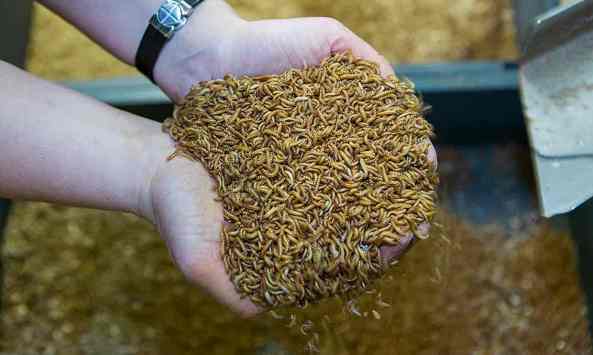
Edible insects are currently expensive, but bug farmers believe economies of scale will bring lower prices. Photograph: Proti-Farm

We cannot help but wonder which type of salt may be considered most appropriate for the new menu items coming soon to a table near you; but seriously, get ready:

The worm has turned: how British insect farms could spawn a food revolution

With meat prices expected to soar, agricultural entrepreneurs believe invertebrate livestock can provide the protein we need. But will the mainstream ever be ready to eat mealworms?

It could be the tumbledown, moss-covered drystone walls marking the boundaries of land that has been farmed since the arrival of the Norse settlers. Or the gentle meanderings of the river Eden through the shadows of the Cumbrian fells. Or the proximity of the Settle-Carlisle railway line. All in all, Thringill Farm seems an unlikely setting for a 21st-century food revolution. Continue reading

With Quinoa, All’s Well Only If It Ends Well

peruvianquinoa_custom-eb612ca1281105ba9be2d6e069a3db7ab8627b5b-s1400-c85

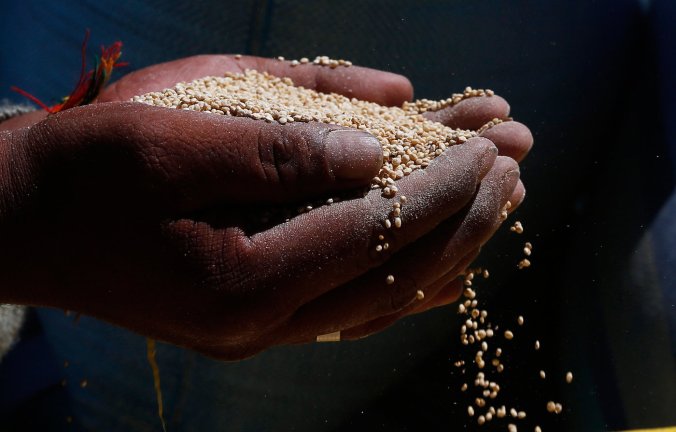
A man holds Peruvian quinoa. New studies of detailed data gathered by Peru’s government find that the global quinoa boom really was good both for Peruvians — both those who grow it and those who eat it. Juan Karita/AP

Thanks to National Public Radion (USA)’s Salt program for this important update:

Your Quinoa Habit Really Did Help Peru’s Poor. But There’s Trouble Ahead

The price of quinoa tripled from 2006 to 2013 as America and Europe discovered this new superfood. That led to scary media reports that the people who grew it in the high Andes mountains of Bolivia and Peru could no longer afford to eat it. And while, as we reported, groups working on the ground tried to spread the word that your love of quinoa was actually helping Andean farmers, that was still anecdote, rather than evidence.
Continue reading

Fair’s Fare, More Than Fair

160404_r27910-690

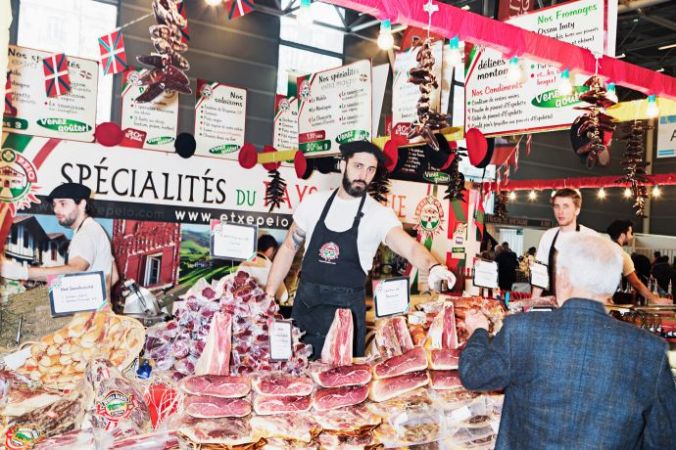
The Salon de l’Agriculture, held every year in Paris, is also a political crucible. PHOTOGRAPH BY IMMO KLINK FOR THE NEW YORKER

It is our favorite annual edition of our favorite source of longform journalism, and this looks like it could be our favorite article from this year’s edition:

Come to the Fair

The food-and-booze fest that is France’s national agricultural exhibition.

BY LAUREN COLLINS

It would be a mistake to think of microtourism, the latest invented word to capture the imagination of the travel sector, as mere staycationing. The practice, as defined by a pair of design students in Denmark who recently completed a project on the theme, is a prerogative of a future in which “gas prices are so high that we must develop a new form of adventure that does not require travelling great distances.” Microtourism is not glamping (no yurt) or bleisure (no work) or minimooning (no wedding). Nor is it Netflix and putter. If a staycation means pajamas and the garden shed, microtourism means sneakers and the subway. Continue reading

Finding The Silver Lining

winegrapes_custom-24abb0a710e60f262997757c40bf35da573ab4f9-s1400-c85.jpg

A worker cuts a cluster of grapes in the Burgundy region of France during the harvest period. Global warming has made conditions historically associated with great wines more frequent in Bordeaux and Burgundy, a study finds. But things look less bright for California vineyards. Jeff Pachoud/AFP/Getty Images

We admit that we stretch, as frequently as we can, to find alternatives to doom and gloom environmental news.  We submit the following as Exhibit A if a case is to made to prove the point that there is always a silver lining to be found (thanks to National Public Radio, USA):

An Upside To Climate Change? Better French Wine

While climate change threatens coastal cities and generates extreme weather, the effects of global warming could bring good news to some of France’s most esteemed vineyards. Continue reading

Agripreneurship

A wonderful aspect of both young people and entrepreneurs is their ability to find creative solutions to apparently insoluble problems. The two overlap beautifully within the Global Forum on Agricultural Research (GFAR) and the Youth Agripreneurs Project (YAP), where the goal is to pilot innovation to help rural communities world wide.

Kulisha, which is the verb ‘to feed’ in Swahili, the national language of Kenya, is a proposed project that addresses both the problem of creating a sustainable food source in Kenya and the extractive fishing methods of coastal trawlers. Aquaculture is an important food industry in East Africa, but the method of using fish meal from wild caught anchovies is destructive on all levels. Kulisha’s goal is to produce sustainable fish feed in Kenya made from black soldier fly larva.

Our idea, Kulisha, will provide a low-cost, high-quality sustainable fish feed made from black soldier fly larvae. We will sell dried insects to these rural fish farmers to replace the anchovies they are using to mix their own. In addition, we’ll produce a nutrient-rich fertilizer as a by-product from raising the insects which will be sold at a low cost to local crop farmers. It is our long term goal to formulate and sell our own feed. Continue reading

Pollinator Challenges & Our Self-Interested Responsibility

966911_1_0226-WPOLLINATORS_standard

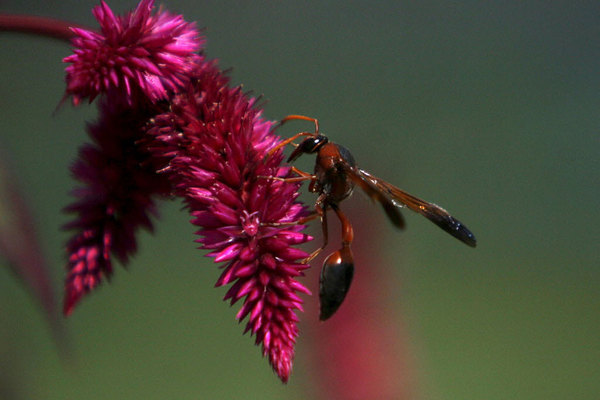
A wasp lands on a flower in a garden in Srinagar, India, Sept. 8, 2009. Bees and other pollinators face increasing risks to their survival, threatening foods such as apples, blueberries and coffee worth hundreds of billions of dollars a year, the first global assessment of pollinators showed on Friday.

It is worth seeing how various media outlets cover the same news we first linked to here. The CS Monitor, as always, has a thoughtful consideration of the news, asking the key question:

Earth’s bees and other pollinators need some human help: What can we do?

Pollinator populations around the world are declining, threatening hundreds of billions of dollars worth of agriculture. Humans are part of the problem, say scientists, but they can also be part of the solution.

Oregon, Trendsetter

Briana Murphy, a shepherdess herds goats at the Portland International Airport in Portland

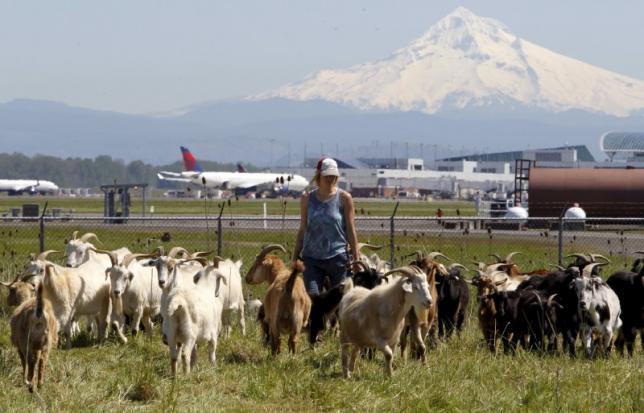
Shepherdess Briana Murphy herds goats at the Portland International Airport in Portland, Oregon, as Mount Hood is seen in the background, April 17, 2015. In a city that loves its goats, the Portland International Airport now has a temporary herd. Forty goats and a llama started munching this week on invasive plants such as blackberries, thistle and Scotch broom near the PDX airfield. The llama’s job is to keep away predators like coyotes. Picture taken April 17, 2015. REUTERS/Steve Dipaola – RTX19KH0


The aroma seems like a small price to pay, under the circumstances, but we appreciate Oregon for trying this novel approach nonetheless:

Oregon city fires its grounds-keeping goats with ‘barnyard aroma’

A crew of goats brought in to devour invasive plants at a popular park in Oregon’s state capital, Salem, have been fired because they ate indiscriminately, cost nearly five times as much as human landscapers and smelled far worse, a city official said on Friday. Continue reading

Wild Tomatoes Reduce Need for Pesticides

Cherry tomatoes growing at Xandari Resort © J.L. Zainaldin

We’re always on the lookout for non-chemical ways to deter pests from agricultural areas, and researchers in the UK are finding yet another method that doesn’t involve spraying plants with poisons that can adversely affect local wildlife (i.e., bees) or the people eating them. It may seem like a no-brainer, but here it is: breed commercial tomatoes with wild ones to increase pest resistance! Sindya Bhanoo summarizes the research for the New York Times:

Whiteflies are the scourge of many farms, damaging tomatoes, peppers, eggplants and other crops. Now, researchers in Britain report that a species of wild tomato is more resistant to the pest than its commercial counterparts.

The wild type, the currant tomato, is closely related to domestic varieties, “so we could crossbreed to introduce the resistance,” said Thomas McDaniel, a biologist and doctoral student at Newcastle University in England and a co-author of the study, published in the journal Agronomy for Sustainable Development. “Another method would be genetic engineering, if we identified the genes.”

The researchers studied Trialeurodes vaporariorum, a species of whitefly that often attacks tomatoes grown in greenhouses. Whiteflies damage tomato plants by extracting the plant’s sap, which contains vital nutrients; by leaving a sticky substance on the plant’s surface that attracts mold; and by transmitting viruses through their saliva.

Continue reading