Really, Wyoming?

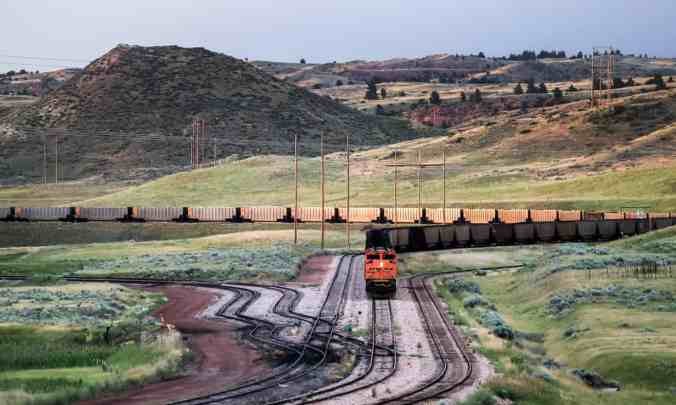
A train loaded with newly mined coal near Gillette, Wyoming. Photograph: Tannen Maury/EPA

It’s been too long since we last asked this question that had been a mainstay in these pages, but today we have to ask it of Wyoming, based on this story:

Wyoming stands up for coal with threat to sue states that refuse to buy it

Republican governor says measure sends message that Wyoming is ‘prepared to bring litigation to protect her interests’

Wyoming is faced by a transition to renewable energy that’s gathering pace across America, but it has now come up with a novel and controversial plan to protect its mining industry – sue other states that refuse to take its coal. Continue reading

Choices For Mining Lithium

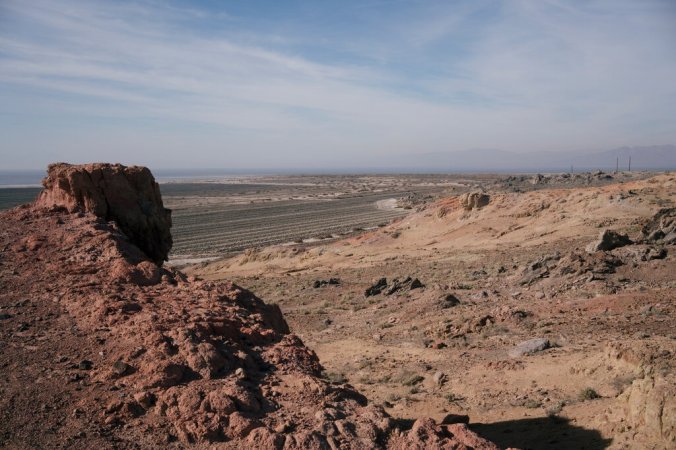
The Salton Sea is one of numerous new mining proposals in a global gold rush to find new sources of metals and minerals needed for electric cars and renewable energy.

Thanks to the New York Times for this coverage of the choices surrounding how and where to mine a key ingredient of more efficient batteries–a consequential environmental question:

The Lithium Gold Rush: Inside the Race to Power Electric Vehicles

A race is on to produce lithium in the United States, but competing projects are taking very different approaches to extracting the vital raw material. Some might not be very green.

“This is the most sustainable lithium in the world, made in America,” Rod Colwell, the chief executive of Controlled Thermal Resources, said. “Who would have thought it? We’ve got this massive opportunity.”

Atop a long-dormant volcano in northern Nevada, workers are preparing to start blasting and digging out a giant pit that will serve as the first new large-scale lithium mine in the United States in more than a decade — a new domestic supply of an essential ingredient in electric car batteries and renewable energy.

The mine, constructed on leased federal lands, could help address the near total reliance by the United States on foreign sources of lithium.

But the project, known as Lithium Americas, has drawn protests from members of a Native American tribe, ranchers and environmental groups because it is expected to use billions of gallons of precious ground water, potentially contaminating some of it for 300 years, while leaving behind a giant mound of waste. Continue reading

The Sinking Cost Of Renewable Energy

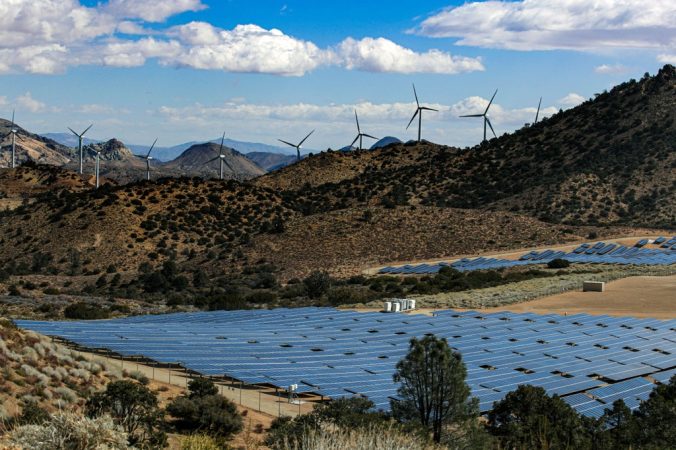
Because its costs continue to slide with every quarter, solar energy will be cheaper than fossil fuels almost everywhere on the planet by the decade’s end. Photograph by Irfan Khan / Los Angeles Times / Getty

Thanks to Bill McKibben, as always, for at least one bit of good news in his weekly newsletter:

Renewable Energy Is Suddenly Startlingly Cheap

Now the biggest barrier to change is the will of our politicians to take serious climate action.

Earth Week has come and gone, leaving behind an ankle-deep and green-tinted drift of reports, press releases, and earnest promises from C.E.O.s and premiers alike that they are planning to become part of the solution. There were contingent signs of real possibility—if some of the heads of state whom John Kerry called on to make Zoom speeches appeared a little strained, at least they appeared. (Scott Morrison, the Prime Minister of Australia, the most carbon-emitting developed nation per capita, struggled to make his technology work.) But, if you want real hope, the best place to look may be a little noted report from the London-based think tank Carbon Tracker Initiative. Continue reading

The Climate Crisis, Earth Day Edition

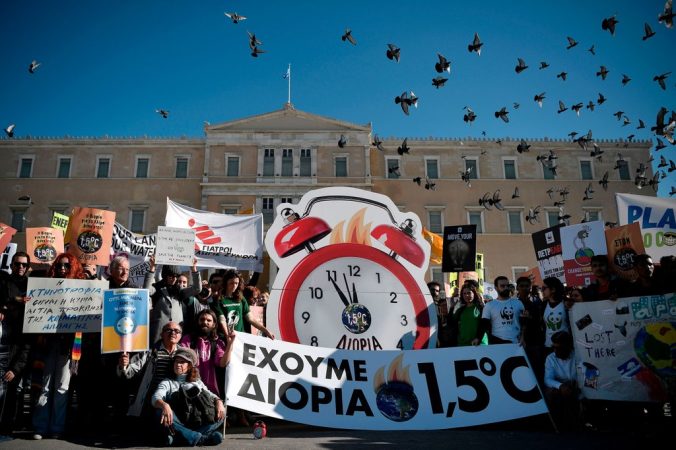
Climate activists at a rally in Athens, Greece, in late 2018, hold up banners warning that time is running out on efforts to contain the earth’s warming to a rise of 1.5 degrees Celsius. Photograph by Louisa Gouliamaki / AFP / Getty

Thanks to Bill McKibben for this Earth Day edition of his newsletter, The Climate Crisis, which we sample from regularly:

How 1.5 Degrees Became the Key to Climate Progress

The number has dramatically reorganized global thinking around the climate.

It’s Earth Day +51, as we near the end of President Biden’s first hundred days, and forty world leaders are scheduled to join him for a virtual summit on climate change. “For those of you who are excited about climate, we will have a lot more to say next week,” the White House press secretary, Jen Psaki, said last Thursday, which is a sweet way to think about it—better than “for those of you who are existentially depressed about climate.” Continue reading

Urban Power Shifts

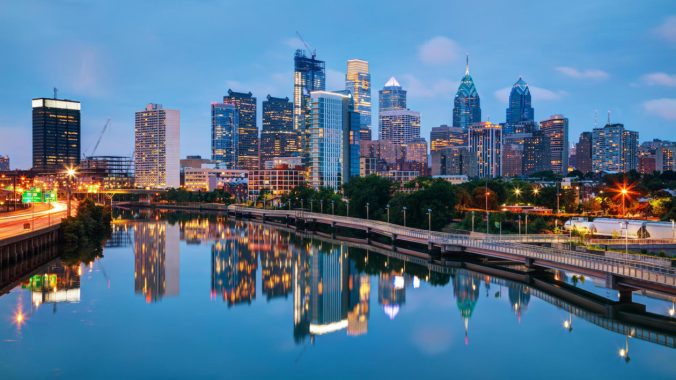
Center City Philadelphia, viewed from the Schuylkill River. ZOONAR GMBH / ALAMY STOCK PHOTO

Thanks to Jonathan Mingle  and Yale e360 for this analysis:

Cities Confront Climate Challenge: How to Move from Gas to Electricity?

Ending the use of fossil fuels to heat homes and buildings is a key challenge for cities hoping to achieve net-zero emissions. Nowhere is that more evident than in Philadelphia, where technical and financial hurdles and a reluctant gas company stand in the way of decarbonization.

In 1836, Philadelphians mostly used whale oil and candles to light their homes and businesses. That year, the newly formed Philadelphia Gas Works caused a stir when it lit 46 downtown street lamps with gas made from coal in its plant on the Schuylkill River. Continue reading

Fossil Fuel Divestment Debate Settled

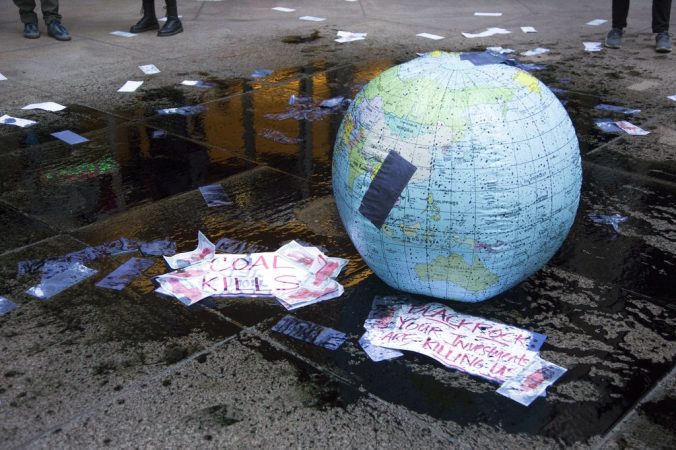
Protesters have argued that you shouldn’t try to profit off the end of the world. New analysis shows that, in any event, you won’t. Photograph by David Grossman / Alamy

This is a short read with a big implication; as always we are grateful to Bill McKibben for his weekly newsletter:

The Powerful New Financial Argument for Fossil-Fuel Divestment

A report by BlackRock, the world’s largest investment house, shows that those who have divested have profited not only morally but also financially.

In a few months, a small British financial think tank will mark the tenth anniversary of the publication of a landmark research report that helped launch the global fossil-fuel-divestment movement. As that celebration takes place, another seminal report—this one obtained under the Freedom of Information Act from the world’s largest investment house—closes the loop on one of the key arguments of that decade-long fight. Continue reading

Scotland, Running On Almost 100% Renewables

GETTY IMAGES. Scotland’s renewables output has tripled in 10 years

Thanks to Scotland, for the ambition and demonstration; and to the BBC for reporting this:

Renewables met 97% of Scotland’s electricity demand in 2020

GETTY IMAGES. WWF Scotland is calling for an increased roll-out of electric vehicles

Scotland has narrowly missed a target to generate the equivalent of 100% of its electricity demand from renewables in 2020.

New figures reveal it reached 97.4% from renewable sources.

This target was set in 2011, when renewable technologies generated just 37% of national demand. Continue reading

Turning Point In USA’s Transition To Electric Vehicles

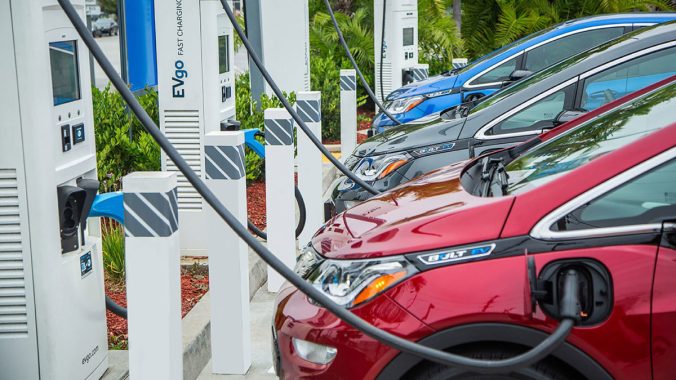
General Motors has partnered with EVgo to deploy more than 2,700 fast chargers across the U.S. CREDIT: GM

John Paul MacDuffie and Sarah E. Light, both professors at the Wharton School of Business at the University of Pennsylvania, have published an article on Yale E360 highlighting the improving potential for electric vehicles to dominate the USA market sooner than previously expected:

EV Turning Point: Momentum Builds for U.S. Electric Vehicle Transition

Driven by GM, Tesla, and the Biden administration, the U.S. is now poised to press ahead in the transformation to electric vehicles. Big challenges still loom, but technological advances, government support, and growing consumer appeal will drive the inevitable switch to EVs.

Last month’s failure of the Texas electric grid, coming just weeks after General Motors’ pledge to make only electric vehicles by 2035, highlights the daunting task the United States faces as it takes the first steps toward weaning its economy off fossil fuels. Continue reading

Promoting PIMBYism

A good method for converting so-called NIMBY opponents of turbines and other renewable-energy infrastructure would be to give locals a stake in the enterprise’s economic success. Photograph by Simon Dawson / Bloomberg / Getty
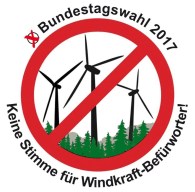
“No vote for wind power advocates” – wind power opponents’ election poster for the 2017 parliamentary elections. Source: windwahn.com

We have giant turbines along the ridge at the top of the mountain where we live. I enjoy looking at them, not because they are pretty, or perfect, but because they represent progress. I never had the NIMBY inclination. If the turbines were in my face all day, every day, or if I had some sense that they were affecting my property value, perhaps I would feel differently. I had thought of the acronym PIMBY, thanks to those turbines uphill from us, before reading this, but am glad to see it is a thing. Thanks, as always, to Bill McKibben for his newsletter’s role in getting us to see further down the road:

The Shift to Renewable Energy Can Give More Power to the People

The pandemic has driven a lot of people outdoors: reports show that park visits are up around the world and parking lots at hiking trails are packed. That’s understandable—by now you’d need to chop down a sizable forest to print out the studies showing that time in nature reduces stress, cuts healing times, and enhances the functioning of the immune system. As Sadie Dingfelder wrote in the Washington Post in December, “I’ve always found it relaxing and rejuvenating to be outdoors, but the anxiety and isolation of the pandemic, the uncertainty of civil unrest and, oh, I don’t know, the potential crumbling of American democracy have made me crave nature like a drug.” Continue reading

Offshore Wind Power, Eastern USA

Construction work underway at the Coastal Virginia Offshore Wind project, located 27 miles off the coast of Virginia Beach. DOMINION ENERGY

Thanks to Yale e360:

On U.S. East Coast, Has Offshore Wind’s Moment Finally Arrived?

After years of false starts, offshore wind is poised to take off along the East Coast. Commitments by states to purchase renewable power, support from the Biden administration, and billions in new investment are all contributing to the emergence of this fledgling industry.

The Block Island Wind Farm off the Rhode Island coast was the first commercial offshore wind farm in the U.S. when it became operational in 2016. DON EMMERT/AFP VIA GETTY IMAGES

About 60 miles east of New York’s Montauk Point, a 128,000-acre expanse of the Atlantic Ocean is expected to produce enough electricity to power around 850,000 homes when it’s populated with wind turbines and connected to the onshore grid in the next few years.

Fifteen miles off Atlantic City, New Jersey, another windy swath of ocean is due to start generating enough power for some 500,000 homes when a forest of 850-foot-high turbines start turning there in 2024.

Continue reading

New Questions For Old Hills

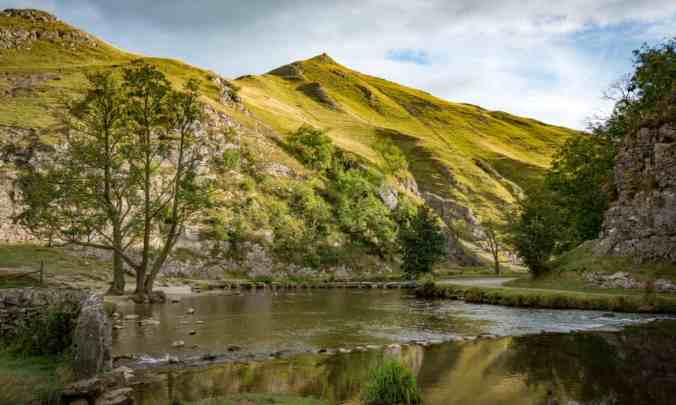
Scenic beauty spot or potential hydropower storage facility? The Dovedale national nature reserve in the Peak District. Photograph: dianajarvisphotography.co.uk/Alamy

Thanks to the Guardian for giving us a different view on one possible part of a solution to the problem posed in yesterday’s post:

Powering up: UK hills could be used as energy ‘batteries’

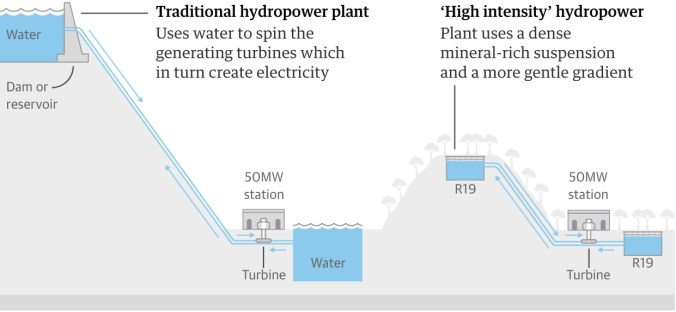
Engineers explore using gentle slopes rather than steep dams or mountains to store electricity

Hundreds of hills across the UK could be transformed into renewable energy “batteries” through a pioneering hydropower system embedded underground.

Guardian graphic. Source: RheEnergise

A team of engineers have developed a system that adapts one of the oldest forms of energy storage, hydropower, to store and release electricity from gentle slopes rather than requiring steep dam walls and mountains. Continue reading

Denmark’s Clean Energy Island

A simulation of Denmark’s clean energy island, due to be completed before 2033. Photograph: Danish government

Wind is picking up speed in the race for energy’s future, and to help governments meet climate goals. Denmark is in that race to win. Thanks to the Guardian for this story:

Denmark strikes deal on £25bn artificial wind energy island

Thanks to an inter-party agreement, the clean energy hub in the North Sea is set to be the largest construction project in Danish history

Denmark’s government has agreed to take a majority stake in a £25bn artificial “energy island”, which is to be built 50 miles (80km) offshore, in the middle of the North Sea.

The island to the west of the Jutland peninsula will initially have an area of 120,000 sq metres – the size of 18 football pitches – and in its first phase will be able to provide 3m households with green energy. Continue reading

2021, Renewable Energy Race Heats Up

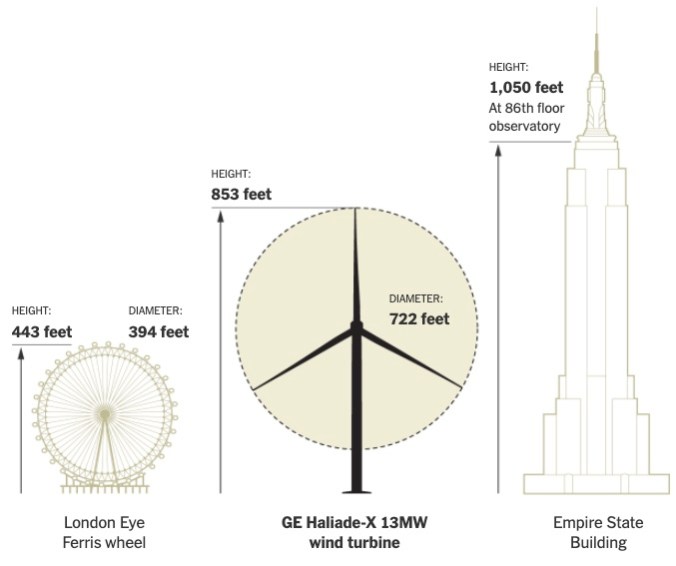
General Electric’s Haliade-X wind turbine at Rotterdam Harbor in the Netherlands. Ilvy Njiokiktjien for The New York Times

Stanley Reed has been our go-to expert on turbines for a few years. The photos and illustrations are particularly helpful to understand the scale of these new models. Thanks to the New York Times for giving him prime space on the front page on the first day of the new year for this story:

A Monster Wind Turbine Is Upending an Industry

G.E.’s giant machine, which can light up a small town, is stoking a renewable-energy arms race.

Twirling above a strip of land at the mouth of Rotterdam’s harbor is a wind turbine so large it is difficult to photograph. The turning diameter of its rotor is longer than two American football fields end to end. Later models will be taller than any building on the mainland of Western Europe. Continue reading

Beware Of “This Is Big” & Other Snappy Catchphrases

The Miniature Science series of ads, created last year by the very talented folks at BBDO on behalf of their client ExxonMobil, are snappy.

By now most people who pay attention to climate science are aware of ExxonMobil’s active role in creating doubt about the emerging facts that their own scientists established about mankind’s impact on climate. In addition to actors like that giant petrochemical company, there are also behind-the-scenes, complicit creatives who have provided essential messaging to strengthen the deception. In a new essay, Bill McKibben turns his attention to those folks, and expects accountability:

If money is the oxygen on which the fire of global warming burns, then P.R. campaigns and snappy catchphrases are the kindling. Illustration by Lia Liao

When “Creatives” Turn Destructive: Image-Makers and the Climate Crisis

Past sins are past no more: an overdue historical recalibration is under way, with monuments being pulled down, dorms renamed, restitution offered. People did things, bad things; even across the span of centuries, they’re being held to account, and there’s something noble about that. The Reverend Robert W. Lee IV, for instance, recently backed the removal of his famous ancestor’s statue from Richmond, Virginia. The memorial, he wrote, “is a hollow reminder of a painful ideology and acts of oppression against black people. Taking it down will provide new opportunities for conversations, relationships and policy change.” Such a response raises an uncomfortable question: What are we doing now that our descendants will need to apologize for? Might we be able to get ahead of the sin this time? Continue reading

A 2020 Bright Spot

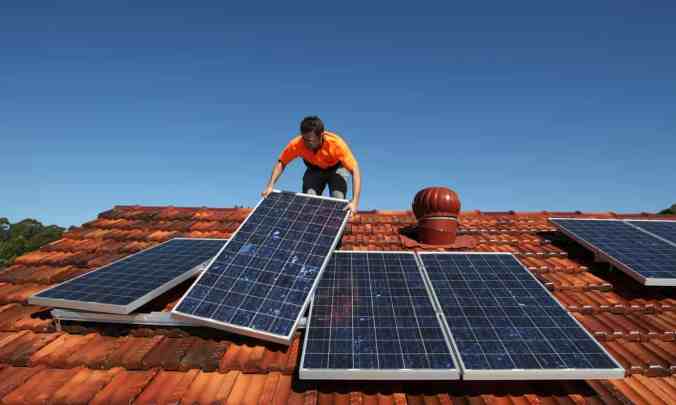
Solar panels are installed on to the roof of a house in Sydney, Australia. Almost 90% of new electricity generation in 2020 will be renewable, the IEA says. Photograph: Reuters

Thanks to the Guardian’s Environment editor Damian Carrington for this sunny news:

International Energy Agency expects green electricity to end coal’s 50-year reign by 2025

Global renewable electricity installation will hit a record level in 2020, according to the International Energy Agency, in sharp contrast with the declines caused by the coronavirus pandemic in the fossil fuel sectors. Continue reading

Prospects For Green Hydrogen

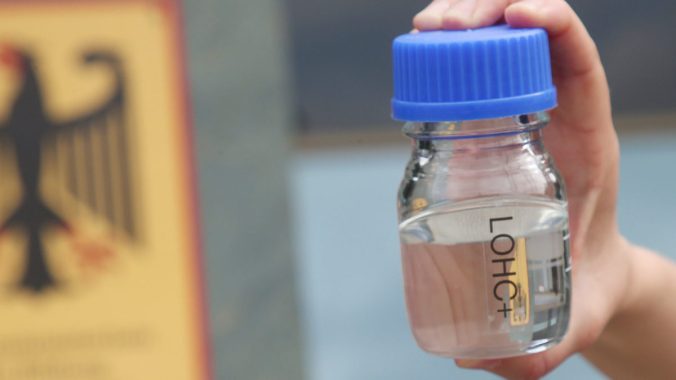
Green hydrogen can be stored in a liquid form. WOLFGANG KUMM/PICTURE-ALLIANCE/DPA/AP IMAGES

Thanks to Yale e360, as always, for news on innovative uses of water related to green energy:

Green Hydrogen: Could It Be Key to a Carbon-Free Economy?

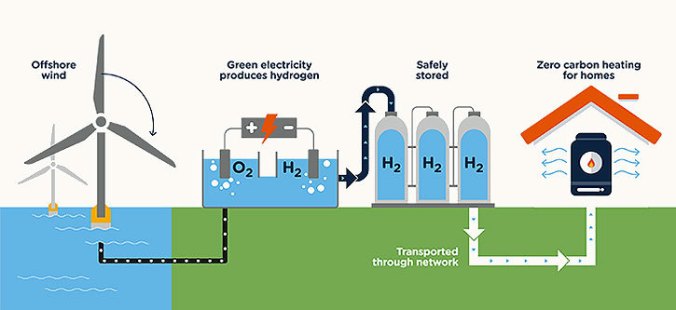
Green hydrogen, which uses renewable energy to produce hydrogen from water, is taking off around the globe. Its boosters say the fuel could play an important role in decarbonizing hard-to-electrify sectors of the economy, such as long-haul trucking, aviation, and heavy manufacturing.

Green hydrogen is produced using renewable energy, making it a CO2-free source of fuel. SGN

Saudi Arabia is constructing a futuristic city in the desert on the Red Sea called Neom. The $500 billion city — complete with flying taxis and robotic domestic help — is being built from scratch and will be home to a million people. And what energy product will be used both to power this city and sell to the world? Not oil. The Saudis are going big on something called green hydrogen — a carbon-free fuel made from water by using renewably produced electricity to split hydrogen molecules from oxygen molecules. Continue reading

Paint Color: More Than An Aesthetic Choice

Image: Tyros.andi/Wikimedia Commons

Wind is a formidable renewable energy option, but the impacts on wildlife have long been discussed. It’s heartening that such a simple solution as paint has the potential to so drastically reduce the dangers to birds and bats.

A simple paint job can save birds from wind turbines

A small study in Norway showed that painting one blade of a wind turbine black reduced bird mortality by over 70%.

Wind energy is one of the world’s most popular renewables. It’s also one of the most promising—some calculations suggest that strategically placed wind turbines could conceivably power the entire planet. As more turbines go up worldwide, they’ll help us reduce pollution, water use and carbon emissions, along with the environmental degradation, habitat loss and human health risks that come with fracking and oil extraction.

But there are some who don’t benefit quite as much: flying animals. Each year, turbine blades kill hundreds of thousands of birds and bats. As wind power becomes more prevalent, this number may rise into the millions—although it’s important to remember that other power generation methods likely kill far more birds than wind farms do.

This concern has led to a number of proposed interventions, from turning off wind farms during migrations to installing special whistles only bats can hear. A new study presents a relatively low-cost, set-it-and-forget-it option: just paint one of the turbine blades black.

Continue reading

New Machines, New Skills, New Hope

McKibben-NorthDakotaWindTurbines

Renewable-energy projects are now finding capital faster than fossil fuels. Photograph by Ken Cedeno / Getty

Since our platform name change, each daily post has been either about coffee or about birds. We have not neglected or forgotten our commitment to all the other important environmental, conservation, culture and related themes this platform has showcased, under whichever name. Today, Bill McKibben, one of our favorite sources of both depressing and heartening environmental news, is our go-to for some good news:

North Dakota Oil Workers Are Learning to Tend Wind Turbines—and That’s a Big Deal

I enjoy big machinery, and it punched all those buttons,” Jay Johnson told me. “They really are big, and, if you like machinery, then there you go.” Johnson has one of the jobs that might, with luck, come to define our era. At Lake Region State College, in Devils Lake, North Dakota, he trains former oil workers for new careers maintaining giant wind turbines. The skills necessary for operating the derricks that frack for crude in the Bakken shale, he says, translate pretty directly into the skills required for operating the machines that convert the stiff winds of the high prairies into electricity. That is good news, not only because it’s going to take lots of people to move the world from oil and gas to solar and wind but because people who work in hydrocarbons are going to need new jobs now that the demand for hydrocarbons is dropping. “It’s impossible to overstate the stillness” in the oil fields now, Johnson says. “Nothing is happening, zero work, and it sure is scary.” Continue reading

Mangroves for the Win

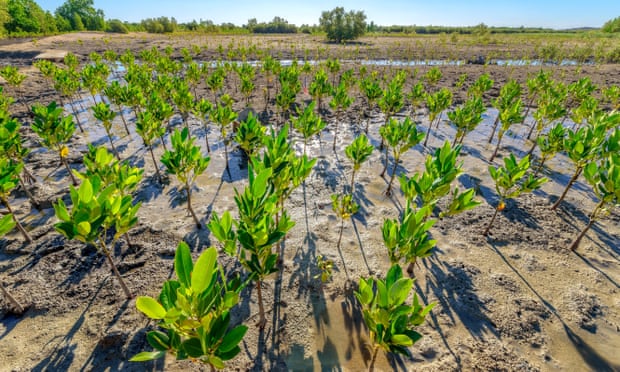
Mangrove restoration in Madagascar. Photograph: Alamy

Our previous posts about the multiple positives of planting trees in response to climate change and toward the goal of economic recovery didn’t take coastal ecosystems into account. These regions tend to be extra vulnerable to the increased pressures of extreme weather, not to mention being the home of many vulnerable populations.

This type of investment seems like a win/win.

Oceans panel presses coastal states to invest in ‘blue recovery’

Report says there are substantial economic benefits to be had from ocean conservation

Investing in the marine environment offers many coastal states the possibility of a “blue recovery” from the coronavirus crisis, according to a report setting out substantial economic benefits from ocean conservation.

Ending overfishing and allowing stocks to recover while ensuring fish farms operate on a sustainable basis would generate benefits of about $6.7tn (£5.3tn) over the next 30 years, according to an assessment of ocean economics by the High Level Panel for a Sustainable Ocean Economy.

This would require reforming perverse subsidies that encourage overfishing, and better regulation of fish farming, but the returns on such investment would repay the outlay 10 times over, the report says.

Mangrove restoration on tropical coastlines offers a quick way to generate jobs in seeding and planting, and returns of about $3 for every $1 spent, in the form of more productive fisheries as well as storm protection.

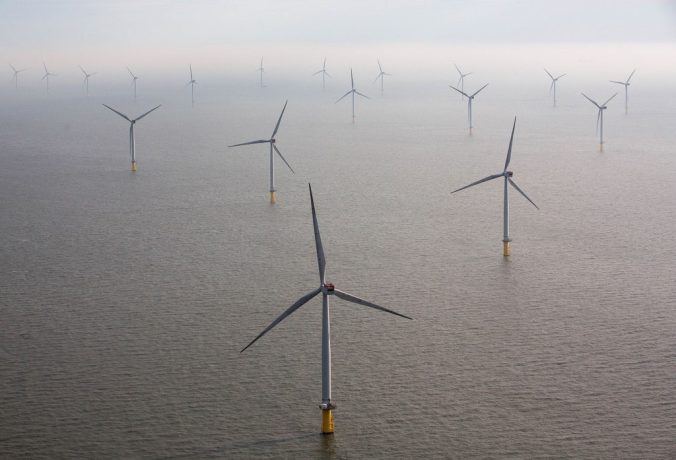
The costs of offshore wind energy generation have plummeted in recent years, making clean energy generation at sea a viable prospect for many countries for the first time. The UK has long been a pioneer in the field, but many other countries have been slow to take it up.

The report found that the technology has matured so quickly that investors can generate returns of up to $17 on each $1 spent, opening up a potential bonanza globally of $3.5tn by 2050 if governments put the right conditions in place.

Ngedikes Olai Uludong, Palau’s ambassador to the UN and one of the panel members, said offshore wind energy could spell an explosion in highly skilled green jobs. “Technologies like offshore wind offer a rate of return that makes more and more sense,” she told the Guardian. “It looks like it is taking off. I’m seeing interest from countries that I’ve never seen interested before.”
Continue reading

Really, France?

This post was going to link out to one of our favorite sources, celebrating fossil fuel tough times. But at the very end of his post, almost as a throw away, there was this reference to the ad above. It led somewhere more fun–and got us thinking Really?–and a chance to instead shout out again about ebikes and VanMoof:

This e-bike ad has been banned in France – let’s talk about why

by Iain Treloar

E-bikes are the future. That’s what the bike industry thinks, that’s what a bunch of new cyclists think, and that’s what sustainable transportation advocates think.

But not everyone thinks that way, as a spat between e-bike brand VanMoof and the French advertising regulatory body has proven.

At the centre of this stoush is a slick TV commercial by VanMoof, a Dutch urban bicycle brand best known for creating that bike with the top tube that looks like that. In the ad, a glossy black sports car has images of pollution, traffic jams and emergency vehicles projected onto it, before melting into a pile of black goo from which a VanMoof e-bike emerges to the slogan ‘time to ride the future’.

It’s pretty visually striking. It also does a succinct job of boiling down many of the concerns people have about over-reliance on automobiles in light of the, you know, climate emergency that we may or may not* be going through globally (*definitely are).

So it’s a little surprising to learn that the ad has been banned from French television because it “creates a climate of fear” around cars.

So what’s really going on here? Let’s break this down.

357826-Reflections-3-170566-original-1593436632

THE PLAYERS

VanMoof: The quirky Dutch brand launched in 2009 with an analogue town bike with integrated lights and lock, and has since had an electric renaissance. Continue reading