The Wind Calls For Attention

03lovins-jumbo.jpg

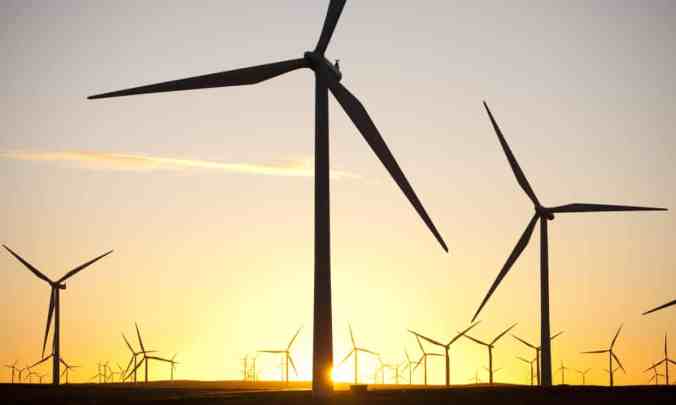
A wind farm in Pomeroy, Iowa. Credit Jim Watson/Agence France-Presse — Getty Images

In the current political climate it may sound like howling in the wind, at first, but read on:

A Case for a Market-Driven Green New Deal

Any serious energy transformation will need to harness America’s powerful and creative economic engine.

By Amory B. Lovins and Rushad R. Nanavatty

Mr. Lovins and Mr. Nanavatty work at Rocky Mountain Institute, which is focused on creating a clean, low-carbon energy future.

The best thing to come from the Senate’s floor debate on the Green New Deal late last month may have been these eminently sane remarks, calling on lawmakers of both parties to “move together” in order “to lower emissions, to address the reality of climate change, recognizing that we’ve got an economy we need to keep strong, that we have vulnerable people we need to protect, that we have an environment that we all care about — Republicans and Democrats.”

Who said it? A Republican, Senator Lisa Murkowski of Alaska, who leads the Energy and Natural Resources Committee. “My hope is we get beyond the high-fired rhetoric to practical, pragmatic, bipartisan solutions,” she said on the chamber floor.

The path is there, if our leaders will only choose to take it. In 2011, Reinventing Firean energy study by Rocky Mountain Institute, where we work, showed how a business-led transition could triple energy efficiency, quintuple renewables and sustain an American economy 2.6 times larger in 2050 than it was in 2010 with no oil, coal or nuclear energy, and one-third less natural gas. The net cost was $5 trillion less than business-as-usual — or even more valuable if a price was put on carbon emissions.
Continue reading

Renewables For Communities In Need

CEF_Shiloh-Temple_IMG_20180503_133709053_HDR_web.jpg

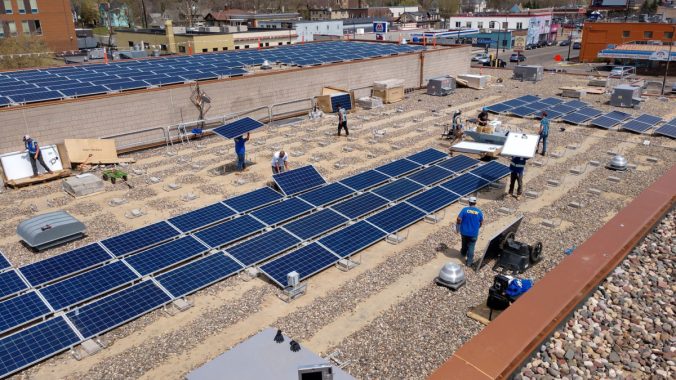
EnterA 204-kilowatt community solar array being installed on the roof of the Shiloh Temple International Ministries in Minneapolis. COURTESY OF COOPERATIVE ENERGY FUTURESa caption

Thanks to Maria Gallucci and Yale e360 for this:

Energy Equity: Bringing Solar Power to Low-Income Communities

Millions of Americans lack access to solar energy because they cannot afford the steep upfront costs. Now, more than a dozen states are adopting “community solar” programs that are bringing solar power and lower energy bills to low-income households from New York to California.

GRID-Alternatives_CO-Solar-Training-Academy-Platteville-0818-03_web.jpg

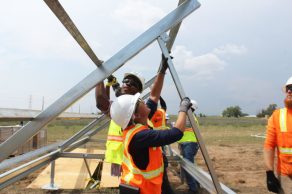
Workers receive job training while building a shared solar farm in Platteville, Colorado. COURTESY OF GRID ALTERNATIVES

Isbel “Izzy” Palans lives in a small cabin nestled among mountain peaks and towering trees in the Colorado Rockies. Her home is often shaded and, during the long winters, buried under heaps of snow. Her monthly utility bills show credits for solar electricity production, but no solar panels are affixed to her roof. Instead, the power comes from a solar array some 60 miles away in a nearby valley.

Last year, the panels nearly slashed her energy bill in half. “I’ve been thrilled,” said Palans, a 76-year-old retired waitress who relies partly on Social Security benefits to make ends meet.

Groundswell_DC_Dupont-Church_IMG_1237_web2.jpg

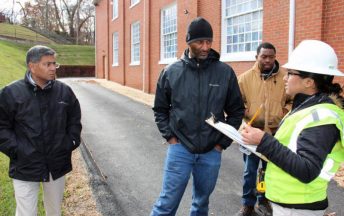
Solar contractor Brad Boston (center) and utility representatives meet with engineer Pranay Kohli to discuss a community solar project at DuPont Park Seventh Day Adventist Church in Washington, D.C. COURTESY OF GROUNDSWELL

Palans is a subscriber to a 145-kilowatt solar array project run by Holy Cross Energy, a rural utility cooperative. Built with state funding, the program provides solar credits to more than 40 low-income households in western Colorado that otherwise wouldn’t have the financial or technical means to access renewable energy. The venture is just one of a growing number of so-called “community solar” projects across the United States focused on delivering renewable energy — and the cost-savings it can provide — to low-income households, from California to Minnesota to Massachusetts. Continue reading

Electrical Generation Can Look Like Sausage When Visualized Just So

Electric.jpg

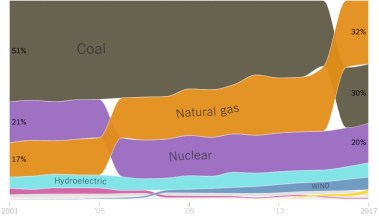
How the United States generated electricity from 2001 to 2017. Percentage of power produced from each energy source

America isn’t making electricity the way it did two decades ago: Natural gas has edged out coal as the country’s leading generation source … and renewables like wind and solar have made small yet speedy gains. But, each state has its own story.

Electric2

Nadja Popovich an explainer of complicated things with visualization techniques that have impressed us so far, now has this.

In Nevada, natural gas surpassed coal as the top source of electricity generation in 2005, earlier than in many other states. Coal’s role in the state’s power mix has continued to decline since then.

We cannot do justice to it, other than suggest you go see it for yourself. A state by state graphic representation of electrical generation methods:

How Does Your State Make Electricity?

Overall, fossil fuels still dominate electricity generation in the United States. But the shift from coal to natural gas has helped to lower carbon dioxide emissions and other pollution. Last year, coal was the main source of electricity generation for 18 states, down from 32 states in 2001.

Is Neutrality The Best Option?

lead_720_405A.jpg

A rending of Powerhouse Brattørkaia, an “energy-positive” building that will open to the public next year in Norway SNØHETTA

Thank you Norway, for demonstrating that we can do better than neutrality:

Norway Is Entering a New Era of Climate-Conscious Architecture

The country now has a suite of buildings that generate more energy than they use.

The European Union has a target of making all new buildings zero-energy by 2020, but in Norway, carbon neutrality isn’t enough.

A consortium in Oslo made up of architects, engineers, environmentalists, and designers is creating energy-positive buildings in a country with some of the coldest and darkest winters on Earth. “If you can make it in Norway, you can make it anywhere,” says Peter Bernhard, a consultant with Asplan Viak, one of the Powerhouse alliance members. Continue reading

Renewable Energy Record Set

3500 (7).jpg

E.ON’s Rampion windfarm in the English Channel, which can power 350,000 homes. Photograph: Darren Cool/E.On/PA

Thanks to Adam Vaughan and the Guardian for this news:

Windy weather carries Britain to renewable energy record

Windfarms supplied third of UK’s electricity this week, with output hitting 14.9GW high

Storm Diana brought travel chaos to road, rail and airports, but the clouds did have a silver lining: the strong winds helped set a renewable energy record.

Windfarms supplied about a third of the UK’s electricity between 6pm and 6.30pm on Wednesday, a time of peak energy demand. Output hit a high of 14.9GW, beating a previous record of 14.5GW. Continue reading

The Technology Of Negative Emissions

ClimeWorks_20170510DSC_6501_PhotosbyJuliaDunlop_web2.jpg

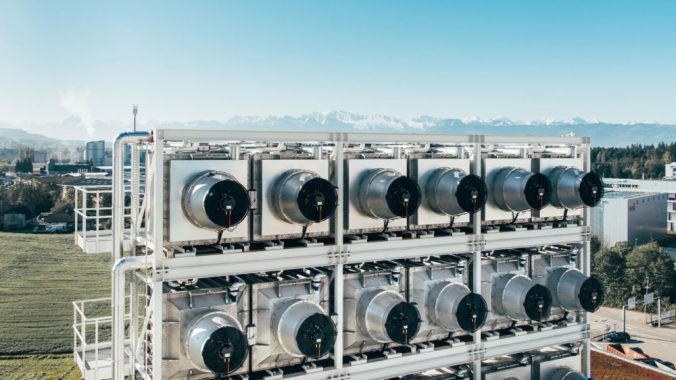
A direct air capture facility in Zurich, created by the Swiss-based technology company ClimeWorks. JULIA DUNLOP / CLIMEWORKS

I was not aware that Elizabeth Kolbert has been writing for Yale e360 for the entire time we have been linking to her New Yorker work on this platform. And then some, because she started publishing there ten years ago. This is her 17th publication for Yale e360 and it can help a layperson understand in a relatively short read whether technology has any chance of accelerating our progress on climate change mitigation:

Climate Solutions: Is It Feasible to Remove Enough CO2 from the Air?

A U.S. scientific panel reports that technologies that take CO2 out of the atmosphere could be a significant part of a strategy to mitigate global warming. In an e360 interview, Stephen Pacala, the panel’s chairman, discusses how these fast-developing technologies are becoming increasingly viable.

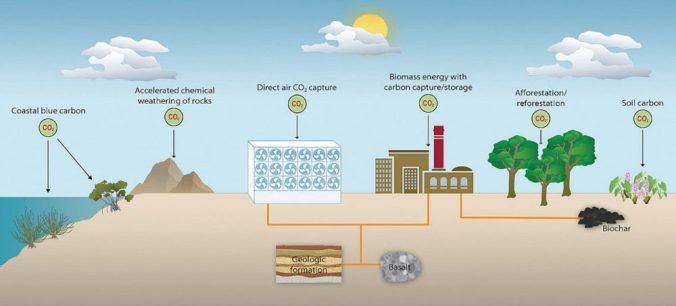
Is there still time to avoid runaway climate change? To a large degree, the answer depends on the feasibility of “negative emissions” — techniques or technologies that suck CO2 out of the air. In the latest report from the Intergovernmental Panel on Climate Change (IPCC), all scenarios for limiting warming to 1.5 degrees Celsius depend on negative emissions technologies, or NETs. Most 2-degree scenarios also rely on negative emissions; many call for removing billions of tons of CO2 per year by mid-century.

NETs_NationalAcademies_web.jpg

Negative Emissions Technologies (NETs) range from low-tech, such as planting more trees, to more high-tech options, such as developing machines to scrub CO2 from the air. NATIONAL ACADEMY OF SCIENCES, 2018

Yet most NETs remain either untested or unproved. To help bridge this gap, the National Academies convened a panel of scientists and asked it to propose a research agenda. The panel considered several possible techniques, ranging from the low-tech — planting more trees — to the high-tech — developing machines to scrub CO2 from the sky. It also looked at a hybrid technology that has become known as bioenergy with carbon capture and storage, or BECCS. The panel recommended several billion dollars be directed to research on NETs. Such technologies, it suggested, ought to be viewed as a “component of the mitigation portfolio,” rather than as a futuristic, last-ditch effort to reduce atmospheric CO2.

Pacala_IsometricStudios_web.jpg

Stephen Pacala. CREDIT: ISOMETRIC STUDIOS

Stephen Pacala, a professor of ecology and evolutionary biology at Princeton University, chaired the panel. In an interview with Yale Environment 360, he talks about why NETs are needed, what should be done to advance them, and why he believes that “direct air capture” technologies could come into widespread use within the next decade. Continue reading

Keeping Track Of Renewables

Kormann-Prop-127.jpg

Despite the rapid decline in the cost of solar-energy technology and battery storage, Arizona gets only six per cent of its electricity from solar. Photograph by Joshua Lott / Bloomberg / Getty

Thanks to Carolyn Kormann, making her fifth appearance since early 2016 in our pages, including this recent item that I particularly favored, for the article below that helps us understand what is happening with renewable energy these days in the USA. It is easy to forget, amidst all the noise of a federal government working to deregulate and reduce environmental protection, that important work continues:

The Battle for Solar Energy in the Country’s Sunniest State

In late September, the Heartland Institute, a libertarian think tank that receives donations from fossil-fuel companies, published a blog post titled “California Billionaire’s Renewable Energy Initiative Makes Arizona Ballot.” The billionaire in question was Tom Steyer, whose year-long effort to pass Proposition 127, an amendment to Arizona’s constitution that would require power companies to generate fifty per cent of their electricity from renewable sources by 2030, has faced aggressive opposition from the state’s largest utility, Arizona Public Service, or A.P.S. The blog post lamented a failed lawsuit filed by Arizonans for Affordable Energy, a political-action committee funded by A.P.S.’s parent company, to keep Prop 127 off the ballot, and quoted several opponents who believed the measure, now up for a vote in November, would be a costly mistake. “Prop 127 would tie Arizona’s future to technologies that do not deliver baseload electricity,” Mark Finchem, a Republican state representative, said, “and are arguably worse for the environment as a whole than the dependable technologies we already have.” The photograph accompanying the post depicted a wind-turbine farm, and, in the foreground, a dead bald eagle.

Arizona is the sunniest state in the country, with more than three hundred bluebird days per year. It is also projected to endure an additional month of hundred-degree days in the coming decades owing to climate change. Yet, despite the rapid decline in the cost of solar-energy technology and battery storage—to the point that, as an A.P.S. director told me, it now frequently outbids fossil fuels, even natural gas—in 2017, Arizona generated only six per cent of its electricity from solar, according to the ballot initiative’s advocates. The state currently requires utilities to generate eight per cent of their power from sources like solar and wind, scaling up to fifteen per cent by 2025. Natural gas, the largest source of Arizona’s net electricity generation, is imported from out of state. “Our most abundant resource in Arizona is our sunshine,” D. J. Quinlan, a spokesman for Clean Energy for a Healthy Arizona, the Phoenix-based political-action committee that Steyer is funding, said. “We need a nationwide transition to renewables. One of the first places we should be doing it is where it’s most efficient and cost-effective, and that’s here.” Continue reading

Scotland, Land Of Regret-Reducing Renewable Resources

5329

Scottish Power’s Whitelee windfarm on Eaglesham moor, just south of Glasgow. Photograph: Global Warming Images/REX

My daily contribution to this platform is a habit vaguely in the tradition of meditation–finding something each day that is worthy of gratitude, or otherwise worthy of sharing with friends, family, and anyone else who cares to listen. Because of the good fortune I have had to visit and work in many amazing places, it is important to me to never regret the places where I still have not been. Scotland is one of those places that, if I were a regretter, I would be feeling it now. I owe that place a visit (even if the company name sounds like a Bond villain):

Scottish Power shifts to 100% wind generation after £700m Drax sale

Big six energy firm drops fossil fuels for generation and say cheap green energy is the future

Scottish Power has ditched fossil fuels for electricity generation and switched to 100% wind power, by selling off its last remaining gas power stations to Drax for more than £700m.

Iberdrola, Scottish Power’s Spanish parent company, said the move was part of its strategy to tackle climate change and would free it up to invest in renewables and power grids in the UK.

The deal also marks a significant expansion and diversification for Drax, whose main business is a coal- and biomass-fired power station in North Yorkshire. Continue reading

Carbon Insurance As Heritage Insurance

Kormann-YurokCarbonCredits-Primary.jpg

A carbon-offset project, the first of its kind in the United States, has become the Yurok’s main source of discretionary income, helping the tribe buy back thousands of acres of land. Photograph by Joel Redman

Carbon trading has featured, or at least been mentioned, only rarely on this platform, now that I stop to check. That seems impossible. But the scheme with so much promise has simply not taken off. Indigenous heritage, on the other hand, has featured in dozens of stories here since we started in 2011. Thanks to Carolyn Kormann for bringing this story to my attention, helped by two captivating photos and the fact that it highlights the approach of the Yurok Tribe (a community I had not heard of before):

Kormann-YurokCarbonCredits-Secondary2

“I think we did a good thing by saving the trees, but I’m not happy with it,” Jene McCovey, a tribal elder, said. “It’s not viable. It allows polluters to pollute.” Photograph by Joel Redman

How Carbon Trading Became a Way of Life for California’s Yurok Tribe

When Marty Lamebear is not fighting fires, he is starting them. In the past few years, as a member of the Yurok Tribe Forestry Program’s fire department, he has been helping revive the controversial practice of prescribed burns to protect and restore the coastal redwood forests of northern California. Lamebear is also a hunter, fisherman, and dancer. In his free time, he makes tribal regalia for ceremonial dances from parts of elk, deer, minks, and porcupines, which he shoots or finds already dead, and from frozen eagles that he orders from the U.S. Fish and Wildlife Service. A prescribed burn, what Lamebear calls a culture burn, creates prairies within the forest, which attract those animals. “At first, we couldn’t really tell its effects,” he said. “But, after about six years now, we can honestly start seeing the landscape open up, animals come around.” They also serve another purpose, he said. “It’s insurance for our carbon.” Continue reading

Behavioral Science & Green Innovation

5749.jpg

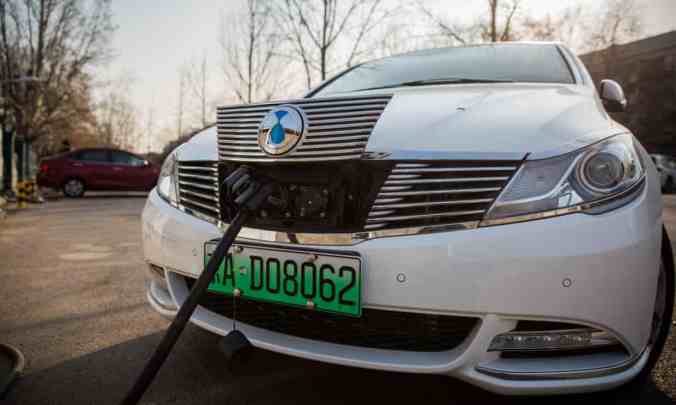
Green registration plates are already in use in China. Photograph: Roman Pilipey/EPA-EFE/Rex/Shutterstock

The UK, whatever other challenges it may be experiencing, is proving itself creatively committed to green innovation:

Green number plates ‘could boost sales of electric cars’ in UK

Behavioural insights unit proposes new colour for registration plates to help ‘normalise the idea of clean vehicles’

Wind Powering 590,000 Homes

WindFarm.jpg

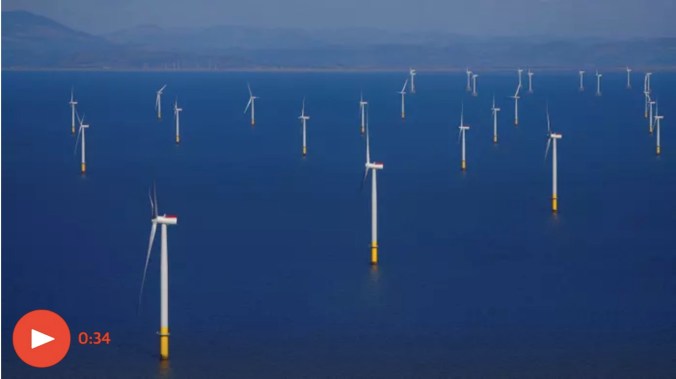
 Drone footage shows world’s largest offshore windfarm – video

Thanks to the Guardian for this news about harnessing wind at a record scale:

World’s largest offshore windfarm opens off Cumbrian coast

Walney Extension will power 590,000 homes amid fears Brexit could stifle growth

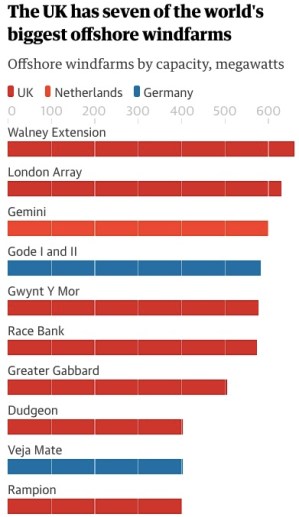
ChartWind.jpg

Guardian Graphic | Source: Renewable

The world’s biggest offshore windfarm has officially opened in the Irish Sea, amid warnings that Brexit could increase costs for future projects.

Walney Extension, off the Cumbrian coast, spans an area the size of 20,000 football pitches and has a capacity of 659 megawatts, enough to power the equivalent of 590,000 homes.

The project is a sign of how dramatically wind technology has progressed in the past five years since the previous biggest, the London Array, was finished.

The new windfarm uses less than half the number of turbines but is more powerful.

Matthew Wright, the UK managing director of Danish energy firm Ørsted, the project’s developer, said: “It’s another benchmark in terms of the scale. This – bigger turbines, with fewer positions and a bit further out – is really the shape of projects going forward.” Continue reading

Europe And The Race To Car Electrification

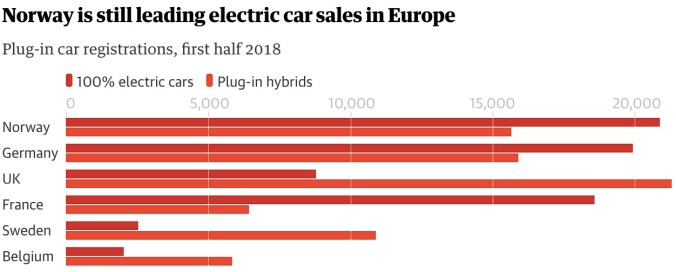
ElectricCars.jpg

Thanks to Adam Vaughan and the Guardian for this update on this race:

Electric cars exceed 1m in Europe as sales soar by more than 40%

Milestone reached nearly a year after China but ahead of the US

3963.jpg

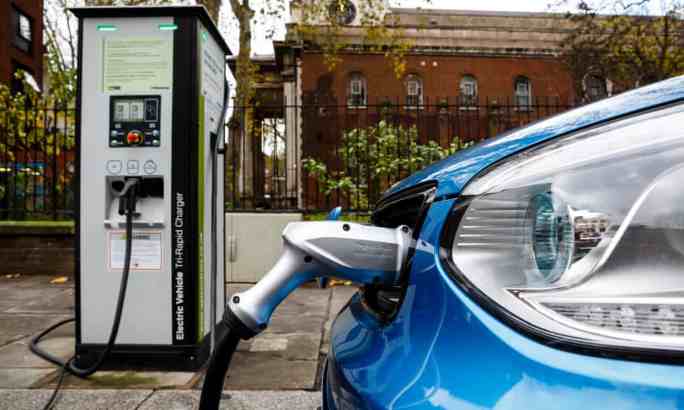
Between January and June around 195,000 plug-in cars were sold across the EU, Iceland, Liechtenstein, Norway and Switzerland. Photograph: Miles Willis/Getty Images for Go Ultra Low

There are now more than a million electric cars in Europe after sales soared by more than 40% in the first half of the year, new figures reveal.

Europe hit the milestone nearly a year after China, which has a much larger car market, but ahead of the US, which is expected to reach the landmark later this year driven by the appetite for Tesla’s latest model.

Between January and June around 195,000 plug-in cars were sold across the EU, Iceland, Liechtenstein, Norway and Switzerland, a 42% increase on the same period a year before. Continue reading

Waterways, Persons & Rights

BakerRiver_Chile_Louis-Vest-Flickr_web.jpg

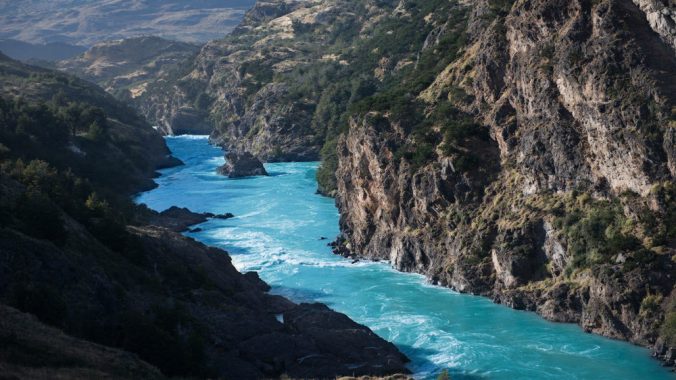
The free-flowing Baker River in Chile’s Patagonia region. Permits for a major hydroelectric project on the waterway were revoked in 2014 amid protests. LOUIS VEST/FLICKR

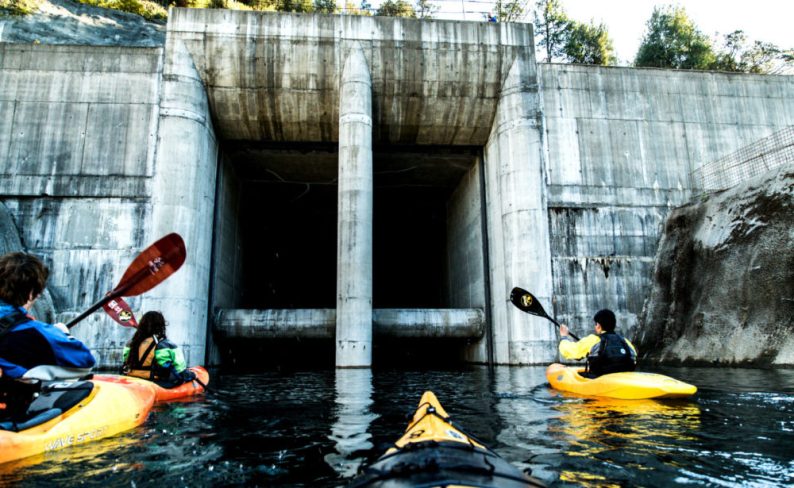
Dams in Patagonia are the gift that keep on giving, in terms of awakening activism and forcing raised awareness of the value of waterways. I first mentioned my experience in Chile here. I came back to the idea a few more times. Thanks to Jens Benohr and Patrick Lynch for this reminder, and for letting us all know where this seems headed from a legal point of view:

Should Rivers Have Rights? A Growing Movement Says It’s About Time

Inspired by indigenous views of nature, a movement to grant a form of legal “personhood” to rivers is gaining some ground — a key step, advocates say, in reversing centuries of damage inflicted upon the world’s waterways.

San-Pedro-Dam_Carlos-Lastra_web.jpg

A Chilean energy company is seeking permits to restart the building of an unfinished dam along the San Pedro River. CARLOS LASTRA

Chile is a land of rivers. Along its narrow 3,000-mile length, thousands of rivers and wetlands bring freshwater and nutrients down from the Andes Mountains to the Pacific Ocean. Together, these river systems drain 101 major watersheds that support both terrestrial and marine ecosystems, ranging from arid lands in the north to blue whale nurseries off of Patagonia in the south.

Chile’s second-longest river, the 240-mile Biobío, once tumbled fast and wild through deep gorges and spectacular scenery on its way from the Andes to the sea. The Biobío was one of the world’s great whitewater rafting venues — until the 1990s, when the first of three large hydroelectric dams was built across the river. Over the past two decades, the Biobío dams have flooded more than 13,000 acres, displaced hundreds of families of the indigenous Mapuche people, turned long stretches of this once-unruly river into placid reservoirs, and caused abrupt fluctuations in water levels that have wrecked nesting habitat for native birds and disrupted the river’s natural rhythms. Continue reading

Renewables In Our Midst

Facebook_Odense_Heat-Recovery_vFINAL_web

When it opens in 2020, Facebook’s new data center in Odense, Denmark will channel its waste heat to warm nearly 7,000 homes. FACEBOOK

Thanks to Nicola Jones and colleagues at Yale Environment 360 for this:

Waste Heat: Innovators Turn to an Overlooked Renewable Resource

Nearly three-quarters of all the energy produced by humanity is squandered as waste heat. Now, large businesses, high-tech operations such as data centers, and governments are exploring innovative technologies to capture and reuse this vast renewable energy source.

HeatHaze_Grangemouth-Refinery_Scotland_ChristopherFurlongGetty_web

Heat radiates from the Grangemouth Oil Refinery in Scotland. About 70 percent of all the energy produced globally gets discarded as waste heat. CHRISTOPHER FURLONG/GETTY IMAGES

When you think of Facebook and “hot air,” a stream of pointless online chatter might be what comes to mind. But the company will soon be putting its literal hot air — the waste heat pumped out by one of its data centers — to good environmental use. That center, in Odense, Denmark, plans to channel its waste heat to warm nearly 7,000 homes when it opens in 2020.

google-datacenter-places-04_Dalles-Oregon_web2

Data centers, such as Google’s facility in Dalles, Oregon, generate huge amounts of waste heat. GOOGLE

Waste heat is everywhere. Every time an engine runs, a machine clunks away, or any work is done by anything, heat is generated. That’s a law of thermodynamics. More often than not, that heat gets thrown away, dribbling out into the atmosphere. The scale of this invisible garbage is huge: About 70 percent of all the energy produced by humanity gets chucked as waste heat. Continue reading

Water, Power & Discontent

Early last year an article in the Guardian reminded me of work I had done in Montenegro in an earlier decade. The work was among the most impactful in my life, both professionally and personally, but the reminder was more a warning than a celebration. Something similar just happened with work I carried out in the region Rachel Dixon, a travel writer for the Guardian, brought to my attention with the film above, mentioned in this article:

Adventure in Albania: kayaking in one of Europe’s final frontiers

With wild rivers, mountains and Unesco sites aplenty, Albania is emerging as an exciting Mediterranean destination – but its wilderness could be devastated by huge dam-building projects

5188‘Go, go, go!” The white-water rafting guide shouted orders from the back of the boat and our five-strong crew paddled hard to stay on course. We were tackling a stretch of the Vjosa, a 270km river that begins in Greece (where it is called the Aoös) and flows through Albania and into the Adriatic just north of the city of Vlora. I was on a recce trip for a new southern Albanian break with Much Better Adventures, which specialises in long weekends to wild places in Europe and North Africa. But this trip was not just a fun adventure – rather just part of a campaign to save the river, which is under threat from proposed dams. A documentary film, Blue Heart, out this month, will highlight the fight to protect Europe’s last wild rivers, with help from ecotourism…

The film, and the article, have to do with the power of water. And the power of humans in deciding what to do with water. Not all reminders can be pleasant. This one is bittersweet. One sweet part is the call to action.

CallAct1

Step 1: Register your interest in hosting a screening

We are aiming to host hundreds of screenings of Blue Heart globally in 2018 to raise awareness of the plight of the people affected in the Balkan region. If you are interested in hosting a screening, please complete the form below and a member of our team will get back to you ASAP.  Please note the film is 40 mins long and we recommend that you allow at least 20 mins for a post screening discussion. Continue reading

Turbines, Bigger & Better

WindTurbs2

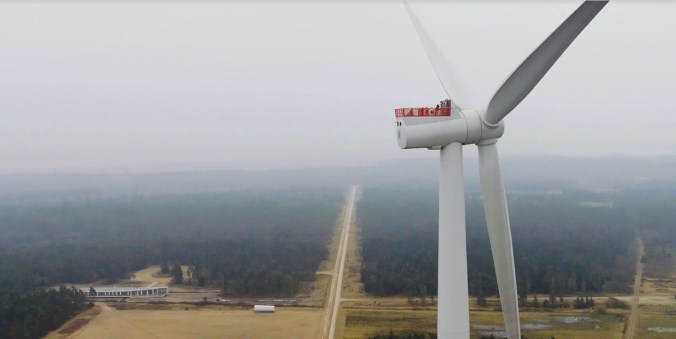
Prototype wind turbines whirl at a testing site in Osterild, near the northern end of Denmark’s Jutland peninsula. By Rasmus Degnbol

Thanks to the New York Times for this reminder that, in spite of what headlines often lead us to believe, progress is out there on as many fronts as we care to look to:

How Windmills as Wide as Jumbo Jets
Are Making Clean Energy Mainstream

WindTurbs.jpg

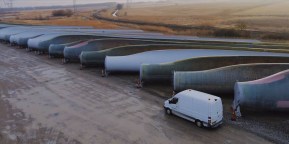
Blades for wind turbines lie outside a factory, waiting to be transported to wind farms.By Rasmus Degnbol

OSTERILD, Denmark — At the northern end of Denmark’s Jutland peninsula, the wind blows so hard that rows of trees grow in one direction, like gnarled flags.

WindTurbs3.jpg

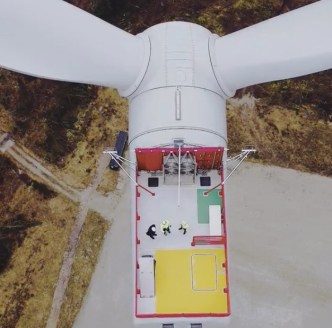
Technicians reach the roof of these enormous wind turbines either via an internal elevator or, if the turbine is installed offshore, by helicopters that lower them into the fenced-off area.By Rasmus Degnbol

The relentless weather over this long strip of farmland, bogs and mud flats — and the real-world laboratory it provides — has given the country a leading role in transforming wind power into a viable source of clean energy.

After energy prices spiked during the 1973 oil crisis, entrepreneurs began building small turbines to sell here. “It started out as an interest in providing power for my parents’ farm,” said Henrik Stiesdal, who designed and built early prototypes with a blacksmith partner. Continue reading

Carbon Footprint Self-Analysis

Carbon1.jpg

Thanks to Livia Albeck-Ripka and the New York Times for this

How to Reduce Your Carbon Footprint

carbonfootprint-slide-SUBX-jumbo.jpg

What Is a Carbon Footprint?

Climate change can be overwhelming. The science is complex, and when it comes to future impacts, there are still a lot of unknowns. While real solutions will require action on a global scale, there are choices you can make in your day-to-day life to lessen your personal impact on the environment. This guide will walk you through some of them.

carbonfootprint-slide-664U-jumbo.jpg

DRIVE LESS

A carbon footprint is the total amount of greenhouse gas emissions that come from the production, use and end-of-life of a product or service. It includes carbon dioxide — the gas most commonly emitted by humans — and others, including methane, nitrous oxide, and fluorinated gases, which trap gas in the atmosphere, causing global warming. Usually, the bulk of an individual’s carbon footprint will come from transportation, housing and food.

You can start the process by calculating your carbon footprint here. You will need to know the following: Continue reading

Government Conference Looking For Solutions To Big Puzzles

Happy to hear that there are still such efforts (conferences such as the one described below) underway and that they are inclined to the audacious. Thanks to Brad Plumer, at the New York Times, for this report:

Kelp Farms and Mammoth Windmills Are Just Two of the Government’s Long-Shot Energy Bets

Thousands of entrepreneurs gathered near Washington this week for an annual government conference. On the agenda: unusual solutions to major clean-energy problems.

merlin_135587181_610e6e68-2378-49ae-8b1a-5557e87a02a5-jumbo

A kelp forest off Mexico’s Pacific coast. A project presented this week at an energy research conference proposes using tiny robots to farm seaweed for use in biofuels. Credit Reinhard Dirscherl/ullstein bild, via Getty Images

Off the coast of California, the idea is that someday tiny robot submarines will drag kelp deep into the ocean at night, to soak up nutrients, then bring the plants back to the surface during the day, to bask in the sunlight.

The goal of this offbeat project? To see if it’s possible to farm vast quantities of seaweed in the open ocean for a new type of carbon-neutral biofuel that might one day power trucks and airplanes. Unlike the corn- and soy-based biofuels used today, kelp-based fuels would not require valuable cropland. Continue reading

Keeping It In The Ground?

louisianapipelineprotest-d0864bee2b618a1d4d9ff96d2cbe12ac53c96f8b-s1600-c85

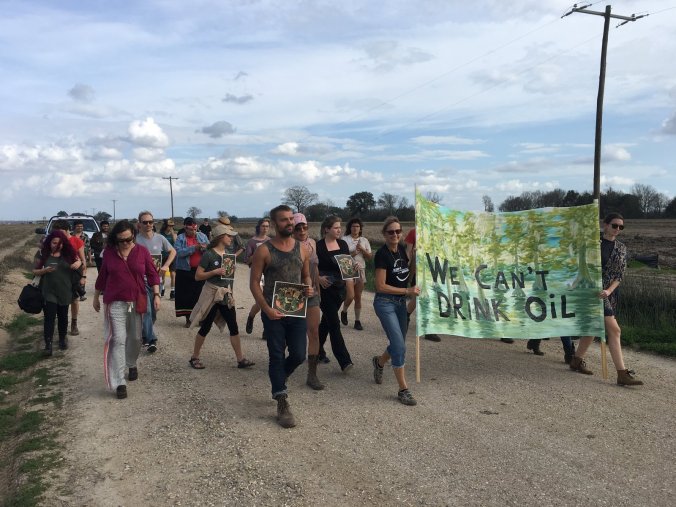
“Keep it in the ground” activists protesting the Bayou Bridge Pipeline on February 17, 2018 near Belle Rose, Louisiana. Travis Lux/WWNO

Under the current circumstances in the USA (you know what we mean) it is not straightforward to consider optimism obvious. But stranger things have happened. Thanks to National Public Radio (USA) for reminding us that when times get tough, the tough tough it out on behalf of us all:

cherrifoytlin-e88dddf32b0f52e571f94c798a180f7125ec1c59-s500-c85

Activist Cherri Foytlin vows to physically block construction of the Bayou Bridge Pipeline in Louisiana.
Travis Lux/WWNO

The United States oil business is booming and the country could soon be the largest crude oil producer in the world. Despite this record-breaking production, climate change activists campaigning to move away from fossil fuels say they are making progress.

Here’s the idea underpinning the ‘keep it in the ground‘ movement: to address climate change, activists say known reserves of fossil fuels will have to be left untouched instead of burned. In the meantime, they want countries to transition to renewable forms of energy such as solar and wind. Continue reading

Environmental Impact From Microwave Ovens

totalenvironmentThree scientists at the University of Manchester have shared their findings in a journal whose title we had not been aware of, but are glad to know is looking out for us all:

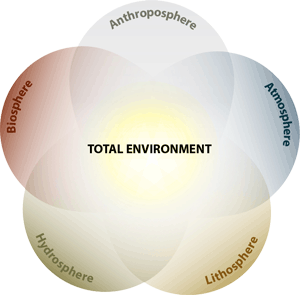
1-s2.0-S0048969717X00259-cov150hScience of the Total Environment is an international journal for publication of original research on the total environment, which includes the atmospherehydrospherebiospherelithosphere, and anthroposphere.

Since most readers of our pages likely use this type of oven on a daily basis, it seems worthy of a moment to read their findings as abstracted below:

Environmental assessment of microwaves and the effect of European energy efficiency and waste management legislation

Authored by Alejandro Gallego-Schmid, Joan Manuel F.Mendoza & Adisa Azapagic

130 M microwaves in the EU consume 9.4 TWh of electricity annually.

First LCA for microwaves to estimate the environmental effects of EU regulation

Standby Regulation will reduce impacts by 4–9% by 2020; WEEE Directive by ~ 0.3%.

Decarbonisation of electricity will reduce most impacts by 6–24% by 2020.

Eco-design regulation for microwaves should be developed to reduce resource use.

More than 130 million microwaves are affected by European Union (EU) legislation which is aimed at reducing the consumption of electricity in the standby mode (‘Standby Regulation’) and at more sustainable management of end-of-life electrical and electronic waste (‘WEEE Directive’). Continue reading