After our post yesterday on the 17-year emergence of periodical cicadas, here is a fantastic body of work on one of nature’s most intriguing creatures 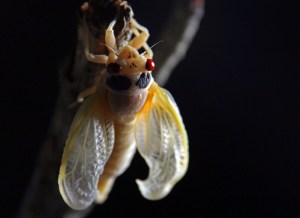 by Samuel Orr. A natural history filmmaker and time-lapse photographer he has been following and filming the various broods of periodical cicadas since 2007 (multiple broods that come out in different years across the eastern part of the United States). After filming some 200 hours of footage, and he is now working towards an hour documentary that focuses on the 17-year periodical cicadas for which he just started a Kickstarter campaign. Continue reading
Animals
Mudumalai Wildlife Sanctuary
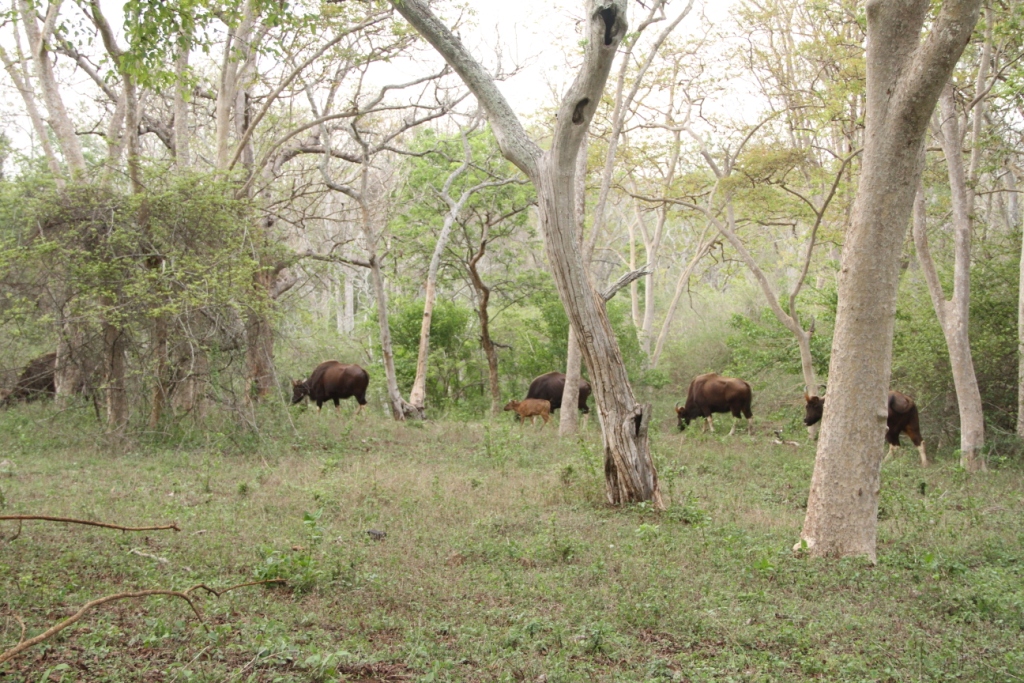
Photo Credits: Roji Antony
Mudumalai Wildlife Sanctuary is one of south India’s famous national parks, nestled amidst the Nilgiri Hills Biosphere in Tamil Nadu. This sanctuary is situated at the tri-junction of Tamil Nadu, Karnataka and Kerala near the Mysore plains. With an area of 321 sq km of natural forest, Mudumalai is famous for Elephant, Wild Gaur, Tiger, Leopard and Deer, as well as being home to over 200 species of bird. Continue reading
Diurnal bats
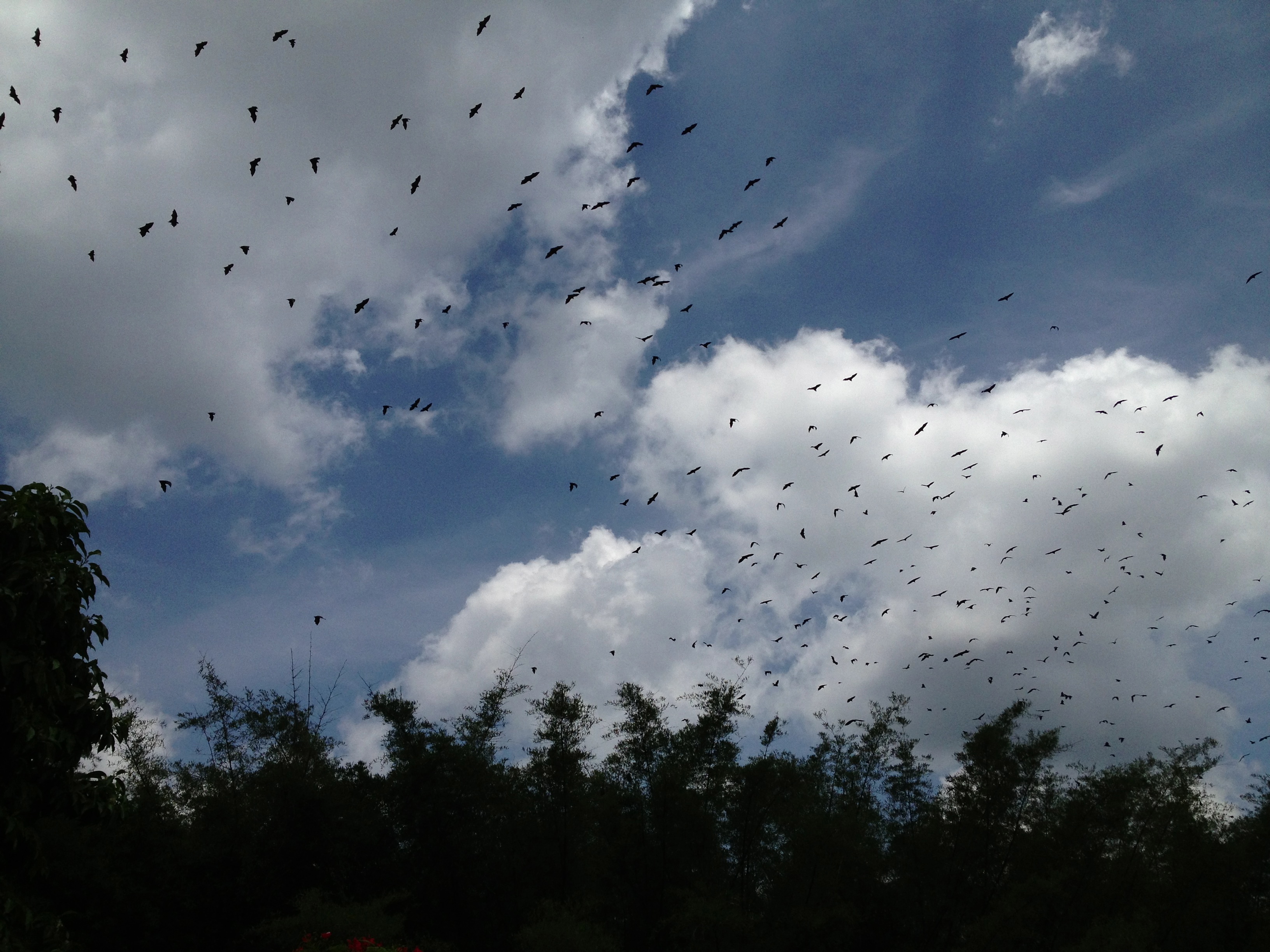
The forest canopy of the Periyar Tiger Reserve is rich in fruit all year round and bats feel very much at home. Out of the 119 species of bats found in India, 28 occur in Kerala. As many as six species of bat have been recorded in the Periyar : the flying fox, the shortnosed fruit bat, the Great-Eastern horse-shoe bat, the Tickell’s bat, the Common yellow bat, and the Painted bat.
Bats usually roost in camps in the bamboo across the road from Cardamom County, hanging upside down all day and feeding on the abundant fruit in the area after sunset. However when I sighted this wide cloud of bats around midday on the rooftop of the restaurant, it got me wondering : what disturbed them during the day ? Continue reading
Siberian Tigers Return, Humans Shrug In Ambivalence

Decades of poaching and logging in China and elsewhere have ravaged the Siberian tiger population, with only about 500 left in the wild worldwide. Photograph: Tim Davis/Corbis
In our day to day work, how humans and wild animals interact is often a matter of personal fulfillment, though at times we tend to the challenging aspects as well. The Guardian‘s coverage of the fate of charismatic mega-felines falls into this latter category with a mixed message of one wild animal’s population rebound and what can only be described as practical human reaction:
…Decades of poaching and logging have ravaged the population of the big cat, also known as Amur tigers– only about 500 still live in the wild worldwide. In 2010, Chinese authorities launched an initiative to boost numbers in the Hunchun National Siberian Tiger Nature Reserve near the country’s border with Russia and North Korea. Continue reading
Oxen Horseshoes
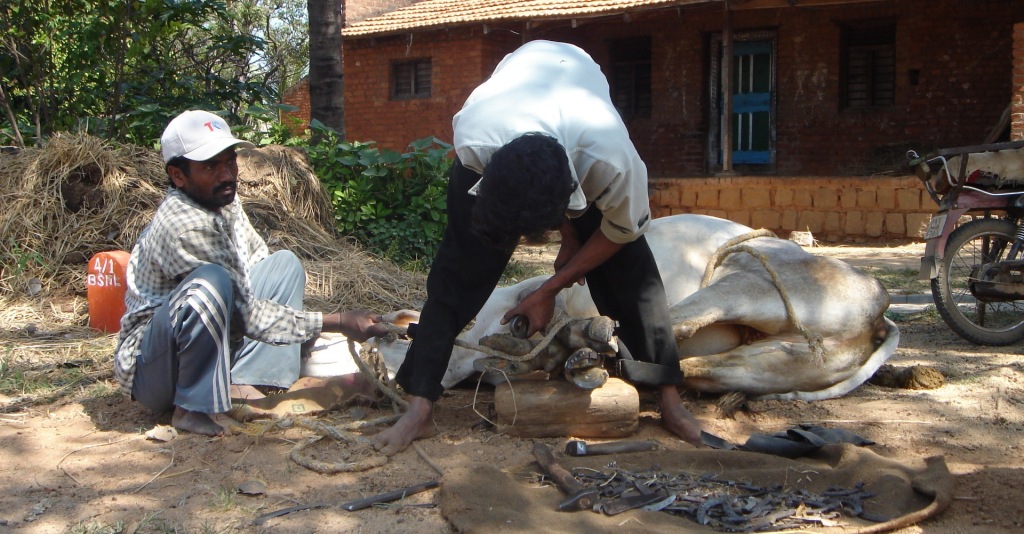
Photo Credits: Ramesh Kidangoor
In most of the South Indian states villages are still using the bullock cart for transporting goods and people, mostly in farms and plantations. The oxen are fitted with horseshoes in order to protect their hooves from heat and uneven roads. Continue reading
Periyar Sightings, Gavi
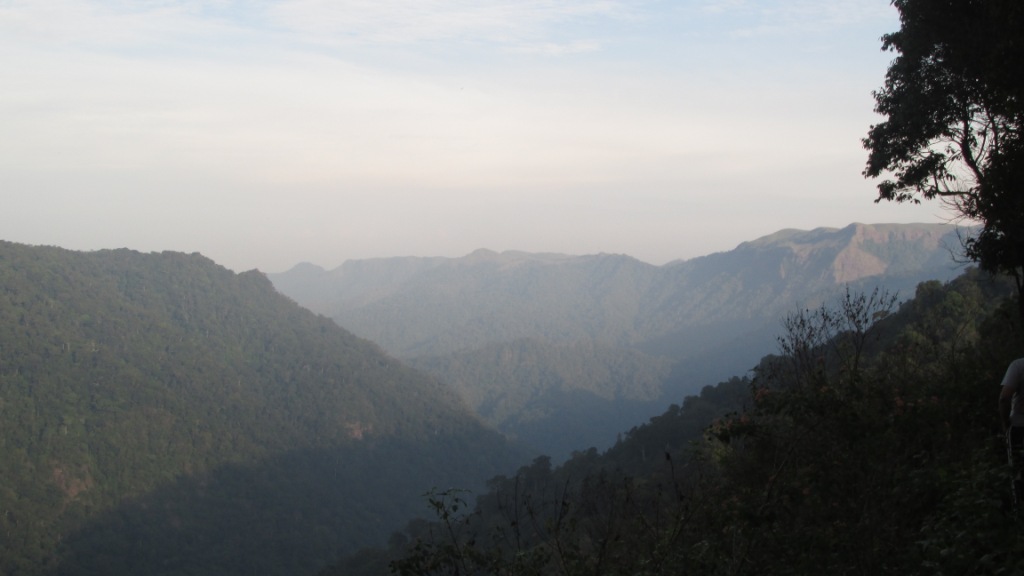
Gavi, part of the Periyar Tiger Reserve under the management of the Kerala Forest Development Corporation, is one of the off-the-beaten-track destinations ideal for a wilderness retreat replete with trekking, birding, canoeing and facilities for lodging. There are hills and valleys, tropical forests, sprawling grasslands, sholas (evergreen tropical forests), cascading waterfalls and cardamom plantations. Elephants, Nilgiri Thar, and the endangered Lion-tailed macaque are all often sighted at the outskirts of Gavi. Yesterday Mr. Sunu from Kottayam visited Gavi and shared some of his photos. Continue reading
Bamboo Rafting – Periyar Tiger Reserve

Bamboo Rafting
Community based ecotourism is the hallmark of the Periyar Tiger Reserve. These programmes are conducted by the local people responsible for the surveillance of the vulnerable parts of the reserve. Bamboo Rafting is a dawn to dusk range hiking and rafting programme through some of the richest forest tracts of the reserve. Continue reading
Madagascar Pochard, Rescued From Expected Extinction
We are always more than happy to share news stories where a turn of luck, a bit of effort, and/or the will to survive keep a species in the game. Here we thank Dr. Lee Durrell, the WCT and the WWT for their news release on the return of a nearly gone group of ducks:
The Madagascar pochard – arguably the world’s rarest bird – has bred successfully in captivity building hope that it can be saved from extinction.
Eighteen precious pochard ducklings are being reared at a specially built centre in Antsohihy, Madagascar, opened last year by Dr Lee Durrell. The birth of the ducklings is a key milestone in the conservation of the species, including an emergency expedition two years ago to take eggs into captivity. It is the ducks from those eggs that have now bred for the first time. Continue reading
Underdogs, Against All Odds, Stage Successful Comeback
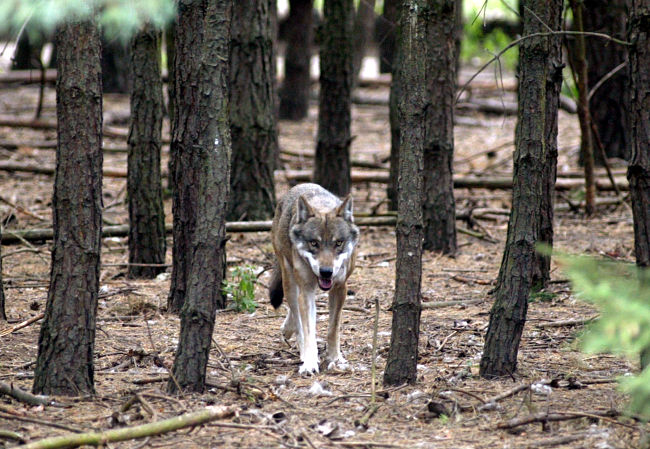
Thanks to the Atlantic Monthly‘s website for this story (click the image above to go to the source) about the resurgence of one of nature’s most historically feared beasts. Although the return of these animals has made relations between conservationists and farmers more difficult in Germany as elsewhere, the net gain for our natural world speaks for itself:
…Wolves have been absent from Germany for nearly a century, hunted out of existence by the end of the 1800s.
But over the past 10 years, they’ve made a comeback as packs from Poland and Russia have migrated into the sparsely populated eastern German state of Brandenburg. Today, some 160 wolves in 17 packs rove south and east of the capital Berlin, occasionally wandering into the city. Continue reading
Reminders Of Wild
For the explanation of each image, plus photo credits and some other images in this weekly series in the Guardian website’s Environment section, click here.
Indian Palm Squirrel (Funambulus palmarum)
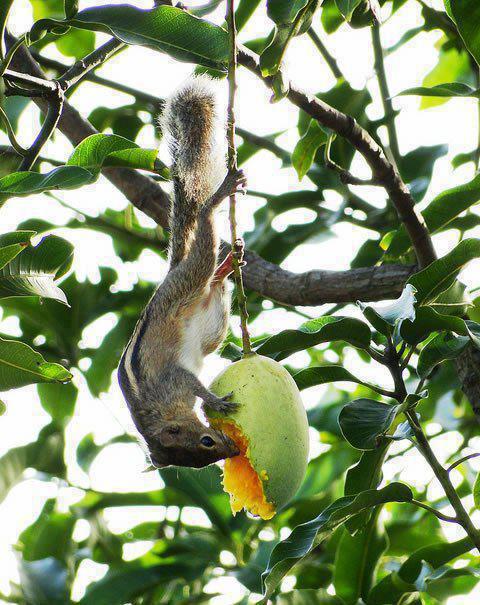
Photo credits: Best of Kerala
The Indian Palm Squirrel, also known as the Three-Striped Palm Squirrel, is very common in and around Periyar Tiger Reserve. These squirrels are native India and Sri Lanka and can often be seen running up and down trees and houses in the Western Ghats. Continue reading
Eyes Of Other Animals (#2 Of 2)
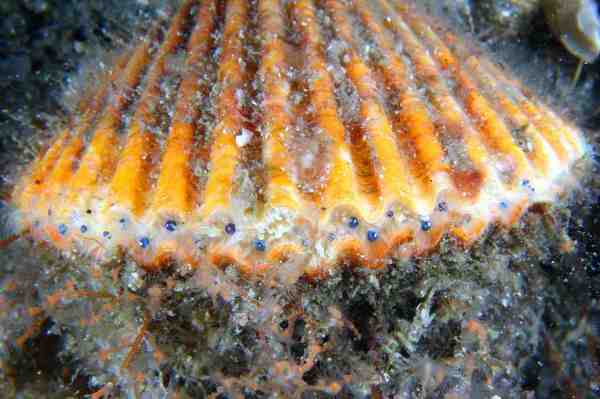
Thanks to The Atlantic‘s Alexis Madrigal, we have some coverage of this topic that we had honestly never thought about, but which makes total sense now that we have some information about it. Eyes matter in ways more than just the obvious practical:
Unless you are an avid scuba diver, when you think of scallops, you probably think of linguine and garlic more than oceans and shells. That’s because we only eat the muscle of the scallop: You never see them in context.
Eyes Of Other Animals (#1 of 2)
The charisma of whales is normally associated with their size, their ancient history, their apparently gentle approach to life. But it is not only those; the eyes have a role to play in why we love these creatures, among others (more on which in a subsequent post). Thanks to Alex Madrigal and The Atlantic for their attention to this topic:
Both humans and whales are mammals, so our eyes are derived from a common ancestor. Not only can we look at whales and they can look back at us, but we know enough about optics to infer their eyes’ capabilities from their anatomy. Animal eyes can be imagined as technological systems evolved with biological materials.
“We will make the fairly bold claim that it is sensible to approach eyes in essentially the same way that an optical engineer might evaluate a new video camera,” write Michael Land and Dan-Eric Nilsson, the authors of the Oxford University Press treatment of our topic, Animal Eyes.
Their eyes capture light in ways we can understand. Their eyes have a focal length. Their eyes have a maximum resolution.
So, what does the world look like to a whale? Continue reading
Whales In Perspective

Abrams, publisher of the book above, was also publisher for another conservation-friendly artist featured on our pages. They have a series of books that showcase wonders of nature in spectacular fashion, and we encourage a visit to their site by clicking the image above:
Photographer and conservationist Bryant Austin’s breathtaking photographic project Beautiful Whale is the first of its kind: It chronicles his fearless attempts to reach out to whales as fellow sentient beings. Continue reading
End This Bling Now

Carl Safina. In Amboseli National Park in Kenya, a herd of savanna elephants moved toward hills where they would spend the night.
What words might make us care enough to take action on behalf of these animals? Perhaps the words of those in the field, watching the paramilitary-style poachers, and who have traced the value chain for which those killers kill. From today’s New York Times a powerful editorial from two such people:
…In China and other countries in the Far East, there has been an astronomical rise in the demand for ivory trinkets that, no matter how exquisitely made, have no essential utility whatsoever. An elephant’s tusks have become bling for consumers who have no idea or simply don’t care that it was obtained by inflicting terror, horrendous pain and death on thinking, feeling, self-aware beings…
Happy Birthday, Douglas Adams
One year ago today I posted this to make sure that anyone who loves this author would be aware that there are still opportunities to celebrate his life in tangible, meaningful ways that he would have appreciated. I encourage anyone and everyone to continue to do so because the conservation needs have grown rather than diminished. You might also enjoy his final public appearance above, which will give you 90 minutes of intense amusement and learning. Continue reading
Clouded Leopard, Malaysian Forest Reserve

In the same regard as sharing important, if small news about conservation efforts, we think it is important for as many people as possible to view animals in the wild in order to sense the importance of conserving their habitat. In this five minute recording, we see the first and only recorded clouded leopard, which is interesting enough. But we also see its hunting ground, which is a scrappy opening within the forest (making the filming possible) rather than a dense forest cover (more difficult for filming, to state the obvious) where we would more likely find a leopard hunting in Kerala. Continue reading
Conservation Could
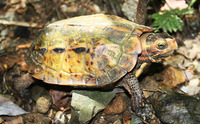
The Ryukyu Black-breasted Leaf Turtle is the subject of Japan’s first ever listing proposal to CITES © Taku Sakod
We are always hoping for good news related to wildlife, whether through habitat conservation, rebounding endangered species, or any of a number of other worthy initiatives to reverse human impact on our fellow species on this planet. We often find more bad news than good. Several stories we have linked to recently report on the progress, and lack thereof, at the CITES gathering in Thailand. This conservation story evokes a certain engine that could:
Bangkok, Thailand, 8th March 2013—Japan is asking the world’s governments to help protect the Ryukyu Black-breasted Leaf Turtle, a rare turtle found on only three small islands in the Okinawa group. Continue reading
Mammals In Modern Habitats
Little did we know that there was an organization called The Mammal Society, let alone that they sponsor such a phenomenal photo competition each year (see some of the prizes offered to understand why so many people contribute). We appreciate the acknowledgement that wild mammals are increasingly found in domesticated locations, which is not how it should be but here is what it looks like:
In 2012-2013 we ran the first Mammal Photographer of the Year competition for amateur photographers. Judges, including Kate MacRae, AKA “Wildlife Kate”, and photographer Steve Magennis are looking for images that tell a story, show rare behaviour, highlight mammals in a fragile environment, or make the ordinary extraordinary. The aim was to bring mammals into public focus, raising awareness of the issues they face, and hopefully encouraging us to appreciate the species that are often overlooked but essential to the health of our habitats. Continue reading
Kakkoor Kalavayal Race (Bullock Cart Race) – Kakkoor, Cochin
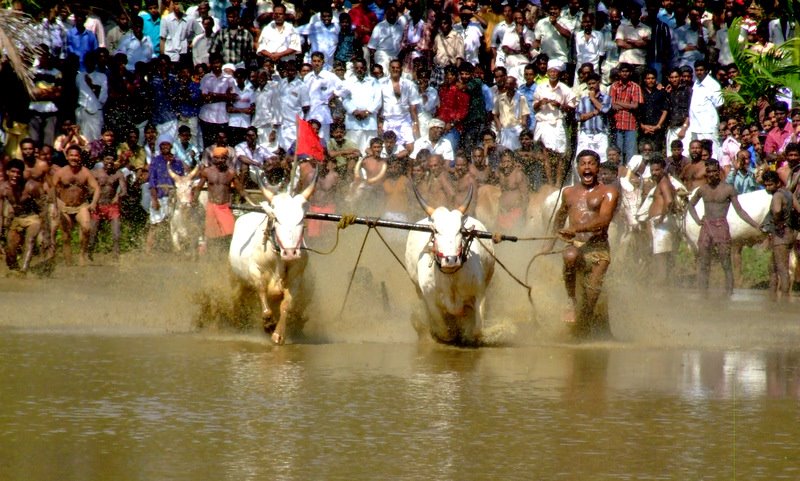
Photo credits: Ramesh Kidangoor
Kakkoor Kalavayal is a traditional post-harvest festival celebrated by the farmers of Kakkoor and the surrounding villages near Cochin. Legend has it that this is the annual meeting of the Goddesses of the villages of Edapra and Ambassery. The most exciting moment of this festival is the grande finale of the bullock race. Continue reading
 Organikos