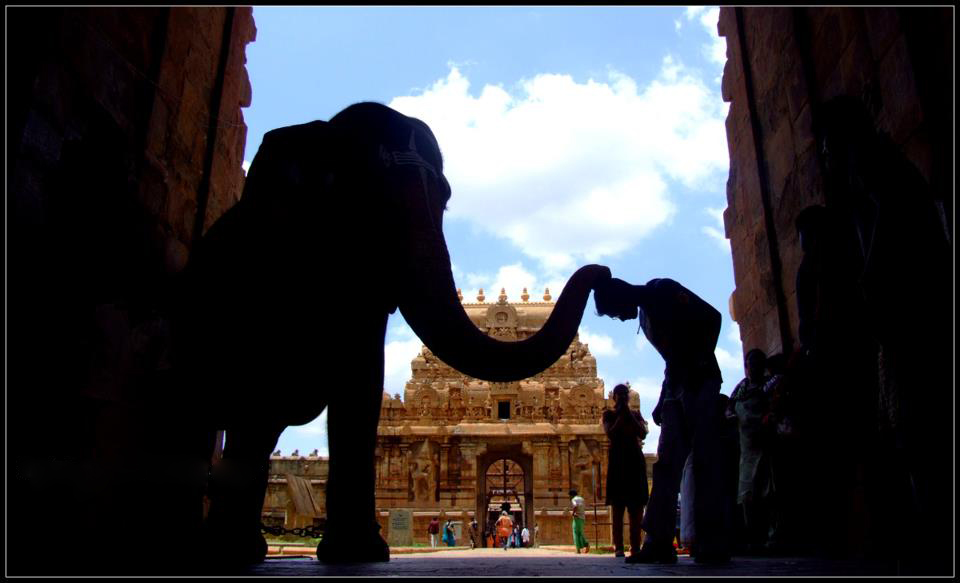
Elephant Blessing – Thanjavur Brihadeeswarar Temple

Photo credits: Ramesh Kidangoor

Elephants are important part of many temple ceremonies and festivals in India especially in the southern states. Frequently the temple elephant carries the idol of the Lord Ganasha and walks in procession around the temple grounds to receive offerings and give blessings in return by placing the trunk gently on the devotee’s bowed head. Continue reading

Old Facts, New Truths, And Remember Those Great Books?

If you ever owned one of these books, you likely grew up in the USA.  Which means you also likely thought, because of all those “cowboy and Indian” movies you watched, that horses were native to North America.  That may sound like a big logical leap, but there is a point.  Today, a review two old posts on this site helped clear up the history of horses in North America and it has to do with the kind of pre-history that captivated any kid who loved those books above.

After this was posted September 30, 2012 one member of our community (me) who grew up reading all the books above, and seeing all those “Western” movies, missed the opportunity to click through and listen to it.  However, I had been fascinated to learn from this post and then from the amazing book it highlighted, the “truth” about horses in North America.

Continue reading

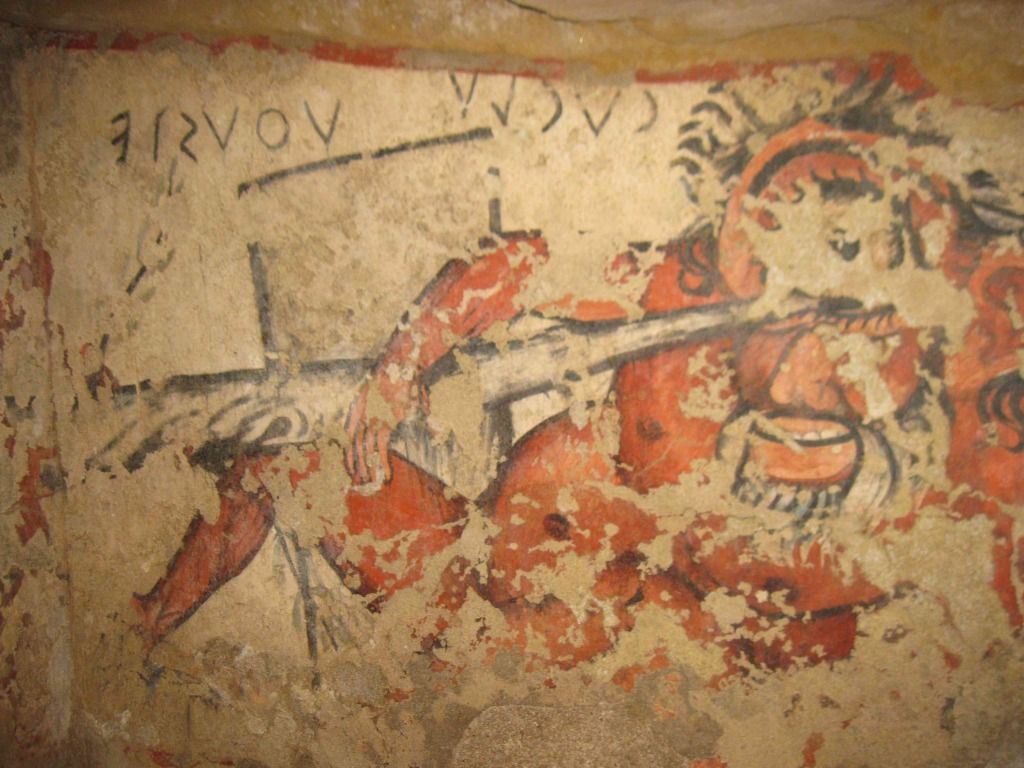
A Few Etruscan Tombs

Polyphemus the Cyclops (Tomb of Orcus)

The Etruscans are, for all their great cultural influence on the Romans, a  poorly understood people. We know they once dominated northern Italy and much of its western coast and that they interacted extensively with not only the Romans but also many other native Italic tribes in the 1st milennium BC. Some of this contact is reflected linguistically: the modern English word “person,” deriving from Latin persona, entered the Latin language from Etruscan phersu Continue reading

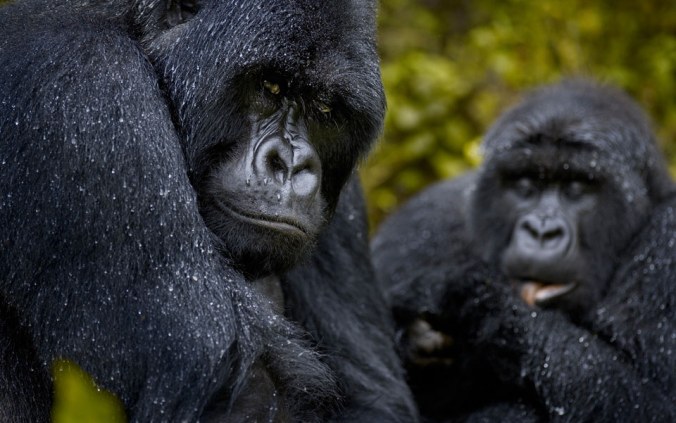
Mammals, Emotions And Human Intelligence

Close cousins: a gorilla family in Rwanda. Photo by Charles L Harris/Gallery Stock

Close cousins: a gorilla family in Rwanda. Photo by Charles L Harris/Gallery Stock

Another great item in a publication we recently started following:

‘If he grabs you, just go limp and let him throw you around. If you tense up, he’ll take it as a dominance challenge.’

‘Um. Okay.’ Continue reading

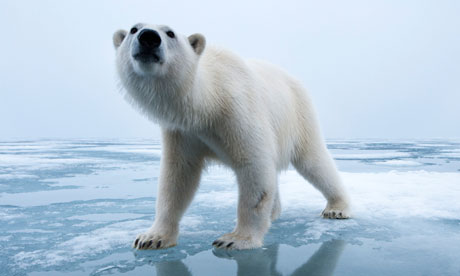
If Green Is The New Black, Perhaps Polar Bear Is The New Panda

Some polar bears may have to be placed in temporary holding compounds until it is cold enough for them to go back on to the sea ice, say scientists. Photograph: Paul Souders/Corbis

Some polar bears may have to be placed in temporary holding compounds until it is cold enough for them to go back on to the sea ice, say scientists. Photograph: Paul Souders/Corbis

This story in the Guardian‘s Environment section, one of the longest stories that section has ever run, is worth the time to read.  It raises a kind of semi-doomsday scenario, and in the process heightens sensitivity to this particular magnificent charismatic megafauna.  Decades back, WWF leveraged the Panda into a strong iconic hot-button for the need of donations to conservation NGOs.  This article got us thinking whether the polar bear is now the hot button icon for increasing the sense of urgency needed to do something about climate change:

The day may soon come when some of the 19 polar bear populations in Canada, Alaska, Greenland, Norway, and Russia will have to be fed by humans in order to keep them alive during an extended ice-free season or prevent them from roaming into northern communities. Some bears may have to be placed in temporary holding compounds until it is cold enough for them to go back onto the sea ice. In worst-case scenarios, polar bears from southern regions may have to be relocated to more northerly climes that have sufficient sea ice cover. Continue reading

Sea Turtles, A Worthy Effort

Photo by Karl Phillips, University of East Anglia. Because sea turtles live far out to sea, little has been understood about their breeding habits until now.

Thanks to our friends in East Anglia, for the extra effort:

Studying any animal in the wild is hard enough, let alone one that spends 30 years at a time out at sea. Because of its ocean-faring lifestyle, scientists know next to nothing about the life style of the critically endangered hawksbill sea turtle, save for the fleeting observations they make when female turtles come to beaches to lay their eggs. Continue reading

Bird Lovers, Unite Around Cats To Go

We appreciate the Guardian‘s coverage of this issue, and activists like this one:

Last week Gareth Morgan, an economist and conservation campaigner, called for cats to be confined or eradicated from his native New Zealand to protect the wildlife. Meanwhile, in the US, a study published this week in the journal Nature found cats are killing more birds and mammals than previously thought. Writer Tom Cox, who shares his home with four cats, and Morgan discuss whether it’s time we learned to live without our feline friends. Emine Saner listens in.

Continue reading

Gorillas In His Midst

This slideshow requires JavaScript.

Yale Environment 360 has an excellent story on the various animals in this protected area, including the warden and those he is committed to protecting, but also the beasts who prey on those wards. Supporting national parks, wherever they may be and at whatever risk, has never been more critical:

The Perils and Rewards of Protecting Congo’s Gorillas

Virunga National Park, home to one of the last remaining populations of mountain gorillas, has witnessed years of war and civil strife. In an interview with Yale Environment 360, the park’s warden describes the lethal threats faced by his rangers and the remarkable survival of the park’s gorillas. Continue reading

Elephants At Work

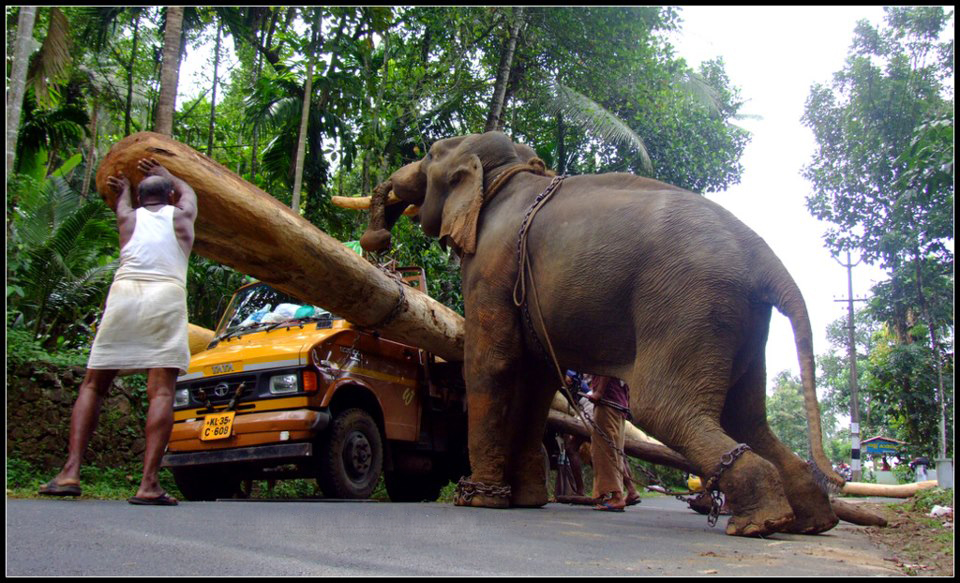
Kerala has about 700 domesticated elephants. Of these 90 percent are tuskers (the local term for male elephants), who play a major role in religious festivals. Apart from their role in temple ritual, the elephant’s strength and power has been effectively harnessed in work in the logging industry, primarily in loading timber for transport. This is unique to this region. Continue reading

Natural Born

It is well-documented on this site that we are feline-lovers, but our Bird Of The Day commitments force our full disclosure of the facts. Among those of us contributing to this blog–or anyone otherwise affiliated with Raxa Collective–we are contributors to the problem reported here (citing numbers specific to the USA only):

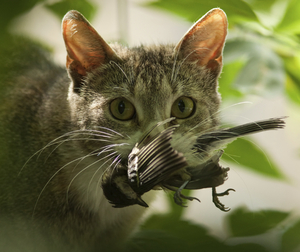
Behind This Cute Face Is A Cold-Blooded Killer

There are as many as 47 million pet cats out hunting for prey. Add that to the tens of millions of feral cats and strays, and researchers estimate that the furry felines are responsible for billions of bird and small mammal deaths every year.

Click the image above to go to the story. Don’t ask us what we plan to do about it.  If you have any suggestions, we are all ears.

Uniquely No Direction Home

k9660

Those of us living nomadic lives, moving from one set of responsibilities (or lack thereof) to another set in a different context, are often living by a compass we cannot quite figure out. A frequent first greeting in India, upon seeing someone who is clearly not from India, tends to be a variation on the question of where were you born. “Where do you stay?” (i.e. where is your residence at this moment) is the follow up to wondering where you are from.  “Where are you going?” is rarely of concern.  It seems understood by all that there may be no return to the place of birth, or the place where you stayed before, or other familiar places.

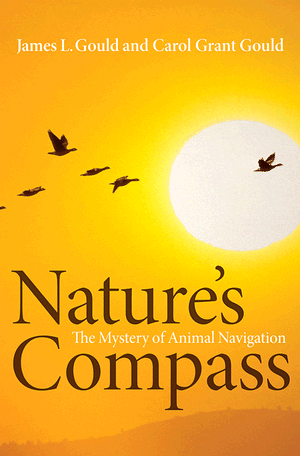
A new book surveys the animal kingdom for some remarkable examples of other creatures’ compasses. What about that cat that found its way 200 miles from an unknown location to the place where it normally lived? A review of the book in The Times Literary Supplement begins:

Curlews wing 6,000 miles, non-stop, along invisible bird-flying lanes in the sky as they travel from the South Pacific to Alaska. Spiny lobster crawl, one after the other, antennae to tail, for 30 miles along the ocean floor. Idaho salmon travel 900 miles and ascend 7,000 feet in elevation as they seek – and find – the tiny creek in which they hatched. Continue reading

Sculpture And Animation In The Interest Of Nature

Art or craft, we are inclined to sculptures and animation for reasons we cannot quite explain–sometimes just for fun, sometimes for contemplation, sometimes both simultaneously. What it means is best left to those experiencing it.  We categorize it as friendly to the themes we care about on this site, so hope to see more of his art. From the Asia Society’s website we learn that

U-Ram Choe is a Korean artist born in 1970 in Seoul. He is best known for his meticulously designed kinetic sculptures made of acrylic and stainless steel, each animated by robotics developed and programmed by the artist. Continue reading

Privacy Disturbed

Emperor penguin colony

The newly discovered 9,000-strong emperor penguin colony on Antarctica’s Princess Ragnhild coast. Photograph: International Polar Foundation/PA

Click the photo above for the story in the Guardian. It sounds beautiful. They are so charismatic.  But it also raises the question of whether these creatures might have been happier without the visitors:

A previously unknown colony of about 9,000 emperor penguins has received its first human visitors.

Scientists from the British Antarctic Survey and US colleagues discovered the colony from satellite images. Continue reading

Wild Periyar – Bonnet Macaque

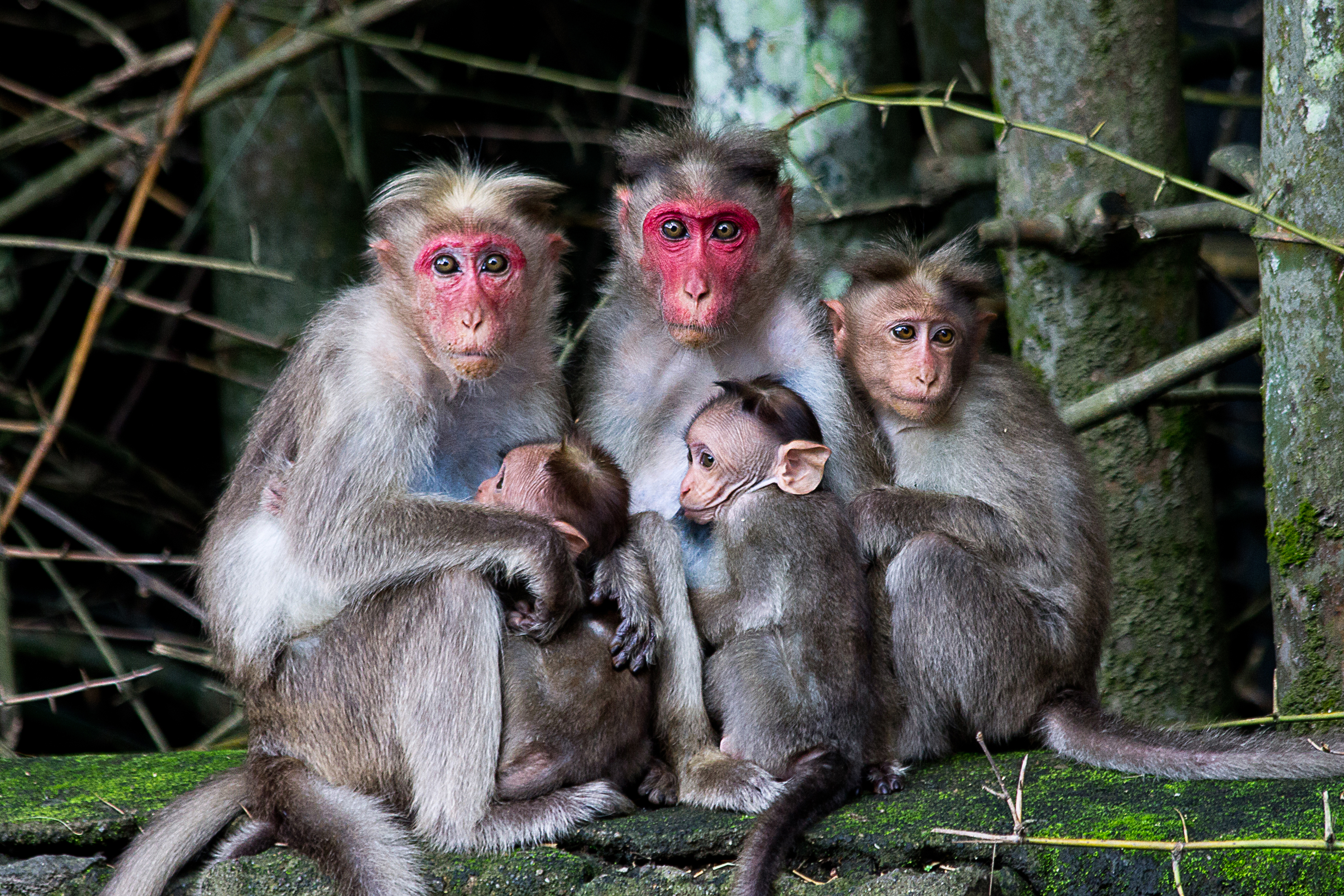
Bonnet Macaques are the most commonly seen of the four species of primates found in Periyar. They are particularly prevalent close to human habitation in places such as the boat landing, picnic spots and the parking areas of Thekkady. Continue reading

See Sophie, Support Story

Forest ranger Klaus Echle tells us about befriending a wild female fox in Germany’s Black Forest. The fox wasn’t shy, and allowed him to follow her around and take astonishingly close-up photographs.

Love of a good story is the backstory of our site.  The backstory to that backstory–from before the time of Seth’s decade-old camping experience in Nicaragua, is one I have started telling here and there and intend to continue telling in the coming weeks of the new year.  Reading and listening to accomplished authors on the topic of writing can be inspiring or daunting to the would-be story-teller with more modest telling skills.  But tell we will, if only because practice makes perfect, and in the process we will also point out as many good stories as we can find.

Yesterday guests of Raxa Collective in Kerala, visiting from the USA, shared with Amie and me their enthusiasm for a radio show and podcast called The Story.  We found it.  We loved the first story we listened to, which brought to mind my own recent wild young animal experience.  Find The Story, and Sophie’s story, by clicking the image above.

If You Happen To Be In London

This slideshow requires JavaScript.

Milo’s recent post got us thinking about the temptation to anthropomorphize.  Tim Flach‘s photography seems to be hugging the temptation sometimes, wrestling with it at others.

His show, just opening in London, would be a good place to start with his work.  The photos below help understand the riff on Milo’s post and his book looks worthy of any coffee table as a conversation-starter. 

One Wild Life Temporarily Lost, Likely To Be Found, Then To Be Lost Permanently

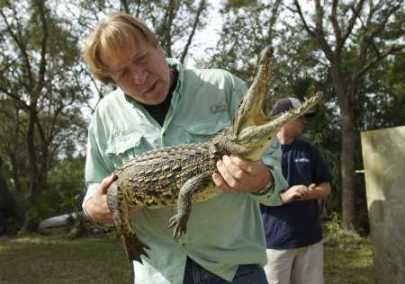
Joe Wasilewski works last month with a Nile crocodile captured near Homestead. The reptile expert says Nile crocodiles “learn that humans are easy targets.”

We do not enjoy reading about, or passing along, such stories.  But we must.  For shock value. Just not for the sake of entertainment shock value.  How and why such creatures find themselves in such locations is a topic we have dedicated at least one post to.  Wild creatures belong in the wild, except on rare occasions.  In the case below, one wild creature will lose its life as a result of someone’s misguided thoughts to the contrary:

State wildlife officials have given their agents a rare order to shoot to kill in the hunt for a young and potentially dangerous Nile crocodile loose near Miami. Continue reading

Bonnet Macaques and Humanity

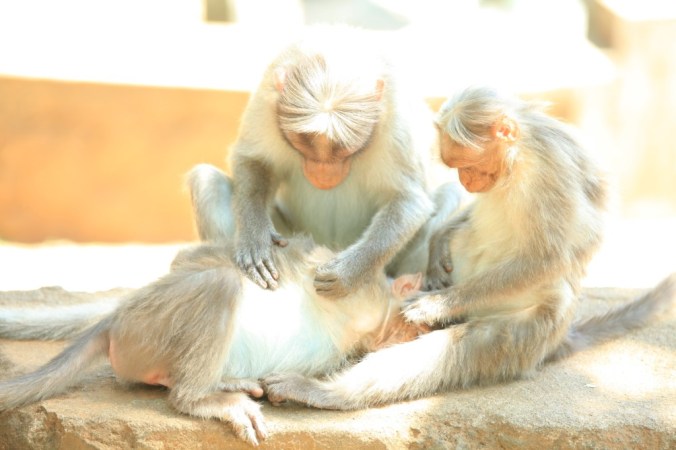
Anyone who has been to Thekkady is familiar with their extroverted nature. They screech and cackle, chase and fight each other in the most public spaces possible, and love to make themselves a nuisance. Bonnet Macaques are ubiquitous, quite probably because of how outgoing and shameless they are – and they seem to like their families big.

_MG_2274 Continue reading

Beauty of Jordan: Spotted Fan-Footed Gecko

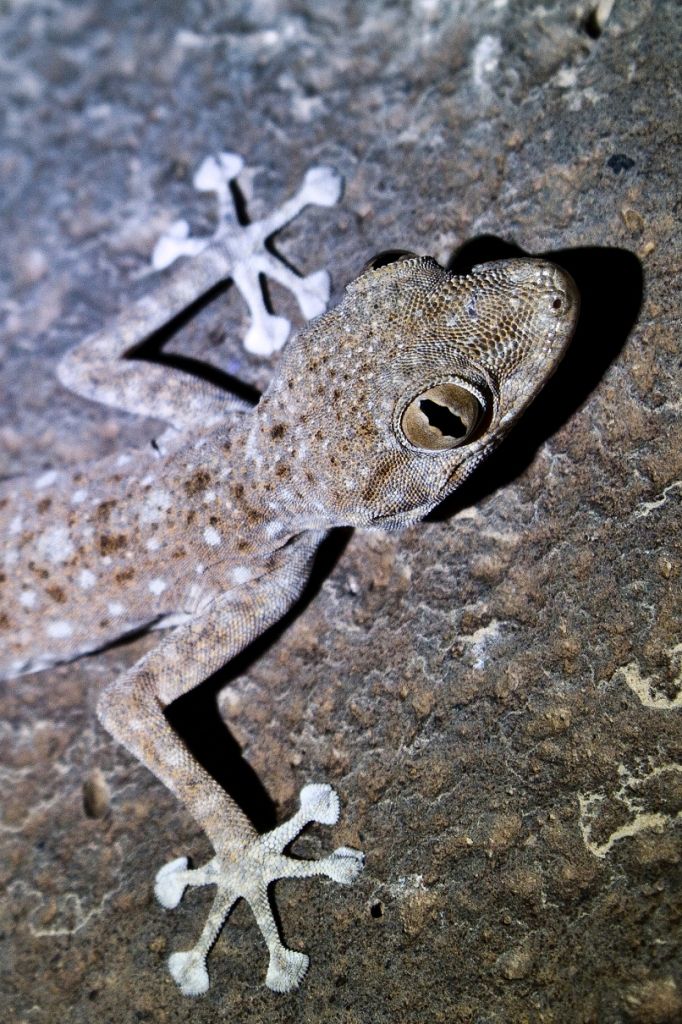
Geckos are more or less ubiquitous throughout the tropics, but visualizing them outside of such environments poses a challenge. Ptyodactylus guttatus, however, is a desert-dwelling species I found and photographed extensively in Jordan. Not only was this species my first subject to attempt capturing nocturnal macro photographs of, its residence within my own probably saved me quite a few mosquito bites over the weeks we shared it.  Continue reading

BBC Wildlife Camera-trap Photos

This slideshow requires JavaScript.

Any time a journalistic enterprise makes the effort to publish images, stories, video or other media that helps us understand and appreciate wildlife and the habitats they depend on, we hope to catch it and link to it here.  Thanks to the BBC for these snapshots.