Thanksgiving: For Animals In & Out Of Context

Thanksgiving, as a national holiday, has its pluses and minuses (most holidays innocently suffer from the tendency we have to overdo things).  Thanksgiving as a practice, a daily or just occasional reflective practice, can only be good.  Today I reflect thankfully on the young animal in the video above (click to spend a minute or so viewing it).  At first glance you might think it is a puppy.  In the video it is clearly in a dog crate, and its facial expressions and movements could just as well be that of a small husky or shepherd dog, or even a mut.

It is a young bear cub.  If you want to know its story, click above.  The story in that video coincides with the story below.

This leopard kitten was found recently separated from its mother in a protected forest area in Kerala, and I happened to be in the right location at the right moment to witness what happens in such cases if our modern world is working at its best.  I learned something in the process, and that has completely changed my view on zoos (for which, this thanksgiving reflection).  The coincidence is that both the bear cub and the leopard kitten enlightened me within days of each other, and within that same set of days I had just been listening to a story on Radio Lab on the topic of zoos; all that,  just at the time when my calendar reminds me each year (the last Thursday of November) to reflect on what I am thankful for.
Continue reading

Wayanad Wildlife Sanctuary

Photo credits: Ramesh Kidangoor

Part of the Nilgiri biosphere, Wayanad  Wildlife Sanctuary is an area of 344.44 square kilometres formed by two discontinuous pockets, Muthunga in the south and Tholpetty in the North. Nearly one third of the area is covered by plantations of Teak, Rosewood, Silver oak and eucalyptus.The rest is covered with Bamboo groves, moist deciduous and semi- evergreen forests. The sanctuary boasts a rich fauna, with elephants and deer the most commonly sighted.

Continue reading

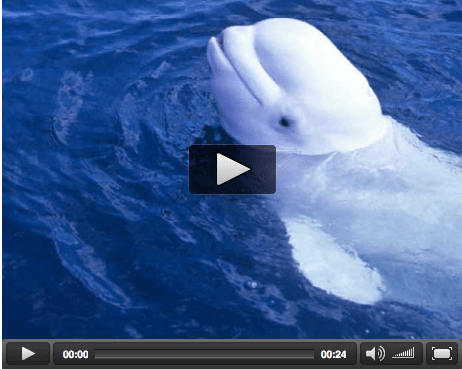
Beluga Love

Thanks to the Guardian:

In the 18th century, whalers who heard whales singing beneath their ships believed they were listening to the souls of drowned men. The notion of the silent ocean having a voice seemed so improbable. It wasn’t until the second world war and the advent of underwater acoustics that science discovered how vocal whales really are. Continue reading

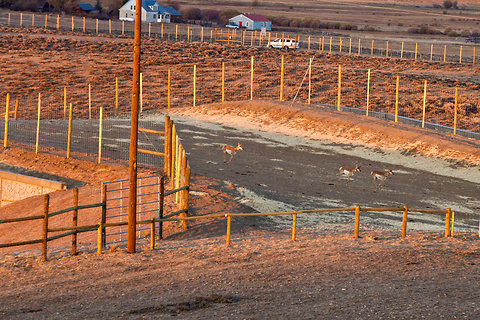
One Small Step For Pronghorns

Jeff Burrell/Wildlife Conservation Society

For a small good news story, click the image above.  It is from the Green Blog of the New York Times, and is the kind of story you would not read about in India because there are no states quite like Wyoming:

Until recently, the population of pronghorn — a small antelope-like mammal endemic to North America — outnumbered people in its native Wyoming. The Cowboy State may be the nation’s least populous, but the two groups still manage to come into conflict. Pronghorns numbering in the tens of thousands cross Highway 191 each year during their annual migration, and collisions between animals and cars are costly for all involved. Continue reading

Young Explorers

I recently discovered that National Geographic offers grants to researchers, conservationists, and explorers between 18 and 25 years old to pursue projects around the world in archaeology, filmmaking, biology, adventure, and exploration, to name a few fields. These Young Explorers Grants, which generally range between $2000 and $5000, can often be a perfect catalyst for more or future funding for people trying to fulfill a lifelong research dream or experiment with a concrete fieldwork idea — after all, having National Geographic’s name on your list of supporters is pretty impressive, and a sign of great potential!

This morning, I attended a workshop given by several members of the National Geographic team hosted by Cornell University and sponsored by the Lab of Ornithology, The North Face, and other groups, which gave an overview of NatGeo’s mission as well as quite specific examples of research possibilities from past and current Young Explorer Grantees. Continue reading

What Makes the Baya Weaver’s Nest a Baya Weaver’s Nest?

“Pick a nest.”

It was the first day of my architectural design studio class and we were told to pick a nest, any nest. I knew this was going to be a great semester: the first assignment was seemingly random, kooky, and just a little ‘out there.’ I was excited! As an architecture student, I love when things are approached in such a non-traditional way.

I know what you must be thinking: aren’t architects supposed to be designing buildings for people? Why are you looking at bird nests?!

I, too, was confused, but I didn’t question it because I had a really cool nest in mind. Because I spent the summer in India with bird-lover and birder extraordinaire, Ben Barkley, the Baya Weaver Bird, who builds its iconic hanging nests around the backwaters of Kerala, was an obvious choice.

Here are my “comprehensive drawings” of the Baya Weaver Bird that attempt to explain the complex relationships the bird maintains with its surroundings.

2nd Draft of Baya Weaver Nest Comprehensive Drawing (By Karen Chi-Chi Lin)

My 2nd draft of Baya Weaver nest comprehensive drawing (Photograph and drawing by Karen Chi-Chi Lin)

Continue reading

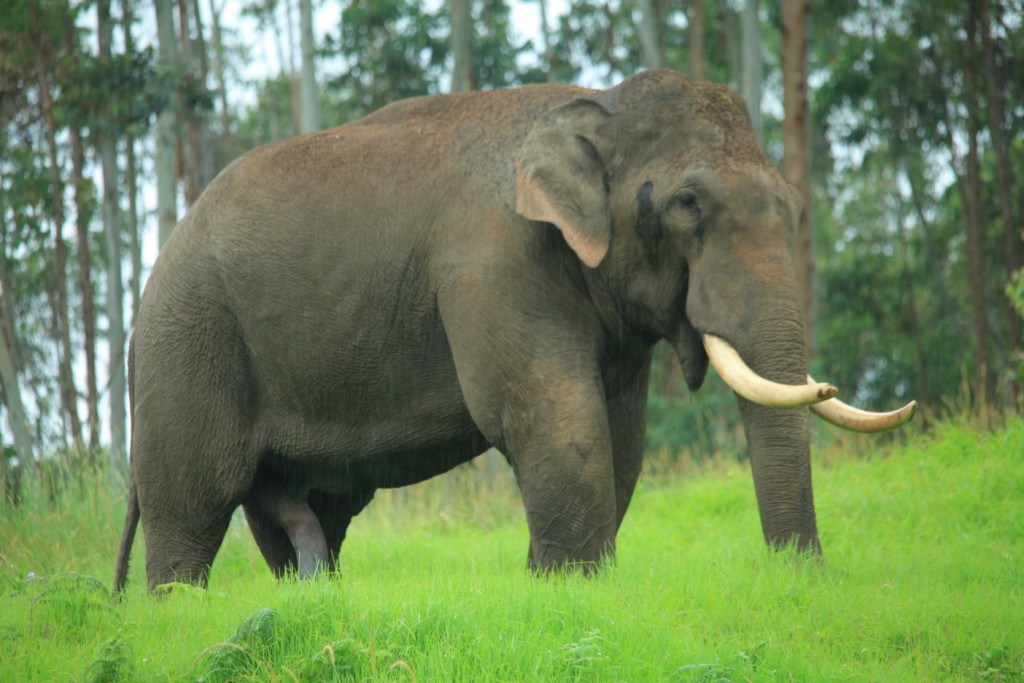
Wild Periyar – Elephants

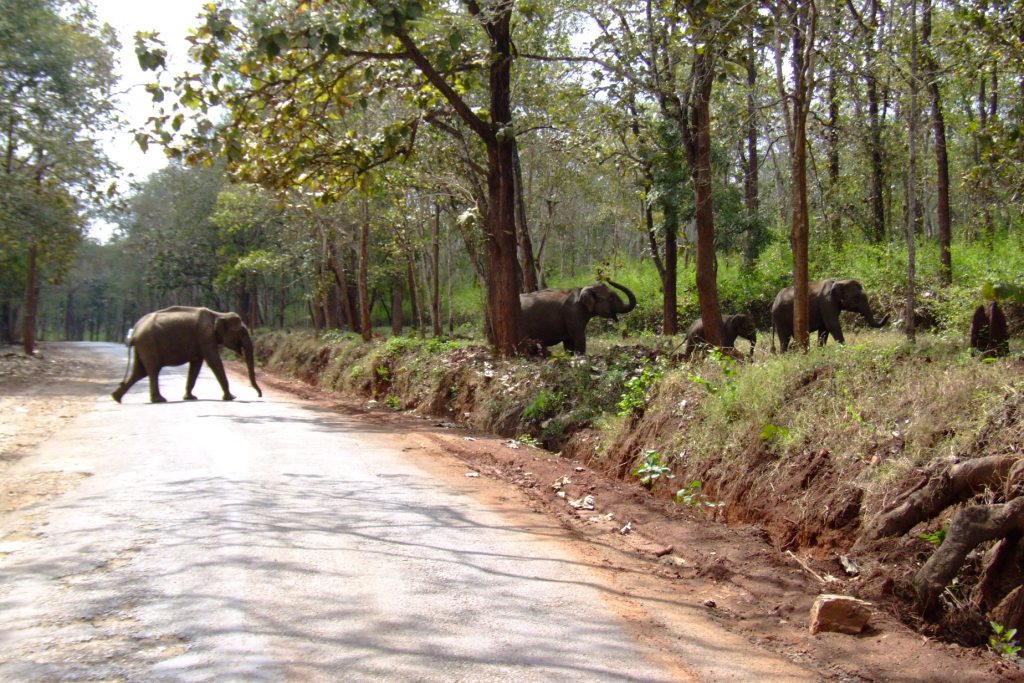
The rich and productive banks of the Periyar reservoir attract Elephants (Elephas maximus) that gather in large numbers to graze on fresh fodder and drink and bath in the waters of the famous lake. In summer, when most other pastures are dry, the lake shore is a constant life source. Elephants are one of the main attractions in Periyar; according to the latest Forest Department census there are about 1300 elephants.

Continue reading

Of Birds and Beans: Part 1 (Birds)

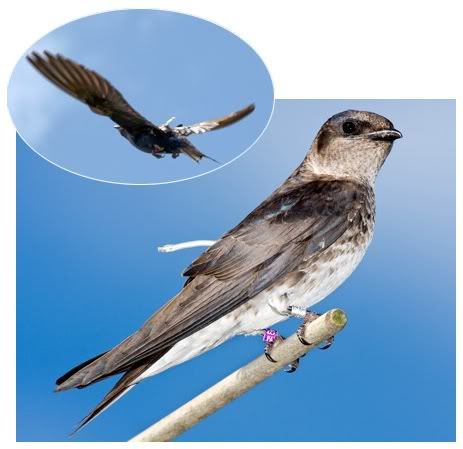
A banded adult purple martin wearing a light logger geolocator. Source: Patrick Kramer and Tim Morton, ScienceMag.

In the time it takes each of us to drink a cup of coffee, acres of tropical forest are cut down. Over the past thirty years, more than half the traditional coffee farms in Latin America have been converted to a newer growing method for higher production. Since the 1960s dozens of migratory bird species from northeastern United States have experienced long-term chronic declines in population size, with few signs of leveling off.

All these events are connected. Deforestation is occurring around the world faster than ever for plenty of reasons, but one of the most widespread and impactful ones is agriculture, and sun coffee (that is, coffee not grown under shade but in huge fields with pesticide, herbicide, and fertilizer assistance) is becoming more common to increase yields in the very same countries where North American migratory birds stay for their winters. But more about sun coffee and its negative ecological impacts later.

Continue reading

Animals We Know, Way Back When

Click the banner for the podcast:
Mammoths and saber-toothed cats may be the most famous beasts of the Ice Age. But they shared the prairie with horses and camels, too—both of which evolved in North America and crossed the ice bridge into Eurasia, before disappearing here. Matthew Kohn (Distinguished Professor, Department of Geosciences Boise State University Boise, Idaho) and Christopher Hill (Associate Dean, Graduate College Associate Professor, Anthropology Boise State University Boise, Idaho) talk about the lesser-known fauna of the Ice Age.

Thermal Imaging, Elephant Listening

©Elephant Listening Project. A thermal image of a juvenile forest elephant drinking minerals dissolved in water at the Dzanga Bai, Central African Republic. Different color palettes can be selected for the images (this one used “rainbow”) while the videos and the image at right were captured using the “iron” color palette.

We first saw the photos in a magazine, and then realized two of our own contributors work under the same roof as the Elephant Listening Project.

Click the image to the left to go to their website for photos and videos of the amazing new approach to listening.  We just returned there to see the new photo to the left and listen to some new recordings they have provided.

And then it dawned on us that we are currently identifying the theme of Summer 2013 internships and our related contribution to conservation at the Periyar Tiger Reserve, which has a healthy population of Asian elephants who may benefit from some listening.

Maybe one of our Lab-based contributors will help us with an introduction to their office mates in the Elephant Listening Project?

Elephant Diet

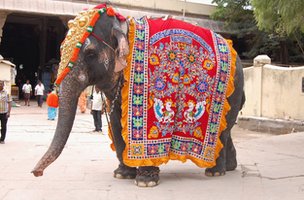
Cuisine and wellness, topics we think about mainly in the context of resort operations in India, also have a role to play in the life of a particular group of elephants, as this BBC story (click the image to go to the source) illustrates:

In parts of India, elephants are kept in temples for religious reasons – taking part in ceremonies and festivals.

Efforts are on in the South Indian state of Tamil Nadu to get these over-pampered tusked animals to slim down, officials have told the BBC. Continue reading

Droning On About Conservation

In a world where funding for national parks and rangers isn’t always in the budget, conservationists have to look to technologies to help protect the millions of acres that some of the world’s most threatened species make their home.  The World Wildlife Fund has developed remote controlled planes that use simple enough technology to be launched by hand and be powered by rechargeable electric batteries.  Click the image above to go to the story in the BBC:

Conservationists in Nepal will soon start using special drones…developed by the global wildlife organisation, WWF. Continue reading

A Flux Of Thought From Sri Lanka

Whenever we check in on The Smart Set we find something interesting, and today it was an essay by Stefany Anne Golberg — an artist, writer, musician, and “professional dilettante” who is also a founding member of the arts collective Flux Factory.  Click the image above to go to Flux Factory, but be sure to read her interesting take on a recent New York Times article about monkeys in Delhi:

It wasn’t so long ago that monkeys and people cohabitated in Delhi like monkeys and squirrels or people and people. They competed for space and food. They shared the same sky. Their lives were fundamentally commingled. This commingling is still common in less developed countries, such as Sri Lanka, where I am presently living.

Diving with Scuba Iguana

Scuba Iguana trips start from the office on Charles Darwin Ave. either going north in a taxi to Itabaca Canal or taking a boat at the Scuba Iguana dock behind the office. All boat rides ranged from 35 to 120 minutes, and were generally pretty smooth. On the way, we could see Common Noddies, Blue-footed Boobies, Elliot’s Storm Petrels, Galápagos Shearwaters, and on North Seymour I saw a Red-billed Tropicbird twice! If I remember correctly, some Nazca Boobies were sitting on the coast of Floreana as well.

Continue reading

Burmese Python Invasion

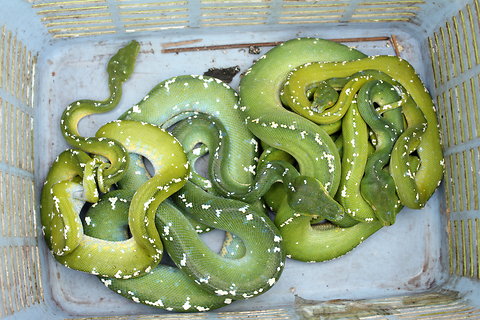
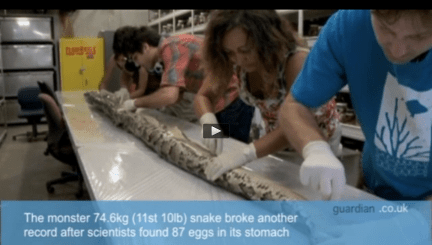
Click to the left to go to the 38 seconds of video on a topic we first posted about here.  It has a bit of ick factor, but the topic is of enormous consequence for the original ecosystems where these wild animals come from, not to mention the innocent creatures they encroach on in their new habitats.

Ganges River Dolphin Conservation

Click the image for the story on BBC’s website:

The Ganges River Dolphin is one of the world’s most endangered freshwater mammals.

Its numbers in South Asia have plummeted in recent decades. But Indian conservationists working on the Brahmaputra River hope to reverse the dolphin’s decline by mobilising riverside communities to protect these amazing cetaceans.

Spotted Deer (Axis axis)

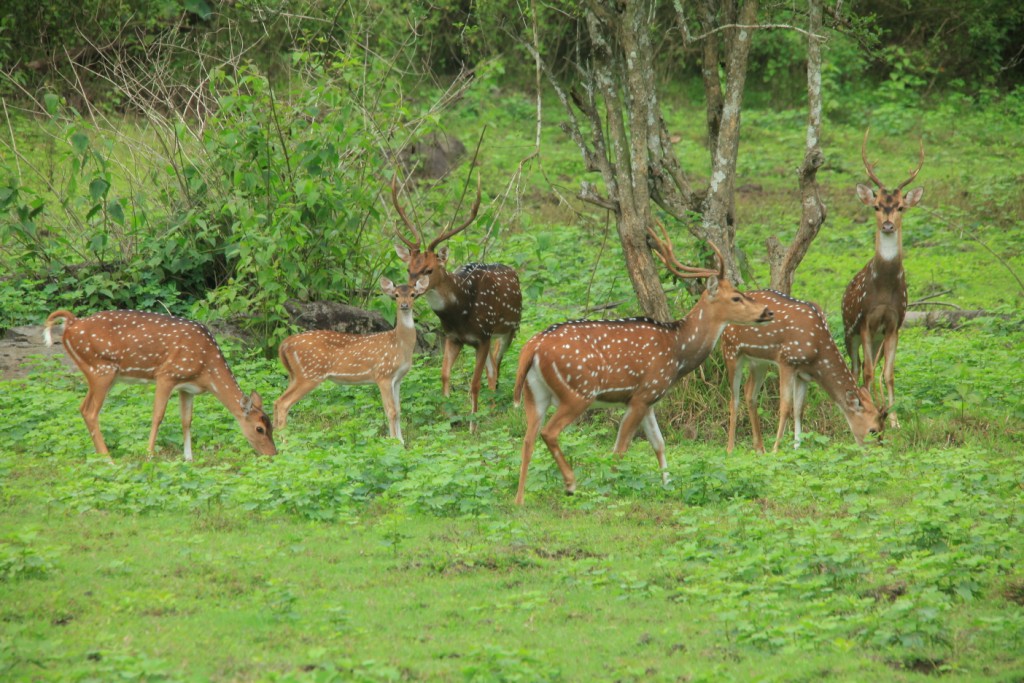
Spotted Deer are commonly found in the dense deciduous semi-evergreen forest and open grass lands of India, mostly seen in large herds. Their life span is about 20-30years. They are the most common deer family in India with a habit across the entire country except in the northern region. As they are the favorite prey of leopards and tigers spotted deers are very nervous animals and are always on the look out for any approaching danger. Continue reading

Galápagos Sea Lions

I just got back from Isabela Island, where I was able to snorkel with a sea lion as playful as the ones in this video (taken, once again, by the ScubaIguana guide Quike Morán), and play with it alone in the relatively shallow waters of Tintoreras (named for the reef sharks that can often be seen there; tinto is red in Spanish; you get the point).

I tried to mimic the swirling, bubble-blowing, and alternating fast and slow approaches as I played with the juvenile sea lion, and was rewarded with a dance even longer than that seen in the video. Continue reading