History Underground

The tunnel system must be one of the most mysterious engineering projects in Liverpool’s history. One entrance into the tunnels was found in the basement of their patron’s former house (Credit: Chris Iles/Friends of Williamson’s Tunnel)

The Williamson’s tunnel system must be one of the most mysterious engineering projects in Liverpool’s history. One entrance into the tunnels was found in the basement of their patron’s former house PHOTO: Chris Iles

The Williamson Tunnels are a labyrinth of tunnels and underground caverns under the Edge Hill district of Liverpool in north-west England. They were built in the first few decades of the 1800s under the control of a retired tobacco merchant called Joseph Williamson.The purpose of their construction is not known with any certainty. Theories range from pure philanthropy, offering work to the unemployed of the district, to religious extremism. Although some of the tunnels have been lost over the years, a lot of them still exist today, under what is now a residential area. One section of the tunnels has been cleared and renovated and is open to the public. The remaining parts of the labyrinth are closed, with many suspected tunnels yet to be rediscovered.
Continue reading

Sandstructures, Just Because

16CHARACTER-master675

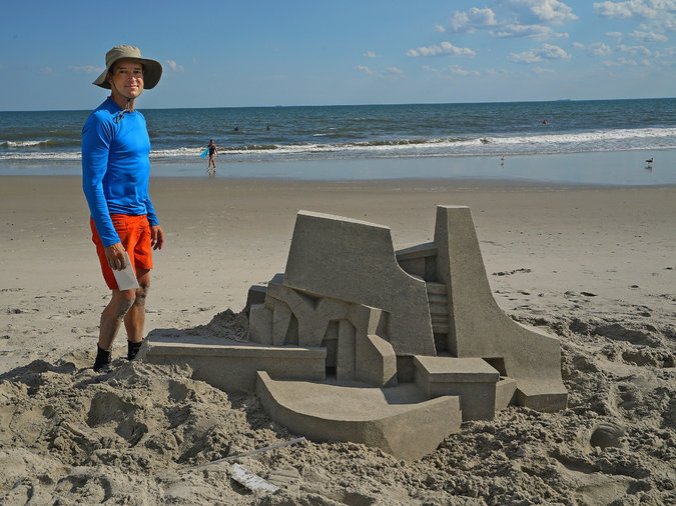
Calvin Seibert spends up to four days a week during the summer at Rockaway Beach in Queens. Credit Nicole Bengiveno/The New York Times

We do not need to explain it; we just like it (click the image to go to the original):

It looked like some futuristic civilization poking up out of the footprinted sand on Rockaway Beach in Queens. A lifeguard walked over to inspect it, then some surfers. A group of dripping children stopped, transfixed.

“Young people tend to watch for longer,” said Calvin Seibert, 57, who was shaping the structure. “If people sense you’re serious about it, they’ll watch longer.”

Mr. Seibert, a Manhattan artist, is serious enough about it to take a long subway ride to the beach up to four days a week from June through September. Continue reading

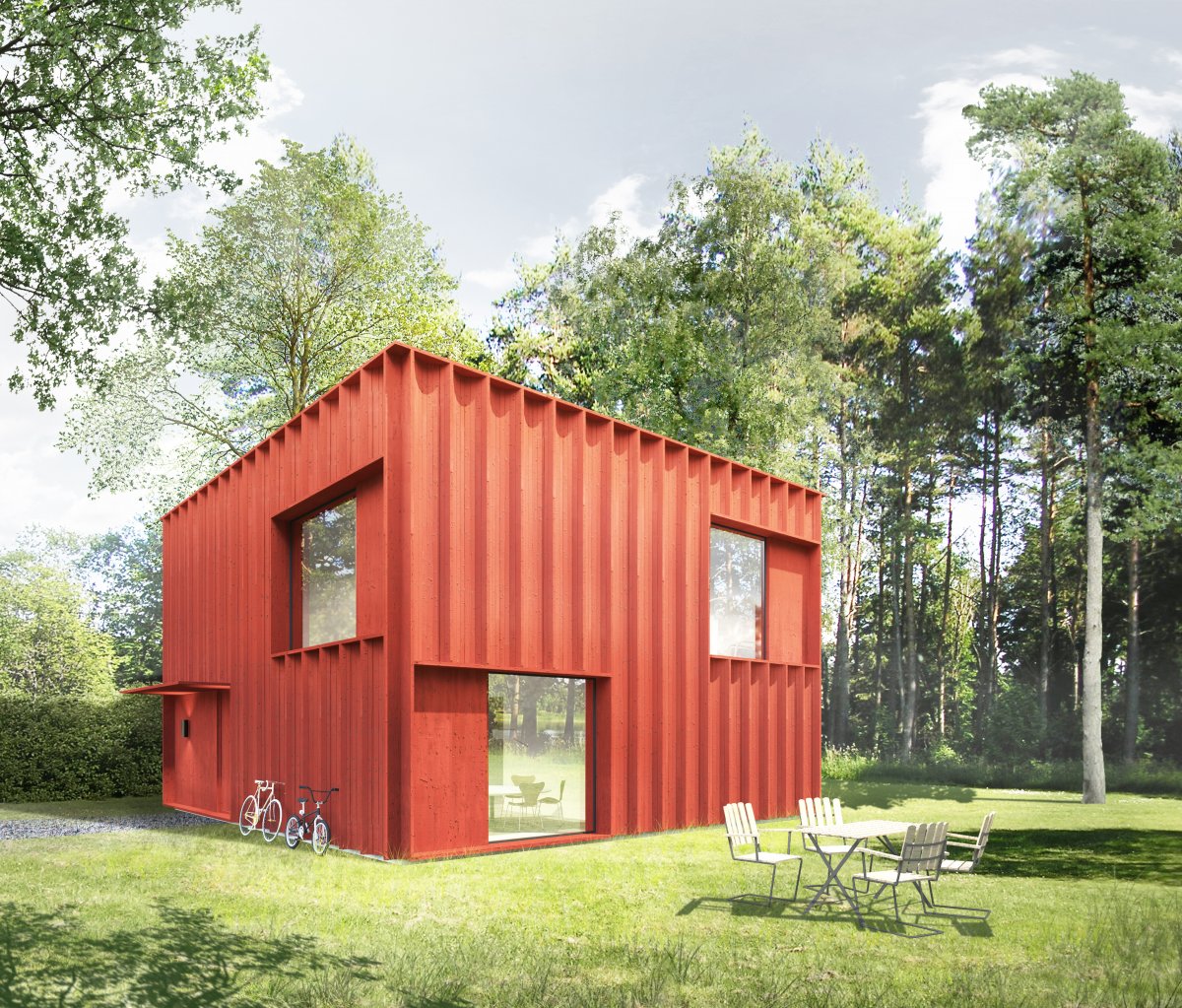
A House For and By the People

This Swedish house was designed by two million people. PHOTO: Tech Insider

This Swedish house was designed by two million people. PHOTO: Hemnet

Technology and democracy – two great forces to reckon with in today’s world. And when these two come together, it exemplifies what community of thought and the powers and possibilities of science can do. Take the Hemnet House. Designed collaboratively by 2 million people (the population size of Jamaica, Latvia, Slovenia and more), the house stands for the greatest tenet of democracy – for the people, by the people.

Continue reading

Eco-friendly Home of the Future

Fitted out with a photo voltaic (solar panel) roof system and high-tech wall panels, the Solcer house collects and stores thermal and electrical energy

Fitted out with a photo voltaic (solar panel) roof system and high-tech wall panels, the Solcer house collects and stores thermal and electrical energy

Introducing the house of the future – which generates more energy than it consumes. The walls of The Solcer house, which was designed and constructed by the Welsh School of Architecture, collect and store thermal and electrical energy. Located at Stormy Down, near Bridgend, the building also has a photo voltaic (solar panel) roof system and has been funded through the Low Carbon Research Institute (LCRI) programme funded by Wales European Funding Office (WEFO).

Continue reading

Welcome to the Urban Forest Neighborhood

The OAS1S™ architecture is shaped as a 1 and answers to the deep human need to become 1 with nature.

The OAS1S™ architecture is shaped as a 1 and answers to the deep human need to become 1 with nature.

If one Dutch architect gets his way, we might soon be living in car-free urban forests where the buildings look like trees. Raimond De Hullu’s new home design, the OAS1S, runs completely off the grid, thanks to renewable energy and on-site water and waste treatment. It’s made with recycled wood and organic insulation, meeting “cradle to cradle” standards where no material goes to waste. But the designer wanted to also rethink what a green building—and neighborhood—should look like.

Continue reading

From Coal Mine to Land Art

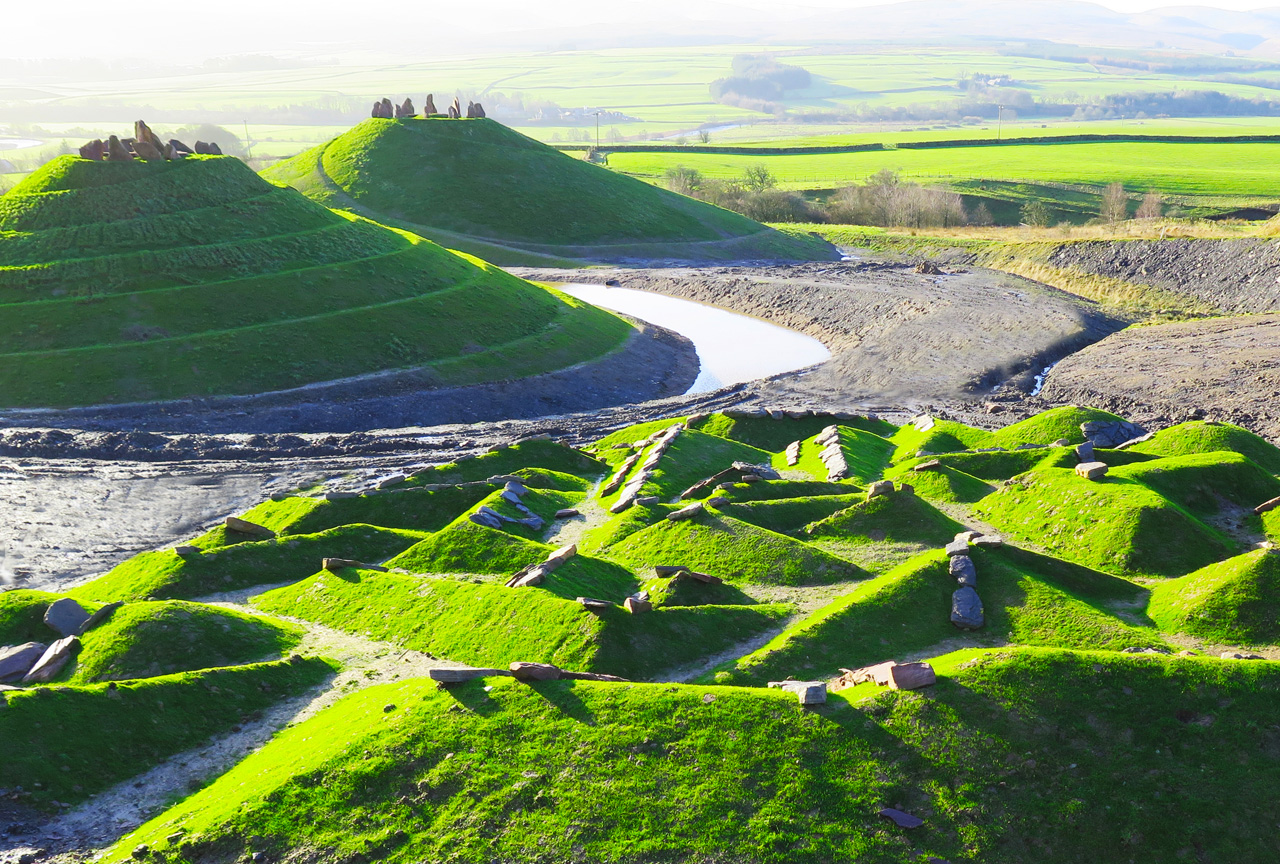
In five years, Scotland plans to run on nothing but renewable energy. Towards that, a start has been to look at deserted coal mines. PHOTO: CoExist

In five years, Scotland plans to run on nothing but renewable energy. Towards that, a start has been to look at deserted coal mines. PHOTO: CoExist

In five years, Scotland plans to run on nothing but renewable energy. The country’s few remaining coal mines are shutting down, leaving a question: How should towns deal with the ugly scars left behind by abandoned mines? Near the village of Sanquhar, the answer is a massive, 55-acre work of land art. Looking like a modern Stonehenge, it builds a miniature multiverse from 2,000 boulders found on the site. Locals, sick of looking at the former mine, lobbied the landowner—Richard Scott, the Duke of Buccleuch—to do something. But they wanted to go beyond just adding a little grass to cover the scarred earth, and build a replacement that might draw visitors to boost a struggling economy. The duke turned to architect Charles Jencks to turn the mine into art.

Continue reading

A Brick to Breathe Easy?

MIT students have created a brick that could end pollution from dirty brick kilns. PHOTO: CoExist

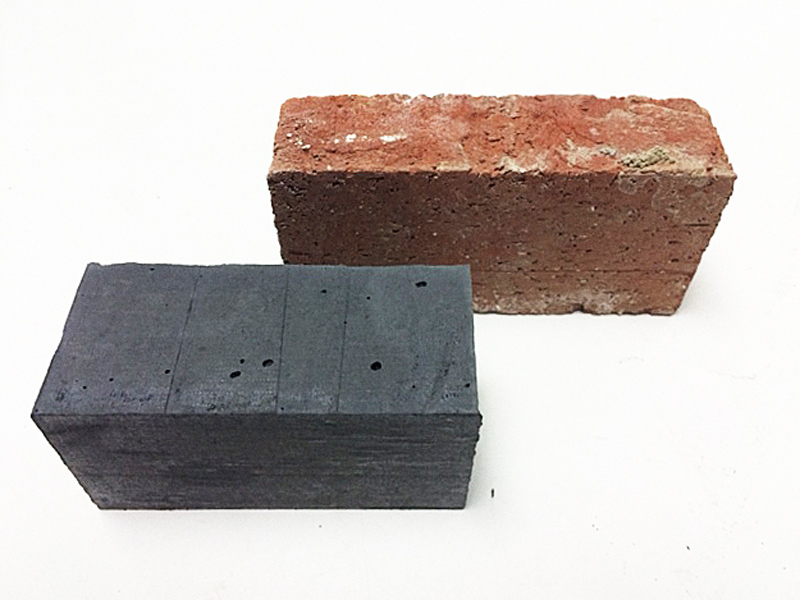
MIT students have created a brick that could end pollution from dirty brick kilns. PHOTO: CoExist

India’s brick industry, spread out over 100,000 kilns and producing up to 2 billion bricks a year, is a big source of pollution. To fire to hot temperatures, the kilns use huge amounts of coal and diesel, and the residue is horrendous: thick particulate matter, poor working conditions, and lots of climate-changing emissions. MIT students have created an alternative. The Eco BLAC brick requires no firing at all and makes use of waste boiler ash that otherwise clogs up landfills.

Continue reading

The Ultimate Architect of Cardboard Buildings

“What is the difference between temporary architecture and permanent architecture?” No architect is more qualified to explore that question than Japanese architect Shigeru Ban. “Temporary” architecture, in disaster zones, is Ban’s calling card. For over 20 years, the 2014 winner of the Pritzker Prize, architecture’s Nobel, has best been known for his well-publicized humanitarian work. From Rwanda to Japan to Nepal, he has turned cheap, locally-sourced objects—sometimes even debris—into disaster-relief housing that “house both the body and spirit,” as Architectural League president Billie Tsien puts it.

Continue reading

A Garden of Waste

Successful stories of upcycling, recycling and effective waste management are heartwarming to say the least. Because they speak of someone thinking about the future and taking the time and effort to act on a lay thought. That’s what the world (and the environment) needs – time. And, Nek Chand, who was born in Pakistan but made India his home, gave almost 60 years of his life to make trash beautiful, to give it meaning and purpose. He created a garden of sculptures and waterfalls out of trash over 40 acres and managed to hide it from everybody for 18 years. It was his secret to keep and is now Chandigarh’s pride. The nation’s, too.

In his spare time, Chand began collecting materials from demolition sites around the city. He recycled these materials into his own vision of the divine kingdom of Sukrani, choosing a gorge in a forest near Sukhna Lake for his work. The gorge had been designated as a land conservancy, a forest buffer established in 1902 and nothing could be built on it. Chand’s work was illegal, but he was able to hide it for eighteen years before it was discovered by the authorities in 1975. By this time, it had grown into a 12-acre (49,000 m2) complex of interlinked courtyards, each filled with hundreds of pottery-covered concrete sculptures of dancers, musicians, and animals.

Continue reading

In Art’s Holy Name, From Italy

When you are a native of the land, you inevitably end up being a guide. From the fastest route to reach the airport, places to visit in Fort Kochi and Mattanchery, and the lowdown on where to get the best seafood – it is assumed that you know it all. And, rightly so. For every textbook guide on India/ Kerala will tell you that you shouldn’t miss what’s left of the Chinese fishing nets, about taking a walk in Jew Town and catching a cultural performance or two. The Santa Cruz Basilica, too, will be on the must-do list. But only a native can tell you of the Italian Jesuit priest, who studied Michelangelo’s repertoire in Rome, and came to Cochin after he was commissioned to paint in churches. And that he died here, too.

Continue reading

If You Happen To Be On Ponce De Leon

Screen Shot 2015-04-25 at 5.25.37 AM

It’s been awhile since we wrote about Nick Cave and the inspired and inspiringly creative form of upcycling he applies in his “happenings”. It seems particularly appropriate that this particular Flux Project (sounds pretty pop-up, right?) takes place at Atlanta’s Ponce City Market, an adaptive reuse renovation of the historic 1926 Sears & Roebuck building into an urban community of hub of living, work and public space.

About the work

Up Right: Atlanta is a “call to arms, head and heart” for Cave initiates—the lead characters of this work. Through the performance, they are prepared mind, body and spirit to face the forces that stand in the way of self-hood, to enter a world over which they have complete control. Initiates become warriors of their own destiny.

Continue reading

If You Happen To Be In New York City

Whitney Museum of American Art. Photograph by Ed Lederman

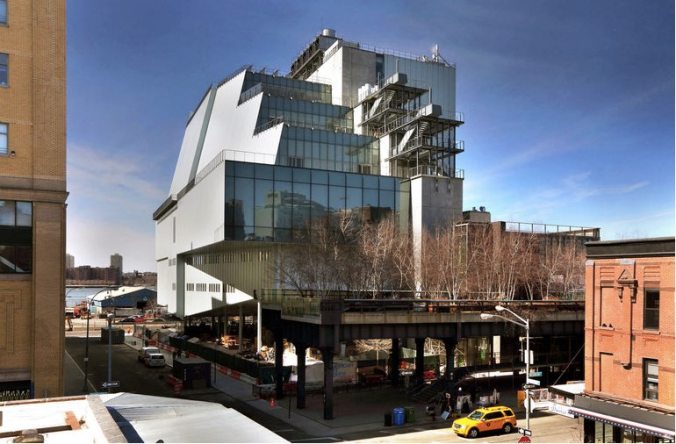
Whitney Museum of American Art. Photograph by Ed Lederman

We have a thing for public spaces, especially when they combine with community activism. We try to get firsthand experience, and when we have learned enough about such places, we share what we can here. Ditto for museum exhibits, special library exhibitions, and unusual library thingys. It is not every day we get to announce the opening, or re-opening, of one of the greatest museums in the world, right in the midst of such a public space:

THE NEW WHITNEY OPENS MAY 1, 2015 BUY ADVANCE TICKETS NOW

The reviews convince us that this will be worth the visit, and this particular wording puts it in perspective:

The Whitney Museum of American Art, long the odd duck among the Big Four of Manhattan art museums—a cohort that includes the mighty Metropolitan, the starry Modern, and the raffish Guggenheim—takes wing on May 1st, when it reopens in a new, vastly expanded headquarters downtown. The fledging owes a lot to the Italian architect Renzo Piano’s ingenious building, on Gansevoort Street, which features six floors of shapely galleries, four open-air terraces, spaces for performance and screening, a library and reading rooms, a restaurant, a café, and an over-all feeling of seductive amenity—a bar on the piazza-like ground floor bodes to be one of the toniest trysting spots in town. It is likely to win far more fans than the Whitney’s old home, Marcel Breuer’s brutalist “inverted ziggurat,” which opened in 1966, on Madison Avenue, and which it vacated six months ago and leased to the Met. Piano’s museum stands at the southern end of the High Line and hard by the Hudson River, in what remains of the tatterdemalion meatpacking district. It looms like a mother ship for both gallery-jammed Chelsea, to the north, and the puttering West Village, to the south. It is instantly a landmark on the cultural and social maps of the city—and on its poetic map, as a site to germinate memories. Continue reading

Progress, Evolution & Design

Screen Shot 2015-03-21 at 10.38.33 AM

Thanks to the Harvard Gazette for bringing our attention to this magazine, published twice yearly by the Harvard University Graduate School of Design:

Making print modern

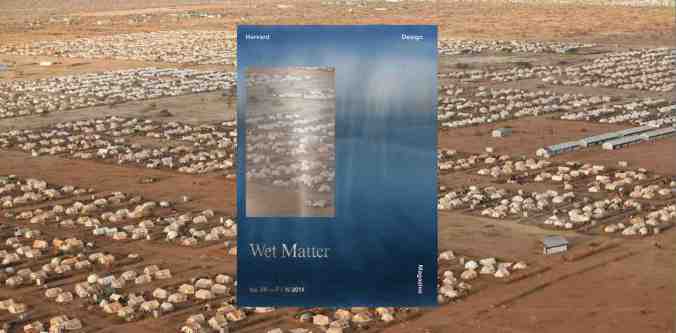
New look for Harvard Design Magazine deepens focus on ‘Wet Matter’

By Corydon Ireland, Harvard Staff Writer

In an age of bits and bytes and pixels and text on screens, Harvard Design Magazine — relaunched in a new format last year ― fervently embraces the thingness of print, the quotidian actuality of paper and ink.

The right wordsmiths were on hand to recast and renew the magazine, which is produced at the Harvard Graduate School of Design.

Continue reading

Craters Of Man’s Devotion

StG Ethiopia

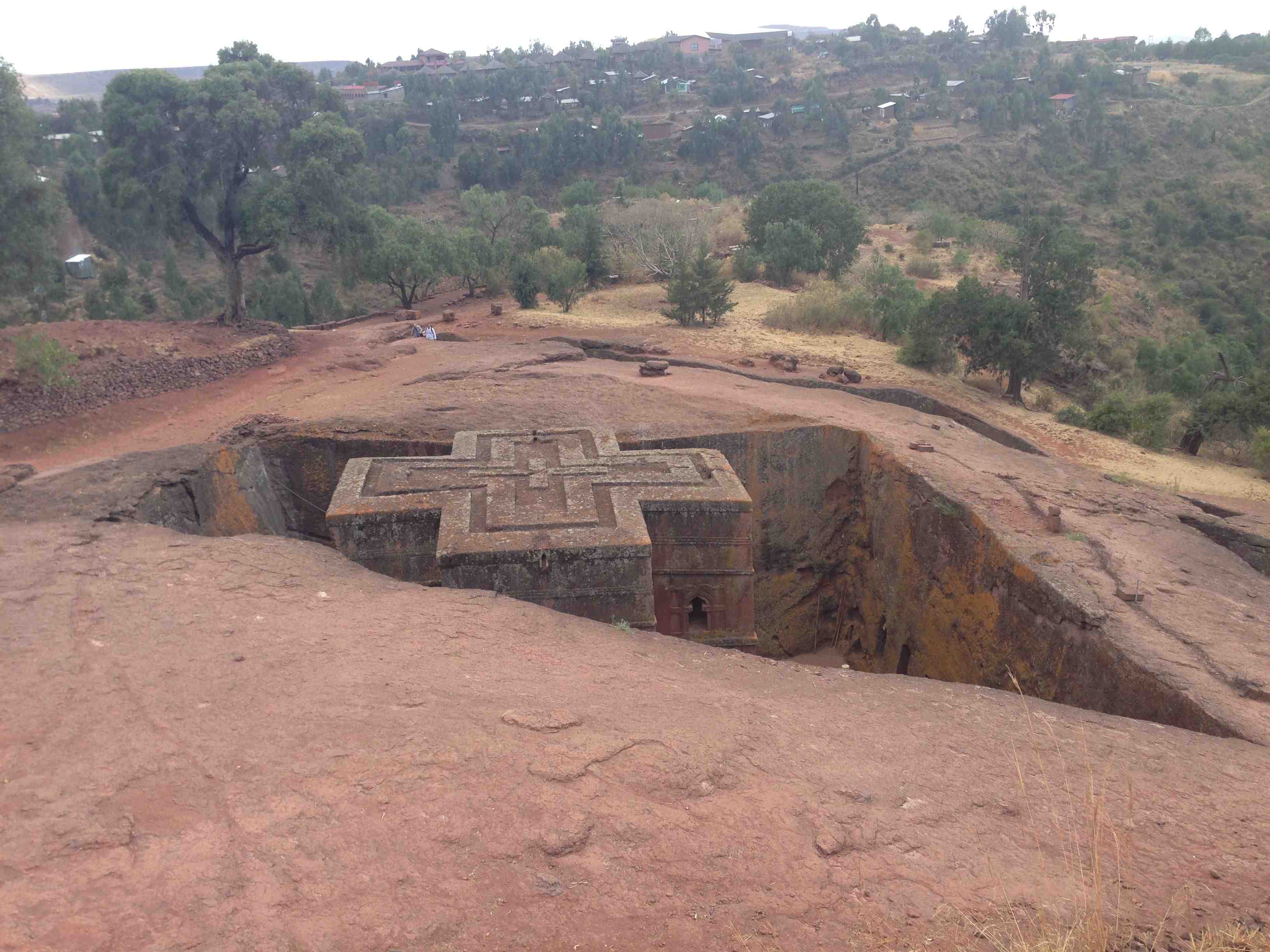
Some snapshots of my Ethiopian expedition, just ended, are in order; not of the national parks which were the main purpose of the expedition–more on which later–but from the visit to the north which is where most visitors to Ethiopia currently make a sort of pilgrimage for reasons you can understand looking at these snapshots.

It would be difficult for any photo to do justice to this wonder, a church created by men 1,000 years ago by carving down into the stone mountain. But words are even less helpful for reasons you can probably best understand by seeing another view of the same, following what the UNESCO World Heritage Centre has to say about this and the other churches of Lalibela, Ethiopia:

…The churches were not constructed in a traditional way but rather were hewn from the living rock of monolithic blocks. These blocks were further chiselled out, forming doors, windows, columns, various floors, roofs etc. This gigantic work was further completed with an extensive system of drainage ditches, trenches and ceremonial passages, some with openings to hermit caves and catacombs…

StG 2

As impressive as those craters in Siberia may be, they pale compared to what man can do when he is sufficiently motivated, which may be the one source of hope for addressing the challenges of climate change (one of the seemingly impossible challenges of our own time). This modern challenge, now that I think of it, seems particularly well-suited to the beliefs many hold, across various religious traditions, about the saint who is the namesake of this particular church.

Continue reading

Kerala Coconut Thatch Weaving

In my earlier posts, I wrote about the abundance of coconut trees in Kerala and their many uses from ingredients in typical foods to the construction of house boats. Another primary use is for roofing. Here at Marari Pearl, it is used unsparingly for most of the buildings from the restaurant to the 20 villas on site. Continue reading

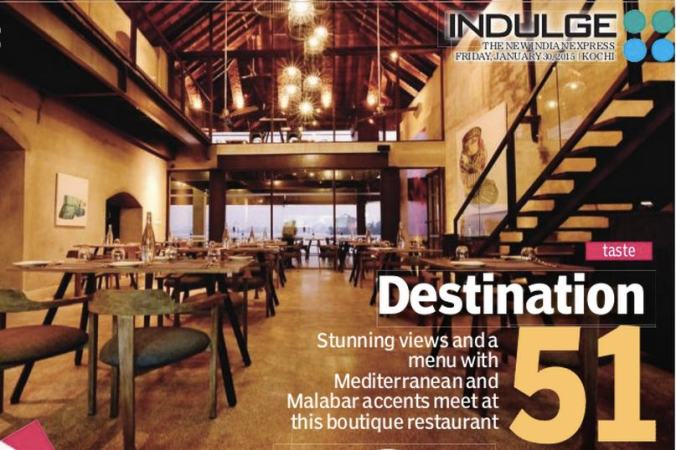
51 Keeps Winning Hearts, Minds, Eyes And Most Importantly Taste Tests

Photo Ratheesh Sundaram, Indian Express

Photo by Ratheesh Sundaram, Indian Express

We cannot help it–we love the press that 51 and Spice Harbour have generated together, including in Architectural Digest and Conde Nast Traveler‘s 40th Anniversary Edition of India’s Most Stunning Boutique Hotels Handbook among other prestigious media outlets. Not in some vanity-driven ugly manner, but as a matter of fact we love that the Indulge team at Indian Express, and specifically Rosanna Abrachan has captured in elegant prose exactly what we would want anyone to know about 51. Thanks, Rosanna! And Ratheesh, superb photography! Some text to sample:

While the menu is not expansive, it is rich and colourful as we first saw in the Xandari salad. With its origins at a property managed by RAXA Collective in Costa Rica, the starter is perfect for evangelists of eating healthy. Continue reading

Rainwater Harvesting, Try This At Home

rainhouse

Thanks to Conservation for this reference to a concept, a design, and a design firm which all catch our full attention:

THIS ENTIRE HOUSE IS A WATER FILTER

Hungarian design firm IVANKA is an avant-garde concrete company. Over the past decade, they’ve developed unexpected ways to incorporate this utilitarian material into everything from designer handbags to BMW concept cars. Lately, though, the company is focusing not just on luxury goods but on the most basic of everyday resources: clean water. Their new “bio-concrete” could turn houses, schools, and factories into giant water filters to produce drinking water from rain. Continue reading

Luxury, Heritage, Authenticity And Progress

A plan to turn the old Samaritaine department store into a five-star hotel is at the center of a debate about what Paris is becoming. CREDIT PHOTOGRAPH BY DENIS ALLARD / REA / REDUX

A plan to turn the old Samaritaine department store into a five-star hotel is at the center of a debate about what Paris is becoming. CREDIT PHOTOGRAPH BY DENIS ALLARD / REA / REDUX

One of the great essayists of our time on a topic we find hitting very close to home as an organization that recycles usage of places in a manner that generates profit, to support conservation, looking forward while trying to retain the core of authenticity:

The Pont des Arts, in Paris, is a steel-and-wood footbridge that connects Left Bank to Right—or, more important to its history and its name, connects the École des Beaux-Arts, where generations of French artists were told how to draw, to the Louvre, where generations went to find out how to look. It was, until relatively recently, a soulful and solitary passerelle, where one could stand for hours in winter, mostly alone, staring out at the view west toward the older, stone parapet of the Pont Royal and the Eiffel Tower, or east toward Notre-Dame and the sharp-jawed Île de la Cité. The view north, toward the Right Bank, remained, until the end of the twentieth century, interestingly mixed, with the newly cleaned Cour Carrée of the Louvre straight ahead and, just to the right, the shiplike prow of the Samaritaine department store, proudly flying a couple of pennants from its top.

In the past nine years, all that has changed. Continue reading

Learning Laboratories, Museums, And Art’s Future Venues

Jon Chase/Harvard Staff Photographer. Harvard Art Museums Director Tom Lentz (from left) moderated a discussion with MoMA Director Glenn Lowry, A.M. '78, Ph.D. '82, Elizabeth Cary Agassiz Professor of the Humanities Jennifer Roberts, and Paul Ha, director, List Visual Arts Center at MIT.

Jon Chase/Harvard Staff Photographer. Harvard Art Museums Director Tom Lentz (from left) moderated a discussion with MoMA Director Glenn Lowry, A.M. ’78, Ph.D. ’82, Elizabeth Cary Agassiz Professor of the Humanities Jennifer Roberts, and Paul Ha, director, List Visual Arts Center at MIT.

Thanks to the Harvard Gazette for this story about museums functioning as inclusive, modern learning laboratories:

In the 1970s, the Italian architect Renzo Piano was a young upstart with immense talent and brazen daring. It was then, still fairly early in his career, that Piano and his partner, the architect Richard Rogers, redefined the architectural landscape with their groundbreaking Pompidou Center in Paris. Continue reading

If You Happen To Be In Paris

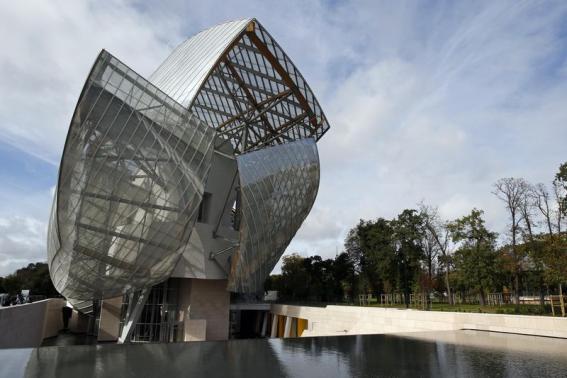
A general view shows the Fondation Louis Vuitton designed by architect Frank Gehry in the Bois de Boulogne, western Paris, October 17, 2014.  REUTERS/Benoit Tessier

A general view shows the Fondation Louis Vuitton designed by architect Frank Gehry in the Bois de Boulogne, western Paris, October 17, 2014. REUTERS/Benoit Tessier

We are in solidarity with the neighborhoods concerned about the loss of green space in Paris, as reported by Reuters on more than one occasion, and this project has been controversial since first announced, but for now, we can only say wow:

(Reuters) – Billowing sails of glass join the Eiffel Tower and the Sacre Coeur as permanent fixtures of the Paris skyline this month, when the new Fondation Louis Vuitton contemporary art museum designed by Frank Gehry opens to the public.

Thirteen years in the making, the museum is the brainchild of Bernard Arnault, the chief executive and founder of LVMH. France’s richest man envisioned a bold new piece of architecture in the capital that would tie the world’s largest luxury group with the cutting edge of art and design.

The private museum that opens to the public on Oct. 27 will be donated to the city of Paris in 50 years. Continue reading