Care & Sacrifice & Cruise Ships

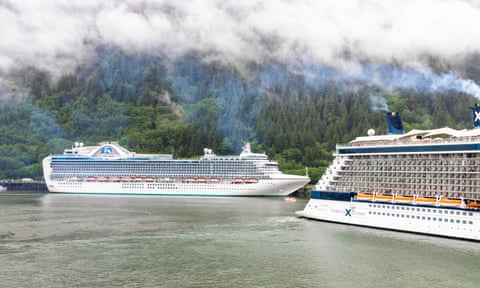
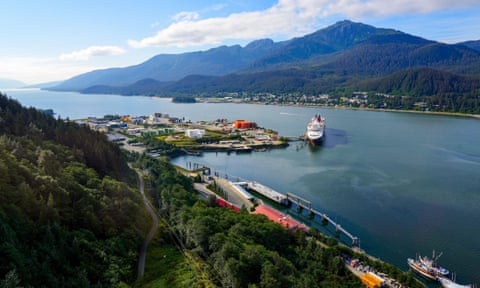
Two huge cruise ships in a large sound with tree-clad mountains in the background

Cruise ships at Alaska’s capital, Juneau, which has a population of 32,000 but had 1.67m cruise ship visitors last year – a 23% rise on the previous record. Photograph: Stephen Dorey/Alamy

We salute you for the care you have chosen to demonstrate, and the sacrifice, Juneau:

Alaska limits cruise ship passengers in capital city after 1.6m visitors last year

Juneau agrees deal with industry body to curtail visits but critics say it does not go far enough to protect quality of life

Cruise ship moored to a pier in a large sound with tree-clad mountains in the background

The Gastineau Channel near Juneau. Some critics of the cruise industry have proposed ‘ship-free Saturdays’ to cut down on the number of ships stopping there. Photograph: Alexandre Rosa/Alamy

Alaska’s capital city is to limit the numbers of cruise ship passengers arriving at the port amid concerns over tourism’s growing impact, but a leading critic of the industry has said further measures to protect Alaskans’ quality of life are needed.

Located on the Gastineau Channel in southern Alaska, Juneau has a population of 32,000 and last year received a record 1.65 million cruise ship passengers – a 23% increase from the previous high. Continue reading
Greenland’s Ice Sheet & Our Future

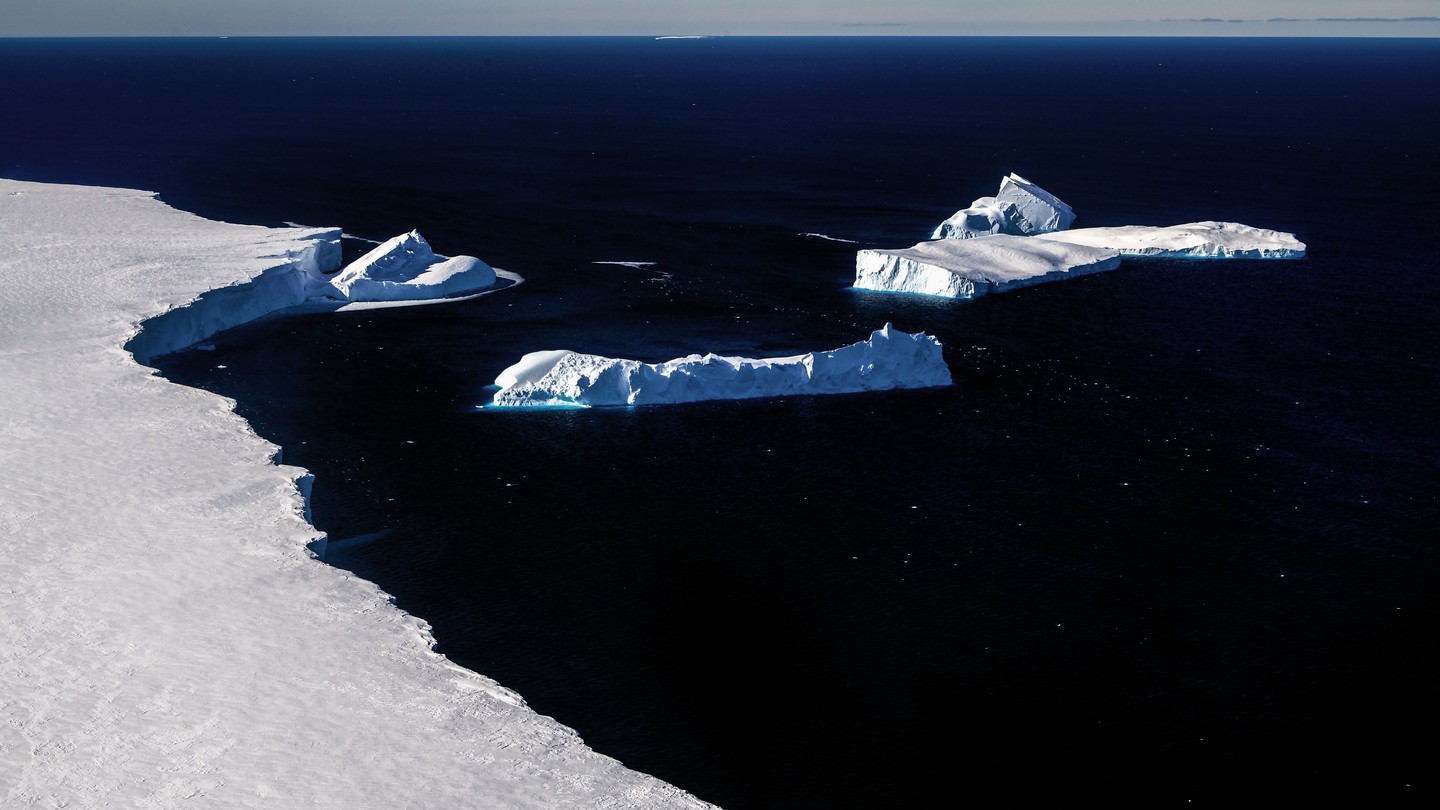
photo of curving white edge of glacier with several calved icebergs and dark blue sea

The edge of the Thwaites Glacier, 2023 (Nicolas Bayou)

Ross Andersen, writing for this focused issue of Atlantic, is worth reading for more than just the adventure he encountered reporting it:

A WILD PLAN TO AVERT CATASTROPHIC SEA-LEVEL RISE

The collapse of Antarctica’s ice sheets would be disastrous. A group of scientists has an idea to save them.

The edge of Greenland’s ice sheet looked like a big lick of sludgy white frosting spilling over a rise of billion-year-old brown rock. Inside the Twin Otter’s cabin, there were five of us: two pilots, a scientist, an engineer, and me. Farther north, we would have needed another seat for a rifle-armed guard. Here, we were told to just look around for polar-bear tracks on our descent. Continue reading
More Youth Demanding Liveable Futures

portion of the Kenai Peninsula in Alaska in 2023. The project would involve construction of a liquefaction plant to prepare the gas for export to Asia. Photograph: Richard Ellis/Alamy

Our appreciation to Dharna Noor for writing a clear story about this new legal initiative, and to the Guardian for publishing it. What started in Montana, a naturally well-endowed state with a mixed environmental record, now continues in Alaska, the biggest frontier of the American West. Our thanks to the younger generation for taking up the fight creatively:

Young Alaskans sue state over fossil fuel project they claim violates their rights

Plaintiffs claim $38.7bn gas export project, which would triple state’s greenhouse gas emissions, infringes constitutional rights

Eight young people are suing the government of Alaska – the nation’s fastest-warming state – claiming a major new fossil fuel project violates their state constitutional rights. Continue reading
Orcas Reconsidered

Although all the planet’s killer whales are currently considered a single species (Orcinus orca), some of the world’s leading experts are proposing to split them into three species. Photo by imagebroker.com/Alamy Stock Photo

Hakai is the go-to magazine for marine stories, and we hope to see more work of Craig Welch, the science journalist who wrote the article below, in the future:

Meet the Killer Whales You Thought You Knew

The iconic marine mammals may not belong to one species but several. Surprise!

Transient, or Bigg’s, killer whales, not only look, sound, and act differently than their resident killer whale neighbors, they might be an entirely different species. Danita Delimont Creative/Alamy Stock Photo

John Ford still recalls the first time he heard them. He’d been puttering around the Deserters Group archipelago, a smattering of spruce- and cedar-choked islands in Queen Charlotte Strait, between Vancouver Island and mainland British Columbia. He was piloting a small skiff and trailing a squad of six killer whales. Ford, then a graduate student, had been enamored with cetacean sounds since listening to belugas chirp while he worked part-time at the Vancouver Aquarium as a teenager. Now here he was, on August 12, 1980, tracking the underwater conversations of wild killer whales through a borrowed hydrophone. Continue reading
Whale Wonder

Hvaldimir near a salmon farm in the fjords off the coast of Stavanger, Norway, in Nov. Conor McDonnell

Whale stories are abundant in these pages partly because they are charismatic and tend to evoke joy, but also because they serve as a barometer for how well we are caring for the planet. Here is one more story, as intriguing as any we have linked to before, for the mix:

The Whale Who Went AWOL

After escaping captivity, Hvaldimir took up residence in Hammerfest, Norway, where he quickly became an international celebrity. Joakim Eskildsen/Institute, for The New York Times

Hvaldimir escaped captivity and became a global celebrity. Now, no one can agree about what to do with him.

On April 26, 2019, a beluga whale appeared near Tufjord, a village in northern Norway, immediately alarming fishermen in the area. Belugas in that part of the world typically inhabit the remote Arctic and are rarely spotted as far south as the Norwegian mainland. Although they occasionally travel solo, they tend to live and move in groups. This particular whale was entirely alone and unusually comfortable around humans, trailing boats and opening his mouth as though expecting to be fed. And he seemed to be tangled in rope. Continue reading
Beavers’ Resilience On Display In Canada

Beavers are not always welcome, but where they belong, they are a wonder to behold. Ian Frazier offers this dispatch from the great North:

Deep in the Wilderness, the World’s Largest Beaver Dam Endures

The largest beaver dam on Earth was discovered via satellite imagery in 2007, and since then only one person has trekked into the Canadian wild to see it. It’s a half-mile long and has created a 17-acre lake in the northern forest — a testament to the beaver’s resilience.

Wood Buffalo National Park, the largest national park in Canada, covers an area the size of Switzerland and stretches from Northern Alberta into the Northwest Territories. Continue reading
Northwest Passage Expedition & Arctic Secrets Revealed

Soren Walljasper, NGM Staff. Sources: Douglas Stenton, University of Waterloo; Jonathan Moore, Parks Canada; Matthew Betts, HMS Terror; Mark Synnott; Tom Gross

We rarely link to expeditions-gone-awry stories, but here is an exception, with thanks to National Geographic:

Seeking to solve the Arctic’s biggest mystery, they ended up trapped in ice at the top of the world

In 1847, Sir John Franklin and a crew of 128 men disappeared while searching for the fabled Northwest Passage. A National Geographic team sought to find evidence of their fate—but the Arctic doesn’t give up its secrets easily.

Jacob Keanik scanned his binoculars over the field of ice surrounding our sailboat. Continue reading
Bubbles On Ice

Illustration by Arina Kokoreva

A bit late considering the special issue was published one month ago, but here is another article in a recent series featuring unusual ideas about how to address climate change:

A Heat Shield for the Most Important Ice on Earth

Engineers might be able to protect Arctic ice by coating it with tiny glass bubbles. Should they?

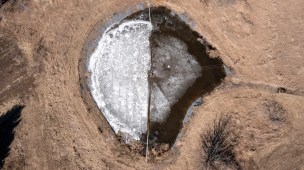
An aerial view of the glass-bubble-covered ice, at left, and the bare ice. Photograph by Doug Johnson

On a clear morning in late March, in rural Lake Elmo, Minnesota, I followed two materials scientists, Tony Manzara and Doug Johnson, as they tromped down a wintry hill behind Manzara’s house. The temperature was in the high thirties; a foot of snow covered the ground and sparkled almost unbearably in the sunlight. Both men wore dark shades. “You don’t need a parka,” Johnson told me. “But you need sunglasses—snow blindness, you know?” At the bottom of the hill, after passing some turkey tracks, we reached a round, frozen pond, about a hundred feet across. Manzara, a gregarious man with bushy eyebrows, and Johnson, a wiry cross-country skier with a quiet voice, stepped confidently onto the ice. Continue reading
Bringing Back Peat

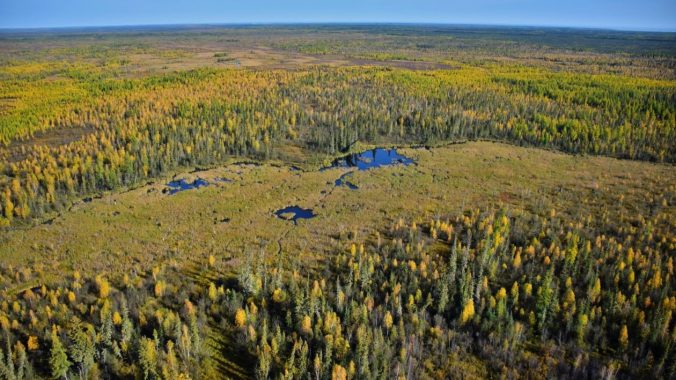
Peatland and taiga forest in northern Finland. NATURE PICTURE LIBRARY / ALAMY STOCK PHOTO

It has been a year since we linked to a peat-in-place story, of which there cannot be too many (so thank you, Yale e360):

Tero Mustonen. GOLDMAN ENVIRONMENTAL PRIZE

Finland Drained Its Peatlands. He’s Helping Bring Them Back

Tero Mustonen has led a successful effort to restore roughly 80 areas of ecologically critical peatlands across his native Finland. In an interview, he talks about the importance of bringing Indigenous knowledge to rewilding initiatives in far northern regions and beyond.

Until a century ago, almost a third of Finland was covered in pristine peatlands, which comprise one of the Earth’s largest and most important carbon sinks. Since then, however, half of Finnish peatlands have been strip-mined for fuel or drained to make room for forest plantations. Continue reading
Not So Happy Earth Day

Over the past three decades, the rate of ice loss from Greenland has increased sevenfold. Photograph by Kerem Yücel / AFP / Getty

On yet another Earth Day, whatever those two words mean together in tandem these days, a message from a reliable source:

It’s Earth Day—and the News Isn’t Good

New reports show that ice sheets in Greenland and Antarctica are melting faster than anticipated, and other disasters loom.

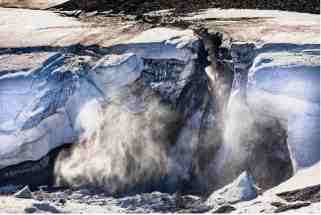
The Greenland ice sheet is, quite literally, a relic of the last ice age. It consists of snow that fell year after year, century after century, and never melted; at the very bottom, there are flakes that fell more than a hundred thousand years ago. Continue reading
Thaw Gas Measurement

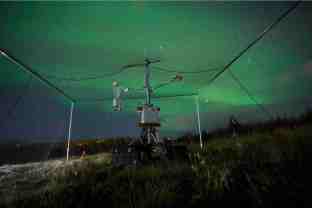
Covered in netting to deflect stray balls, these instruments gather methane data on the seventh hole of Midnight Sun Golf Course. Permafrost is rapidly thawing across the far north, deforming fairways here and releasing the highly potent greenhouse gas, which leads to more warming. PHOTOGRAPH: FRANKIE CARINO

Thaw problems are coming. Permafrost is losing its permanence. Measuring the speed and impact of the thaw is a new form of sleuthing:

The Arctic’s Permafrost-Obsessed Methane Detectives

The Far North is thawing, unleashing clouds of planet-heating gas. Scientists rely on an arsenal of tech to sniff out just how nasty the problem is.

AT THE MIDNIGHT Sun Golf Course in Fairbanks, Alaska, they say you never get the same shot twice. Continue reading
Brilliance Up North

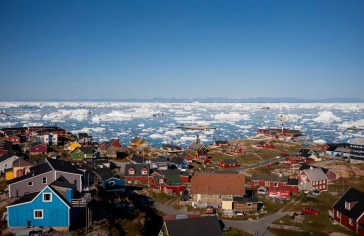
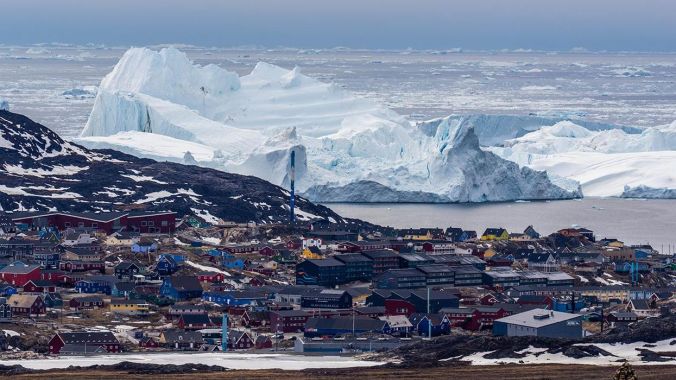
Ilulissat’s icy fjord, a UNESCO World Heritage site, is one of Greenland’s main tourist destinations even though its airport is currently too small to accommodate large jets. Carsten Snejbjerg for The New York Times

Setting limits at the outset, what a brilliant idea:

The Arctic island, renowned for its glaciers and fjords, is expanding airports and hotels to energize its economy, even as it tries to avoid the pitfalls of overtourism.

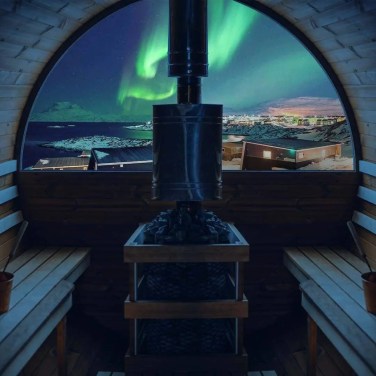
A sauna with a view of Nuuk and, at left, in the distance, the nearly 4,000-foot mountain Sermitsiaq. Inuk Travel

“The weather decides”: It could almost be the motto of Greenland. Visitors drawn to this North Atlantic island to see its powder blue glaciers, iceberg-clogged fjords and breathtakingly stark landscapes quickly learn to respect the elements, and they’re sometimes rewarded for it.

One cold December day, I was waiting for a delayed flight in Kangerlussuaq, a former U.S. military base just above the Arctic Circle, when a friendly Air Greenland pilot named Stale asked if I’d like to join him on a drive to the harbor to “pick up some musk ox heads.” The offer seemed very Greenlandic, so how could I refuse? Continue reading
Alaska, Goosefoot Farm & The New Frontier

Either before or after reading the article below, please click on the image to the right. If it is early morning where you are, it will get you started on the right foot. If it is the middle of the day, the website will refresh you. And if it is night time, sweet dreams will almost certainly follow.

Our coffee CSA, combined with our regenerative activities, are only a  couple of reasons why this article is of personal interest to me. Work in Yakutia increased my wanting to visit Alaska, which started with the fact that my wife Amie was born there. Most of all, it is Alaska! The reasons are compounding, but time is not. Many thanks to Yasmin Tayag for this article in the New Yorker:

The Surreal Abundance of Alaska’s Permafrost Farms

Illustration by Nicholas Konrad / The New Yorker

In a place where the summer sun shines for twenty-one hours a day, climate change is helping to turn frozen ground into farmland.

In 2010, Brad St. Pierre and his wife, Christine, moved from California to Fairbanks, Alaska, to work as farmers. “People thought we were crazy,” Brad said. “They were, like, ‘You can grow things in Alaska?’ ” Their new home, not far from where Christine grew up, was as far north as Reykjavík, Iceland, and receives about sixty inches of snow each year. Continue reading

Will More Forests Cool The Planet Fast Enough?

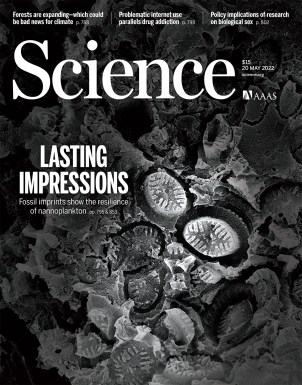
Thanks to Fred Pearce, who we normally link to at Yale e360, for The Forest Forecast, an article in the current issue of Science magazine:

Climate change could lead to a net expansion of global forests. But will a more forested world actually be cooler?

These are strange times for the Indigenous Nenets reindeer herders of northern Siberia. In their lands on the shores of the Arctic Ocean, bare tundra is thawing, bushes are sprouting, and willows that a generation ago struggled to reach knee height now grow 3 meters tall, hiding the reindeer. Surveys show the Nenets autonomous district, an area the size of Florida, now has four times as many trees as official inventories recorded in the 1980s. Continue reading

Proto-Peat In The Arctic

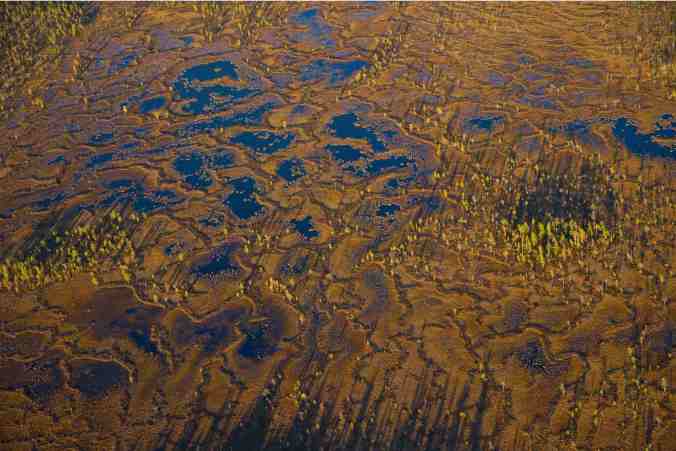
PHOTOGRAPH: SANNA PIILO

We have posted enough times about the importance of protecting peat, but this is the first we hear the question Carbon-Rich Peat Is Disappearing. But Is It Also Growing? Our thanks to Matt Simon at Wired for this one:

PHOTOGRAPH: SANNA PIILO

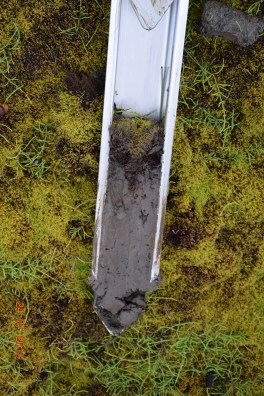
Scientists have discovered “proto-peat” forming in the Arctic as the Earth naturally sequesters carbon, but it could take centuries to mature.

THANK PEAT FOR that scotchy flavor of Scotch whisky: The muck forms in Scotland’s bogs, when layer after layer of dead vegetation resists decay and compresses into fuel, which is burned during scotch distillation. But you can also thank peat for helping keep our planet relatively cool, as all that muck—which is particularly common across the Arctic—traps a tremendous amount of carbon that would otherwise heat the atmosphere. Continue reading

More On Seed Banks

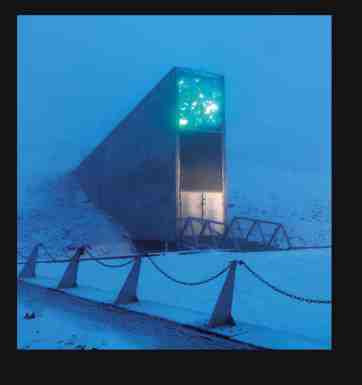
We have featured these banks before, but they are worthy of a more detailed inside look.

So, thanks to by Salomé Gómez-Upegui, Rita Liu and the Guardian. Their article, Seed banks: the last line of defense against a threatening global food crisis is full of images and written descriptions that put these banks in better perspective:

As climate breakdown and worldwide conflict continue to place the food system at risk, seed banks from the Arctic to Lebanon try to safeguard

As the risks from the climate crisis and global conflict increase, seed banks are increasingly considered a priceless resource that could one day prevent a worldwide food crisis. Continue reading

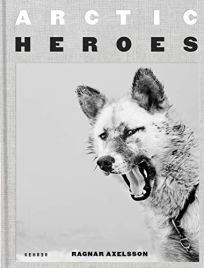
Arctic Heroes

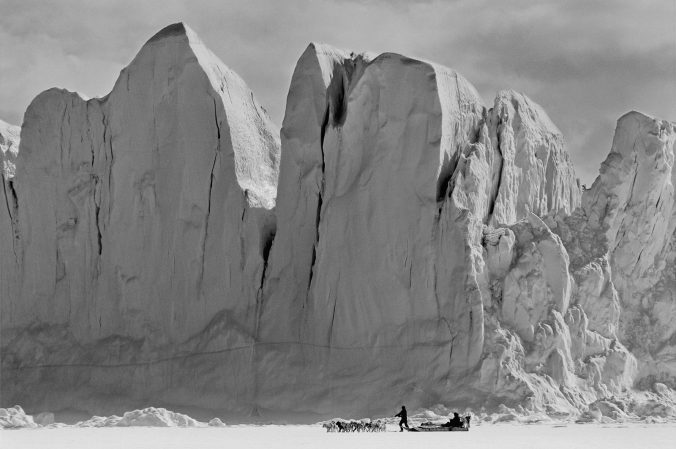
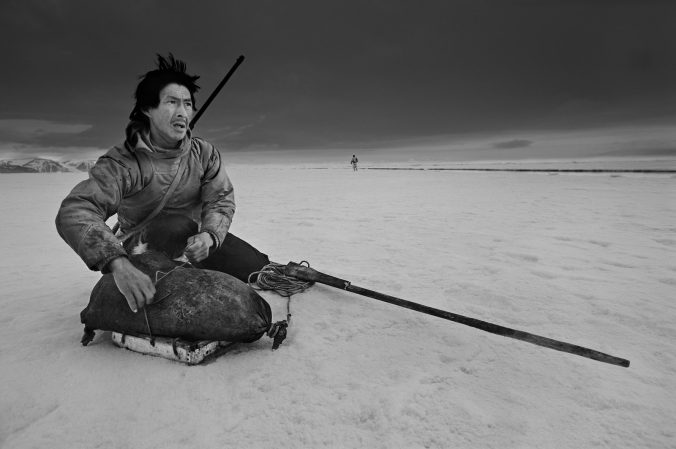
The book is not new, but it is new to us. Ben Taub has brought to our attention this stunning portraiture that, like most great photography, makes you wonder how the artist got the composition just so:

Ragnar Axelsson

The Fading Ways of Indigenous Arctic Hunters

Ragnar Axelsson

Ragnar Axelsson’s portraits from Greenland reveal the effects of climate change on ice floes, sled dogs, and a traditional culture.

During springtime in the far, far north—when the sun breaches the horizon, after months of total darkness—indigenous Greenlandic hunters head out to frozen inlets and get lost in ice and time. By day, the hunters might move miles in one direction, while the ice under their feet floats gently in another. Continue reading

Other Sides Of Svalbard

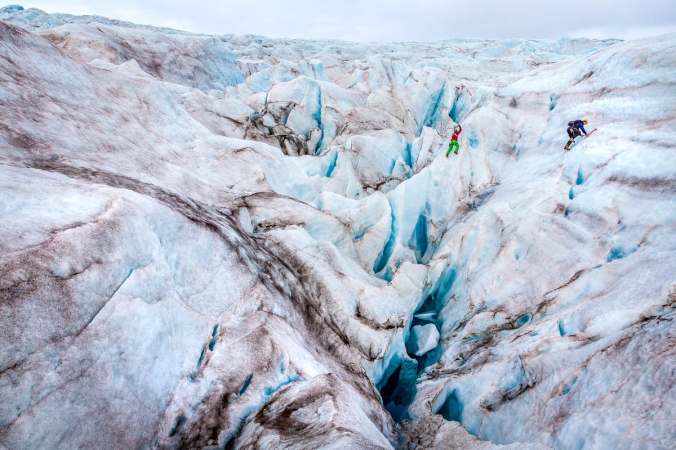
Among the land-based activities available on Svalbard, glacier hiking and ice climbing are perhaps the most challenging — and rewarding. Just watch where you put your feet and your ice axe.

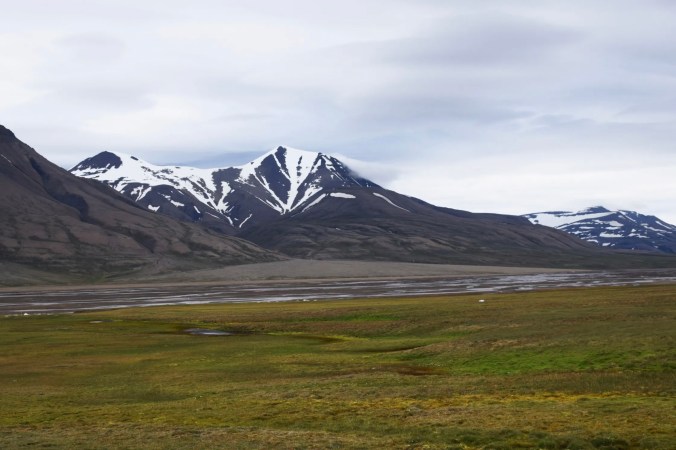
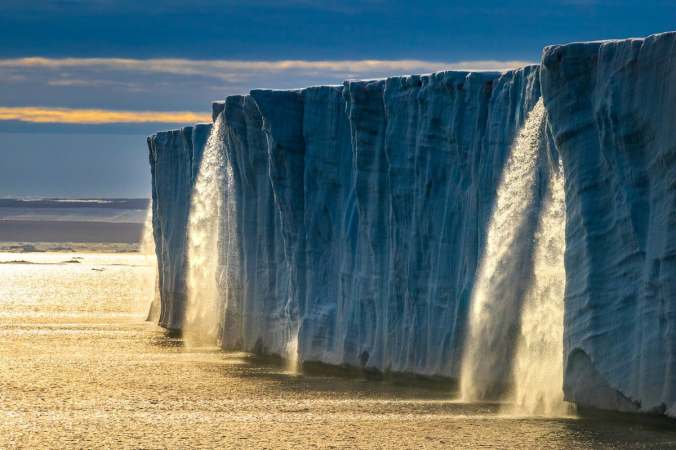
Starting 7+ years ago, each previous mention of Svalbard in our pages has focused on the vault until an article two years ago got us to look up and around. Now again this week we have good reason for looking beyond the vault. Marcus Westberg wrote an article, with stunning photos he took, Bearing Witness to Svalbard’s Fragile Splendor:

The strong summer sun melts the top layer of ice on Austfonna, Svalbard’s largest ice cap and Europe’s third-largest glacier, creating myriad gushing waterfalls.

A never-setting sun very quickly muddles one’s ability to tell time. This photograph was taken just before 11 p.m.; without a watch and regular mealtimes I could have easily mistaken it for any other time of day.

To visitors, the Norwegian archipelago can seem both ethereal and eternal. But climate change all but guarantees an eventual collapse of its vulnerable ecosystem.

Mesmerized, I would lean against the railing at the front of the ship, alone, for hours on end. Over the course of 10 days, no two moments were the same. The Arctic world was constantly shifting and changing around me as we slowly made our way through ice and open sea, past whales, walruses, birds and bears.

Except to keep track of mealtimes, watches were irrelevant; in the summer, this far north of the Arctic Circle, the sun never goes anywhere near the horizon. Continue reading

Humanity & Melting History

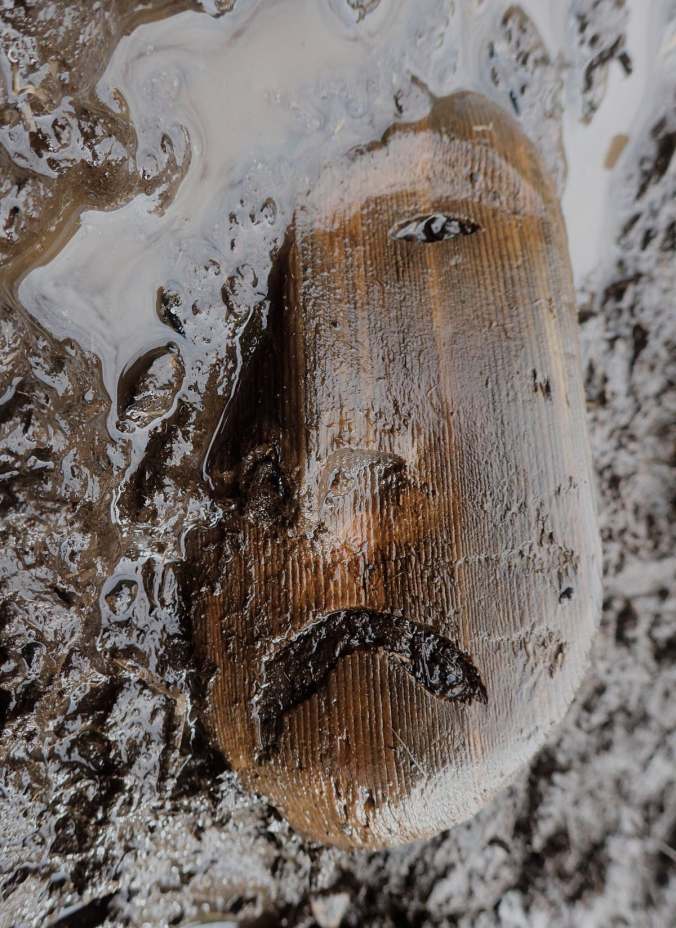
A mask belonging to the Yup’ik people of Alaska emerging from the permafrost. It is one of more than 100,000 artifacts retrieved from Nunalleq, the site of a village that was attacked by rivals 350 years ago. University of Aberdeen

When I posted about this book yesterday I had the long arc of history on my mind all day, and now this:

As Earth Warms, Human History Is Melting Away

Climate change is revealing long-frozen artifacts and animals to archaeologists. But the window for study is slender and shrinking.

The Langfonne ice patch in Norway. Glacier Archaeology Program, Innlandet County Council

For the past few centuries, the Yup’ik peoples of Alaska have told gruesome tales of a massacre that occurred during the Bow and Arrow War Days, a series of long and often brutal battles across the Bering Sea coast and the Yukon. According to one account, the carnage started when one village sent a war party to raid another. But the residents had been tipped off and set an ambush, wiping out the marauders. The victors then attacked the undefended town, torching it and slaughtering its inhabitants. No one was spared. Continue reading

Greenland Ends Drilling For Oil

Icebergs near Ilulissat, Greenland. Climate change is having a profound effect in Greenland with glaciers and the Greenland ice cap retreating. Ulrik Pedersen / NurPhoto / Getty Images

Thanks to Ecowatch for publishing this story by Andrea Germanos:

‘Future Belongs to Renewable Energy’: Greenland Ditches All Oil Drilling

Greenland announced Thursday a halt on new oil and gas exploration, citing climate and other environmental impacts.

“Great news!” responded the Center for International Environmental Law.

The government of Greenland, an autonomous Danish dependent territory, framed the move as necessary to transition away from fossil fuels. Continue reading