As preparation for the second edition of the Kochi-Muziris Biennale slides into the preopening home stretch the streets of Fort Kochi are awash with colorful activity. Stay tuned for more images as they continue to unfold!
Art
And the Winners Are…
Employees and guests at Xandari have voted over the last two weeks, and now we have our final fourteen: two winners from each grade, and four from 6th grade. Thank you to those of our readers who took the time to vote in our selection process as well!


Today the students had a Continue reading
An Art Brand, A Big Bubble
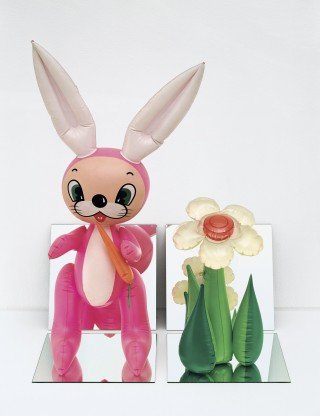
Koons’s “Inflatable Flower and Bunny (Tall White, Pink Bunny),” 1979. BROAD ART FOUNDATION, SANTA MONICA
Because we are not experts in any sense of the subject, contemporary art is only rarely a topic of interest on this blog. But as readers of media far and wide related to the cultures we operate in, we cannot help noticing what experts say about it. We have once or twice linked out to articles that reflect our concern about the overwhelming sense of art and commerce overlapping more than seems right. Jeff Koons, on show in Paris currently, offers an other prime example of our concern. A review of the New York retrospective of Koons earlier this year had this respectful insight:
…Koons’s smiley mien and a line of patter that is part huckster and part self-esteem guru—“Everybody’s cultural history is perfect”—call to mind Degas’s remark to Whistler: “You behave as though you had no talent.” But Koons has no end of talent and, within his range, mastery, marked by an obsessive perfectionism, and wound tightly around some core emotion, perhaps rage, which impels and concentrates his ambition. It’s really the quality of his work, interlocking with economic and social trends, that makes him the signal artist of today’s world. If you don’t like that, take it up with the world… Continue reading
Murals at Cornell’s Lab of Ornithology
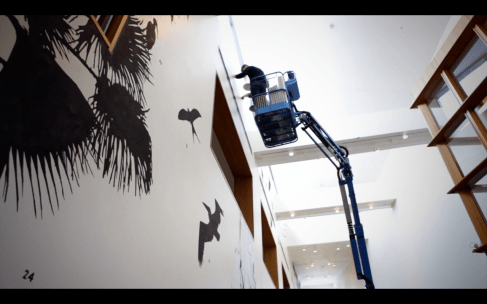
Video by Lindsay France/University Photography
This past spring, naturalist, writer, and artist James Prosek completed the Wall of Silhouettes on the north wall of the Lab’s visitor center. As you can see from the video above, this mural is all in black and white, and shows the life-size, hand-painted silhouettes of 170 birds in different habitats, accompanied by numbers like those in a field guide to represent the relationship between us and nature and one of the ways in which people connect with birds.
A mural by artist Jane Kim planned for the wall facing Prosek’s paintings is scheduled to be completed next November, and will feature representatives from all 231 bird families, Continue reading
Thanksgiving: Art History on a Plate
As we continue to work on plating and food trials for 51 at Spice Harbour, the concept of deconstructing a typical Kerala dish often makes it into the conversation. During these conversations with Indian colleagues the subject of “typical American food” frequently comes up. Like India, there’s no one “American cuisine” (don’t get me started on the horrors of our fast food exports), but a Thanksgiving meal comes close.
In the collaborative spirit of preparing and plating a meal that’s meant to be shared, multi-media artist Hannah Rothstein deconstructed the classic Thanksgiving meal of turkey, gravy, cranberry sauce and “sides” with a nod to 10 artists with the most distinctive of painting styles, with the acception of Cindy Sherman, a photographer best known for her conceptual portraits. Continue reading
An Impromptu Tacacorí CUBs Art Contest
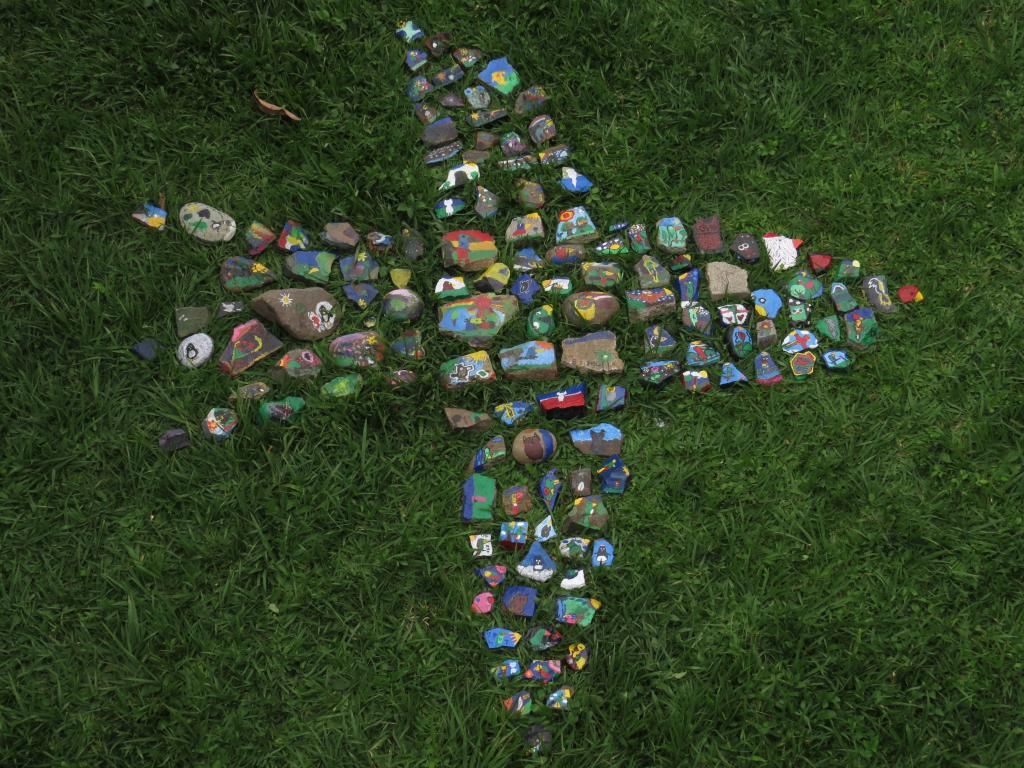
A crudely-formed bird (airplane?) mosaic, photographed from the school roof
Last week, after many delays, I was able to get down to the school in Tacacorí and take photos of all the CUBs rocks that the students had painted. I used my camera (rather than my phone) and a borrowed tripod so that the pictures would be better quality and also more standardized. The result was 146 photos of rocks. I don’t know the exact number of students at the school, but I know that fifth-graders in particular were impatient to take their rocks home before I photographed them, because there were only a handful of specimens left last week.


Unfortunately for those students who didn’t wait until I told them they could Continue reading
Resistance, Change, Art, Words–Liberating
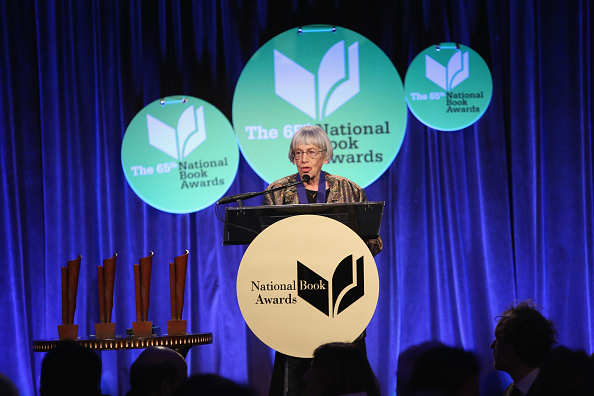
NEW YORK, NY – NOVEMBER 19: Ursula K. Le Guin attends 2014 National Book Awards on November 19, 2014 in New York City. (Photo by Robin Marchant/Getty Images)
We do not normally pay attention to awards ceremonies, but this one catches our attention. We have said on occasion why we think books matter, why libraries matter, why the fate of publishing matters. On a good day, in our line of work, we approach the same ideal of books: to create experiences different from those encountered in normal, every day lives and by virtue of such experiences, to liberate. Comfort. Beauty. Taste. Wonderment, awe, perspective, yes yes yes.
But going somewhere. And that somewhere is freedom from the confines of norms, from the confines of places devoid of nature. The freedom of the road, a cliche that nonetheless has meaning. Thanks to the New Yorker‘s Rachel Arons for pointing us to the short, powerful comment from an author who influenced many of us early in life to do what we do for a purpose:
…But it was Ursula K. Le Guin, accepting the Medal for Distinguished Contribution to American Letters early in the evening, who gave the definitive remarks of the ceremony, gliding through the genre debate and the Amazon-Hachette debacle on her way to explaining the crucial role that literature must play in our society.
Starry Night Bike Path

Artist Dan Roosegaarde pays tribute to Vincent Van Gogh’s painting Starry Night by creating this bike path in Van Gogh’s hometown of Eindhoven. Courtesy of Studio Roosegaarde
Thanks to National Public Radio (USA) for this follow up to another recent story from Holland about bike path innovations:
In the Dutch town of Eindhoven, artist Daan Roosegaarde has paid homage to its most famous resident, Vincent Van Gogh, by creating a glowing bike path that relies on solar-powered LED lights and interprets his classic painting Starry Night.
Roosegaarde says he wants his work, illuminated by thousands of twinkling blue and green lights, to speak to everyone. Continue reading
Awesome Oceans, Awesome Curator, Awesome Book
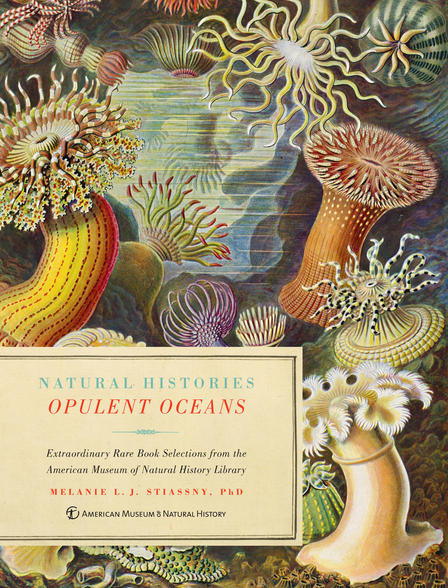
The American Museum of Natural History is a favorite childhood and parenthood hangout of many of the readers of these pages and visitors to places where Raxa Collective does its work. Our sense of awe about the natural world often starts in an urban institution like this one. No surprise, its curators are awesome in their own right. Here is one example from the AMNH blog a few weeks back:
Q&A with Curator Melanie Stiassny
This month marks the publication of Opulent Oceans:Extraordinary Rare Book Selections from the American Museum of Natural History Library (Sterling Signature, 2014), the third in a series showcasing the spectacular holdings of the Rare Book Collection in the Museum Library. Written by Curator Melanie L. J. Stiassny, the book includes essays about pioneering biologists who studied marine life. (And like the preceding volumes—Natural Histories (2012), which inspired the current exhibition, and Extraordinary Birds (2013)—it also showcases a variety of scientific illustrations that brought new discoveries to a growing audience of experts and laypeople alike.)
We recently spoke with Dr. Stiassny, who is Axelrod Research Curator in the Department of Ichthyology, about her experiences researching the book. Continue reading
Courtney, Come To Kerala!
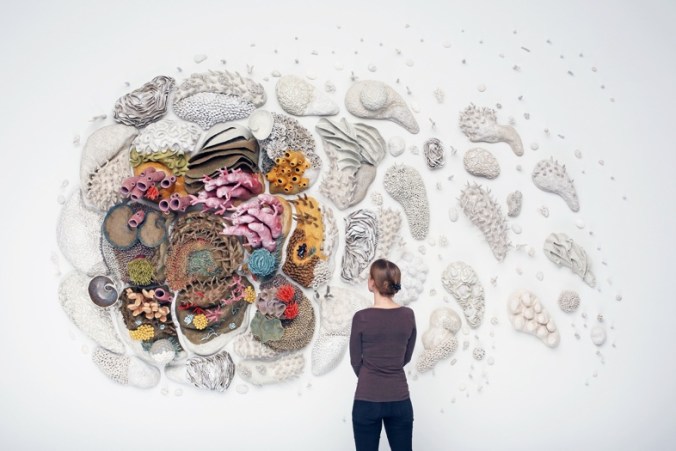
We lean to the idea that art can be a nobler calling than other ways of making a living, even in unusual circumstances. After reading the morning news today, one could be forgiven for continuing to think that art is essentially a commercial endeavor, which we would rather not believe in spite of all the evidence:
Thanks to Giacometti, Sotheby’s Hits Its Highest Total Ever at Fall Opening

But thanks to Courtney Mattison for hewing to a different road, for which our doors will be open if she chooses to visit: Continue reading
An Artist’s Favorite Points Of View
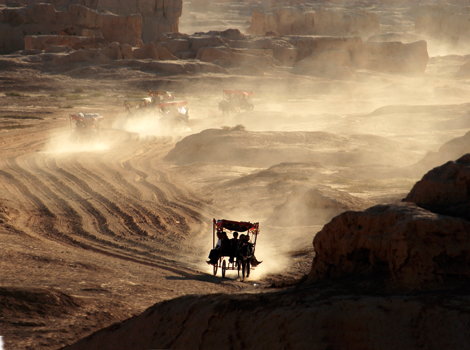
The sculptor, printmaker and painter tells Charlie McCann about his favourite places—they reveal an eye for beauty as well as a taste for symbolism
Thanks to the Economist’s “intelligent life” for this briefing on an artist’s favorite visuals:
JOURNEY From Beijing to Yining (above)
In 2010, my son Edmund went on his gap year to Yining, in the province of Xinjiang. My wife and I were worried; Edmund was one of only two Europeans in the city and there’d been tremendous unrest in the region. After eight months, we decided to check up on him. We flew to Beijing and got on a train. Our journey inland was really exciting: from our cabin we saw tiny villages, where every little patch had been cultivated, and passed vast deserts where huge dust storms turned the sky black. Eventually we got to Xinjiang. By that time, Edmund could speak rudimentary Mandarin. With him, we ended up travelling to Yining by an overnight coach. It was this mad bus full of chickens, geese and dogs. Continue reading
Rewilding With Horses
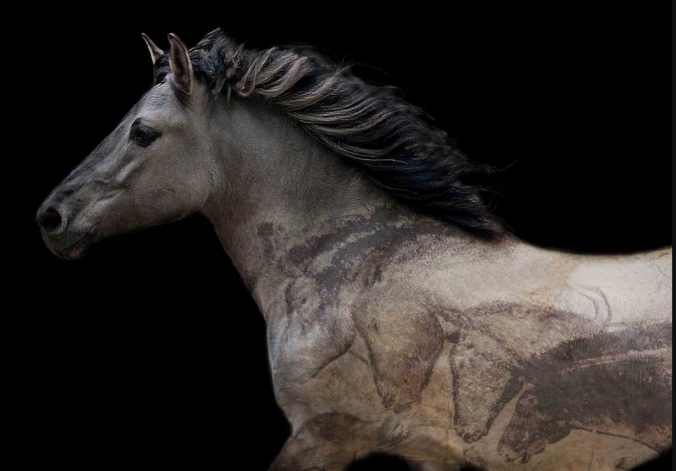
The poster for “TARPAN: Repainting An Ancient Picture” . Horsefly Films
Related to a recent post, on an interesting “what if” question that has no answers, here is a kind of answer. Thanks to Rewilding Europe for this press release:
It is the worthy result of over a year of work by Jen Miller and Sophie Dia Pegrum, two American filmmakers at Horsefly Films. It is also the second in their ongoing series of informative and beautiful films documenting and celebrating rare horse breeds and the unique, and often vanishing, cultures that surround them. Continue reading
Kidstuff, Creativity

Thinking of Seth’s recent work at Xandari’s neighboring school, and earlier work in Galapagos, this article strikes a cord:
Laura Carlin’s artistic exercises for young minds
The Phaidon author demonstrates how creativity comes from an active mind not an overly tutored hand
At Phaidon, we understand that a good art education should start early. Yet some books for younger readers aren’t always especially kid friendly. This is why we’ve buddied up with the London illustrator and educator Laura Carlin. Her fantastic new book, A World of Your Own, treats drawing not so much as a skill be to mastered, but as a fantastic toy, to engage a child’s imagination. Continue reading
Awesomeness In Small Images


We have pointed out photography competitions many times over the last several yearsIf you are so inclined, so equipped, and capable, we applaud you already:
The Nikon International Small World Competition first began in 1975 as a means to recognize and applaud the efforts of those involved with photography through the light microscope.
Since then, Small World has become a leading showcase for photo-micrographers from the widest array of scientific disciplines.
A photomicrograph is a technical document that can be of great significance to science or industry. But a good photomicrograph is also an image whose structure, color, composition, and content is an object of beauty, open to several levels of comprehension and appreciation.
The Nikon Small World Competition is open to anyone with an interest in photography through the microscope. Truly international in scope, entries have been received from the United States, Canada, Europe, Australia, Latin America, Asia, and Africa. Winners have included both professionals and hobbyists. Continue reading
Speed Pysanky
In the video above, about four hours of working on two different eggs are condensed into six minutes of edited footage that has been sped up by 2000%. Continue reading
For All Our Blacksmith Friends, A Tribute

Click the image above to watch an amazing short film. For the short time I spent time apprenticing as a blacksmith, before realizing how amazingly challenging this craft is, I thought I might become someone like this. I did not have it in me. But I learned respect for those who do. So I am happy to share this film for all those with the talent it takes, and those who may not have been quite aware of what it takes:
The Blacksmith: A Short Film About Art Forged From Metal
“I’m exploiting the maximum of what you can ask a piece of metal to do.”
Learning Laboratories, Museums, And Art’s Future Venues

Jon Chase/Harvard Staff Photographer. Harvard Art Museums Director Tom Lentz (from left) moderated a discussion with MoMA Director Glenn Lowry, A.M. ’78, Ph.D. ’82, Elizabeth Cary Agassiz Professor of the Humanities Jennifer Roberts, and Paul Ha, director, List Visual Arts Center at MIT.
Thanks to the Harvard Gazette for this story about museums functioning as inclusive, modern learning laboratories:
In the 1970s, the Italian architect Renzo Piano was a young upstart with immense talent and brazen daring. It was then, still fairly early in his career, that Piano and his partner, the architect Richard Rogers, redefined the architectural landscape with their groundbreaking Pompidou Center in Paris. Continue reading
If You Happen To Be In Eleuthera…
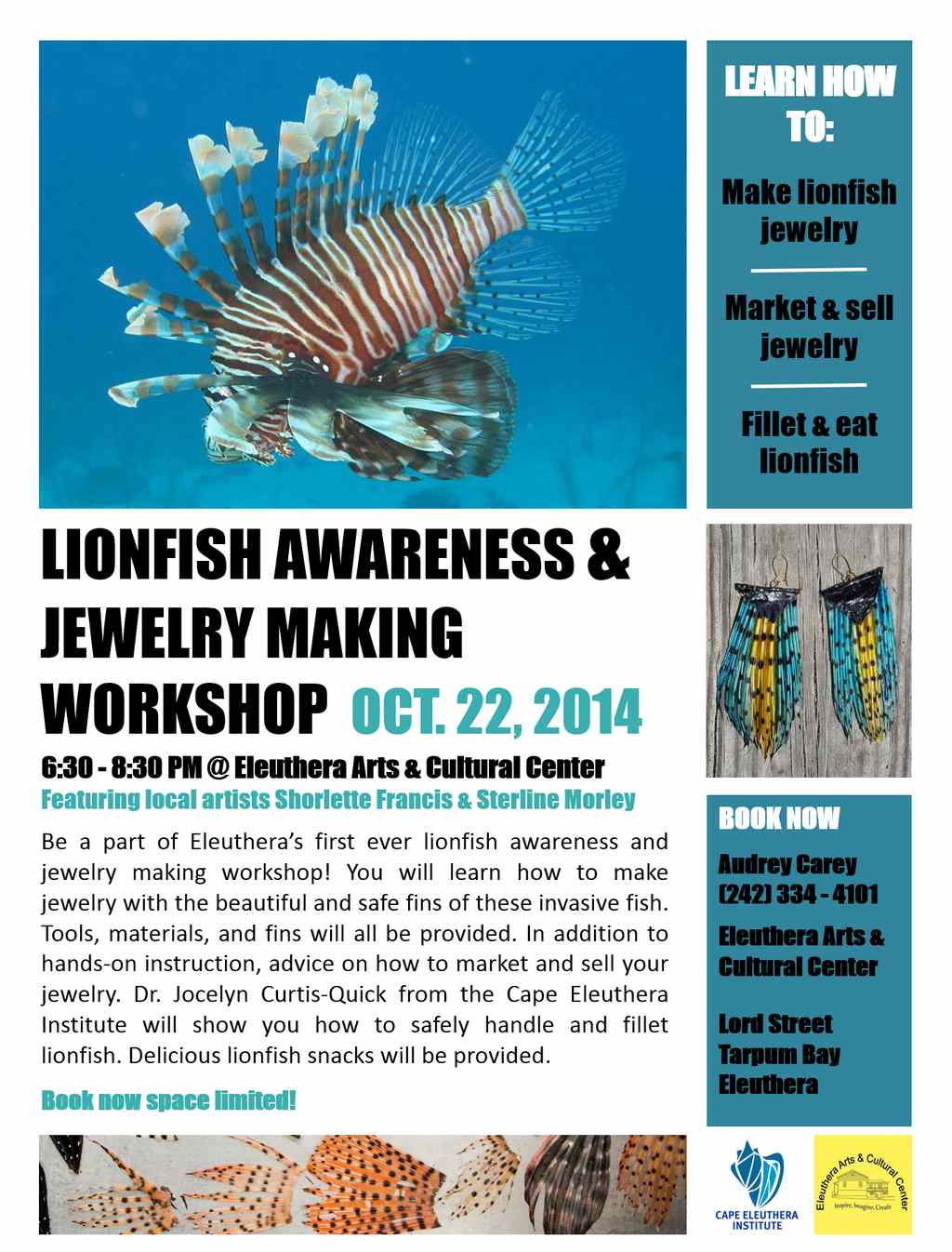
Regular readers of this site are familiar with contributor Phil Karp’s wonderful posts about this invasive species. He’s been advising this group in Eleuthera for several months. We wish we could be there!
Can you?
First Sale of Xandari Pysanky
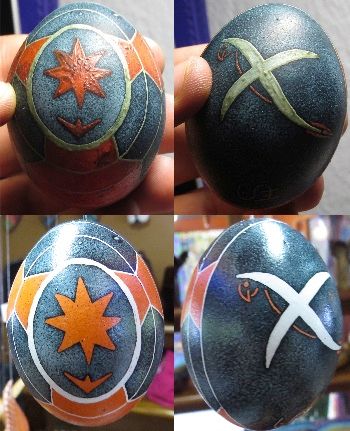 Last week, we had the good fortune of having some guests at Xandari who were interested in buying a few of the eggs on display in the gift shop. One guest purchased a Xandari coffee-stained egg like the ones featured in my previous post on the subject, as well as an egg that bore the insignia of San José’s soccer team, Saprissa, which is generally unpopular among fans of the Alajuelan team, La Liga Deportiva Alajuelense (La Liga for short).
As Xandari is located in the hills above Alajuela, most of the employees here are Liga fans, and it’s fun to joke with them about which team’s eggs will sell more in the future (so far the Liga egg is still hanging on the display tree, but that’s most likely because it doesn’t feature a fire-breathing dragon like Saprissa). The third egg that we sold this weekend was one featuring a new design of the Xandari ‘X’ with some extra lines to turn it into a flying bird. Continue reading
Celebrate Urban Rock Birds


With over a week of working with other grades at the elementary school in Tacacorí, I’ve seen lots of really great paintings of birds on locally-found stones, and even one or two chunks of cement. After finding around seventy-odd rocks around Xandari that were mostly usable for this art project and scrubbing them all of mud and moss, I Continue reading
 Organikos