Ben & Jerry & Labor

04MIGRANT-01placeholder-master768

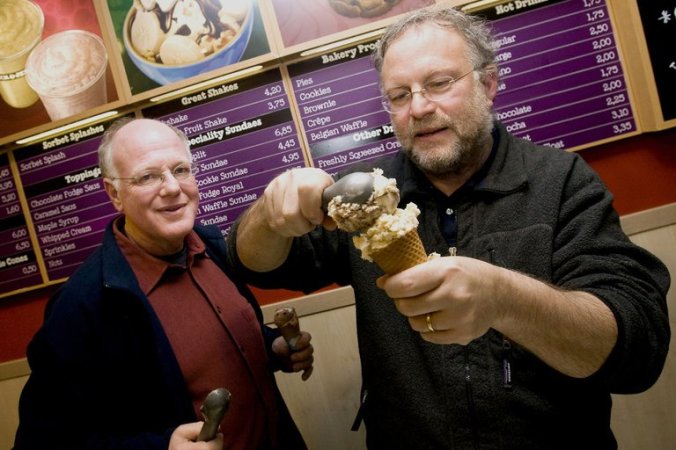
Ben Cohen, left, and Jerry Greenfield, the founders of Ben & Jerry’s, in 2010. The company, which is now owned by Unilever, announced an agreement that establishes labor standards for the Vermont dairy farms that are its suppliers. Credit Ade Johnson/Agence France-Presse — Getty Images

We do not normally feature corporate food conglomerates in these pages, because there is not normally good news to share; but Ben & Jerry are not normal. Good on them for this:

For years, Ben & Jerry’s took steps to make sure that its ice cream did not contain artificial growth hormone. The company also has a self-imposed fee on its greenhouse gas emissions.

What Ben & Jerry’s did not have was a reliable way of ensuring that the dairy farms supplying it with milk were providing humane conditions for their workers, a major issue in an industry where many people work seven days a week for less than minimum wage.

On Tuesday, the ice cream maker, which is based in Vermont, took a big step toward changing that, signing an agreement with a farmworkers’ group that establishes labor standards for the company’s suppliers in the state, and creates an enforcement strategy that encourages workers to speak up about violations. Continue reading

Feathers’ Fine Flourish

170925_r30593

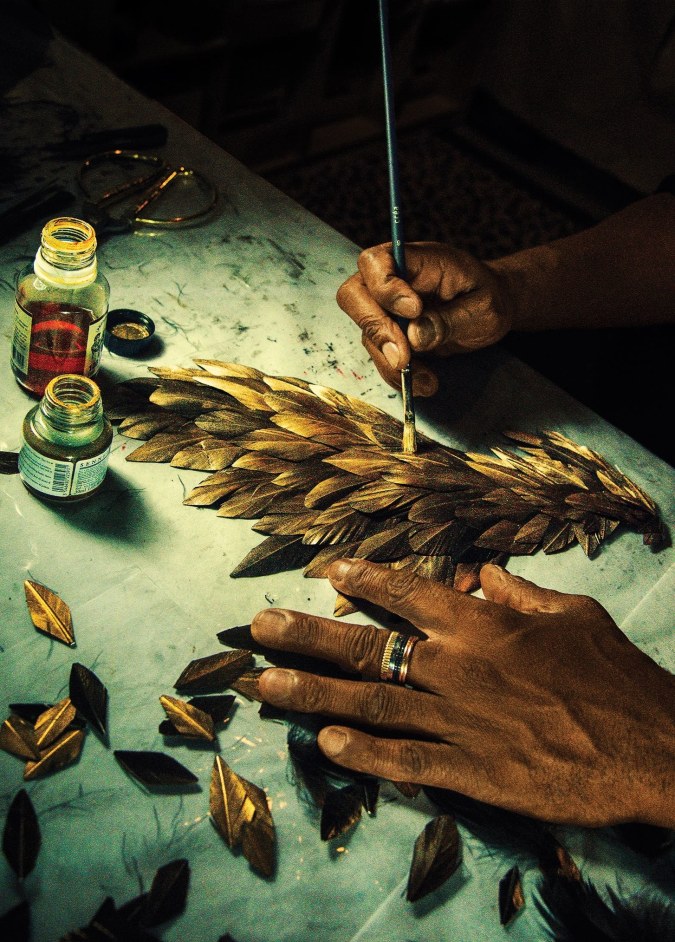
Charles-Donatien paints and lacquers goose feathers in his studio. Photograph by Pari Dukovic for The New Yorker

The Style issue of the New Yorker is the least interesting of the year, from the perspective of these pages; and yet on occasion even in this one they deliver something we can mull over:

The Eternal, Seductive Beauty of Feathers

We’ve been dressing up as birds since the Stone Age. Eric Charles-Donatien has brought the craft of featherwork into the twenty-first century.

Not surprisingly Burkhard Bilger is the journalist who pulls this off. Our Bird Of The Day (365 times for seven years running) feature exposes us to feathers of such variety that we could not resist giving Mr. Bilger the benefit of the doubt on this one:

170925_r30592There is such a thing as too much beauty. So the stuffed bird on the counter seemed to be saying. It was a Himalayan monal, Lophophorus impejanus, Liberace of land fowl. Its head was emerald, its neck amber and gold, its back a phosphorescent violet that flared to a sunburst at the tail. A pouf of feathers jutted from its head like a tiny bouquet. Named for Lady Mary Impey, the wife of the Chief Justice of Bengal in the late seventeen-hundreds, it had a stout, ungainly body swaddled in bright plumes as if for an audience with the maharaja. It was a turkey that wanted to be a hummingbird. Continue reading

Honey With Urban Terroir

The bees’ home at the Javits. Beekeeping was illegal in New York until 2010 when the ban was lifted. Credit Chang W. Lee/The New York Times

It’s impossible to overstate the importance of bees, both environmentally and agriculturally.  So we’re suckers for happy bee stories, especially urban bees. Kudos to the New York City Board of Health for lifting the Giuliani-era ban against urban bee-keeping, not to mention the Javits Center green-roof sustainability project!

Atop a Manhattan Convention Center, a Harvest of Honey

Let us begin not with the who, which was several thousand bees and a bunch of people in anti-sting gear that looked like spacesuits, or the what, which was harvesting honey. Let us go directly to the where.

It was not a bosky setting that would bring to mind the Robert Frost poem about good fences and good neighbors, but the south roof of the Jacob K. Javits Convention Center on Manhattan’s Far West Side. Here the neighbors are the unfinished towers of the Hudson Yards development. They ring what has become an urban meadow — the south roof, mostly covered by 6.75 acres of kaleidoscopic sedum. It is yellowish green. It will turn red in time for Christmas.

The bees have been in residence since spring. The first 12,000 came from California, transplanted in a three-pound container that looked like a shoe box with screens on both sides. They were placed in wooden hives, which look like stackable drawers. There were 60,000 to 80,000 by midsummer.

The accommodations are typical of urban apiaries. Liane Newton, the director of nycbeekeeping.org, who tends them, described her role as “convincing them they live in a tree trunk when they live in a file cabinet.”

Her persuasion seems to have paid off. “They made cells for closets, cells for babies, cells for storing pollen,” she reported one morning last week. “One amazing thing about bees is they have this architectural inclination.” Continue reading

If You Happen To Be In New York City

04bamboo1-web-jumbo

“Dance,” a sculpture made in 2000 by Honda Shoryu, in “Japanese Bamboo Art: The Abbey Collection,” at the Metropolitan Museum of Art. Credit Jake Naughton for The New York Times

Bamboo is an important part of the ecosystem in just about every place where we have worked over the last two decades; thanks to Roberta Smith for this:

Prairie Land Livestock

071417_grazing_johnson_turkey1-aa3481f251f2ec4caf6ae0f6d9cb3b126622bccd-s1300-c85

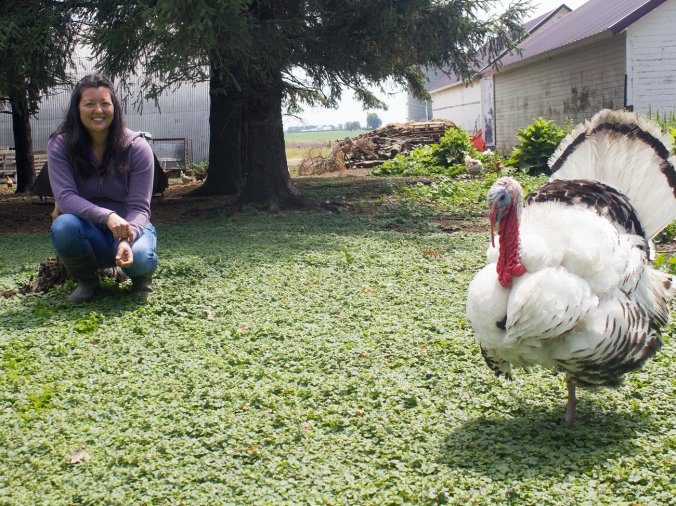
Farmer Wendy Johnson markets hogs, chickens, eggs and seasonal turkeys. She also grows organic row crops at Joia Food Farm near Charles City, Iowa. Amy Mayer/Harvest Public Media

Thanks to Harvest Public Media, Amy Mayer and the folks at the salt over at National Public Radio (USA):

How, And Why, Some Farmers Are Bringing Livestock Back To The Prairie

On a cloudy summer day, Iowa farmer Wendy Johnson lifts the corner of a mobile chicken tractor, a lightweight mesh-covered plastic frame that has corralled her month-old meat chickens for a few days, and frees several dozen birds to peck the surrounding area at will. Soon, she’ll sell these chickens to customers at local markets. Continue reading

Third Wave Coffee In Central America

xxguatemala1-master768

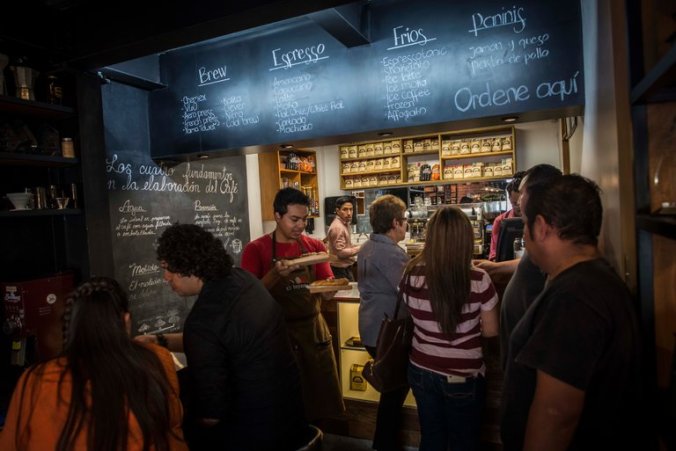
San Francisco? Soho? Try Guatemala City, inside El Injerto, a coffee shop. Guatemala is home to an expanding coffee scene. Credit Daniele Volpe for The New York Times

Thanks to Elisabeth Malkin for her visit to Guatemala on behalf of the coffee lovers who read the New York Times:

The Hot New Thing in Guatemala, Land of Coffee? It’s Coffee

GUATEMALA CITY — In the narrative spun around specialty coffee, there are two kinds of places: those where people cultivate the beans and those where people consume the end result. Continue reading

The Craft Speaks

Altman-The-Transportive-Power-of-the-Cobblers-Shop

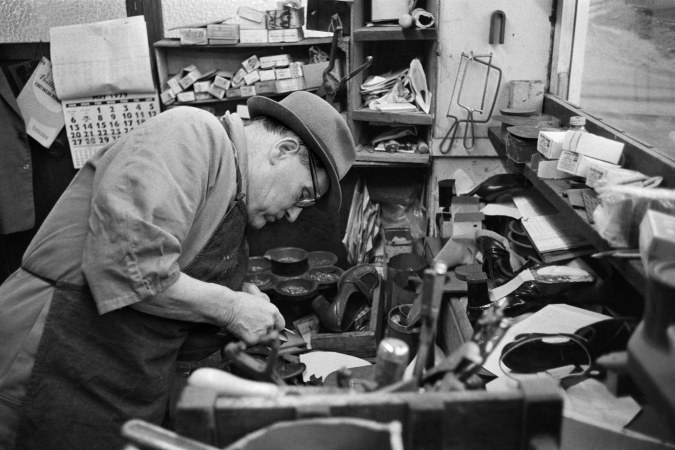
His craft is based in the notion that things of quality are meant to be fixed, even repeatedly, rather than discarded and replaced. Photograph by Martin Parr / Magnum

Thanks to the New Yorker and especially Anna Altman for this little picture:

There were the hiking boots I’ve had since high school, so battered that one Sunday, near the Delaware Water Gap, the rubber sole started to crumble off in chunks. There were the short brown riding boots, perforated like brogues, that remained beloved even with a gash worn through the leather at the heel. There were the teal-blue pumps with a decorative buckle on the toe, made by an upscale French designer and borrowed, without total permission, from a friend’s sister, for a twenty-first birthday party. Those came home flecked with my roommate’s vomit, a peel of leather dangling from the toe. Continue reading

Tradition and Memory, Handed Down Stitch by Stitch

If you happen to be anywhere near the Philadelphia Museum of Art, you have a few more days to visit this extraordinary exhibit of Phulkari: The Embroidered Textiles of Punjab.

Thanks to Architectural Digest contributor Medhavi Gandhi for this informative and culturally sensitive article.

Philadelphia Museum of Art showcases the history of Punjab’s rich embroidery craft through ‘Phulkari’

Phulkaris, which literally translates into ‘flower work’, is a unique style or technique of embroidery peculiar to Punjab, and today constitute the lavishly embroidered head scarves and shawls crafted in the region. ‘Phulkari: The Embroidered Textiles of Punjab’ presents phulkaris from the collection of Jill and Sheldon Bonovitz alongside the Philadelphia Museum of Art’s permanent collection, focusing mostly on embroideries from a pre-partitioned Punjab.

The threads of phulkari have since endured much: partition, industrial reforms, changing economic and fashion trends, and the exhibition aptly helps you develop a perspective around all these.

GEOGRAPHICAL INDEXING
Curators Dr. Cristin McKnight Sethi and Dr. Darielle Mason position the craft as art, presenting phulkaris through the historical and cultural lens, thus offering a renewed contact with the old way of life; ceasing to be a commodity of high commercial value but more as a window into the lives of people.

In a brief issued by the Museum, Timothy Rub, The George D. Widener Director and CEO of the Philadelphia Museum of Art, said: “This exhibition, which examines the artistic, cultural, and political significance of phulkari, is long overdue and will certainly delight visitors who may be unfamiliar with this remarkable art form”. I couldn’t agree more, and here’s why: Continue reading

Sustainable Village Highlight: San Juan la Laguna, Guatemala

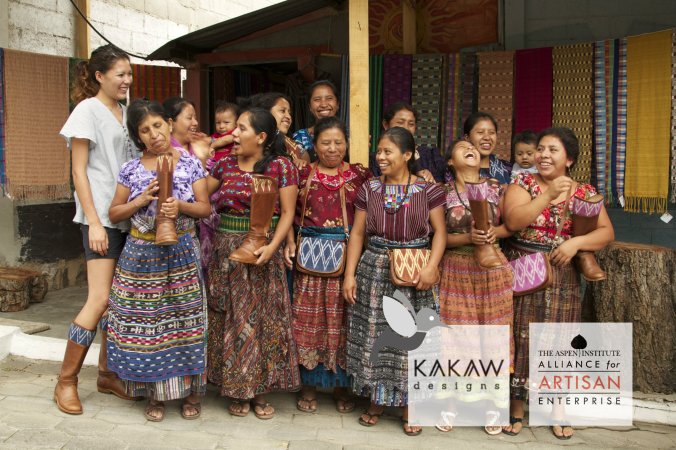
Hi, there! I’m Mari Gray, founder of artisan-made brand Kakaw Designs, based in Guatemala. After studying International Relations and Spanish at UC Davis and then working for several non-profits in Latin America, I became disillusioned and decided to focus on sustainable development through a social enterprise, partnering with talented artisan communities in Guatemala.

I feel incredibly fortunate to work with different artisan groups in Guatemala through Kakaw Designs (pronounced <kekao> like the cacao tree), an artisan-made brand I started about four years ago.  We currently work with several different artisan groups: two weaving, one embroidery, two teams of leathersmiths, and one silversmith; all to make our designs come to life.  But it was for a good reason that we started with the weaving cooperative Corazón del Lago in San Juan la Laguna, at Lake Atitlán.

Kakaw Designs Alliance logo

We would never have been able to launch Kakaw Designs without this group of forward-thinking, professional weavers from this small Maya village.  The community itself is exceptional, with sustainability clearly a focus through:

  • Use of natural dyes in textile production, also using local traditional techniques such as backstrap weaving and ikat designs  <<Learn more by watching our video>>
  • Organization of weavers in cooperatives or associations, where women work together and can therefore take larger orders and offer quality control
  • Up-and-coming development of community ecotourism, especially birding

Continue reading

Atlas Obscura, Miscellanea

AtlasObsc.jpg

Bumblebees pollinating flowers during the study. NICOLE MILLER-STRUTTMANN

The story connected to the photo above is worth the few minutes, just as the dozens of other bee stories you will find in these pages have been. After reading it I started exploring the site where I found it. Finally. I see that Amie linked to and commented on this story reported in Atlas Obscura last year. I remember reading her post and then going to the source, as I did each of several other times when we have featured their work in these pages.

For well over two years we linked to their stories without any of our individual names attributed to the commentary on the story being linked to. When a post on our site has no name other than La Paz Group it just means here is our kind of story, enjoy. When a post has one of our names on it, it means the same thing only with more attention to detail. Today I finally had reason to explore Atlas Obscura, and realize that as much as I am committed to what we do and our communication about that work and related miscellanea, I might be just as happy doing what they are doing:

Atlas Obscura is the definitive guide to the world’s wondrous and curious places

In an age where everything seems to have been explored and there is nothing new to be found, we celebrate a different way of looking at the world. If you’re searching for miniature cities, glass flowers, books bound in human skin, gigantic flaming holes in the ground, bone churches, balancing pagodas, or homes built entirely out of paper, the Atlas Obscura is where you’ll find them.

Atlas Obscura is a collaborative project. We depend on our far-flung community of explorers (like you!) to help us discover amazing, hidden spots, and share them with the world. If you know of a curious place that’s not already in the Atlas, let us know.

There is plenty out there to discover, so let’s start looking!

Southern Roots Run Deep

Ms. Gomez grew up pulling mangoes from the trees and buying sugar cane from the vendors gathered outside her parochial school. Evan Sung for The New York Times

While Crist may have had the good fortune to enjoy a taste of Kerala with Asha Gomez during travel away from our home there, I was busy exploring the market byways for local ingredients and food ways. What a fascinating story to hear that Asha is actually experiencing that same sense of discovery and exploration within her own home state.

It looks like Crist might have gotten his wish for Asha to come to Kerala, after all!

A Chef’s Quest in India: Win Respect for Its Cooking

“I think I had disconnected myself from this place in some way by saying for so long that the U.S. was home,” said Ms. Gomez, 47, who had moved from the Indian state of Kerala to the state of Michigan as a teenager. “There is still so much a part of me here. I think I had forgotten that.”

Ms. Gomez had come to this land of ports, tea estates and spice gardens not only to reconnect with a part of herself, but also to find new ways to use her camera-ready personality and kitchen chops to lasso Kerala’s beautiful food culture and drag it back to the United States.

“I have to remove people from the mentality that all Indian food should be clumped up into nine dishes that are not really Indian dishes,” she said. “Not all Indian food belongs on a buffet line at $4.99. Indian food is 5,000 years of tradition and history, and it belongs right up there with French cuisine.”

Her frustration over American interpretations of the beloved coconut-scented fish curries, dosas and carefully layered beef biryanis of her homeland echoes the lament of countless cooks who have immigrated from countries like China, Mexico or Vietnam only to find their food mangled to meet the limitations of a new country’s palate and relegated to its cheap-eats guides.

“I wish I could say to every immigrant cook in America, ‘Why do you think your food should be any less than any other cuisine that comes from anywhere else in the world?’” Ms. Gomez said. Continue reading

Cry Sadness Into The Coming Rain

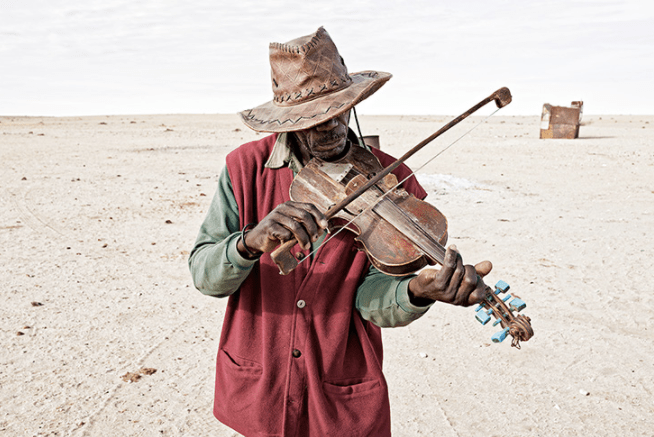
Gottlieb ǂKhatanab ǁGaseb aka Die vioolman (The Violinist) plays traditional Damara music at the funeral of Ouma Juliana ≠Û-khui ǁAreses on the family farm beneath the Dâures. Uis District, Erongo Region. December 2014

As an international company, our team tends to be spread out across the world, so more often than not many of our posts is a surprise to the rest. It was with that sense of synchronicity that I read Crist’s piece on Gerhard Steidl’s conservation work yesterday while I was in the midst of writing about this upcoming publication.

Born in Namibia, photographer Margaret Courtney-Clarke spent decades capturing life in remote places in Italy, the USA and numerous parts of Africa. Returning to Namibia after years away, she found the once familiar landscape drastically changed.

Cry Sadness Into the Coming Rain is a forthcoming publication by Steidl, Germany, 2017.

With strong memories of my formative years growing up on the edge of the Namib Desert in what was then known as South West Africa, I have returned to explore my obsession with this place and my lifelong curiosity for the notion of shelter. I have covered thousands of dusty kilometres across remote plains, through dry river beds, over sand dunes and salt pans, through conservancies and communal lands to photograph families in desperate, forgotten outposts. I try to capture the ‘transhumance’ – the search for work, forage and water – and the remnants of former habitats alongside once productive land.

In coastal towns I move with women and children across stretches of desert from one garbage dump to another – often with the loot they carry in their quest to create shelter and eke out a living. I focus on human enterprise and failure, on the bare circumstances of ordinary women and men forced to negotiate life, and of an environment in crisis. Continue reading

Not Quite Water Into Wine, But Righteous Indeed

26ALEweb-3-master675.jpg

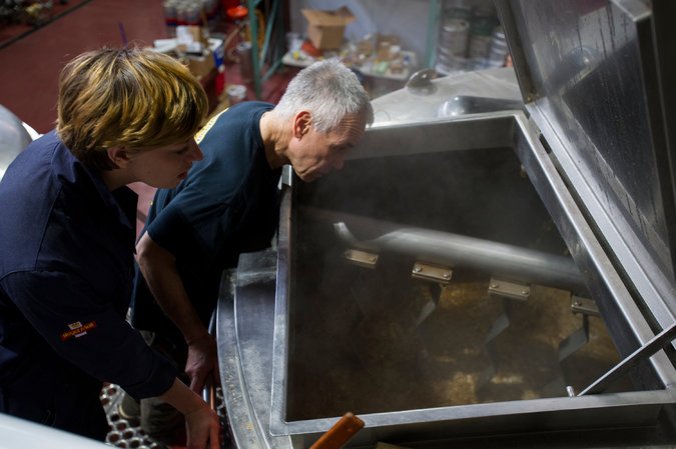
Mark Szmaida, right, Chelsea Craft Brewing’s head brewer, and Devin Hardy, the co-leader of Toast Ale’s American project, inspected the bread mash for the first batch. Credit Gregg Vigliotti for The New York Times

We have featured plenty stories about reducing food waste, and plenty about brewing various beverages, but this is the first story we have found at the intersection of the two:

Toast Ale, From Recycled Bread, Is Now Brewed in New York

By

Overproduction is built right into the business model of most bakeries. While we devour much of what is made, huge quantities of perfectly good grain are tossed.

But Tristram Stuart, an Englishman who began battling food waste 15 years ago, long before it became a popular cause, discovered a way to turn bread, an inexpensive product with a short shelf life, into one that’s long-lived and lucrative: craft ale. Continue reading

Breaking Rules When The Result Is Worth It

19berries-1-superJumbo

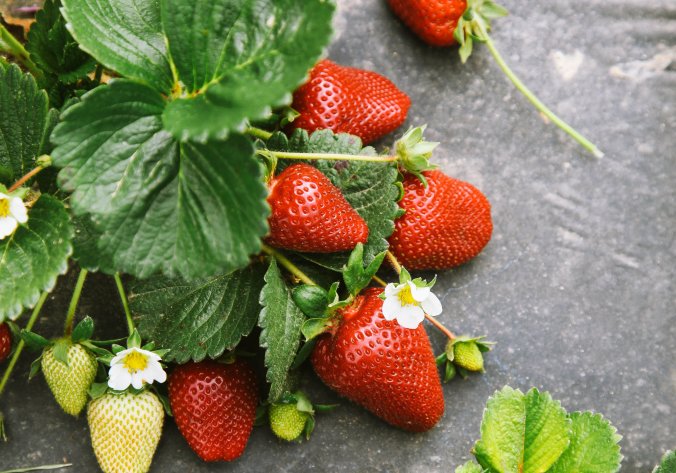
The strawberries at Harry’s Berries, grown in Oxnard, Calif., are harvested only once every five days, to give the fruit time to reach its peak flavor. Credit Amy Dickerson for The New York Times

Renegade behavior in the abstract attracts us almost always. We admit to favoring examples, cases, histories that point to unusual choices that we think provide a model for others to follow to solve problems. However, sometimes there is no choice but to point to the downside of renegade behavior, aka breaking the rules on which society depends. And there are plenty of lousy renegades we read about but do not foul up these pages with. Today, it’s coming up strawberries. Thanks to Rick and Molly and to Karen Stabiner for bringing this story forward:

Red, Ripe and Renegade: Berries That Break All the Rules

“This one should be O.K.,” he said, sounding not quite convinced. Then again, his definition of ripe is more stringent than most. Continue reading

Milpa To Mesa

Masienda.png

My foraging around about food leads me to many small pleasures, and here is one. Thanks to Florence Fabricant for bringing my attention to Masienda, whose founder has the kitchen credibility you would expect to have a company have such a huge leap forward in such a short timeframe: Continue reading

Public Domain Cultural Jukebox

Alan Lomax, in 1992. As computer technology progressed, Lomax envisioned a searchable database for music from around the world. Credit G. Paul Burne

Some say music is the earliest communal art form, and one that continues to connect us. The inclusiveness of Alan Lomax’s vision with the Association for Cultural Equity and the Global Jukebox carries that inspiration further, with interactive features that connect the dots between music, culture and geography, paying “tribute to the expressive styles of all peoples within the framework of cultural equity and the diversity which is crucial to our survival as a species.”

Alan Lomax Recordings Are Digitized in a New Online Collection

Alan Lomax made it his lifelong mission to archive and share traditional music from around the world. He spent decades in the field, recording heralded artists like Muddy Waters and Woody Guthrie, as well as far more obscure musicians, from the British Isles to Haiti. He also created systems to classify this music and explore the links between cultures.

Lomax died in 2002, but the organization he founded, the Association for Cultural Equity (ACE), is hoping to further his research with the Global Jukebox, a new online database. The project, an interactive website, allows users to listen to and learn about more than 6,000 songs from 1,000 cultures — including many from Lomax’s personal collection. Continue reading

Democratizing Coffee Consumption

12COFFEE3-master675-v2

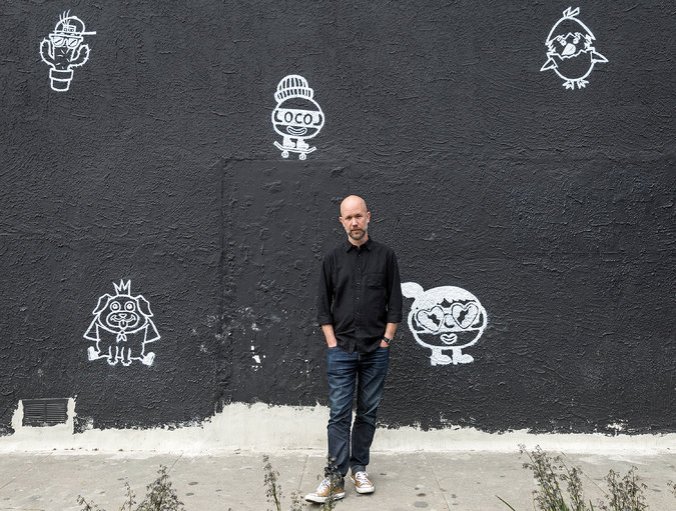
Tony Konecny, the head of coffee operations at Locol, outside the branch in the Watts neighborhood of Los Angeles. CreditEmily Berl for The New York Times

We have no reason to debate the logic of a more reasonably priced cup of quality coffee:

Has Coffee Gotten Too Fancy?

By

LOS ANGELES — The $1 cup of coffee is divisive, as drinks go.

For some, it’s a staple of the American morning: a comforting routine, a good deal. Anything that costs more than $1 is needlessly expensive, a waste of money — the coffee from a deli, diner or doughnut cart is all you need to start the day. For others, the $1 cup is suspiciously cheap. Maybe it tastes bad, or its production does harm to the land and is unfair to laborers. If you have to pay more, then that is probably a reflection of a drink’s true cost. Continue reading

Vermontini & Other Delicacies

BBQ

Braun Hughes, a cook, center, stokes a fire while another cook, Andy Risner, keeps watch. Drew Anthony Smith for The New York Times

Last week at Chan Chich Lodge we had guests from Vermont who were on their 6th visit, the first having been back in 1998. This couple started at dawn each day and while primarily birding they witnessed plenty of the other wildlife. Each sunset they enjoyed a classic dry martini with olives, and some conversation with Migde (yes, that is the spelling, pronounced mig-day) the bartender.

By the end of the week watching their sunset ritual, I had the image of a martini we might create in their honor. Instead of their favored olives we would put a few small cubes of chilled Harrington’s of Vermont smoked ham. Perhaps just to humor me, they said they would like to try that during their next visit. In the last few days I have been looking into the matter and I can find no evidence that this is a good idea.

I can also find no evidence that it is a bad idea. So I am continuing the investigation. And today I am happy to see a review related to another form of smoked meat, quite different from that of Harrington’s, in this case at a restaurant in Texas. Pete Wells now holds my attention better than any reviewer, on any topic. Anthony Lane, for a long time, held it on the residual strength of the laughter produced by one film review in 2005; his predecessor Pauline Kael also held it a long time before that. In the era of crowd-sourced reviews, the professional is still relevant for a reason. Today’s restaurant review is a case in point:

AUSTIN, Tex. — “How much brisket are you having?” Continue reading

Liquid Renaissance

28tmag-cocktails-slide-3bo4-master768

Sullivan Doh, owner-mixologist at Le Syndicat in Paris.Credit Charissa Fay

We are pleased to read of Mr. Field, in some ways doing in Paris what we have just noted happening with cacao in the Caribbean–a kind of renaissance of beverages that is also on our agenda in Belize:

The Slow Rise of Craft Cocktails in Paris

By

28tmag-cocktails-slide-Q0D3-master180.jpgIn her new book, “The New Paris: The People, Places & Ideas Fueling a Movement” ($30, amazon.com), the writer (and T contributor) Lindsey Tramuta documents the creative and cultural shift she has witnessed in the city in recent years. Below is a passage on the rise of craft cocktails there.

To say that cocktails are a new phenomenon in Paris is to overlook a culture of distilling liquors dating back to the 1800s, one that gained greater traction more than one hundred years later during American prohibition, when newly unemployed bartenders came to Europe in droves and landed in some of the continent’s best hotel bars. Continue reading

Reviving Cacao

59417_orig_custom-915406cf70e2af518f4441fd5d23a7fd2512008d-s1400-c85-1

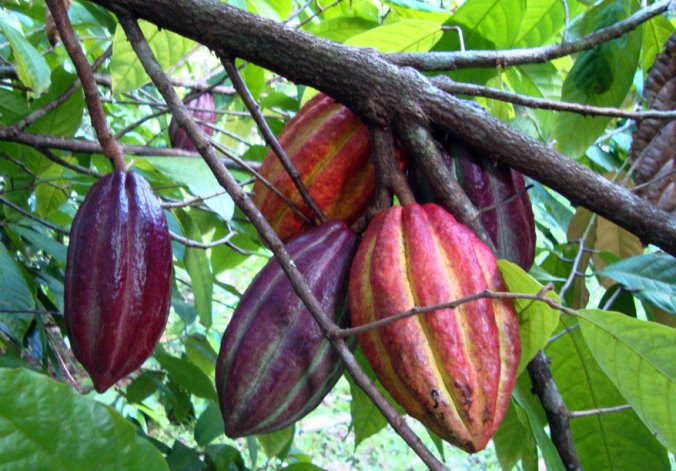
Cacao pods ready for harvest at the Loiza Dark Chocolate farm. Courtesy of Loiza Dark Chocolate

Thanks to Dan Charles and his colleagues at the salt, over at National Public Radio (USA) for telling us about that something speaking to Mr. Vizcarrondo; we, working in Belize, working on farm revival among other things, also hear that something and we are inspired to hear of others who hear it too:

The dream of reviving Puerto Rico’s chocolate tradition took root in Juan Carlos Vizcarrondo’s mind years ago.

He’s always been obsessed with flowers and trees. As a boy, he planted so much greenery in his mother’s backyard, there was hardly room to walk.

But in his thirties, he started planting cocoa trees, with their colorful pods full of magical seeds. “Something told me, just keep planting, because nobody has it! It’s so strange, nobody has it!,” he recalls. Continue reading