Kathryn Schulz, Come To Kerala

Screen Shot 2015-04-10 at 6.14.56 AM

Past invitations have been sent to environmentally-oriented illustrators, to entrepreneurial conservation artists, to sandplay free spirits, to wildlife management scientists, and to food prodigies; but not enough attention has been paid, in our invitations, to word specialists. So, moving right along, Kathryn please be our guest. We would love to host you here and/or here and/or here.

We have not read the book in the link above, nor even a review of the book, but we are linking to its homepage because there you will find not only information about her book but also links to the two TED talks given by the author, whose profession is listed as Wrongologist. Catchy titles are not what catch us. Scintillating writing on the meaning of words does. For that, you could not do much better than starting here, which will also justify our invitation, as wordplay appreciators, to one of the best:

What Part of “No, Totally” Don’t You Understand?

BY KATHRYN SCHULZ

Not long ago, I walked into a friend’s kitchen and found her opening one of those evil, impossible-to-breach plastic blister packages with a can opener. This worked, and struck me as brilliant, but I mention it only to illustrate a characteristic that I admire in our species: given almost any entity, we will find a way to use it for something other than its intended purpose. We commandeer cafeteria trays to go sledding, “The Power Broker” to prop open the door, the Internet to look at kittens. We do this with words as well—time was, spam was just Spam—but, lately, we have gone in for a particularly dramatic appropriation. In certain situations, it seems, we have started using “no” to mean “yes.”

Here’s Lena Dunham demonstrating this development, during a conversation with the comedian Marc Maron on his podcast “WTF.” The two are talking about people who reflexively disparage modern art: Continue reading


Beer, Craftily Crafted

Water samples at the Clean Water Services brewing competition last year used to compare their high-purity water to other local sources of water. /Courtesy of Clean Water Services

Water samples at the Clean Water Services brewing competition last year used to compare their high-purity water to other local sources of water.
/Courtesy of Clean Water Services

When we previously wrote about artisanal beer and it’s most precious ingredient, water, we thought that the New Belgium Brewery was an outlier of alchemy. But thanks to the NPR team at the Salt, we hear this forward thinking form of recycling is more common than we thought.

Clean Water Services of Hillsboro says it has an advanced treatment process that can turn sewage into drinking water. The company, which runs four wastewater treatment plants in the Portland metro area, wants to show off its “high-purity” system by turning recycled wastewater into beer.

Clean Water Services has asked the state for permission to give its water to a group of home brewers. The Oregon Brew Crew would make small batches of beer to be served at events – not sold at a brewery.

But as of now, the state of Oregon doesn’t technically allow anyone to drink wastewater, no matter how pure it is.

The Oregon Health Authority has approved the company’s request for the beer project. But the Oregon Environmental Quality Commission will also have to sign off on it before anyone serves a beer made from recycled sewage.

Continue reading

Bookstores, Breweries, Bunk

Local Habit, in San Diego, offers a variety of California craft beers. Beer has become as much a part of the San Diego identity as surf and sun. CREDIT PHOTOGRAPH BY EROS HOAGLAND/THE NEW YORK TIMES/REDUX

Local Habit, in San Diego, offers a variety of California craft beers. Beer has become as much a part of the San Diego identity as surf and sun.
CREDIT PHOTOGRAPH BY EROS HOAGLAND/THE NEW YORK TIMES/REDUX

It was already so good at what it did in print, it was easy to wonder what would come next. How to respond to the digital era? The New Yorker‘s transformation has been welcome, and Tim Wu is clearly an awesome part of it, as you may already know:

Consider a few surprising and optimistic facts for the new year: nationwide, independent bookstores have grown by about twenty per cent since 2009; meanwhile, American craft breweries collectively now sell more than 16.1 million barrels of beer annually, outpacing, for the first time, Budweiser. This isn’t the only evidence that small-scale businesses are making a comeback. Over the last ten years, the long-running decline of small farms has levelled out, and more than three billion dollars was spent last year on more than four thousand independent feature films. Over all, since 1990, small businesses (with, generally, fewer than five hundred employees or less than $7.5 million in annual receipts) have added millions of employees, while big businesses have shed millions. Continue reading

Water Hyacinth EcoDevelopment Projects

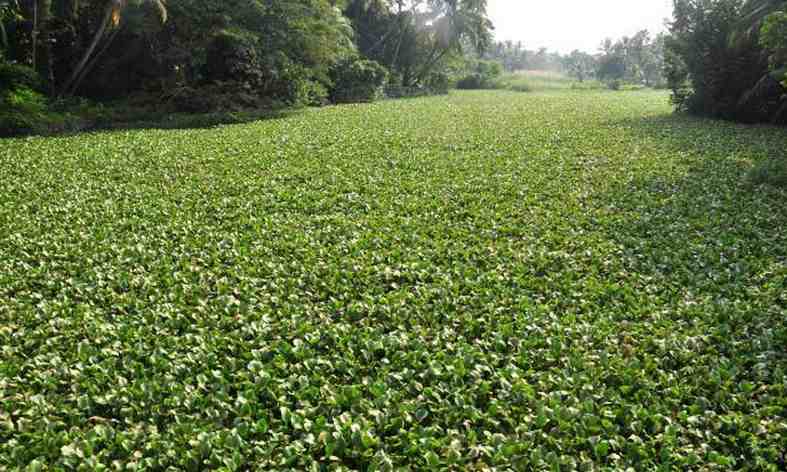
Water hyacinths choke the Poorna river at Tripunithura. Photo: Vipin Chandran; The Hindu

Water hyacinths choke the Poorna river at Tripunithura. Photo: Vipin Chandran; The Hindu

There are many similarities between Indian and Thai river life; watching villagers and people on barges going about their daily lives on the water is one, and the flora and fauna of river life is another. While traveling on the Chao Phraya River it only took a moment to see how the water hyacinths have the potential to choke river traffic. My excitement was piqued when Chananya from Asian Oasis told me that there was an established industry to use the plant for decorative, household and furniture purposes. Continue reading

Our Daily Bread, Please

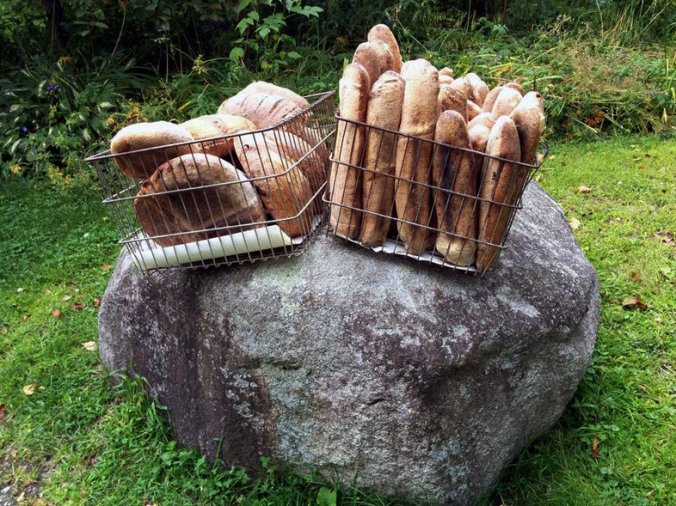
Rabin bread on a rock at the farmers market in Plainfield prior to setting up the table. Jon Kalish for NPR

Rabin bread on a rock at the farmers market in Plainfield prior to setting up the table. Jon Kalish for NPR

Where can we find the stones, here in Kerala, to build the oven to bake the bread to allow the reincarnation of this labor of love when the oven man and his wife of great heart from Vermont stop baking? We will find out. We will surely let you know. Meanwhile listen to and/or read this story, thanks to National Public Radio (USA):

When Jules Rabin lost his job teaching anthropology in 1977, he and his wife, Helen, turned to baking to keep their family afloat. For 37 years they’ve baked sourdough bread that people in central Vermont can’t seem to live without.

The year before Jules left Goddard College, he and Helen built a replica of a 19th century peasant oven, hauling 70 tons of fieldstone from nearby fields. The stones covered an igloo-shaped brick baking chamber 5 1/2 feet in diameter. Continue reading

If You Happen To Be In London

bell03_3613_04

We have been meaning for nearly a year to recommend this article on the relationship between one man and several artists who were otherwise completely unrecognized by the art establishment over many decades. With this man as a champion, after a long effort the artists have finally come into the recognition previously denied to them.

This new show in London reminds us not only to share that article, but to share this review. What explains our interest in this sort of exhibit is the outsider status of the artists. Not “bad boy” outsiders clamoring for attention, but innovators. Thanks to London Review of Books for this review of a current show at the Tate:

‘Proud’ is an epithet that extends from the parade to the workbench. The swagger of troops marching down the street is transferred by the carpenter to the nail that juts out, no less cocky, no less full of itself. There’s much in Tate Britain’s new exhibition, British Folk Art (until 31 August), that straddles both forms of pride. It opens with a fanfare of stout, galumphing tradesmen’s signs: the outsize models of boots, keys, teapots, top hats and so on that dangled over high streets two centuries ago. Continue reading

Small Ukrainian Museum’s Outsized Support Keeps Tradition Alive And Well

pysanky-easter


This qualifies as an unexpected form of entrepreneurial conservation, except among a few with insider knowledge. Several Raxa Collective contributors are amateur pysankyists, some bordering on master level, so this post is a tribute not only to a great museum which these contributors know well, but to the many non-Ukrainians who are inspired by this tradition enough to keep a Ukrainian art form alive and well:

Vegans, avert your eyes while the rest of us consider the egg. We’ve finally reached its season, at least as far as symbolism goes: spring, birth, something that the Theosophical Society calls “the origin and secret of being”—and that’s just the beginner-level stuff. What the grain of sand was to William Blake, the egg has been to just about everyone else. Brahma emerged from an egg, and so did the Tahitian god Ta’aroa and Pangu, the Chinese creator. The ancient Greeks practiced oomancy, divination by boiled egg white. Continue reading

Collaboration On Oldest Living Things

Thanks to Jonathan Minard for the short film above presenting Rachel Sussman Carl Zimmer and Hans Ulrich Obrist, and the book that they collaborated on:

Since 2004 artist Rachel Sussman has been researching, working with biologists, and traveling all over the world to photograph continuously living organisms 2,000 years old and older. The work spans disciplines, continents, and millennia: it’s part art and part science, has an innate environmentalism, and is driven by existential inquiry. She begins at ‘year zero,’ and looks back from there, photographing the past in the present. Together, her portraits capture the living history of our planet – and what we stand to lose in the future.

Continue reading

Artisan Trending

artisanal_image_main_HArticle

Details is not one of our regular go-to publications, and trendy is not our thing, but this story is worth a read if only for the fascinating graphics:

This is a handcrafted story. Assembled according to the time-honored traditions of the delightfully anachronistic magazine industry, it was carefully conceived by a small group of experienced editors, then slowly stitched together around locally sourced quotes, each word expertly tailored to your reading enjoyment (stitched—a nice word, isn’t it?). The author, emerging from the seclusion of his quiet work warren, submitted the piece only after it had met his exacting specifications and according to no schedule but that dictated by the work itself.

Continue reading

Getting The Story

His autobiography has been in print since 2007, but Longform helped bring that book back to our attention by bringing Gay Talese on stage at New York University recently, to talk about his life writing for Esquire in the 1960s and for The New Yorker today.  He tells his story during the onstage interview as only a master story-teller can. It is about listening; crafting; working: building a community of sources and fellow-writers:

“I want to know how people did what they did. And I want to know how that compares with how I did what I did. That’s my whole life. It’s not really a life. It’s a life of inquiry. It’s a life of … knocking on a door, walking a few steps or a great distance to pursue a story. That’s all it is: a life of boundless curiosity in which you indulge yourself and never miss an opportunity to talk to someone at length.” Continue reading

Self-Sufficiency Taken To The Outer Extremes

Before the lights go out on the last New Yorker issue of 2013, one more of several articles we found worth the read, and relevant to our common themes of interest–community-building, innovation, environmentalism, farming, etc.–on this blog, even if we tend to incremental change rather than the radicalism on display here:

Marcin Jakubowski, the owner of a small farm in northwestern Missouri, is an agrarian romantic for high-tech times. A forty-one-year-old Polish-American, he has spent the past five years building industrial machines from scratch, in a demonstration of radical self-sufficiency that he intends as a model for human society everywhere. He believes that freedom and prosperity lie within the reach of anyone willing to return to the land and make the tools necessary to erect civilization on top of it. His project, the Global Village Construction Set, has attracted a following, but among the obstacles he has faced is a dearth of skilled acolytes: the people who show up at his farm typically display more enthusiasm for his ideas than expertise with a lathe or a band saw. Continue reading

Restoration, Recollections & Rewards

All photos courtesy of the AKTC

We’d been living in Kerala for 6 months before we traveled back to the U.S. via Delhi in order to update our visas. Having only experienced the sights in my “southern home” up until that point, we scheduled our flight to allow for a Delhi city tour, and Humayun’s Tomb was the first item on the agenda.Unluckily for us the “Travel Gods” were not favoring us, and between flight delays and Delhi traffic we reached the gates of the tomb compound at 5:58pm, just in time for us to see the guard saunter over to lock them for the night. I was seriously disappointed, but I’ve since learned that perhaps those aforementioned gods were looking after our best interest after all. Continue reading

Thanks For Your Notes, Tom

Mark Seliger/Little, Brown and Company, via Associated Press

Mark Seliger/Little, Brown and Company, via Associated Press

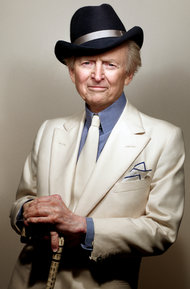
When we read a great book, we get transported into a world of the author’s creation. We are not expected, nor do we normally want, to think about what went into that creation.  Literary critics, perhaps, but not we lay readers. One exception to this general rule is when a writer comes along and changes things with his or her style of writing.  Then, we might be curious about the craft itself. We have posted on this topic from time to time for various reasons related to Raxa Collective’s commitment to written documentation of our experiences. Today, one such craftsman has decided to share his craft (at a wow price, for both him and the recipient, we note). A few excerpts about this news as reported in the New York Times:

…But now, Mr. Wolfe is about to be enshrined in one of the city’s most august institutions, thanks to the sale of his archives to the New York Public Library. Continue reading

Learning To Dance Yakshagana

Courtesy of Karnataka Mahila Yakshagana A scene from Yakshagana performed by female artists in Bangalore, Karnataka, in January.

Courtesy of Karnataka Mahila Yakshagana. A scene from Yakshagana performed by female artists in Bangalore, Karnataka, in January.

Thanks to India Ink for bringing to our attention this article by Kavitha Rao:

BANGALORE — In a quiet Bangalore home, a group of middle-aged women are learning to walk, talk and dance like men. Continue reading

If You Happen To Be In London

This slideshow requires JavaScript.

If you are a fan of big welding projects that appear to result from an artisan ethos, and a fan of Bob Dylan, and find yourself in London in the coming weeks, this show called Mood Swings may be for you:

“I’ve been around iron all my life ever since I was a kid. I was born and raised in iron ore country – where you could breathe it and smell it every day. And I’ve always worked with it in one form or another. Continue reading

Food Transparency

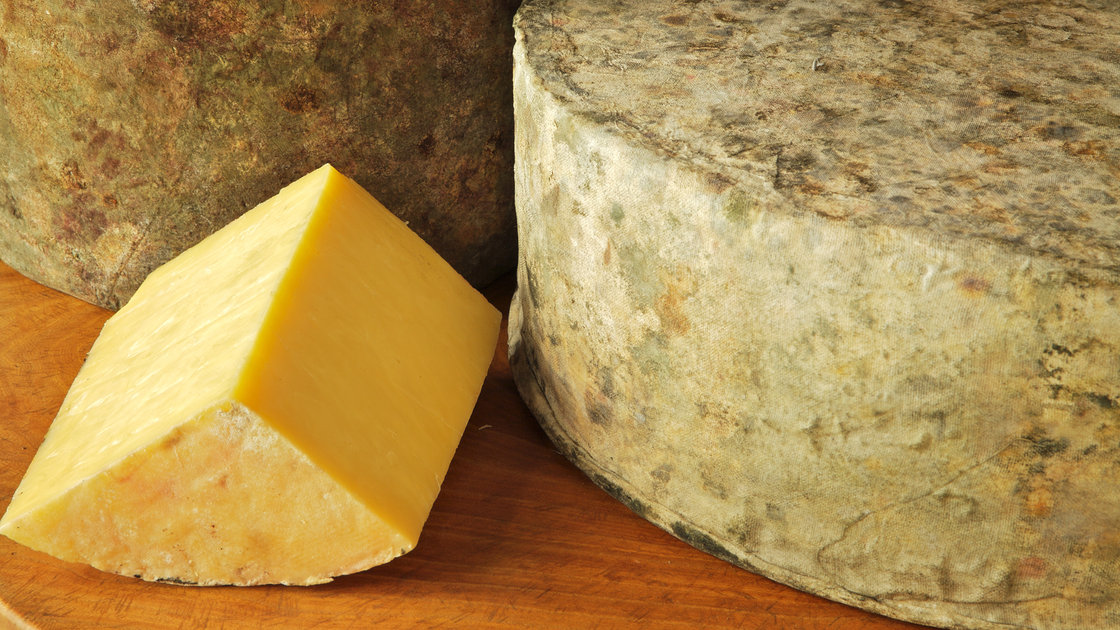
Shelburne Farms' clothbound cheddar has a bright yellow color because it's made from the milk of cows that graze on grasses high in beta-carotene. Courtesy of A. Blake Gardner

Shelburne Farms’ clothbound cheddar has a bright yellow color because it’s made from the milk of cows that graze on grasses high in beta-carotene. Courtesy of A. Blake Gardner

We have been posting on the topic of transparency in food several times each year since starting this blog, so this news/commentary podcast fits in a tradition:

The news from Kraft last week that the company is ditching two artificial dyes in some versions of its macaroni and cheese products left me with a question.

Why did we start coloring cheeses orange to begin with? Turns out there’s a curious history here. Continue reading

The Last Bookstore

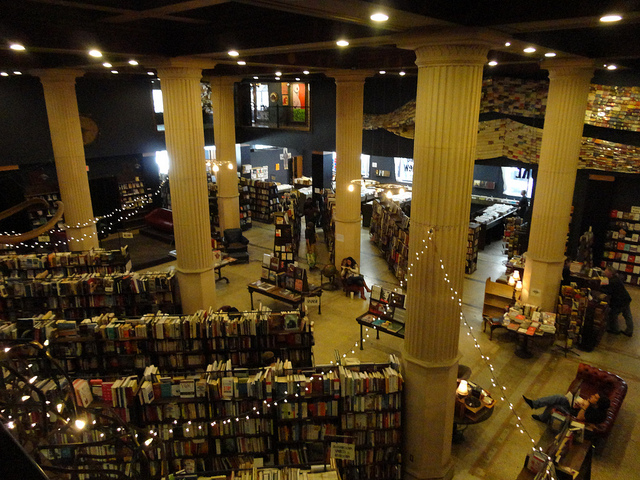
Photography credit Scott Garner.

Thanks to Paris Review, and particularly Casey N. Cep, for a reminder of why bookstores have more meaning than other forms of merchandising:

…Our inheritance felt large, but it was the sawhorses that I most admired, especially when my father put them to use constructing bookshelves for my bedroom. My father was no stranger to construction; he built the log cabin in which I was raised. He inherited not only tools but also skills from his father, so he was able to cut, stain, and install the wide bookshelves on my bedroom walls in no time. The shelves were required to house my growing library, acquired book by book in a thrilling sequence of gifts, purchases, and trades. Continue reading

Clothing Without Pretension


This may be the only time you find a link related to clothing on this site.  But it is not the clothing that motivates the link.  We liked the way this fellow explained his unique humility, so we have watched the same publication for more surprises.  Here is one. A man of considerable success and apparently little pretension. Artisan ethos.  Nothing about conservation, but a pretty clear sense of community (never mind the blue bloods and rock stars; it is the early morning conversations with the road sweeper that we can relate to) and at least with his five decades of marriage a clear sense of collaboration as well:

What’s the best thing and what is the weirdest thing you’ve ever received?

I have a fan that has been sending me things covered in stamps for over 20 years. I don’t even have any idea who it is, there’s never any letter. Around my desk at the moment I have a red watering can for the garden, a yellow sunflower, a bowling pin, a boat-shaped birdhouse, a yellow chicken and a long piece of wood, all covered in stamps with the address on it. So that’s just one crazy thing. But I get all kinds of things – I just had a little book sent to me, a story about me by a 10-year-old schoolgirl. Continue reading

Be, Cause (Simon Pearce)

This slideshow requires JavaScript.

He is an entrepreneur, so we find him interesting.  As with some other entrepreneurs featured on this podcast, we find him more interesting because of a higher calling in his business model.  He starts with excellence as defined by a few keywords–simplicity, quality, clarity, individuality, functionality–but he clearly cares about family and others outside his business. We find him most interesting because Simon Pearce contributes to the common good.  It is these ethics, not revealed directly in the From Scratch interview, but visible (though not “in your face” visible) on his company’s website, that make him worthy of more attention:

KP LoveYourBrain Bowl

Simon Pearce will DONATE 100% of THE PROFITS from the sales of the KP LoveYourBrain Bowl to the Kevin Pearce Fund.

Continue reading

Global, Local & Perspective

We have only mentioned him once before on this site, but we like him more than that.  In less than one minute, he sums up what can sometimes take us years to get right in the development and operation of a conservation resort: framing local phenomena in such a way that reflects value beyond the locale, while avoiding as much as possible the homogenizing effects of globalization. Continue reading