The Pastoral Muse

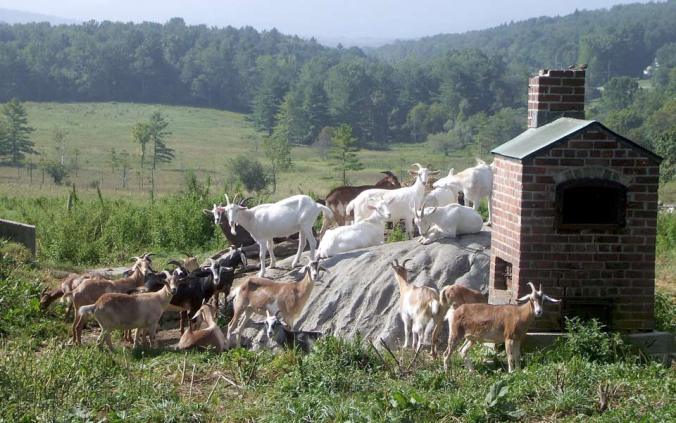
Goats on the hillside in Vermont. Photo by Anne Buchanan

Goats on the hillside in Vermont. Photo by Anne Buchanan

It has been some time since we first found an article in this publication, which we have continued following. There is at least one emerging pattern to explain why we keep going back: every article has an image that transports us, that makes us want to go see the who, what and where of the description:

…Jennifer and her husband Melvin work Polymeadows Farm, a small goat dairy farm and dairy plant in Vermont. They are currently milking about 120 goats. During kidding season, twice a year, the newborns spend their first night in a barrel of hay in the kitchen. This is important during Vermont winters, but also in summer, so that Jennifer knows the kids are healthy before they go out and join the rest. Continue reading

Kitchen Collaboration

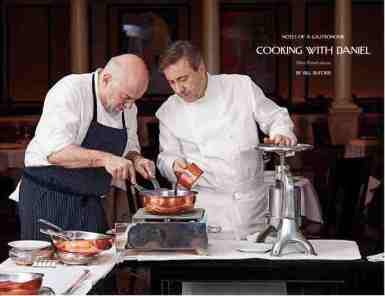
Kitchen Confidential juggled with foodies’ fascinations in new and unusual ways, and since then reality television seems to be the appropriate new home for that side show.  Oddly, it began in 1999 with an article in the New Yorker. So it is only fitting that the magazine has been balancing those dynamics with the work of less celebrity-oriented writers ever since.  None better than Bill Buford, who gets out there, and in there, like a citizen scientist for the story (though he is not shy of carny, either). Here what catches my attention is the collaboration, but plenty on the ethos of an artisan, the farm as the garden of eden, and last but not least the role of food in heritage and heritage in food (click the image above to go to the article):

Two years ago, during the summer of 2011, Daniel Boulud, the New York-based French chef, told me he had been thinking about a project that we might do together. We were both in France at the time. I was living in Lyons—I had moved there in order to learn French cooking—and Boulud was visiting his family in Saint-Pierre-de-Chandieu, a nearby village on a wooded ridge in the open countryside. Continue reading

Brothers In Craft

What do we love most about this?  The evidence that two brothers can work together effectively, pursuing a common dream; check. The commitment of two brothers to a craft, elevating it to a new level; check. The artisanal beards; enough already. It is about the brothers as much as anything else, and worth a few minutes of your time.

If you want to learn about the Masts, their approach to chocolate, and about their company, click the video above or here for the About page of their website, which includes more vimeos (note to Raxa Collective: are we using too many words and not enough video?).  But do yourself a favor and click here for the ever-superb Jessica Harris’s conversation with these two brothers on her entrepreneurship-focused podcast called From Scratch: Continue reading

Save Soil, Perhaps Even Improve It By Drinking Organic Coffee

SaveOurSoil_LOGOThe news we pointed to about coffee-making best practices was mainly about the last step of a long chain–when the coffee is just about to give its olfactory, gustatory and other pleasures upon consumption.  It linked to an earlier post about the artisanal agriculture link in the coffee-making value chain, but here we add one more link on that topic. It has strong recommendations about what else we as consumers might do to assist in coffee-making best practices. It brings to mind topics we have covered in non-coffee posts, such as altruism, which we have considered more than once; and collective action, likewise more than a passing interest.

When we have the opportunity to support a good cause, at minimum we can give it attention here by linking to it, and with great pleasure we do so for our friends at Counter Culture Coffee:

Our soils are in crisis. Conventional, chemical-based farming is destroying soil health, leaving farms with increasingly barren earth. Extraordinary coffee – that which we are dedicated to – needs rich, thriving soil, since healthy soil leads to healthy coffee trees, prosperous farms, and delicious coffee. Continue reading

Best Practices, Coffee Edition

Coffee

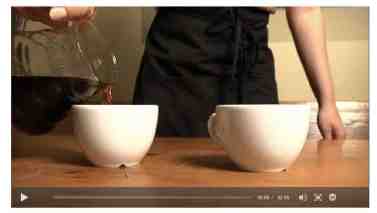
Click the image to the left to go to the video, if you are the coffee-loving type.  The follow up to this earlier story is here:

It’s not hard to brew a great cup of coffee—at least, it shouldn’t be. There are only two ingredients: coffee and water. And there are only two firm rules: these ingredients must be combined and then, sometime later, separated. (In fact, this second rule is somewhat less firm: when professionals are evaluating coffee, they typically let the grounds settle at the bottom of the cup, and use a rounded spoon to scoop small mouthfuls from near the surface.) Continue reading

Artisanal Glass & Natural History

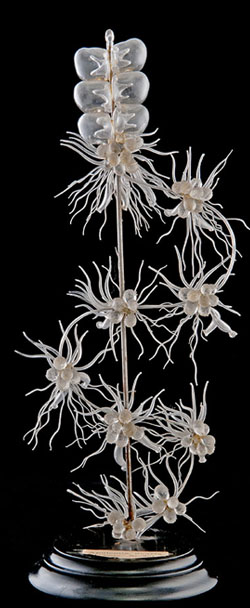
Intro jelly fishAn article in today’s New York Times by C. Drew Harvell profiles the Blaschkas, glassmakers who were commissioned to create anatomically perfect sculptures of marine creatures for scientific purposes starting in the late 1800s, and current efforts to find living specimens of the same. From the introduction to one of the original collections, at Cornell University:

Before Jacques Cousteau and the aqualung, before Kodachrome and underwater photography – there were the Blaschkas, father and son glassworkers who produced some of the most extraordinary glass objects that have ever been made. Their work has been described as “an artistic marvel in the field of science and a scientific marvel in the field of art.”

Artifacts inevitably reflect the cultural values leading to their creation. In 19th century Europe and America, an explosion of interest in science and education directly affected Leopold and Rudolf Blaschka. Reflecting these interests, new museums were built and opened to the public. They differed from earlier museums not only by admitting the public but also by featuring collections that illustrated science and natural history and often displayed systematic arrangements of plants and animals.

Continue reading

Good Entrepreneurship Personified

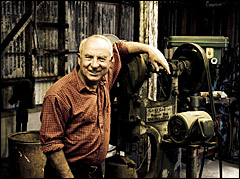
We recently discovered this podcast about entrepreneurship, and a few of the interviewees are among our most admired. For example, click the image to the left to go to the interview with our all time favorite:

Yvon Chouinard

Founder, Patagonia Continue reading

Artisan Ethos

Further to the provocative statement on vegan ethics here, we have chosen this as a follow up to highlight this new publication’s value–on a subject we actually talk about in our office and a our resort operations:

Joy in the task

Even the finest restaurants are serving coffee made with capsules. Have we lost faith in the human touch?

Continue reading

Galapagos Crafts

Another change visible in the Galapagos Islands circa 2011, versus 2oo3, is the quality of the craft on display in at least one shop in Puerto Ayora.  I have always been interested in artisan craft, but especially so in the last 15 years.  My first exposure to the intersection between ancient traditions and modern methods was in Guatemala in the mid-1990s, where an Austrian artisan was working with Maya communities on the re-establishment of production of finely carved ceremonial masks.  Not long after that, I saw the same thing in Ecuador, where a Swiss artisan was working with the tagua nut (aka vegetable ivory) to create remarkable carved curiosities.

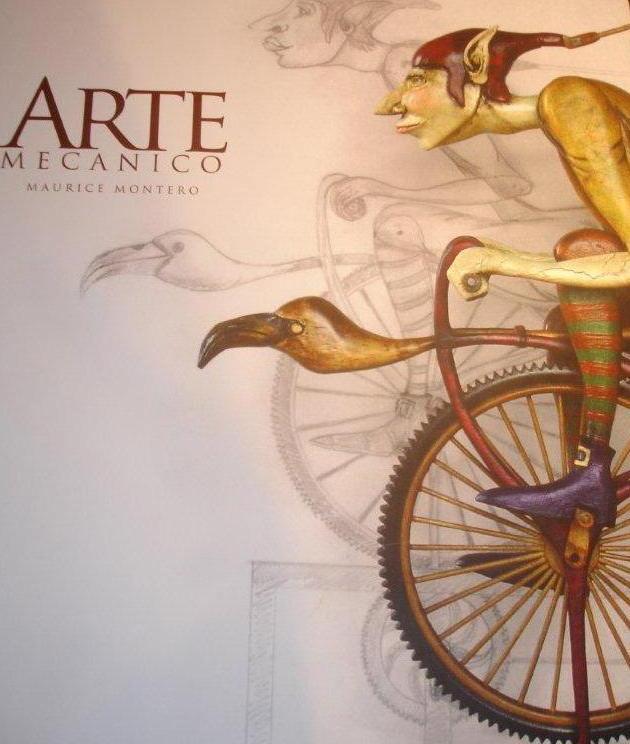
Now, in Galapagos, I see that an Ecuadoran artisan has documented his work in this book, showing a series of hand-made, all-wooden mechanical devices.  While he is not based in the islands, his work is on display and somehow resonates especially well there.  I took these short videos while visiting the gallery showing his work: