Foxes, Habitat & De-Wilding

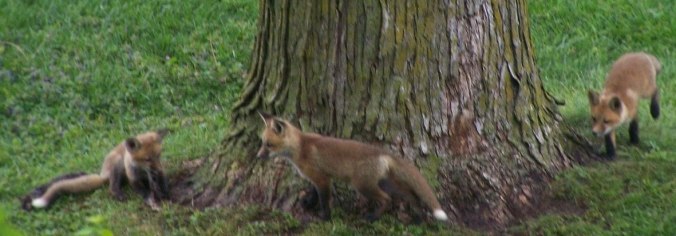
Five red fox kits around the tree.jpg

I recently received some photographs showing a family of foxes that had taken up residence near a home in the countryside an hour away from Kansas City. The foxes were wild, but even in this semi-rural landscape the foxes did not appear wild to me.

Vixen near the lakeIt was something about the context, seeing them in a yard I recognized well, that made me think about the essence of wildness. In the last year I have seen a number of grey foxes in the forests of Chan Chich and like most of the wild animals they do not seem to be afraid of humans; neither attracted to nor repelled by fear.

Vixen Apr 27 2017.jpgThe animal-human dynamic in both cases, the semi-rural home (of my in-laws, as it happens) setting of the foxes as well as those at Chan Chich seem to be one of peaceful coexistence, even apparent disinterest.  The human-animal dynamic is anything but disinterested, which the photos illustrate and that we see evidence of every day among Lodge guests. People want to see animals in their natural habitat. The animals’ apparent lack of fear of humans is related to the fact that there has been no hunting in the surrounding half million acres of forest for a couple generations.

It may also be that the foxes around the yard of the home in these photos also have not been hunted but something tells me that the foxes that seem habituated in and around human populations are different from those in these wild forests. I cannot quite articulate why I think that but today this book review got me thinking differently about the essence of wildness:

zuk-master180Imagine a time when scientists worked in secret, wondering if government officials would declare their research counter to state interests, endangering not only the personal liberty of the scientists themselves but their ability to let the experiments take them where the facts led. A time when how good a scientist you were was not all that mattered — what was important was how well you fit into political and ideological dictates. No, this is not a setup for a book ripped from yesterday’s CNN feed. Instead, it is the backdrop to a story that is part science, part Russian fairy tale and part spy thriller.

“How to Tame a Fox” sets out to answer a simple-seeming question: What makes a dog a dog? Put another way, how did an animal that started out as a bloodthirsty predator become one that now wants nothing more than a nice belly rub and the chance to gaze adoringly at a member of another species? Continue reading
Preserving Biodiversity to Feed the World

BioDiv.jpg

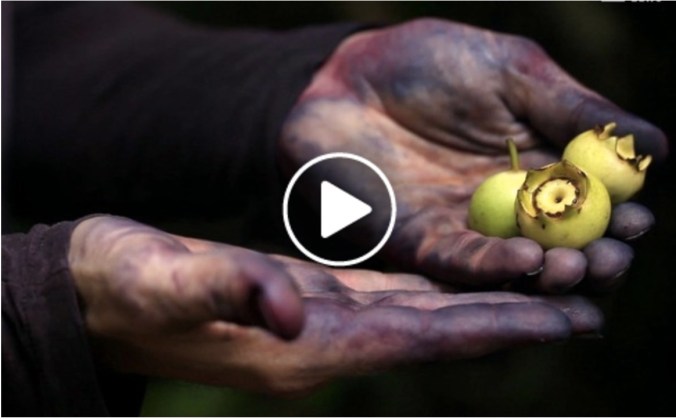
Thanks again to Atlantic for its occasional short film series, and in this case specifically to Erica Moriarty for bringing our attention to a video by Independent Lens available for sampling over at PBS (click the image above):

In the last century, 94% of the world’s seed varieties have disappeared. Family farmsteads have given way to mechanized agribusinesses to sow genetically identical crops on a massive scale. In an era of climate uncertainty and immense corporate power, farmers, scientists, lawyers, and indigenous seed keepers are on a mission to defend the future of food. Botanical explorer Joseph Simcox has been to over 100 countries, collecting thousands of seeds. In this documentary from Independent Lens, he travels to the Peruvian Amazon. Continue reading

Ranching, Recovery & Reason

MasterSceneofSilverCreek-GuiseppeSiata-1260x708.jpg

If you missed this post, it is worth a read for perspective either before or after the story below, and even if you do not read the story below that one should not be missed. Thanks to Cool Green Science:

Ridding the West of cattle remains a priority for some organizations and individuals. “Ranching,” the director of one prominent group told High Country News, is among “the most nihilistic lifestyles this planet has ever seen. Ranching should end. Good riddance.” Another group charges that ranching causes “desertification.” Another proclaims that “grazing spreads weeds.” Still another cites as a “myth” that “profitable livestock production and ecological preservation can coexist.” Continue reading

Song of the Sloth Bear

Much of our efforts on this site go to honoring the efforts of conservationists, in the form of scientists, activists, and writers. A special appreciation go to the photographers, filmmakers and artists whose work brings nature into the lives of many who may not normally be exposed to the incredible biodiversity of our world.

Longtime contributor Sudhir Shivaram is one such photographer, and we appreciate his  introduction to this lovely film Daroji by Sugandhi Gadadhar currently in final deliberation at the 2017 Wild & Green Shorts Film Festival, Montana.

Daroji is a short film for children, introducing them to wildlife, specifically those from in and around Daroji Sloth Bear Sanctuary in Karnataka, India. Bindu, a female Indian Sloth Bear, tells the story of different families, including her own, and shares a friendly note with her audience, suggesting that man and animal can co-exist in harmony.

We wish Ms. Gadadhar the best of luck!

Bioluminescence, Fungi, Science


27TRI-MUSHROOM1-superJumbo

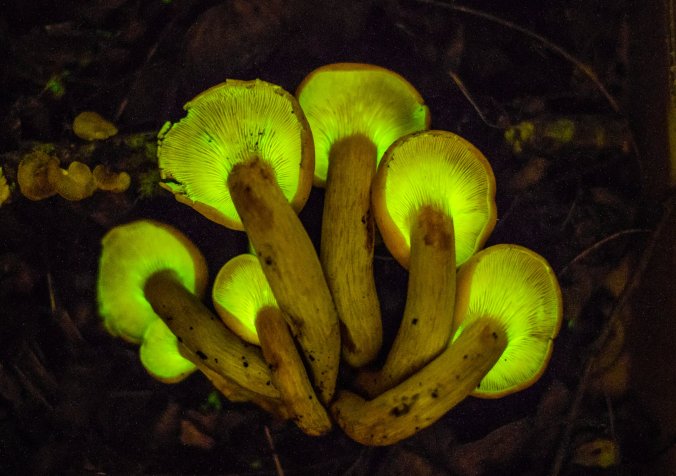
A bioluminescent jack-o’-lantern mushroom found in Pisgah National Forest, near Asheville, N.C. Credit Mike Belleme for The New York Times

Three of our favorite topics in one, thanks to Joanna Klein, the New York Times, and Science (the section of the paper and the thing itself):

PISGAH NATIONAL FOREST, N.C. — Here’s what I was told: Get away from the city, go during a new moon and keep my flashlight off. When the sky faded black enough to spot stars twinkling, I’d be able to see mushrooms glowing. Continue reading

Reminder Of Why Global Big Day Matters

CloudCrowd.pngNot every episode needs to be a crowd-pleaser, but this one catches the attention of our crowd more than the first three episodes had. It reminds us that while Global Big Day is intended to be fun, with a hint of competitive spirit, it is all in the interest of science and ultimately for the benefit of conservation of bird habitat (reminder to pledge). Thanks to The National Science Foundation for funding this! Thanks to PBS for making it available to watch online, even outside the USA (at least in Belize):

TheCrowdandTheCloud.jpg

Citizens4Earth, Ep. 4

Counting birds for more than 100 years generates data on a changing climate and there’s an app for that: eBird. Surfer science using smart tech tracks ocean acidification and coastal temperatures in the Smartfin project. Spend “A Year in the Life of Citizen Science” with California’s monarch butterflies and horseshoe crabs in Delaware. Continue reading

Does The Monkey Smile?

SpiderMonkey.jpg

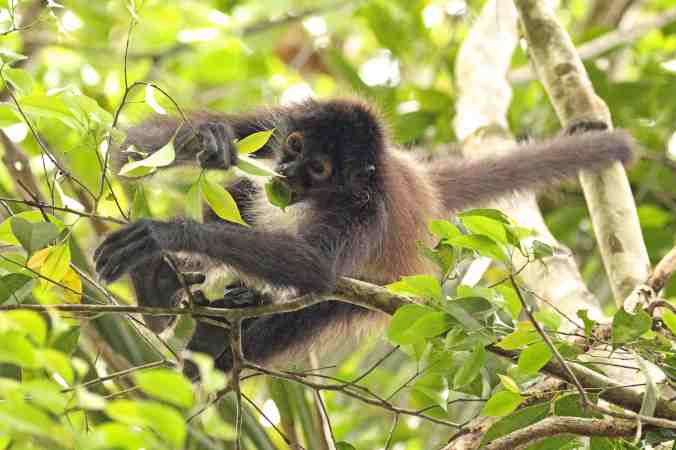
When sharing wildlife photos here, whether from guests or some of our own, the idea is to provide constant reminders, to ourselves and to everyone else, of the value of conservation. Even with a title of a post meant to draw a smile, it is not to be cute so much as to address the wonder of the moment captured in the camera. I really do wonder whether the margay purrs. And Chrissy Mason’s photo of the margay helped me wonder that more effectively.

The photo above, and the one below–both also shared by Chrissy–got me thinking about whether primates really smile, or whether it just looks that way to us (you must have seen that photo, reportedly a selfie taken by a macaque, that sure looks like a knowing grin). Continue reading

Citizen Science, 2017 & Beyond

tnc_90078497_preview_cropped-e1493211756535-1260x708.jpg

We have an event coming up that is our main focus now with regard to citizen science. After a few years of linking out to plenty of initiatives in this realm, 2017 is our big year, so to speak. And not only for us, nor only for 2017. We see the trend building momentum. Thanks to the Nature Conservancy and Cool Green Science for this story reminding us of the variety of citizen science projects are out there waiting to be discovered:

As a remotely operated vehicle (ROV) descends into the ocean depths, inky blackness slowly consumes all sunlight. Jellyfish and unidentified floating objects drift by, marine snow shimmers in the vehicle’s headlights. Suddenly, mountains and canyons taller and deeper than any on land materialize out of the darkness. Then, a voice breaks over the intercom, “Bridge, this is Nav, can we move five-meters South and hold position? Okay, let’s get underway again. Bearing 180°, 20 meters.” Continue reading

Plants, Water & Sound

flower-and-earbuds.jpg

Thanks to Brandon Keim and Anthropocene for this summary of some recent science exploring the reactions of flora to sound in their search for water:

Plants can hear water. Could noise pollution interfere?

There’s a transformation underway in how people think about plants: not just as inanimate biological objects, but as capable of perceptions and actions that resemble the intelligent behaviors of animals. Continue reading

Whispering Whales

whispering-whales-1-737094c2b8f1aaac28bc47183219c85f80bea1a7-s1400-c85.jpg

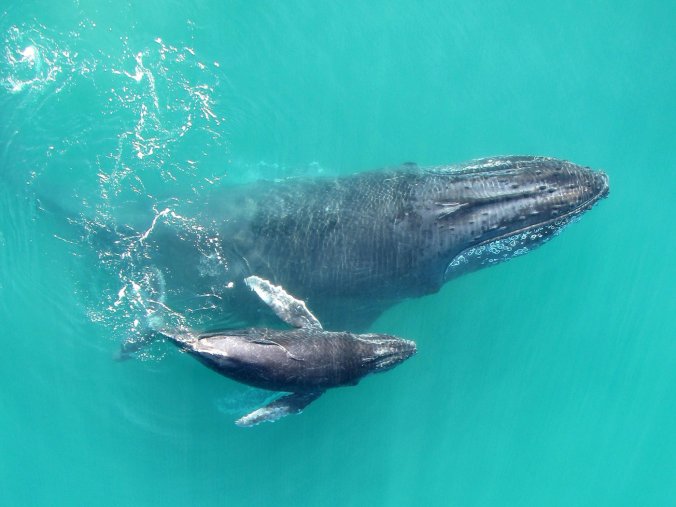
A mother and calf humpback whale swim in the Exmouth Gulf in Western Australia. Fredrik Christiansen/Functional Ecology

Thanks to National Public Radio (USA) for this story:

Recordings Reveal That Baby Humpback Whales ‘Whisper’ To Their Mothers

by Nell Greenfieldboyce

Whalesound.jpgBaby humpback whales seem to whisper to their mothers, according to scientists who have captured the infant whales’ quiet grunts and squeaks.

The recordings, described in the journal Functional Ecology, are the first ever made with devices attached directly to the calves. Continue reading

Big Day Pledge

clo_logo_2_351px

As we have in past years, in solidarity with our friends and colleagues at the Cornell Lab of Ornithology, we are sharing the pledge drive as far and wide as we can, and look forward to doing our part more specifically in a couple weeks:

BigDay_Email-banner_032817

On May 9th, the Cornell Lab of Ornithology’s top birding team will begin the long journey to the Yucatan Peninsula for Big Day 2017. Big Day is an all out midnight-to-midnight birding event to see who can identify the most species in a 24 hour period. Team Sapsucker hopes to find the most birds yet — by identifying 300 bird species. Continue reading

Does The Margay Purr?

MargayC1

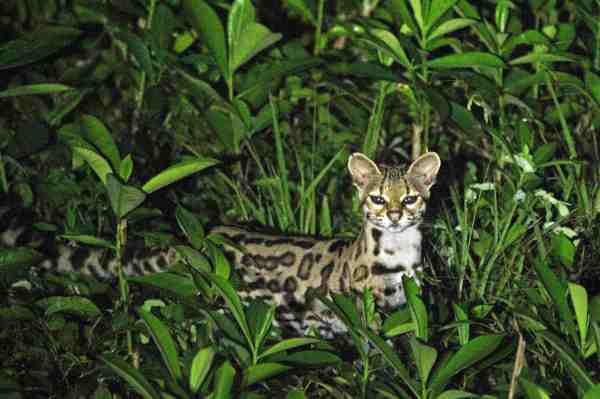
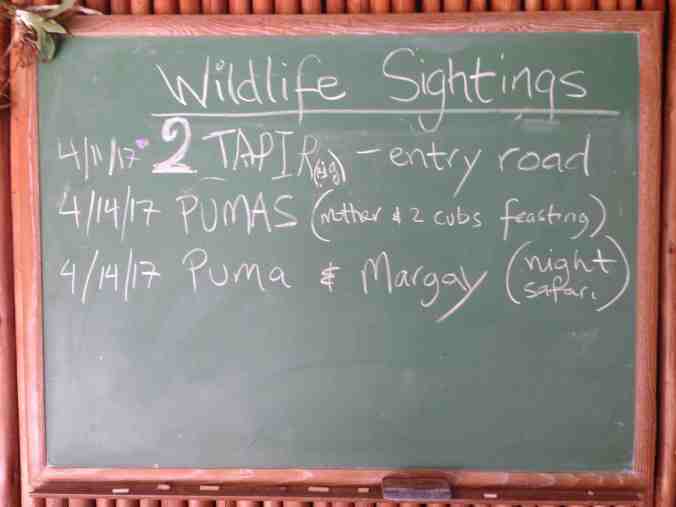
Thanks for this photo go to a mom and daughter team who were out every day recently from pre-dawn until late evening, absorbing all on display at Chan Chich Lodge and its surrounding forests. Their last night, sharing the night safari with the family who contributed here, was a golden opportunity, so to speak. This margay looks so content, and intent, in a feline way, that I cannot help but wonder whether these wild cats purr.

If You Happen to Be at the Smithsonian – But You Don’t Have to Be

Science, entrepreneurship, conservation and innovation converge at this amazing open source summit with events in multiple Smithsonian locations ranging from New York City, Washington DC and Panama City.

Frequent contributor to this site Phil Karp, will participate in a forum on Restoring Nature. The synergy of forum subjects with our interest in wild foods and our work in conservation focused hospitality makes us wish we were there.

What’s Working in Conservation

Earth Optimism celebrates a change in focus from problem to solution in the area of global conservation with an unprecedented gathering of thought leaders, scientists, environmentalists, artists, civic leaders and international media.

The global conservation movement has reached a turning point. Continue reading

Foraging Classes

HornFarmCenterLogoStacked-72-540x540WhiteBGA mushroom dropped in on my life, in an unexpected manner, and now I find myself wandering to unexpected places, such as rural Pennsylvania. I am sharing here mainly as a record of how I have come across the resources that inform how we approach bringing foraging to Chan Chich Lodge.

So, bravo and thanks to our friends at the Horn Farm Center for Agricultural Education, which is my latest find in these wanderings. I particularly like their clearly laid out information on the educational resources they offer, most notably this section on foraging classes: Continue reading

If You Eat Canned Tuna, Consider This

TunaRank.jpg

We check in with EcoWatch regularly, and from time to time Greenpeace has a surprising piece of content featured, like this 20 Canned Tuna Brands Ranked: How Sustainable Is Your Brand?

StarkistWarn.jpgWhat is surprising to me is this pop up call to action, which echoes back at least three decades for me to the first time I heard of Greenpeace, which was also the first time I heard of any issues related to canned tuna, which was also the first time I looked on a map to see where the Gulf of California, and Baja California Sur were situated. It is surprising because on the ranking above, this same tuna is not the absolute worst of the worst. Even more surprising, in its own way, is that Trader Joe’s is even worse in this ranking. Go figure. Anyway, thanks to David Pinsky, Greenpeace, and EcoWatch for this: Continue reading

Global Big Day, Coming Soon At Chan Chich Lodge

We have already extended the invitation, but we will continue reminding you just as the Lab keeps reminding us:

On May 13, 2017, the Cornell Lab of Ornithology’s birding Dream Team, the Sapsuckers, will reach for an audacious goal: finding 300 bird species in just 24 hours – and raising $475,000. Can they do it?! Continue reading

Tools, Tinkering, Science & Salvation

IMG_0984_edited-1260x708.jpg

Tim Boucher sets a camera trap near a bird of paradise lek. Photo © The Nature Conservancy (Justine E. Hausheer)

Camera traps are never going to lose our fascination, and have played a mitigating role in our non-Luddite but still determined effort to keep it simple, back to nature. The future depends on innovation, and we cannot hide behind trees pretending otherwise. If conservation efforts are going to compete effectively against the forces supporting environmental destruction, unconventional approaches are needed. We are entrepreneurially-inclined, and so are naturally comfortable with FishFace, among seven innovative pivots to a better future described by the wonderful team at Cool Green Science:

7 Science Innovations That Are Changing Conservation

BY ,

In our still relatively brief existence, humans have evolved our way to an era many are now calling the Anthropocene – a new geological epoch defined by human impact on Earth. But our unparalleled creativity is a double-edge sword. We are undeniably contributing to many of the global challenges now facing our species, and all species who share this planet. Continue reading

Margay Jump Start

MargayRecline.jpg

In the post where I mentioned this margay sighting I did not yet have any photographic evidence. Now I do. Prior to their departure, the same Los Angeles family mentioned in this cat-sighting post handed me the memory card from their camera and I was able to pull these images. In the rush of the holiday weekend I had forgotten these until now. Above was the first, taken as quickly as the camera could be lifted to follow the spotlight. Below, an enlargement of the cat. Continue reading

Feline Trifecta

LeanderOcelot

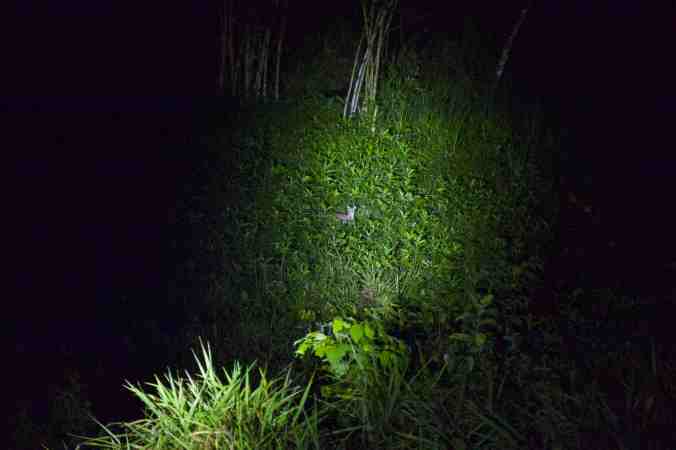
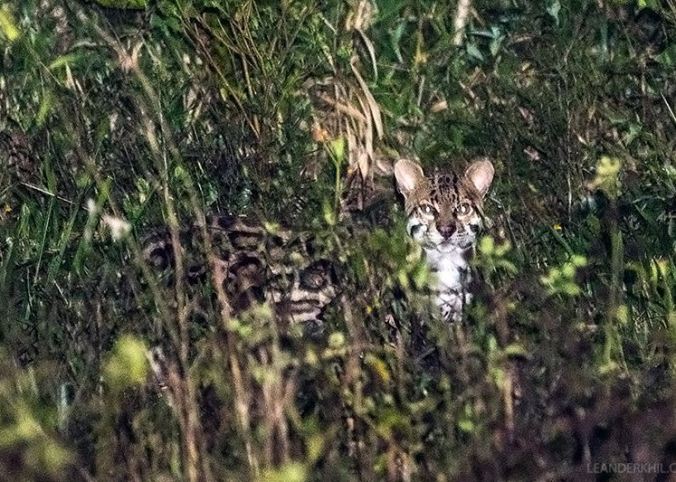
When Leander caught this cat in his camera some weeks ago, there was no telling if and when, or where, we might see it again. Last night, a family from Los Angeles who just the night before had seen two other species of cat during the night safari at Chan Chich Lodge, decided on a guided trek through the forest starting at 8pm. Continue reading

Margay Sighting @ Chan Chich Lodge

IMG_7014

Persistence does not always pay off. But, it is often a great trait for its own sake. We all admire people who set out to do something, and stick with it long after there is reason to continue hoping for that something. And, if you are like me, you cheer the underdog, hoping they will at the very last minute get that something. Continue reading