WhaleCam, Antarctica

WhaleCam.jpg

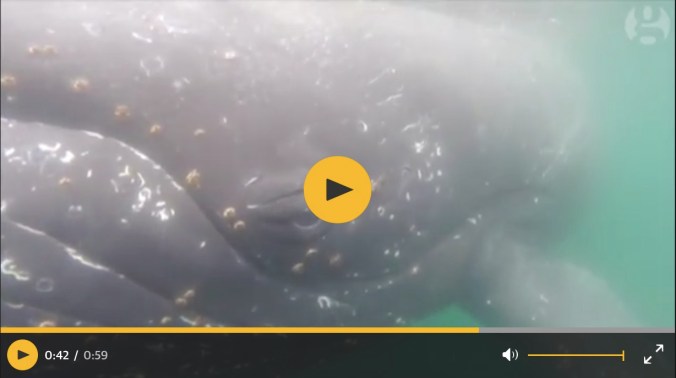
While fish were surf-spawning in California, the Guardian was sharing this footage from way down south:

The World Wildlife Fund released this footage filmed in March 2017 that shows the view from a camera attached to a whale in Antarctica. Scientists used suction cups to attach cameras to humpback and minke whales, revealing new feeding habits and their social lives. The data gathered will be used to protect whales and their ecosystems

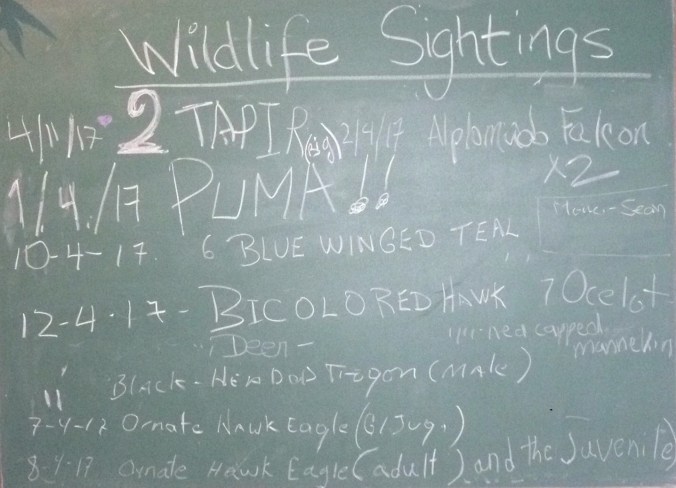
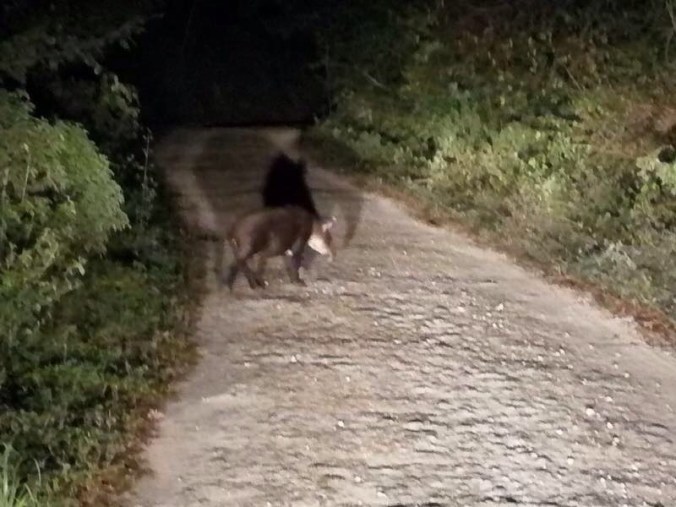
Tapir Encounter @ Chan Chich Lodge

IMG_7001

Over the last couple weeks we have had a pretty full range of the animals guests most hope to see. Although the jaguars have been elusive, puma and ocelot have been wandering the nearby forests allowing occasional sightings. But we can guess the jaguar are there because of this:

IMG_6994 Continue reading

Surf Spawning Spree

14GRUNION1-master675

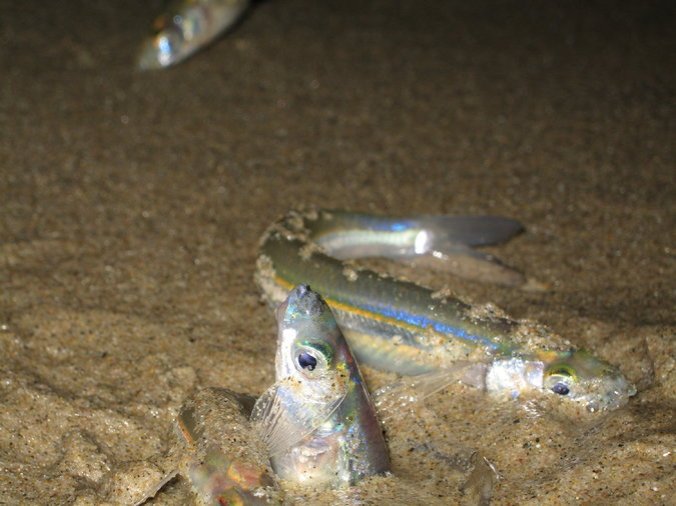
Female grunions twist their bodies tail first into the sand and lay 2,000 to 3,000 eggs, which males then fertilize. Credit Doug Martin

Thanks to Joanna Klein and the Science section of the New York Times for this explanation of a full moon mating phenomenon:

Silver Fish Surf the Waves to Spawn on California Beaches

Every year, thousands of little fish ride waves onto Southern California’s beaches at night to lay and fertilize eggs. High up in the sand, they squirm, wriggle and wrap around one another. As they dance beneath the moonlight, the beach transforms into a twinkling tapestry of spawning silver bodies. It’s known as the grunion run, and within a few hours, the show is over. Continue reading

No Forestry? No Way

IMG_3736-1260x708.jpg

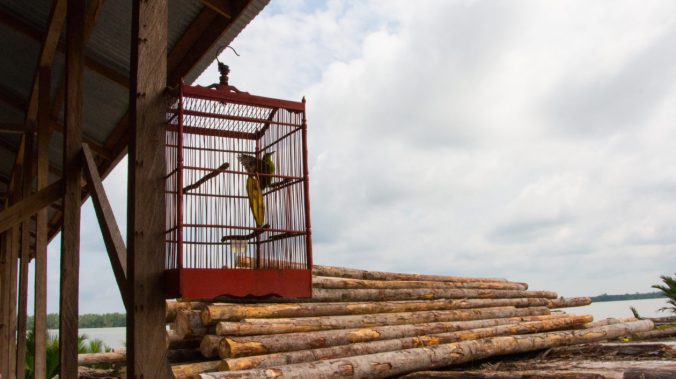
A caged songbird overlooks a logging yard in East Kalimantan, Indonesia. Photo © The Nature Conservancy (Justine E. Hausheer)

Thanks to Justine E. Hausheer for Modeling Logging’s Impacts on Biodiversity & Carbon in a Hypothetical Forest over at Cool Green Science:

Tropical forests are widely celebrated for their biodiversity and increasingly recognized for their carbon sequestration potential. But what’s less often acknowledged is halting logging entirely will make climate change worse, as wood is one of the most sustainable building materials.

So how can conservationists help nations meet the demand for wood products and protect forests, while minimizing both biodiversity loss and carbon emissions? Continue reading

Happy 20th Anniversary, Meg!

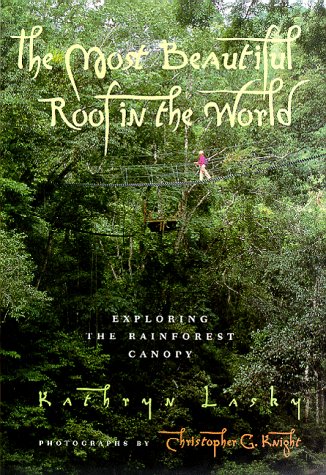
543092After posting this quick thought about foraging, I sent a link to Meg, and she reminded me that she had not only been to Belize but that there is a book about her time here.

As I explored the book I realized that it was first published 20 years ago, incidentally the year when I first visited Belize. I also discovered that the book is in wide circulation among educators in the USA, for hopefully obvious good reasons:

Journey along with Dr. Meg Lowman, a scientist who, with the help of slings, suspended walkways, and mountain-climbing equipment, has managed to ascend into one of our planet’s least accessible and most fascinating ecosystems–the rain-forest canopy. “Fresh in outlook and intriguing in details, this book will strengthen any library collection on the rainforest.”–Booklist Continue reading

Keeping Those Scarlet Macaws Out Of Harm’s Way

web_camilla-cerea_au0117_sm_049

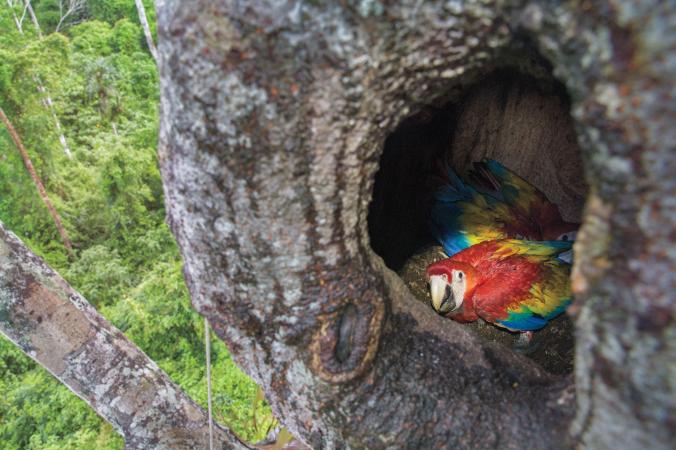
Two Scarlet Macaws chicks sit in their nest in the cavity of a quamwood tree in Belize’s Chiquibul Forest. Photo: Camilla Cerea/Audubon

Thanks to the neighbors of Chan Chich for bringing to my attention this article by Martha Harbison in the current issue of Audubon Magazine, which touches on the topic I referenced back here, not far from Chan Chich Lodge as the bird flies (so to speak):

…To keep macaw chicks safe, a team of rangers spends night and day watching over the birds’ nests and homes.

The Scarlet Macaw’s last, best defense against wildlife poachers doesn’t look like much: just a ramshackle collection of tarps, makeshift tables, plastic five-gallon buckets, jungle hammocks, and a cook fire, hidden in the dense understory of a tropical hardwood forest near the fraught and uncomfortably porous border between Belize and Guatemala. Continue reading

To Bait Or Not To Bait, A Debate

owl-baiting-9_custom-eff377db1531b3a9380239392d03516bf9b06f7f-s1400-c85

A great gray looks up after plunging into the snow, while hunting north of Two Harbors, Minn. The great gray is one of the world’s largest species of owl. Derek Montgomery for MPR News

We have never had, nor can I picture us having this debate at Chan Chich Lodge or any other wildlife setting we are responsible for managing; nonetheless, since we all live in glass houses of one sort or another, it is worth a moment to read this and ponder (thanks to Dan Kraker and Minnesota Public Radio, USA):

Earlier this winter, photographer Michael Furtman was driving along the North Shore of Lake Superior in search of great gray owls. Several of the giant, elusive birds had flown down from Canada looking for food.

He pulled off on a dirt road where he had seen an owl the night before. One was there, perched in a spruce tree, but so was a pair of videographers filming them.

“I backed off, I was going to just let them have their time with the bird,” Furtman says. “And then I saw them run out and put a mouse on the snow.” Continue reading

Birdwatching 101, Mid-May, Chan Chich Lodge

SibleyYou probably cannot do much better, if you are just getting interested in birdwatching, than to have a primer like this one. The author, in the pantheon of ornithology according to the birdwatchers I know, spends half an hour sharing some of the basics in this podcast:

This week’s Please Explain is all about birdwatching. We chat with ornithologist David Allen Sibley, a leading expert in the field. Sibley is the author of The Sibley Guide to Birds, a reference work and field guide for the birds found in the North American region. He offers details and illustrations of 810 species of birds, with information about identification, life history, vocalizations, and geographic distribution. According to the Audubon Society, “There are 47 million birdwatchers. But there is only one David Sibley.”

In the final minutes Mr. Sibley answers a question that has been of interest to the staff of Chan Chich Lodge in recent months. Do bird feeders have any adverse effect on the birds they attract? In short, no. So today we returned the hummingbird feeders to their longstanding perches on the dining room deck. Birds, staff, and guests are all happy with this decision.

This podcast serves as a good reminder of an opportunity we are inviting birdwatchers of all skill levels to join us for. We have already posted about it here, and earlier here as well. Come join the fun!

Whales Off Sri Lanka

4269.jpg

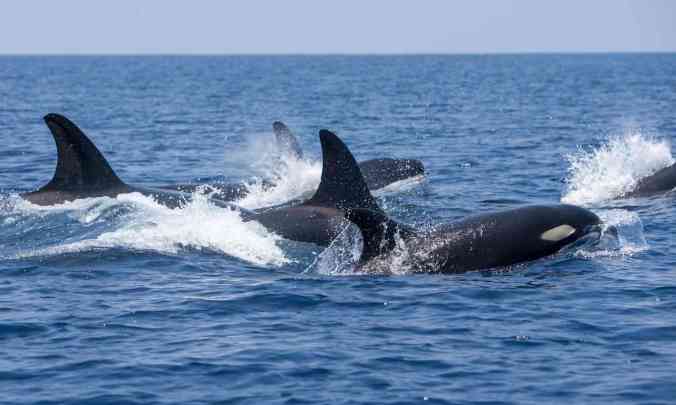
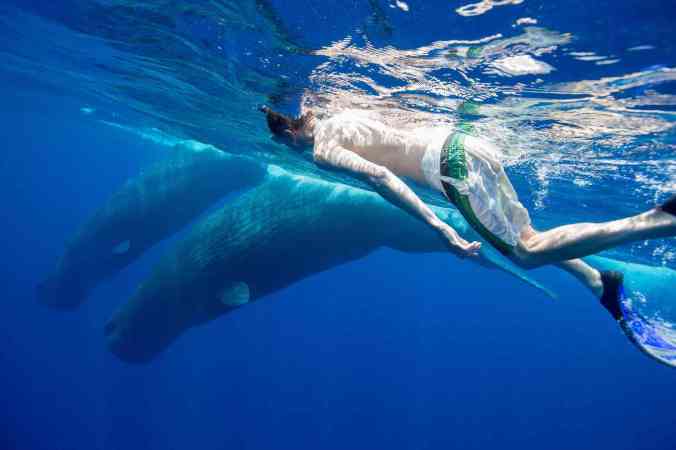
While observing sperm whales off the Sri Lankan coast, Philip Hoare came face to face with eight hunting orcas who had no fear of the 100-strong sperm whale pod

Thanks to Philip Hoare for this photo-documentary of his recent dive in our old neighborhood just south of the southern tip of India:

5184.jpg

Photograph: Andrew Sutton

Continue reading

Seed Vault Deposit

We have shared a couple times in the past about the seed vault, but just now it has come to our attention again in this press release from last month, provided by The Crop Trust, which reminds us of the meta-agriculturalist Cary Fowler, whose 2009 Ted talk is worth another quarter hour after a quarter hour on the short film above:

MAJOR DEPOSIT TO WORLD’S LARGEST SEED COLLECTION IN THE ARCTIC OVERSEEN BY THE CROP TRUST | GOPRO SUPPORTS CROP TRUST WITH NEW VIDEO AND PLEDGE DRIVE

SVALBARD, NORWAY – 22 February 2017A major seed deposit critical to ensuring global food security was made to the Svalbard Global Seed Vault in the Arctic Circle today. Continue reading

Invasion, Proliferation, Hunt–A New Paradigm

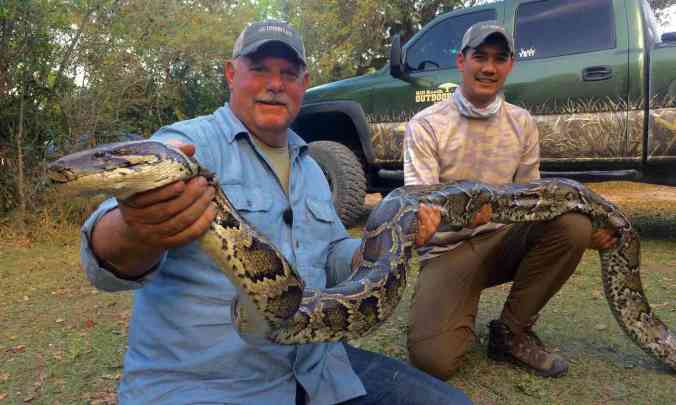
3264.jpg

Bill Booth with one of the Burmese pythons that are wreaking havoc upon the Everglades’ fragile ecosystem. Photograph: Roger Booth

A Decade Since The Last Flight Of The Scarlet Macaw

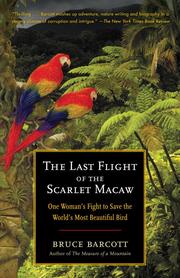
The+Last+Flight+of+the+Scarlet+Macaw.jpgWhen a book like this comes recommended, book reviews from a decade earlier are as fresh and relevant as ever:

…When McPhee wrote “Encounters With the Archdruid,” the American conservation movement was a religious and mystical force. It may still be so today, but the movement now employs nearly as many big-city lawyers and consultants as any corporation hoping to develop a mine, oil field or… dam. They’re out in force in Bruce Barcott’s new book, “The Last Flight of the Scarlet Macaw: One Woman’s Fight to Save the World’s Most Beautiful Bird,” the story of a bitter fight against a dam in western Belize. No, it doesn’t sound thrilling (which is doubtless why the publisher kept the word “dam” out of the title), but Barcott, a contributing editor at Outside magazine and the author of “The Measure of a Mountain: Beauty and Terror on Mount Rainier,” makes it so, mashing up adventure travel, biography and nature writing in a steamy climate of corruption and intrigue…

It is not the first time this book has been recommended to me, but yesterday a fellow hotelier in Belize mentioned it when describing his getting to know someone central to the book’s story, and this  reminded me that I still had not touched the book. It is, I am told, a must read.  Bruce Barcott provided an excerpt of his book back when it first came out, so I have just started.
Let Sleeping Bears Lie

25tb-hibernation-top-superJumbo.jpg

A black bear, which has been sedated, and her cub in a den in Massachusetts. Credit Mark Wilson/The Boston Globe, via Getty Images

Thanks to the science writer Steph Yin for this one:

Waking From Hibernation, the Hard Work of Spring Begins

For animals that hibernate, making it to spring is no small feat. Torpor — the state of reduced bodily activity that occurs during hibernation — is not restful. By the time they emerge, hibernating animals are often sleep-deprived: Continue reading

Bird, Data, Love

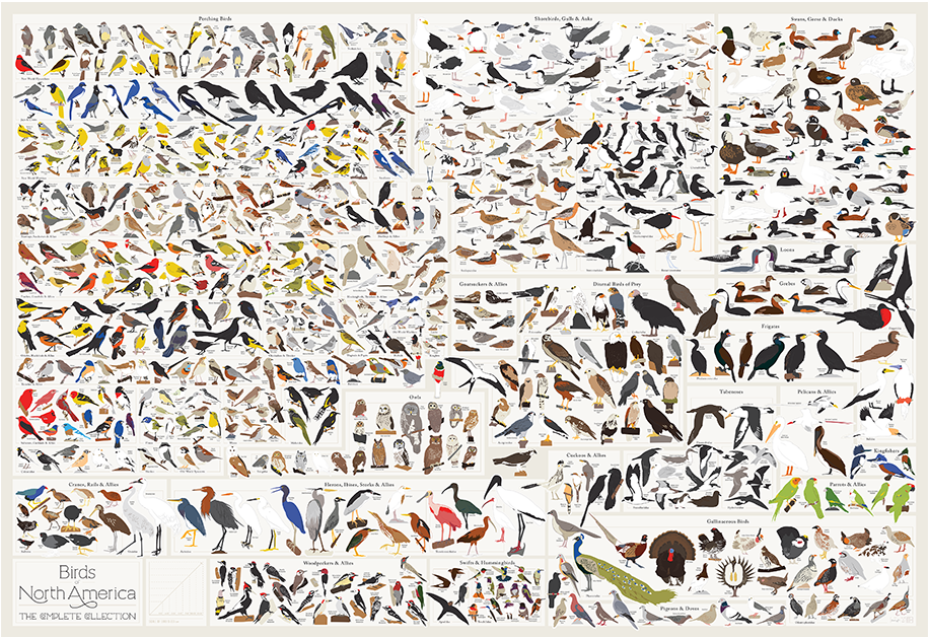
We love this amazing poster from Pop Chart Lab as much as the link to find it.  The site’s zoom function gets you closer to the fantastic detail.

Take a look!

Perhaps our most ambitious taxonomical undertaking yet, this is your field guide to the birds of North America! The product of over 400 hours of intricate illustration work by our talented team of artists, this unabridged aviary features over 740 fair-feathered friends drawn to scale and sorted by species, covering the continent’s avifauna (both native and introduced, as designated by the National Audubon Society and the Cornell Lab of Ornithology) from common sparrows, jays, and owls to rarer birds such as the Greater Sage-Grouse, the California Condor, and the Whooping Crane. An ornithological opus like no other, this classificatory treasure is perfect for amateur and eagle-eyed birdwatchers alike. Continue reading

Ocelot Dreaming At Chan Chich Lodge

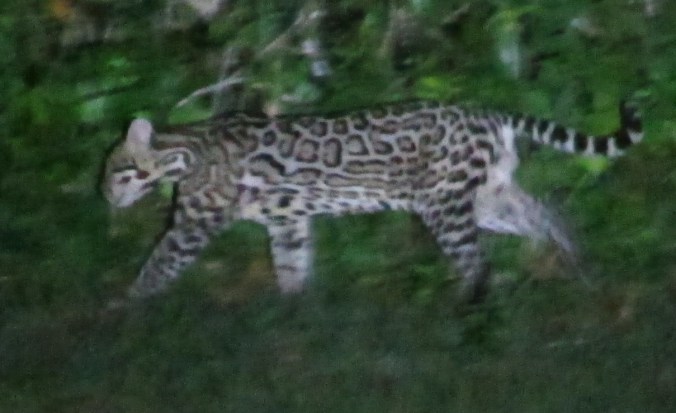
MargayDream.jpg

Thanks to our guests, Yvonne & Martin Ryves of Cork, Ireland for these snapshots taken on the night safari Wednesday after dinner. The one above looks like an ocelot in a dreamscape. Below, as crisp a couple of shots as you are likely to get on the go in the dark in this part of the world. Continue reading

Buffalo, Back Big

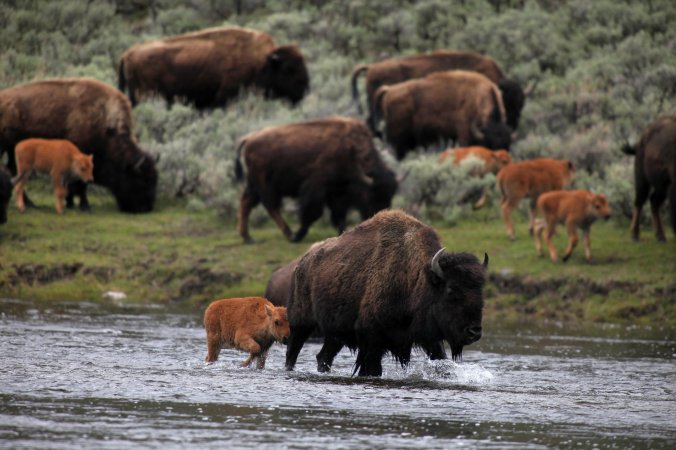
14tb-bison-superJumbo.jpg

Bison and their calves in Yellowstone National Park. A fossil found in Canada provides the oldest evidence of bison ever discovered in North America. Credit Nicole Bengiveno/The New York Times

We love watching the return of this beast, so this story in today’s Science section is our kind of story:

When did North America become a home where the ancestors of buffalo roamed? Between 195,000 and 135,000 years ago, according to a study published Monday that reports on the oldest fossil and genomic evidence of bison on the continent. Continue reading

Global Big Day 2017, Belize

BigDayDonate

You have plenty of options of where to spend the day, but we are hoping to share the entire week leading up to May 13 with lots of old friends of Chan Chich Lodge–not only dedicated birders, but especially them. And not only old friends–we welcome the opportunity to introduce new folks to birding. So think about joining us that week in particular.

In our work around the world in recent years we have tried to support the Cornell Lab of Ornithology’s mission, focused through ebird in this worthy call to action, in as many ways as possible. If you do not know about the Lab, start with what they say about themselves and if it strikes you as relevant click on the banner above to make a pledge on one key initiative:

The Cornell Lab of Ornithology is a world leader in the study, appreciation, and conservation of birds. Our hallmarks are scientific excellence and technological innovation to advance the understanding of nature and to engage people of all ages in learning about birds and protecting the planet. Continue reading

Come See, Enjoy, & Count With Us!

LeanderOcelot

We had the good fortune some weeks ago to host one of Europe’s finest birder-guide-photographers at Chan Chich Lodge. His bird photos are wow quality (see below for an example) but my favorite of all his photos is the one above of an ocelot. We are gearing up for Global Big Day at Chan Chich Lodge. Our primary goal is simple. Follow the leader, and lead by example. Our secondary goal is kind of competitive, related to the program’s own details:

Details

For the past two years, the second Saturday in May has been the biggest day of the year for birds: Global Big Day. More than 6,000 species of bird. Tens of thousands of people. 153 countries. Immeasurable fun. Continue reading

Global Big Day 2017, Neotropical Focus

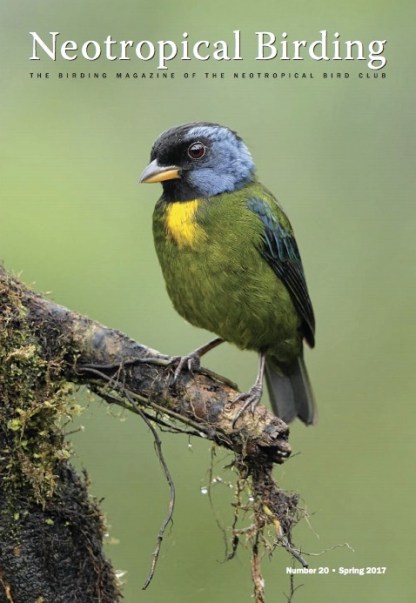
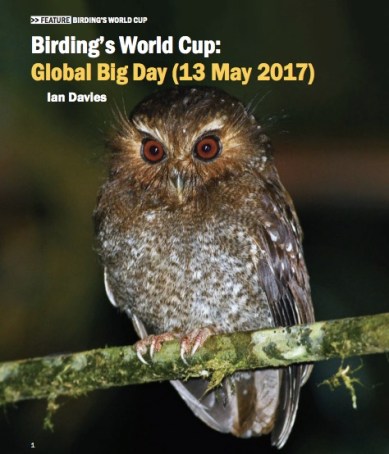
Neotropical BirdingNeotropical Birding’s magazine feature on Global Big Day 2017, which we are looking forward to at Chan Chich Lodge, provides a good primer on the what, how and why of this event; we hope to convince you on the where:

Walking the thin line between madness and brilliance, ‘big days’ (also known as ‘bird races’) are the essence of birding’s competitive spirit distilled into 24 intense, frantic and thrilling hours. Months of planning, poring over spreadsheets and pen-marked maps; days spent scouting out the perfect stops, driving practice routes while ingesting egregious amounts of caffeine; and years of birding experience used to find  the right habitat for each target species, the game is to see or hear as many bird species as possible in a single, incredibly efficient, BIG day.

Neotropical2

Why do this? Why care? These friendly competitions are an incredibly powerful way to engage people around the world, both within the birding community and beyond. Across fields of study and walks of life, there is always an innate human interest in setting records or being a part of something that has never happened before. In addition to the inherent fun, record-setting events provide an outlet to talk to non-birders about conservation issues, ecological concerns, and all the things that make birds so interesting. Continue reading

Salmon On Northeastern USA Rivers

shadinhopper-1260x708

American shad in fishlift in Holyoke Dam on Connecticut River in Holyoke, MA. Courtesy of Connecticut Department of Energy and Environmental Protection

Of all North America’s Atlantic salmon rivers none compared in size or productivity with the 407-mile-long Connecticut River that drains Vermont, New Hampshire, Massachusetts and Connecticut. But early in the 19th century all strains of salmon uniquely adapted to this sprawling system (at least 25) had been rendered extinct by dams. Continue reading