Elephant Footprint Land

We know how much an Asian elephant eats, but until today we didn’t know the biodiversity footprint of African elephants – that is, the literal biodiversity in the footprints left by these massive animals as they walk around, hopefully avoiding beehives. John Platt reports for Scientific American on the ecosystem engineers’ effects from walking:

When you weigh upwards of 6,000 kilograms, you tend to leave a trace of yourself wherever you walk. That’s definitely the case with African elephants (Loxodonta africana), which, according to new research, is actually a boon for dozens of other, much tinier, species.

As discussed in a paper published this week in the African Journal of Ecology, elephant feet play an important ecological role in Uganda, and probably in other countries. As elephants walk through the forest, they leave deep footprints behind them. These footprints then fill up with water, creating little foot-shaped microhabitats for at least 61 different microinvertebrate species from nine different orders.

Continue reading

Keystone, Canary, and Weedy Species

canary_art22-1068x479

Art © US State Dept./Doug Thompson

We wrote on these two biodiversity conservation ideas in the last month, and will continue to develop that theme for some time. Writing for The Guardian, biologist James Dyke explains a recent scientific study he was involved in that divided organisms into three distinct types, with “canary” species being the most important to monitor as indicators for ecosystem health:

The Earth’s biodiversity is under attack. We would need to travel back over 65 million years to find rates of species loss as high as we are witnessing today.

Conservation often focuses on the big, enigmatic animals – tigers, polar bears, whales. There are many reasons to want to save these species from extinction. But what about the vast majority of life that we barely notice? The bugs and grubs that can appear or vanish from ecosystems without any apparent impact?

Continue reading

Wood Wide Web

7650980706_652e5ab178_k.jpg

Forests and fungi–words that make me think of Milo circa 2010-2012 in the south of India, especially in the Periyar Tiger Reserve (but also later, writing about fungi in relation to food waste). When I first heard this a week ago, it seemed typical of Radiolab’s attention to quirky outlier science stories:

From Tree to Shining Tree

Saturday, July 30, 2016

A forest can feel like a place of great stillness and quiet. But if you dig a little deeper, there’s a hidden world beneath your feet as busy and complicated as a city at rush hour.

In this story, a dog introduces us to a strange creature that burrows beneath forests, building an underground network where deals are made and lives are saved (and lost) in a complex web of friendships, rivalries, and business relations. It’s a network that scientists are only just beginning to untangle and map, and it’s not only turning our understanding of forests upside down, it’s leading some researchers to rethink what it means to be intelligent.

And it was typical, in that sense. But Milo’s attention to the underworld of fungi, which at the time seemed to me as quirky as this Radiolab story does today, got me to start paying attention to anything in our news network with certain keywords (mushroom, fungi, etc.) and just now I came across a short journalistic account that taps into the same science as the Radiolab piece above, and I am realizing it may not be merely quirky: Continue reading

Blue Ventures, Belize

Screen Shot 2016-08-04 at 6.41.54 PM.jpg

We have been introduced to Blue Ventures by Phil Karp, and want to share their website far and wide:

We rebuild tropical fisheries with coastal communities

Blue Ventures develops transformative approaches for catalysing and sustaining locally led marine conservation. We work in places where the ocean is vital to local cultures and economies, and are committed to protecting marine biodiversity in ways that benefit coastal people. Continue reading

Biodiversity, Conservation, Questions

natural-history-collection1.jpg

From Conservation, a provocative question answered in the summary of a scientific investigation:

IS BIODIVERSITY THE ENEMY OF NATURE?

It’s easy to use a word so often that its meaning is taken for granted. Nuances are lost, conceptual freight laid aside, assumptions unexamined. Take biodiversity: just a few decades old, the word is now ubiquitous, a default frame for thinking about nature — and that’s not necessarily a good thing. Continue reading

Pinocchio in the Forest

pinocchio20lizard_zpsnwefj0ks

Source: BBC.com

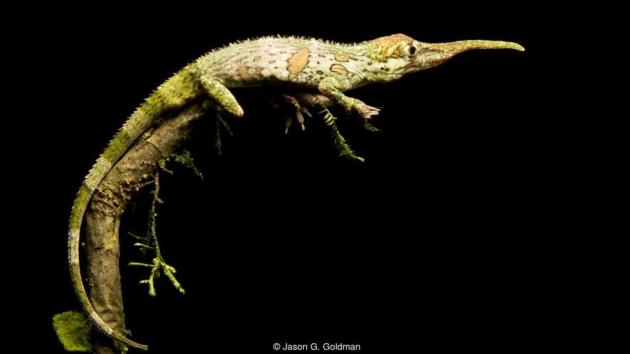
Eccentric and alien-like creatures abound on Earth, but often times these species are found in very remote and small areas. The Ecuadorian horned anole, also known as the “Pinocchio lizard,” is a species that would likely appear in Discovery Channel’s TV series Life (if it has not done so already).  This curious lizard with a long, malleable nose was found in the Mindo cloud forests of Ecuador’s Pichincha Province in the 50’s. Aside from its peculiar nose, what makes the story more intriguing is that it ‘disappeared’ from human research world for almost 40 years until it was rediscovered by a group of birders (hurray birders!) in 2005. The purpose of the horn and how it moves are still a mystery, but Jason Goldman has written an article for the BBC Earth website that elucidates some of the rare reptile’s habits:

Lucas Bustamante carefully aims his laser pointer at a small branch some 50ft (15m) above the ground. The green spot of light is clearly visible, but I just cannot see the lizard he has spotted: just branches, leaves and moss.

Continue reading

Expeditions In The Interest Of Science (Secondary Discovery, Nature’s Majesty)

p03xtfz4

The survey crew inventories the park for butterfly habitats (Credit: John McLaughlin)

This BBC article, featuring butterfly hunters in the very northwestern-most spot in the lower 48 of the USA, reminds us of an expedition we tracked not long ago:

Equal parts academic and mountain man, wildlife biologist John McLaughlin has scaled mountains and traversed snowbound passes to identify more than 40 butterfly species.

It’s best to bring an ice axe when counting butterflies in North Cascades National Park. Located on the Canadian border in the US state of Washington, the park is renowned for its jagged peaks, limited trails and annual snow pack.

“Before my census crew could learn to identify over 40 butterfly species,” John McLaughlin recalled, “they had to know how to safely traverse snowbound, steep passes and – if necessary – to self-arrest using an ice axe.” Continue reading

Nature, Color, Science

Screen Shot 2016-07-09 at 5.50.02 AM

If you happen to be in London, starting July 15 this exhibition at the Natural History Museum looks worth a worth a visit:

Investigate how different animals see the world, and explore your own relationship with colour, through interactive experiences and immersive films.More than 350 specimens feature, from beautiful birds to fossils of the first organisms with eyes. And British artist Liz West has produced a stunning light installation, inspired by Newton’s colour spectrum and blue morpho butterflies in the Museum’s collection.

The BBC gives it a strong review here:

_90172043_b583d8fa-da3c-4d0a-aece-83ff65cc48a5

A new exhibition exploring the relationship between colour and vision in the natural world is opening at the Natural History Museum.

Intense and vibrant natural colours will be displayed in specimens and photographs of insects, animals and plants. At the heart of the exhibition – Colour and Vision, which opens on 15 July – is the question of how we perceive colour. Continue reading

Bioluminescent Fungi

4608

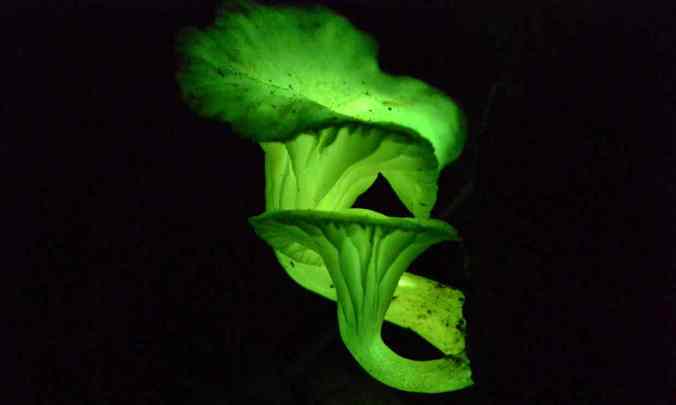
Fungal luciferin could eventually allow the creation of an autonomously luminescent plant. Photograph: Cassius Stevani at the San Paulo University in Brazil

Bioluminescence has appeared in these pages so many times that people probably wonder why. The answer would be because we have contributors who see its wonder of the world quality as directly relevant to our communications mission.

And there was a time when stories about fungi, mushrooms, etc. were the domain of one key contributor. We used to leave stories like this one to our resident mycoenthusiast  Milo, but he is no longer in residence with us; instead, busy now setting up a permaculture organic farm in the rolling hills to the west of Ithaca, NY (USA). So, for lack of a better post-person, this recommendation is from the team:

How research into glowing fungi could lead to trees lighting our streets

Bioluminescence, the peculiar ability of some organisms to behave like living night-lights, could be the key to some remarkable advances

On a moonless night deep in a Brazilian rainforest the only thing you are likely to see are the tiny smears of light from flitting fireflies or the ghostly glow of mushrooms scattered around the forest floor. Both effects are the result of bioluminescence, the peculiar ability of some organisms to behave like living night-lights. Continue reading

Use Nature, Not Seawalls, to Defend from Storms

A Living Shoreline replaced a failing bulkhead at the N.C. Wildlife Resource Commission’s Edenhouse boat ramp on the Chowan River. Photo by the North Carolina Coastal Federation

From the Harvard Gazette, an article by Colleen Walsh on the environmental damage and lack of success in general from manmade seawalls:

For years coastal homeowners have tried to beat back Mother Nature with seawalls, imposing structures of wood and/or concrete intended to fend off angry tides and surging storms. But emerging research suggests that in some areas, biological barriers both better protect against erosion and preserve vital ocean habitats.

Not only have seawalls in certain areas been shown repeatedly to fail when tested, but they pose a threat to the delicate ecosystems associated with wetlands and intertidal areas, Rachel Gittman, a postdoctoral research associate at Northeastern University’s Marine Science Center, said during a talk at Radcliffe on Thursday. Instead of absorbing energy generated by wind and waves, seawalls reflect that force back into the water, said Gittman, further eroding the shore and erasing important habitats for fish, crabs, and shore birds.

Continue reading

Birds Back From Beyond Brink

gettyimages-129031564_custom-0155a178bff9fc85b180038391dbdbe1bf478731-s1400-c85

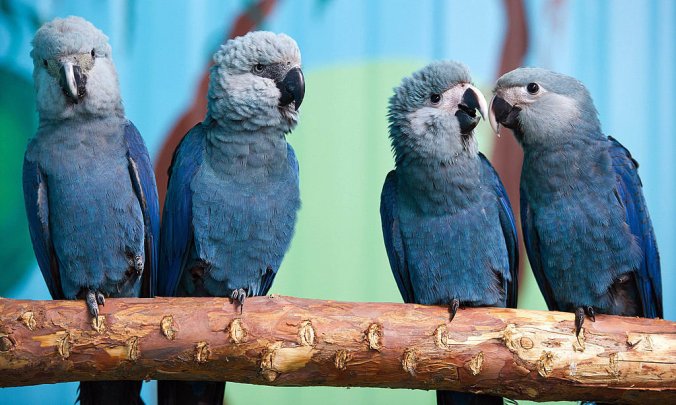
Spix’s macaws (L-R) Felicitas, Frieda, Paula and Paul sit on a branch in their aviary in Germany. The species has not been seen in the wild for 15 years until the recent sighting in Brazil. DPA/AFP/Getty Images

Thanks to National Public Radio (USA):

An Avian Mystery: Rare Parrot Spotted In Wild For First Time In 15 Years

For the last 15 years, Spix’s Macaw has been presumed extinct in the wild. That’s until one of the blue-feathered parrots was spotted and caught on video flying near the town of Curaca, Brazil.

Conservators say the appearance of the mysterious rare bird represents “a new hope” for the area.

The bird was first spotted by a local farmer named Nauto Sergio Oliveira, a government conservation institute said in a statement. Oliviera told his neighbors, and the next day his wife Lourdes Oliveira and daughter Damilys trekked out at dawn in search for the bird.

The rare parrot appeared in a nearby riparian forest and Damilys managed to catch it on video: Continue reading

Coral Reef Bright Spots

lead_960 (3).jpg

Tane Sinclair-Taylor

Thanks, as always, to Mr. Yong and his team at Atlantic Monthly:

Why Some Coral Reefs Are Thriving

Not all of the world’s reefs are in bad shape—and a few of the healthiest are managed by humans.

by Ed Yong

In 1990, Jerry Sternin from the global charity Save the Children traveled to Vietnam to fight malnutrition. His strategy was simple. He looked for ‘bright spots’—mothers whose children were bigger and healthier than average, even though they were just as poor and disadvantaged as their neighbors. And he asked: what were they doing differently? Continue reading

An Important Question From E.O. Wilson

4202

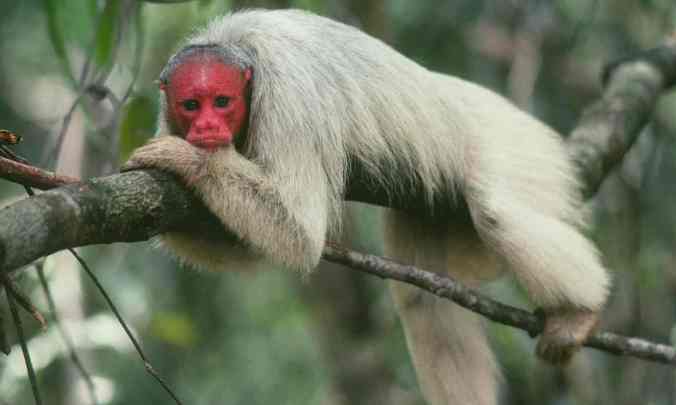
A bald uakari monkey (Cacajao calvus) in the flooded forest of the Amazon in Brazil. The IUCN Red List categorizes this species as vulnerable. Photograph: Alamy

Thanks to the Guardian for continuing to give a platform where it is most needed with respect to the natural environment:

Could we set aside half the Earth for nature?

Renowned biologist E.O. Wilson wants to set aside half of the planet as protected areas for nature. But is this possible? And, if so, how would it work?

by Jeremy Hance

As of today, the only place in the universe where we are certain life exists is on our little home, the third planet from the sun. But also as of today, species on Earth are winking out at rates likely not seen since the demise of the dinosaurs. If we don’t change our ways, we will witness a mass extinction event that will not only leave our world a far more boring and lonely place, but will undercut the very survival of our species.

So, what do we do?

E.O. Wilson, one of the world’s most respected biologists, has proposed a radical, wild and challenging idea to our species: set aside half of the planet as nature preserves.

Continue reading

Lights in the Dark

Galiteuthis. Credit: MBARI

In the past three days, two of the blogs we visit have shared a total of three posts concerning animals that live in the deep sea, where light is scarce. Ed Yong has written for NatGeo’s blog about a “squid that has glowing eyeshadow that acts as an invisibility cloak,” as well as the genetic branches and diversity of species exhibiting bioluminescence; Matt Miller wrote for The Nature Conservancy’s blog about a new book by photographer Danté Fenolio called Life in the Dark: Illuminating Biodiversity in the Shadowy Haunts of Planet Earth. Below, a quick excerpt from each, starting with the squid:

The oceans of the world are home to animals that render themselves invisible with glowing eyeshadow.

They’re called glass squid and, as their name suggests, they are largely transparent. They’d be impossible to see in the darkness of the open ocean were it not for their eyes—the only obviously opaque parts of their bodies.

Continue reading

Pristine Nature

Chan Chich

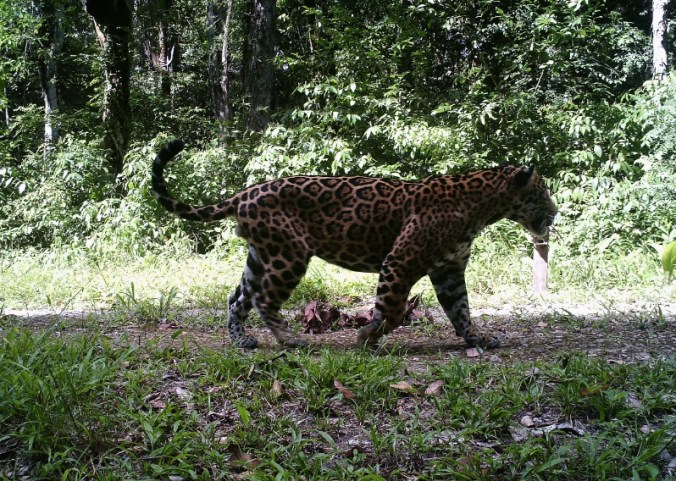
In writing about Belize recently, I had mentioned time spent with a tapir, favored in the diet of jaguar throughout Central America. The photo above was taken on property at the lodge my posts were referring to. Rule of thumb, it seems to me, is that a jaguar population requires relatively pristine nature to be sustainable, and that seems to be the case where this photo was taken. But what do I know, really? I am dedicated to entrepreneurial conservation but I am not a biologist so I depend on experts to inform my thinking, and to discipline it with a heavy dose of realism. In reading this post from earlier today I am better prepared to think about the mission of Chan Chich Lodge (more on which in a subsequent post), and the history of the 30,000 acre wilderness conservation area that it sits on:

Gallon Jug

At one time, the venerable 150 year old Belize Estates Company owned roughly one fifth of the entire country, about one million acres including much of the northwest corner of the country. From the turn of the century until the 1960’s, timber, mainly mahogany, cedar and santa maria, were selectively logged from this area. Gallon Jug, originally a logging camp located where the current GJ offices are, was named after a B.E.C. foreman, Austin Felix, discovered many discarded items from a Spanish camp, including a number of ceramic gallon jugs. Continue reading

Invasive Species, Natural Disasters Of Our Own Creation

Screen Shot 2016-06-07 at 6.48.16 AM.jpg

Who needs horror movies when a story like this makes for much more compelling fear, and the realism is, well, real. Click the image above to go to the story:

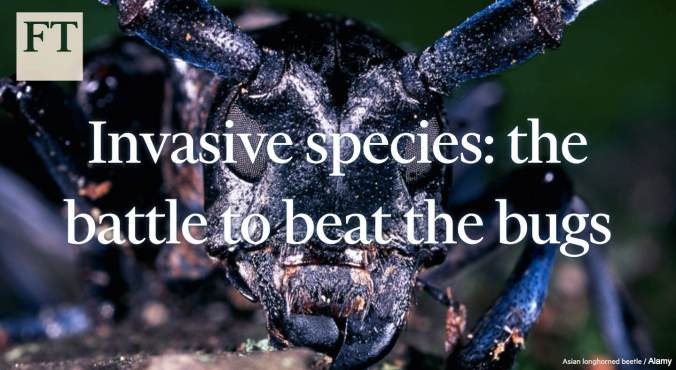
Biosecurity ‘weaponry’ is helping to halt the global spread of non-native species, from rampaging caterpillars to giant hornets

The best time to annihilate oak processionary caterpillars is when they are young, just a few millimetres long and still high up in the trees. At this stage, their appetite for oak is rapacious, so dousing the leaves in a biocontrol agent like Bacillus thuringiensis (Bt) is one way to get the caterpillars to ingest it. When Bt toxins dissolve in the caterpillar gut they become active, puncturing the stomach and killing the insect in several days. Continue reading

Lionfish Removal and Awareness Day Festival


Photo credit: Erin Spencer

Photo credit: Erin Spencer

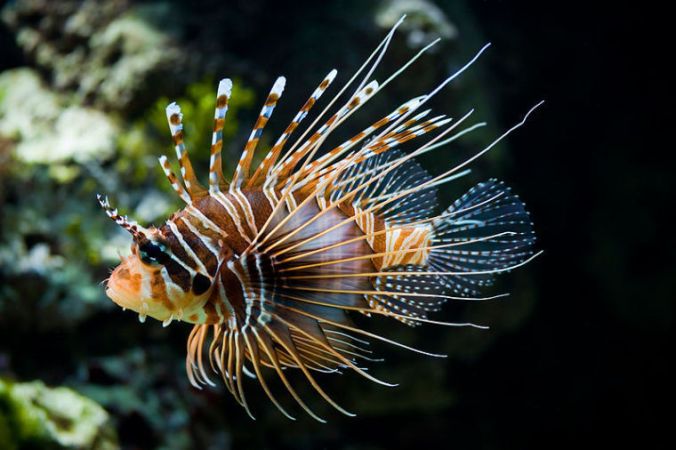
I’ve posted previously about the lionfish invasion that is threatening coral reef and other marine ecosystems throughout the Caribbean, Gulf of Mexico, and Southern Atlantic Seaboard of the United States. As I’ve noted in earlier posts, it is the general consensus of the scientific and conservation community that eradication of lionfish from the Atlantic is impossible. However, there is growing evidence that systematic removal efforts can be effective in controlling lionfish populations and in reversing their negative impact on reef health. The challenge faced by marine protection agencies and marine resource managers is how to undertake these removals on a regular and financially sustainable basis. I’m convinced that this challenge can best be met by an integrated approach involving coordinated action by public and private actors complemented by the creation of markets for lionfish products.

All of these elements were in evidence at the Lionfish Removal and Awareness Day festival in Pensacola, Florida which I attended last month. Organized by the Florida Fish and Wildlife Conservation Commission (FWC), the two-day event included a lionfish derby (with more than 8,000 lionfish removed by volunteer divers), lectures about the invasion and the threat that it poses, lionfish cooking and tasting, and sale of lionfish products.

Notable among the sponsors of the event was Whole Foods, which had announced a few weeks earlier that it was going to begin selling lionfish at its stores in California and Florida. The move by whole foods was sparked by the decision late last year of Monterey Aquarium’s Seafood Watch program to list lionfish as a best choice under its sustainable seafood recommendations, citing the invasive nature of the species. As I had noted in a previous post, Seafood Watch had previously declined to list lionfish due to the absence of an established commercial fishery, but to their credit, the group responded to what they described as a “grassroots campaign” and revisited the issue. Moreover, since taking the decision to list lionfish, Seafood Watch has been active in raising awareness about the invasion and in promoting lionfish consumption. Continue reading

New Marine Park in Malaysia

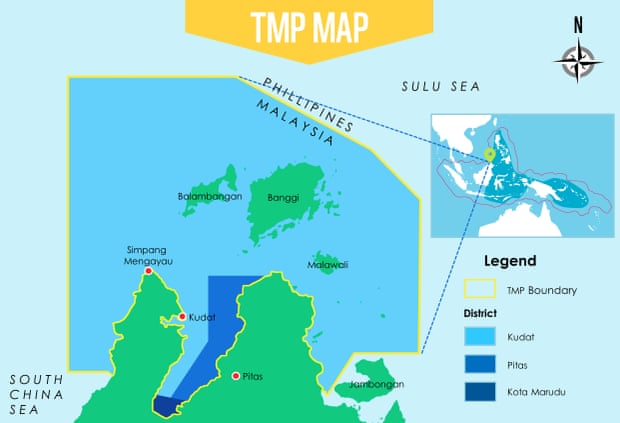
A map of the new Tun Mustapha marine protected area, which occupies just under one million hectares of seascape, including more than 50 islands. Illustration: WWF Malaysia

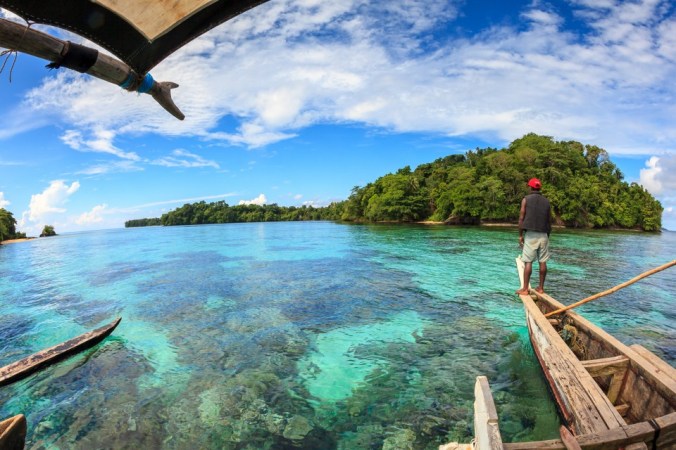
The more protected areas for wildlife in the world the better, in our book. So we’re happy to hear that Malaysia has created a new marine park, the largest of its kind in the country, that covers a million hectares, or around two million football fields. With so many coral and fish species in the region, it’s a great step forward for conservation in an area at risk for over-fishing or poor practices like blast or cyanide fishing. Johnny Langenheim reports:

Malaysia has just established the biggest marine protected area (MPA) in the country. The Tun Mustapha park (TMP) occupies 1m hectares (2.47m acres) of seascape off the northern tip of Sabah province in Borneo, a region containing the second largest concentration of coral reefs in Malaysia as well as other important habitats like mangroves, sea grass beds and productive fishing grounds.

It is also home to scores of thousands of people who depend on its resources – from artisanal fishing communities to the commercial fisheries sector – making it in many ways a microcosm of the entire Coral Triangle bioregion, where environmental protection must be balanced with the needs of growing coastal populations.

Continue reading

Read Roger

26cohen-master675

Bleached coral in the Great Barrier Reef. Credit Agence France-Presse/XL Catlin Seaview Survey

Today’s editorial, from his current perch in Australia, is typical of the most reasoned editorialist currently writing for an English language major daily that we know of; so, worth a read:

Coral vs. Coal

Roger Cohen

MELBOURNE, Australia — Tim Flannery, a scientist and environmentalist who was named Australian of the Year in 2007, lost his job in 2013. The right-wing government of then-Prime Minister Tony Abbott shut down the Climate Commission that Flannery headed in a peremptory move designed to demonstrate its contempt for climate change. The commission had been established two years earlier to provide “authoritative information” to the Australian public. Continue reading

Lionfish Initiative Spearheaded By Whole Foods In Florida

5158843f5fcbe.image

Florida Stores First Region to Offer New “Spearited” Catch of the Day

We are not purposely low tech, but we do not use tracking devices for news topics we care about (this topic we have tended to leave to Phil Karp, a contributor who first brought it to our attention a few years ago, and is highly attuned to the news and trends related to lionfish entrepreneurial conservation). We just watch the news sources we are inclined to trust, and try to get exposed to new news sources as frequently as possible. Those of us tracking news from India sometimes are late picking up important stories, like this one that has already been out for more than a day as it comes to our attention.

No matter. We like it, and for the record we want to share good news when we encounter it. This comes from ABC television affiliate WWSB in Florida, USA. We consider it a public service announcement, and so quote in full here, but still please click to the source of the story so they get credit:

A hub for certified sustainable seafood, Whole Foods Market® is excited to offer shoppers a fresh and delicious new seafood option – lionfish. The fish is a nonnative, invasive species that has a potential negative impact on indigenous species and habitat. By reducing the number of lionfish in the wild, Whole Foods Market® will help to improve the serious environmental threat they cause. Continue reading