Lionfish Initiative In Florida

tbfish1-master768.jpg

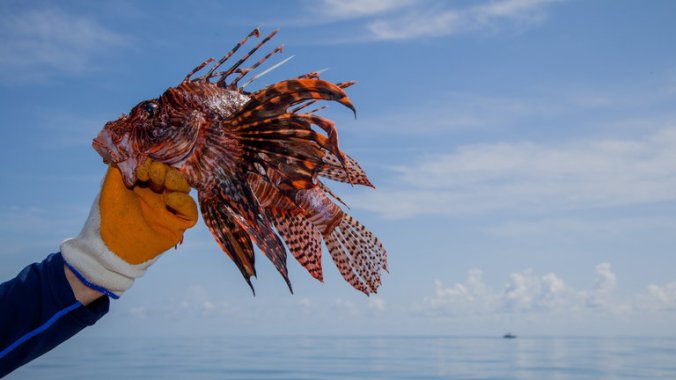
Capturing lionfish is typically done by divers with spears. Credit Angel Valentin for The New York Times

We never tire of hearing about new initiatives to eradicate this introduced species, and like the way the folks in Florida are thinking outside the box:

Florida Needs a Lionfish King or Queen. It Could Be You.

By

Ladies and gentlemen, behold an opportunity to become maritime royalty. The Florida Fish and Wildlife Conservation Commission is hosting the Lionfish Challenge, a statewide hunting competition intended to encourage divers to capture, kill and eat the beguiling beauties, which have been invading western Atlantic waters and gobbling up native species for at least two decades. The title of Lionfish King or Queen goes to whoever captures the most lionfish by Sept. Continue reading

Fighting Flouting Fishing Fleets

3888

Chinese boats banded together with ropes, after alleged illegal fishing in South Korean waters in the Yellow Sea off the southwestern coast county of Buan. Photograph: Dong-A Ilbo/AFP/Getty Images

Tragedy of the commons on the high seas, fought by those who perceive their interests in common enough to do something about it (a tricky thing, as we note frequently), once again in the news.  Thanks to the Guardian, and environmental reporter Emma Bryce, for this reportage:

Tens of countries sign up to shut pirate fishers out of their ports

The first of its kind, a new international treaty obliges signatories to intercept pirate fishers before they can sell their catch

In March, the Argentinian coast guard shot at and sank a Chinese vessel that was alleged to be fishing illegally in Argentinian waters (the crew were all rescued). While it’s unclear whether the boat was committing crime, the incident showed that the tension surrounding pirate fishing is reaching a peak, marked elsewhere by increasing conflict, and the detainment and scuttling of illegal fishing fleets. But for pirate fishers, the financial gains appear to be worth these risks. Continue reading

A Bird’s Journey Tracked, Mapped & Shared

Screen Shot 2016-05-25 at 5.20.45 AM.jpg

From National Public Radio (USA) today, this should have your attention even if you are not a birder:

We Followed A Snowy Owl From Maryland To Ontario

At the end of 2013, snowy owls started showing up far south of their usual winter range. The big white birds were reported in South Carolina, Georgia, even Florida.

Dave Brinker, an ecologist with the Maryland Department of Natural Resources, had never seen anything like it. Continue reading

We Never Tire Of This Clever Creature

baird_beetle-5336-1--e98afd45ca45c51af0b6ec49cc8417c456611fbb-s1400-c85

Scientists at the University of Lund in Sweden have shown that dung beetles use mental “snapshots” of the Milky Way to navigate. E. Baird / Lund University

Thanks to National Public Radio (USA) for this story, which we link to even though we just recently linked back to some earlier stories on the same.

And speaking of NPR, one of the podcasts that originates on its New York City affiliate WNYC–Radio Lab, which was featured in some of our earliest posts–this episode featuring another beetle may have been the greatest of all time.

Dung Beetles Navigate Poop-Pile Getaways Using Celestial ‘Snapshots’

It’s not easy being a dung beetle.

Besides the obvious fact that they eat, well, dung, the act of just getting a meal is an involved process.

In the most elaborate carry-out scenario, the dung beetles must first stake claim to their piece of poop at the main dung pile, then shape it into a sphere for easy transport, fend off other dung beetles trying to steal it, and then — using the stars to navigate — determine the fastest way to roll their prize away to a safe spot for consumption. Continue reading

Xandari, Early Saturday Morning


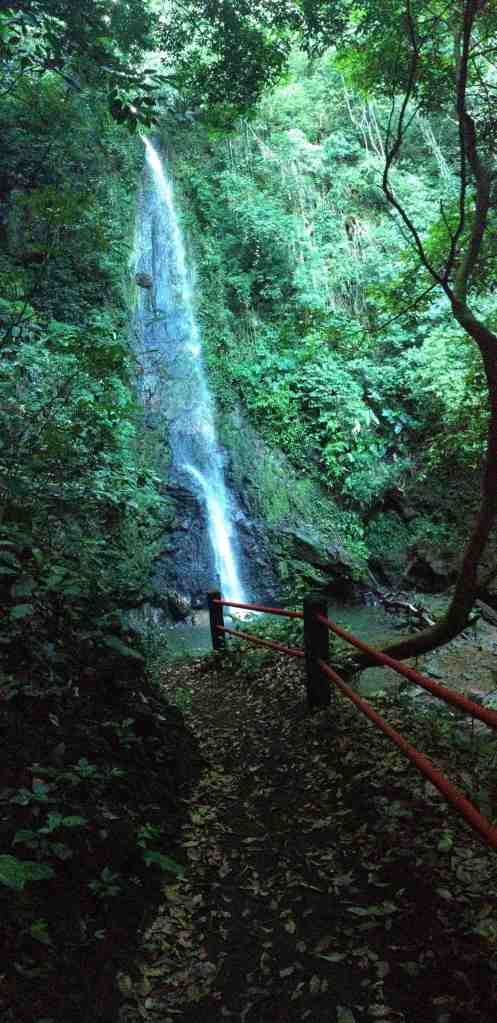
Falls

I have walked these trails hundreds of times during the nearly two decades since I first stepped foot in Xandari’s forest reserve. Somehow I never tire of this particular stretch, which is a testament to the fundamental charisma of water, and the special charisma of water falling from a significant height. Continue reading

Science Cannot Serve Two Masters

overfishing_custom-1e6a0790cb0cea389c8c2aa9c4927c8b6f5686a1-s1400-c85.jpg

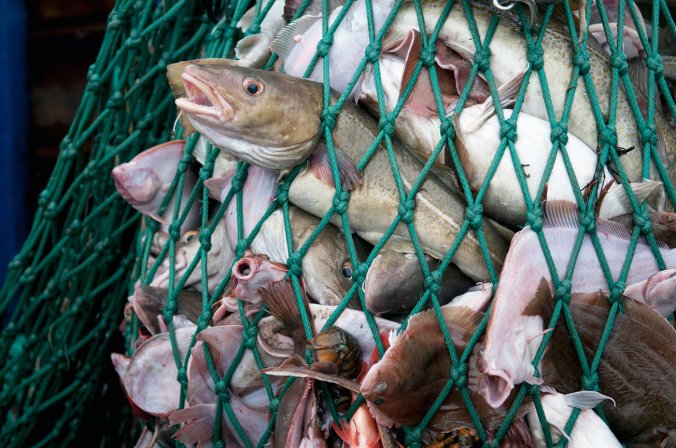
A fishing dragger hauls in a net full of Atlantic cod, yellowtail flounder and American lobster off the coast of New England. Greenpeace says Ray Hilborn, a prominent fisheries scientist known for challenging studies that show declines in fish populations, failed to fully disclose industry funding on some of his scientific papers. Jeff Rotman/Getty Images

Go to the dictionary, or notes from a science course you might have taken, to be reminded of the definition of how this body of knowledge operates, and the importance of avoiding bias is evident. When it relates to the survival or collapse of species, avoiding bias seems even more important than the definition implies. Science serves the interest of objective, verifiable truth; not economic or political interests (thanks to National Public Radio, USA):

Fisheries Scientist Under Fire For Undisclosed Seafood Industry Funding

A prominent and outspoken fisheries scientist at the University of Washington is under attack from Greenpeace for not disclosing industry funding in several scientific papers stretching back to 2006. Continue reading

Adaptation’s Last Chances

lead_960 (1)

Thanks to the Atlantic‘s excellent science writer, Ed Yong, for this:

Climate Change Is Shrinking Earth’s Far-Flying Birds

In which the red knot is the canary, and the planet is the coalmine.

ED YONG

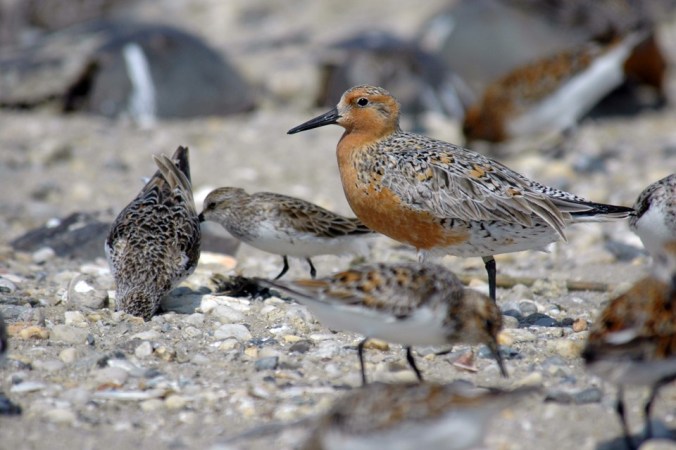
Every year, flocks of red knots criss-cross the globe. In the summer, these shorebirds breed in the Arctic circle, making the most of the exposed vegetation and constant daylight. Then, anticipating the returning ice and continuous night, they fly to the opposite end of the world. Different populations have their own itineraries, but all are epically long: Alaska to Venezuela; Canada to Patagonia; Siberia to Australia.

These migratory marathons mean that the red knot’s fate in one continent can be decided by conditions half a world away. And that makes it a global indicator, a sentinel for a changing world. It is the proverbial canary in the coalmine, except the mine is the planet.

And the canary is shrinking. Continue reading

Scientists Speak On Behalf Of Yellowstone Grizzly Bears

Thank you, EcoWatch, for keeping us posted on Jane Goodall’s never-ending advocacy on behalf of various members of the animal kingdom we co-inhabit the earth with:

Dr. Jane Goodall is one of 58 prominent scientists and experts who have signed a letter asking the U.S. Fish and Wildlife Service (USFWS) to retain Endangered Species Act protections for Yellowstone-area grizzly bears. Continue reading

McKibben In The Guardian

3840

Global direct action began with hundreds of environmental activists invading the UK’s largest opencast coal mine in south Wales on Tuesday. Photograph: Kristian Buus for the Guardian

More McKibben, who we believe we will never tire of sharing here:

The time has come to turn up the heat on those who are wrecking planet Earth

An interesting question is, what are you waiting for?

Global warming is the biggest problem we’ve ever faced as a civilisation — certainly you want to act to slow it down, but perhaps you’ve been waiting for just the right moment. Continue reading

Must-Read Editorial

01fagin-blog427

Thanks to the New York Times for carrying this in prominent placement:

A Mine vs. a Million Monarchs

In recent years, Angangueo’s 5,000 inhabitants have been cursed by calamities natural and manufactured. Snowstorms, mudslides and flash floods have terrorized the town. Hulking piles of mine tailings line the main road, barren reminders of the silver, gold and copper mining that petered out a quarter-century ago after defining the community for 200 years.

Even the monarch butterflies that are the focus of the “magic town” tourism campaign are suffering. Millions still roost on nearby mountains, a wintertime spectacle that attracts the visitors from “El Norte” who are the town’s economic lifeline. But the overwintering population of monarchs has fallen by almost two-thirds over the past dozen years, and this year’s better-than-usual aggregation was abruptly devastated in March by another freak snowstorm, the worst in years. Continue reading

The Intelligence Of Clever Animals

Riederer-Inky-the-Octopus-290x149-1461702146We are susceptible to stories that spotlight animal intelligence, and challenge our assumptions about the unique capacities of humans. Cleverness and intelligence can be difficult to parse, so the details of the story matters.  This one is better than most such stories for reasons we cannot quite explain:
Earlier this month, under the cover of night, an octopus named Inky hauled his basketball-sized body out of the tank he shared with a companion at the National Aquarium of New Zealand, heaved himself across the floor, and squeezed his gelatinous mantle into a narrow drain leading to the Pacific Ocean. Continue reading

If You Happen To Be In Japan

27tb-fireflysquid1-superJumbo

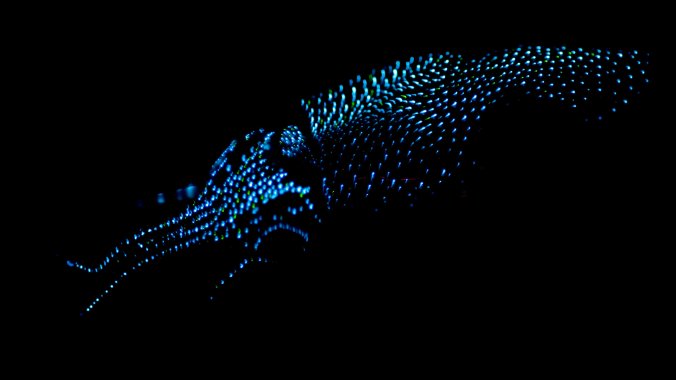
A firefly squid in Japan. The best time to see them is between March and June. Credit Michael Ready/Visuals Unlimited, Inc., via Getty Images

It is Science section day in the New York Times, and this story doubles as a travel recommendation:

Hop on a fishing boat in Toyama Bay, Japan, in the wee hours of the morning and you may feel as if you’re in a spaceship, navigating through the stars. That’s because each year, between March and June, millions of firefly squid transform the water into a galactic landscape. Lucky for you, all you need is a reservation to come aboard, your eyes and perhaps a really good camera.

The firefly squid may bring to mind a lightning bug. But the cephalopod is three inches long and flies through the sea, not the sky. And instead of a single light on its belly, it has five around each eye, three each on the tips of two of its arms and even more covering its body. Continue reading

Good News for Manatees

Florida manatee Credit: Carol Grant/Getty Images via Scientific American

When we wrote about “sea-cows” before here it was in a post about water hyacinth. Now Scientific American is sharing some good news on the species that we weren’t aware about, with great increases in their population’s numbers. Sean Carroll reports:

Good news seems to be rare these days, and good news about the environment even rarer.

But in January this year, after fifty years on the endangered species list, the US Fish and Wildlife Service (FWS) proposed to remove the manatee as its numbers in Florida have increased 400% in the past 25 years. And just this month, the FWS proposed to delist the Greater Yellowstone grizzly population as the number of bears has increased from 136 in 1975 to about 700 today.

Continue reading

New Mouse Lemur Species Found

Microcebus ganzhorni is named in honor of the Hamburg ecologist Prof. Jörg Ganzhorn who has worked on ecology and conservation in Madagascar for more than thirty years. Photo by G. Donati via Mongabay.

Madagascar is a place of wonder and near-fantastical wildlife, though sadly many of their ecosystems are at risk, as referenced in this UNESCO World Heritage Site post. So it’s no surprise to read that new species are being found there. Mike Garowecki reports for Mongabay:

There are now 24 known species of mouse lemur, all of them found in Madagascar.

Scientists with the German Primate Center (DPZ), the University of Kentucky, the American Duke Lemur Center, and Madagascar’s Université d’Antananarivo have found three new species of mouse lemurs that live in the South and East of Madagascar. They described the new species — Microcebus boraha, Microcebus ganzhorni, and Microcebus manitatra — in the journal Molecular Ecology.

Though their name and appearance might suggest that they are rodents, mouse lemurs are in fact primates. What’s more, all mouse lemur species look extremely similar: they are small, nocturnal animals with brown fur and large eyes. It was only through the use of advanced methods that allow for more precise measurements of genetic differences that the team of researchers was able to establish the three new species.

Continue reading

Treetops Teeming

19REDWOODS-master1050-v2

Climbers, including a master instructor, made their way up Grandfather, an 800-year-old, 200-foot-tall redwood near Los Gatos, Calif., last month. Credit Steve Lillegren

A topic we have been coming back to on a regular basis for years–the value of biodiversity in general (we are not averse to stating the obvious in these funny times we live in) and in particular the as-yet still to be explored forest treetops–appears in the Science section of this week’s New York Times. Apart from reminding us of a tree-inclined scientific friend (Meg, of treetop science fame, we have just recently learned you are now out in the vicinity of these redwoods, and so we shout this one out to you!), and reminding us of one of the great long-form pieces of journalism on the same topic, it is worth a read:

The Sound of Silence

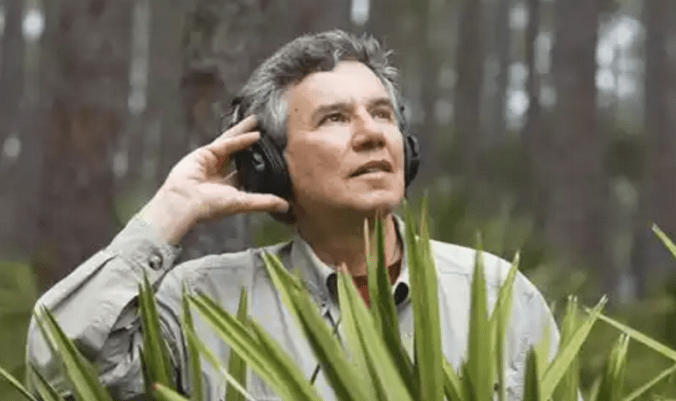
Musician and naturalist Bernie Krause has spent 40 years recording over 15,000 species in many of the world's pristine habitats. Photograph: Courtesy of Hachette Book Group

Musician and naturalist Bernie Krause has spent 40 years recording over 15,000 species in many of the world’s pristine habitats. Photograph: Courtesy of Hachette Book Group

For many of us, part of the joy of a walk in the woods is the range of senses engaged. The wind rustling through the trees is enhanced by the diversity of the creatures that call that ecosystem home. But with habitat loss due to either changing climate or other human impact. many of the sounds heard for millennia are falling silent.

Bernie Krause has spent his life archiving these sounds. They’re worth more than just a listen. They’re a call to action.

When musician and naturalist Bernie Krause drops his microphones into the pristine coral reef waters of Fiji, he picks up a raucous mix of sighs, beats, glissandos, cries, groans, tones, grunts, beats and clicks.

The water pulsates with the sound of creatures vying for acoustic bandwidth. He hears crustaceans, parrot fish, anemones, wrasses, sharks, shrimps, puffers and surgeonfish. Some gnash their teeth, others use their bladders or tails to make sound. Sea anemones grunt and belch. Every creature on the reef makes its own sound.

But half a mile away, where the same reef is badly damaged, he can only pick up the sound of waves and a few snapping shrimp. It is, he says, the desolate sound of extinction. Continue reading

Mysterious Sea-Floor Activity

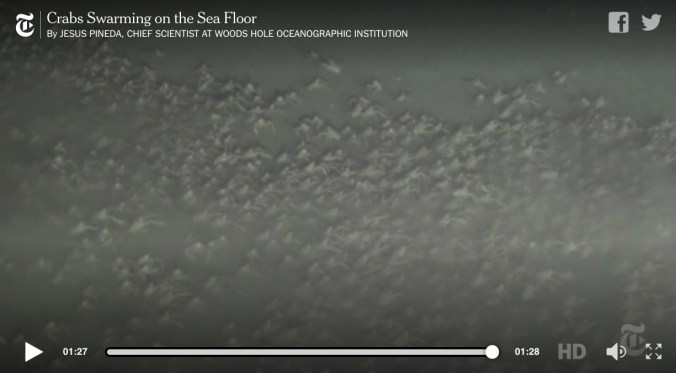
Screen Shot 2016-04-15 at 11.37.52 AM

Thousands of red crabs swarmed the ocean floor off the coast of Panama. By JESUS PINEDA, CHIEF SCIENTIST AT WOODS HOLE OCEANOGRAPHIC INSTITUTION on Publish Date April 14, 2016. Photo by Jesus G. Pineda/Woods Hole Oceanographic Institution.

Watch the video above as an introduction to a fascinating story from the Science section of the New York Times:

Uncovering a Deep-Sea Swarm of Zombie Crabs

The team stumbled upon the horror movie moment last April while exploring the aptly named Hannibal Bank Seamount, an underwater mountain home to a plethora of sea life. Continue reading

Better For The Bees

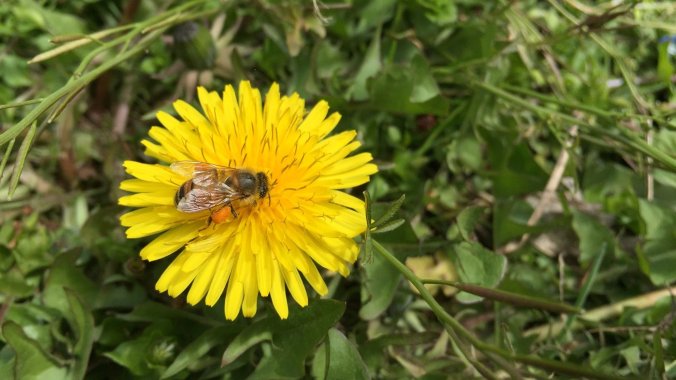
bee_wide-620b0e28784802026939d4d72fe1ae54cfa80f7d-s1400-c85

A bee gathers pollen from a park in Kensington, Md. With bee health in mind, home and garden products giant Ortho has announced it will phase out neonics, a class of pesticides, from its outdoor products. Allison Aubrey/NPR

We never expected to be publicly thanking a company like this one for an action it has committed itself to, but credit where it is due:

Home And Garden Giant Ditches Class Of Pesticides That May Harm Bees

A leading brand of home and garden pest-control products says it will stop using a class of pesticides linked to the decline of bees.

Ortho, part of the Miracle-Gro family, says the decision to drop the use of the chemicals — called neonicotinoids, or neonics for short — comes after considering the range of possible threats to bees and other pollinators. Continue reading

WWF Reports Half of World Heritage Sites Put at Risk by Development

Ambatotsondrona cliffs, in the Marojejy National Park of Madagascar. This park is one of several included in the UNESCO World Heritage Site named Rainforests of the Atsinanana, which has been declared In Danger. Photo by Jeff Gibbs via WikiMedia Commons

We deeply care about UNESCO World Heritage Sites anywhere on the globe, and believe they can be a great conservation tool, so reading that the World Wildlife Fund thinks almost three times more of the Sites are threatened than UNESCO lists as “In Danger” is worrisome, to say the least. Fiona Harvey reports for the Guardian:

Close to half of the sites around the world designated for special protection as areas of outstanding importance for nature are now being threatened by industrial development, a new survey has shown.

The sites, which include Australia’s Great Barrier Reef, the Grand Canyon in the US, and China’s giant panda sanctuaries in Szechuan, are all supposed to be protected under the United Nations’ designated world heritage status. But encroachments from industries, including fossil fuel exploration and illegal logging, are threatening to destroy the valuable habitats, the conservation charity WWF said on Wednesday.

Continue reading

The Little Things In Life Provide New Perspective

wealthofunsu

This is a new and expanded view of the tree of life, with clusters of bacteria (left), uncultivable bacteria called ‘candidate phyla radiation’ (center, purple) and, at lower right, the Archaea and eukaryotes (green), including humans. Credit: Zosia Rostomian, Lawrence Berkeley National Laboratory

It has been years since we sourced our last story link from this source, but we chose the perfect day to go back snooping. Those of us who learned our trade in Costa Rica have long believed that there is a lot to be said for charismatica microfauna, and this news gets us thinking back on that topic with new perspective:

Wealth of unsuspected new microbes expands tree of life

The tree of life, which depicts how life has evolved and diversified on the planet, is getting a lot more complicated.

Researchers at the University of California, Berkeley, who have discovered more than 1,000 new types of and Archaea over the past 15 years lurking in Earth’s nooks and crannies, have dramatically rejiggered the tree to account for these microscopic new forms.

“The tree of life is one of the most important organizing principles in biology,” said Jill Banfield, a UC Berkeley professor of earth and planetary science and environmental science, policy and management. “The new depiction will be of use not only to biologists who study microbial ecology, but also biochemists searching for novel genes and researchers studying evolution and earth history.”

Continue reading