Biodiversity May Protect Against Wildfires

Photo of a Southern brown bandicoot by John O’Neill via Wikimedia Commons.

New research in Australia’s forests and bushlands indicates that terrestrial biodiversity–or more precisely, a higher number of different mammal species–can help prevent wildfires given the way the critters alter their ecosystem. We’ve heard about different creative management options for fires before, and we care deeply for biodiversity preservation efforts, so this seems like one of those win-win scenarios if it can be implemented. Jason Goldman reports for UW’s Conservation Magazine on research published in Animal Conservation:

One factor leading to increased wildfire susceptibility might be surprising: biodiversity loss. In particular, the extinction of small, ground-dwelling mammals may prime Australia’s bush to burn.

Wildfires certainly threaten biodiversity in some cases. According to the IUCN, 179 mammal, 262 bird, 146 reptile, 300 amphibian, and 974 plant species can count wildfire (and fire suppression) among their existential threats. More wildfires means less wildlife, even accounting for the many ecosystems that are already fire-adapted. But according to a new study published in the journal Animal Conservation, it works the other way around too.

Matt Hayward, a conservation ecologist at Australia’s Bangor University and the Australian Wildlife Conservancy, argues that restoring biodiversity could reduce the likelihood of a wildfire starting—or of spreading rapidly once it’s begun.
Continue reading

Sumatran Rhino Siting In Borneo

2rhino_750-copy.jpg

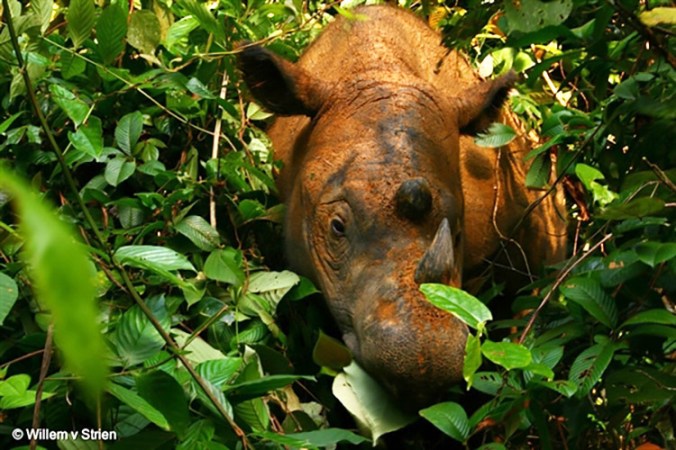
A rhino in the Sumatran Rhino Sanctuary in Way Kambas National Park, Indonesia (2008). Photo credit: Willem v Strien / Greenpeace

Thanks to EcoWatch for this remarkable news:

An excited World Wildlife Fund (WWF) team released details of how the female rhino was safely captured in East Kalimantan (part of Indonesian Borneo) last month and has now been transported to a more protected region. Over the last few years, evidence from camera traps and footprints has indicated that these rhinos still survived in Borneo’s forests, but this is the first known encounter with a live animal since the early 1970s. Continue reading

Waste Not, Want Not Tiger Habitat

4047

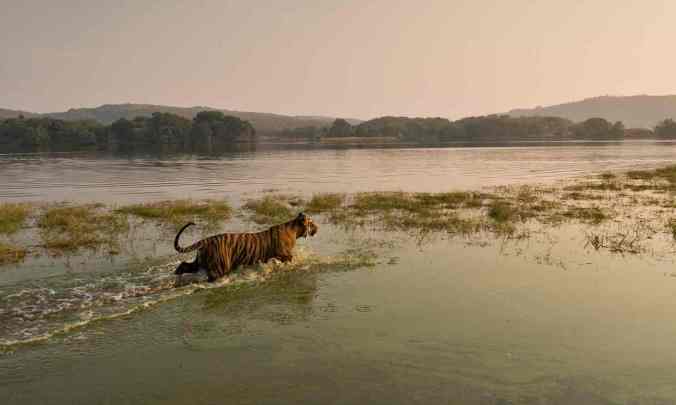
A tiger wades into the waters of Raj Bagh lake in Ranthambhore tiger in Rajasthan, India. Conservationists warn ‘tiger corridors’ connecting habitats across Asia are crucial for the survival of the species. Photograph: Aditya Singh/Alamy

From today’s Guardian in the Environment section, some welcome news on one of our most posted-on topics:

Forests still large enough to double the world’s tiger population, study finds

Satellite maps show tiger habitat is being lost but still adequate for meeting international goal of doubling tiger numbers by 2022

Forests that harbour tigers are being lost but are still large enough to take double the world’s tiger population in the next six years, according to a study using new satellite mapping technology. Continue reading

From A Friend In San Francisco

The magazine Bay Nature is new to us, brought to our attention thanks to a friend from that part of the world. It comes via this particular article, which touches on several topics–fungi, birds, conservation and Bay Area awesomeness–commonly seen in our own pages in the last five years. Have a read below and if you like it go read the remainder on their website:

Identifying With Lichen

How the surprising union between a fungus and an alga raises questions about the nature of identity

by Elizabeth Lopatto

In July, Governor Jerry Brown signed into law a bill declaring the lace lichen—found along the Pacific coast and throughout the coast ranges—the state lichen. As of January 1, 2016, California will be the first state ever to designate a lichen as a state symbol.

Lace lichen, Ramalina menziesii, is easily recognized. It is pale green and dangles in strips from trees. It’s sometimes confused with Old Man’s Beard (Usnea sp.), which is also pale green and dangly. Lace lichen’s range stretches from Alaska to Baja California. It’s an important food for deer; it also serves as material for birds’ nests. I see it once, in researching this story, when naturalist Morgan Evans, a former student naturalist aide at Tilden Nature Area in the East Bay hills, removes it from her backpack and spreads it out. Evans is a pleasant and patient woman, whose true love is fungi. Her interest in lichens is an extension of that, she says. Anyway, she found some lace lichen growing in Morgan Territory Regional Park. She figured I’d want to see it and there isn’t much growing in Tilden that she knows of. She hands me the lichen, which feels strangely plasticine. It’s pale green—she wetted it so it wouldn’t crumble when she transported it—and dangles impressively, at least six inches long. Lace lichen can grow as long as a meter, and it has a netted structure that looks, to me at least, more like fishnet stockings than lace. Perhaps fishnet-stocking lichen would be a little too racy a nickname. Continue reading

Warming Climate & Shrinking Bison

12938647293_8441c5bf5f_k-1260x708

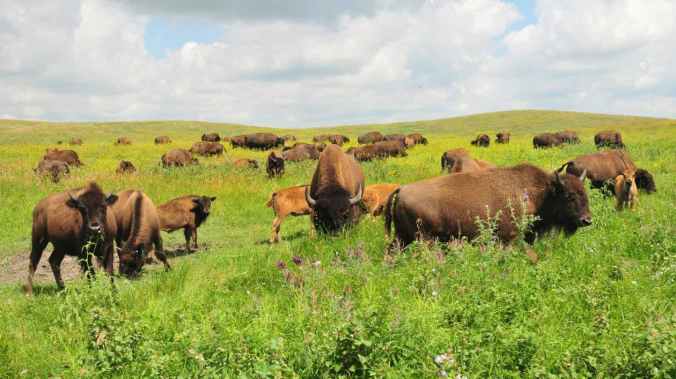
Bison graze on Ordway Prairie, owned and managed by the Nature Conservancy. The site has a USFWS grassland easement protecting it in perpetuity. Photo © USFWS Mountain-Prairie/Flickr

Thanks to science writer Matt Miller, and the Cool Green Science website, we get these stories daily that increase our understanding of the lesser known details of our environment. Are they important? It is a matter of perspective:

Here’s a climate change impact you probably never considered: bison diets.

As the climate warms, bison in North America are likely to shrink, as documented in research published by Joseph Craine and colleagues.

The reason they shrink is because as grasslands warm, grasses and other plants accumulate less protein. Bison are then forced to eat plants that are less nutritious.

This raises a related question: what plants do bison actually eat?

The answer to this question could help conservationists manage for plant species that are higher in protein and preferred by bison – ensuring healthy herds on warming grasslands. Continue reading

Ornithological Epicenter

There is grandeur in this view of life, with its several powers, having been originally breathed into a few forms or into one; and that, whilst this planet has gone cycling on according to the fixed law of gravity, from so simple a beginning endless forms most beautiful and most wonderful have been, and are being, evolved.

– Charles Darwin, Origin of Species, 1859

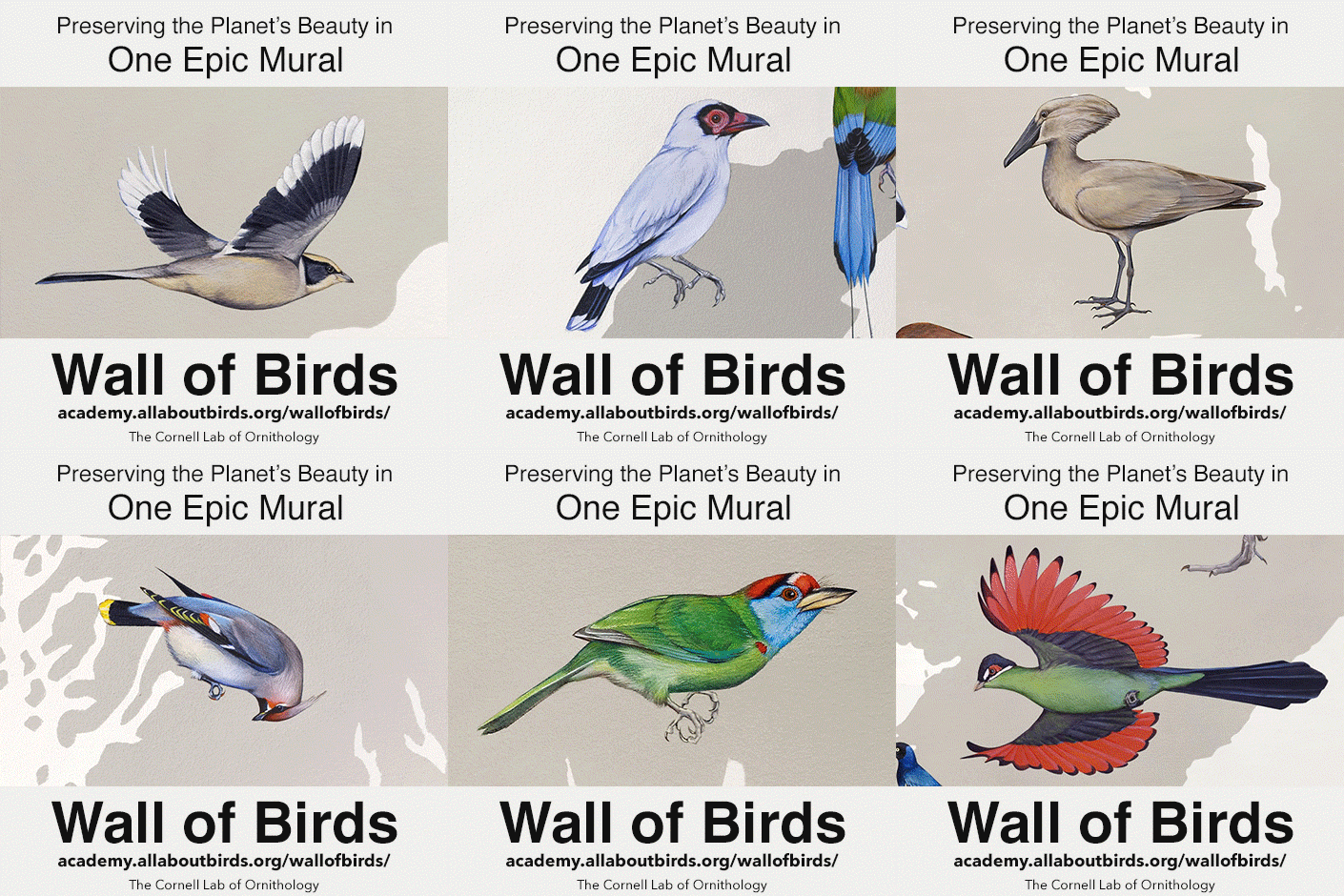
The Cornell Lab of Ornithology has long been a leading presence in the study, appreciation and conservation of birds. From citizen science programs, to eBird, to research collaboration with the the National Geographic Society, the Lab has helped to educate the public about the environmental importance of birds. The Wall of Birds, titled “From So Simple a Beginning,” from the Darwin quote above, celebrates the world of birds, showcasing biodiversity and evolutionary change, by featuring species from all surviving bird families alongside several extinct ancestors.

The scale of the mural is mind-blowing! The world map covers the largest wall of the Lab’s visitor center, with life-sized birds from each of the 243 taxonomic families of the world, placed in their geographical endemic locations. Check out the scale of the flying albatross in the lower left of the mural! The pale, gray scale depictions of the extinctions and ancestors adds to the complexity of the mural.

Continue reading

Colorful Scientific News From Kerala

06mpm-Four-exti_07_2765284g.jpg

The rediscovered plants, Impatiens concinna, Impatiens sasidharanii, Impatiens sasidharanii var hirsute and Impatiens neo-modesta, are found to have great medicinal value.

Even without the medicinal value component of this discovery, we would consider this good news:

Four ‘extinct’ plant species rediscovered

Four species of Impatiens (Kasi Thumba) plants believed to have gone extinct were rediscovered from the Western Ghats recently. Continue reading

Ever Heard of a Quoll?

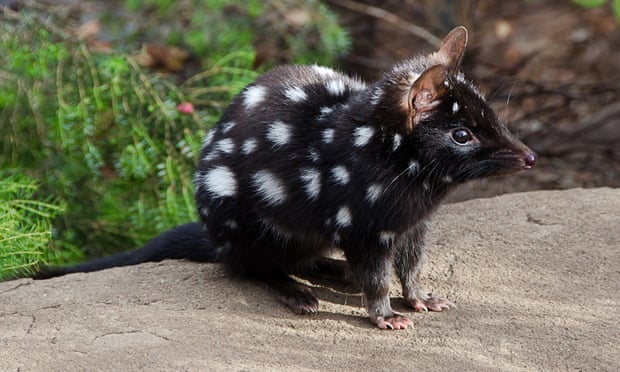
An eastern quoll. Professor Adrian Manning said it was the first ‘translocation’ of wild eastern quolls ‘into a free-ranging situation’ on the Australian mainland. Photograph: Marc Faucher, via The Guardian

We’re always happy to hear about the reintroduction of a previously extirpated species to its original habitat, even if we’re wary of some of the more ambitious projects from prior extinctions. Even though we weren’t aware of the existence of this cute marsupial named the Eastern Quoll, we’re glad to know that it is returning to its homeland. Elle Hunt reports for the Guardian:

The eastern quoll is making a comeback to mainland Australia, from where it disappeared more than 50 years ago, with a new generation introduced to the Australian Capital Territory from Tasmania.

A team of researchers from the Australian National University has reintroduced a group of wild eastern quolls from Tasmania into the Mulligan’s Flat Woodland Sanctuary in Canberra.

The small, carnivorous marsupial has not been seen there for almost 80 years.

Prof Adrian Manning, who led the team from the ANU’s Fenner School of Environment and Society, said it was the first “translocation” of wild eastern quolls “into a free-ranging situation” on the Australian mainland.

Continue reading

California Condors, Better Births, Incredible Intervention

California Condor chick being fed by a puppet as part of the captive breeding program. Photo by Ron Garrison at the San Diego Zoo for the US Fish and Wildlife Service, via WikiMedia Commons.

Back in 1973 when the Endangered Species Act put the California Condor under protection, the species’ numbers were still dwindling at an alarming rate. In the following decade the remaining population was captured and bred in captivity, so as to protect chicks and release them into the wild. And last year, more condors were born and raised in the wild (14) than the number of adult wild condors that died (12), which represents success in the breeding program. There are now over 250 California Condors in the wild, a vast improvement over the 22 surviving birds that were captured for the start of the breeding program.

Officials also counted 27 wild condor nests last year. Nineteen were in California, three in the Arizona-Utah border area and five in Mexico’s Baja Peninsula. Grand Canyon National Park in Arizona has a condor nest, officials said, as do Zion National Park in Utah and Pinnacles National Park in central California.

The captive breeding program continues with the Peregrine Fund‘s World Center for Birds of Prey near Boise being the top egg producer, with six eggs laid this spring and nine more expected.

“So far it’s going fantastic,” said Marti Jenkins, condor propagation manager at the facility.

She said two eggs laid at the facility last year were placed in wild nests in California where eggs were either infertile or damaged. The replacement eggs produced fledglings that officials count in the wild population.

Continue reading

The Grey Parrots Go Missing


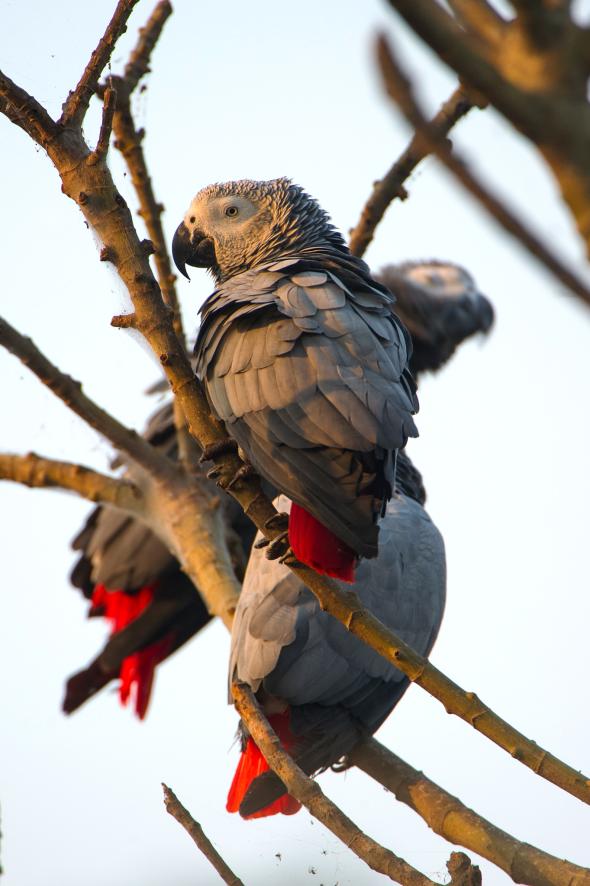
These African Grey parrots were rescued from smugglers and released on Ngamba Island in Lake Victoria. The African Grey parrot is the single most heavily traded wild bird. PHOTO: CHARLES BERGMAN

These African Grey parrots were rescued from smugglers and released on Ngamba Island in Lake Victoria. The African Grey parrot is the single most heavily traded wild bird. PHOTO: CHARLES BERGMAN

In all that we write about conservation, a related tag – unfortunately – happens to be extinction. Brought about by forest loss, miscalculated development plans, social and political apathy towards ecosystems, lack of awareness – the reasons we’ve all heard of. Now, National Geographic reports on the disappearance of the ‘talking bird’:

Flocks of chattering African Grey parrots, more than a thousand flashes of red and white on grey at a time, were a common site in the deep forests of Ghana in the 1990s. But a 2016 study published in the journal Ibis reveals that these birds, in high demand around the world as pets, and once abundant in forests all over West and central Africa, have almost disappeared from Ghana. Uncannily good at mimicking human speech, the African Grey (and the similar but lesser-known Timneh parrot) is a prized companion in homes around the world. Research has shown that greys are as smart as a two-five year-old human childcapable of developing a limited vocabulary and even forming simple sentences.

Continue reading

Hatching the ‘Third Eye’

The first tuatara hatchling has been born outside of its native New Zealand. photo: Chester Zoo

The first tuatara hatchling has been born outside of its native New Zealand. PHOTO: Chester Zoo

Discoveries excite us, an event that defies all odds even more so. Like the hatching of this tuatara outside its native of New Zealand.

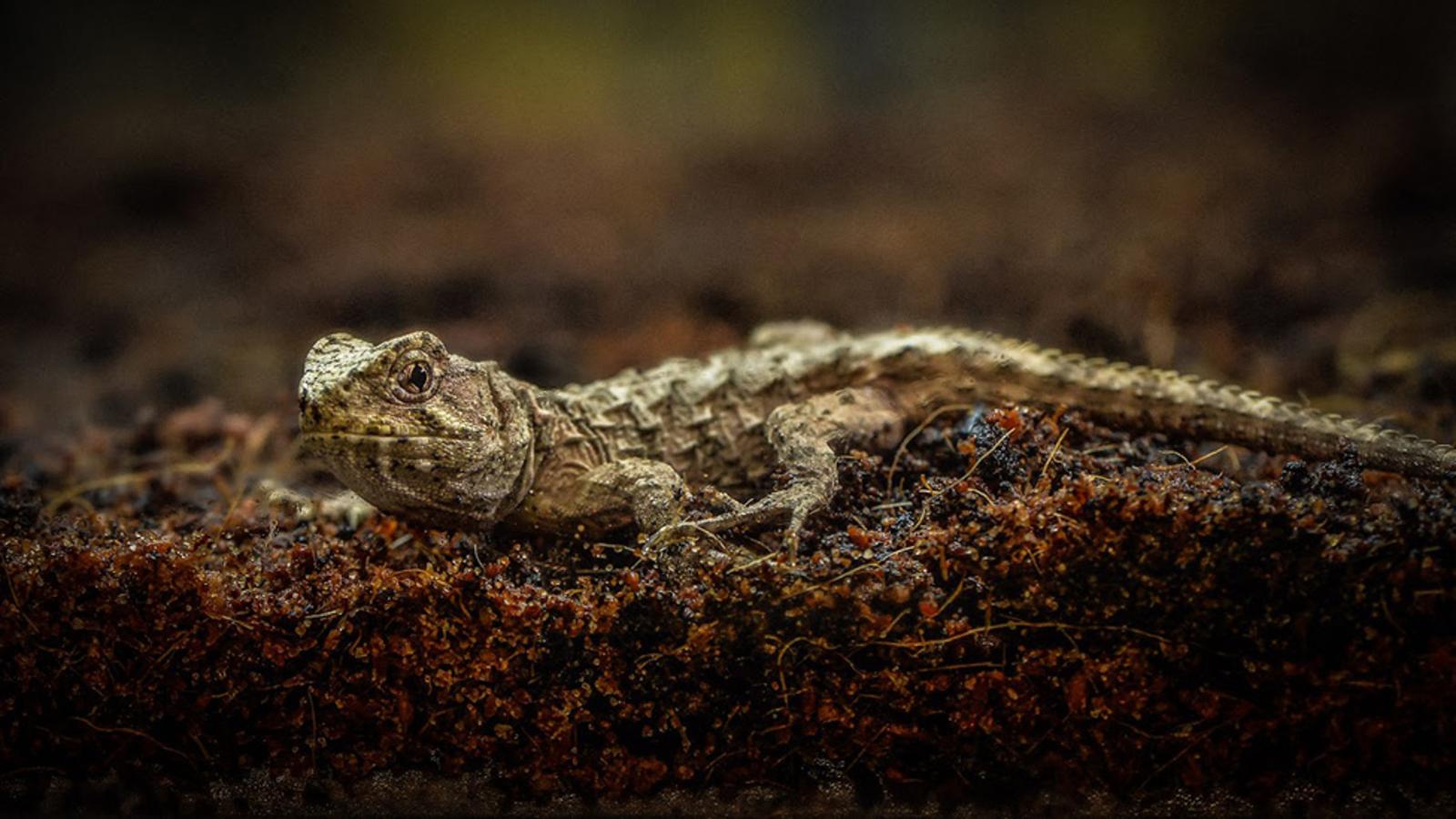
After decades of work by a dedicated team at Chester Zoo in England, the first tuatara hatchling has been born outside of its native New Zealand.

“Breeding tuatara is an incredible achievement,” says Isolde McGeorge, the zoo’s tuatara keeper since 1977. “They are notoriously difficult to breed and it’s probably fair to say that I know that better than most as it has taken me 38 years to get here.”

Continue reading

El Jefe, Sole Wild USA Jaguar

lead_large (1)

One may be the loneliest number, but it is not a hopeless number, we hope. Thanks to the Atlantic for this story:

There are about 15,000 jaguars living in the wild today. They are solitary creatures, preferring to live and hunt alone. But the one living and hunting in the United States takes the word “loner” to another level: The jaguar, nicknamed “El Jefe,” is the only known wild jaguar in the country.

El Jefe, which means “the boss” in Spanish, made his public debut Wednesday in video footage released by the Seattle-based Conservation CATalyst and the Tucson, Arizona-based Center for Biological Diversity. The brief clip shows the big cat roaming the grassy forest floor of the Santa Rita Mountains, outside Tucson, navigating rocky creeks, and just doing jaguar-y things: Continue reading

Reimagining Trees

TREES-master675

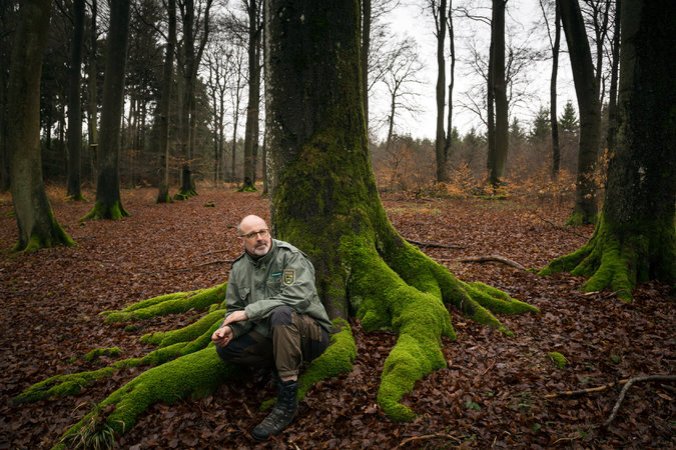
“When I say, ‘Trees suckle their children,’ everyone knows immediately what I mean.” PETER WOHLLEBEN Credit Gordon Welters for The New York Times

There is an article in the Saturday Profile section of the New York Times this weekend that catches my attention for reasons made obvious in these pages since 2011. Thousands of posts about community, collaboration and conservation, many of which have dealt with the importance of forests. But it most importantly reminded me of a conversation I had with a couple who visited Xandari Costa Rica last year. We had trekked together in the forest reserve, all the while discussing our mutual interest in the concept of biophilia, which has been covered plenty in these pages.

Among other things I recall from that strolling conversation was each of us sharing experiences from years earlier that had caused us to rethink the simple pleasure of a walk in the woods, to consider “what a walk in the woods does for us.” Of course, the simple pleasure is still there, but understanding biophilia can intensify the pleasure of a walk in the woods. And then, if we take it a step further, or deeper, it then causes us to consider the importance of forest conservation, and our prospective roles with regard to conservation.

Those conversations with guests are essential components of our work, so (shout out to Andrew and Holly included) I recommend this article for reminding me…:

…After the publication in May of Mr. Wohlleben’s book, a surprise hit titled “The Hidden Life of Trees: What They Feel, How They Communicate — Discoveries From a Secret World,” the German forest is back in the spotlight. Since it first topped best-seller lists last year, Mr. Wohlleben has been spending more time on the media trail and less on the forest variety, making the case for a popular reimagination of trees, which, he says, contemporary society tends to look at as “organic robots” designed to produce oxygen and wood. Continue reading

The Power of Parks

yosemite

Photographs of Yosemite National Parks composed by Stephen Wilkes. Courtesy: National Geographic

Which side are you on – the one that believes national parks are the past or to the side that sees the future in these stretches? As long as national parks figure on your maps and feature in your scheme of things, you must know that the National Park Service is celebrating its centennial this year.  In commemoration, National Geographic looks at how to preserve these wild spaces:

“In March 1868 a 29-year-old John Muir stopped a passerby in San Francisco to ask for directions out of town. “Where do you wish to go?” the startled man inquired. “Anywhere that is wild,” said Muir. His journey took him to the Yosemite Valley in California’s Sierra Nevada, which became the spiritual home of Muir’s conservation movement and, under his guidance, the country’s third national park. “John the Baptist,” he wrote, “was not more eager to get all his fellow sinners into the Jordan than I to baptize all of mine in the beauty of God’s mountains.” Today around four million people a year follow their own thirst for the wild to Yosemite.”

Continue reading

Inside the Eye

eyes_zpstq8hccww

Photo credit: David Liittschwager for National Geographic

Congratulations to science writer Ed Yong, who we know from his blogging in National Geographic‘s “Phenomena” Science Salon (which we’ve been sharing for a while now), for his first full feature story in the magazine he writes for on the web! It’s a fascinating piece on the eye, “nature’s most exquisite creation,” as his subtitle affirms. And indeed, we learned a lot about vision in the animal world thanks to Yong’s story:

Some see only in black and white; others perceive the full rainbow and beyond, to forms of light invisible to our eyes. Some can’t even gauge the direction of incoming light; others can spot running prey miles away. The smallest animal eyes, adorning the heads of fairy wasps, are barely bigger than an amoeba; the biggest are the size of dinner plates, and belong to gigantic squid species. The squid’s eye, like ours, works as a camera does, with a single lens focusing light onto a single retina, full of photoreceptors—cells that absorb photons and convert their energy into an electrical signal. By contrast, a fly’s compound eye divides incoming light among thousands of separate units, each with its own lens and photoreceptors. Human, fly, and squid eyes are mounted in pairs on their owners’ heads. But scallops have rows of eyes along their mantles, sea stars have eyes on the tips of their arms, and the purple sea urchin’s entire body acts as one big eye. There are eyes with bifocal lenses, eyes with mirrors, and eyes that look up, down, and sideways all at the same time.

Continue reading

The Lost Frog Of India

_87821587_92b1068a-e193-4352-b00f-ddafaf388815

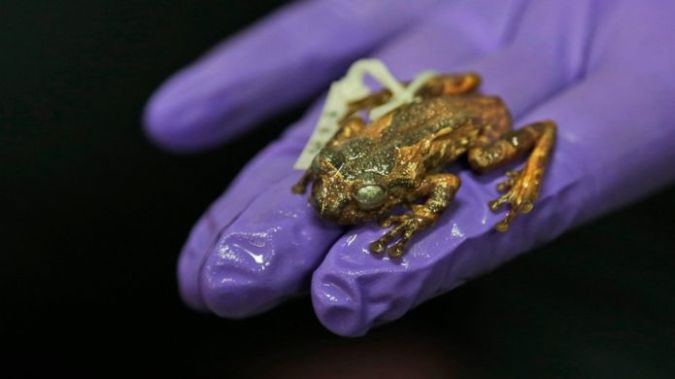
AP Image. Unusually, the frogs feed mostly on vegetation, rather than insects or larvae

Thanks to the BBC’s website for this note of encouragement:

An extraordinary tree frog thought to have died out more than a century ago has been rediscovered in India

The discovery was made by renowned Indian biologist Sathyabhama Das Biju and a team of scientists, in the jungles of north-eastern India.

It is hoped the frogs might now be found across a wide area, from China to Thailand.

Studies of the frog have also led scientists to reclassify it as an entirely new genus. Continue reading

Visual Memories From Borneo

Sea Nomads

A group of Sea Badjao are photographed in Denawan Island, Borneo. Malaysia.

Raxa Collective was invited in 2014 to scout a location for a new conservation project in Borneo, and the Sea Badjao were among the most important cultural features of the island locations being scouted. The scouting resulted in a “pending” return plan, and for sometimes pending implies years (as in this case) so all we can say at the moment is that this item reminds us:

For hundreds of years, nomadic groups known as Badjao have lived on boats in the waters of Southeast Asia, heading to shore only to trade or to take shelter from threatening weather. They are free-diving fishers by tradition, swimming many metres underwater, without equipment, to harvest seafood and pearls off the ocean floor. It is only in the past few generations, facing rising costs and reduced seafood catch, as well as myriad other threats, from extreme weather to pirates, that Badjao families have settled in fixed communities. Living in homes near the water or perched above it, on stilts set into old coral reefs, they have undertaken a slow and difficult transition to modern life. Continue reading

Lepidopteran Diversity at Xandari

Over the last month or two one of my goals has been to identify as many of the butterflies and moths–or lepidopterans–that we have here at Xandari. Part of this work involves looking at old photos taken since 2014, when James and I first arrived on property and started taking pictures of wildlife; another element of the job is going out and photographing the lepidopterans in a more determined fashion.

Not an easy task, when butterflies can have such whimsical flight patterns and startle quite easily. Moths are a little simpler to chase because during the day they’re often focused on staying still and hiding out until evening. Continue reading

Saving the Hill of Her Childhood

Plant and animal life on Flag Hill, near the hill station town of Mussoorie in north India, has been restored through the efforts conservationist Sejal Worah.

Plant and animal life on Flag Hill, near the hill station town of Mussoorie in north India, has been restored through the efforts conservationist Sejal Worah.

Environmentalist and WWF India Programme Director, Sejal Worah, and her local team have spent the last two years attempting to revive a 400 acres area situated in the Garwhal Himalayas, in Mussoorie, Uttarakhand.  From being a degraded and over grazed territory, within two years of conservation efforts the protected area has become a sanctuary for wildlife which hadn’t been reported for years, like the Himalayan black bear and Sambhar deer.

Continue reading

A Bird Prized for its Ivory

The illegal trade in elephant tusks is well reported, but there's a type of "ivory" that's even more valuable. It comes from the helmeted hornbill - a bird that lives in the rainforests of East Asia and is now under threat. PHOTO: Science Photo Library

The illegal trade in elephant tusks is well reported, but there’s a type of “ivory” that’s even more valuable. It comes from the helmeted hornbill – a bird that lives in the rainforests of East Asia and is now under threat. PHOTO: Science Photo Library

Throughout history, the human desire for ivory—used in products from jewelry to piano keys to priceless religious art objects—has far outmatched efforts to stop the killing of elephants for their tusks. A smaller, feathered species, too, feels threatened thanks to the ‘prized’ casque it wears on its head: the Helmeted Hornbill.

Helmeted hornbills live in Malaysia and Indonesia. On the islands of Sumatra and Borneo their maniacal calls and hoots resonate through the rainforest. They have a reputation for being secretive and wary, though, and you’re more likely to hear them than see them.They have good reason to be shy – thousands are killed each year for their casques, shot by hunters who sell the heads to China. Between 2012 and 2014, 1,111 were confiscated from smugglers in Indonesia’s West Kalimantan province alone. Hornbill researcher, Yokyok Hadiprakarsa, estimates that about 6,000 of the birds are killed each year in East Asia.The casque, for which hunters are willing to risk arrest and imprisonment, is sometimes referred to as “ivory”. It’s a beautiful material to carve, smooth and silky to the touch, with a golden-yellow hue, coloured by secretions from the preen gland – most birds use their heads to rub protective oils from this gland over their feathers, legs and feet.

Continue reading