Where Are the Colors?

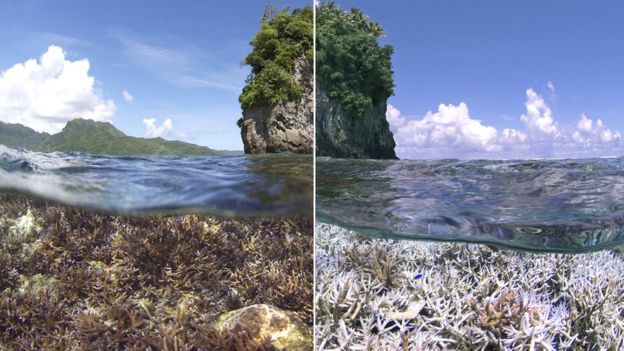
These images, taken in American Samoa, show the devastation caused by coral bleaching between December 2014 and February 2015. PHOTO: BBC

These images, taken in American Samoa, show the devastation caused by coral bleaching between December 2014 and February 2015. PHOTO: BBC

Yet another effect of global warming and changing ecosystems. Corals worldwide are at risk from a major episode of bleaching which turns reefs white.Although reefs represent less than 0,1% of the world’s ocean floor, they help support about a quarter of all marine species. The US National Oceanic and Atmospheric Administration (NOAA) says the livelihoods of 500 million people and income worth over $30bn (£19,6bn) are at stake.

Continue reading

Chile Looks Beneath the Waters

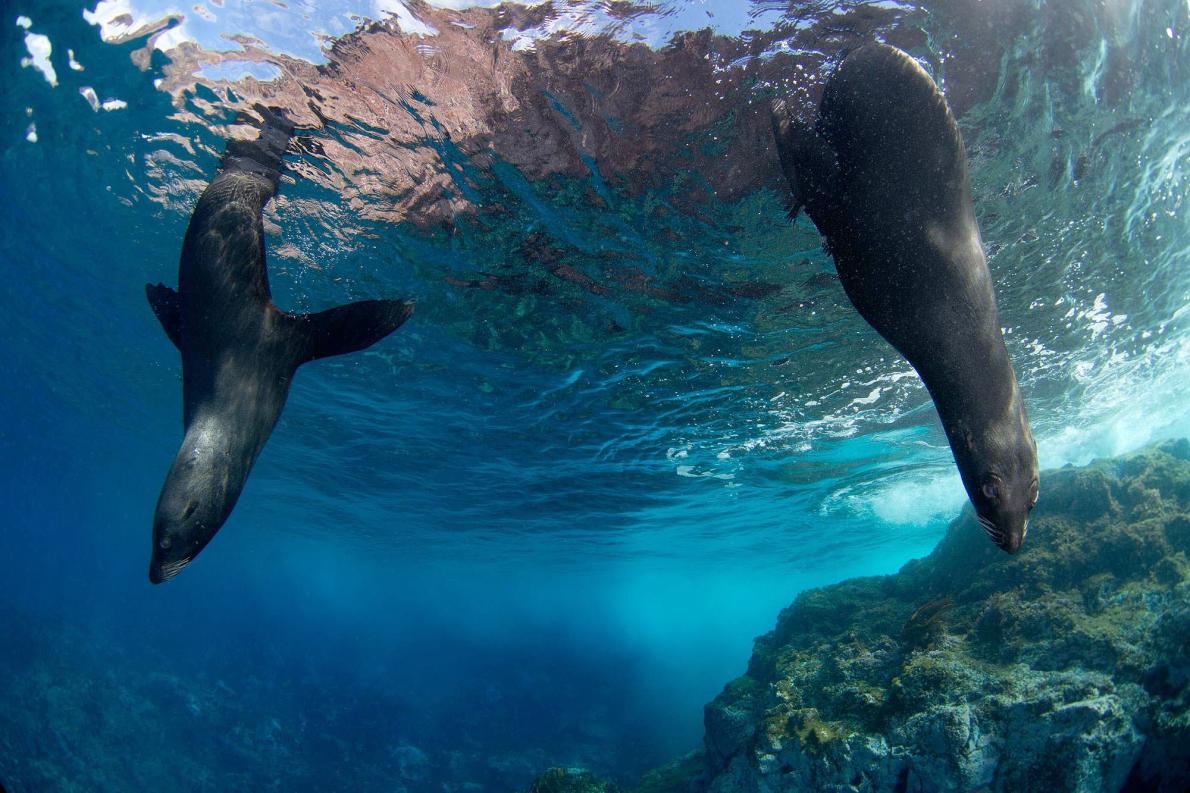
Two Juan Fernandez fur seals (Arctocephalus philippii) slide through the water off the Desventuradas Islands about 559 miles (900 kilometers) west of Chile. Divers snapped this picture during a 2013 expedition to an area that is now the largest no-take marine reserve in the Americas. PHOTO:  ENRIC SALA

Two Juan Fernandez fur seals slide through the water off the Desventuradas Islands. Divers snapped them during a 2013 expedition to an area that is now the largest no-take marine reserve in the Americas. PHOTO: ENRIC SALA

Here’s another win for those who vouch for the ecosystem wealth that lie beneath the waters. The Chilean government on Monday announced that it has created the largest marine reserve in the Americas by protecting an area hundreds of miles off its coast roughly the size of Italy.

The new area, called the Nazca-Desventuradas Marine Park, constitutes about eight percent of the ocean areas worldwide that have been declared off-limits to fishing and governed by no-take protections, says Russell Moffitt, a conservation analyst with the Marine Conservation Institute in Seattle, Washington. (Read about the world’s largest marine reserve in the Pacific Ocean.)

Continue reading

The Man of Mangrove Forests

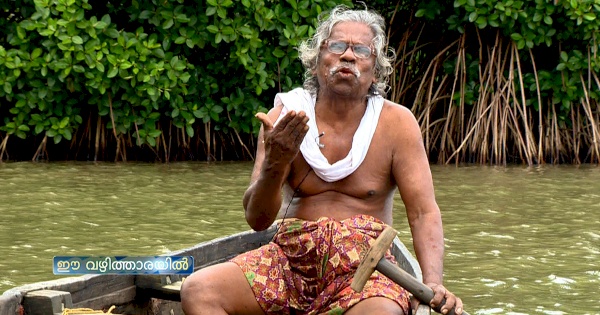
Pokkudan’s pursuit of mangrove conservation started back in the 80s when he started collecting mangrove seeds and planting them in the marshy lands of in Pazhayangadi. PHOTO: Mathrubhumi

Pokkudan’s pursuit of mangrove conservation started back in the 80s when he started collecting mangrove seeds and planting them in the marshy lands of in Pazhayangadi. PHOTO: Mathrubhumi

Kallen Pokkudan, also known as Kandal (mangrove in vernacular) Pokkudan, an Indian environmental activist and writer from Kerala, devoted his life to mangrove forests and planted more than a hundred thousand mangroves over three decades across Kerala.These trees of the tropics offer a lifeline to areas under the threat of natural disasters, prevent soil erosion, form a breeding ground for marine animals, purify water, and sustain coastal livelihoods. Pokkudan’s pursuit of mangrove conservation started back in the 80s when he started collecting mangrove seeds and planting them in the marshy lands of in Pazhayangadi. His work to expand mangrove cover along the Indian coastline has earned him a UNESCO special mention.

As the noon breeze blows Pokkudan’s silver wisps into his eyes shaded by thick glasses, the octogenarian talks with an unvarnished matter-of-factness about the revolution he started in 1989. At a time when most people were ignorant of the many scientific and envi¬ronmental uses of mangroves, Pokkudan—until then a political thinker—saw them as wind-cheaters that, to a great extent, prevented schoolchildren from losing their umbrellas to strong winds blowing from the Ezhimala area. “I started planting mangrove saplings to shield school-going children from the wind,” says Pokkudan humbly. “I also believed they would prevent the sea from eroding the ground and, above all, I wanted to see the beautiful trees growing.”

Continue reading

4,000 Years of Shared History

The African baobab, though, is most widely distributed both in its home continent and in the neo-tropics where enslaved Africans were brought to work. PHOTO: Gavin Evans

The African baobab, though, is most widely distributed both in its home continent and in the neo-tropics where enslaved Africans were brought to work. PHOTO: Gavin Evans

The Baobab tree is a native African tree with numerous valuable advantages including food, shelter, clothing, medicines, hunting, fishing, water storage, etc. It is considered sacred and immortal and its species is as old as 5000 years.And some of this is heritage is shared with India as well.
In the French novella The Little Prince, the titular prince comes from a very small asteroid planet called B612 where soil is full of baobab seeds. He tells the author that if left to grow, the baobabs would become so numerous and huge that they could make the little planet explode.On Earth, though, baobabs are quite the opposite. Anyone living in Africa where baobabs grow to enormous sizes would be able to tell you about the numerous benefits the trees provide for humans and animals.They would probably describe the marvellous generosity of its trunk and its hospitality to many creatures, and extol the hardy and light fruit pod with its deliciously powdery pulp and nutritious seeds that remain fresh and edible over long periods of time.
But there is a mystery to baobabs, as they are also found in India. How did they get there?

Continue reading

What Does It Take to Plant a Forest?

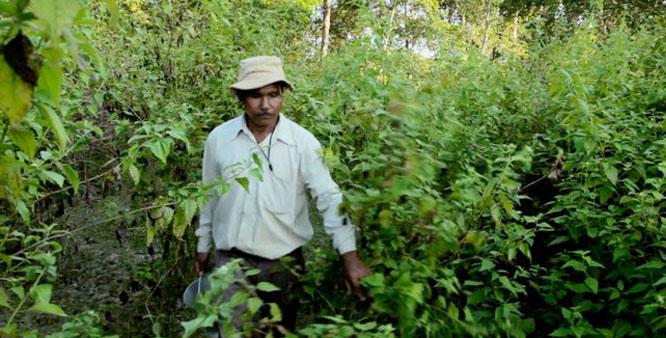
Indian man, Jadav "Molai" Payeng, has single-handedly planted a 1,360 acre forest In Assam. PHOTO: Jagran

Indian man, Jadav “Molai” Payeng, has single-handedly planted a 1,360 acre forest In Assam. PHOTO: Jagran

For many people the sight of a dead snake would be an unpleasant but not tragic image, but for Indian activist Jadav “Molai” Payeng it was a call to action that inspired him to create an entire forest. When Payeng was just a teenager in 1979 he came across a bed of dead snakes on the sun-baked shores of the Brahmaputra river. The limbless beasts had been stranded on the barren banks and perished in the unmitigated heat due to the lack of shade or tree cover. Payeng wept over the corpses but resolved to turn his sadness into action.

Continue reading

Who’s Taking Over Coral Reefs?

Between August and November in 2014, Chinese dredgers created a land mass on Fiery Cross that spans 3,000 meters long and 200 to 300 meters wide. PHOTO: Washington Post

Between August and November in 2014, Chinese dredgers created a land mass on Fiery Cross that spans 3,000 meters long and 200 to 300 meters wide. PHOTO: Washington Post

Here are some figures for China’s military strength. Here is also the fact that much of the country’s military building is concentrated in the high seas. Especially in waters that once hosted biodiversity hotspots in coral reefs.

As China races to extend its military reach, it is turning pristine habitats into permanent islands. Satellite images of the South China Sea show rapid destruction of some of the most biodiverse coral reefs in the world. The reclamation of land in the contested Spratly archipelago to build runways, military outposts and even small towns is endangering ecosystems that are key to maintaining world fish stocks and biodiversity.

Continue reading

Belize Lionfish Jewelry – Update


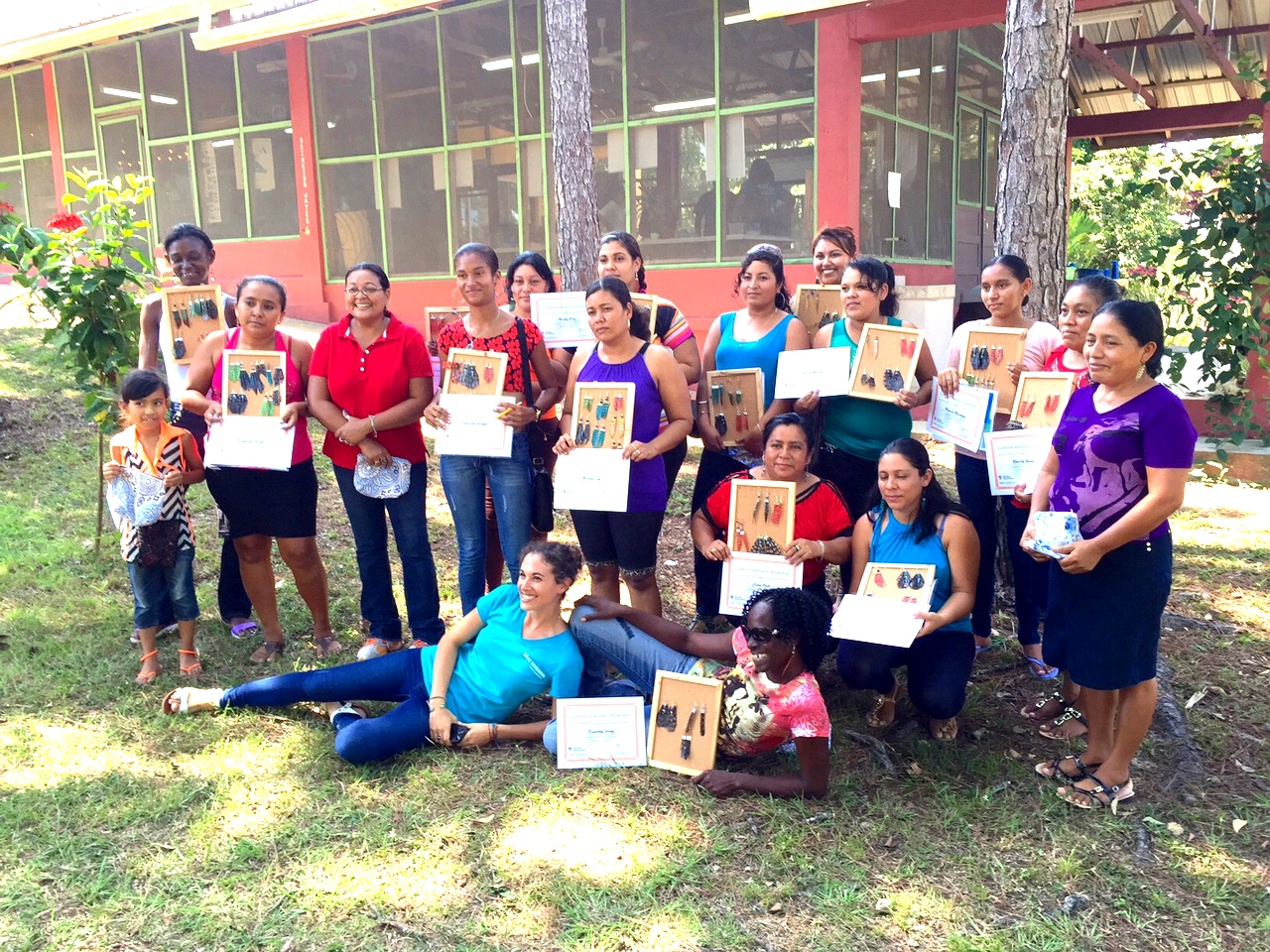
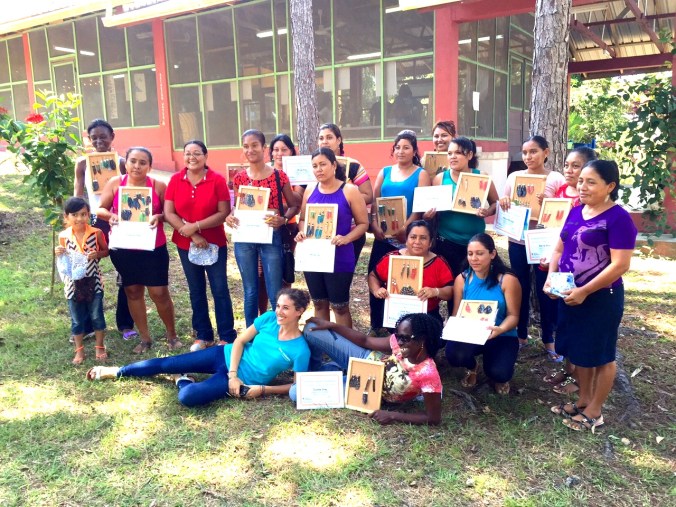
Belize Lionfish Workshop participants with their certificates

Belize Lionfish Workshop participants with their certificates

I’ve posted previously about the emergence of lionfish jewelry as one of several market-based approaches to controlling the invasion of this non-native species which poses an unprecedented threat to marine ecosystems in the Western Atlantic.

Last month, for the third year in a row, I spent two weeks in Belize where I had a chance to get an update on how the market is developing.  I started my visit in Placencia, which is home to Kaj Assales, the most successful of the lionfish jewelry artists in the country, with her own jewelry line which she sells through her boutique as well as online.  It was my first chance to visit her shop and to see some of her new designs.

Next I spent a week in the Sapodilla Cayes with ReefCI, the NPO that I first collaborated with to help jump-start the lionfish jewelry market in the country.  This gave me a chance to practice my lionfish spearing skills, as the ReefCI team and visiting volunteers continue to remove several hundred lionfish per week dissecting a sample of 30-40 of these for stomach content. Data on size, sex, and stomach content is provided to the Belize Fisheries Department and has been a valuable input to its national lionfish control strategy.  Coincidently, ReefCI’s lionfish control program was profiled in the August issue of United Airlines magazine; not only a nice recognition of the group’s efforts, but also a great boost for raising awareness about the lionfish invasion. Continue reading

In the Name of the ‘Salvation’ Fish

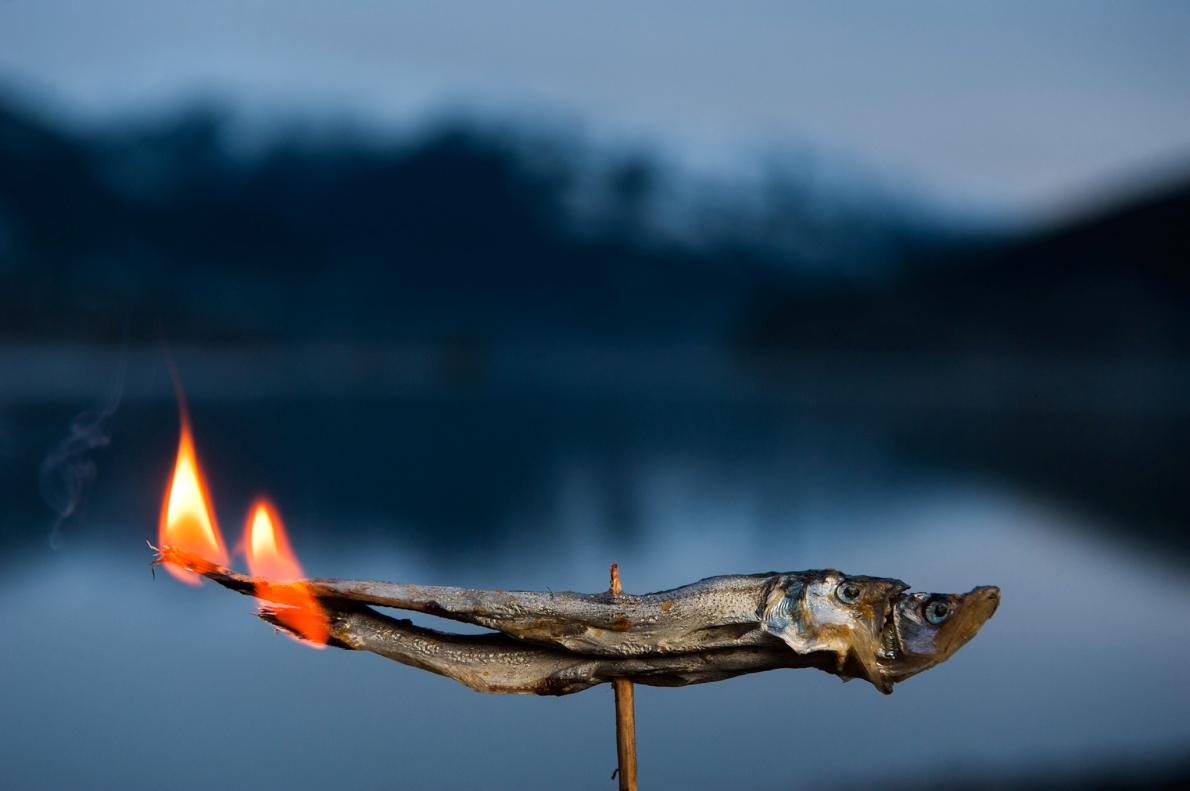
Also known as candlefish, eulachon (Thaleichthys pacificus) are so oily that they can ignite when dried. Traditionally, eulachon were used at times as lights by Nisga'a people.  PHOTO:  PAUL COLANGELO

Also known as candlefish, eulachon (Thaleichthys pacificus) are so oily that they can ignite when dried. Traditionally, eulachon were used at times as lights by Nisga’a people. PHOTO: PAUL COLANGELO

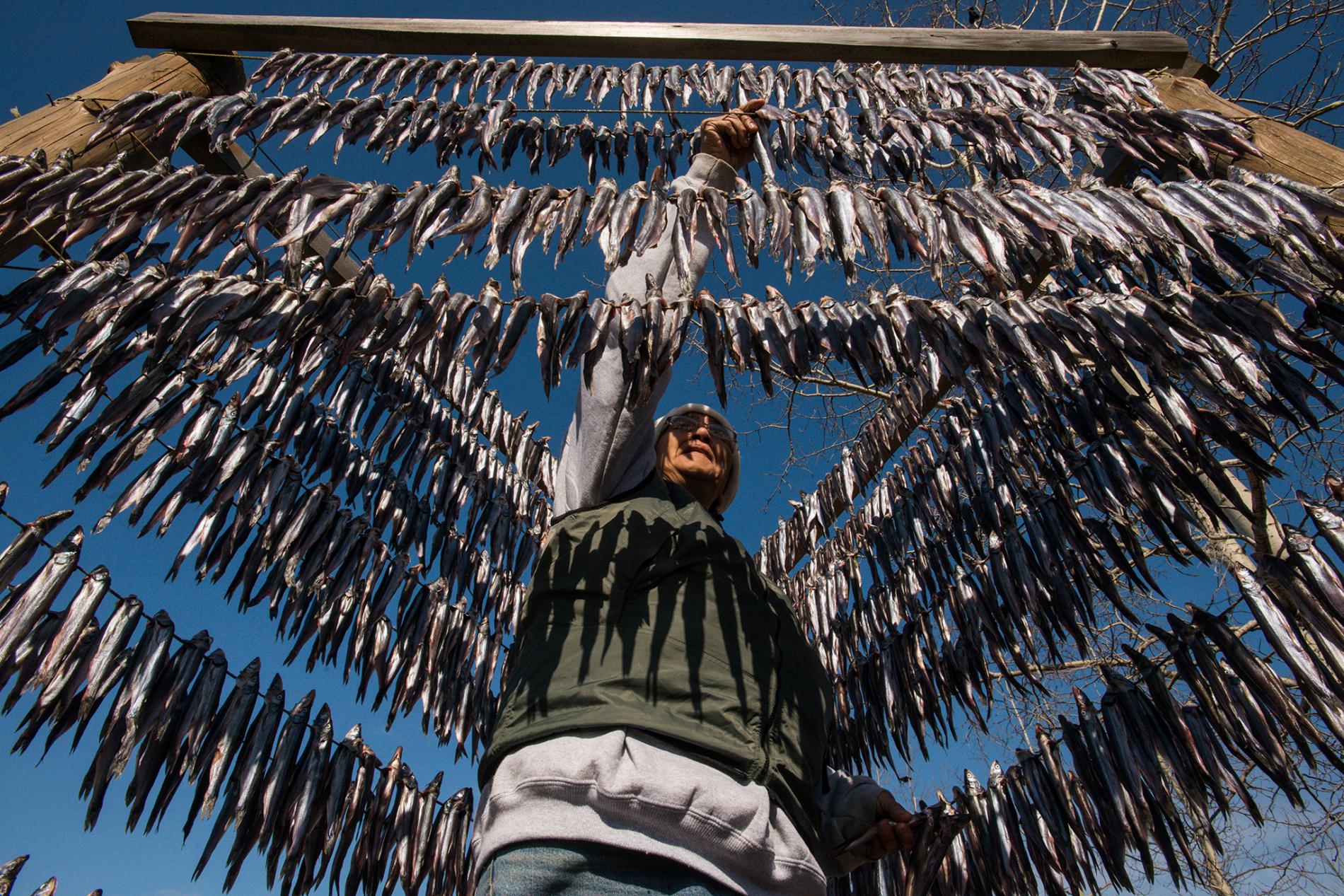
A Nisga'a woman hangs eulachon on a ganee'e, or air-drying rack. PHOTO: PAUL COLANGELO

A Nisga’a woman hangs eulachon on a ganee’e, or air-drying rack. PHOTO: PAUL COLANGELO

Often referred to as “salvation fish” for safeguarding native people from starvation, the eulachon is now in need of a lifeline itself—as its habitat and population are in danger. National Geographic reports on the fish’s historical and cultural significance and the the many changes in the ocean that have led to the decline of the eulachon’s numbers:

The fish are also known as halimotkw, often translated as “savior fish” or “salvation fish.” Eulachon return to the rivers here to spawn at the end of the North Pacific winter, when historically food supplies would be running low. In lean years the eulachon’s arrival meant the difference between life and death for people up and down the coast.

Today, the fish that used to safeguard native people from starvation is itself in need of a lifeline.

Continue reading

Meet the Tree Elders

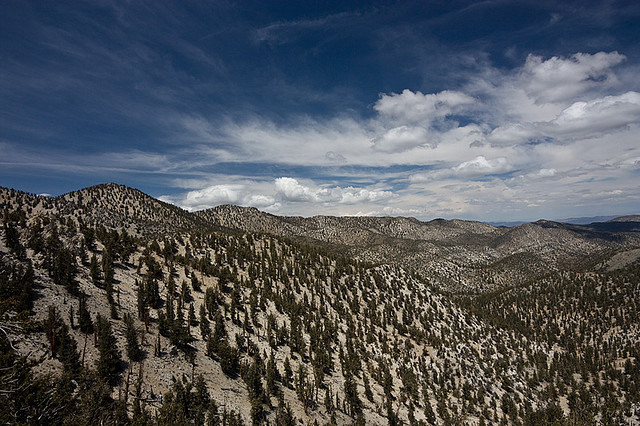
An ancient 4,800-year-old Great Basin Bristlecone Pine, the Methuselah Tree grows high in the White Mountains of eastern California. PHOTO: AGrinberg Creative Commons

An ancient 4,800-year-old Great Basin Bristlecone Pine, the Methuselah Tree grows high in the White Mountains of eastern California. PHOTO: AGrinberg Creative Commons

Did you know that the exact location of the world’s second oldest tree is a Forest Service secret? Or that a woman was charged with setting a fire that burnt down one of the oldest tree organisms? Well, “The Senator” must have sprung up roughly 3,500 years ago — a tiny cypress tree, no bigger than a fist, in the swamplands of Central Florida. In 2012, that very same cypress burned to the ground. The majestic 118-foot tall tree was one of the oldest organisms in the world. Over the course of its long life, it survived hurricanes, disease and logging sprees, serving as a tourist attraction and a spiritual epicenter for pilgrims hoping to bask, literally, in the shade of history.

Continue reading

Waking the Dead

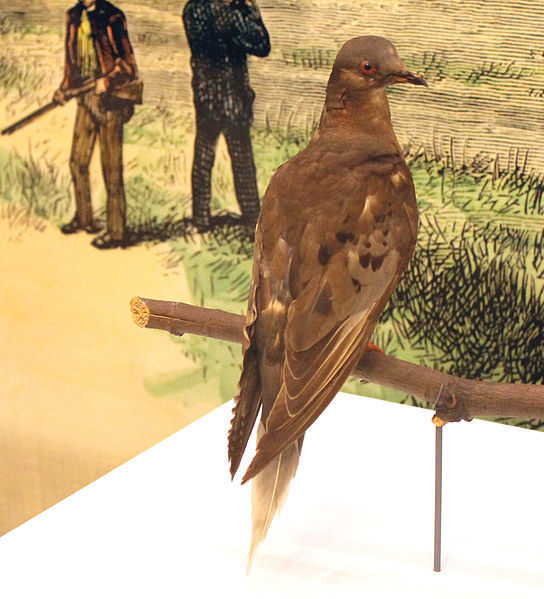
Martha in a display case in the National Museum of Natural History, 2015. (Photo: Ph0705/WikiCommons CC BY-SA 4.0)

Martha in a display case in the National Museum of Natural History, 2015. (Photo: Ph0705/WikiCommons CC BY-SA 4.0)

If you happen to visit the National Museum of Natural History in Washington D.C, don’t just walk by this innocuous stuffed pigeon. Take a good look at Martha, because she’s the last of the world’s flock of passenger pigeons. And now the subject of the ambitious  The Great Passenger Pigeon Comeback, a “de-extinction” project aimed at reviving the species. Using the genomes of the rock pigeon and the band-tailed pigeon as a reference, project scientists aim to assemble a complete passenger pigeon genome and transfer it into the germ cells of band-tailed pigeons in order to generate live passenger pigeons. The target date for the passenger pigeons’ triumphant return is 2022.

Continue reading

Meeting within Periyar Tiger Reserve

photo credit: Sudhir Shivaram; Barnawarpara Wildlife Sanctuary in Chhattisgarh

Just a few days ago, I went for the first time to the Periyar Tiger Reserve in Thekkady, which is one of the most important national parks in Kerala. For sure, luck was going our way! We saw so many things: different monkeys, awesome birds, multicolored frogs … but the most amazing and unexpected meeting in this dense forest was one with an animal that I would never have imagined seeing: a leopard! Even if it was obviously fleeting in one sense, it was also a timeless moment that I will remember. None of us had time to take a picture of the animal, which is why I’m using a photo by Sudhir Shivaram taken in Barnawarpara Wildlife Sanctuary in Chhattisgarh. The photo is also much closer than the scene that we experienced, where the leopard was fifty meters in front of us.

Sudhir’s quote below is a good way to show how fast it was and how lucky we are to have looked at the right time in the right place.

I keep saying – In Wildlife Photography you get 0-3 seconds to make your image, otherwise you have missed the opportunity. That’s exactly what happened to me in this case. Continue reading

A Fitting Anniversary Surprise

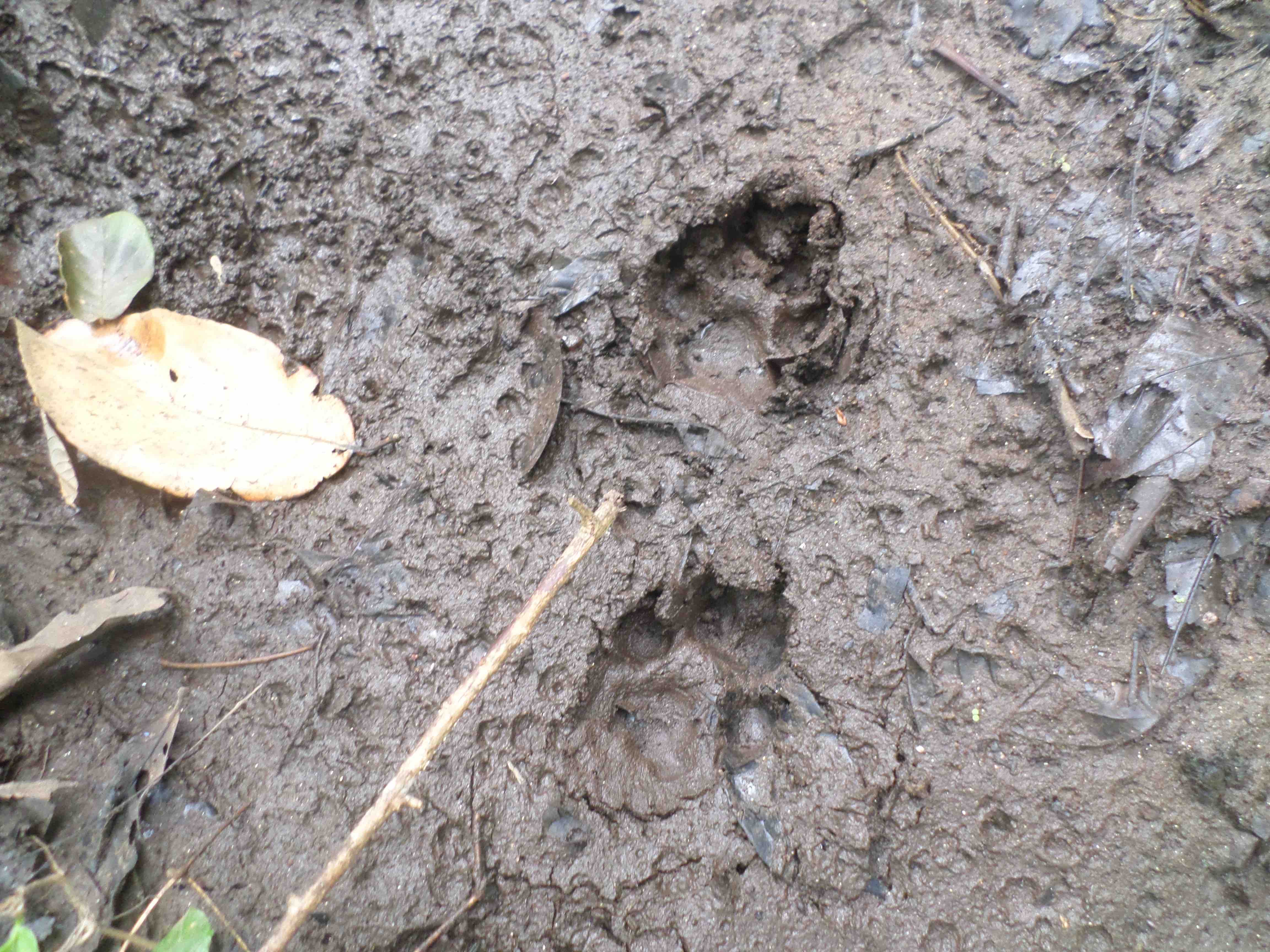
Leopard Paw Prints, Periyar Tiger Reserve

Leopard Paw Prints, Periyar Tiger Reserve

Five years ago last week several of us moved to Kerala, India. Sometime in the first year one of us took a photo of a huge tiger paw print while trekking through the Periyar Tiger Reserve. Two of us had the briefest of brief sightings of a tiger, back then as well, with the tiger leaping across the trail we were on, doing its best to avoid us and move on…

Now, exactly five years in, we had what anyone would describe as the ideal nature encounter.  Continue reading

Whale Shark Encounter

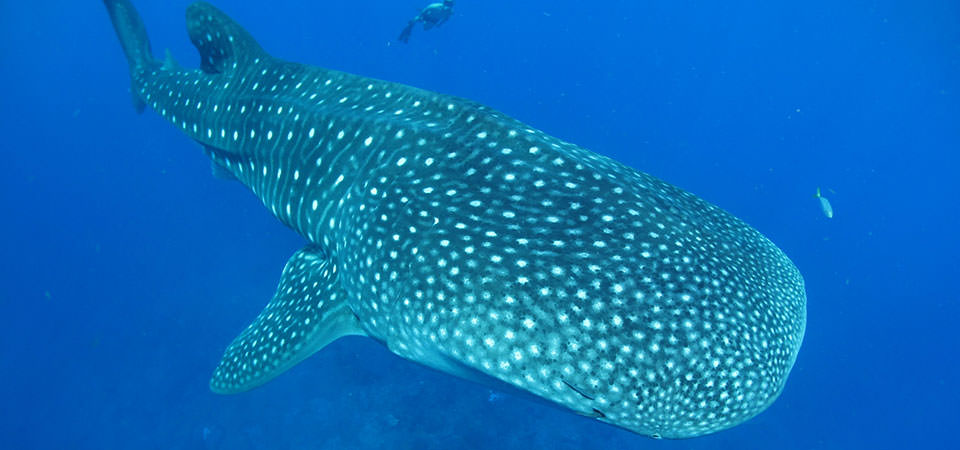
In celebration of International Whale Shark Day, which is August 30…

I’ve posted previously about ecotourism ventures focused on iconic marine species such as sharks, manta rays, and sea turtles and how such ventures can be linked to protection of the species involved. From a natural capital valuation standpoint, the link is based on the recognition that the revenue generated from wildlife tourism associated with the animals far exceeds the revenue that would be earned from their capture for meat and/or body parts.  In a nutshell – they are worth more alive than dead!

One species that has been the focus of wildlife tourism in various parts of the world is the whale shark. The largest fish in the sea, whale sharks grow up to 40 feet in length and more than 45,000 pounds in weight.  Continue reading

“Holy Crab,” Bulbman

For most of August Xandari has been operating at full capacity. Since this past weekend the hotel has had fewer guests as families prepare for the new school year in Europe and the United States. In a way, it’s a relief, not only for me and my unrestrained desire to sing when I’m alone, but also for the auditory senses of the guests. I no longer bump into hikers during my treks along the waterfall trails and I avoid the embarrassment of having to “justify” my discordant singing. All in all, at least for a few days, no one has to put up with my singing…except maybe for an unexpected creature I found at “river view 2.”

Continue reading

What Does That Song Mean?

The chickadee makes at least 15 different calls to communicate with its flock-mates and offspring. PHOTO: Nature Mapping Foundation

The chickadee makes at least 15 different calls to communicate with its flock-mates and offspring. PHOTO: Nature Mapping Foundation

Chickadees have one of the most unique and varied vocal repertoires. Few backyard birds are as beloved as the Black-capped Chickadee. The boldly patterned chickadee is perky, trusting – and it seems to introduce itself by calling its name – chick-a-dee. But when a chickadee voices its namesake call – using a host of variations – it’s most likely maintaining contact with its mate, scolding a predator, or announcing a food source. These chickadee calls, distinct from songs, are uttered by both sexes and may be voiced year-round. What do they communicate?

Continue reading

What Can We Do For the Gentle Giant?

A herd of elephants by the river at Periyar Tiger Reserve, Thekkady, India. PHOTO: Rosanna Abrachan

A herd of elephants by the river at Periyar Tiger Reserve, Thekkady, India. PHOTO: Rosanna Abrachan

Predation of elephants has increased in recent years, with as many as 100,000 African elephants being killed between 2010 and 2012, according to an elephant researcher at Colorado State University. Nearly 60 percent of Tanzania’s elephant population has been wiped out in the past six years, the report indicated. Increased demand in Asia, where a single tusk can fetch up to $200,000, has fueled the increase in poaching. August 12 marked the fourth annual World Elephant Day, a day to “bring attention to the urgent plight of Asian and African elephants,” according to a Web site about the annual event. There may be fewer than 400,000 African and fewer than 40,000 Asian elephants remaining in the wild, the Website says.

Continue reading

Are You on the Bee Highway?

Oslo's bee highway has pollen pitstops and bee hotels. PHOTO: Wikimedia Commons

Oslo’s bee highway has pollen pitstops and bee hotels. PHOTO: Wikimedia Commons

Oslo, Norway now has a “bee highway,” consisting of bee-friendly routes through the city. Each features flowery, green rest stops along the way so the bees can take a break and fill up on nectar.

Continue reading

Meet the Godwit in North Korea

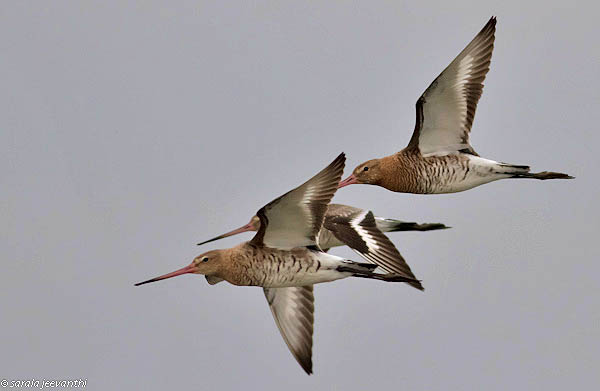
A godwit made international headlines in 2007 when she was confirmed to have flown for seven days and nights without stopping to a feeding ground in China. That was the longest nonstop flight by a land bird ever recorded. PHOTO: Wikimedia Commons

A godwit made international headlines in 2007 when she was confirmed to have flown for seven days and nights without stopping to a feeding ground in China. That was the longest nonstop flight by a land bird ever recorded. 

To the untrained eye, it’s just a lot of birds on an otherwise deserted stretch of muddy, flat coastline. But for ornithologists, North Korea’s west coast is a little piece of paradise each spring — and both the birds and a dedicated group of birdwatchers travel a long way to get there. The birds being watched aren’t exactly household names — bar-tailed godwits (Limosa Iapponica), great knots (Calidris Tenuirostris) and dunlins (Calidris Alpina).

Continue reading

Big Fish, Small Fish

Encouraging consumers to eat fish such as herring, mackerel, and butterfish might, ironically enough, be the best way to save those species. PHOTO: Nutritional Thinking

Encouraging consumers to eat fish such as herring, mackerel, and butterfish might, ironically enough, be the best way to save those species. PHOTO: Nutritional Thinking

From the beginning of time and until relatively recently, little fish had only big fish to fear. Since the middle of the twentieth century, however, some little fish—forage fish, to be precise—have faced radically increased threats from humans, and, by extension, from the pigs and chickens that the fish are increasingly being fed to. Forage fish are now threatened worldwide, which has potentially troubling implications for the entire food chain. In conservation circles, the suggestion lately is that encouraging consumers to eat small fish might, ironically enough, be the best way to save them.

Continue reading

There, There, the Insects Feel You

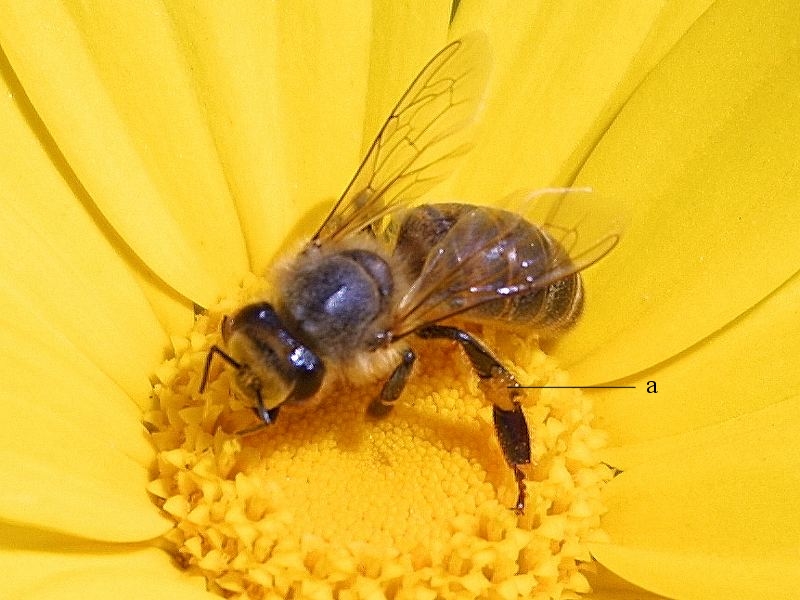
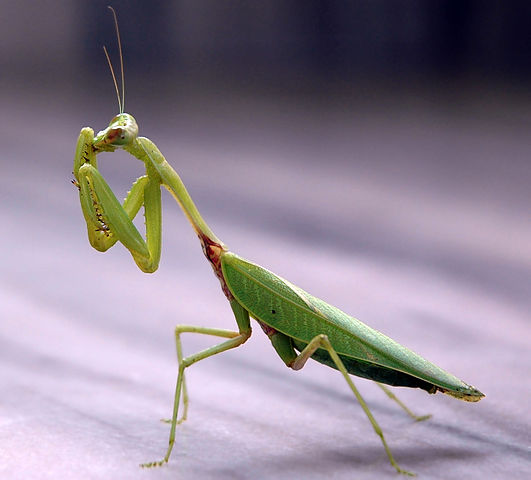
Are insects conscious beings, asks a new study. PHOTO: Wikimedia Commons

Are insects conscious beings, asks a new study. PHOTO: Wikimedia Commons

A recent survey suggests that, for most of us who have ever had a pet companion, it’s a no-brainer that mammals and birds are emotional creatures, sharing emotions with multiple species and not just their own. Yet despite the thousands of YouTube videos and hundreds of recent scientific studies presenting easily accessible evidence and examples, not everyone thinks so. It was only in 2012 that scientists finally agreed that nonhuman animals are conscious beings. It has only just been discovered that dogs display immensely complex, human-like emotions like jealousy, and that cows express positive emotions through the whites of their eyes. But what about insects?

Continue reading