Bird Behavior at Xandari

Over the past several weeks, I’ve had the fortune of being able to find birds sitting relatively still and have filmed them doing their stuff. All of the species in the video below are quite common here at Xandari, but I hope to eventually be able to share footage of even more rare and exciting birds that James and I sometimes see!

For more bird videos that I’ve taken in the past, you can  Continue reading

Throwback Thursday: IPM

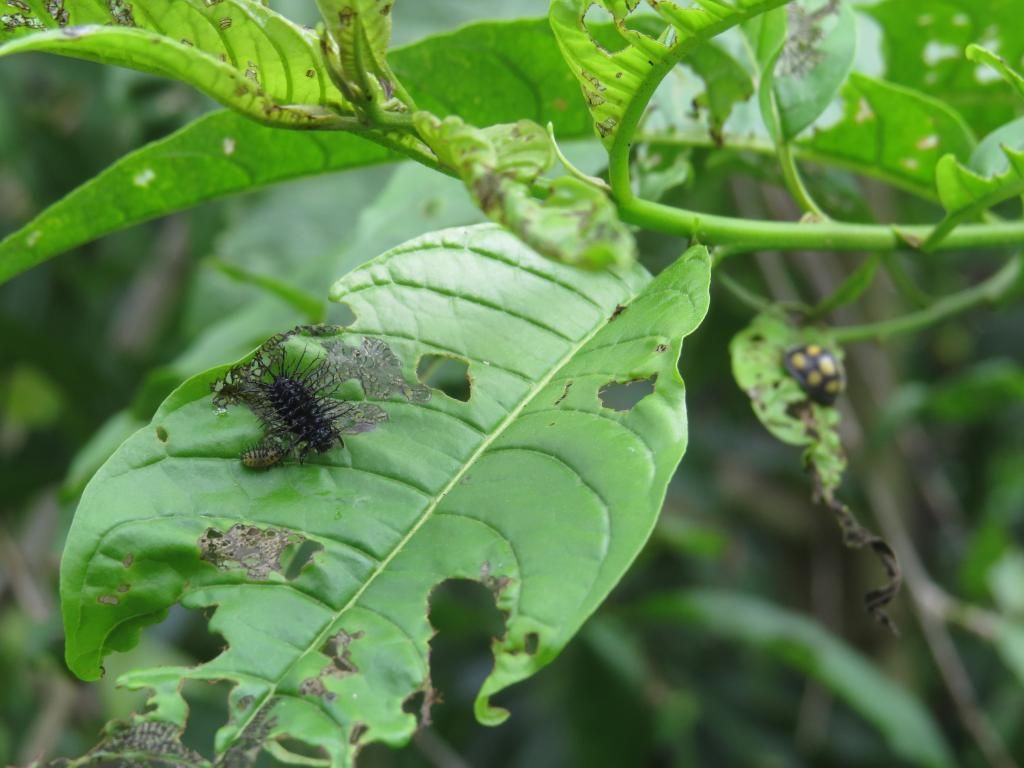
A ladybug relative nymph in the foreground and a mature individual in the background. The tiny thing next to the nymph might be a larvae.

Yesterday, as James and I were on one of our birding walks around Xandari, we ran into José Luis, who had a couple new things to show us about the gardens and orchard that he runs. At first, it looked like a ragged young tree, its leaves half-devoured and its trunk stained black. But we quickly learned Continue reading

Landscape Restoration

Tianjin-225x132

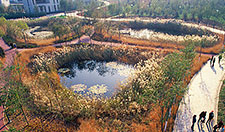
Turenscape Qiaoyuan Wetland Park in Tianjin, China, has terraced ponds that incorporate designed experiments to monitor benefits.

We watch for stories about innovative approaches to fixing things in the natural environment, wherever those stories may be found.

And whatever name they may be given.

Thanks to Yale360 for their ongoing attention, including this recent article:

Rebuilding the Natural World: A Shift in Ecological Restoration

From forests in Queens to wetlands in China, planners and scientists are promoting a new approach that incorporates experiments into landscape restoration projects to determine what works to the long-term benefit of nature and what does not.

by Richard Conniff Continue reading

About Those Dancing Frogs


Thanks to National Geographic’s website for extending the details of this  news we first shared here:

…The spectacular haul more than doubles the number of Indian dancing frogs, a family named for the bizarre courtship displays of their foot-waving males, to 24 species. Continue reading

Discovering Frogs In South India

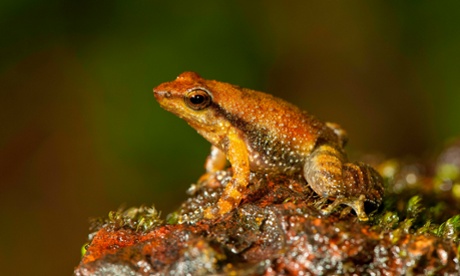
One of the 14 new species of so-called dancing frogs discovered by a team headed by University of Delhi professor Sathyabhama Das Biju in the jungle mountains of southern India Photograph: Satyabhama Das Biju/AP

One of the 14 new species of so-called dancing frogs discovered by a team headed by University of Delhi professor Sathyabhama Das Biju in the jungle mountains of southern India Photograph: Satyabhama Das Biju/AP

Thanks to the Guardian for their coverage of environmental news stories, and considering the role frogs play as an indicator of ecosystem well-being, this counts as a big one:

Scientists have discovered 14 new species of so-called dancing frogs in the jungle mountains of southern India. Indian biologists say they found the tiny acrobatic amphibians, which earned their name with the unusual kicks they use to attract mates, declining dramatically in number during the 12 years in which they chronicled the species through morphological descriptions and molecular DNA markers. They breed after the yearly monsoon in fast-rushing streams, but their habitat appears to be becoming increasingly dry. Continue reading

A Minor Detraction From Aging’s Major Detractors

old-tree

Thanks to Roberta Kwok for her ever-concise summaries of remarkable scientific findings on Conservation‘s website, this one following the theme of a companion post with regard to aging organisms:

SCORE ONE FOR THE REALLY OLD GUYS

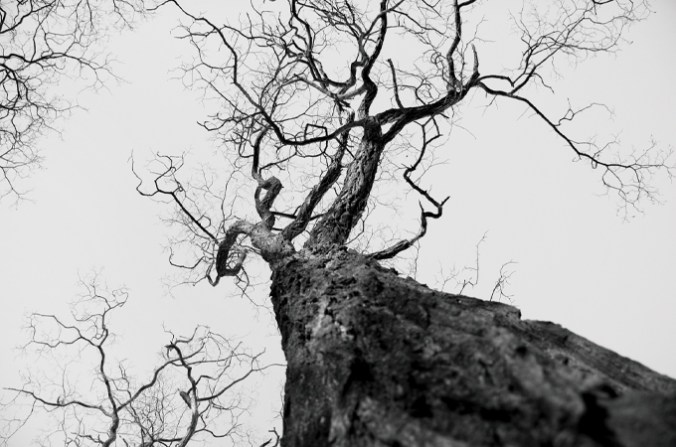
Aging is generally associated with slowing down. But scientists have found that trees actually grow faster as they get older, making them star players in a forest’s carbon storage. In fact, one old tree can fix as much carbon in a year as the total amount of carbon in a “middle-aged” tree. Continue reading

Thinking In Unexpected Places

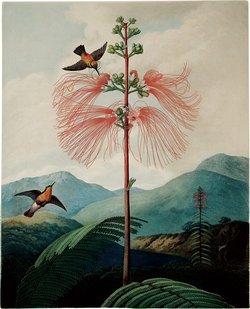
The Large Flowering Sensitive Plant, whose ‘plant electricity,’ Oliver Sacks writes, ‘moves slowly…as one can see by watching the leaflets…closing one by one along a leaf that is touched.’ Illustration from Robert John Thornton’s The Temple of Flora (1799–1807), published in a new edition by Taschen.

The Large Flowering Sensitive Plant, whose ‘plant electricity,’ Oliver Sacks writes, ‘moves slowly…as one can see by watching the leaflets…closing one by one along a leaf that is touched.’ Illustration from Robert John Thornton’s The Temple of Flora (1799–1807), published in a new edition by Taschen.

Thanks to the New York Review of Books for engaging one of the great thinker-researcher-writers of our time for this story The Mental Life of Plants and Worms, Among Others:

Charles Darwin’s last book, published in 1881, was a study of the humble earthworm. His main theme—expressed in the title, The Formation of Vegetable Mould through the Action of Worms—was the immense power of worms, in vast numbers and over millions of years, to till the soil and change the face of the earth. But his opening chapters are devoted more simply to the “habits” of worms.

Worms can distinguish between light and dark, and they generally stay underground, safe from predators, during daylight hours. They have no ears, but if they are deaf to aerial vibration, they are exceedingly sensitive to vibrations conducted through the earth, as might be generated by the footsteps of approaching animals. All of these sensations, Darwin noted, are transmitted to collections of nerve cells (he called them “the cerebral ganglia”) in the worm’s head.

Continue reading

Time Zone Adjustments For Sleep


It is a drag. Just saying the two words that are the inspiration for this app below is a drag. So instead we will say it more soothingly, discussing the need for adjustments for sleep based on crossing time zones. This is definitely of interest to many of the travelers who make their way to properties we manage. Raxa Collective remains firmly rooted in Kerala, India–a long haul flight from most places–while expanding our project reach into Western Africa and Central America, which makes us susceptible to the attraction of this app brought to our attention by National Public Radio (USA):

Jet lag is nobody’s idea of fun. A bunch of mathematicians say they can make the adjustment less painful with a smartphone app that calculates the swiftest way to adjust.

Users plug in the time zone they’re traveling to, and the app will do the calculations before spitting out a schedule specifying when the user should stay in bright light, low light or be in the dark, says Olivia Walch, a graduate student at the University of Michigan who designed the app.

“The conventional wisdom is for every hour you’re shifting, it’s about a day of adjustment,” Walch says. So Washington, D.C., travelers going to Hong Kong — a 12-hour time difference — could take up to 12 days to adjust. The app can reduce that time to roughly four or five days, the inventors say. Continue reading

The Canopy Is A Portal

When we first met Dr. Meg Lowman last year we were already familiar with the use of tree climbing techniques for forest biology research. But the pioneer of canopy ecology includes an additional dimension to her REU (Research Experiences for Undergraduates) by acknowledging that physical mobility has little to do with being an effective field biologist. “To explore the canopy we climb ropes not trees, and in the lab we use microscopes, computers and minds, which have no limits.”

The Baker University program had been open to eight students, half of whom had ambulatory disabilities. All eight students were professionally trained to ascend into the canopy to collect moss, lichen and leaves to measure the impact of the invertebrates like tardigrades (water bears) on the habitat. Continue reading

Skimming the Globe

Stemming from a spontaneous fascination while living in India, I have photographed and written extensively about dragonflies in the past, and as an untrained naturalist, my interest has been mainly focused on dragonflies’ aesthetics rather than their physiology or ecological significance. However, as my interest in holistic ecology and the natural world grows, my thoughts have wandered from dragonflies and mushrooms to a bigger-picture ideology focusing on the connectedness and relationships between organisms within an ecosystem. Those relationships are present across the globe, year-round – regardless of how lifeless a place may seem. Being used to tropical climates unfortunately gives me a predisposition to fear the painful cold of Colorado mountain winters, and I retreat to a less hands-on approach to my research.

While seeking food for thought online, I stumbled upon a TED Talk given in 2009 on dragonflies – which in itself would interest me. But this talk concerns an exceptionally interesting species of dragonfly (though I didn’t realize it when I noticed its swarms in Gavi) – and one that aligns more with my current biological interests than those I held in the past few years (skimming the surface, some might say). Continue reading

Gift-Giving Across Species

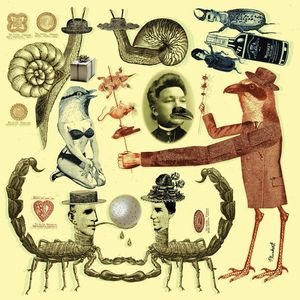
David Plunkert …Gift-giving has been seen in spiders, birds, mammals and the land snail, which shoots darts at its intended.

If you think humans are unique as gift-givers, think again, and read Natalie Angier’s current article in The New York Times:

…The drive to exchange presents is ancient, transcultural and by no means limited to Homo sapiens. Researchers have found striking examples of gift-giving across the phyletic landscape, in insects, spiders, mollusks, birds and mammals. Many of these donations fall under the rubric of nuptial gifts, items or services offered up during the elaborate haggle of animal courtship to Continue reading

Experiments In Plant Intelligence

The article we linked to here is now unlocked so non-subscribers can access the full story, and the video currently posted on the New Yorker‘s website (click the image above to go to the source) is a good accompaniment:


Last week, in our World Changers Issue, Michael Pollan wrote about the growing field of plant neurobiology and the ways that plants seem to exhibit intelligence, intention, and even choice. Continue reading

Dear Dr. Rodrigues, Thank You From The Western Ghats

The research of Dr. Ana Rodrigues and her colleagues, much appreciated by our team here in the Western Ghats (no hard feelings, of course, that Colombia has a hotspot considered greater in terms of irreplaceability), is featured in a story in today’s Guardian

…”This beautiful mountain, which is not far from cities and towns, is being colonised by rich people building second homes,” said Dr Ana Rodrigues, a researcher at the CEFE-CNRS institute in France, who led the new study. The team’s analysis of the world’s 173,000 nature reserves identified 138 that were “exceptionally irreplaceable.”

Continue reading

Rainforests, Primary And Otherwise

Thanks to the Guardian for bringing this to our attention:

At an age when freedom passes allow pensioners to take on the challenge of clambering to the top deck of a bus, Dr Francis Hallé is more likely to be found perched at the top of a tree.

The retired professor of botany is 75 and has just completed his first film. In it he can be seen standing, without a safety rope, on a branch of a massive moabi tree 230 feet above the forest floor. Continue reading

Ants, Wasps And That Nagging Question

Mr. Zimmer’s the one to finally comment on the suspicious similarities between ants and wasps, in blurb form here and in full form linked below to his New York Times column:

Growing up on a small farm, I was able to get to know the insects that lived on the property pretty well. Some I liked, and some I hated. Continue reading

Algal Jazz

The radio show Living on Earth, produced by Public Radio International (thanks to their contributors and sponsors!), first carried this story about a biologist who intuited an interplay between marine microbes and jazz music.  The interview with that biologist is here, both as podcast and transcript. Thanks to the University of Washington’s Conservation magazine for bringing it back to our attention before it floated off on the horizon:

Music in the key of algae

In the age of Big Data, making sense of the information deluge is no small feat. But biologist and jazz-music fan Peter Larsen of Argonne National Lab thinks he has a powerful way to capture the complex interplay between microbial life and the physical environment: bebop music.

Larsen’s data-driven compositions are generated by observations collected at the L4 marine monitoring station, a data buoy operated by the U.K.’s Plymouth Marine Laboratory and Marine Biological Association. The buoy records weekly measurements of temperature, salinity, nutrient levels, and other parameters. In addition, researchers classify and measure the abundance of zooplankton and phytoplankton from samples collected at the site. Continue reading

Photographer + Professor + Himalayas = Collaborative Book

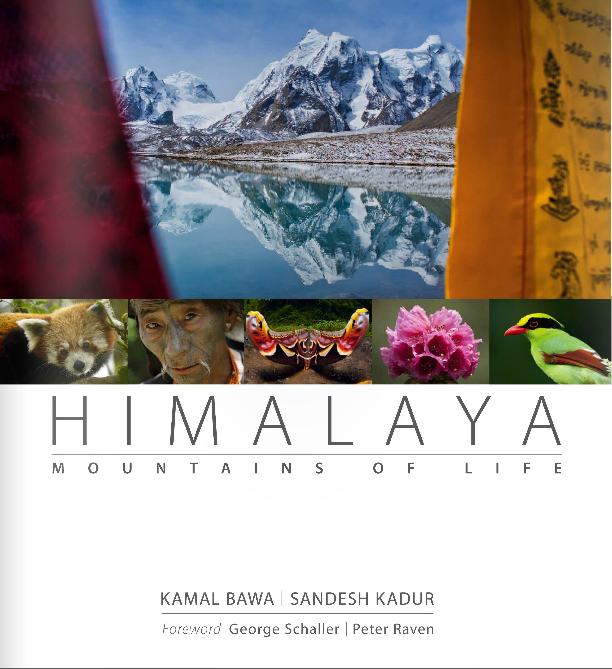
The blurb is enough to get our attention, but the images on the book’s website (click the image above to see) make the journey palpable:

The Eastern Himalaya—land of Gods, of ancient mountain kingdoms, of icy peaks and alpine meadows—is like no other place on Earth. The life and landscapes of the region are as diverse, spectacular and fragile as the mountains themselves. Even today, these mountains hold many mysteries: unnamed species, primeval cultures and the promise of magical cures to heal all of humanity. Himalaya—Mountains of Life takes us on a journey of biocultural discovery, from the great canyon of Yarlung Tsangpo and the Siang Gorge in the east to the Kali Gandaki Gorge in the west. Along the way, Himalaya demonstrates through breathtaking imagery and words, why the preservation of this heritage is so important—not just for us, but for the future of all life on Earth. Continue reading

If You Happen To Be In Sydney

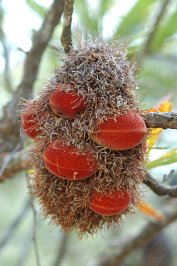
Fruit of Banksia aemula

Fruit of Banksia aemula

Tomorrow, at long last, the latest greatest seed bank in the world is opening:

The Australian PlantBank

The Australian PlantBank is a science and research facility of the Royal Botanic Gardens and Domain Trust and is located at the Australian Botanic Garden, Mount Annan. It houses the Trust’s seedbank and research laboratories that specialise in horticultural research and conservation of Australian native plant species, particularly those from New South Wales.

Visiting PlantBank

The Australian PlantBank opens to the public on Saturday 12 October, 12 noon to 4 pm.

Continue reading

Extinction Reversal

When Phil first mentioned the series he would share here, the fit could not have been more perfect. It was based on his own experience as a diver; on his own informed understanding of environmental challenges at once universal and personal (as a diver, he has witnessed changes that disturb him); on his role as a citizen science participant; and on his belief in entrepreneurial conservation as a solution to some otherwise intractable challenges.

We prefer the first person here, but also share as much as we can of what science has to say on these subjects through our reliable cadre of science journalists. Carl Zimmer, over at National Geographic‘s Phenomena site, writes about genetically engineering in the wild, which raises important, obvious and not so obvious ethical issues:

Back in April, I wrote in National Geographic about the provocative idea of bringing extinct species back to life. In the five months that have passed since then, I haven’t spotted any mammoths or saber-tooth lions drifting through my front yard. If “de-extinction” ever does become real, it won’t for quite a while.

What I have seen over the past five months is a new conversation. Part of the conversation has revolved around the specifics of de-extinction. Some people are open to the possibilities of rebuilding genomes and embryos of vanished species. Some people find it a flashy distraction from the real work of fighting the current wave of extinctions. Continue reading

Little Wonder

Thanks to the Science section folks at the New York Times, who have added to an already excellent Tuesday paper section with lots of excellent online resources such as this (click the image to the left to go to the video):

SCIENCE

ScienceTake: A Frog’s Secret to Sticking

Nature is full of animals with amazing abilities that scientists are trying to understand, and the torrent frog is one of them. True to its name, it lives stuck to waterfalls.